Bay County was created on July 1, 1913, as the state's 49th county, and it was named for St. Andrews Bay. Its county seat is Panama City, which took its name from the Panama Canal while the canal was being dug. The county is home to Tyndall Air Force Base, which began as Tyndall Field in 1941, and to the beach city of Panama City Beach. Its history goes back to people of the Deptford culture, who lived on this coast as early as 500 B.C.
This page tells the story in order, from the first people on St. Andrew Bay to Glenwood's new historical markers of 2024, then lists places in the county where you can still see it. The sources for each part are named at the end of that part, and all of them are listed at the bottom of the page.
The first people on St. Andrew Bay
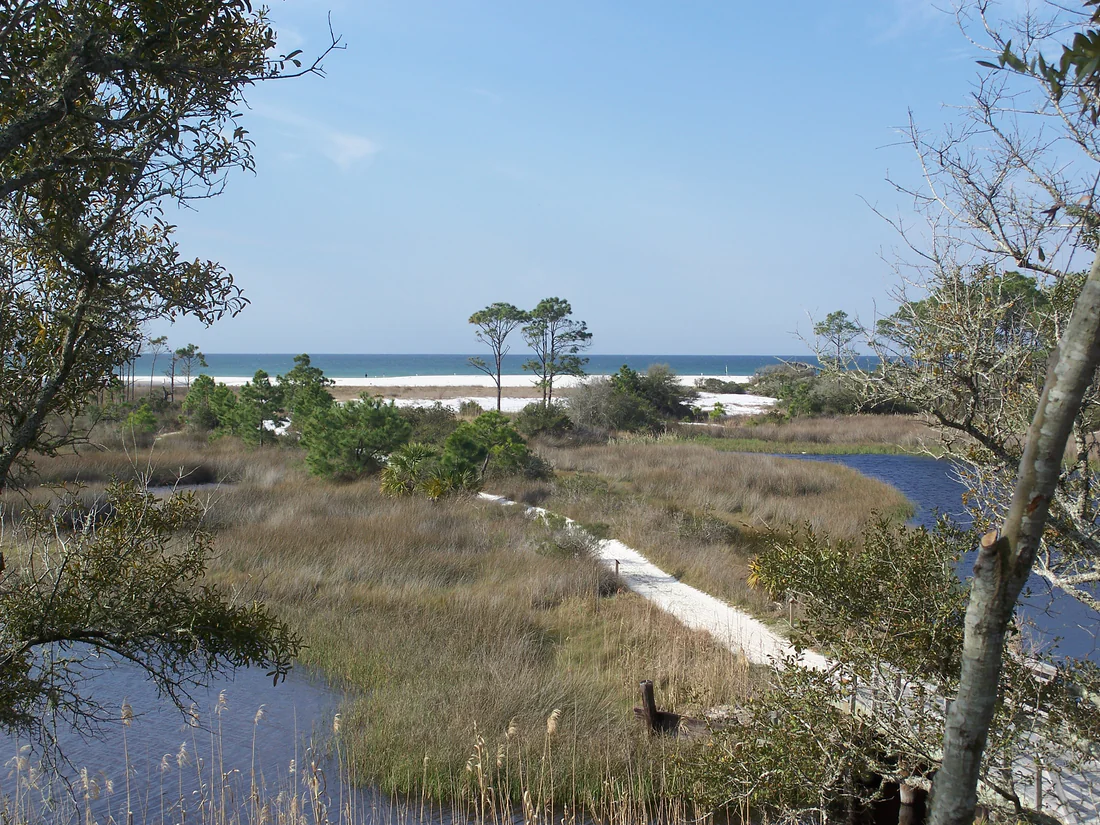
The City of Panama City Beach says many Native people lived around St. Andrew Bay before settlers built a community there in the 1800s. At what is now Camp Helen State Park, archaeologists know the early people by the pottery middens they left behind. Archaeologists call them the Deptford culture, which goes back to 500 B.C. Centuries ago, Native Americans came to the beaches of today's St. Andrews State Park for the shellfish that filled the waters nearby.
WMBB News reported that archaeologist Teresa Brown was part of a team studying the people who once lived where Tyndall Air Force Base is now. At Redfish Point, they found what is left of a shell ring. The ring shows that a village once stood on the site of the old golf course clubhouse. The station also reported that more than 30 flat-topped shell mounds once stood along St. Andrews Bay. Ben Liggin, who owns the Native Spirit Museum, said C.B. Moore recorded all of them in the 1900s, and that the shell was later used to build Front Beach Road and Back Beach Road.
Sources: City of Panama City Beach: Area Information; Florida State Parks: Camp Helen State Park, History; Florida State Parks: St. Andrews State Park, History; WMBB News 13 (mypanhandle.com): Panhandle Residents Worry About Losing Florida's History
Next: Chapter 2, Spanish ships, early settlers and Red Fish Point →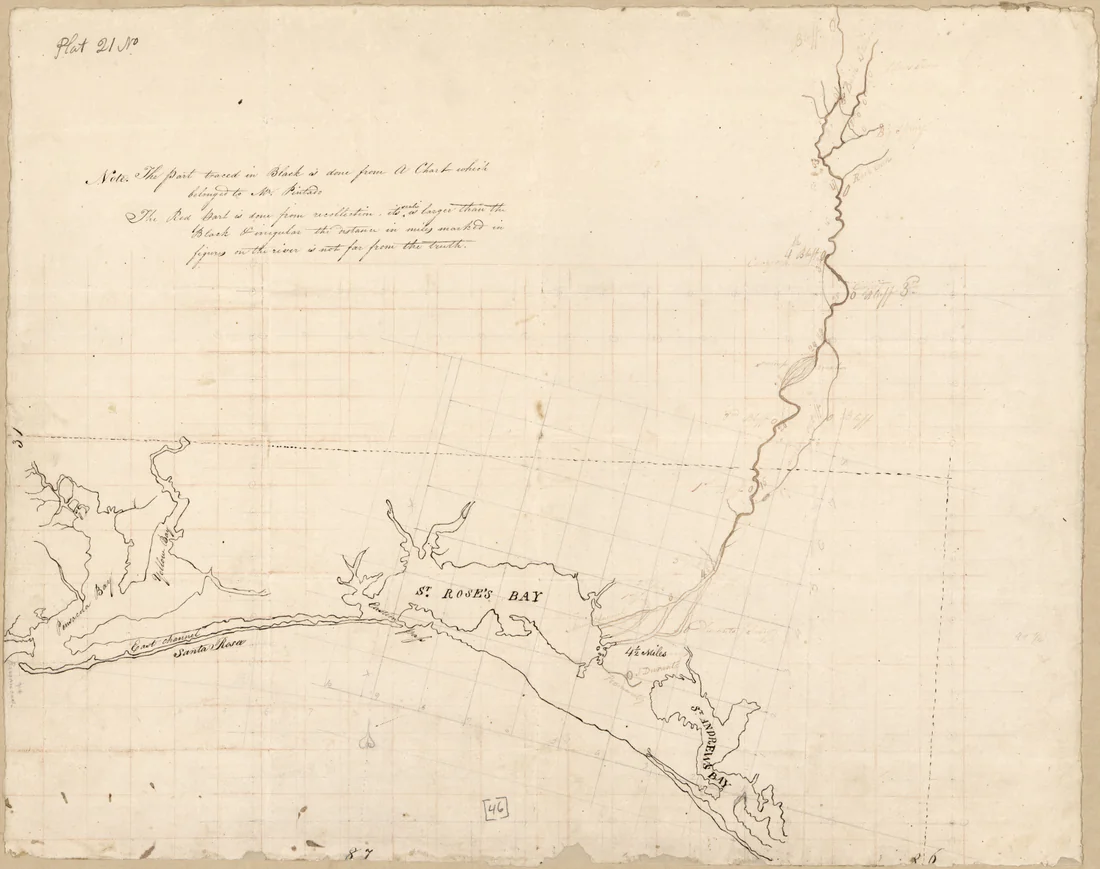
Spanish ships, early settlers and Red Fish Point
A Bay County brochure printed in 1915 said men from the expeditions of Miurelo visited St. Andrews Bay in 1516. Bay County's own history names the doomed voyage of Panfilo de Narvaez as the first account of Europeans in the area. It gives the year as 1529 in one place and says he landed at Tampa Bay in 1528 in another.
The 1915 brochure said people settled the area some time in the late 1700s. It said the land had passed under the flags of Spain, France, England and the United States. John Clark, a former governor of Georgia, built a home at the place later called Old Town St. Andrews. A post office for St. Andrew's Bay opened officially on October 23, 1845.
Jose Massalina, a free Black Spanish merchant sailor, jumped ship in 1836 at St. Joseph. He made a homestead at Red Fish Point, on land that is now part of Tyndall Air Force Base. In Georgia, Massalina bought an enslaved woman, who became his wife, and he asked about 40 Black families to settle with him. The county's timeline dates the start of the Red Fish Point community to 1835.
Sources: University of South Florida, Florida Center for Instructional Technology: Floripedia, Bay County, Florida (from the 1915 brochure Greeting from Bay County Florida); Bay County Board of County Commissioners: A Bit of History About Bay County (Annual Budget, Fiscal Year 2010-2011)
Next: Chapter 3, Civil War salt on St. Andrew Bay →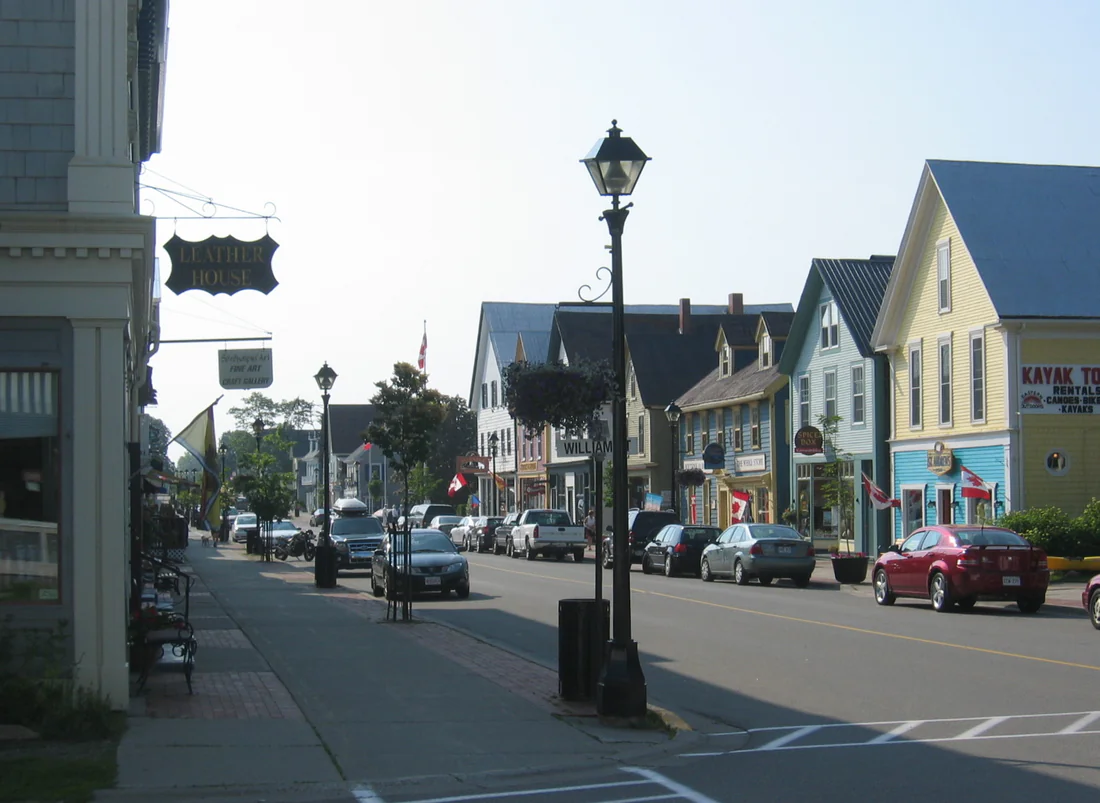
Civil War salt on St. Andrew Bay
During the Civil War, from 1861 to 1865, saltworks on St. Andrew Bay supplied Southern troops and citizens with salt, fish and cattle. Salt was needed to keep food from spoiling, and a bushel could sell for as much as $50. The salt came from wood-fired works around West Bay, East Bay, North Bay and Lake Powell. About 2,500 men, mostly from Alabama, Georgia and Florida, were excused from fighting so they could work there.
Acting Master W.R. Browne, who commanded the U.S. Restless, was told to start a series of attacks on the saltworks in August 1862. In December 1862, a ship from the blockading fleet destroyed the settlement at Old Town St. Andrews, the 1915 brochure said. Confederate soldiers under Captain Walter J. Robinson drove back a landing party of 11 Union sailors from the U.S.S. Roebuck on March 20, 1863. A 1961 state marker says two Union sailors were killed and six wounded. A later state marker counts six dead and three wounded.
More Union attacks came in December 1863, and the marker says the attacks destroyed more than 290 saltworks. The workers rebuilt them quickly, and the saltworks kept running until February 1865.
Sources: Florida Department of State, Florida Historical Markers: The St. Andrew Bay Saltworks; University of South Florida, Florida Center for Instructional Technology: Floripedia, Bay County, Florida (from the 1915 brochure Greeting from Bay County Florida); Florida Department of State, Florida Historical Markers: St. Andrew Skirmish (2000); Florida Department of State, Florida Historical Markers: St. Andrews Bay Skirmish (1961)
Next: Chapter 4, A mill town, a railroad and a city named for a canal →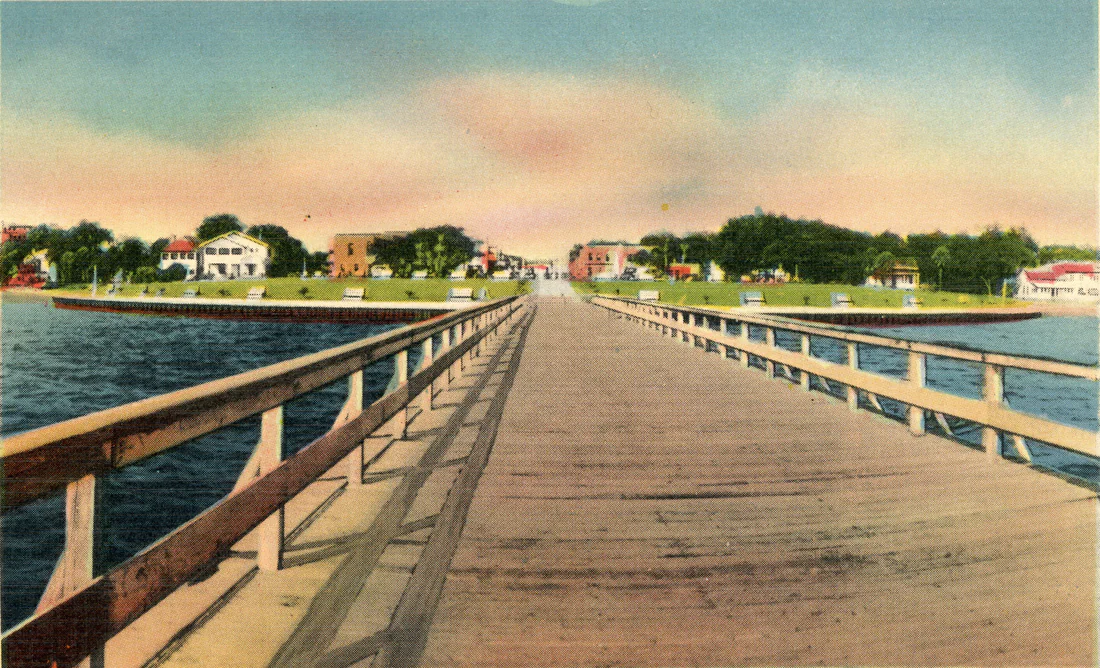
A mill town, a railroad and a city named for a canal
In Millville, Henry Bovis, a French Canadian lumberman, built his mill, the St. Andrews Lumber Co., on the upper end of Watson Bayou. Later it took the name German-American Lumber Co.
Glenda Walters, who heads the Bay County Historical Society, says Panama City's first well-known name was Park Place. Later it was called Harrison, for President Benjamin Harrison, because it got a post office in his time. George West, who had worked for a railroad in Chicago, came up with the name Panama City around 1905. The Panama Canal was being dug at the time, and the hope was that goods from the canal would come into a port here. Walters says that a ruler laid across a map between Chicago and Panama runs through the area.
In 1906, West and two partners, Robert Lee McKenzie and a man named Gay, started the Gulf Coast Development Company to sell the area as a shipping port for the canal. In 1908 the Atlanta & St. Andrews Bay Railway reached Panama City from Dothan, Alabama. Mills and naval stores businesses followed, and the 1915 brochure said the number of newcomers rose sharply. Panama City became an incorporated city on February 23, 1909, when 600 people lived there. By 1910, the county's history says, Millville was the largest town on the bay.
Sources: Bay County Board of County Commissioners: A Bit of History About Bay County (Annual Budget, Fiscal Year 2010-2011); WJHG: Panama City named after early 1900s "big dig" (August 6, 2020); The Florida Senate: SR 2794 (2009), A resolution recognizing and celebrating 2009 as Panama City's Centennial Year; University of South Florida, Florida Center for Instructional Technology: Floripedia, Bay County, Florida (from the 1915 brochure Greeting from Bay County Florida)
Next: Chapter 5, Union veterans settle Lynn Haven →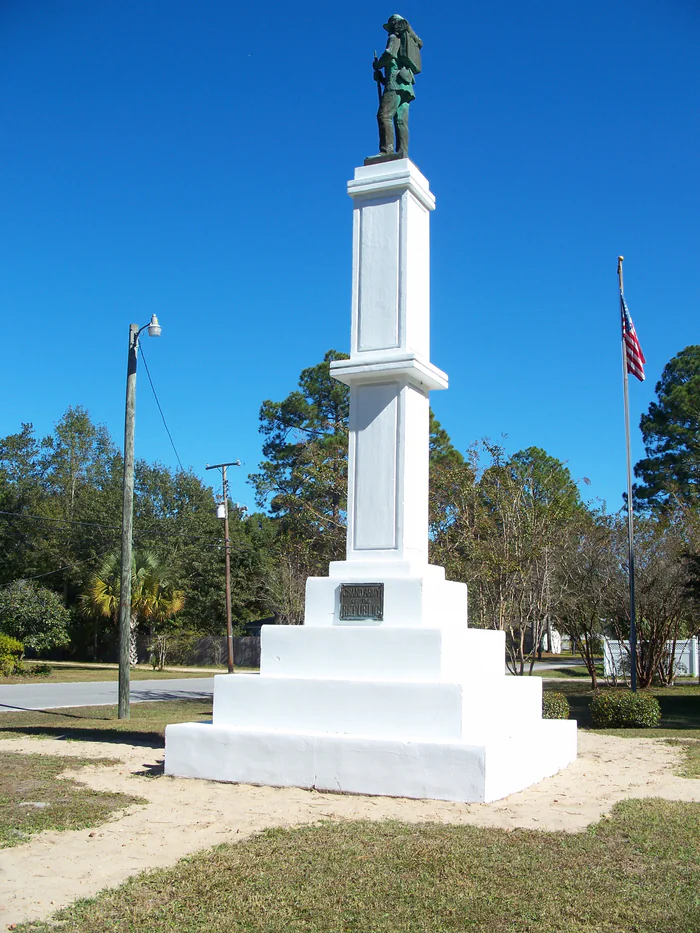
Union veterans settle Lynn Haven
In 1911, Samuel D. Yutzy, a Union veteran from Pennsylvania, built a big square two-story house in Lynn Haven. Lovinia Bates and her husband, L.E. Bates, came from Battle Creek, Michigan, in July 1912 as part of the move of Union veterans from the North. In 1913 Mrs. Bates proposed States' Clubs, and she was the Michigan Club's first president. The clubs helped the new settlers get to know one another and eased their homesickness.
Also in 1913, Lynn Haven's chapter of the Grand Army of the Republic began plans for a monument to the Union Army's fallen soldiers. Dr. William Krape, a veteran who was Lynn Haven's mayor in 1920, led the work. Much of the money came from the soldiers' own pension checks. The statue of a Union soldier stands 26 feet above the base and looks north toward home.
When it was done, it was hailed as the first monument of its kind this far south, the marker says. In 1956 its purpose was widened to honor American veterans of every war.
Sources: Historical Marker Database: Yutzy-Butchers House (Lynn Haven Heritage Committee marker); Historical Marker Database: The Bates Home (Lynn Haven Heritage Committee marker); Historical Marker Database: Union Soldier Monument (Lynn Haven Heritage Committee marker)
Next: Chapter 6, Bay County is created in 1913 →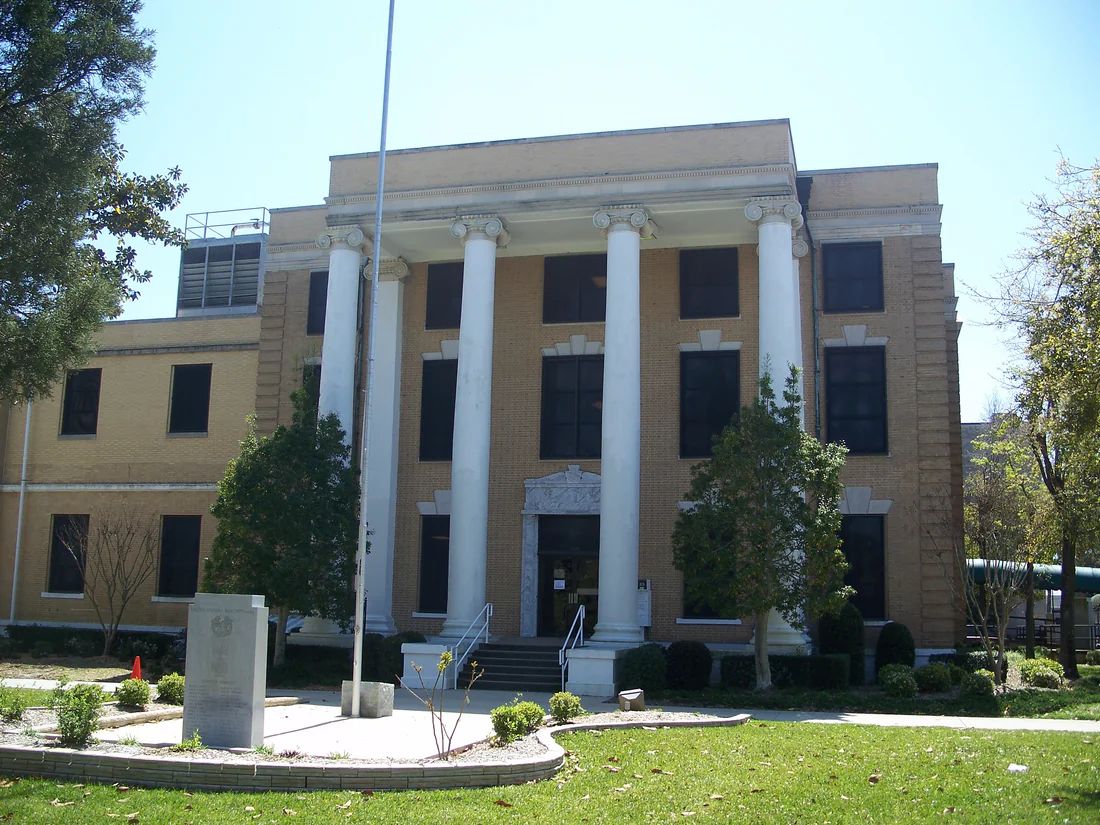
Bay County is created in 1913
Bay County was created on July 1, 1913, as the state's 49th county, the county's history says. The county says its land came from Washington, Calhoun and Walton counties, while the 1915 brochure names only Washington and Calhoun. It was named for St. Andrews Bay, which wraps around much of Panama City. The bill was sponsored by R. L. McKenzie in the state House and L. H. Howell in the state Senate. Panama City is the county seat.
The new county's first leaders met on July 10, 1913, in rooms above the Bank of Panama City. The courthouse cornerstone was laid in December 1914, and the building was dedicated in December 1915. In 1915 a county brochure counted 14 naval stores plants in Bay County, running 19 stills.
A fire badly damaged the courthouse on December 20, 1920, but its outer walls survived and it was rebuilt. On March 12, 1926, a state law merged St. Andrews, Millville and Panama City into one city named Panama City. Panama City's founder, George West, died that same year.
Sources: Bay County Board of County Commissioners: A Bit of History About Bay County (Annual Budget, Fiscal Year 2010-2011); University of South Florida, Florida Center for Instructional Technology: Floripedia, Bay County, Florida (from the 1915 brochure Greeting from Bay County Florida); The Florida Senate: SR 2794 (2009), A resolution recognizing and celebrating 2009 as Panama City's Centennial Year; WJHG: Panama City named after early 1900s "big dig" (August 6, 2020)
Next: Chapter 7, Rosenwald High School and Black education →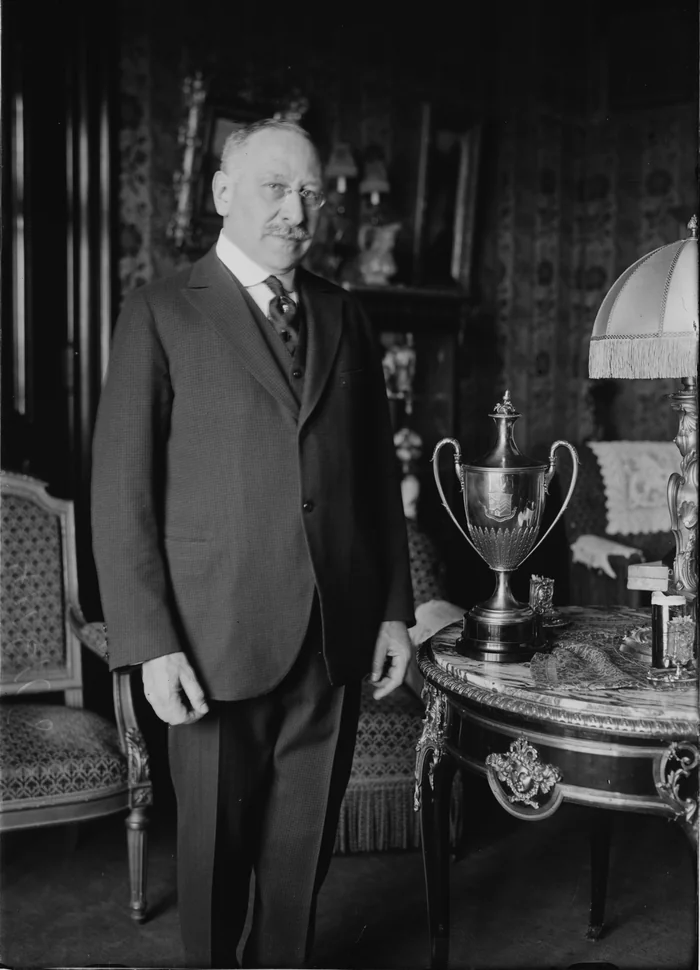
Rosenwald High School and Black education
In 1917, Julius Rosenwald, the chairman of Sears, Roebuck and Company, and his family set up the Rosenwald Fund. One of its biggest efforts helped build schools for Black children in rural parts of the South. In the mid-1920s, Panama City's Black community and the Bay County School Board teamed up to use the fund's help to build a school.
In the 1927-1928 budget year, they bought land on East 11th Street in the Shinetown neighborhood. The school opened as Panama City High School and served Panama City's Black community as both an elementary school and a high school. Its first class, three students, graduated in 1939. By then it had been renamed for Julius Rosenwald, so it would not be mixed up with Panama City High School, the white school.
Land for a new school was bought in 1950, and its new building was dedicated in 1951. Black students went to Rosenwald High School on the new campus from 1952 to 1967. Bay County began to desegregate its public schools in 1966. From 1967 to 2009 Rosenwald was a middle school, and then it became an alternative high school.
Sources: Florida Department of State, Florida Historical Markers: Rosenwald High School; WJHG: Rosenwald High School recognized as historic landmark (June 16, 2021)
Next: Chapter 8, Early beach days: Shell Island, Panama City Beach and Camp Helen →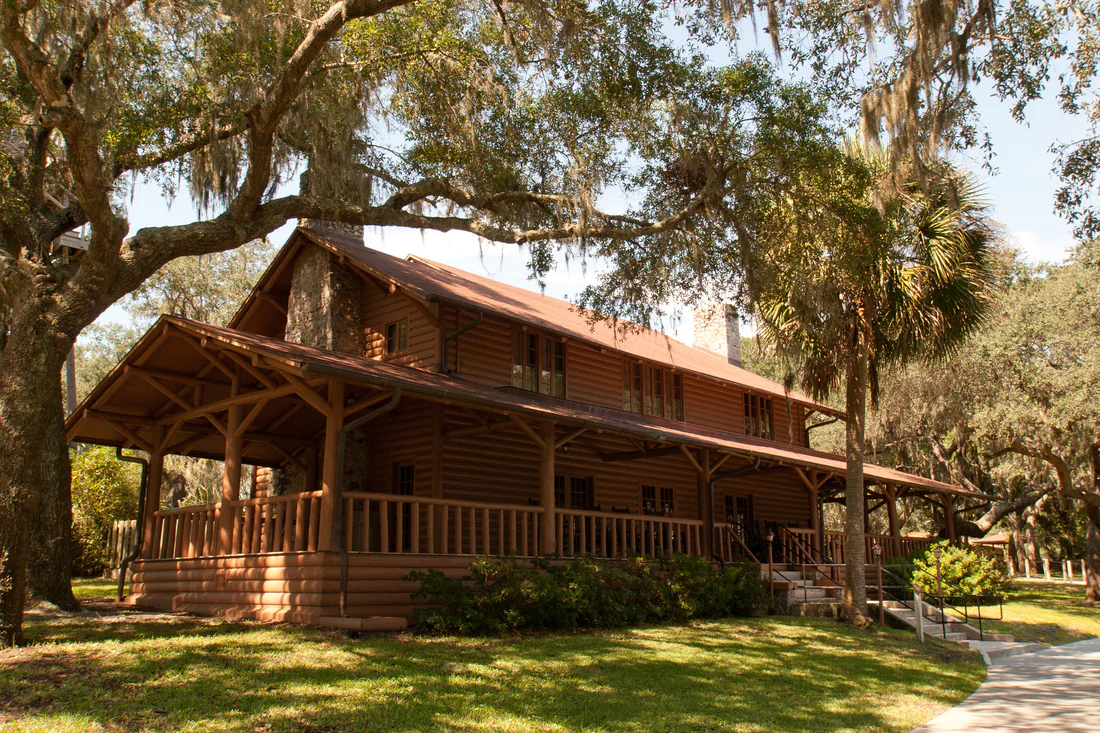
Early beach days: Shell Island, Panama City Beach and Camp Helen
A hurricane in 1929 wrecked the 26-foot boat of Theodore Tollofsen, a sailor born in Norway, and left it on Grand Lagoon's south shore. Known as Teddy the Hermit, he made a homestead there and stayed 25 years, until he died in 1954 at age 74. Shell Island began as Lands End Peninsula and became an island in the 1930s, after dredging opened the Gulf-Bay Pass.
On the Gulf beaches, Gideon Thomas owned 104 acres of beachfront in the 1930s, with a wooden pier that ran 1,000 feet into the Gulf. The Panama City Beach Chamber of Commerce marks May 2, 1936, as the day Panama City Beach officially opened for business. It says Thomas chose to build a community around tourism rather than farming.
In 1928 Robert E. Hicks bought 185 acres overlooking Phillips Inlet. Its lodge was finished in 1932, and the owners called the place Loch Lomond. In 1945, Avondale Mills, an Alabama cotton mill and fabric maker founded by B.B. Comer, bought the property as a vacation camp for its workers. The camp was named for Helen, the wife of Comer's son Fletcher. Avondale workers began vacationing at the new Camp Helen in 1946.
Sources: Florida State Parks: St. Andrews State Park, History; Emerald Coast Magazine: Postcards from Paradise (July 31, 2017); Panama City Beach Chamber of Commerce: PCB's 80th Anniversary Celebration; Florida State Parks: Camp Helen State Park, History and Nature (brochure); Florida State Parks: Camp Helen State Park, History
Next: Chapter 9, World War II: Tyndall Field, Liberty ships and the Navy →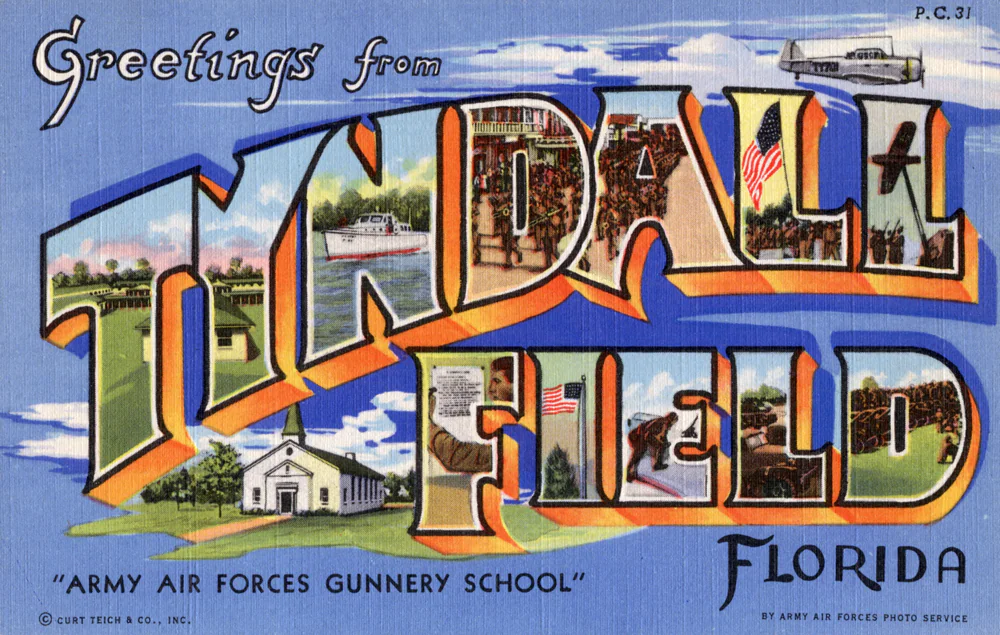
World War II: Tyndall Field, Liberty ships and the Navy
A site board chose East Peninsula for Flexible Gunnery School No. 9 in December 1940. The spot lay 12 miles to the southeast of Panama City. Mayor Harry Fannin of Panama City turned over the first shovelful of sand at the groundbreaking on May 6, 1941. The base was named for Lieutenant Francis B. Tyndall of Sewall Point, Florida, a fighter pilot credited with four victories in World War I. The War Department gave the new post the name Tyndall Field on June 13, 1941.
In 1942 the War Department chose the site above the new pass, now part of St. Andrews State Park, for a temporary harbor defense post with two 155mm guns. The United States Maritime Commission picked the J. A. Jones Construction Co. to set up and run a Liberty ship yard in Panama City. The Wainwright Shipyard, named for General Jonathan Wainwright, turned out 108 ships on its five slipways between 1943 and the end of the war. As many as 15,000 people worked there at one time, and Panama City grew from 20,000 people in 1940 to as many as 60,000 during the war.
On July 20, 1945, the Navy set up the U.S. Navy Mine Countermeasures Station in Panama City. It began with a staff of ten officers and three civilians.
Sources: Tyndall Air Force Base: Welcome to Tyndall Air Force Base (About); Tyndall Air Force Base: Tyndall celebrates 80 years of air power; Florida State Parks: St. Andrews State Park, History; Museum of Florida History: Wainwright Shipyard; Naval Sea Systems Command: NSWC Panama City, Who We Are; U.S. Navy: A Look Back at the Command's Historical Beginnings (October 14, 2015)
Next: Chapter 10, A state park, the Gideon case and the Miracle Strip →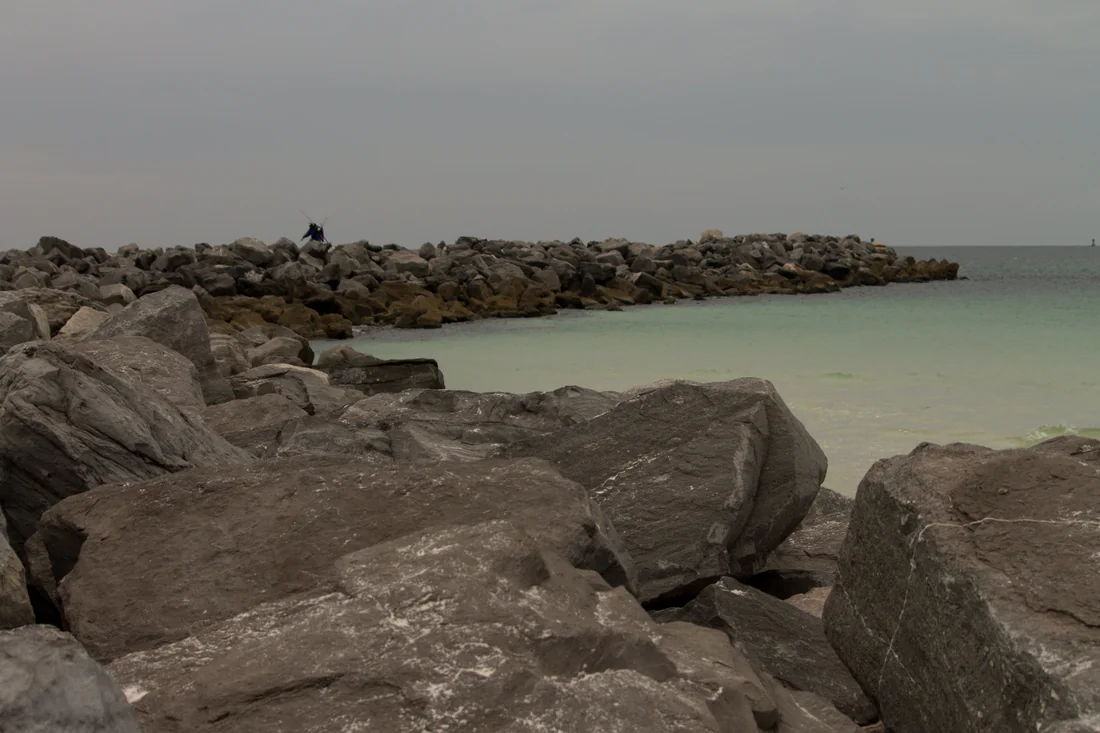
A state park, the Gideon case and the Miracle Strip
St. Andrews State Park began in 1947 with 302.87 acres along the Gulf shore, bought from the federal government for $2.50 an acre. Getting there became practical once the nearby Grand Lagoon Bridge was repaired, and the park opened to visitors in 1951.
Clarence Earl Gideon was tried for burglary at the Bay County Courthouse in 1961. In 1963 the U.S. Supreme Court ruled in his case, Gideon v. Wainwright. The court held that anyone charged with a serious crime who is too poor to pay for a lawyer must be given one. Visitors from across the country came to the Miracle Strip Amusement Park at Panama City Beach from 1963 to 2003. Emerald Coast Magazine says its Starliner was the first roller coaster in Florida.
In 1970 the City of Panama City Beach was formed by joining Panama City Beach, West Panama City Beach, Edgewater Beach Resort and Long Beach Resort. In 1980 the Navy moved its Naval Diving and Salvage Training Center from the Washington Navy Yard to the banks of Alligator Bayou, off St. Andrew Bay. On March 6, 1982, the Institute of Diving opened the International Diving Museum in Panama City, with the restored SEALAB I habitat as its featured exhibit. In 1983 Shipwreck Island Waterpark opened across the street from the Miracle Strip.
Sources: Florida State Parks: St. Andrews State Park, History; Bay County Board of County Commissioners: A Bit of History About Bay County (Annual Budget, Fiscal Year 2010-2011); Emerald Coast Magazine: Postcards from Paradise (July 31, 2017); City of Panama City Beach: About Us; Naval Sea Systems Command: Faceplate, Summer 1982 (Volume 13, No. 2)
Next: Chapter 11, Since 1990: Camp Helen State Park, F-35s at Tyndall and markers in Glenwood →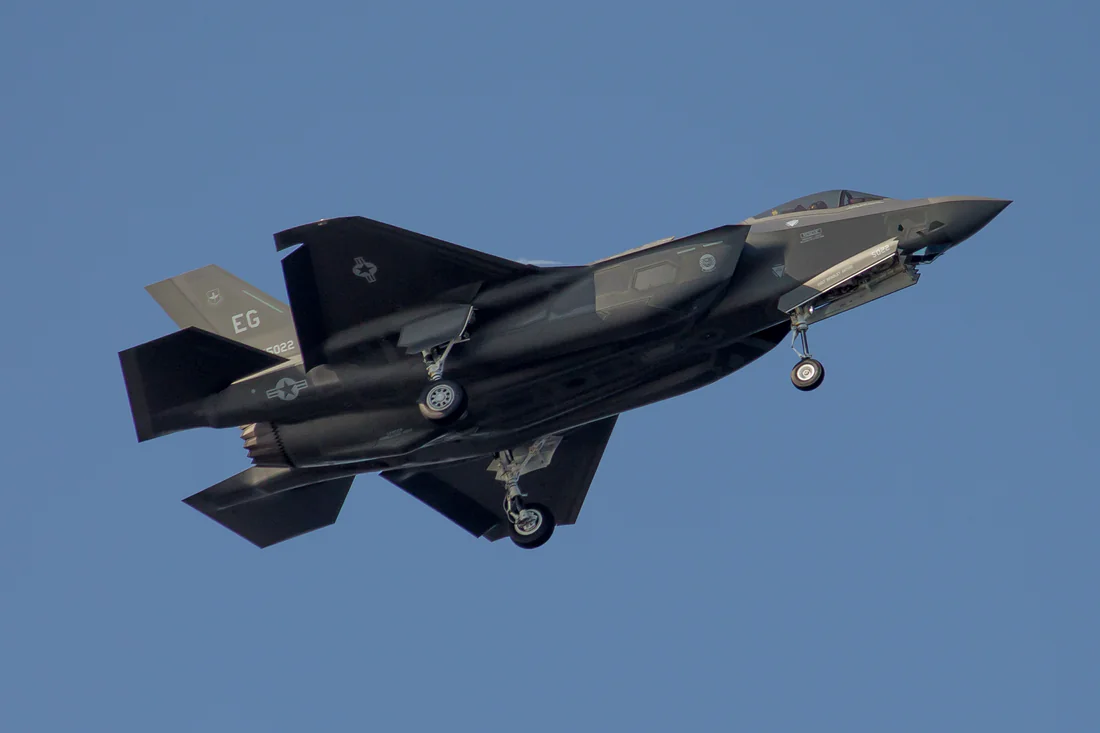
Since 1990: Camp Helen State Park, F-35s at Tyndall and markers in Glenwood
The state of Florida bought Camp Helen in 1996. Camp Helen State Park opened to the public in 1997. On October 10, 2018, Hurricane Michael came ashore near Tyndall Air Force Base as a Category 5 storm with top sustained winds of 161 mph. Between Mexico Beach and Indian Pass, the storm surge reached 9 to 14 feet.
In June 2021, Rosenwald High School was named a historic landmark after four years of work by its alumni association. In July 2023, visitors got into the Man in the Sea Museum for free to mark 59 years since SEALAB I. On August 1, 2023, the first three F-35 fighter jets landed at Tyndall, and a fourth arrived on August 3.
At a ceremony on July 13, 2024, Panama City unveiled five markers in Glenwood honoring Black-owned businesses. Many of those businesses closed when Martin Luther King Jr. Boulevard, once called Cove Boulevard, was widened in the mid-1990s. Barnes Cleaners, Charlie's Time and Grady's One Stop Drive-In were among those honored, bringing the total in Glenwood to ten markers. In September 2024, six more markers were unveiled, among them Wilson Bros. Barbershop and Lady Ethel Beauty College.
Sources: Florida State Parks: Camp Helen State Park, History; National Weather Service Tallahassee: Hurricane Michael 2018; WJHG: Rosenwald High School recognized as historic landmark (June 16, 2021); WMBB News 13 (mypanhandle.com): Man in the Sea Museum celebrates 59th anniversary of SEALAB I (July 20, 2023); Tyndall Air Force Base: Long awaited F-35 aircraft touch down at Tyndall; Air & Space Forces Magazine: Tyndall Finally Has Its First Four F-35s. What Happens Next? (August 4, 2023); WKGC Public Media: New Glenwood Historical Markers (July 16, 2024); WMBB News 13 (mypanhandle.com): 6 new Glenwood historical markers commemorate black-owned businesses (September 14, 2024)
Next: the whole story, in dates →The whole story, in dates
People of the Deptford culture live at today's Camp Helen State Park.
A 1915 county brochure says men of the Miurelo expeditions visit St. Andrews Bay.
Jose Massalina jumps ship at St. Joseph and homesteads at Red Fish Point.
The St. Andrew's Bay post office officially opens.
The St. Andrew Bay Saltworks supply the South with salt, fish and cattle.
A ship from the blockading fleet destroys Old Town St. Andrews.
Confederate soldiers drive back a landing party from the U.S.S. Roebuck.
More Union attacks strike the saltworks.
George West comes up with the name Panama City.
The Atlanta & St. Andrews Bay Railway reaches Panama City from Dothan, Alabama.
Panama City is incorporated, with 600 people.
Union veteran Samuel D. Yutzy builds his house in Lynn Haven.
Lynn Haven's Union veterans begin plans for a soldiers' monument.
Bay County is created, named for St. Andrews Bay.
The new courthouse is dedicated.
St. Andrews, Millville and Panama City are merged into one city.
The school board and Panama City's Black community buy land for a Rosenwald school.
A hurricane wrecks the boat of Theodore Tollofsen, later known as Teddy the Hermit.
Panama City Beach officially opens for business, by the chamber's count.
Rosenwald's first class of three students graduates.
Ground is broken for the gunnery school on East Peninsula.
The War Department names the new post Tyndall Field.
The Wainwright Shipyard turns out 108 ships.
Avondale Mills buys the Hicks property as a vacation camp.
The U.S. Navy Mine Countermeasures Station is set up in Panama City.
St. Andrews State Park opens to visitors.
Clarence Earl Gideon is tried for burglary at the Bay County Courthouse.
The U.S. Supreme Court rules in Gideon v. Wainwright.
The Miracle Strip Amusement Park draws visitors from across the country.
Bay County begins to desegregate its public schools.
Four beach communities join to form the City of Panama City Beach.
The International Diving Museum opens with SEALAB I on display.
Camp Helen State Park opens to the public.
Hurricane Michael comes ashore near Tyndall Air Force Base as a Category 5 storm.
Rosenwald High School is named a historic landmark.
The first three F-35 fighter jets land at Tyndall.
Panama City unveils five markers in Glenwood.
Six more Glenwood markers are unveiled.
Where you can still see it
 01
01Shell Island
Goes with: Early beach days: Shell Island, Panama City Beach and Camp Helen
Open the place page →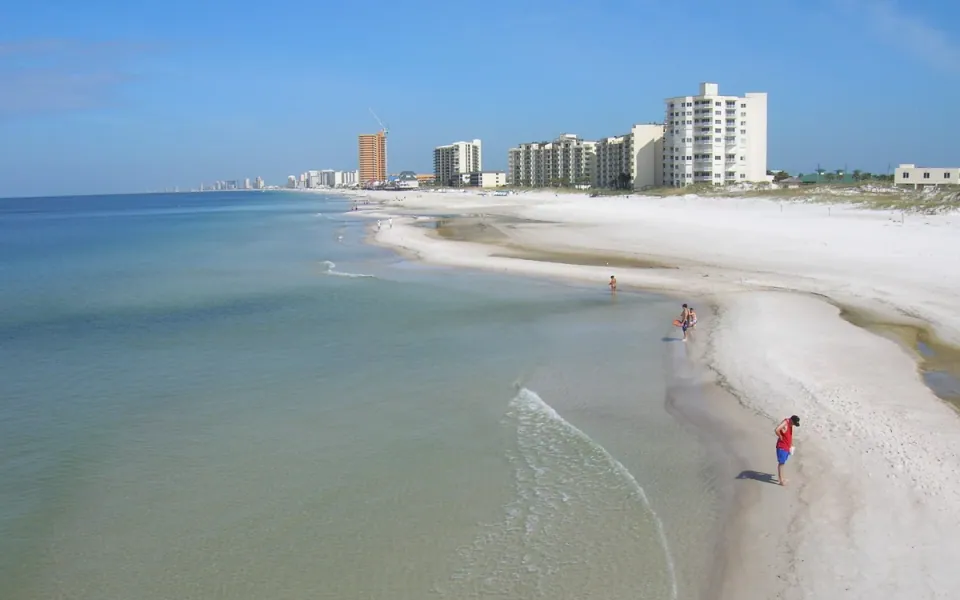 02
02Panama City Beach
Goes with: Early beach days: Shell Island, Panama City Beach and Camp Helen
Open the place page →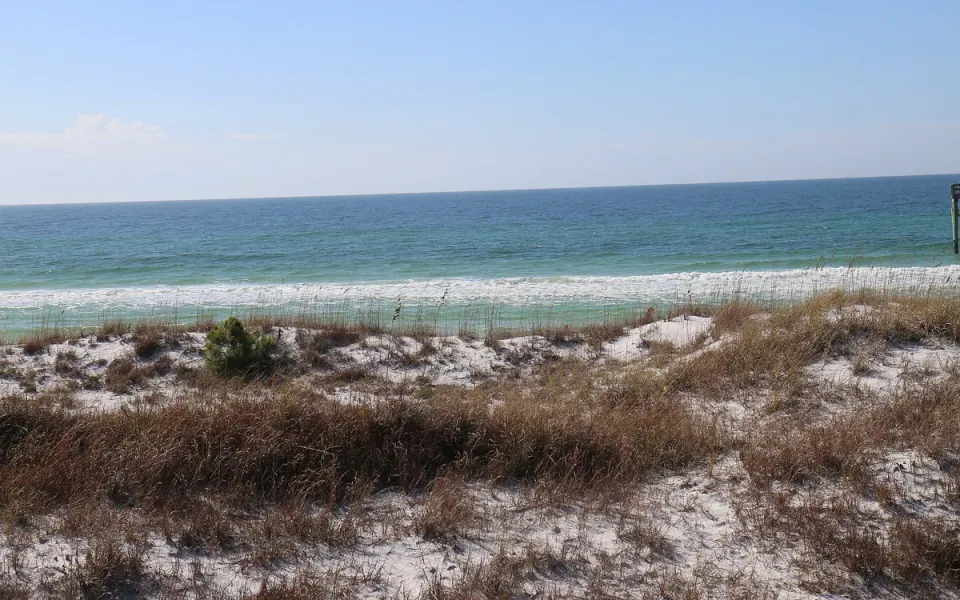 03
03St. Andrews State Park
Goes with: A state park, the Gideon case and the Miracle Strip
Open the place page →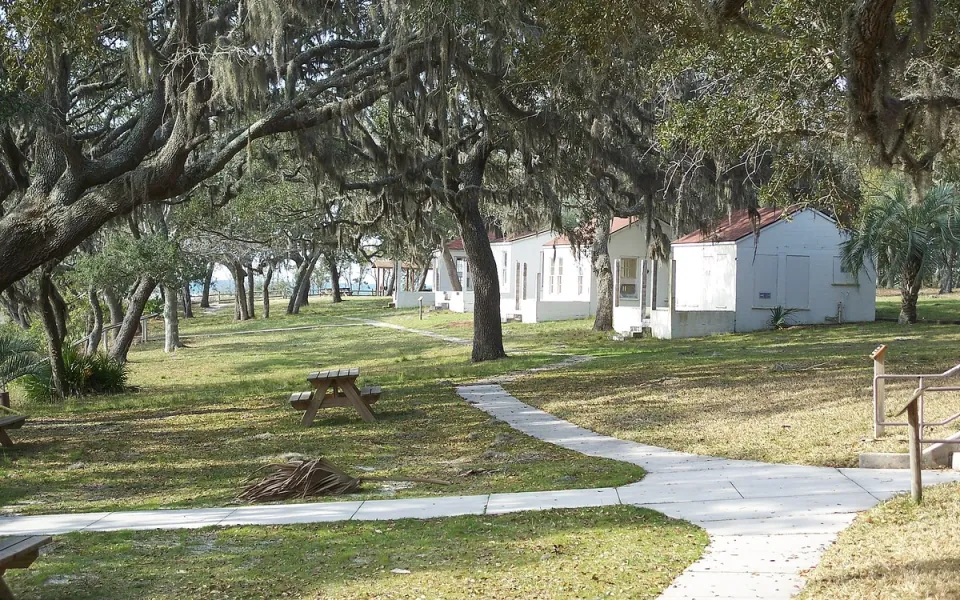 04
04Camp Helen State Park
Goes with: Since 1990: Camp Helen State Park, F-35s at Tyndall and markers in Glenwood
Open the place page →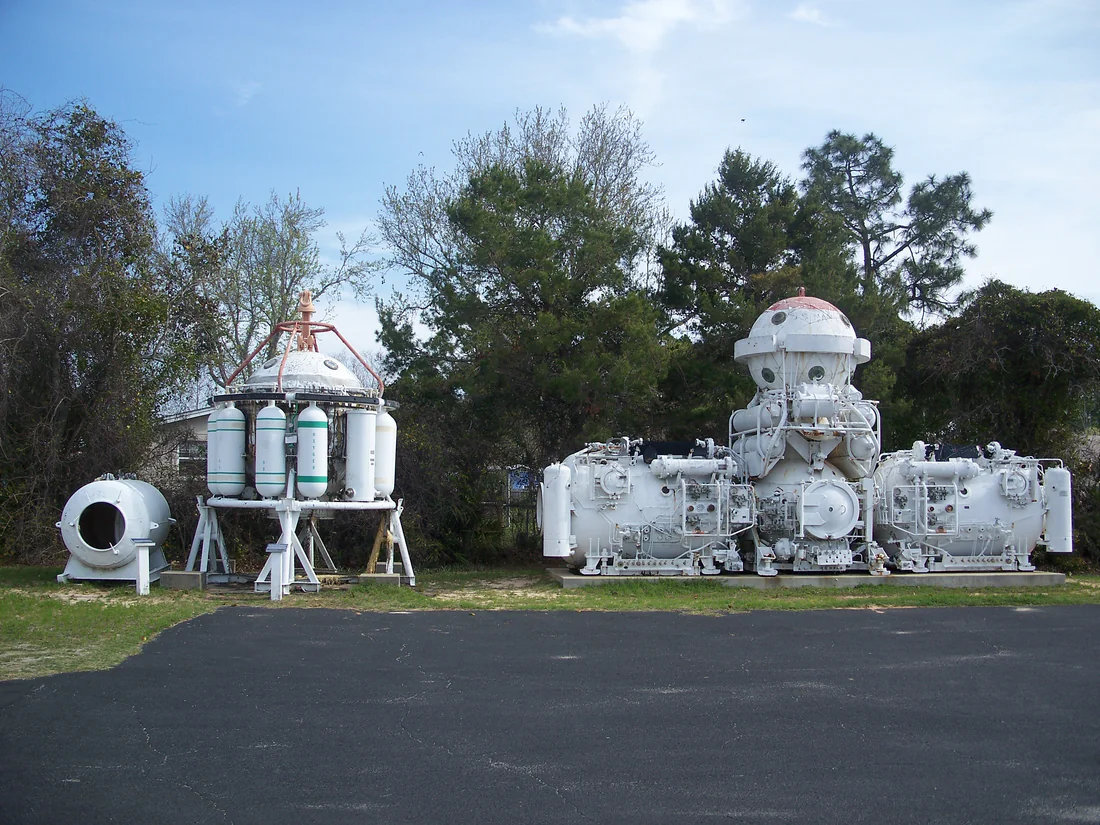 05
05Man in the Sea Museum
Goes with: Since 1990: Camp Helen State Park, F-35s at Tyndall and markers in Glenwood
Open the place page →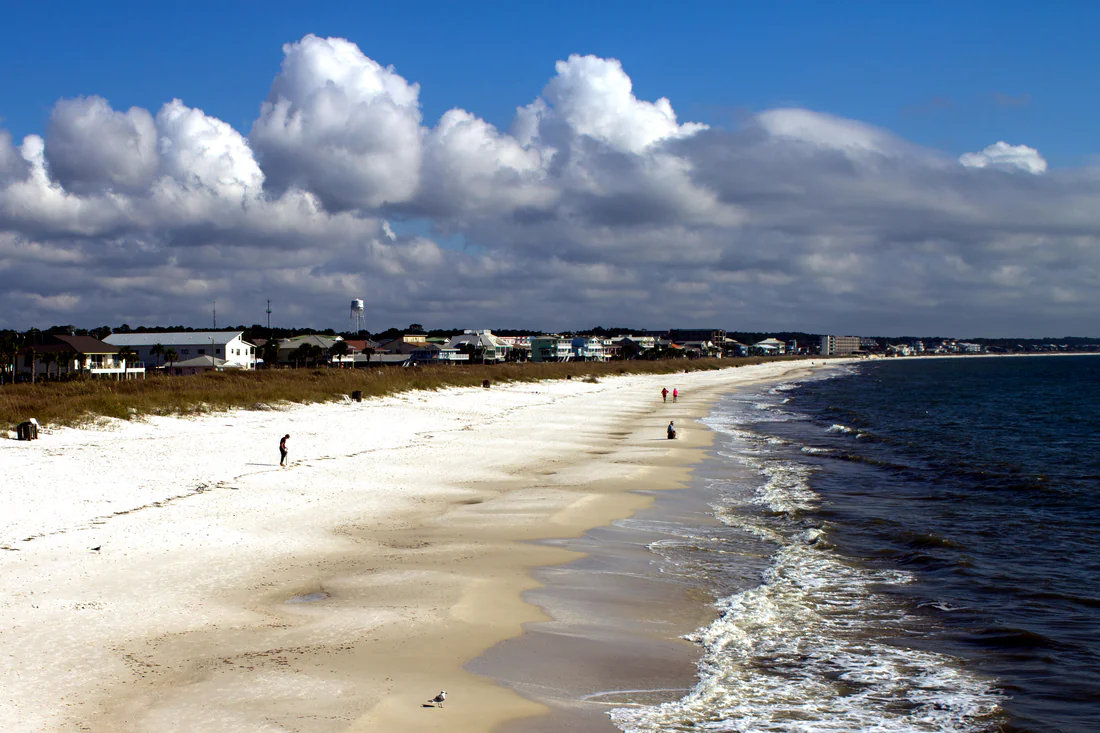 06
06Mexico Beach
Goes with: Since 1990: Camp Helen State Park, F-35s at Tyndall and markers in Glenwood
Open the beach page →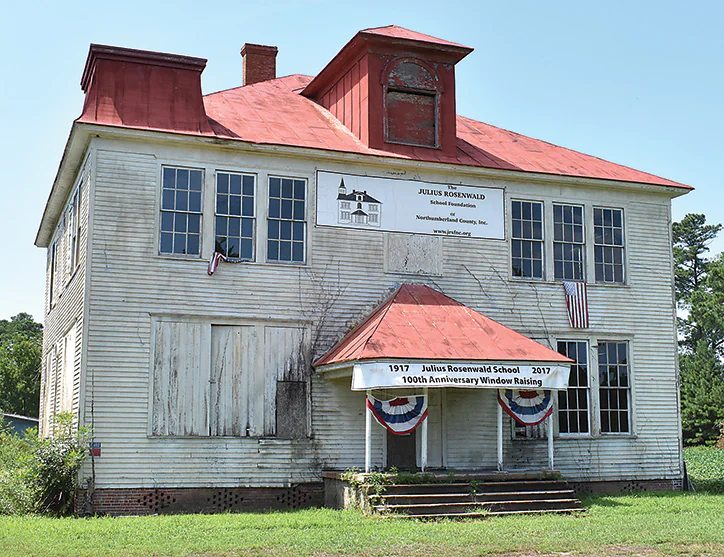 07
07Rosenwald High School
Goes with: Rosenwald High School and Black education
Rosenwald High School marker, Florida Department of State →Questions people ask
When was Bay County created?
Bay County was created on July 1, 1913, as the state's 49th county.
Chapter 6 →What was Bay County named for?
Bay County was named for St. Andrews Bay, which wraps around much of Panama City.
Chapter 6 →How did Panama City get its name?
George West came up with the name Panama City around 1905, while the Panama Canal was being dug, in the hope that goods from the canal would come into a port there.
Chapter 4 →How did Tyndall Air Force Base begin?
It began as Flexible Gunnery School No. 9 on East Peninsula, and the War Department named it Tyndall Field on June 13, 1941.
Chapter 9 →What does Bay County have to do with Gideon v. Wainwright?
Clarence Earl Gideon was tried for burglary at the Bay County Courthouse in 1961, and the U.S. Supreme Court ruled in his case in 1963.
Chapter 10 →Where this comes from.
Last updated October 17, 2026.
- Bay County Board of County Commissioners: A Bit of History About Bay County (Annual Budget, Fiscal Year 2010-2011) ↗ Read October 16, 2026
- University of South Florida, Florida Center for Instructional Technology: Floripedia, Bay County, Florida (from the 1915 brochure Greeting from Bay County Florida) ↗ Read October 16, 2026
- City of Panama City Beach: Area Information ↗ Read October 16, 2026
- City of Panama City Beach: About Us ↗ Read October 16, 2026
- Florida State Parks: Camp Helen State Park, History ↗ Read October 16, 2026
- Florida State Parks: Camp Helen State Park, History and Nature (brochure) ↗ Read October 16, 2026
- Florida State Parks: St. Andrews State Park, History ↗ Read October 16, 2026
- WMBB News 13 (mypanhandle.com): Panhandle Residents Worry About Losing Florida's History ↗ Read October 16, 2026
- Florida Department of State, Florida Historical Markers: The St. Andrew Bay Saltworks ↗ Read October 16, 2026
- Florida Department of State, Florida Historical Markers: St. Andrews Bay Skirmish (1961) ↗ Read October 16, 2026
- Florida Department of State, Florida Historical Markers: St. Andrew Skirmish (2000) ↗ Read October 16, 2026
- WJHG: Panama City named after early 1900s "big dig" (August 6, 2020) ↗ Read October 16, 2026
- The Florida Senate: SR 2794 (2009), A resolution recognizing and celebrating 2009 as Panama City's Centennial Year ↗ Read October 16, 2026
- Historical Marker Database: Yutzy-Butchers House (Lynn Haven Heritage Committee marker) ↗ Read October 16, 2026
- Historical Marker Database: The Bates Home (Lynn Haven Heritage Committee marker) ↗ Read October 16, 2026
- Historical Marker Database: Union Soldier Monument (Lynn Haven Heritage Committee marker) ↗ Read October 16, 2026
- Florida Department of State, Florida Historical Markers: Rosenwald High School ↗ Read October 16, 2026
- Emerald Coast Magazine: Postcards from Paradise (July 31, 2017) ↗ Read October 16, 2026
- Panama City Beach Chamber of Commerce: PCB's 80th Anniversary Celebration ↗ Read October 16, 2026
- Tyndall Air Force Base: Welcome to Tyndall Air Force Base (About) ↗ Read October 16, 2026
- Tyndall Air Force Base: Tyndall celebrates 80 years of air power ↗ Read October 16, 2026
- Museum of Florida History: Wainwright Shipyard ↗ Read October 16, 2026
- Naval Sea Systems Command: NSWC Panama City, Who We Are ↗ Read October 16, 2026
- U.S. Navy: A Look Back at the Command's Historical Beginnings (October 14, 2015) ↗ Read October 16, 2026
- Naval Sea Systems Command: Faceplate, Summer 1982 (Volume 13, No. 2) ↗ Read October 16, 2026
- National Weather Service Tallahassee: Hurricane Michael 2018 ↗ Read October 16, 2026
- WJHG: Rosenwald High School recognized as historic landmark (June 16, 2021) ↗ Read October 16, 2026
- WMBB News 13 (mypanhandle.com): Man in the Sea Museum celebrates 59th anniversary of SEALAB I (July 20, 2023) ↗ Read October 16, 2026
- Tyndall Air Force Base: Long awaited F-35 aircraft touch down at Tyndall ↗ Read October 16, 2026
- Air & Space Forces Magazine: Tyndall Finally Has Its First Four F-35s. What Happens Next? (August 4, 2023) ↗ Read October 16, 2026
- WKGC Public Media: New Glenwood Historical Markers (July 16, 2024) ↗ Read October 16, 2026
- WMBB News 13 (mypanhandle.com): 6 new Glenwood historical markers commemorate black-owned businesses (September 14, 2024) ↗ Read October 16, 2026