Artifacts from a shell mound at Jupiter Inlet have been dated to between about 5000 and 500 BC. Palm Beach is named for coconut palms planted from the coconuts of the Providencia, a ship that wrecked near shore in 1878. The Town of Palm Beach says the pioneer era ended when Henry Flagler's Royal Poinciana Hotel opened in 1894.
This page tells the story in order, from the first people to the arts center, ballpark, museum and trains of recent years, then lists places in the county where you can still see it. The sources for each part are named at the end of that part, and all of them are listed at the bottom of the page.
The first people
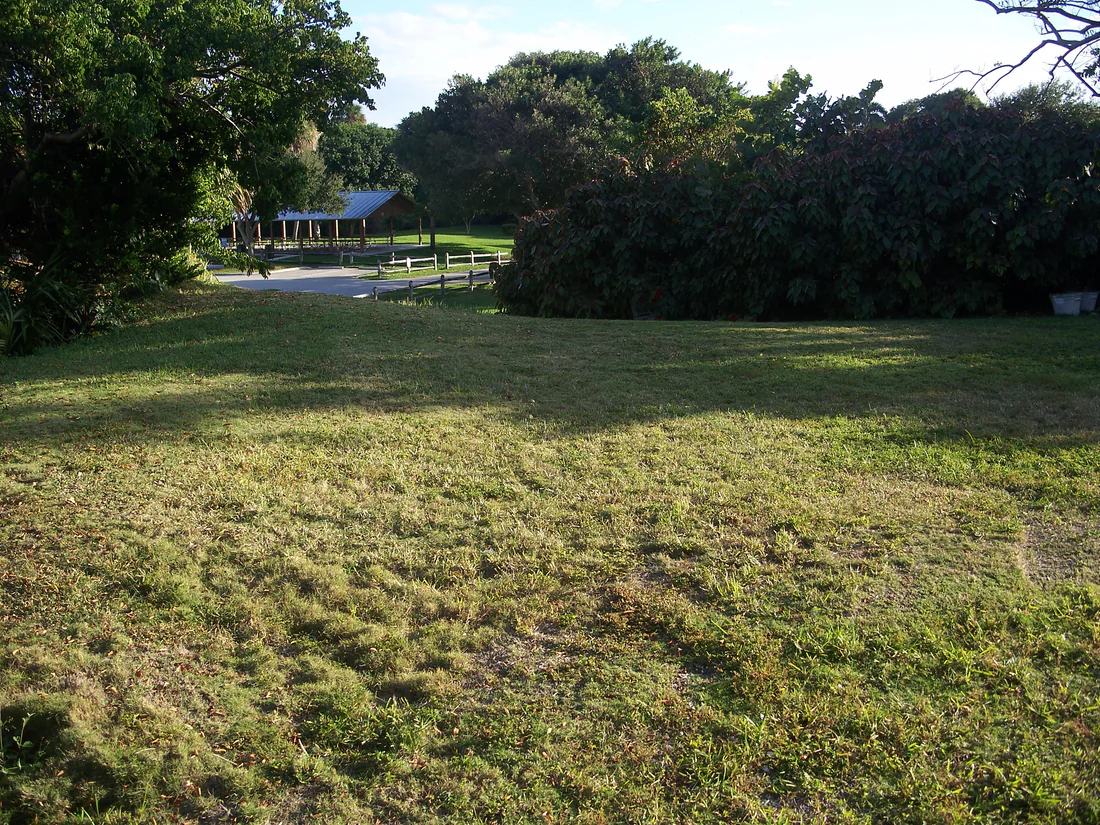
The first people were living in what is now Florida by roughly 12,000 years ago. Jobe and Jeaga were the names the Spanish gave to the people of what is now northern Palm Beach County. The Guacata and Mayaimi, two small tribes, lived along the shore of Lake Okeechobee. The Jeaga and Jobe who lived in the area of the present county numbered about 2,000.
Rather than farm, the Jeaga hunted deer and raccoon and caught sharks, fish and shellfish. They caught large sea turtles that came up on the beach to lay eggs, and they gathered roots, palmetto berries and sea grapes. Shells thrown away after meals of shellfish built up into mounds. Artifacts taken from the Jeaga shell mound at Jupiter Inlet are dated to between about 5000 and 500 BC. A section of the mound is still there in DuBois Park, across from the Jupiter Inlet Lighthouse.
Sources: Historical Society of Palm Beach County: Native Americans in Palm Beach County; Historical Society of Palm Beach County: Early Tribes; Historical Society of Palm Beach County: Jeaga and Jobe
Next: Chapter 2, Spanish sails and an English shipwreck →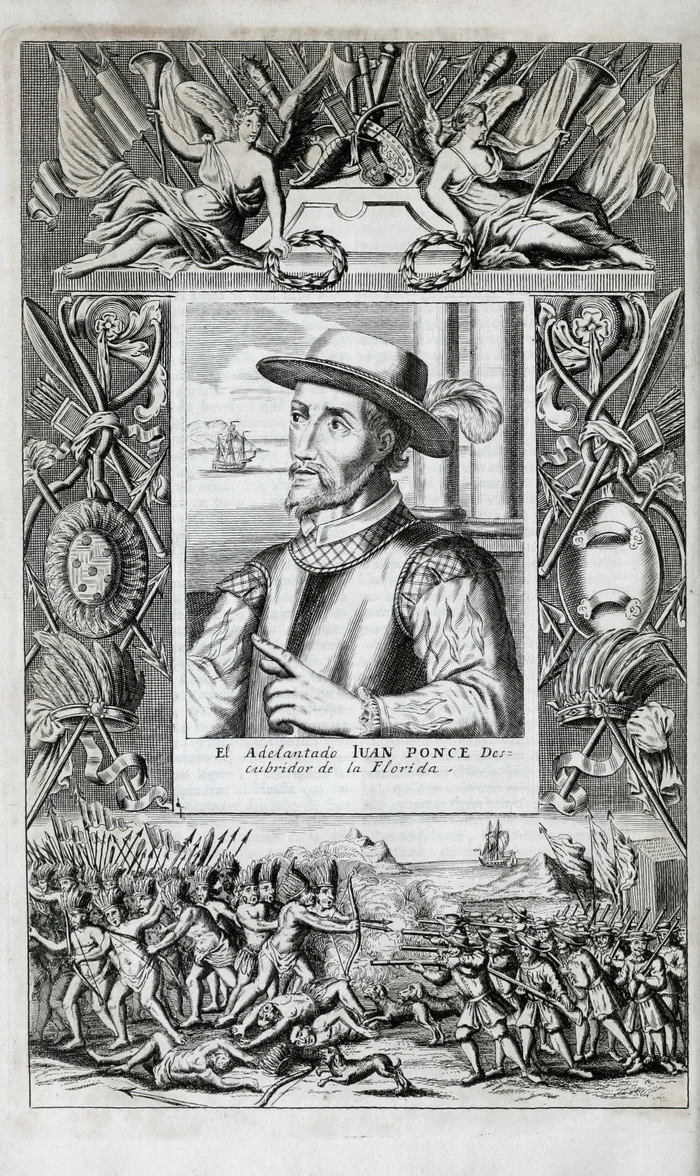
Spanish sails and an English shipwreck
Spanish ships first showed up along the Jeaga coast in the early 1500s. Ponce de León set out on March 3, 1513, and on his way south he sailed past Jupiter Inlet. From the ship's log, the Historical Society of Palm Beach County concludes that he likely gave the river at Jupiter Inlet the name Rio de la Cruz, or River of the Cross.
The Reformation, an English ship, was wrecked in 1696 a little north of where Jupiter stands today. Its survivors, among them Jonathan Dickinson and his family, were taken captive by the Jeaga. Dickinson's account says his captors lived in wigwam-style houses on a large shell mound above Jupiter Inlet.
The early tribes had disappeared within 250 years after Juan Ponce de León explored the Florida coast. Most died of diseases from Europe that their bodies could not resist, and some were enslaved or killed in war.
Sources: Historical Society of Palm Beach County: Jeaga and Jobe; Historical Society of Palm Beach County: Native Americans in Palm Beach County; Historical Society of Palm Beach County: Early Tribes
Next: Chapter 3, War on the Loxahatchee →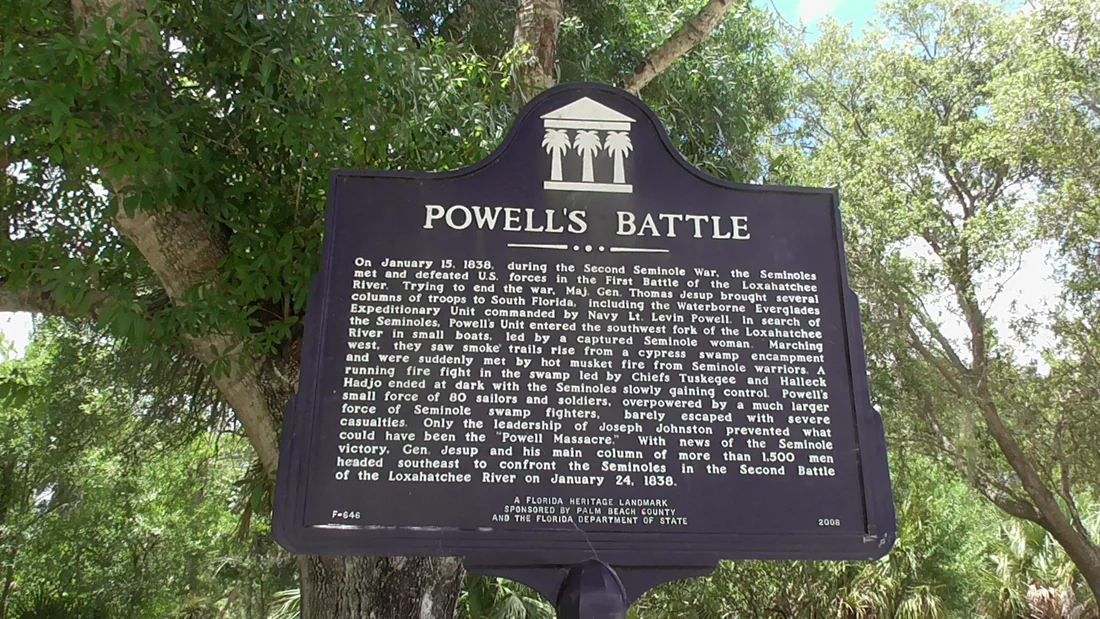
War on the Loxahatchee
The United States and the Seminoles went to war three times. On January 15, 1838, in the Second Seminole War, Seminole warriors beat a U.S. force at the first battle on the Loxahatchee River. Navy Lt. Levin Powell was in command, and his force barely got away. Maj. Gen. Thomas Jesup marched 1,500 men to the Loxahatchee River's headwaters nine days later, on January 24, 1838.
The state marker for this battle calls Jesup's opponents Red and Black Seminoles. The Seminoles shot from a dense hammock on high ground, and Jesup was hit in the face. Col. William Harney's dragoons moved around the Seminoles' flank, and the battle ended as the Seminoles fled into the Everglades. Seven soldiers died in the fighting and 31 were wounded, and Seminole losses are not known.
In the view of the Historical Society of Palm Beach County, these two battles brought an end to organized Seminole resistance in the Second Seminole War. Once the second battle was over, Jesup's soldiers built Fort Jupiter where a point of land sticks out into the Loxahatchee River. Fort Jupiter was shut in 1842, put back in use in the 1850s for the Third Seminole War, then shut for the last time when that war ended. Billy Bowlegs surrendered in 1858 and moved with his Seminole band to Indian Territory. Today's Florida Seminoles and Miccosukees descend from those who would not sign a treaty or surrender.
Sources: Historical Society of Palm Beach County: Native Americans in Palm Beach County; Florida Department of State: Powell's Battle (historical marker); Florida Department of State: Jesup's Battle January 24, 1838 (historical marker); Historical Society of Palm Beach County: The 2nd Seminole War
Next: Chapter 4, The lighthouse and the pioneers →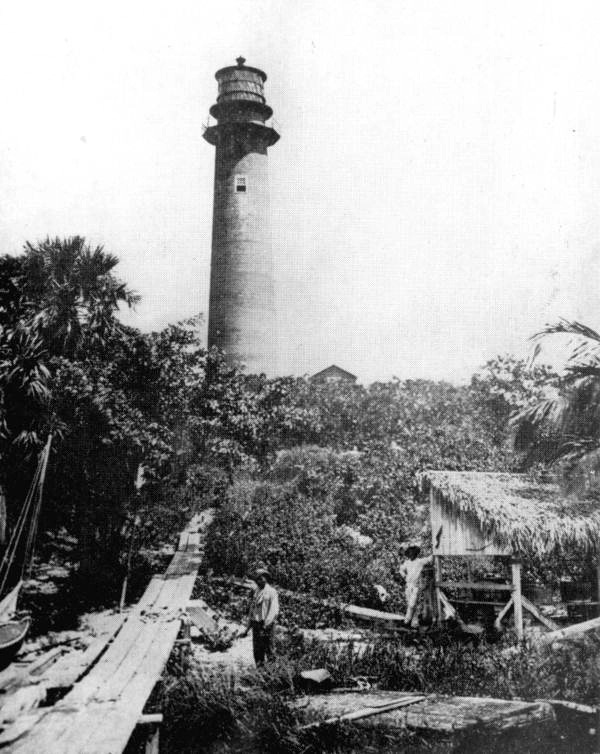
The lighthouse and the pioneers
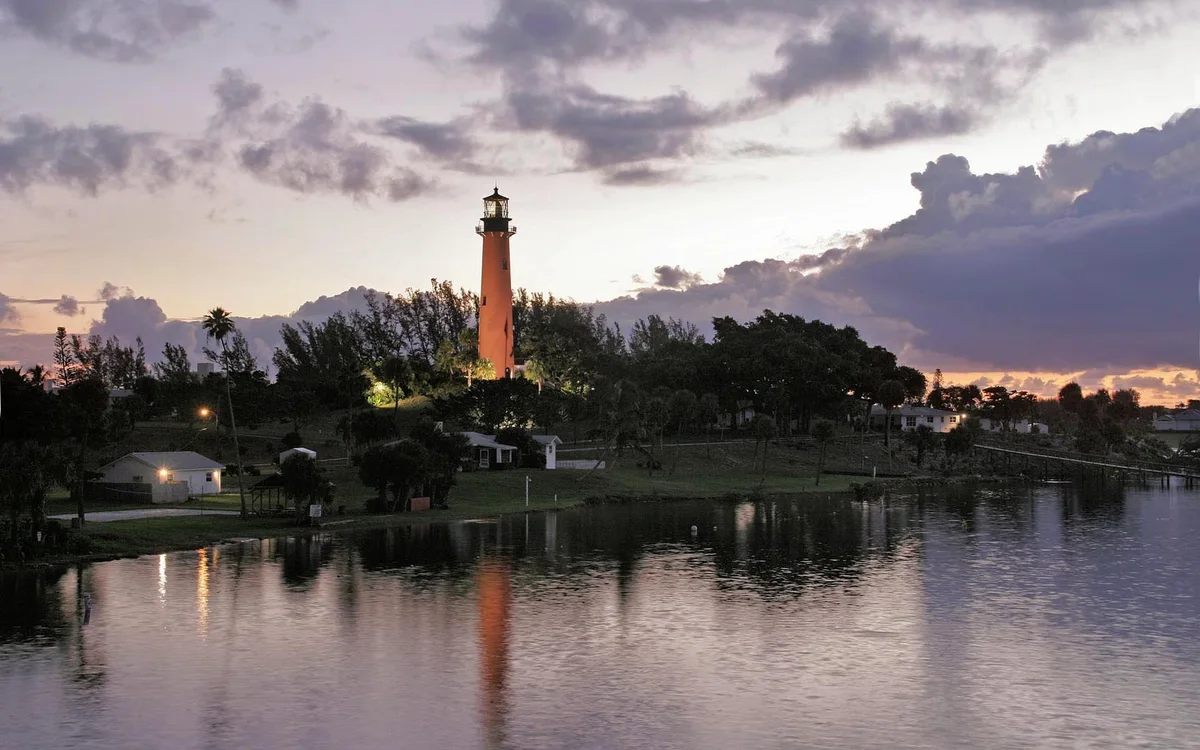
The site and original design of the Jupiter Inlet Lighthouse were the work of Lt. George Gordon Meade, an officer in the U.S. Army Corps of Topographic Engineers. In late 1855 the first crew of workers was sent, but the start of the Third Seminole War made them go back home right away. Construction started in January 1859, and on July 10, 1860, the 108-foot tower was officially lit. When the Civil War began, Augustus Lang, the assistant keeper, and other local people who sided with the Confederacy disabled the light. The lighthouse stayed dark for the rest of the war and was lit again on June 28, 1866.
In the pioneer years, the whole area went by the name of Lake Worth, a lake named for William Jenkins Worth, who in 1842 helped end Florida's Second Seminole War. Hannibal Dillingham Pierce came from Chicago in 1872 and went to work at the Jupiter Lighthouse as its assistant keeper. A year later the Pierce family made its home on Hypoluxo Island. The Providencia, sailing from Havana to Barcelona with a cargo of coconuts, washed up on the beach in January 1878. Settlers claimed the coconuts as salvage and planted them, and early settlers' accounts say the wreck gave Palm Beach its name.
The Coconut Grove House, the area's first hotel, was open to tourists by 1880. Starting in December 1884, mail carriers connected the settlements on Lake Worth with the Miami area. The carriers kept to the beach, walking barefoot, so they could stay out of the inland swamps. In October 1887, carrier James Edward Hamilton died trying to swim across the Hillsboro Inlet after the skiff he used there was borrowed and left on the far side, and his body was never found. The barefoot route's last trip came in January 1893, when the mail began to go by stage.
Sources: Jupiter Inlet Lighthouse & Museum: Jupiter Inlet Lighthouse History; Historical Society of Palm Beach County: Pioneer Life; Historical Society of Palm Beach County: The First Arrivals; Town of Palm Beach: History of the Town; Historical Society of Palm Beach County: Mail Routes
Next: Chapter 5, Flagler's railroad and hotels →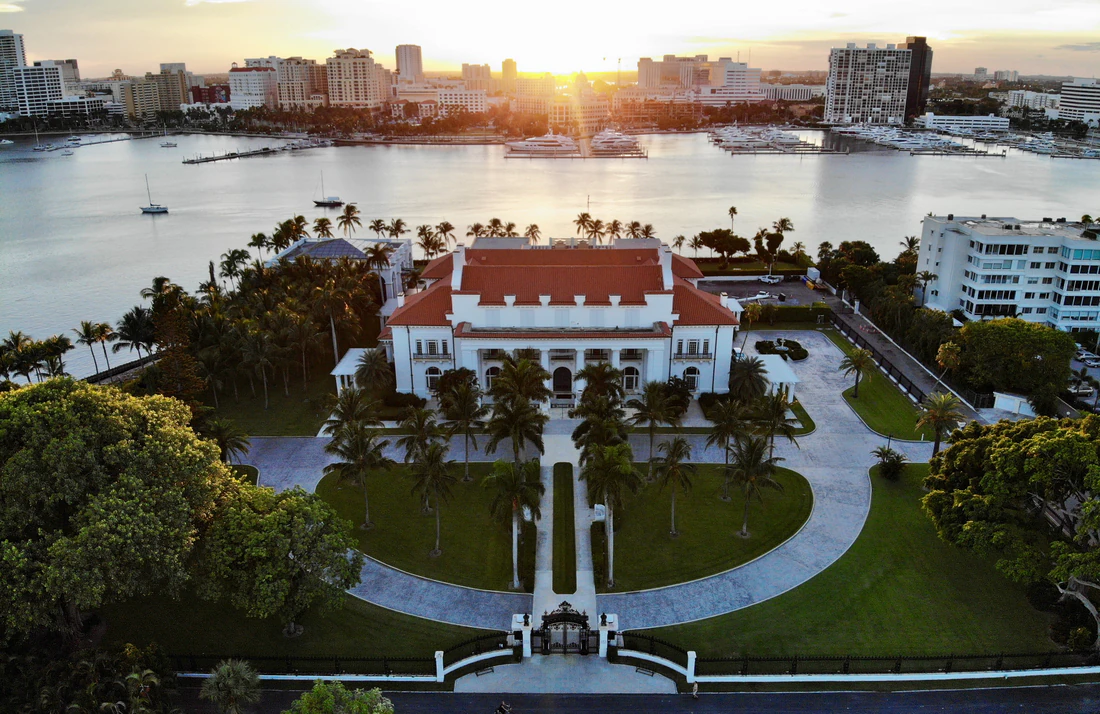
Flagler's railroad and hotels
Henry Flagler's railroad had reached what is now West Palm Beach by 1894. On the east side of Lake Worth, in today's Palm Beach, Flagler built the Hotel Royal Poinciana. When it opened on February 11, 1894, its 540 rooms held 17 guests. The Town of Palm Beach calls it the world's largest wooden structure. Flagler's Palm Beach Inn opened in 1896, and in 1901 it became The Breakers.
The land that became the center of downtown West Palm Beach cost Flagler $45,000. On February 4, 1894, the first lots were auctioned off, and on November 5, 1894, West Palm Beach became an incorporated city. Whitehall, a 75-room mansion, was built by Flagler as a gift for Mary Lily Kenan Flagler, his wife. From 1902 until he died in 1913, the Flaglers spent their winters there. In 1959 Jean Flagler Matthews set up the Henry Morrison Flagler Museum as a nonprofit to buy the house, and it opened to the public on February 6, 1960.
Flagler's Black workers, among them many people from the Caribbean and former slaves who came from northern states, settled in an area called the Styx. Tabernacle Missionary Baptist, one of the churches in the Styx, moved to the other side of Lake Worth in 1894. Landowner James M. Munyon had 150 tenants there. He gave George Currie, then the Dade County treasurer, the authority to have a deputy tell them they had 30 days to remove their homes. Most of the residents seem to have moved to West Palm Beach's all-Black Northwest neighborhood around 1906. Those who remained in the Styx were asked to leave only in 1912.
Sources: Flagler Museum: Florida East Coast Railway; Historical Society of Palm Beach County: The Grand Hotels, The Royal Poinciana; Town of Palm Beach: History of the Town; Historical Society of Palm Beach County: West Palm Beach; City of West Palm Beach: History; Flagler Museum: Whitehall; Historical Society of Palm Beach County: The Styx; Historical Society of Palm Beach County: The Styx, Removal
Next: Chapter 6, The Yamato Colony and the farms →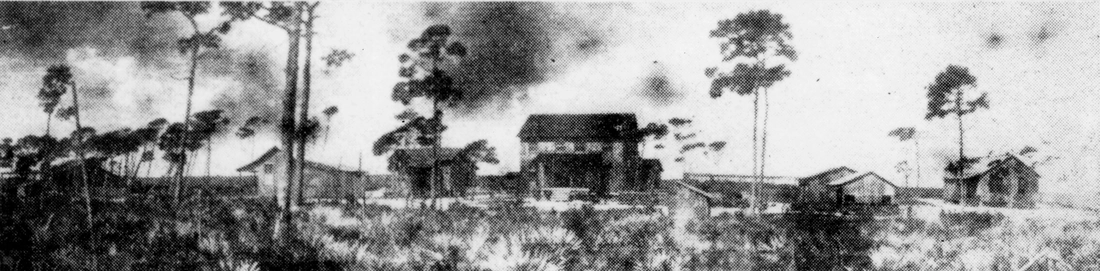
The Yamato Colony and the farms
The Yamato Colony began with a site in Boca Raton that Jo Sakai first saw on Christmas Day 1903. Sakai and about fifteen Japanese men founded the colony in summer 1905 on 40 acres close to the Florida East Coast Railway, on its west side. In 1906 the railway put up a station a little north of where Yamato Road runs today. On May 4, 1906, George Morikami arrived. Yamato farmers shipped out 10,000 crates of fruit in the 1907-08 season, and they sent two crates of pineapples to Tokyo for the imperial household.
The 1920s land boom convinced many Yamato settlers it was time to sell their land, and most of them left Florida. In 1942 the federal government took the land of the few who had stayed, for the Boca Raton Army Air Field. In total, 296 acres were taken from five Japanese landowners. George Morikami later gave all of his land, nearly 200 acres, to Palm Beach County and its people. Morikami Park, created from the gift, opened in 1977, and the Morikami Museum and Japanese Gardens opened that year as well.
The county's western part is called the Glades, and its organic muck soil is so fertile it has the nickname "black gold." In 1921 the Glades got its first sugar mill. Until the Conners Toll Highway's dedication in 1924, boats on canals were the only way to get to Lake Okeechobee. Once the Communist Party and Fidel Castro took over Cuba in 1959 and seized its sugarcane farms, cane in the Everglades Agricultural Area went from 47,000 acres planted to 138,000 acres harvested four years later. Citrus groves once covered thousands of acres in the county, but by 2000 most grove owners had sold to developers.
Sources: Morikami Museum and Japanese Gardens: Yamato Colony; Boca Raton Historical Society: Yamato Colony; Morikami Museum and Japanese Gardens: About; Historical Society of Palm Beach County: Agriculture; Historical Society of Palm Beach County: Sugarcane, King of Crops; Historical Society of Palm Beach County: Conners Highway; Historical Society of Palm Beach County: Citrus Groves
Next: Chapter 7, A new county in 1909 →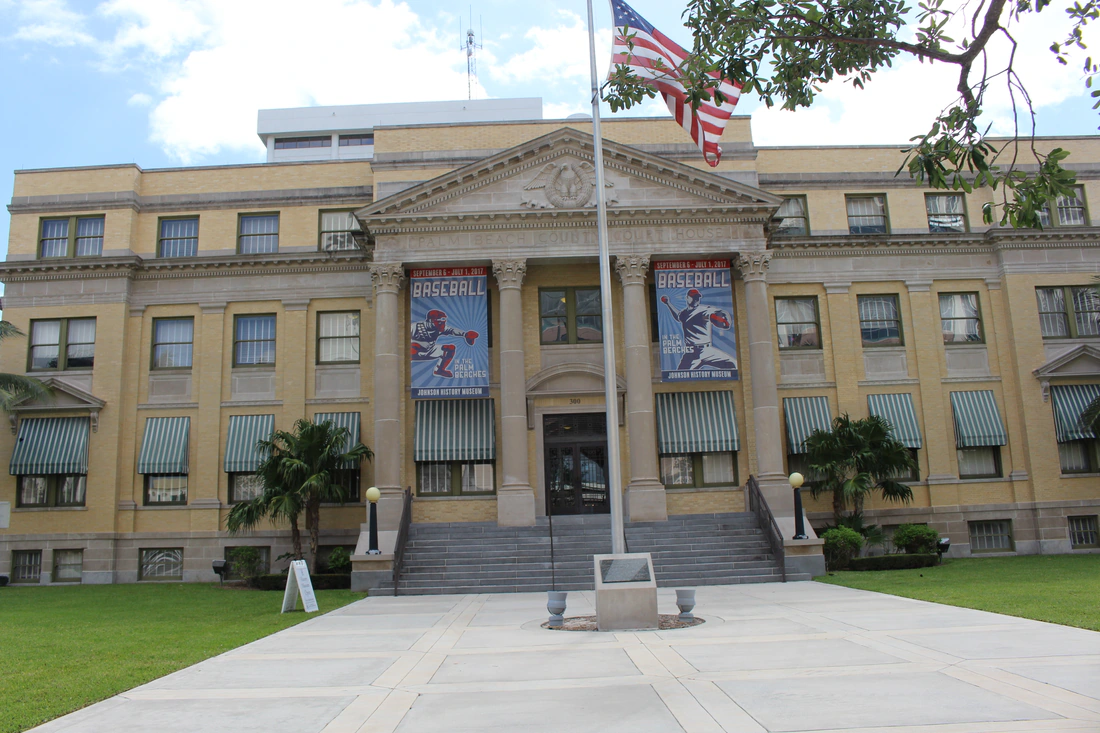
A new county in 1909
Palm Beach County was created by Senate Bill Number 18, which Florida lawmakers passed in April 1909. Its land was taken from the northern part of what was then called Dade County. The county came into existence on July 1, 1909, as the 47th in Florida. The county seat was placed in West Palm Beach. The county commissioners agreed to use an old school house on Clematis Avenue as a temporary courthouse.
In 1913 the commission hired an architect for a new courthouse, to stand on land that Henry Flagler donated. The dedication was planned for April 10, 1917. Today the building's name is the Historic 1916 Palm Beach County Courthouse. The restored courthouse houses the Richard and Pat Johnson Palm Beach County History Museum on its second floor.
When Broward County was formed in 1915, it took in land from the southern part of Palm Beach County. Palm Beach County lost a northwestern section to Okeechobee County in 1917 and a northern area to Martin County in 1925. In 1963 the counties of Glades, Hendry, Martin and Okeechobee were assigned about three-quarters of Lake Okeechobee.
Sources: Historical Society of Palm Beach County: West Palm Beach; Palm Beach County: Palm Beach County History; Palm Beach County: Palm Beach County History, Page 2; Historical Society of Palm Beach County: Plan Your Visit
Next: Chapter 8, Boom, bust and the 1928 hurricane →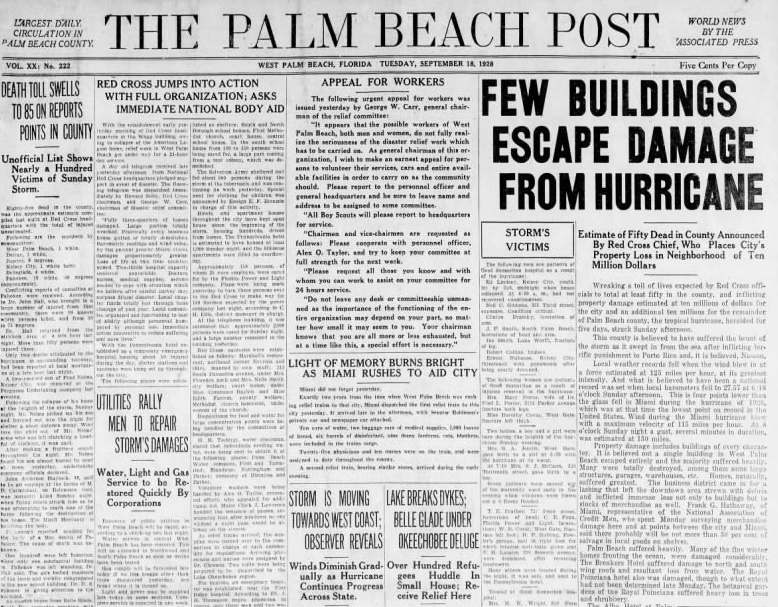
Boom, bust and the 1928 hurricane
A building boom started in Palm Beach County after World War I. Addison Mizner, an architect, moved to Boca Raton in 1925 with the goal of creating the most architecturally beautiful playground in the world. In February 1926 his Cloister Inn opened, but by then the boom had collapsed. A hurricane in 1926 did major damage in south Florida. In 1927 the Mizner Development Corporation failed, and in January 1930 Clarence Geist opened the Cloister Inn again, this time as the Boca Raton Club, with 450 rooms.
On September 16, 1928, a hurricane came ashore on the Palm Beach County coast between Boca Raton and Jupiter. As the storm moved inland at Category 4 strength, its strong winds piled up Lake Okeechobee's water at the lake's southern end. Floodwater several feet deep spread across a wide area, and South Bay, Belle Glade, Chosen, Canal Point and Pahokee were all flooded. The National Weather Service puts the number who drowned at more than 2,500. The Historical Society of Palm Beach County gives a death toll of nearly 3,000, and says most of the dead were non-white migrant workers.
In West Palm Beach, the bodies of 674 African American victims went into a mass grave where Tamarind Avenue meets 25th Street. At Port Mayaca Cemetery, more than 1,500 bodies were buried together. Robert Hazard and his nonprofit group spent about ten years working to have the Black victims recognized. The disaster was followed a year later by the creation of the Okeechobee Flood Control District. The Hoover Dike was built around Lake Okeechobee from 1932 to 1938 to keep such a flood from happening again.
Sources: Historical Society of Palm Beach County: Land Boom and Bust; Historical Society of Palm Beach County: The Great Architects, Mizner in Boca Raton; Historical Society of Palm Beach County: West Palm Beach; National Weather Service Miami: The Okeechobee Hurricane of 1928; Historical Society of Palm Beach County: The Hurricane of 1928
Next: Chapter 9, World War II and the years after →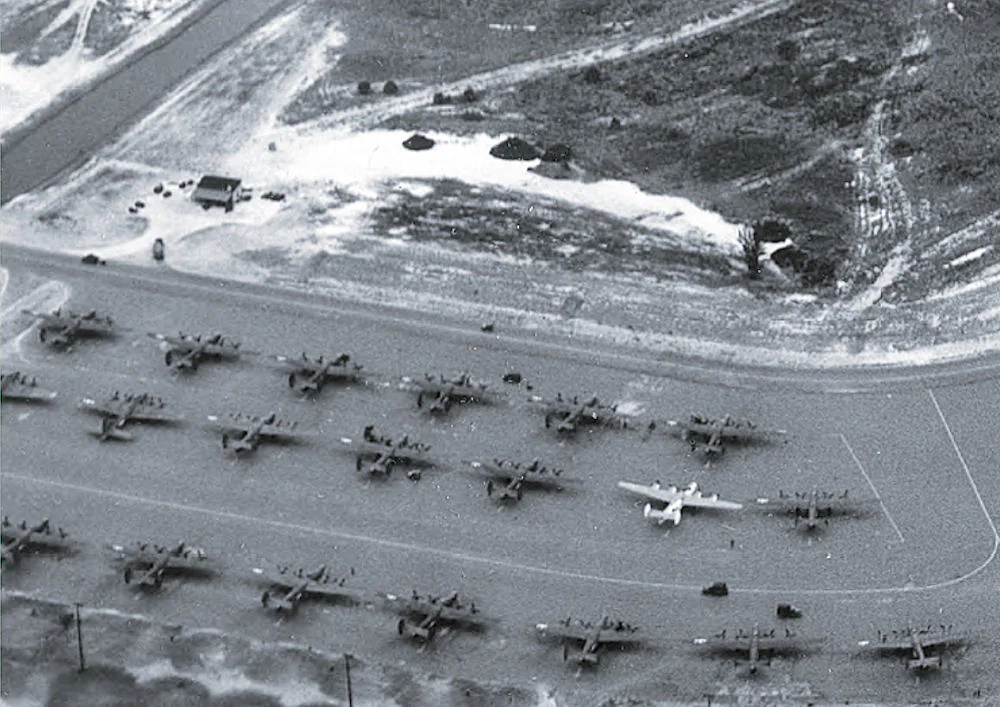
World War II and the years after
From February to May 1942, German submarines sank eight ships off Palm Beach County, half of them near Jupiter Inlet. Morrison Field, west of West Palm Beach, had opened in 1936, and in 1940 the Army Air Corps set up its Air Transport Command there. West Palm Beach was a training site or departure point for over 45,000 pilots. Boca Raton Army Air Field had its official opening on October 12, 1942, and more than 100,000 troops went through Boca Raton. The air field was in use until 1947, and its grounds are now the site of Boca Raton Airport and of Florida Atlantic University.
In June 1947 Morrison Field was deactivated and handed back to Palm Beach County, which renamed it Palm Beach International Airport a year later. Through the 1950s, 1960s and 1970s, retirees moved to Florida at an average rate of a thousand a week. Palm Beach County was the destination for many of them, and its population doubled in the 1950s. Pratt and Whitney's site west of North Palm Beach opened in 1958. John D. MacArthur made 4,000 acres of his land into a new city in 1959, incorporating it as Palm Beach Gardens.
President John F. Kennedy used his family's estate in Palm Beach as his Winter White House from 1961 to 1963. In 1961 a bunker was built on Peanut Island to protect him from nuclear fallout. In 1967 Lion Country Safari opened its first park off Southern Boulevard.
Sources: Historical Society of Palm Beach County: The Enemy Presence, German U-boats; Historical Society of Palm Beach County: World War II, U.S. Military in West Palm Beach; Historical Society of Palm Beach County: U.S. Military in Boca Raton; Historical Society of Palm Beach County: Expansion; Historical Society of Palm Beach County: North County, MacArthur Country; Town of Palm Beach: History of the Town; CBS12 News: President John F. Kennedy's secret bunker in Palm Beach County could reopen; Historical Society of Palm Beach County: The 1960s
Next: Chapter 10, Segregation and civil rights →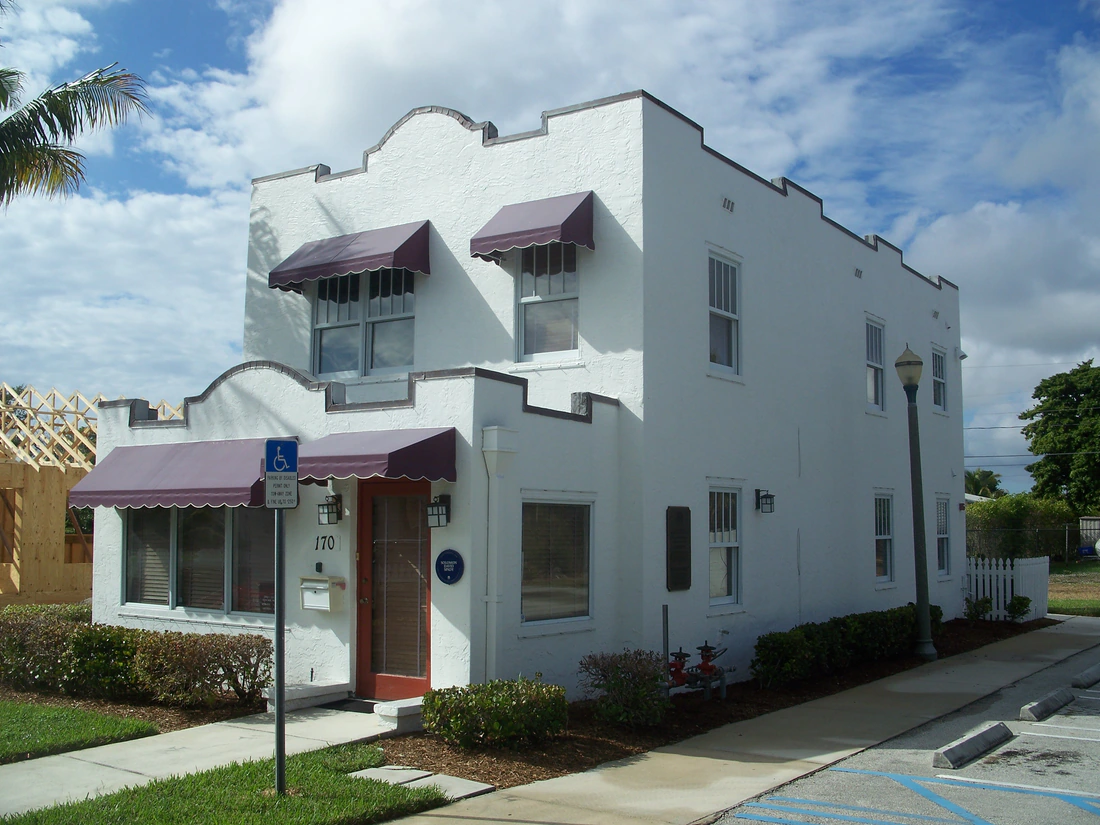
Segregation and civil rights
In 1917 a high school for African American students, the first in the county, was built on 11th Street. In 1921 Solomon David Spady, who had studied at Tuskegee Institute under George Washington Carver, replaced a man named Walker at the Delray County Training School. In 1937 George Washington Carver High School went up on that same site, with Spady as its principal. A 1929 West Palm Beach ordinance gave official status to the city's Black section, and its boundaries remained in force until 1960. A 1939 guide to Florida reported that a Belle Glade ordinance required all Black people, except those who worked in the town, to stay off the streets after 10:30 p.m.
In 1951 William M. Holland became West Palm Beach's first Black attorney. In 1956, when his son was old enough to start school, Holland and Isaiah Courtney Smith pressed officials into a legal test case. For two years the county kept the boy out of Northboro Elementary, an all-white school, and then Holland and Smith brought a class-action suit. Under a county plan in 1961, four Black students moved to white high schools. The Holland case came to an end on July 9, 1973, when a federal judge's final ruling declared the school district officially integrated.
The 1916 deed to Woodlawn Cemetery limited its use to whites, and in 1962 a vote of the West Palm Beach City Commission kept that limit in place. Later, Holland and Louise E. Buie, the local NAACP president, joined two other African Americans in putting down deposits for plots at Woodlawn. By a vote of 4 to 1, the commission then integrated the cemetery.
Sources: Historical Society of Palm Beach County: African American Schools; Historical Society of Palm Beach County: African American Communities; Historical Society of Palm Beach County: School Desegregation; Historical Society of Palm Beach County: The Civil Rights Era in Palm Beach County
Next: Chapter 11, Since 1973: the Kravis Center, spring training, the Norton Museum and Brightline trains →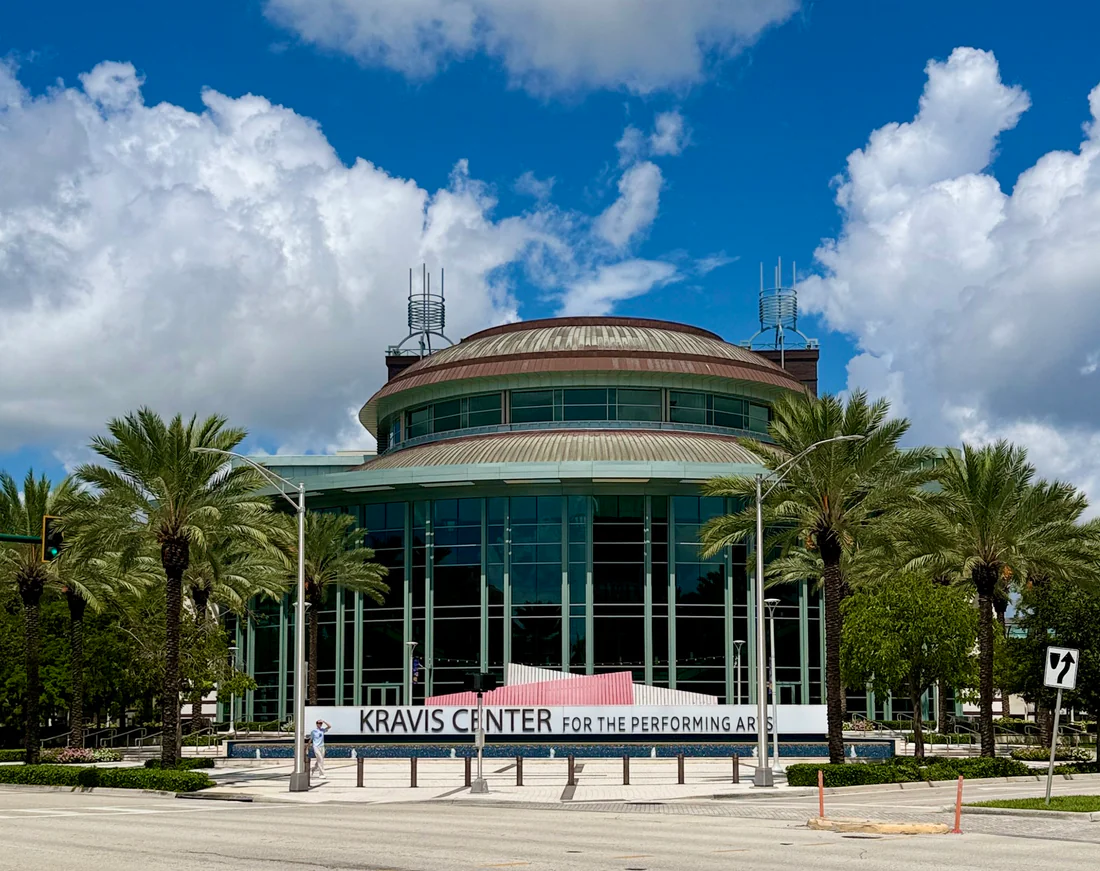
Since 1973: the Kravis Center, spring training, the Norton Museum and Brightline trains
The Kravis Center for the Performing Arts, near downtown West Palm Beach, opened in September 1992. At its grand opening gala on November 28, 1992, Burt Reynolds was master of ceremonies, and Ella Fitzgerald was on the program. On February 28, 2017, the Washington Nationals beat the Houston Astros 4-3 in the first game at The Ballpark of the Palm Beaches, the two teams' new spring training home in West Palm Beach. WPTV reported that West Palm Beach had not had a spring training game since 1997, when the Atlanta Braves and the Montreal Expos moved away. On February 9, 2019, the Norton Museum of Art opened its expansion, a new West Wing and sculpture garden designed by Lord Norman Foster of Foster + Partners.
Tri-Rail commuter trains, planned at first as a temporary service while I-95 was under construction, began running on January 9, 1989. On January 13, 2018, Brightline began running passenger trains from West Palm Beach to Fort Lauderdale. Railway Gazette called them the first scheduled passenger trains run by a private company in the United States since the early 1980s. On September 22, 2023, Brightline began carrying passengers from West Palm Beach north to Orlando.
Early on September 5, 2004, the eye of Hurricane Frances crossed the coast near Sewall's Point, and its southern eyewall reached the far northeast part of Palm Beach County. Nearly three weeks later, on September 25, Hurricane Jeanne came ashore near the southern end of Hutchinson Island, almost the same point. On May 8, 2008, the Jupiter Inlet Lighthouse site became an Outstanding Natural Area. The Bureau of Land Management says no other unit of its National Conservation Lands lies east of the Mississippi River.
Sources: Kravis Center for the Performing Arts: History; WPTV: Nationals defeat Astros on opening day at Ballpark of the Palm Beaches; MLB.com: New Nats, Astros park opens to much fanfare (February 28, 2017); Norton Museum of Art: The Expansion; Progressive Railroading: Tri-Rail commuter service turns 30; Railway Gazette: Brightline launches higher-speed inter-city service; WFLX: Brightline passengers hop aboard train for weekend travel to Orlando; Brightline: Brightline History: Brightline Opens Between Orlando and Miami (September 22, 2023); National Weather Service Miami: Frances; National Weather Service Miami: Jeanne; Bureau of Land Management: BLM invites public to celebrate Jupiter Inlet Lighthouse Outstanding Natural Area and 25 years of National Conservation Lands; Bureau of Land Management: Jupiter Inlet Lighthouse Outstanding Natural Area
Next: the whole story, in dates →The whole story, in dates
The first people are living in present-day Florida.
Artifacts from the Jeaga shell mound at Jupiter Inlet are dated to this span.
Ponce de León sails south past Jupiter Inlet.
The English ship Reformation is wrecked north of Jupiter, and the Jeaga take the survivors captive.
Seminole warriors beat Lt. Levin Powell's force on the Loxahatchee River.
Maj. Gen. Thomas Jesup's men fight the Seminoles at the Loxahatchee River's headwaters.
Billy Bowlegs surrenders and moves with his band to Indian Territory.
The Jupiter Inlet Lighthouse is officially lit.
The lighthouse, dark during the Civil War, is lit again.
Hannibal Pierce becomes assistant keeper of the lighthouse.
The Providencia and its coconuts wash ashore.
Barefoot carriers start taking mail between Lake Worth and the Miami area.
The first West Palm Beach lots are auctioned.
The Royal Poinciana Hotel opens.
West Palm Beach becomes an incorporated city.
The Palm Beach Inn takes the name The Breakers.
Jo Sakai and about fifteen Japanese men found the Yamato Colony.
Palm Beach County comes into existence as Florida's 47th county.
Newly formed Broward County takes land from the south of Palm Beach County.
The new courthouse is due to be dedicated.
The Glades gets its first sugar mill.
The Conners Toll Highway is dedicated.
Mizner's Cloister Inn opens in Boca Raton.
A hurricane comes ashore, and South Bay, Belle Glade, Chosen, Canal Point and Pahokee are flooded.
A West Palm Beach ordinance makes the city's Black section official.
The Hoover Dike goes up around Lake Okeechobee.
Boca Raton Army Air Field opens officially.
Holland and Isaiah Courtney Smith press officials into a school test case.
A fallout shelter for President Kennedy is built on Peanut Island.
The Holland case ends with a federal judge's final ruling.
Tri-Rail commuter trains begin running.
The Kravis Center for the Performing Arts opens in West Palm Beach.
The Jupiter Inlet Lighthouse site becomes an Outstanding Natural Area.
The Nationals and Astros play the first game at their new spring training ballpark.
Brightline trains start running from West Palm Beach to Fort Lauderdale.
The Norton Museum of Art opens its new West Wing and sculpture garden.
Brightline begins carrying passengers from West Palm Beach to Orlando.
Where you can still see it
 01
01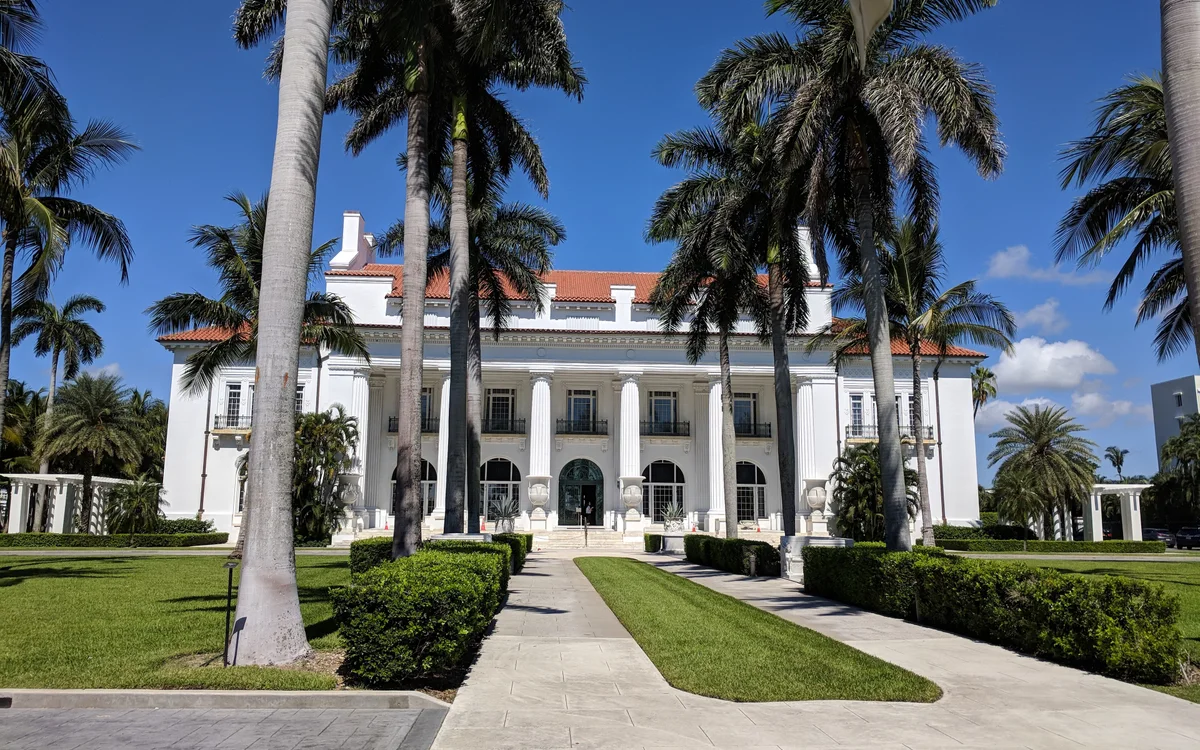 02
02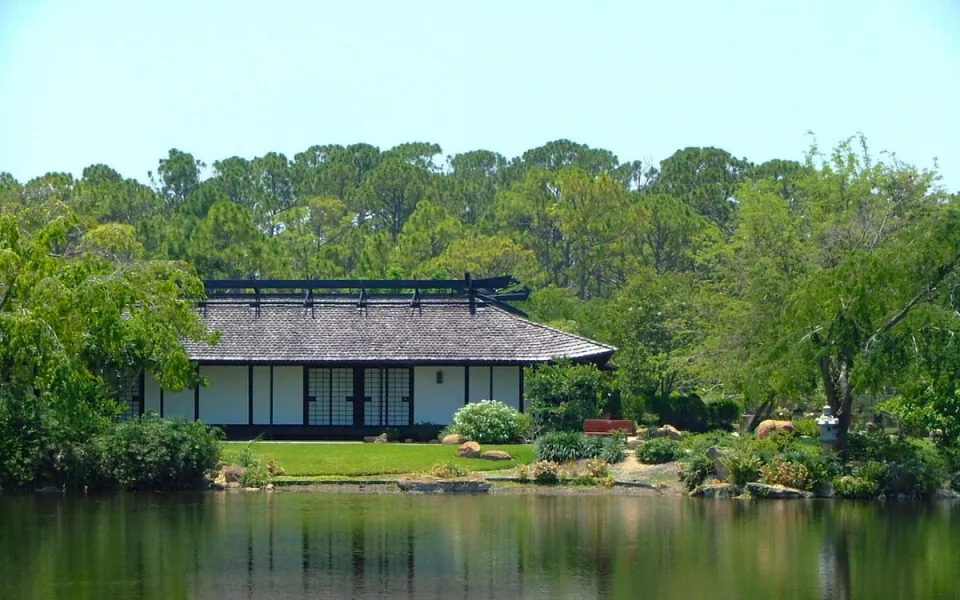 03
03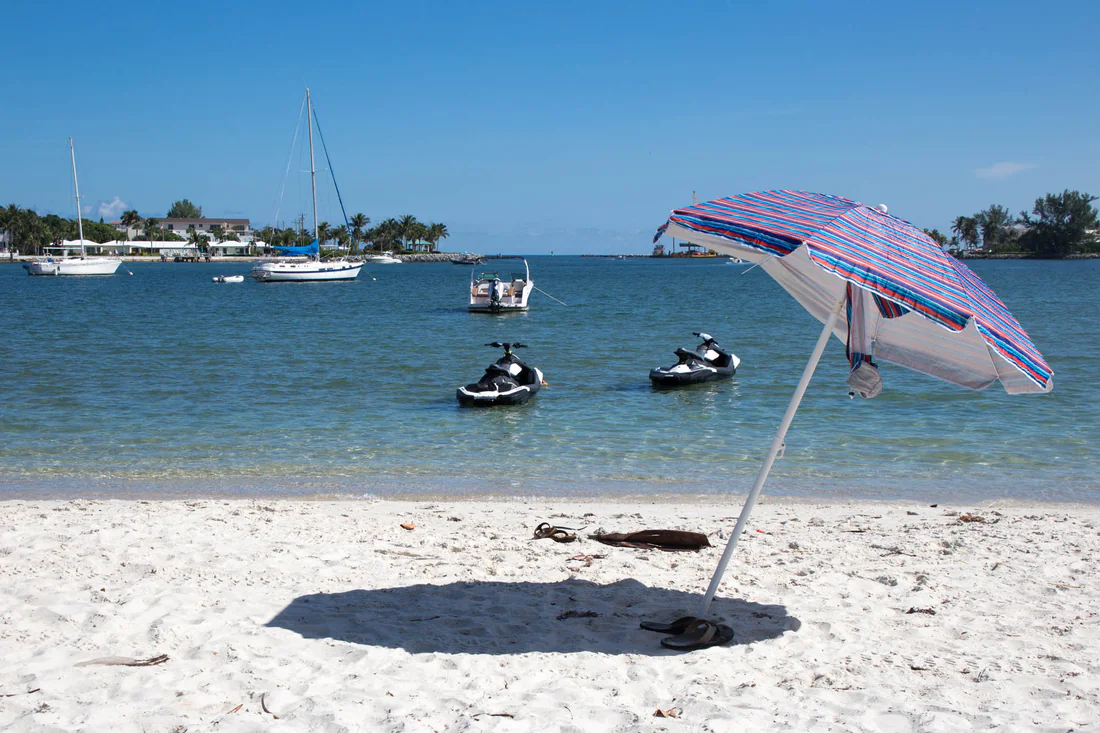 04
04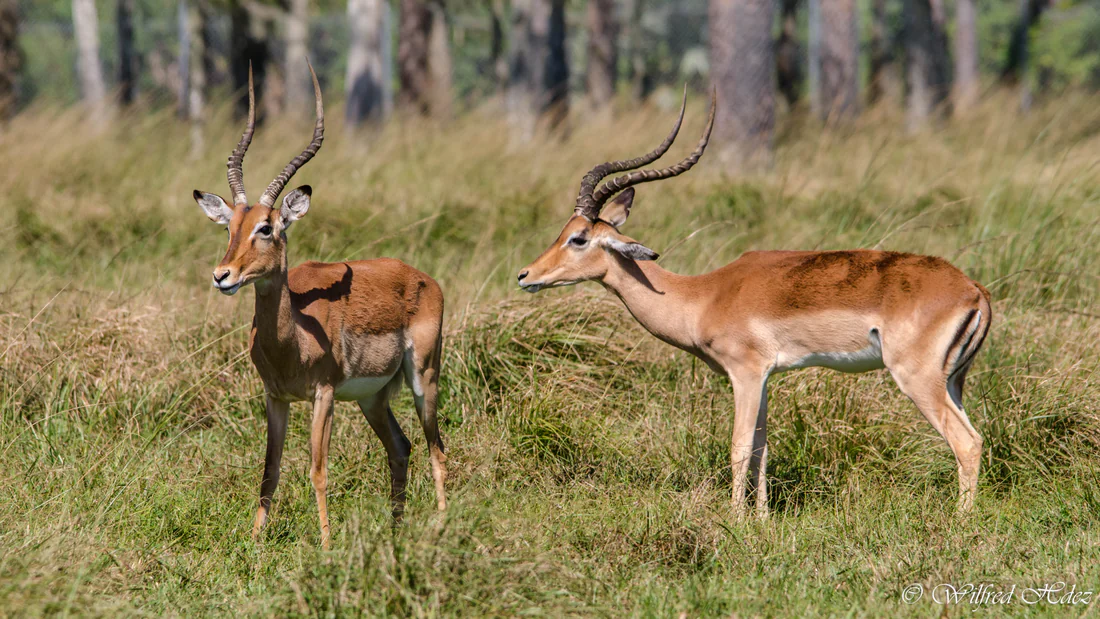 05
05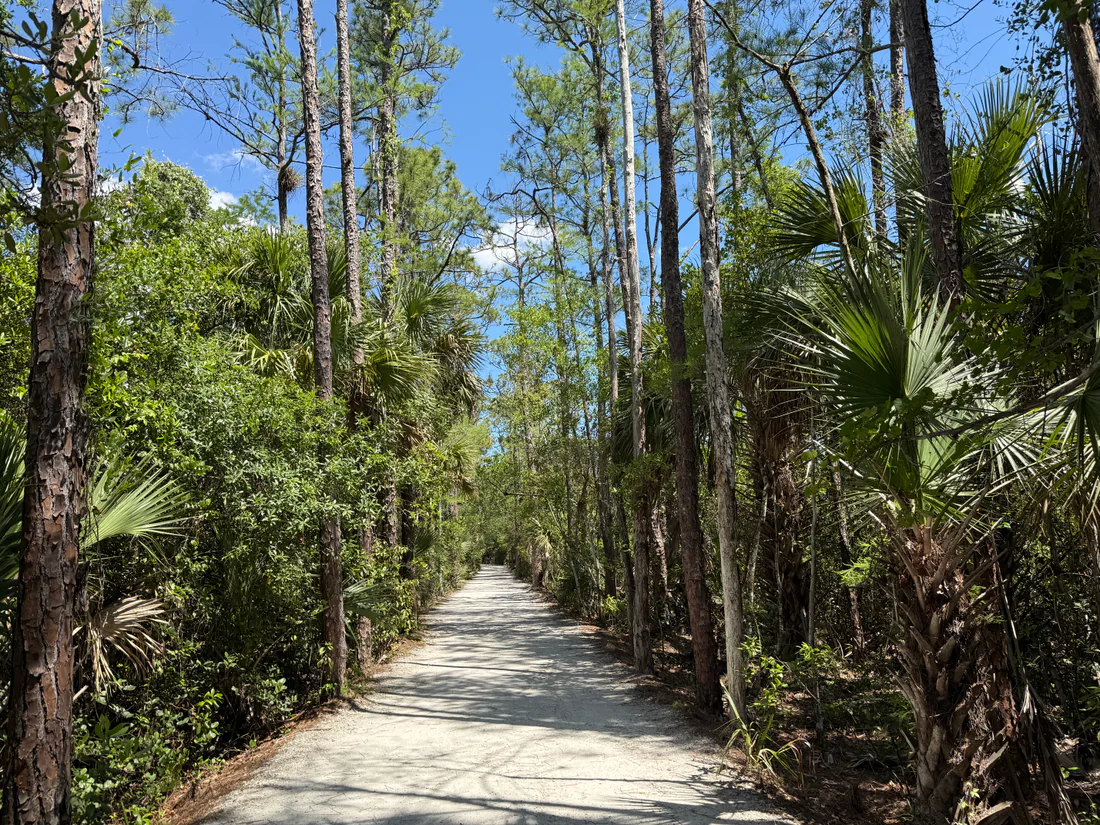 06
06Loxahatchee River Battlefield Park
Goes with: War on the Loxahatchee
Loxahatchee River Battlefield Park (Palm Beach County Parks) →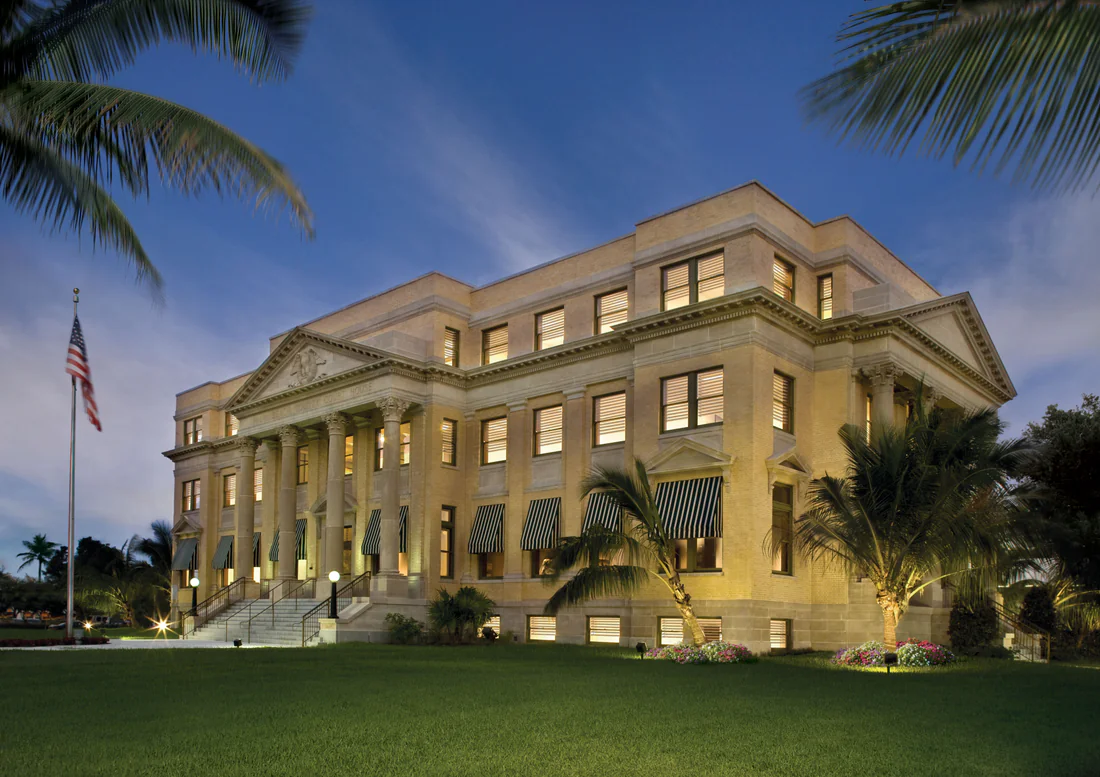 07
07Richard and Pat Johnson Palm Beach County History Museum
Goes with: A new county in 1909
Visit the county history museum in the 1916 Courthouse (Historical Society of Palm Beach County) →Where this comes from.
- Palm Beach County: Palm Beach County History ↗ Read October 15, 2026
- Palm Beach County: Palm Beach County History, Page 2 ↗ Read October 15, 2026
- Town of Palm Beach: History of the Town ↗ Read October 15, 2026
- City of West Palm Beach: History ↗ Read October 15, 2026
- Flagler Museum: Florida East Coast Railway ↗ Read October 15, 2026
- Flagler Museum: Whitehall ↗ Read October 15, 2026
- Jupiter Inlet Lighthouse & Museum: Jupiter Inlet Lighthouse History ↗ Read October 15, 2026
- Florida Department of State: Powell's Battle (historical marker) ↗ Read October 15, 2026
- Florida Department of State: Jesup's Battle January 24, 1838 (historical marker) ↗ Read October 15, 2026
- National Weather Service Miami: The Okeechobee Hurricane of 1928 ↗ Read October 15, 2026
- Morikami Museum and Japanese Gardens: Yamato Colony ↗ Read October 15, 2026
- Morikami Museum and Japanese Gardens: About ↗ Read October 15, 2026
- Boca Raton Historical Society: Yamato Colony ↗ Read October 15, 2026
- CBS12 News: President John F. Kennedy's secret bunker in Palm Beach County could reopen ↗ Read October 15, 2026
- Historical Society of Palm Beach County: Native Americans in Palm Beach County ↗ Read October 15, 2026
- Historical Society of Palm Beach County: Plan Your Visit ↗ Read October 15, 2026
- Historical Society of Palm Beach County: Jeaga and Jobe ↗ Read October 15, 2026
- Historical Society of Palm Beach County: Early Tribes ↗ Read October 15, 2026
- Historical Society of Palm Beach County: The 2nd Seminole War ↗ Read October 15, 2026
- Historical Society of Palm Beach County: Pioneer Life ↗ Read October 15, 2026
- Historical Society of Palm Beach County: The First Arrivals ↗ Read October 15, 2026
- Historical Society of Palm Beach County: Mail Routes ↗ Read October 15, 2026
- Historical Society of Palm Beach County: The Grand Hotels, The Royal Poinciana ↗ Read October 15, 2026
- Historical Society of Palm Beach County: West Palm Beach ↗ Read October 15, 2026
- Historical Society of Palm Beach County: The Styx ↗ Read October 15, 2026
- Historical Society of Palm Beach County: The Styx, Removal ↗ Read October 15, 2026
- Historical Society of Palm Beach County: Agriculture ↗ Read October 15, 2026
- Historical Society of Palm Beach County: Sugarcane, King of Crops ↗ Read October 15, 2026
- Historical Society of Palm Beach County: Conners Highway ↗ Read October 15, 2026
- Historical Society of Palm Beach County: Citrus Groves ↗ Read October 15, 2026
- Historical Society of Palm Beach County: Land Boom and Bust ↗ Read October 15, 2026
- Historical Society of Palm Beach County: The Great Architects, Mizner in Boca Raton ↗ Read October 15, 2026
- Historical Society of Palm Beach County: The Hurricane of 1928 ↗ Read October 15, 2026
- Historical Society of Palm Beach County: The Enemy Presence, German U-boats ↗ Read October 15, 2026
- Historical Society of Palm Beach County: World War II, U.S. Military in West Palm Beach ↗ Read October 15, 2026
- Historical Society of Palm Beach County: U.S. Military in Boca Raton ↗ Read October 15, 2026
- Historical Society of Palm Beach County: Expansion ↗ Read October 15, 2026
- Historical Society of Palm Beach County: North County, MacArthur Country ↗ Read October 15, 2026
- Historical Society of Palm Beach County: The 1960s ↗ Read October 15, 2026
- Historical Society of Palm Beach County: African American Schools ↗ Read October 15, 2026
- Historical Society of Palm Beach County: African American Communities ↗ Read October 15, 2026
- Historical Society of Palm Beach County: The Civil Rights Era in Palm Beach County ↗ Read October 15, 2026
- Historical Society of Palm Beach County: School Desegregation ↗ Read October 15, 2026
- Kravis Center for the Performing Arts: History ↗ Read October 16, 2026
- WPTV: Nationals defeat Astros on opening day at Ballpark of the Palm Beaches ↗ Read October 16, 2026
- MLB.com: New Nats, Astros park opens to much fanfare (February 28, 2017) ↗ Read October 16, 2026
- Norton Museum of Art: The Expansion ↗ Read October 16, 2026
- Progressive Railroading: Tri-Rail commuter service turns 30 ↗ Read October 16, 2026
- Railway Gazette: Brightline launches higher-speed inter-city service ↗ Read October 16, 2026
- WFLX: Brightline passengers hop aboard train for weekend travel to Orlando ↗ Read October 16, 2026
- Brightline: Brightline History: Brightline Opens Between Orlando and Miami (September 22, 2023) ↗ Read October 16, 2026
- National Weather Service Miami: Frances ↗ Read October 16, 2026
- National Weather Service Miami: Jeanne ↗ Read October 16, 2026
- Bureau of Land Management: BLM invites public to celebrate Jupiter Inlet Lighthouse Outstanding Natural Area and 25 years of National Conservation Lands ↗ Read October 16, 2026
- Bureau of Land Management: Jupiter Inlet Lighthouse Outstanding Natural Area ↗ Read October 16, 2026