Sarasota County was part of Manatee County until July 1, 1921, when it became a county of its own. The new county's government worked first out of the Hover Arcade on Sarasota's Main Street and moved into its own courthouse in 1927. In 1927 John Ringling brought his circus's winter quarters to Sarasota, and the city became known as the Circus City. People were coming to the springs of what is now North Port 14,000 or more years ago.
This page tells the story in order, from the first people at Warm Mineral Springs to the Echoes of Sarasota exhibit of 2026, then lists places in the county where you can still see it. The sources for each part are named at the end of that part, and all of them are listed at the bottom of the page.
The first people at the springs
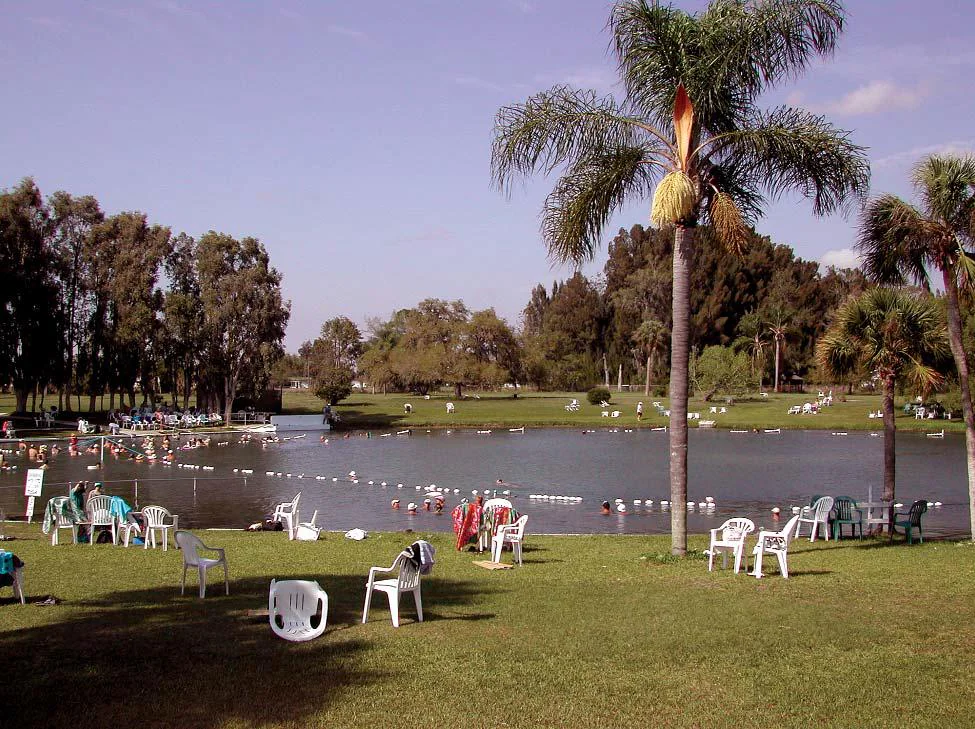
A WUWF Public Media report says two deep sinkholes in what is now North Port drew the first Floridians 14,000 or more years ago. When people first came, the water in Warm Mineral Springs was 100 feet lower than it is now. In the 1950s, divers there found the remains of an ancient hunter and seven other people. Human remains about 12,000 years old lay on a ledge some 40 feet down. Bones of extinct animals turned up as well, among them a saber-toothed tiger, a giant sloth and a camel.
Little Salt Spring lies about three miles from Warm Mineral Springs. In the 1950s, divers learned that it was a sinkhole more than 200 feet deep. Digs there in the 1970s brought up wooden objects between 7,000 and 12,000 years old. Warm Mineral Springs was listed on the National Register of Historic Places in 1977. The University of Miami received Little Salt Spring in 1982 as a gift from the General Development Corporation.
Sources: WUWF Public Media: Parks and Museums: Warm Mineral Springs Park (July 9, 2024); City of North Port: Beneath Warm Mineral Springs Park; Historical Marker Database: Prehistoric Man Lived Here/Spring Was Once a Cave (Sarasota County Historical Commission marker); University of Miami Rosenstiel School: Little Salt Spring, History
Next: Chapter 2, Shell mounds at Spanish Point →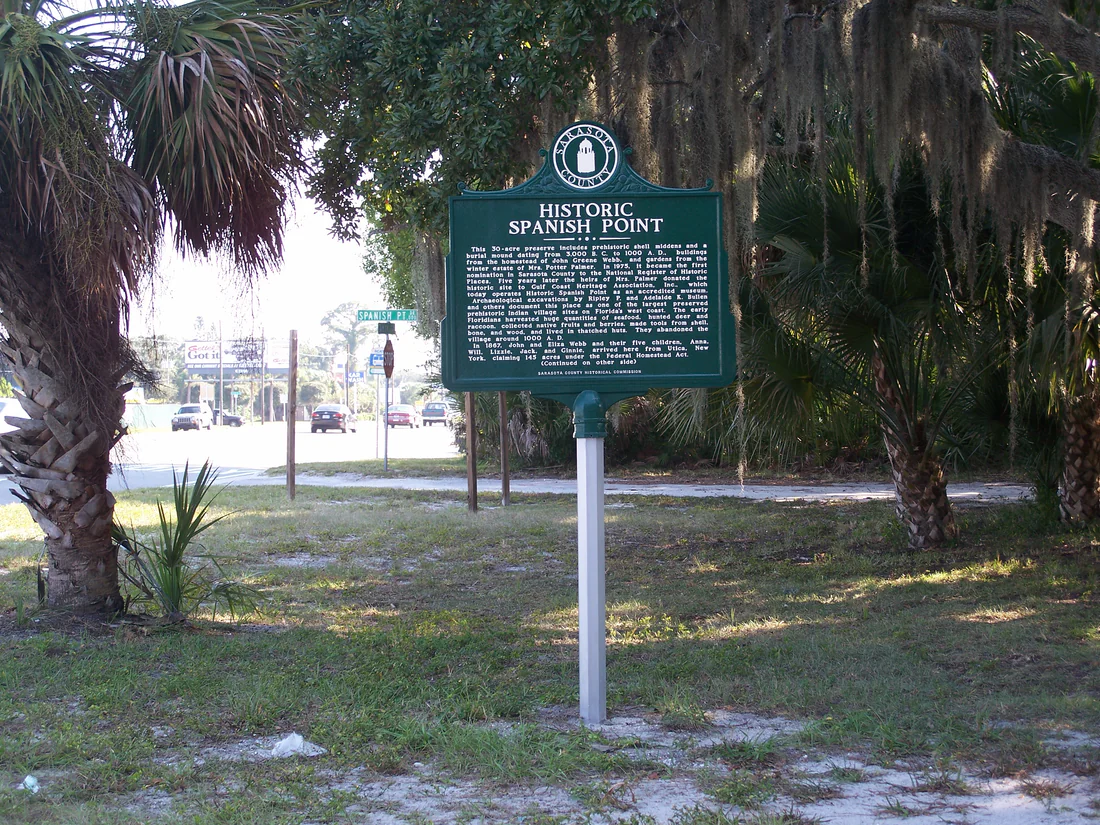
Shell mounds at Spanish Point
More than 4,500 years ago, people settled beside a freshwater spring at what is now Historic Spanish Point. Their mounds grew from the shells of the oysters, clams, scallops, whelks and conchs they gathered from the shallow water nearby. Over time one mound formed a ring around the spring and rose 20 feet above sea level. Radiocarbon dates show that people lived in the village for over 3,000 years. Marie Selby Botanical Gardens, which runs the site today, calls it the largest Native American village site that survives anywhere from Charlotte Harbor north to Crystal River.
In the late 1950s, Gordon Palmer, a grandson of Bertha Palmer, asked archaeologists Ripley and Adelaide Bullen to do research there. Among their finds was pottery that the gardens count among the oldest known to have been made by Native Americans. The site's marker says it was the first place in Sarasota County nominated for the National Register of Historic Places, in 1975. Five years later, Bertha Palmer's heirs gave it to the Gulf Coast Heritage Association. Marion Almy and the archaeologist George Luer helped create Window to the Past, an exhibit that shows a shell midden 10 feet tall behind glass.
Sources: Marie Selby Botanical Gardens: Archaeology; Sarasota Magazine: For 50 Years, Archaeologist Marion Almy Has Uncovered and Protected Florida's Buried History (September 4, 2026); Charlotte Sun: Plaque marks the spot for historic Sarasota County sites (December 29, 2020)
Next: Chapter 3, Cuban fishermen and a name on the map →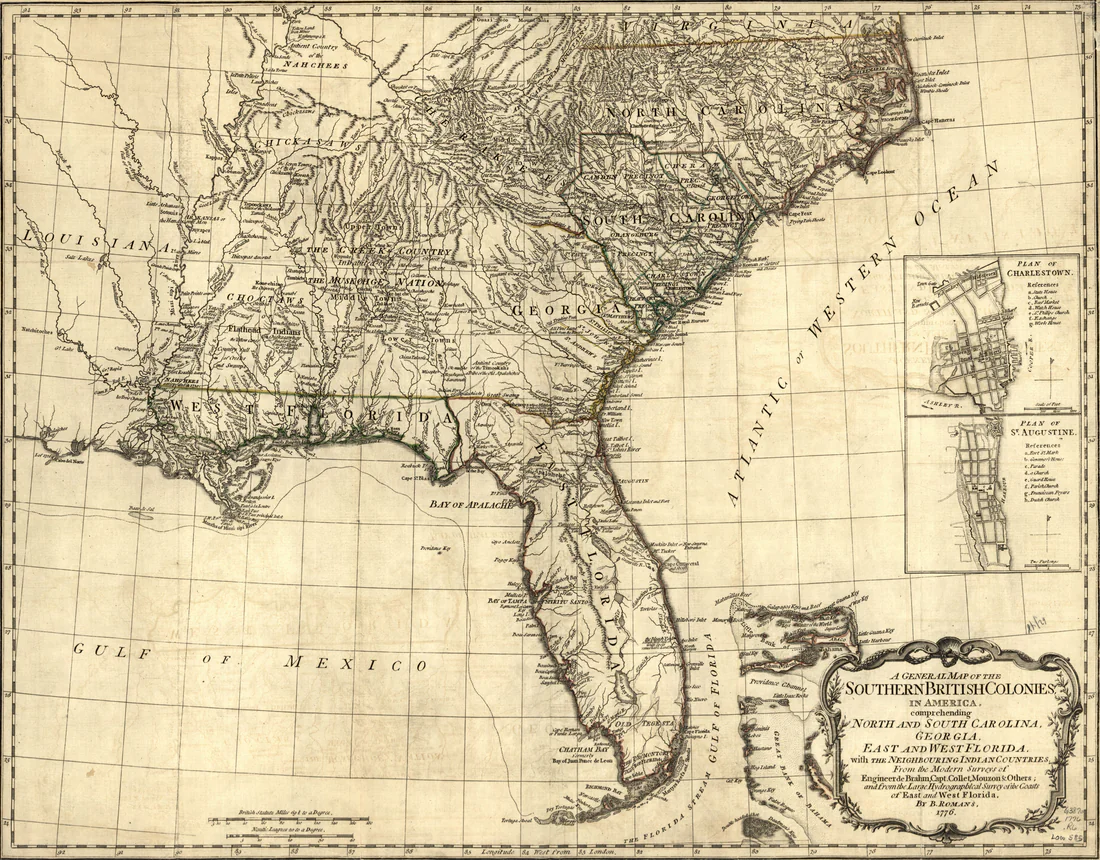
Cuban fishermen and a name on the map
In 1763, after the Seven Years War, Spain gave Florida to Great Britain in exchange for Cuba. In 1776 the area was a British colony, but most of the people there were Cuban fishermen. Some Seminoles worked for the fishermen. Fishermen from Cuba also camped on the old Spanish Point shell mounds, long after the first people there had gone.
The name first showed up on Spanish maps, with spellings that included Sarasote, Zarazote and Saraxote. Josh Goodman, who manages the Sarasota History Center, told the Observer that some form of the name appeared on maps by the 1760s. In 1774 the mapmaker Bernard Romans put the name "Boca Sarazota" on the coast where Sarasota and Bradenton are today.
Sources: Your Observer: The land almost no one wanted (2026); Marie Selby Botanical Gardens: Archaeology
Next: Chapter 4, Pioneers on Sarasota Bay →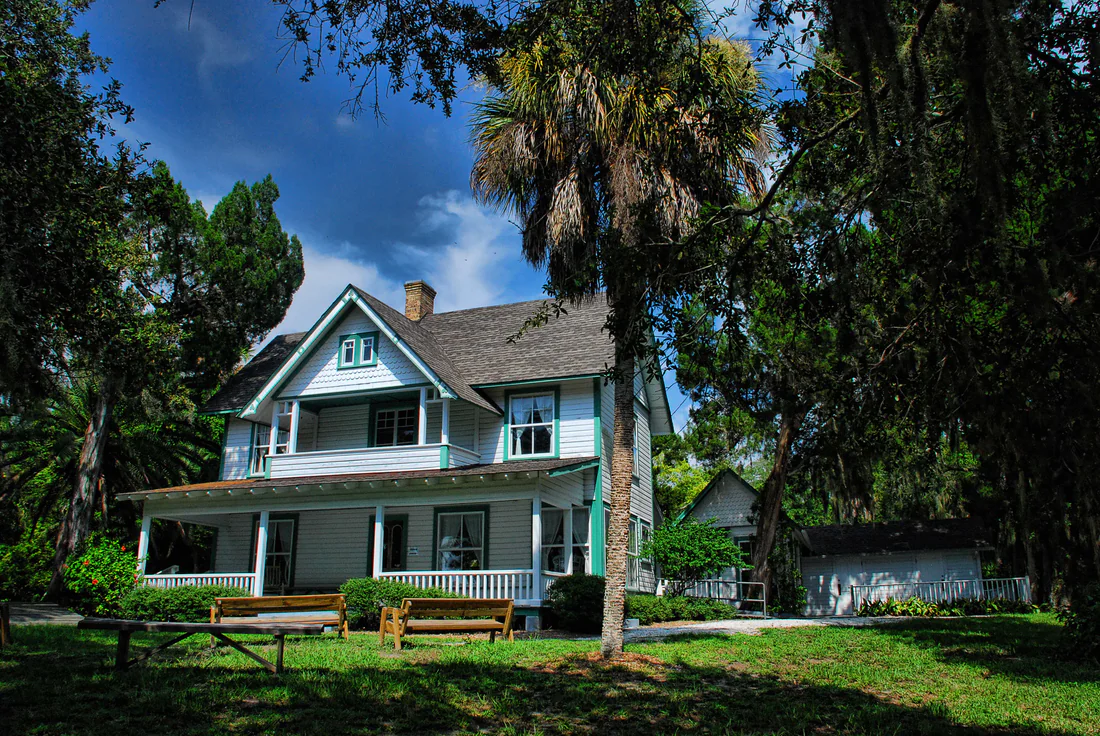
Pioneers on Sarasota Bay
The History & Preservation Coalition of Sarasota County says William H. Whitaker was the first white settler to stay for good in the Sarasota area. He received a deed to 144.81 acres on Sarasota Bay on September 1, 1851.
Jeffery Bolding was 23 when he fled slavery in North Carolina. Whitaker came upon him a month later, sick and hiding in the palmettos, and bargained to buy him for $1,000. When emancipation came in 1863, Union troops took Bolding and his wife, Hannah, to Key West. He later went back to live with the Whitakers and died in 1904. Sarasota Magazine says a small tintype of him is the county's oldest photograph of an African American whose name is known.
A fisherman from Cuba told the Webb family, who were pioneers, about the old shell mounds. The family made its home there and named it Spanish Point. In 1871 John Webb wrote to the Smithsonian about human remains he found while plowing his garden. In 1884 Webb started a post office there called Osprey, after the fish hawk. In 1888, settlers farther south renamed an area known as Horse and Chaise, calling it Venice for its many waterways.
Sources: History & Preservation Coalition of Sarasota County: Sarasota History; Sarasota Magazine: The Story of Jeffery Bolding, Sarasota's First Enslaved Man; Marie Selby Botanical Gardens: Archaeology; Historical Marker Database: Venice (Sarasota County Historical Commission marker, 1983)
Next: Chapter 5, Scottish colonists and a new town →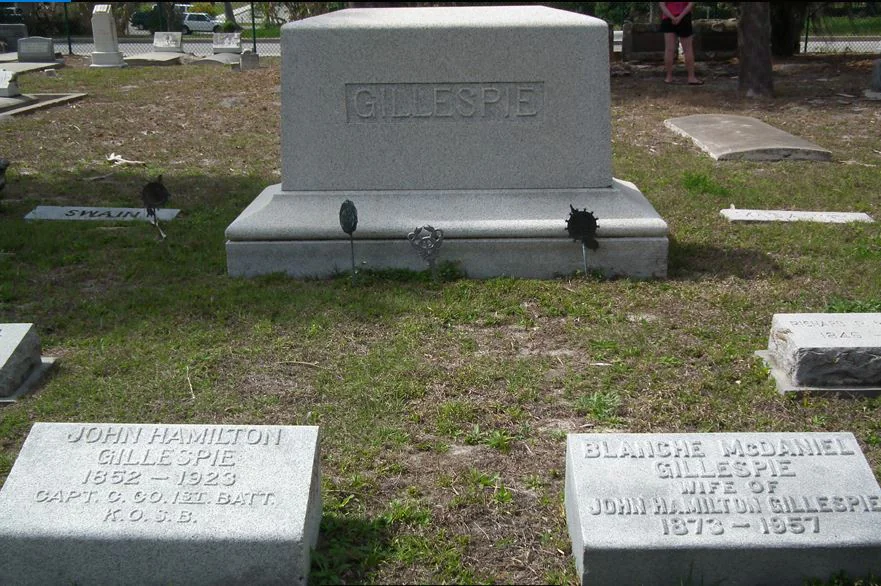
Scottish colonists and a new town
The Florida Mortgage and Investment Company of Edinburgh, Scotland, bought 60,000 acres at Sarasota. It told about 65 Scots they could easily make a living farming there. The colonists arrived in December 1885 and found only wilderness. Hard times soon left them unhappy with their new land.
Lewis Colson, who had been enslaved, helped survey and lay out the original town of Sarasota in 1885. Sources give different years for when he and his wife, Irene, arrived. John Hamilton Gillespie, born in Edinburgh in 1852, came in 1886 to help the struggling company. He had three miles of Main Street cleared and a large wharf built. He also built a golf course, which Sarasota Magazine calls the first in Florida.
Most travel was by boat, and in the 1890s the Mistletoe carried people between Sarasota and Tampa. On October 14, 1902, Sarasota was made a town, and Gillespie was elected its mayor. On May 13, 1913, Sarasota became a city. The Sara de Soto pageant began in 1916, with Genevieve Higel as its first queen. The pageant grew from a legend, first told in 1900, about a daughter of the explorer Hernando de Soto named Sara, but she never existed.
Sources: Sarasota Magazine: The Land Boom Decade That Changed Sarasota Forever (Jeff LaHurd, November 3, 2025); History & Preservation Coalition of Sarasota County: Sarasota History; Newtown Alive: Newtown History Timeline; Sarasota Magazine: Life Wasn't Easy for Sarasota's Early Pioneers (December 28, 2016); Sarasota Magazine: Are You a Real Sarasotan? (December 1, 2020); Sarasota Magazine: A Black Landmark From the Days of Segregation Is Being Reborn as a Civic and Cultural Hub (December 2, 2025); Charlotte Sun: Plaque marks the spot for historic Sarasota County sites (December 29, 2020); Sarasota Magazine: At the Sarasota County History Center, You'll Find Fascinating Historical Objects (December 2, 2025); Your Observer: The land almost no one wanted (2026)
Next: Chapter 6, Overtown, Newtown and the Colson Hotel →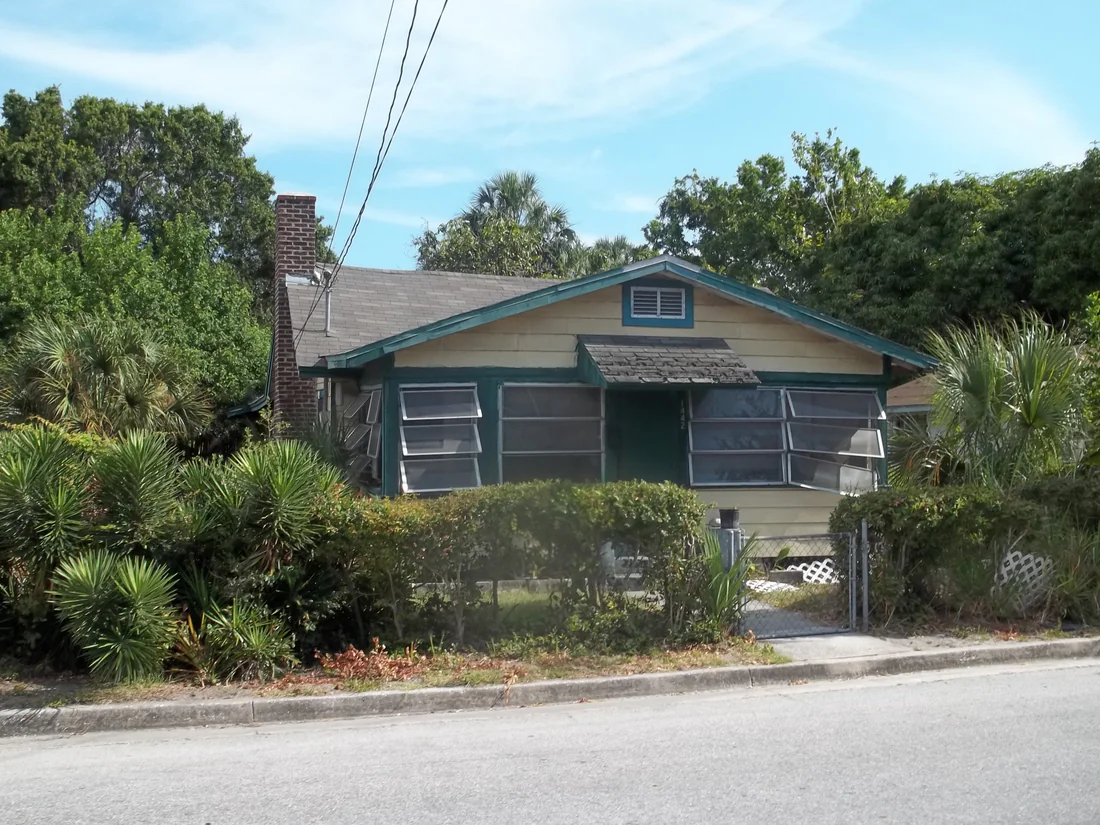
Overtown, Newtown and the Colson Hotel
The City of Sarasota says Overtown was the first neighborhood that Black residents founded in Sarasota. Black workers harvested celery, laid railroad ties and cleared land for developers. They also worked in the homes of Sarasota's most powerful people. In 1899 Lewis Colson was named the first pastor of Bethlehem Baptist Church, according to Newtown Alive. Sarasota Magazine says it was the first Black church in the city.
In 1912 a school for Black children opened at the Knights of Pythias Hall, and Emma Edwina Booker became its principal. Newtown dates from April 20, 1914, the day its first plat of 96 lots was recorded in Manatee County. In 1925 a new brick school for Black children opened, and it was later named for Emma E. Booker.
The Colson Hotel opened in Overtown in 1926 for Black travelers who could not stay in white hotels. Edwin Burns, a brother of developer Owen Burns, built it and named it for Lewis and Irene Colson. Downstairs were a barber shop and a soft drink parlor. The old Overtown neighborhood is now called the Rosemary District.
Sources: City of Sarasota: Newtown History; Newtown Alive: Newtown History Timeline; Sarasota Magazine: A Black Landmark From the Days of Segregation Is Being Reborn as a Civic and Cultural Hub (December 2, 2025); Sarasota Magazine: In the 1920s, Sarasota Was Small, Southern and Segregated (November 3, 2025)
Next: Chapter 7, Bertha Palmer and a county of its own →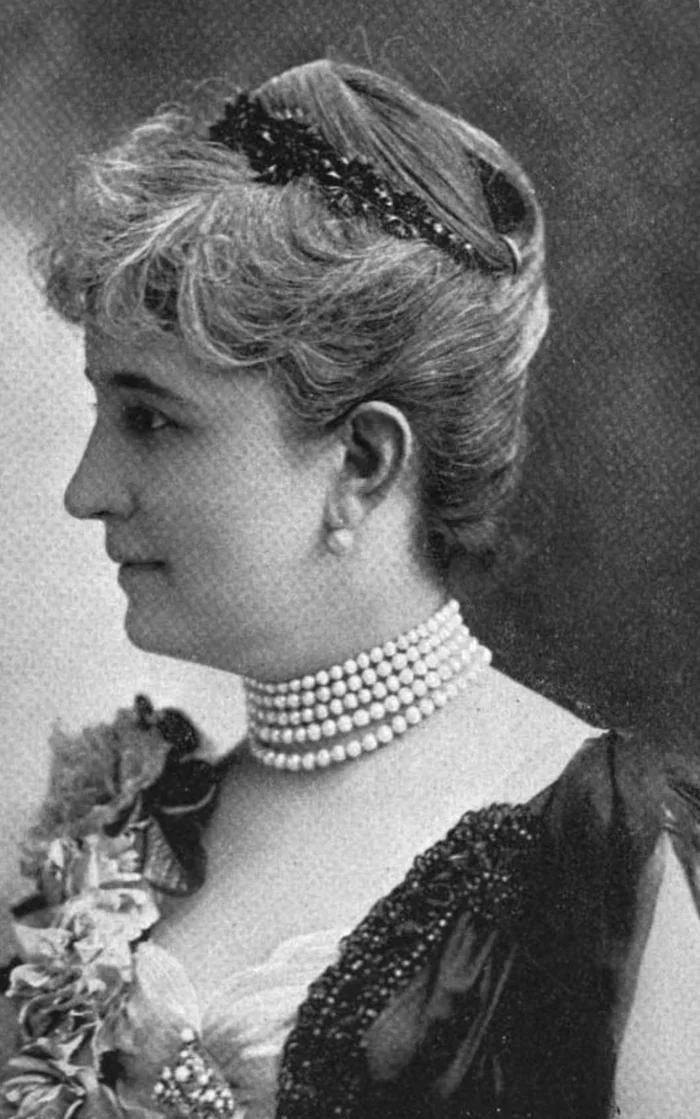
Bertha Palmer and a county of its own
Bertha Palmer, a leader of Chicago society, moved to Sarasota in 1910. She made her home on the old shell mounds at Spanish Point and named the estate The Oaks. She bought land across Sarasota and Manatee counties, and sources give different totals, from more than 80,000 acres to 140,000 acres. She turned swampy land into pasture and farms, watered it with artesian wells and dipped cattle to kill ticks. She died in 1918, and her family took up her support for a new county.
People in the southern part of Manatee County complained of poor roads, weak representation in Tallahassee and being cut off from the rest of the county. In May 1921 the Legislature voted to create Sarasota County, and Governor Cary Hardee signed the bill a day later. Rose Phillips Wilson, who published The Sarasota Times, urged women to vote on it that June. Voters approved the new county in June 1921, 518 to 154.
Sarasota County came into being on July 1, 1921. An old photograph shows the new county's Main Street parade, with Model T cars decked in flags. For almost five years the county government worked out of the Hover Arcade, which also held Sarasota City Hall. Charles and Edith Ringling gave land for a courthouse, and Dwight James Baum was hired to design it. County officials finished moving into the new courthouse in February 1927.
Sources: Sarasota Magazine: Locals Know Bertha Palmer for Her Modest Sarasota Ranch Life, but in Chicago She Defined Gilded Age Luxury (May 1, 2026); Sarasota Magazine: The Land Boom Decade That Changed Sarasota Forever (Jeff LaHurd, November 3, 2025); Marie Selby Botanical Gardens: Archaeology; Patch: Sarasota County Celebrates Centennial With Special Events (March 22, 2021); Historical Marker Database: Sarasota County Courthouse (Sarasota County Historical Commission marker, 2001); Your Observer: Sarasota County Centennial: Start of county was contentious; Sarasota Magazine: Sarasota County Marks Its Centennial This Year (March 6, 2021); Sarasota County Clerk of the Circuit Court and County Comptroller: Sarasota's Historic Courthouse
Next: Chapter 8, Boom years, bridges and Venice →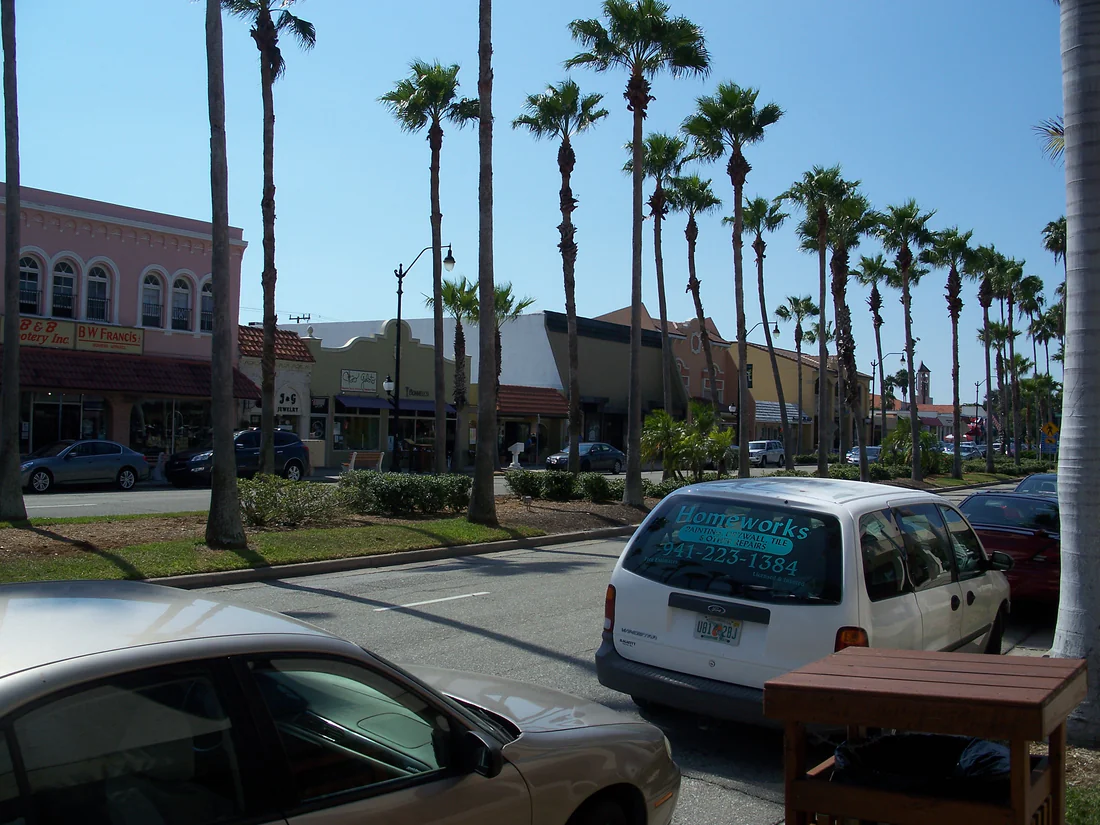
Boom years, bridges and Venice
In 1922 civic leaders persuaded Chicago businessman Andrew McAnsh to build a large hotel in Sarasota. His Mira Mar Hotel opened in 1923, and soon the county, above all the city, was filling with new hotels, banks, stores and homes. Owen Burns, whom Sarasota Magazine calls the city's first major developer, built the first John Ringling Bridge. John Ringling paid for the bridge, which opened on February 2, 1926. Ringling planned St. Armands Circle as a ring of shops with tropical plants and Italian statues.
St. Armands takes its name, misspelled, from Charles St. Amand, a Frenchman who bought land on three of the small islands in the late 1880s. The New York Giants began spring training at Payne Park in 1924, and major league teams trained there until 1988. The Edwards Theatre, named for Arthur B. Edwards, an early mayor, opened in 1926 and is now the Sarasota Opera House. The Tamiami Trail, first proposed in 1915, was finished in 1928.
In 1925 the Brotherhood of Locomotive Engineers began building Venice as a planned retirement town for its members. City planner John Nolen drew the plan, with wide boulevards, small parks, a golf course and farmland called Venice Farms. By 1926 the land boom had ended. The stock market crash of 1929 ended the Venice plan. In Sarasota, the value of building permits fell from over $4.5 million in 1925 to $83,596 in 1929.
Sources: Sarasota Magazine: The Land Boom Decade That Changed Sarasota Forever (Jeff LaHurd, November 3, 2025); Sarasota Magazine: John Ringling's Vision of St. Armands Circle Lives on Today (Jeff LaHurd, November 3, 2025); Charlotte Sun: Plaque marks the spot for historic Sarasota County sites (December 29, 2020); Patch: Sarasota County Celebrates Centennial With Special Events (March 22, 2021); Historical Marker Database: Venice (Sarasota County Historical Commission marker, 1983)
Next: Chapter 9, John Ringling and the Circus City →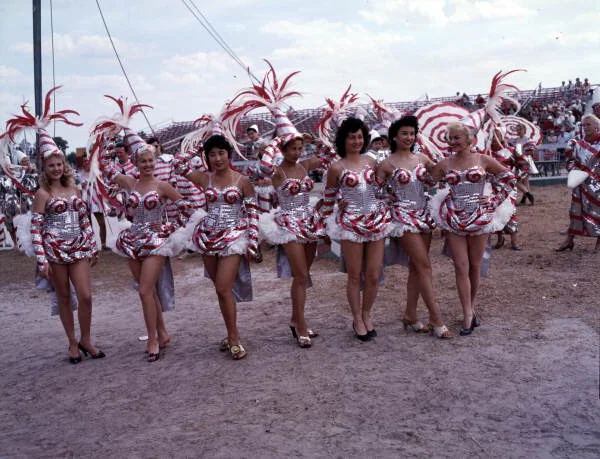
John Ringling and the Circus City
In 1911 John and Mable Ringling bought 20 acres on the Sarasota waterfront, where they spent their winters. Dwight James Baum designed their home on Sarasota Bay, Ca' d'Zan, and Mable worked closely with him, using Venice, Italy, as her model. The Ringling museum says the house was finished in 1926 after two years of work, though a Florida Department of State page says Christmas 1925. The John and Mable Ringling Museum of Art dates from 1927, and the public could first visit it in 1931, the year the Ringling School of Art began. Mable died first, and when John Ringling died in 1936, he left Ca' d'Zan, the art museum and its collection to the State of Florida.
In 1927 John Ringling moved the circus's winter quarters to Sarasota from Bridgeport, Connecticut. The winter quarters covered 160 acres and employed 1,600 people at their peak. Visitors could see 50 elephants there, along with monkeys, apes, zebras and yaks. Sarasota became known as the Circus City, and the circus gave local people much-needed work. The Wallendas, a high-wire troupe from Germany, came to Sarasota after the 1928 season.
In March 1951 Cecil B. DeMille filmed The Greatest Show on Earth in Sarasota, with that year's Ringling troupe in the cast. More than a thousand local people were paid extras, and the film had its premiere at the Edwards Theater in 1952. The winter quarters stayed in Sarasota until 1959 and moved to Venice in 1960. The circus closed its Venice winter home in 1992. Its Clown College, which trained performers in Venice and Sarasota until the late 1990s, counted Bill Irwin and Penn Jillette among its graduates.
Sources: Sarasota Magazine: Mable Ringling Left a Legacy Beyond the Art Museum That Bears Her Name (July 6, 2020); Florida Department of State, Division of Arts and Culture: John N. Ringling (Florida Artists Hall of Fame); The Ringling: Ca' d'Zan; Sarasota Magazine: The Land Boom Decade That Changed Sarasota Forever (Jeff LaHurd, November 3, 2025); Historical Marker Database: Ca'D'Zan: House of John (Sarasota County Historical Commission and others); Charlotte Sun: Plaque marks the spot for historic Sarasota County sites (December 29, 2020); Sarasota Magazine: Six Sarasota Tourist Attractions From the Past (March 6, 2021); Sarasota Magazine: Photo: Betty Hutton Filming 'The Greatest Show on Earth,' March 1951 (March 2, 2026); Sarasota Magazine: Are You a Real Sarasotan? (December 1, 2020)
Next: Chapter 10, A state park, the war years, a shark lab and the wade-ins →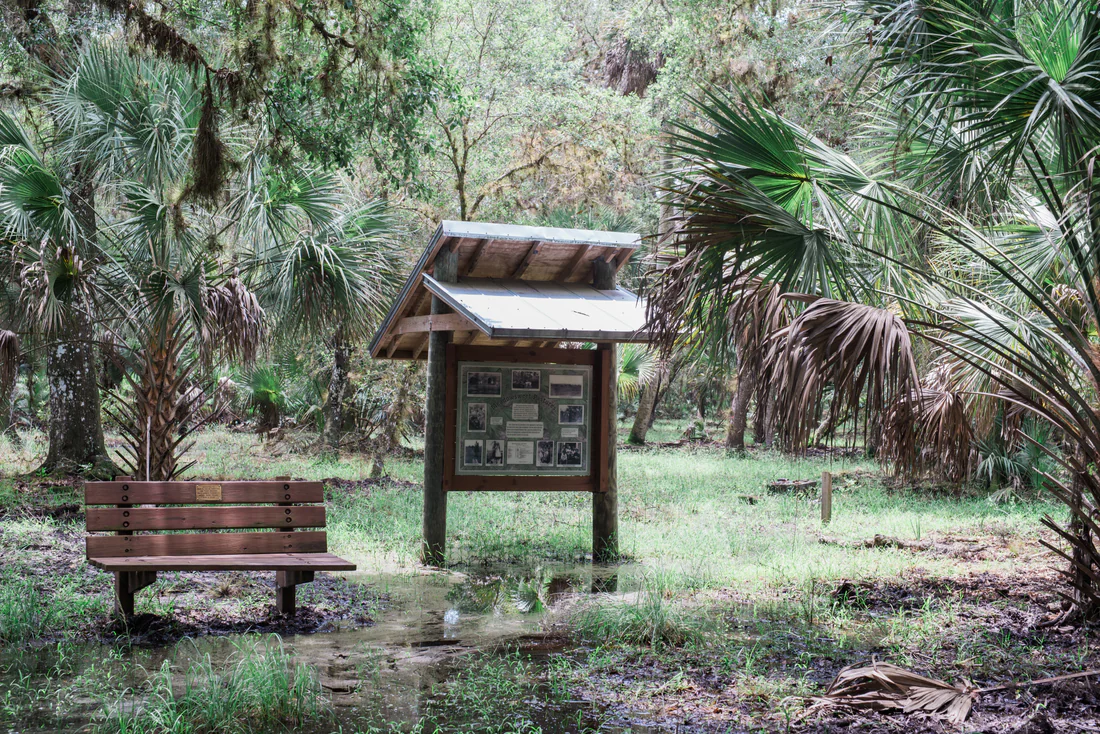
A state park, the war years, a shark lab and the wade-ins
In October 1934 the first Civilian Conservation Corps workers, from South Carolina, reached the Myakka River valley and started work on a state park. In July 1935, people at a Sarasota town meeting voted against bringing in a Black corps, and within three days the Army shut down all work at the park. Sarasota later accepted a Black corps, and from late 1935 most of the park's workers were men of color. Myakka River State Park opened to the public in February 1941. The park's visitor center today is a horse barn built by the CCC and later refurbished.
The Lido Casino, an art deco beach pavilion designed by Ralph Twitchell, went up in 1940 with WPA money, but Black residents were not allowed in. In World War II the Manatee-Sarasota Airport became a military field with 3,000 servicemen, and Venice Army Air Field opened on July 7, 1942. In January 1955 Eugenie Clark, an expert on sharks, moved to Placida, where the Vanderbilt family helped her open the Cape Haze Marine Laboratory. In 1960 the lab moved to the southern end of Siesta Key, and in 1967 it took the name Mote, after the Mote family. New College was founded as a private college on October 11, 1960, and its first class enrolled in 1964.
In September 1955, Neil Humphrey Sr., who led the local NAACP, walked onto Lido Beach with other Newtown residents, though the beach was closed to Black people. People taunted the group and threw bottles at them. Sarasota Magazine says it was the first wade-in but not the last, and for years people from Newtown kept driving out to Lido in caravans. Rather than open the beach, the county gave Newtown its own swimming pool. The Civil Rights Act of 1964 banned segregated beaches by law, but sources differ on whether the county's beaches were fully integrated then or only years later.
Sources: Florida State Parks: Legacy of the CCC at Myakka; Florida State Parks: Myakka River State Park, History; Sarasota Magazine: Six Sarasota Tourist Attractions From the Past (March 6, 2021); History & Preservation Coalition of Sarasota County: Sarasota History; Charlotte Sun: Plaque marks the spot for historic Sarasota County sites (December 29, 2020); Your Observer: Mote at 60: A bigger fish in the sea (January 27, 2015); Mote Marine Laboratory: Dr. Eugenie Clark; New College of Florida: History; Sarasota Magazine: In 1955, Local Heroes Staged 'Wade-Ins' to Protest Segregation (January 13, 2023); U.S. Civil Rights Trail: Sarasota; FOX 13 Tampa Bay: NAACP commemorates 65th anniversary of beach caravan to integrate Sarasota beaches (September 30, 2020); Sarasota Magazine: Sarasota Added to U.S. Civil Rights Trail (January 22, 2019)
Next: Chapter 11, Since 1990: A rail trail, world rowing and a 100th birthday →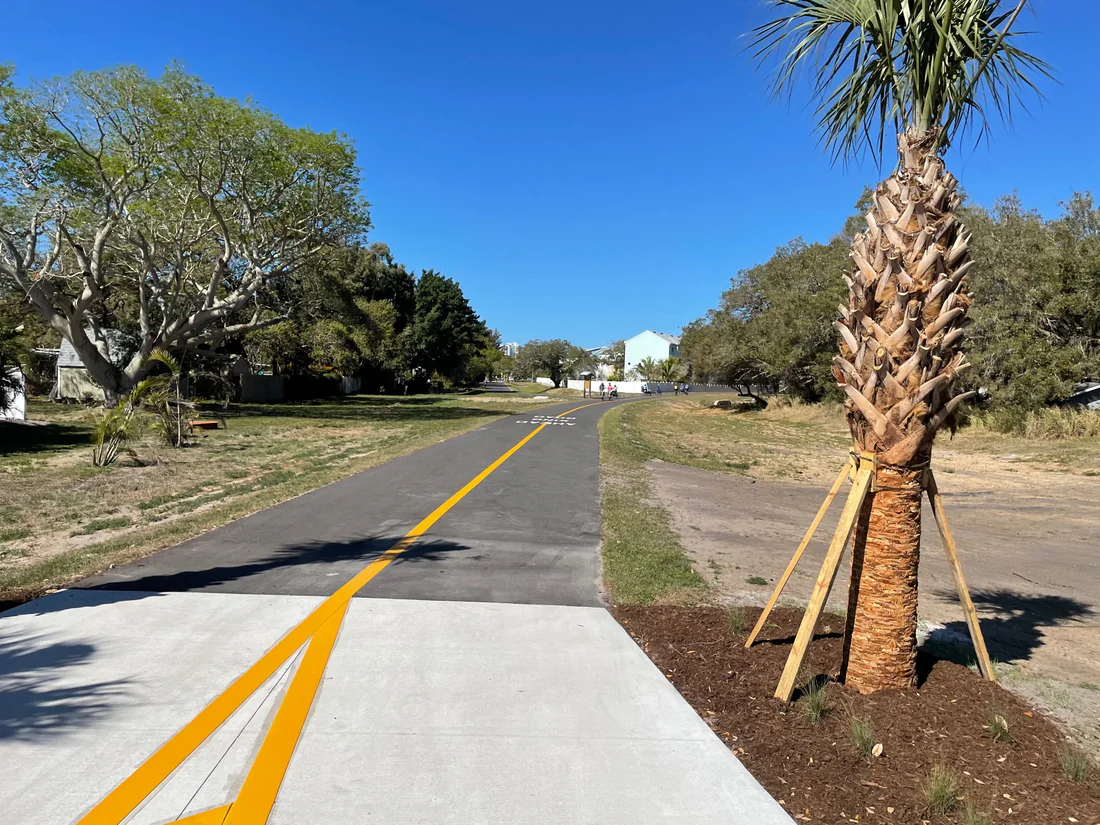
Since 1990: A rail trail, world rowing and a 100th birthday
The Legacy Trail, laid on the old Seaboard rail line, opened in 2008 and ran 10 miles from the Venice Train Depot north to Palmer Ranch. In 2017 Sarasota's Nathan Benderson Park held the World Rowing Championships, which ended on Sunday, October 1. Sarasota Magazine said it was the first time in more than 20 years that the event had come to the United States. A World Rowing spokesman put the crowd on the final day at more than 8,000.
In 2018 Hurricane Michael uncovered the ruins of the Lido Casino, which had been torn down in 1969. One piece of floor, laid in red and green tile, looked as bright as it had in 1940. By January 2019, the Newtown African American Heritage Trail had joined the U.S. Civil Rights Trail, thanks to the 1955 wade-ins at Lido Beach. To mark the honor, more than 50 people, among them some of the original protesters, rode to Lido Beach again on Martin Luther King Jr. Day. Sarasota County turned 100 on July 1, 2021.
The centennial year brought live events and a phone app with nine driving tours that people take on their own, reaching Venice, Englewood, Old Miakka and downtown Sarasota. On March 3, 2022, the Legacy Trail reached Payne Park in downtown Sarasota, giving riders 18.5 miles of trail from Sarasota to Venice. In April 2024, Sarasota's Historic Preservation Board turned down a request to tear down the 1926 Colson Hotel. In June 2026, the City of Sarasota opened Echoes of Sarasota, a show of 19 paintings about the city's past, at City Hall and the Van Wezel Performing Arts Hall. The city tied the exhibit to the nation's 250th anniversary.
Sources: Your Observer: First phase of parallel track to Legacy Trail opens (Andrew Warfield, April 2, 2026); Sarasota Herald-Tribune (Earle Kimel, as carried by AOL): Legacy Trail in Sarasota opens to Payne Park along with two trailheads; Sarasota Magazine: The World Rowing Championships Come to Sarasota (Kay Kipling, June 30, 2017); Your Observer: 2017 World Rowing Championships closes in Sarasota (Jay Heater, October 1, 2017); Sarasota Magazine: Six Sarasota Tourist Attractions From the Past (March 6, 2021); Sarasota Magazine: Sarasota Added to U.S. Civil Rights Trail (January 22, 2019); Sarasota Magazine: County Sets Week of Celebrations to Mark the Sarasota Centennial (June 28, 2021); Patch: Sarasota County Celebrates Centennial With Special Events (March 22, 2021); Sarasota Magazine: Sarasota County Auto Tours App Connects Past and Present (July 10, 2026); Sarasota Magazine: Sarasota Historic Preservation Board Denies Permit to Demolish Historic Hotel Built During Segregation (April 10, 2024); Sarasota Magazine: In the 1920s, Sarasota Was Small, Southern and Segregated (November 3, 2025); Sarasota Magazine: 'Echoes of Sarasota' Exhibit Connects Us to Our Past (July 23, 2026)
Next: the whole story, in dates →The whole story, in dates
People come to two deep sinkholes in today's North Port.
People settle around a spring at Spanish Point and start building shell mounds.
Mapmaker Bernard Romans puts the name "Boca Sarazota" on the coast.
William H. Whitaker gets a deed to land on Sarasota Bay.
At emancipation, Union troops take Jeffery and Hannah Bolding to Key West.
John Webb starts a post office called Osprey.
Scottish colonists arrive and find only wilderness.
Lewis Colson is named pastor of Bethlehem Baptist Church.
Sarasota is made a town, and John Hamilton Gillespie is elected its mayor.
Bertha Palmer moves to Sarasota from Chicago.
A school for Black children opens at the Knights of Pythias Hall.
Newtown's first plat is recorded in Manatee County.
Voters approve the new county, 518 to 154.
Sarasota County comes into being.
The Brotherhood of Locomotive Engineers begins building Venice.
The first John Ringling Bridge opens.
John Ringling brings the circus's winter quarters to Sarasota.
The Tamiami Trail is finished.
The first Civilian Conservation Corps workers reach the Myakka River valley.
John Ringling dies and leaves Ca' d'Zan and his art museum to the State of Florida.
Myakka River State Park opens to the public.
Venice Army Air Field opens.
Cecil B. DeMille films The Greatest Show on Earth in Sarasota.
Eugenie Clark moves to Placida to open the Cape Haze Marine Laboratory.
Neil Humphrey Sr. and other Newtown residents walk onto Lido Beach in a wade-in.
The circus winter quarters move to Venice.
New College begins as a private college.
Historic Spanish Point is nominated for the National Register of Historic Places.
Warm Mineral Springs is listed on the National Register of Historic Places.
The circus closes its Venice winter home.
The Legacy Trail opens, running north from the Venice Train Depot.
The World Rowing Championships end at Nathan Benderson Park.
Hurricane Michael uncovers the ruins of the Lido Casino.
More than 50 people ride to Lido Beach again after the Newtown trail joins the U.S. Civil Rights Trail.
Sarasota County turns 100.
The Legacy Trail reaches Payne Park in downtown Sarasota.
The city's Historic Preservation Board refuses to let the Colson Hotel be torn down.
The Echoes of Sarasota exhibit opens at City Hall and the Van Wezel Performing Arts Hall.
Where you can still see it
 01
01 02
02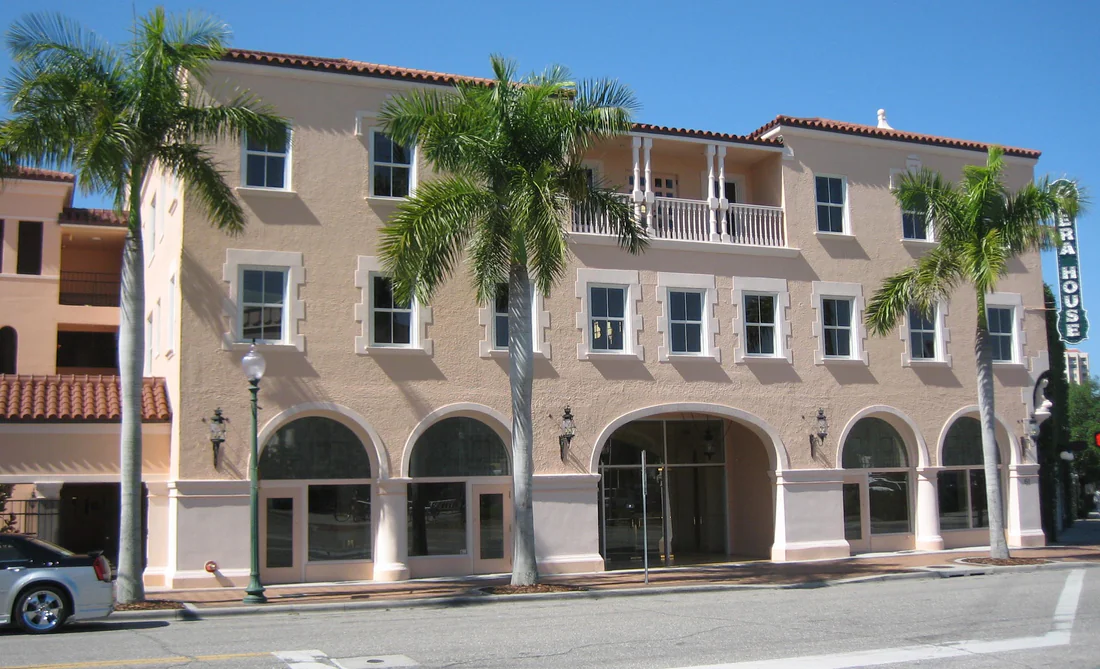 03
03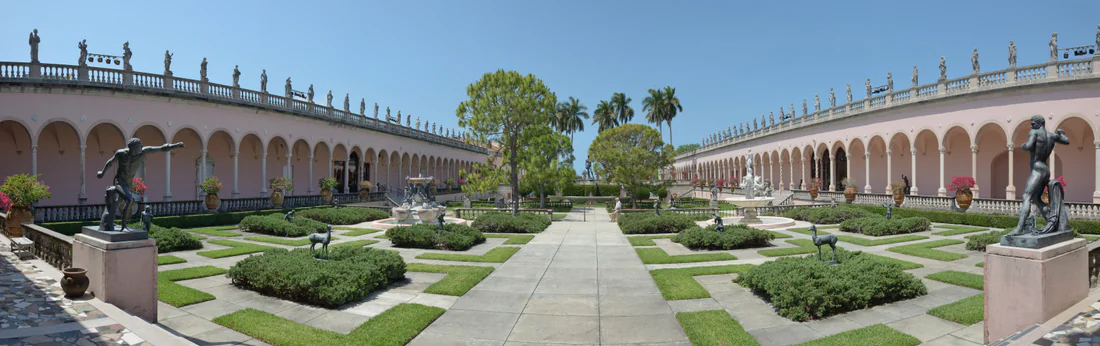 04
04 05
05Myakka River State Park
Goes with: A state park, the war years, a shark lab and the wade-ins
Open the place page →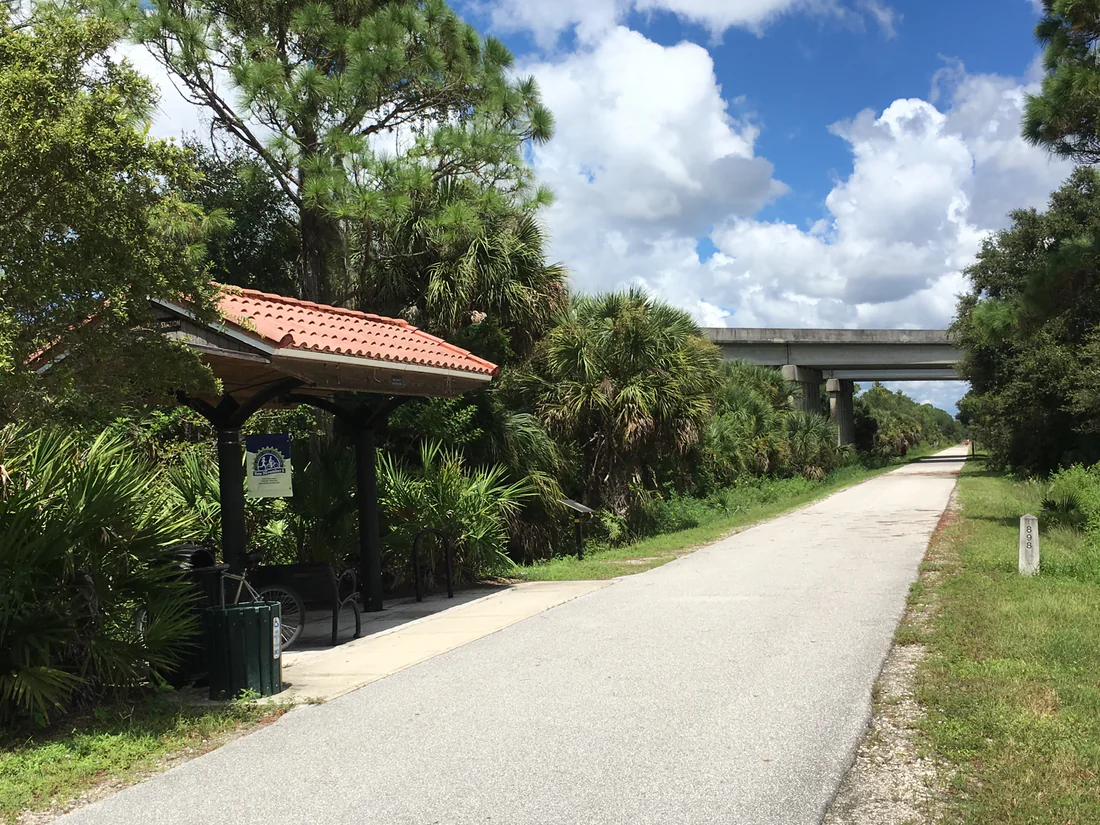 06
06The Legacy Trail
Goes with: Since 1990: A rail trail, world rowing and a 100th birthday
Open the place page → 07
07Questions people ask
When was Sarasota County created?
Sarasota County came into being on July 1, 1921, after the Legislature voted to create it in May 1921 and voters approved it in June.
Chapter 7 →Where did the name Sarasota first appear?
The name first showed up on Spanish maps, with spellings that included Sarasote, Zarazote and Saraxote.
Chapter 3 →Who was the first settler in Sarasota?
The History & Preservation Coalition of Sarasota County says William H. Whitaker, who received a deed to land on Sarasota Bay on September 1, 1851, was the first white settler to stay for good.
Chapter 4 →When did the Ringling circus come to Sarasota?
In 1927 John Ringling moved the circus's winter quarters to Sarasota from Bridgeport, Connecticut.
Chapter 9 →What were the Lido Beach wade-ins?
In September 1955, Neil Humphrey Sr., who led the local NAACP, walked onto Lido Beach with other Newtown residents, though the beach was closed to Black people, and for years people from Newtown kept driving out to Lido in caravans.
Chapter 10 →Where this comes from.
- WUWF Public Media: Parks and Museums: Warm Mineral Springs Park (July 9, 2024) ↗ Read October 16, 2026
- City of North Port: Beneath Warm Mineral Springs Park ↗ Read October 16, 2026
- Historical Marker Database: Prehistoric Man Lived Here/Spring Was Once a Cave (Sarasota County Historical Commission marker) ↗ Read October 16, 2026
- University of Miami Rosenstiel School: Little Salt Spring, History ↗ Read October 16, 2026
- Marie Selby Botanical Gardens: Archaeology ↗ Read October 16, 2026
- Sarasota Magazine: For 50 Years, Archaeologist Marion Almy Has Uncovered and Protected Florida's Buried History (September 4, 2026) ↗ Read October 16, 2026
- Charlotte Sun: Plaque marks the spot for historic Sarasota County sites (December 29, 2020) ↗ Read October 16, 2026
- Your Observer: The land almost no one wanted (2026) ↗ Read October 16, 2026
- History & Preservation Coalition of Sarasota County: Sarasota History ↗ Read October 16, 2026
- Sarasota Magazine: The Story of Jeffery Bolding, Sarasota's First Enslaved Man ↗ Read October 16, 2026
- Historical Marker Database: Venice (Sarasota County Historical Commission marker, 1983) ↗ Read October 16, 2026
- Sarasota Magazine: The Land Boom Decade That Changed Sarasota Forever (Jeff LaHurd, November 3, 2025) ↗ Read October 16, 2026
- Newtown Alive: Newtown History Timeline ↗ Read October 16, 2026
- Sarasota Magazine: Life Wasn't Easy for Sarasota's Early Pioneers (December 28, 2016) ↗ Read October 16, 2026
- Sarasota Magazine: Are You a Real Sarasotan? (December 1, 2020) ↗ Read October 16, 2026
- Sarasota Magazine: A Black Landmark From the Days of Segregation Is Being Reborn as a Civic and Cultural Hub (December 2, 2025) ↗ Read October 16, 2026
- Sarasota Magazine: At the Sarasota County History Center, You'll Find Fascinating Historical Objects (December 2, 2025) ↗ Read October 16, 2026
- City of Sarasota: Newtown History ↗ Read October 16, 2026
- Sarasota Magazine: In the 1920s, Sarasota Was Small, Southern and Segregated (November 3, 2025) ↗ Read October 16, 2026
- Sarasota Magazine: Locals Know Bertha Palmer for Her Modest Sarasota Ranch Life, but in Chicago She Defined Gilded Age Luxury (May 1, 2026) ↗ Read October 16, 2026
- Patch: Sarasota County Celebrates Centennial With Special Events (March 22, 2021) ↗ Read October 16, 2026
- Historical Marker Database: Sarasota County Courthouse (Sarasota County Historical Commission marker, 2001) ↗ Read October 16, 2026
- Your Observer: Sarasota County Centennial: Start of county was contentious ↗ Read October 16, 2026
- Sarasota Magazine: Sarasota County Marks Its Centennial This Year (March 6, 2021) ↗ Read October 16, 2026
- Sarasota Magazine: John Ringling's Vision of St. Armands Circle Lives on Today (Jeff LaHurd, November 3, 2025) ↗ Read October 16, 2026
- Sarasota Magazine: Mable Ringling Left a Legacy Beyond the Art Museum That Bears Her Name (July 6, 2020) ↗ Read October 16, 2026
- Sarasota Magazine: Six Sarasota Tourist Attractions From the Past (March 6, 2021) ↗ Read October 16, 2026
- Sarasota Magazine: Photo: Betty Hutton Filming 'The Greatest Show on Earth,' March 1951 (March 2, 2026) ↗ Read October 16, 2026
- Sarasota Magazine: In 1955, Local Heroes Staged 'Wade-Ins' to Protest Segregation (January 13, 2023) ↗ Read October 16, 2026
- FOX 13 Tampa Bay: NAACP commemorates 65th anniversary of beach caravan to integrate Sarasota beaches (September 30, 2020) ↗ Read October 16, 2026
- U.S. Civil Rights Trail: Sarasota ↗ Read October 16, 2026
- Sarasota Magazine: Sarasota Added to U.S. Civil Rights Trail (January 22, 2019) ↗ Read October 16, 2026
- Sarasota Magazine: County Sets Week of Celebrations to Mark the Sarasota Centennial (June 28, 2021) ↗ Read October 16, 2026
- Sarasota Magazine: Sarasota County Auto Tours App Connects Past and Present (July 10, 2026) ↗ Read October 16, 2026
- Sarasota Magazine: Sarasota Historic Preservation Board Denies Permit to Demolish Historic Hotel Built During Segregation (April 10, 2024) ↗ Read October 16, 2026
- Sarasota Magazine: 'Echoes of Sarasota' Exhibit Connects Us to Our Past (July 23, 2026) ↗ Read October 16, 2026
- Florida Department of State, Division of Arts and Culture: John N. Ringling (Florida Artists Hall of Fame) ↗ Read October 16, 2026
- The Ringling: Ca' d'Zan ↗ Read October 16, 2026
- Historical Marker Database: Ca'D'Zan: House of John (Sarasota County Historical Commission and others) ↗ Read October 16, 2026
- Sarasota County Clerk of the Circuit Court and County Comptroller: Sarasota's Historic Courthouse ↗ Read October 16, 2026
- Florida State Parks: Myakka River State Park, History ↗ Read October 16, 2026
- Florida State Parks: Legacy of the CCC at Myakka ↗ Read October 16, 2026
- Your Observer: Mote at 60: A bigger fish in the sea (January 27, 2015) ↗ Read October 16, 2026
- Mote Marine Laboratory: Dr. Eugenie Clark ↗ Read October 16, 2026
- New College of Florida: History ↗ Read October 16, 2026
- Sarasota Magazine: The World Rowing Championships Come to Sarasota (Kay Kipling, June 30, 2017) ↗ Read October 16, 2026
- Your Observer: 2017 World Rowing Championships closes in Sarasota (Jay Heater, October 1, 2017) ↗ Read October 16, 2026
- Your Observer: First phase of parallel track to Legacy Trail opens (Andrew Warfield, April 2, 2026) ↗ Read October 16, 2026
- Sarasota Herald-Tribune (Earle Kimel, as carried by AOL): Legacy Trail in Sarasota opens to Payne Park along with two trailheads ↗ Read October 16, 2026