The Ringling
John Ringling made a fortune in the circus and spent a large part of it on European art. He began building the museum on June 27, 1927; it opened briefly in 1930 and 1931 and properly on January 17, 1932.
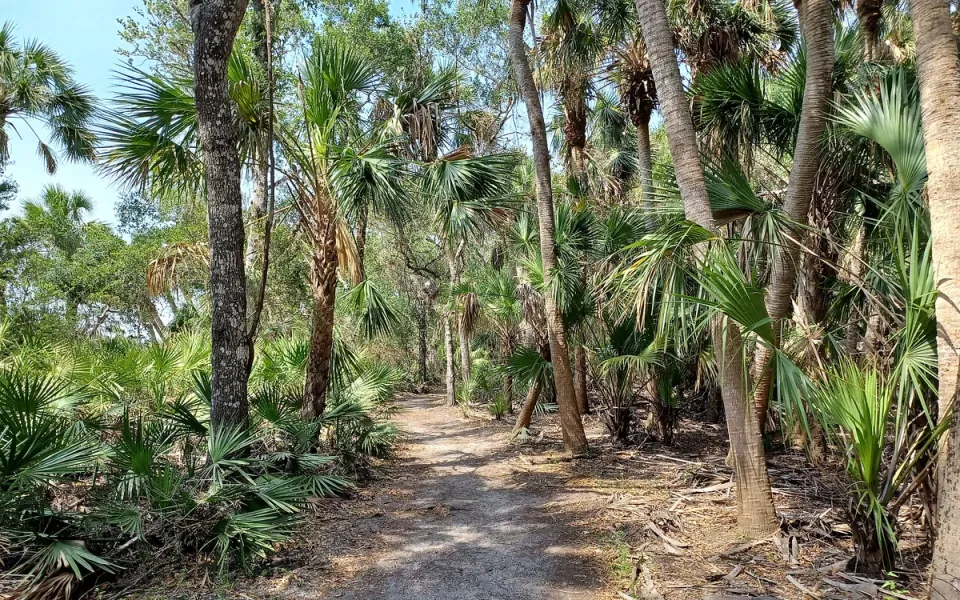
Photograph: Trail in Myakka River State Park.jpg by Mx. Granger · CC0 · Restored from the credited Wikimedia Commons file, normalized to the consistent attraction-card frame and converted to WebP by 1stFlorida.com. Portrait originals retain their complete composition over a softly blurred extension of the same photograph.
Sarasota County attraction
Sarasota County · Gulf Coast
Thirty-seven thousand acres of prairie, hammock and wetland east of Sarasota, with a walkway through the tree canopy and a great many alligators.
Also worth a visit
John Ringling made a fortune in the circus and spent a large part of it on European art. He began building the museum on June 27, 1927; it opened briefly in 1930 and 1931 and properly on January 17, 1932.
Marie Selby left her bayfront property to the public when she died, and the gardens opened on July 7, 1975. The downtown campus has grown from seven acres to nearly fifteen, still built around the Selby house and the banyan grove she and her husband William planted the better part of a century ago.
Mote SEA opened on October 8, 2025, at Nathan Benderson Park, serving Sarasota and Manatee counties, and it replaces the aquarium Mote ran for decades on City Island. The building runs to 146,000 square feet on a twelve-acre campus.
The sand here is about 99 percent quartz, ground down from the Appalachian Mountains and washed south over a very long time. Quartz reflects heat rather than holding it, so even on the hottest afternoon the dry sand is walkable barefoot, which is not true of most beaches in Florida.
Venice calls itself the shark tooth capital of the world and the claim rests on geology. Ten million years ago this coast was under water and thick with sharks, and the fossil layer beneath the beaches here runs eighteen to thirty-five feet deep.
The sinkhole is 236 feet across at the surface and 230 feet deep, narrowing and widening again like an hourglass. About twenty million gallons a day move through it at around 86 degrees, with five to seven million overflowing, and the water carries a heavy load of dissolved minerals, chloride running 1,600 to 1,700 milligrams a liter.
Keep comparing