St. Johns County was created on July 21, 1821, one of the first two counties in Florida. The county is named for the St. Johns River. Its seat is St. Augustine, which the county calls the nation's oldest city, founded by Spanish explorers in 1565. People have lived in northeast Florida for more than 10,000 years, the county notes.
This page tells the story in order, from the Timucua to Flagler College, championship golf and a lighthouse at 150, then lists places in the county where you can still see it. The sources for each part are named at the end of that part, and all of them are listed at the bottom of the page.
The Timucua
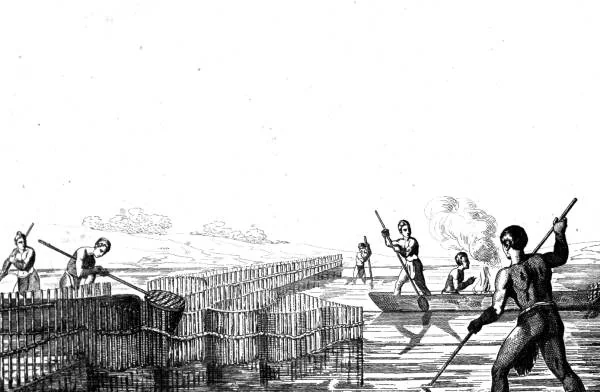
People have lived in what is now northeast Florida for more than 10,000 years. The Timucua had been living around St. Augustine for over 500 years when Menéndez arrived. They fished, hunted, and grew corn, beans and squash. Families traced their descent through the mother's side. From about 500 BC to AD 1600, the Timucua here cooked, stored and ate their food using what is called St. Johns pottery.
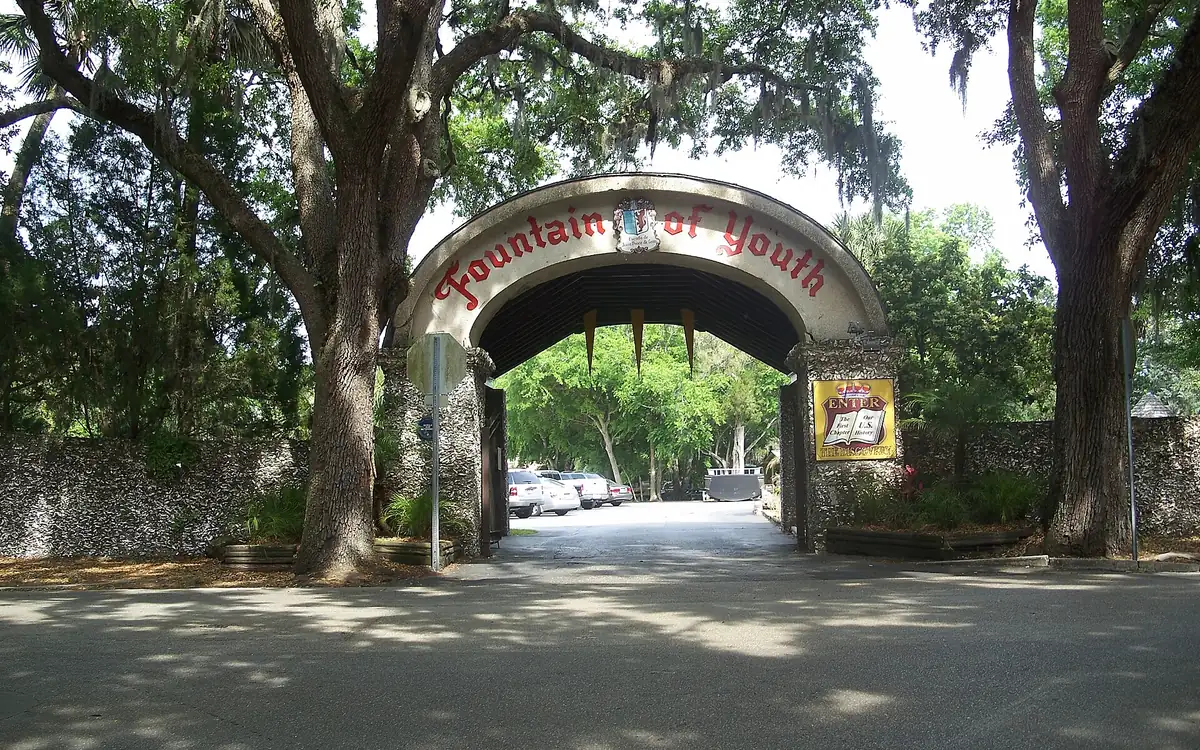
In 1565 the leading chief around St. Augustine was Seloy. Archaeologists have found his town in today's Fountain of Youth park, roughly a mile north of where the Castillo de San Marcos stands. It was large, spreading over more than 12 acres. Timucua houses were usually round and built of palm thatch. Remains of Nombre de Dios, a Catholic mission started in the 1580s, have also been found in the park.
Sources: St. Johns County: St. Johns County 200th Celebration: 200 Years of Stories; Florida Museum of Natural History: The Timucua in St. Augustine; WUWF: Exploring Spanish history at Fountain of Youth Park
Next: Chapter 2, Menéndez founds St. Augustine, 1565 →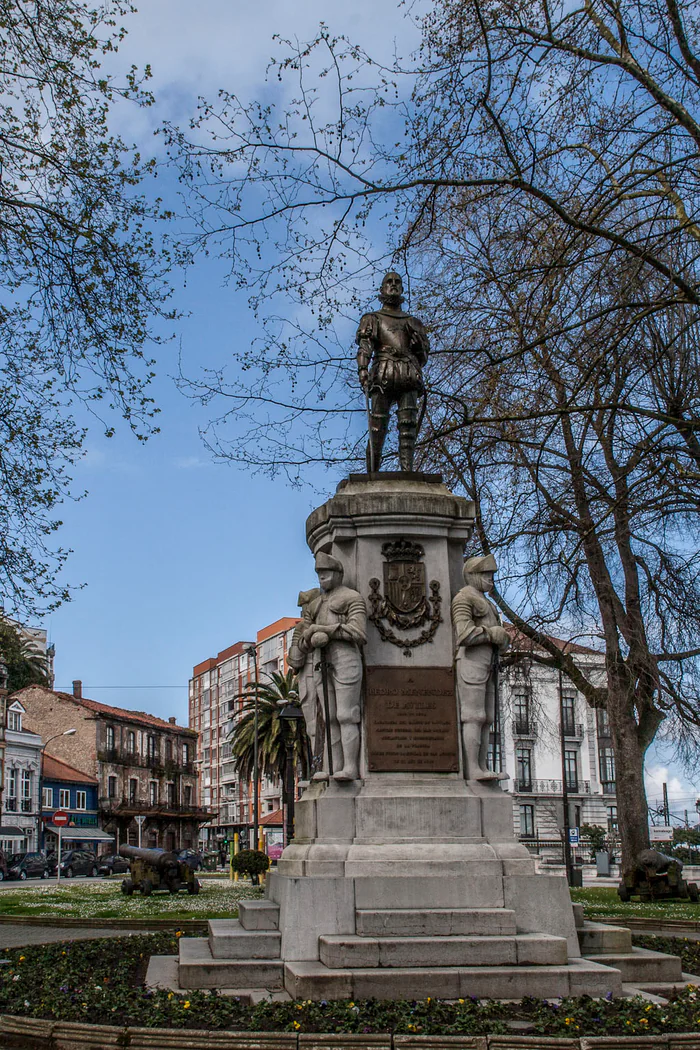
Menéndez founds St. Augustine, 1565
Britannica says Juan Ponce de León landed in this area in 1513 and claimed the land for Spain. In 1564, France built a settlement called Fort Caroline about 35 miles to the north, close to where the St. Johns River meets the ocean. Spain's King Philip sent Admiral Pedro Menéndez de Avilés to drive the French out. Menéndez founded St. Augustine on September 8, 1565. He named it for St. Augustine of Hippo, because he had first sighted the coast on that saint's feast day.
About 800 colonists came with him, among them 26 women and enslaved Africans whose number is not known. They first settled in Seloy's town and turned his council house into their first fort. The Park Service notes that the founders held a Mass of Thanksgiving 55 years before the Pilgrims reached Plymouth. The French under Jean Ribault sailed toward St. Augustine, but a hurricane pushed them off course and they came ashore farther south. In September 1565, Menéndez took Fort Caroline from the French.
Menéndez then led 70 soldiers to an inlet where 127 shipwrecked Frenchmen were trapped. Short of food and arms after the wreck, they gave up. Of those men, 111 were killed. On October 12, 1565, a second group, including Ribault, surrendered, and 134 more were killed. Ever since, people have called the inlet Matanzas, which is Spanish for slaughters.
Sources: Encyclopaedia Britannica: St. Augustine; National Park Service: Florida: Fort Matanzas National Monument; Action News Jax: St. Augustine marks birth of founder Don Pedro Menendez de Aviles; Florida Museum of Natural History: First Contacts; National Park Service: Castillo de San Marcos Stories; National Park Service: The Massacre of the French
Next: Chapter 3, Pirates, raids and a fort of shell stone →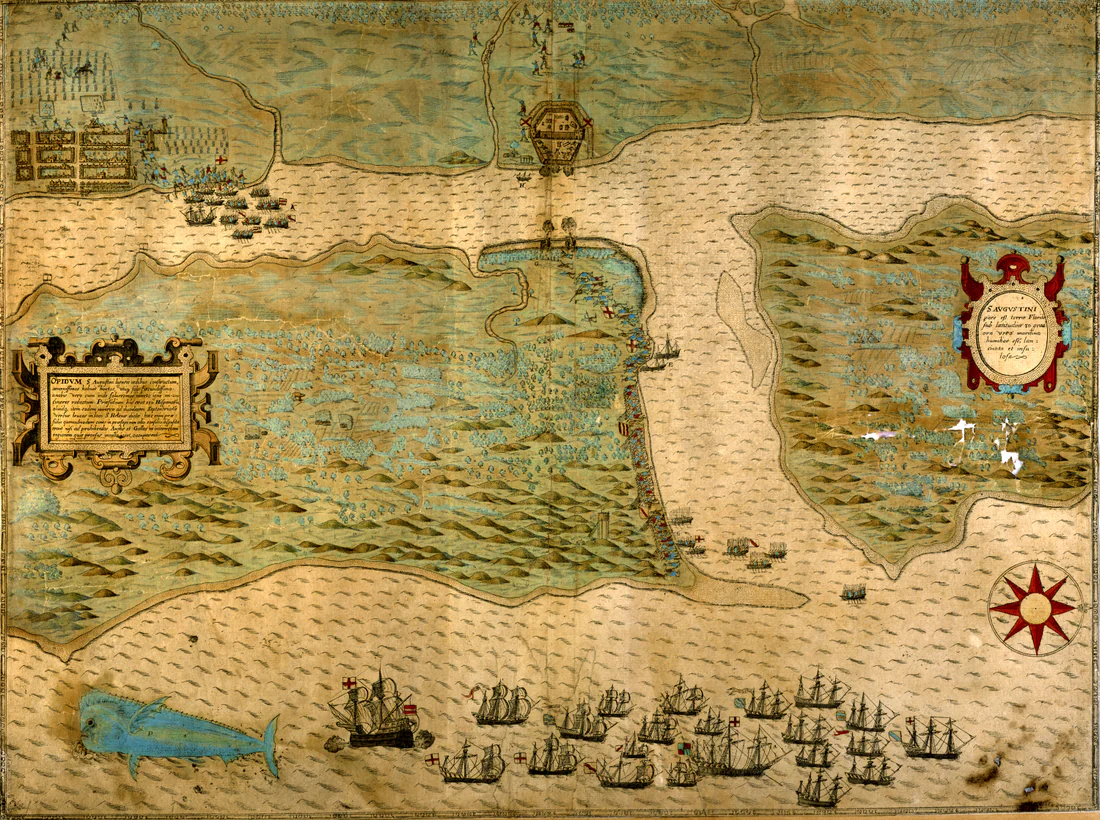
Pirates, raids and a fort of shell stone
The colonists stayed in Seloy's town only until May 1566. Then they moved the town over the bay to Anastasia Island, because they felt safer from attack there. In 1586 a fleet under the English privateer Sir Francis Drake looted the town and set it on fire. English pirates raided the town again in 1668.
After the English founded Charleston in 1670, and with the pirate Robert Searles threatening to take over, the Spanish Crown was at last willing to pay for real defenses. Work on a stone fort, the Castillo de San Marcos, began in 1672 and ended in 1695. The builders used coquina, a shell stone quarried on Anastasia Island in what is now Anastasia State Park.
In 1702 Governor James Moore of Carolina led an English attack, and the town was burned. During the siege, the townspeople took shelter inside the fort. Cannonballs fired at its coquina walls bounced off or sank in only a few inches. The attackers flattened everything else, so the Castillo is the only building that survives from the city's earliest days.
Sources: Florida Museum of Natural History: Colonization and Conflict; Museum of Florida History: Fortifications in St. Augustine; Florida Museum of Natural History: The Castillo Years; National Park Service: Coquina, the Rock that Saved St. Augustine; Encyclopaedia Britannica: St. Augustine; National Park Service: St. Augustine Town Plan Historic District
Next: Chapter 4, Fort Mose and the siege of 1740 →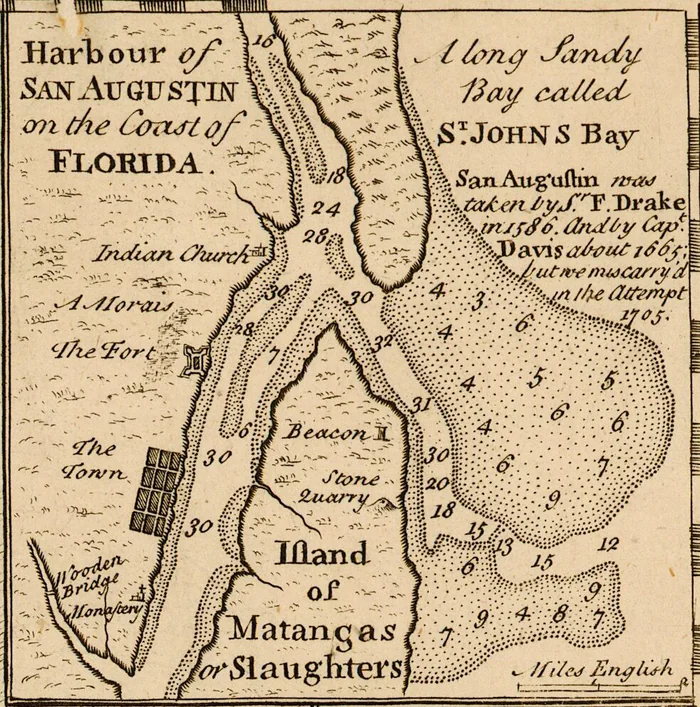
Fort Mose and the siege of 1740
In 1738 Florida's Spanish governor chartered a settlement named Gracia Real de Santa Teresa de Mose. Called Fort Mose for short, it was a refuge for people escaping slavery in the English colonies of the Carolinas. About 100 Africans are thought to have made their homes there. The Museum of Florida History says it was the first free Black settlement given official approval within today's mainland United States.
In 1740 James Edward Oglethorpe, the British general who led the Georgia colony, laid siege to St. Augustine. The people of Fort Mose had to retreat into the town. A battle was fought at Fort Mose on June 26, 1740. For 27 days Oglethorpe's guns fired on the Castillo. Once again the fort held.
Spain then built a small stone fort at Matanzas Inlet, about 15 miles south of St. Augustine. Fort Matanzas, finished in 1742, is a coquina fort 30 feet tall and 50 feet across. After it turned back a British attempt on the inlet in 1742, the fort never fired its guns again. The people of Fort Mose went back in 1752 and put up a new fort. In 1763 Florida passed to England, and the last of the Fort Mose militia left for Cuba.
Sources: Florida State Parks: History of Fort Mose; Museum of Florida History: Fortifications in St. Augustine; Encyclopaedia Britannica: St. Augustine; Florida's Historic Coast (St. Augustine, Ponte Vedra & The Beaches Visitors and Convention Bureau): Discover the Incredible Story of America's First Free Black Settlement; National Park Service: Coquina, the Rock that Saved St. Augustine; National Park Service: Florida: Fort Matanzas National Monument
Next: Chapter 5, British rule and the Minorcans →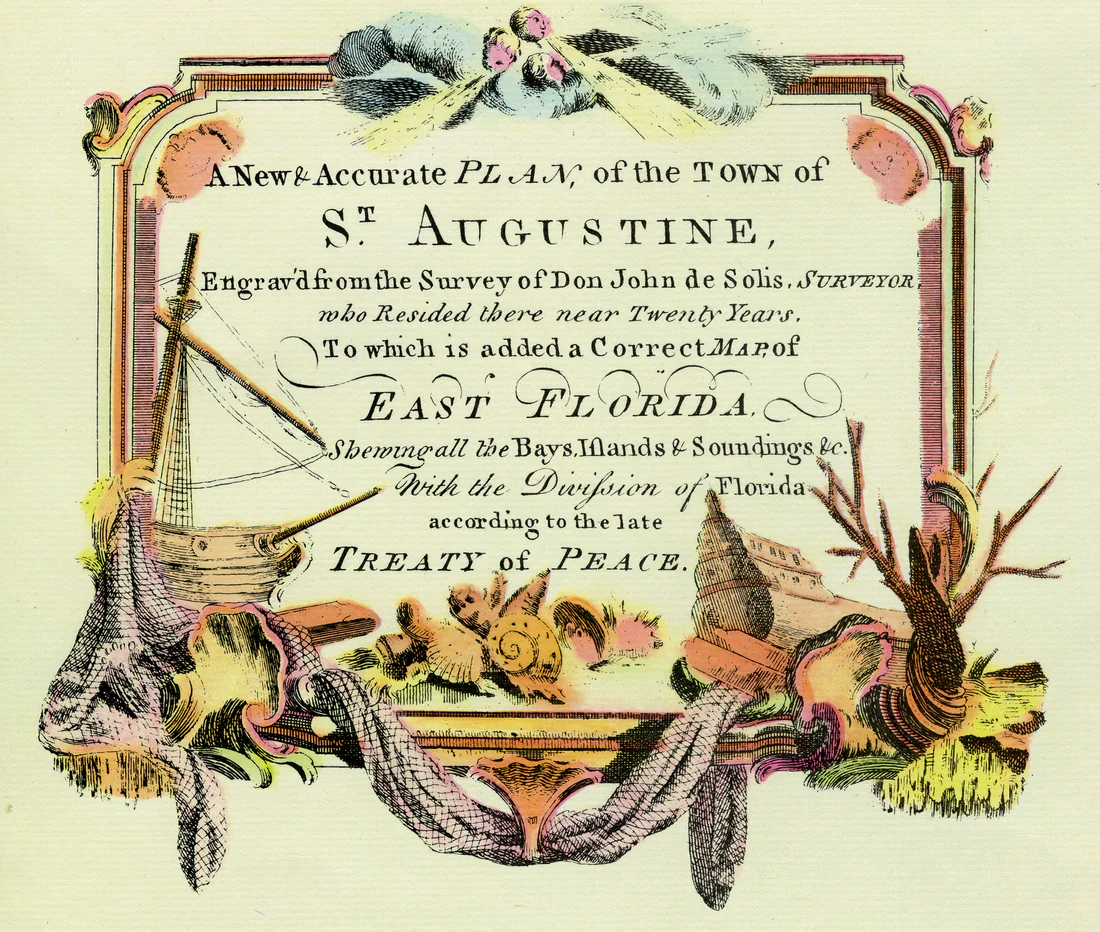
British rule and the Minorcans
In 1763, as the Seven Years' War ended, Spain traded Florida to England and received Cuba in return. Most Spanish residents decided to leave for Cuba. The British renamed the Castillo Fort St. Mark. Florida stayed loyal to Britain all through the American Revolution. Angry townspeople burned likenesses of the rebels Sam Adams and John Hancock in the plaza.
Three men who had signed the Declaration of Independence were held prisoner in St. Augustine: Edward Rutledge, Arthur Middleton and Thomas Heyward Jr. South Carolina's lieutenant governor, Christopher Gadsden, spent 42 weeks alone in the fort's jail.
Dr. Andrew Turnbull brought about 1,500 contract workers, most of them Minorcans, to East Florida. By late summer 1768 they had settled at New Smyrna. In 1777 the laborers walked north to St. Augustine and took their complaints to Governor Patrick Tonyn. After 1777 a large group of these Minorcan farmers and fishermen came to St. Augustine. One traditional Minorcan dish is vinegar sausage seasoned with datil peppers.
Sources: Florida Museum of Natural History: The Castillo Years; National Park Service: The British Period (1763-1784); National Park Service: Castillo de San Marcos and Fort Matanzas National Monuments; Florida Memory: Dr. Andrew Turnbull and the Origins of New Smyrna Beach; Florida Museum of Natural History: New Arrivals
Next: Chapter 6, Spain returns, and St. Johns County is created →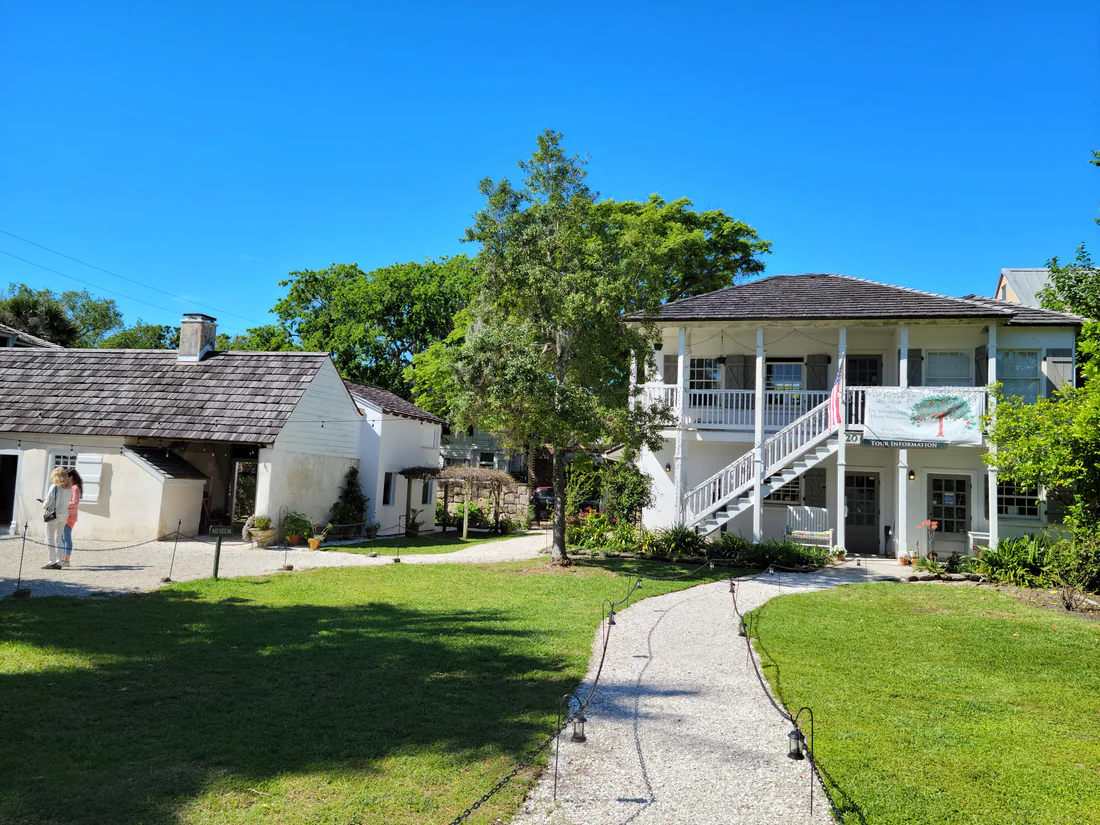
Spain returns, and St. Johns County is created
British rule lasted just 20 years. A treaty in 1783 returned Florida to Spain. From 1784 to 1821, during Spain's second time in charge, over half of St. Augustine's people came from English, Minorcan or newly American families. Britannica lists the cathedral, from 1791, and the Ximenez-Fatio House, from about 1797, among the restored Spanish colonial buildings in town.
In 1821 Colonel Robert Butler took charge of Spanish East Florida from Colonel José M. Coppinger. Andrew Jackson created St. Johns County, along with Escambia County, on July 21, 1821. The new county took in everything east of the Suwannee River. Its area topped 39,000 square miles, most of the Florida peninsula. In time, all 67 of Florida's counties grew out of those first two.
The St. Johns River gave the county its name. The county's school district traces that name to a Spanish mission, San Juan del Puerto, or Saint John of the Harbor. In 1932 the federal Interior Department removed the apostrophe from Saint John's, because an apostrophe suggested ownership. St. Augustine is the county seat.
Sources: Florida Museum of Natural History: The End of Colonial Dominion; Encyclopaedia Britannica: St. Augustine; St. Johns County School District: Our Community; St. Johns County: St. Johns County 200th Celebration: 200 Years of Stories; WJHG: This Day in History: July 21, 1821; University of South Florida, Florida Center for Instructional Technology: St. Johns County; St. Johns County: 401 Introduction (Administrative Code)
Next: Chapter 7, Fort Marion: the Seminole War, the Civil War and prisoners from the West →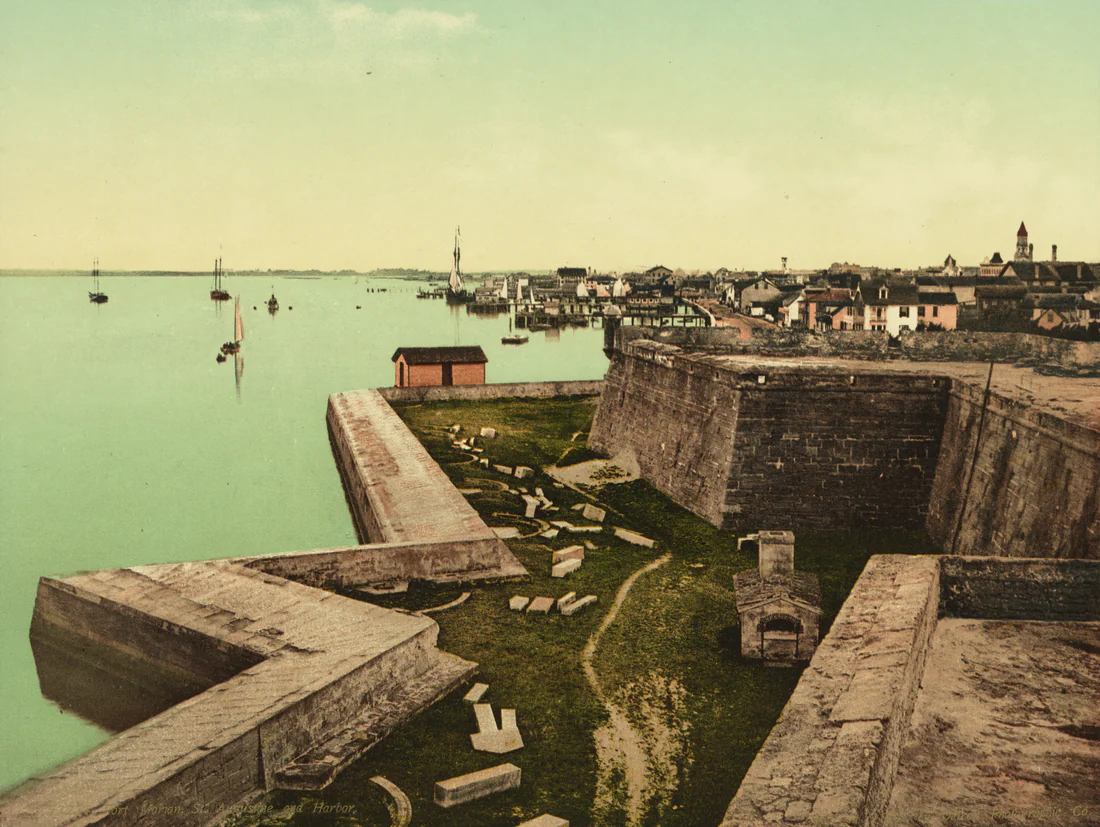
Fort Marion: the Seminole War, the Civil War and prisoners from the West
On January 7, 1825, an Army order gave the Castillo a new name, Fort Marion. Seminole leaders, with warriors and families, met at Fort Peyton, south of St. Augustine. General Jesup had called them there by pretending he wanted peace talks. They carried a white truce flag, yet soldiers surrounded them and made them prisoners. In 1837 the Army imprisoned Osceola and roughly 200 more Seminoles inside Fort Marion as prisoners of war.
Another well-known prisoner was Coacoochee, also called Wild Cat. He led an escape after dark on November 29, 1837. Twenty prisoners got out that night, the Park Service says, but just how they did it is still debated. Army records say they climbed out a window in the fort's southwest corner. Wild Cat's own account was that only two men, he and one companion, got away.
On March 11, 1862, a landing party from the Union warship Wabash, led by Commander C. R. P. Rodgers, took over St. Augustine. Union forces held the city until 1865. In 1875 Fort Marion again became a prison for Native Americans. The 74 captives came from five Great Plains tribes. In 1886 hundreds of Chiricahua Apache people were held there too.
Sources: National Park Service: Fort Marion; National Park Service: Seminole Incarceration; Naval History and Heritage Command: Wabash I (Screw Frigate); EBSCO Research Starters: St. Augustine, Florida
Next: Chapter 8, A new lighthouse, Flagler's hotels and the Alligator Farm →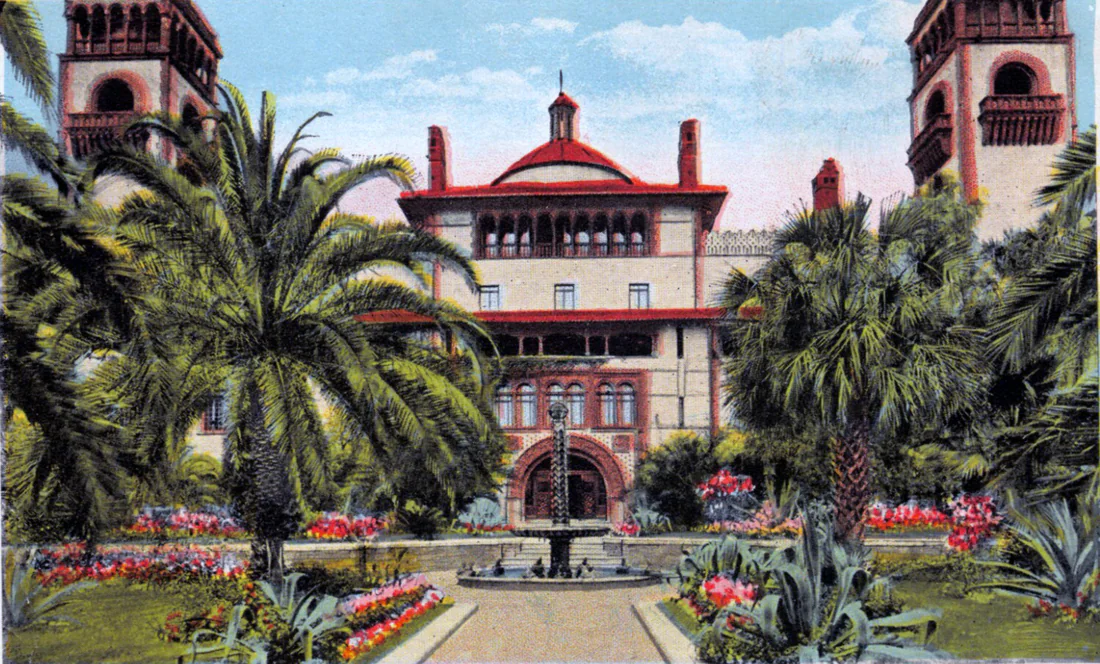
A new lighthouse, Flagler's hotels and the Alligator Farm
The Coast Guard says Florida's first lighthouse was an old Spanish watchtower in St. Augustine, put to use in 1824. Work on a new lighthouse began in 1871. Its light first shone on October 15, 1874. In 1878 the old lighthouse fell into the sea.
Henry Flagler, a cofounder of the Standard Oil Company, came to St. Augustine as a winter guest in the 1880s. By 1886, a Flagler rail line linked the city with the rest of the eastern seaboard. His company built two large, richly decorated hotels, named the Alcazar and the Ponce de León. The Ponce de León hotel opened in January 1888. Thomas Edison wired the hotel's electric lights, Flagler College says.
In 1893 George Reddington and Felix Fire, who had been collecting alligators on Anastasia Island, opened the St. Augustine Alligator Farm on South Beach. Instead of the showy winter resort Flagler pictured, St. Augustine became a quieter town where people lived all year. Flagler died on May 20, 1913. In 1920 the Alligator Farm moved to the spot where it stands today.
Sources: U.S. Coast Guard History Program: St. Augustine Lighthouse, St. Augustine, Florida; EBSCO Research Starters: St. Augustine, Florida; National Park Service: St. Augustine Town Plan Historic District; Flagler College: Historical Virtual Tours; Florida Memory, State Archives of Florida: Reddington's "Gator" Farm; Florida Department of State, Florida Historical Markers: St. Augustine Alligator Farm
Next: Chapter 9, The forts become national monuments, and the old town is restored →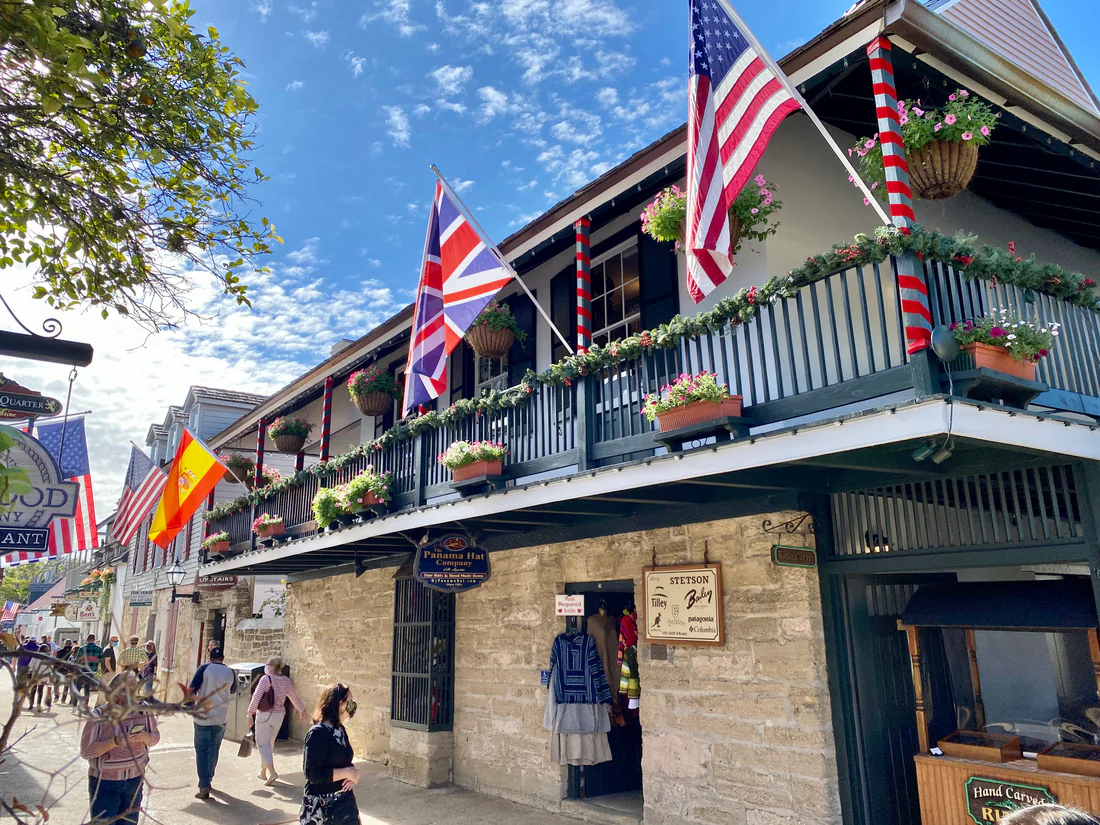
The forts become national monuments, and the old town is restored
Near the end of the 1800s, the little-used Fort Matanzas was in bad shape, and its foundation had cracked in three places. In 1916 the federal government began restoring the fort because of its history. In 1924 President Coolidge made the Castillo, then still called Fort Marion, a national monument. Fort Matanzas was made a national monument on the same day, October 15, 1924.
In the mid-1930s, people began talking about bringing back the town's Spanish look. World War II held up those plans. In 1942 Congress voted to give Fort Marion back its first name, Castillo de San Marcos. The renaming was part of a joint public and private effort to draw visitors through St. Augustine's Spanish past.
A group called the St. Augustine Historical Restoration and Preservation Committee was formed on June 19, 1959. The restored area centers on St. George Street.
Sources: National Park Service: Castillo de San Marcos and Fort Matanzas National Monuments; National Park Service: Florida: Fort Matanzas National Monument; National Park Service: Fort Marion; EBSCO Research Starters: St. Augustine, Florida
Next: Chapter 10, 1964: the civil rights movement and Martin Luther King Jr. →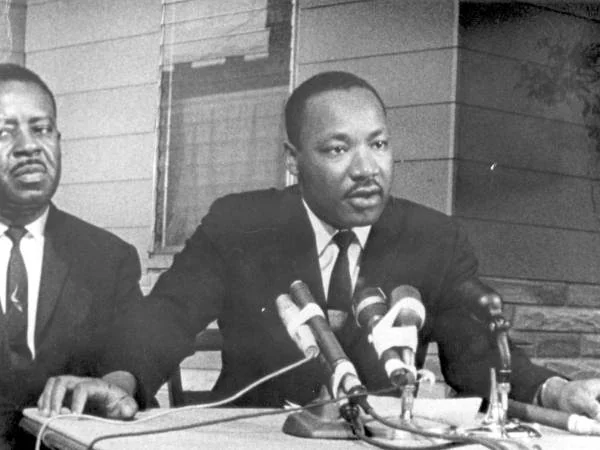
1964: the civil rights movement and Martin Luther King Jr.
Lincolnville, founded in 1866, was the main Black neighborhood in St. Augustine, the Park Service says. Robert Hayling, a Lincolnville dentist and NAACP representative, started the protests that finally brought an end to discrimination in the city. In 1963 he led campaigns against segregated public places in town that served tourists. He also asked the White House to withhold its support from the city's 400th anniversary. When neither effort worked, he asked the Southern Christian Leadership Conference, or SCLC, to help.
Police arrested hundreds of protesters, the Park Service says, among them a group of rabbis and the Massachusetts governor's 72-year-old mother. Martin Luther King Jr. arrived in early June and joined protesters sitting in at Monson's Motor Lodge. He was arrested in St. Augustine on June 11, 1964. He, Ralph Abernathy and several others had asked to be served at a segregated restaurant. That same month, baseball star Jackie Robinson spoke to a rally for civil rights in Lincolnville.
A week after King's arrest, another group of protesters staged a swim-in in the motel pool. On June 18, 1964, the motel's manager was filmed pouring acid into the pool. The Park Service says the attention from King's sit-in and Robinson's rally helped speed the Civil Rights Act through Congress. The national SCLC leaders left the city on July 1, 1964, one day before President Lyndon Johnson made the Civil Rights Act law. Even after that, the Klan's threats and picketing kept many businesses in town segregated, the King Institute says.
Sources: National Park Service: Lincolnville Historic District; Historical Marker Database: Dr. Martin Luther King Jr., Detained in Jacksonville (marker erected by the City of Jacksonville); Martin Luther King, Jr. Research and Education Institute, Stanford University: St. Augustine, Florida; News4JAX (WJXT): Dr. Martin Luther King Jr. joined push to end racial discrimination in nation's oldest city (January 17, 2022)
Next: Chapter 11, Since 1968: Flagler College, championship golf and a lighthouse at 150 →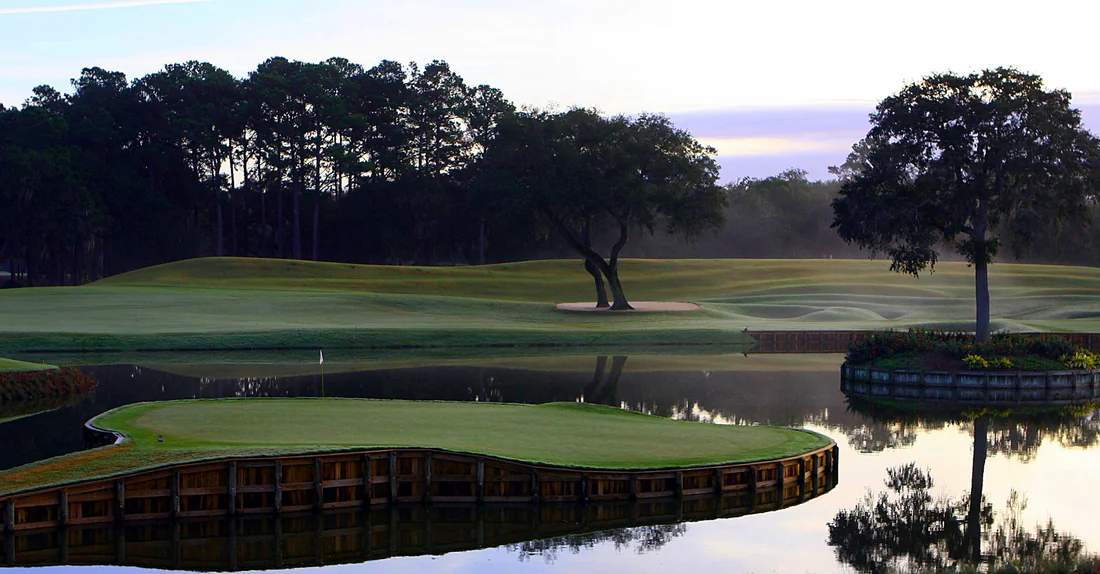
Since 1968: Flagler College, championship golf and a lighthouse at 150
In 1968 Flagler College took over the old Hotel Ponce de León. The Alcazar Hotel became home to the Lightner Museum and to St. Augustine's city offices. Archaeologist Kathleen Deagan first excavated on the Fountain of Youth property in 1976. In the 1980s her team realized it might be Menéndez's first settlement. In 1986 a dig she led found the site of Fort Mose.
The Stadium Course at TPC Sawgrass dates from 1980, and The Players Championship was first played there in 1982. Its 17th hole, with its green on an island, is one of the best-known golf holes in the world, the club says. The World Golf Hall of Fame opened in St. Augustine in 1998, the Associated Press reported. In March 2024 Scottie Scheffler won The Players Championship for the second year in a row, which no golfer had done in its 50 years, the Associated Press reported. By June 2024 the Hall of Fame had returned to Pinehurst, North Carolina.
In 1994 Fort Mose was named a National Historic Landmark, and it went on the National Register of Historic Places. St. Augustine reached the 450th anniversary of its founding on September 8, 2015. UNESCO added Fort Mose to its Route of Enslaved Peoples in 2019. In October 2024 St. Augustine celebrated 150 years of its lighthouse, Action News Jax reported.
Sources: EBSCO Research Starters: St. Augustine, Florida; Florida Museum of Natural History: St. Augustine: First Colony; Florida's Historic Coast (St. Augustine, Ponte Vedra & The Beaches Visitors and Convention Bureau): Discover the Incredible Story of America's First Free Black Settlement; TPC Sawgrass: Golf; Associated Press, in the Butler Eagle: Golf Hall of Fame to move back to Pinehurst at new site (July 2022); Associated Press, on WKMG News 6 ClickOrlando: Scheffler goes back-to-back in Players Championship in Sunday thriller at Sawgrass (March 17, 2024); WLOS News 13: A family legacy returns: World Golf Hall of Fame back in Pinehurst for US Open (June 14, 2024); Florida State Parks: History of Fort Mose; Historic City News: Re-live historic landing of Pedro Menendez September 8th; The Cultural Landscape Foundation: Fort Mose Historic State Park; Action News Jax: St. Augustine celebrates historic lighthouse after 150 years (October 14, 2024)
Next: the whole story, in dates →The whole story, in dates
Timucua cooks use St. Johns pottery.
Britannica says Ponce de León lands in the area and claims it for Spain.
Pedro Menéndez de Avilés founds St. Augustine.
Jean Ribault's men surrender at the inlet later called Matanzas, and 134 are killed.
Sir Francis Drake's fleet loots and burns the town.
The Castillo de San Marcos is built.
An English attack from Carolina burns the town, but the Castillo survives.
Spain charters Fort Mose for people escaping slavery.
A battle is fought at Fort Mose.
The coquina fort at Matanzas Inlet is finished.
Florida passes to England, and most Spanish residents leave for Cuba.
The New Smyrna laborers walk to St. Augustine to complain to the governor.
A treaty gives Florida back to Spain.
Andrew Jackson creates St. Johns County.
The Castillo is renamed Fort Marion.
Osceola and about 200 other Seminoles are held in Fort Marion.
Coacoochee, or Wild Cat, leads an escape from the fort.
A Union landing party takes over St. Augustine.
The new St. Augustine lighthouse is lit for the first time.
Fort Marion holds 74 captives from five Great Plains tribes.
Flagler's Ponce de León hotel opens.
The St. Augustine Alligator Farm opens on South Beach.
Henry Flagler dies.
The Castillo and Fort Matanzas become national monuments.
Congress restores the name Castillo de San Marcos.
A committee is formed to restore the old town.
Robert Hayling leads campaigns against segregated places that serve tourists.
Martin Luther King Jr. is arrested in St. Augustine.
The Monson Motor Lodge manager is filmed pouring acid into the pool.
The national SCLC leaders leave the city, a day before the Civil Rights Act becomes law.
The Hotel Ponce de León becomes Flagler College.
The Players Championship is first played on the Stadium Course at TPC Sawgrass.
A dig led by Kathleen Deagan finds the site of Fort Mose.
The World Golf Hall of Fame opens in St. Augustine.
St. Augustine reaches its 450th anniversary.
UNESCO adds Fort Mose to its Route of Enslaved Peoples.
Scottie Scheffler wins The Players Championship for the second year in a row.
St. Augustine celebrates 150 years of its lighthouse.
Where you can still see it
 01
01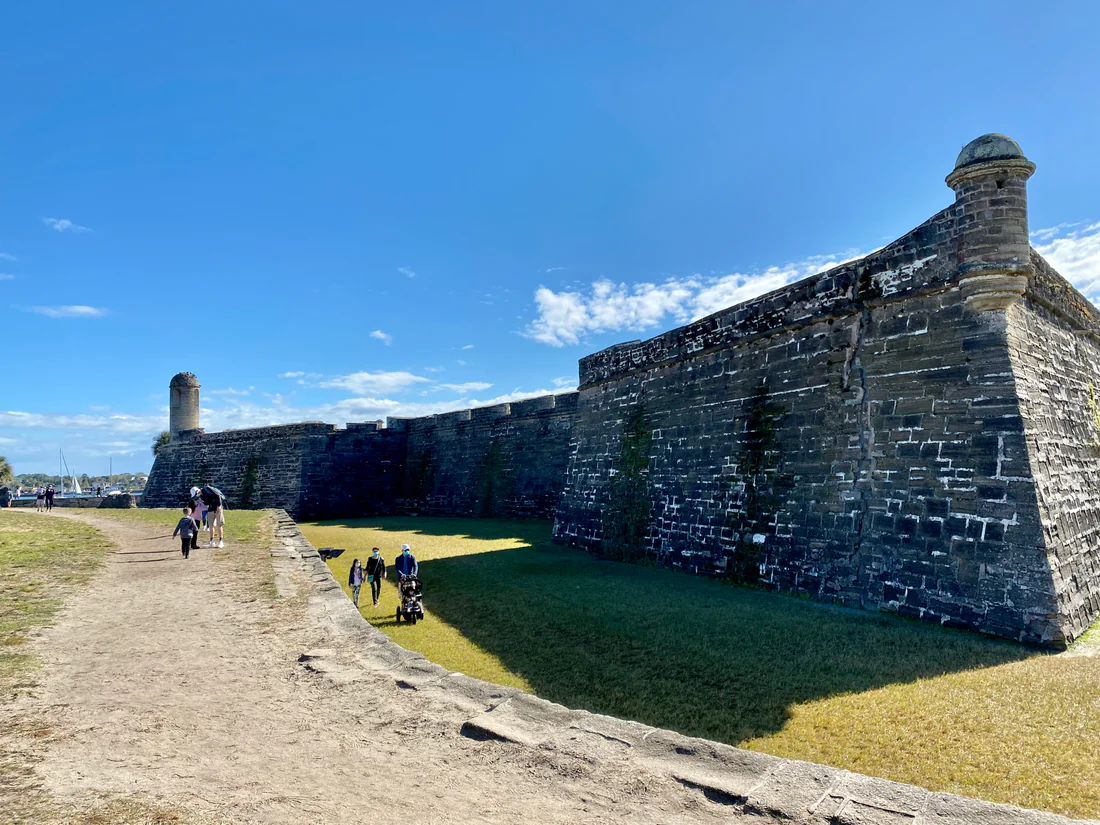 02
02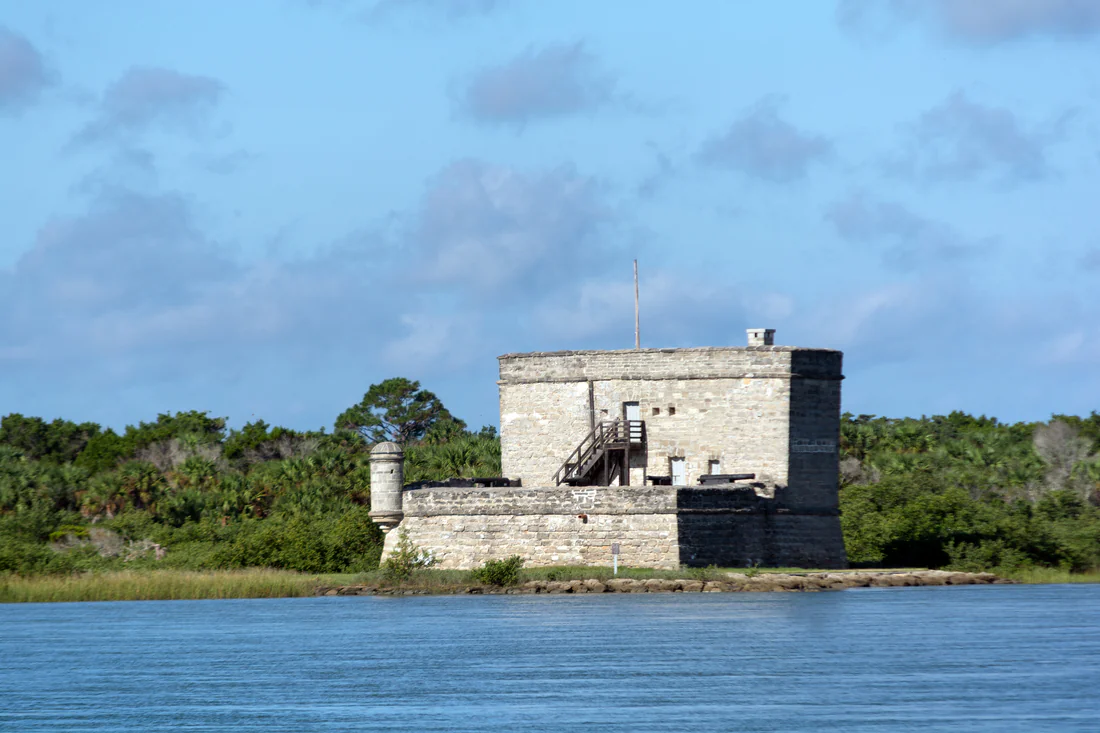 03
03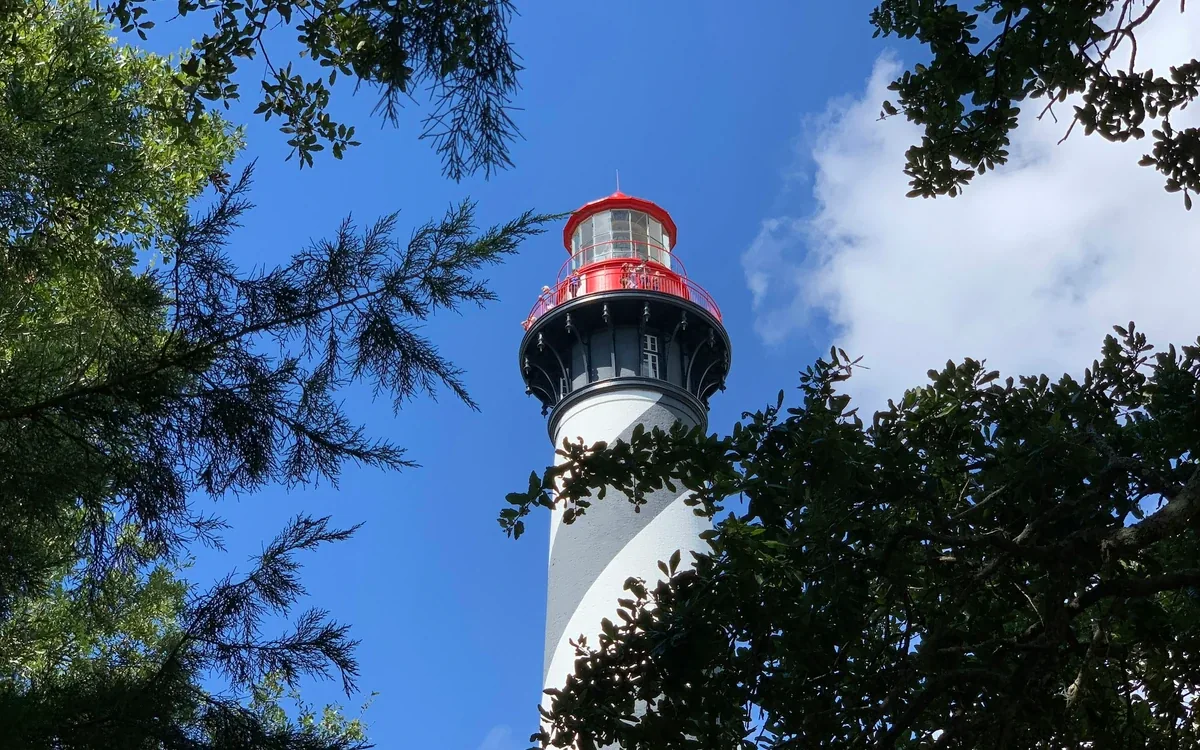 04
04St. Augustine Lighthouse & Maritime Museum
Goes with: A new lighthouse, Flagler's hotels and the Alligator Farm
Open the place page → 05
05St. Augustine Alligator Farm Zoological Park
Goes with: A new lighthouse, Flagler's hotels and the Alligator Farm
Open the place page →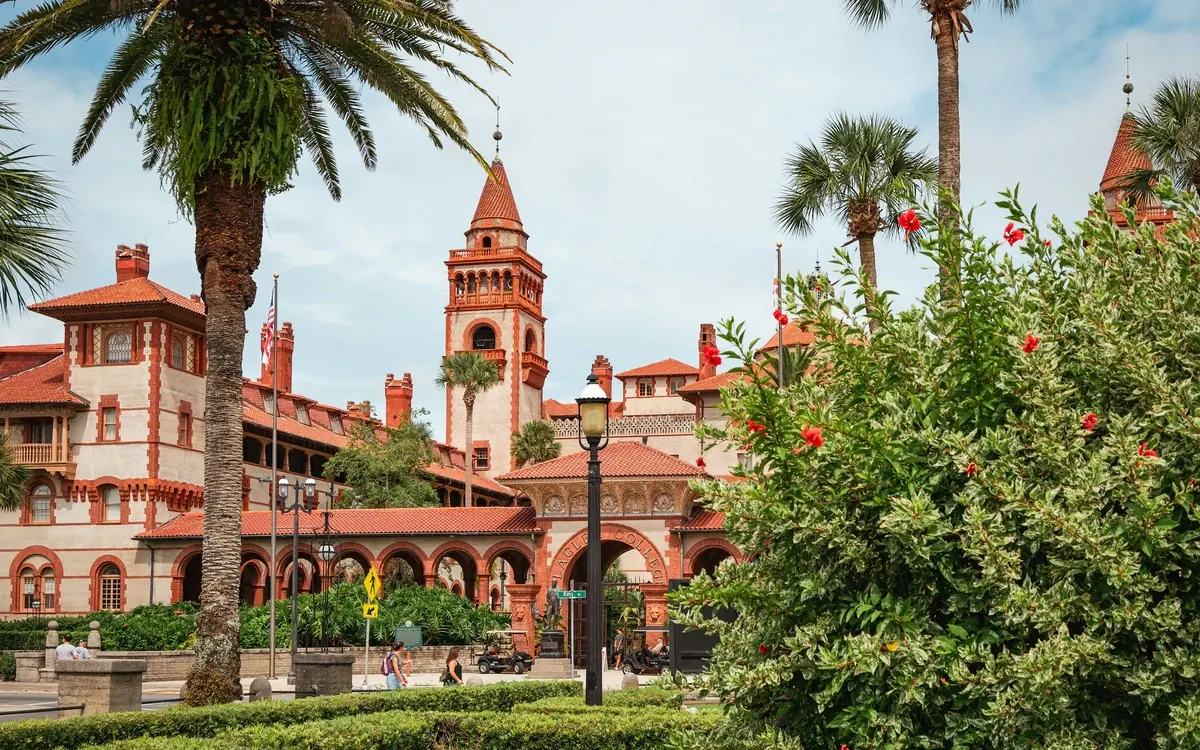 06
06Flagler College
Goes with: Since 1968: Flagler College, championship golf and a lighthouse at 150
Open the place page →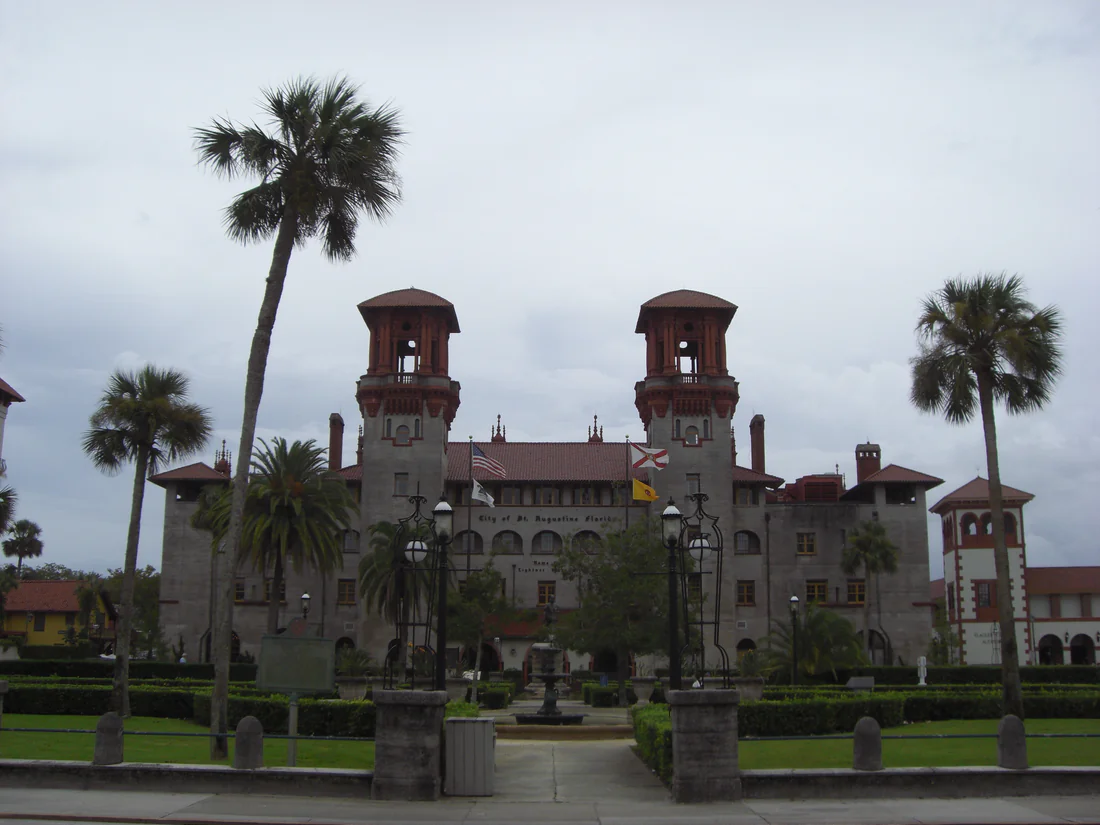 07
07Lightner Museum
Goes with: Since 1968: Flagler College, championship golf and a lighthouse at 150
Open the place page →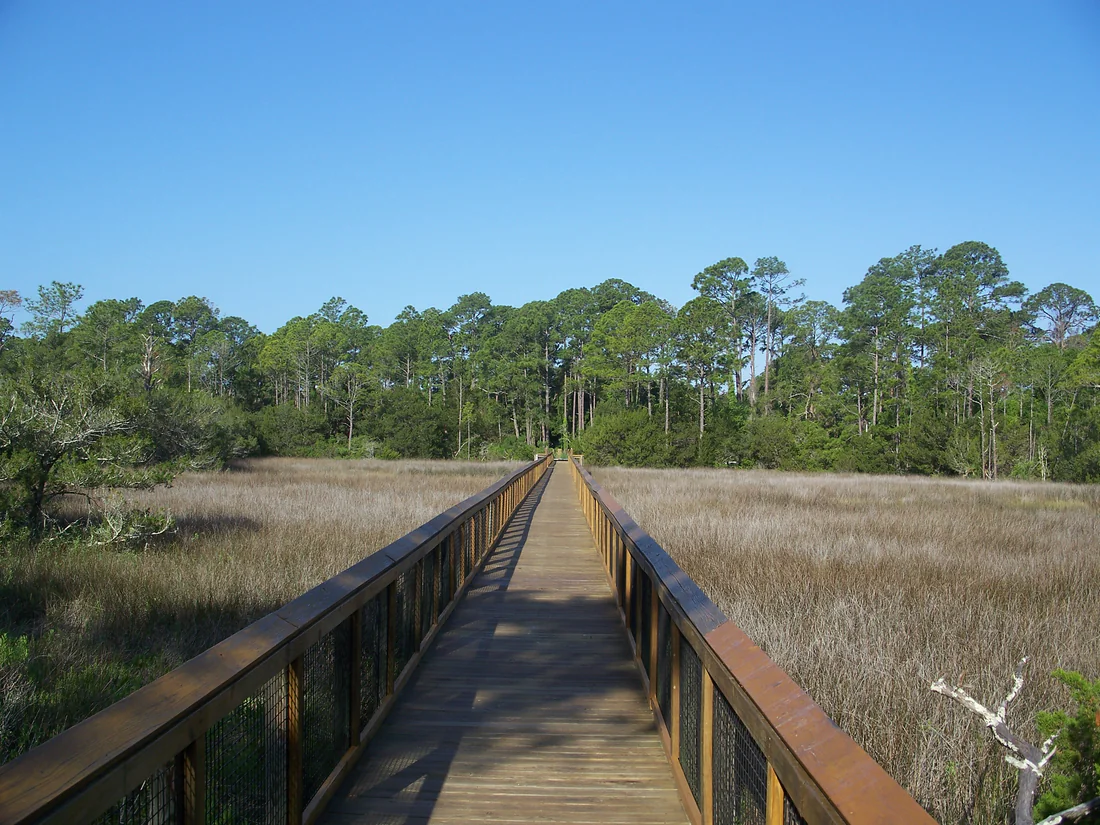 08
08Fort Mose Historic State Park
Goes with: Fort Mose and the siege of 1740
Fort Mose Historic State Park →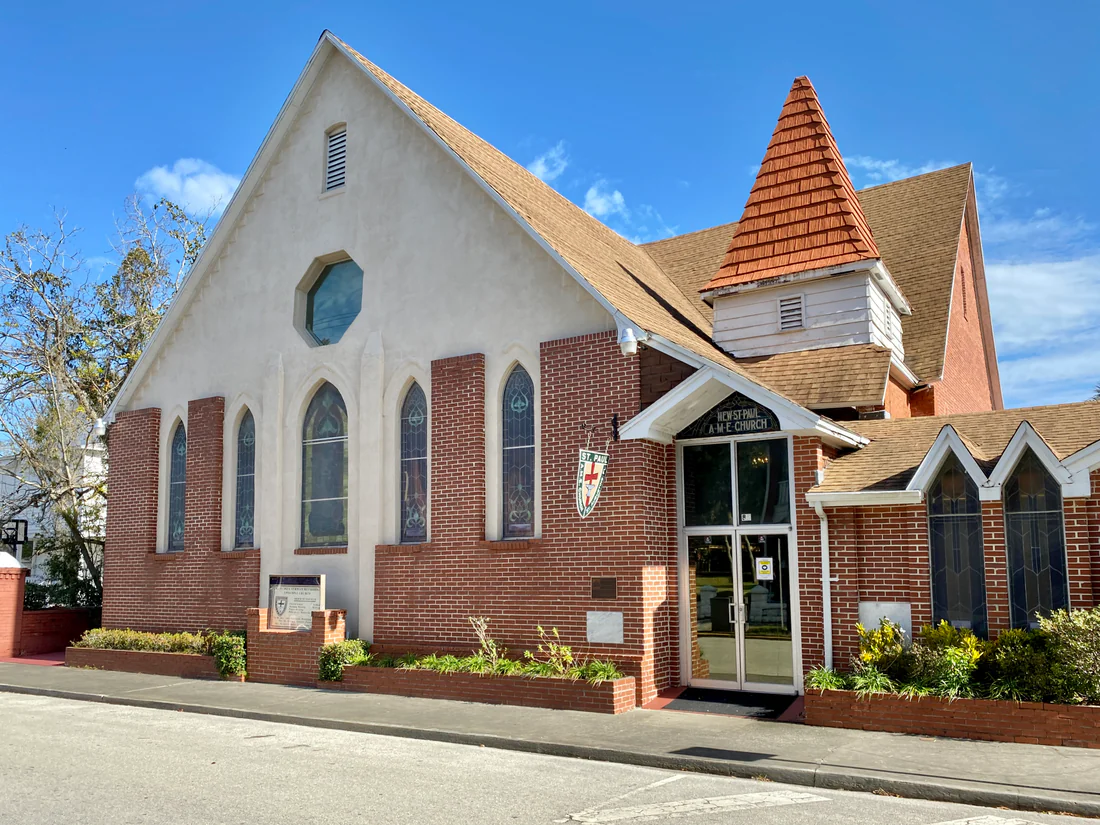 09
09Lincolnville Historic District
Goes with: 1964: the civil rights movement and Martin Luther King Jr.
Lincolnville Historic District →Questions people ask
When was St. Johns County created?
Andrew Jackson created St. Johns County, along with Escambia County, on July 21, 1821.
Chapter 6 →When was the Castillo de San Marcos built?
Work on a stone fort, the Castillo de San Marcos, began in 1672 and ended in 1695.
Chapter 3 →When was Martin Luther King Jr. arrested in St. Augustine?
Martin Luther King Jr. was arrested in St. Augustine on June 11, 1964.
Chapter 10 →Where this comes from.
- St. Johns County: St. Johns County 200th Celebration: 200 Years of Stories ↗ Read October 16, 2026
- St. Johns County: 401 Introduction (Administrative Code) ↗ Read October 16, 2026
- St. Johns County School District: Our Community ↗ Read October 16, 2026
- University of South Florida, Florida Center for Instructional Technology: St. Johns County ↗ Read October 16, 2026
- WJHG: This Day in History: July 21, 1821 ↗ Read October 16, 2026
- Florida Museum of Natural History: The Timucua in St. Augustine ↗ Read October 16, 2026
- Florida Museum of Natural History: First Contacts ↗ Read October 16, 2026
- Florida Museum of Natural History: Colonization and Conflict ↗ Read October 16, 2026
- Florida Museum of Natural History: The Castillo Years ↗ Read October 16, 2026
- Florida Museum of Natural History: New Arrivals ↗ Read October 16, 2026
- Florida Museum of Natural History: The End of Colonial Dominion ↗ Read October 16, 2026
- Florida Museum of Natural History: St. Augustine: First Colony ↗ Read October 16, 2026
- Museum of Florida History: Fortifications in St. Augustine ↗ Read October 16, 2026
- National Park Service: The Massacre of the French ↗ Read October 16, 2026
- National Park Service: Florida: Fort Matanzas National Monument ↗ Read October 16, 2026
- National Park Service: Castillo de San Marcos and Fort Matanzas National Monuments ↗ Read October 16, 2026
- National Park Service: St. Augustine Town Plan Historic District ↗ Read October 16, 2026
- National Park Service: Coquina, the Rock that Saved St. Augustine ↗ Read October 16, 2026
- National Park Service: Castillo de San Marcos Stories ↗ Read October 16, 2026
- National Park Service: The British Period (1763-1784) ↗ Read October 16, 2026
- National Park Service: Fort Marion ↗ Read October 16, 2026
- National Park Service: Seminole Incarceration ↗ Read October 16, 2026
- Naval History and Heritage Command: Wabash I (Screw Frigate) ↗ Read October 16, 2026
- Florida State Parks: History of Fort Mose ↗ Read October 16, 2026
- The Cultural Landscape Foundation: Fort Mose Historic State Park ↗ Read October 16, 2026
- Florida's Historic Coast (St. Augustine, Ponte Vedra & The Beaches Visitors and Convention Bureau): Discover the Incredible Story of America's First Free Black Settlement ↗ Read October 16, 2026
- Florida Memory: Dr. Andrew Turnbull and the Origins of New Smyrna Beach ↗ Read October 16, 2026
- Encyclopaedia Britannica: St. Augustine ↗ Read October 16, 2026
- EBSCO Research Starters: St. Augustine, Florida ↗ Read October 16, 2026
- WUWF: Exploring Spanish history at Fountain of Youth Park ↗ Read October 16, 2026
- Action News Jax: St. Augustine marks birth of founder Don Pedro Menendez de Aviles ↗ Read October 16, 2026
- Historic City News: Re-live historic landing of Pedro Menendez September 8th ↗ Read October 16, 2026
- U.S. Coast Guard History Program: St. Augustine Lighthouse, St. Augustine, Florida ↗ Read October 16, 2026
- Flagler College: Historical Virtual Tours ↗ Read October 16, 2026
- Florida Memory, State Archives of Florida: Reddington's "Gator" Farm ↗ Read October 16, 2026
- Florida Department of State, Florida Historical Markers: St. Augustine Alligator Farm ↗ Read October 16, 2026
- National Park Service: Lincolnville Historic District ↗ Read October 16, 2026
- Martin Luther King, Jr. Research and Education Institute, Stanford University: St. Augustine, Florida ↗ Read October 16, 2026
- Historical Marker Database: Dr. Martin Luther King Jr., Detained in Jacksonville (marker erected by the City of Jacksonville) ↗ Read October 16, 2026
- News4JAX (WJXT): Dr. Martin Luther King Jr. joined push to end racial discrimination in nation's oldest city (January 17, 2022) ↗ Read October 16, 2026
- TPC Sawgrass: Golf ↗ Read October 16, 2026
- Associated Press, in the Butler Eagle: Golf Hall of Fame to move back to Pinehurst at new site (July 2022) ↗ Read October 16, 2026
- Associated Press, on WKMG News 6 ClickOrlando: Scheffler goes back-to-back in Players Championship in Sunday thriller at Sawgrass (March 17, 2024) ↗ Read October 16, 2026
- WLOS News 13: A family legacy returns: World Golf Hall of Fame back in Pinehurst for US Open (June 14, 2024) ↗ Read October 16, 2026
- Action News Jax: St. Augustine celebrates historic lighthouse after 150 years (October 14, 2024) ↗ Read October 16, 2026