FLORIDA PLACE TO EXPLORE
Spain began the Castillo in 1672 and finished it in 1695, after wooden forts had burned or rotted through a century of trying. The material is coquina, a soft stone of shells bonded together, quarried at King's Quarry on Anastasia Island and ferried across Matanzas Bay.
MUSEUM & CULTURE
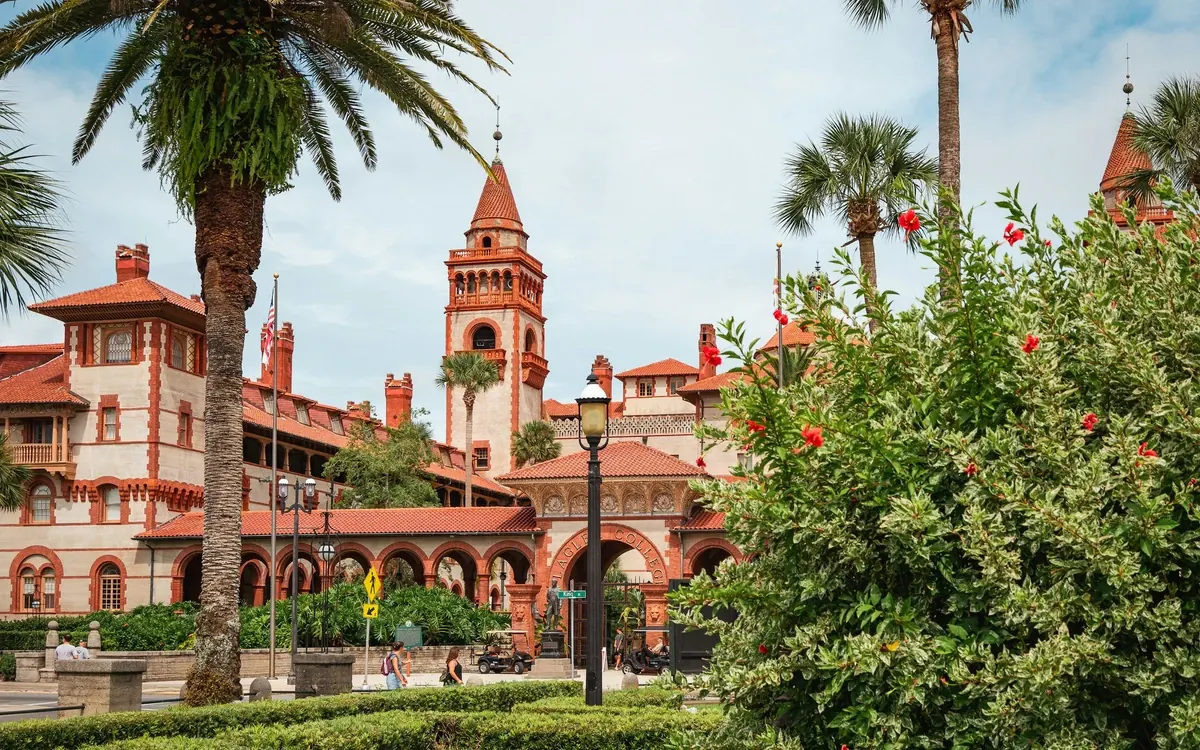
Flagler commissioned the Alcazar Hotel in 1887 to hold the overflow of wealthy visitors coming south on his railway. Carrere and Hastings designed it in Spanish Renaissance Revival style and built it of poured concrete, which made it among the earliest poured concrete buildings anywhere.
HISTORY & HERITAGE
Two things are true about this place at once, and the park is worth visiting because of both. The legend is that Ponce de Leon landed here in 1513 and found a spring. No evidence supports it, and the historian Douglas Peck has argued the landing was nearer Melbourne Beach.
FLORIDA PLACE TO EXPLORE
The reserve was designated on August 19, 1999, and covers 76,760 acres across three estuaries, the Guana, the Tolomato and the Matanzas, along with the Atlantic shoreline in front of them. It is a research reserve rather than a park, which means most of it is left alone and studied.
FLORIDA PLACE TO EXPLORE
The Colonial Quarter takes up two acres in the middle of the historic district, off St. George Street, and it is the closest thing in the city to walking into the eighteenth century. The site shows life under Spanish rule in the 1740s: interpreters in period dress work a blacksmith's forge, build a ship the way it would have been built then, fire a musket and explain what the work involved.
FLORIDA PLACE TO EXPLORE
The building at 112 Riberia Street was the city's ice plant, put up in 1917 when ice was a serious industry, and it stood empty for years before the distillery took it on. What comes out of it now is made from Florida ingredients: Florida Straight Bourbon and a port-finished version of it, pot-distilled rum, New World Gin and a vodka made from Florida sugar cane.