In 1915, parts of Dade County and Palm Beach County were joined to form Broward County. It is named after Napoleon Bonaparte Broward, a former governor of Florida. Fort Lauderdale is the county seat. The city takes its name from a fort built beside the New River in 1838, during the Second Seminole War. A state historical marker says Tequesta camps in what is now Fort Lauderdale date back as far as 500 BCE.
This page tells the story in order, from the Tequesta to the Florida Panthers' two Stanley Cups, then lists places in the county where you can still see it. The sources for each part are named at the end of that part, and all of them are listed at the bottom of the page.
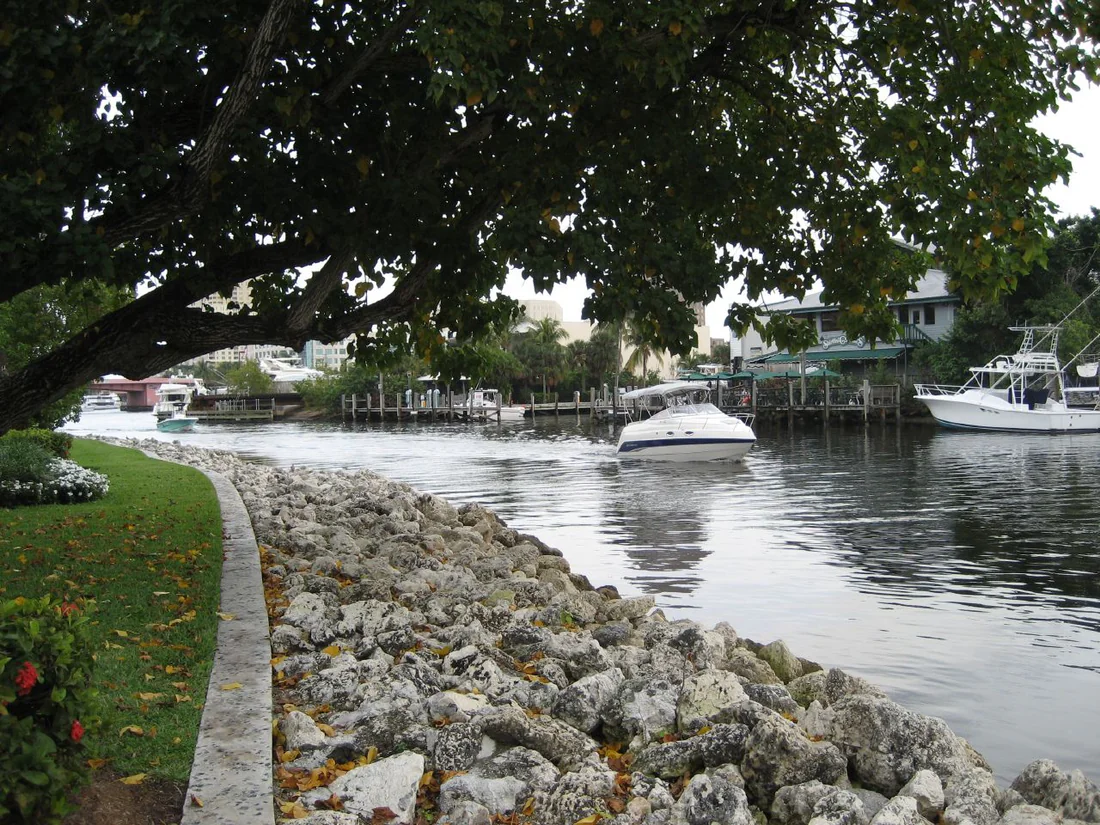
The first people
A state historical marker says Fort Lauderdale's prehistoric people, usually called the Tequesta, had camps there as early as 500 BCE. The county's timeline says the Tequesta were living on the land, hunting and gathering, about 2,000 years ago. By the mid-1700s, the Tequesta were gone.
In the 1700s, groups of Creek Indians left Georgia and Alabama and moved into Florida. Over the 1700s and 1800s, the Seminole and Miccosukee nations moved south into the Everglades.
Sources: Florida Department of State: Historical marker, The First Fort Lauderdale; Broward County Libraries Division: A Broward County Historical Timeline; Florida Department of State: Seminole History; History Fort Lauderdale: Museum Campus
Next: Chapter 2, Spanish Florida and the first settlers →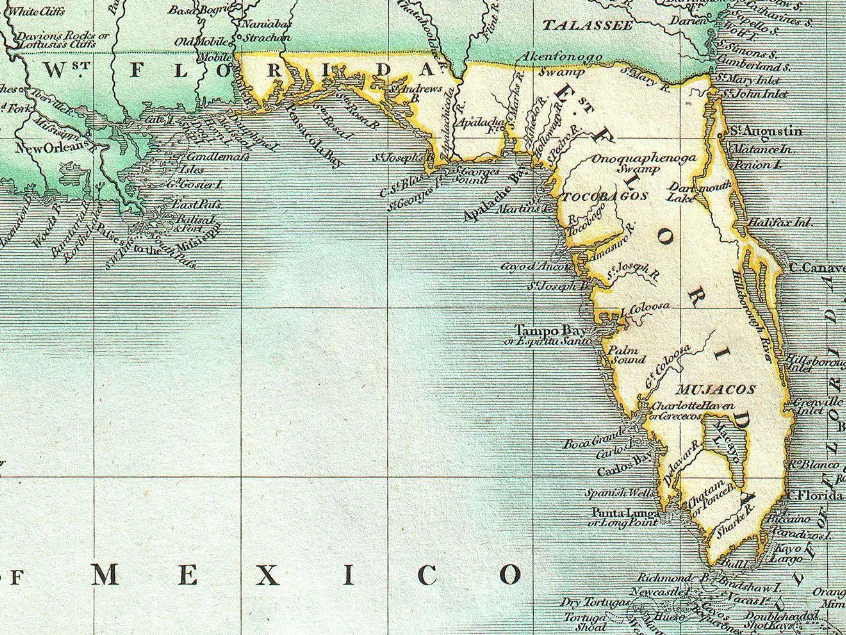
Spanish Florida and the first settlers
Sebastian Verezaluze, a Spanish explorer, sailed up the New River in 1793 while on a spy mission. The county's timeline says Bahamians were the first white settlers known to have lived on the New River, arriving in the late 1700s. By 1800, Seminole Indians were living along the New River, and so were American and Bahamian settlers.
In 1821, Florida became a territory of the United States, and more Americans came to settle in the area. They lived by fishing, farming and salvaging. Florida Memory, the state archives' history site, counts William Cooley among the earliest American settlers to arrive after 1821. Cooley started a farm, ran a trading post on the river and served as the area's justice of the peace.
Sources: History Fort Lauderdale: Museum Campus; Broward County Libraries Division: A Broward County Historical Timeline; Florida Department of State: Historical marker, The First Fort Lauderdale; Florida Memory: Florida Maps, Then and Now (Fort Lauderdale)
Next: Chapter 3, War and the three forts →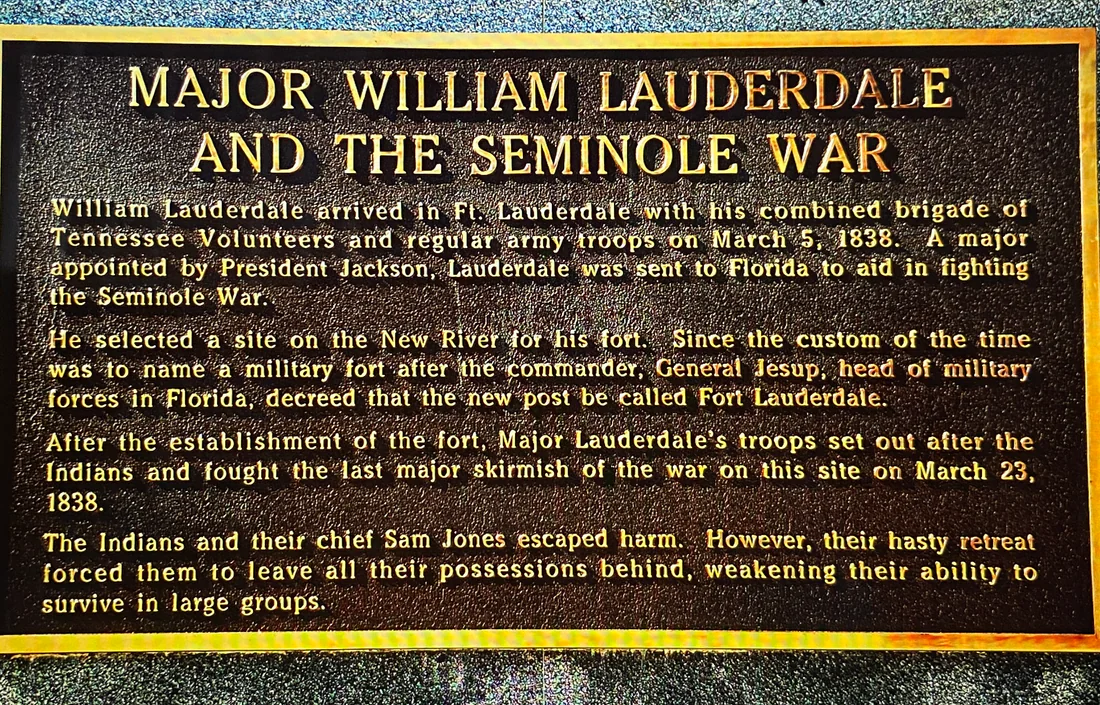
War and the three forts
Once the Indian Removal Act passed in 1830, the federal government tried to move the Seminoles to Oklahoma. That attempt led to the Second Seminole War. The war lasted from 1835 to 1842. William Cooley's wife and children were killed on January 4, 1836, in an attack on the family by Seminole and Black warriors.
Later, 200 Tennessee Volunteers on horseback were ordered from Jupiter to the New River under Major William Lauderdale. The men set up camp at the forks of the New River on March 6, 1838, on the north bank. The post was named Fort Lauderdale, after the officer in command. By May 1838, the soldiers had abandoned the fort. Soldiers came back in February 1839 to set up Fort Lauderdale again. They found the blockhouse and the stockade burned.
In February 1839, a second Fort Lauderdale was built east of the first one. It was the work of Company K of the Third Artillery, under Captain William B. Davidson. A third fort, on the beach, was finished by September 1839. It stood on a narrow strip of land with the Atlantic Ocean on one side and the New River Sound on the other. The city of Fort Lauderdale takes its name from the 1838 fort on the New River. On May 8, 1858, the United States declared that its third war with the Seminoles had ended. By that time, more than 3,000 Seminoles had been sent west of the Mississippi River. About 200 to 300 Seminoles stayed in Florida.
Sources: Florida Department of State: Seminole History; Florida Department of State: Historical marker, The Second Fort Lauderdale; Florida Memory: Florida Maps, Then and Now (Fort Lauderdale); Florida Department of State: Historical marker, The First Fort Lauderdale; Fort Lauderdale Police Department: City History
Next: Chapter 4, Frank and Ivy Stranahan →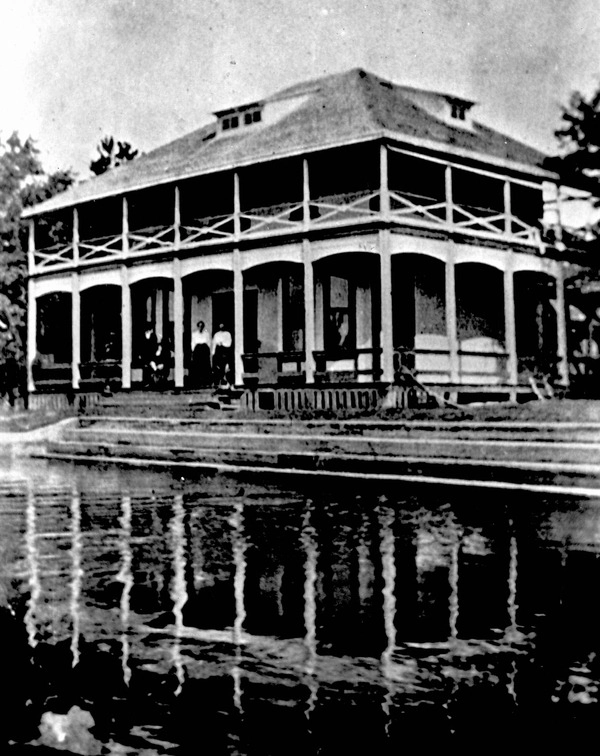
Frank and Ivy Stranahan
Frank Stranahan, from Ohio, was 27 years old in January 1893 when he came to what is now Fort Lauderdale. His cousin owned a ferry and camp on the New River at Tarpon Bend, and Frank was hired to manage them. The ferry and overnight camp served the new stagecoach line that ran between Lantana and Lemon City. Frank built up a business trading with the Seminole Indians. They often came to trade in dugout canoes and camped at the post, staying several days each time. At his store, Seminole families swapped animal hides for things they could not make on their own.
By 1899, enough people lived there to need a schoolteacher. The job went to Ivy Julia Cromartie, age 18, of Lemon City, at $48 a month. On August 16, 1900, Frank and Ivy were married. In 1901, Frank put up a two-story building, now called Stranahan House. The museum says it is the oldest structure still standing in Broward County.
Over the years, the building was used as a trading post, a post office, a town hall and the Stranahans' home. On May 22, 1929, Frank drowned himself in the New River, which runs in front of the house. Ivy lived in the house until she died at age 90 on August 30, 1971. The house became a historic house museum in 1984.
Sources: Stranahan House Museum: Our History; Broward County Libraries Division: A Broward County Historical Timeline; Florida Memory: Florida Maps, Then and Now (Fort Lauderdale); Stranahan House Museum: Fort Lauderdale Historic House
Next: Chapter 5, The railroad and the canals →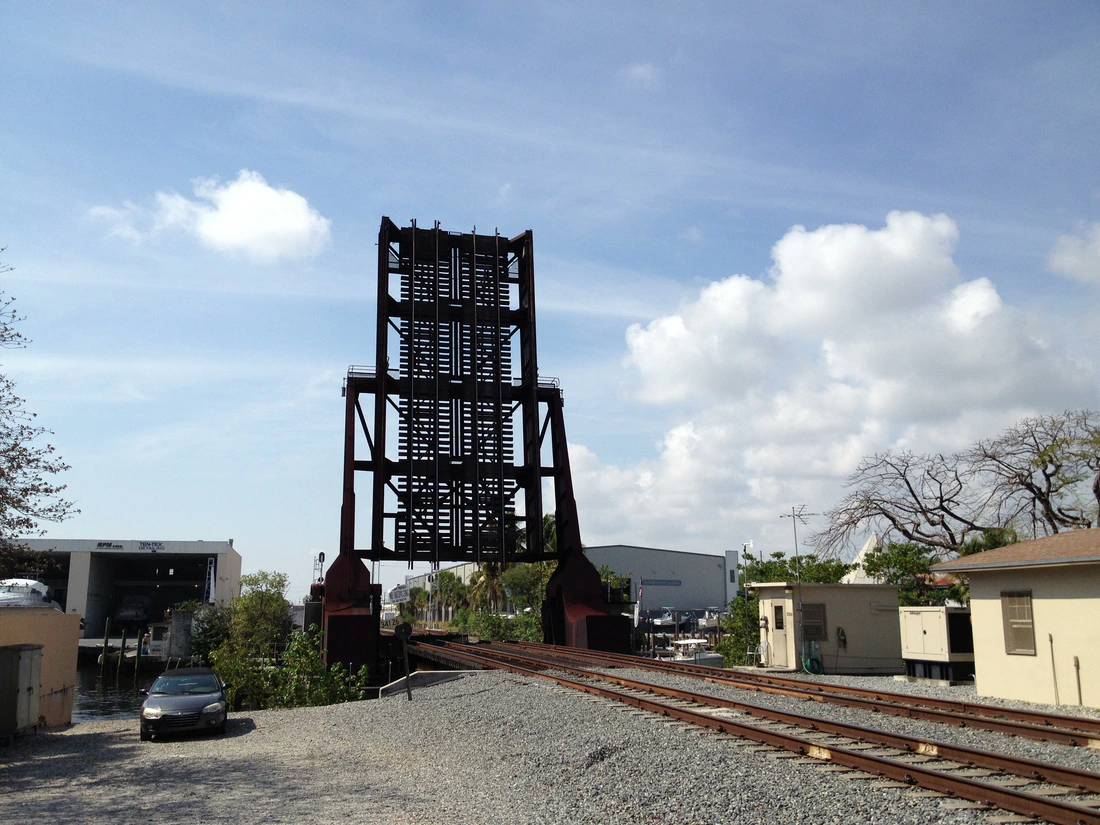
The railroad and the canals
Henry Flagler, who owned the Florida East Coast Railway, asked Philemon N. Bryan to build the part of the line that ran between the New River and Pompano. In 1894, Bryan and his sons, Tom and Reed, brought in 400 African-American workers. Their job was to build the roadbed, and they came from New Smyrna by boat. On February 22, 1896, the first train bound for Miami arrived in Fort Lauderdale. The New River Inn was built in 1905 by a contractor, Edwin T. King. He built it for Bryan.
According to the county's timeline, Dania was the first town within today's Broward County to incorporate, which it did in 1904. Napoleon Bonaparte Broward served as Florida's governor from January 3, 1905, until January 5, 1909. The Florida Department of State credits him with success in draining and developing parts of the Everglades. Dredging work on the canals started in July 1906. The first step was building two dredges, named Everglades and Okeechobee, on the North New River Canal.
In 1909, the first permanent settlers arrived to start the town of Zona, now Davie. The county's timeline says Zona was the first town made from land that had been part of the Everglades. Fort Lauderdale incorporated on March 27, 1911. In 1912, work was finished on three canals: the North New River, the South New River and the Hillsboro.
Sources: Florida Department of State: Historical marker, Old Fort Lauderdale Village; Broward County Libraries Division: A Broward County Historical Timeline; Florida Department of State: Napoleon Bonaparte Broward; National Park Service: National Register nomination form, Lock #1, North New River Canal
Next: Chapter 6, Broward County is created →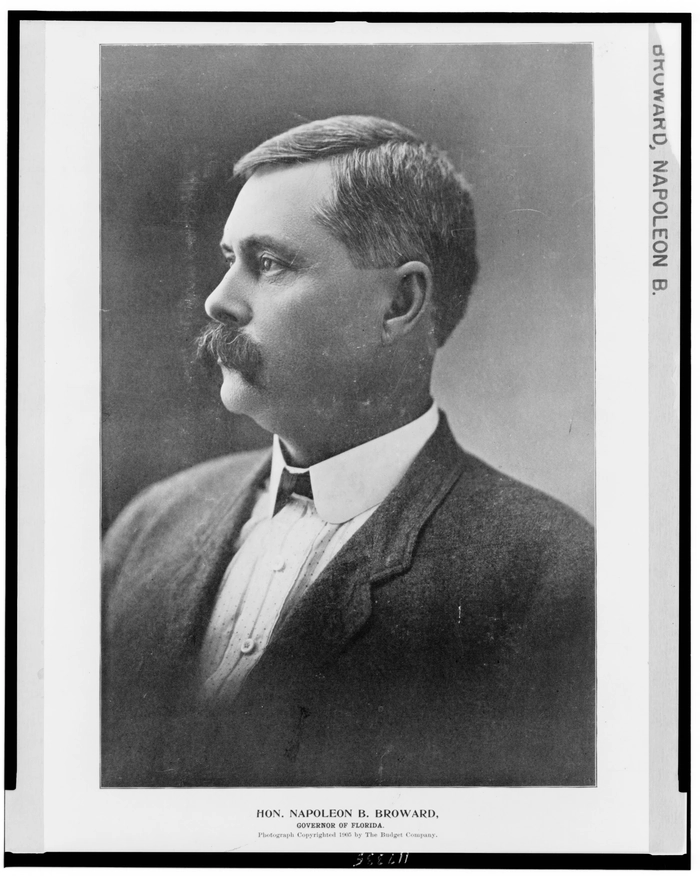
Broward County is created
In 1913, there was an earlier attempt to form a new county. It failed when a referendum did not get the votes it needed. On April 30, 1915, the act that created Broward County was approved. The new county was made from parts of both Dade County and Palm Beach County. It was named after Napoleon Bonaparte Broward, who had been governor of Florida. A Florida International University biography says the name honors his work to drain the Everglades and dig channels through it.
Fort Lauderdale became the county seat. County government began on October 1, 1915. The county's first courthouse opened in the building that had been the Fort Lauderdale School. That building was on Andrews Avenue, on the south side of the New River. Also in 1915, the Dixie Highway was finished through Broward County, linking the area by road to the rest of the country.
Sources: Florida Memory: A Brief Historical Sketch of Broward County; Broward County: A Brief History of Broward County; Florida International University: Everglades Biographies, Napoleon Bonaparte Broward; Broward County Libraries Division: A Broward County Historical Timeline
Next: Chapter 7, Boom, hurricane and bust →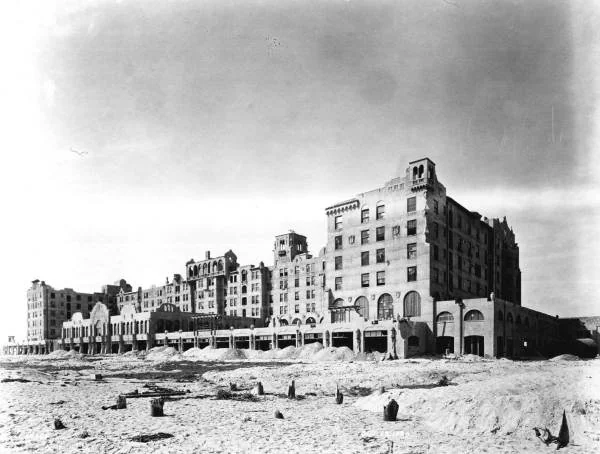
Boom, hurricane and bust
In 1919, the Broward Hotel opened on Las Olas Boulevard, and the county's timeline calls it the first hotel in the county meant for tourists. In 1921, developer Joseph W. Young started Hollywood by the Sea, a new development. In 1922, Charley Rhodes started dredging to make finger islands along Las Olas Boulevard. By 1925, Florida's land boom had reached its peak. In parts of the county, real estate and tourism had replaced farming as the economy's mainstays. Hollywood was incorporated as a city in 1925.
A hurricane struck on September 18, 1926. It was a Category 4 storm, big enough to cover both Broward and Dade counties. The worst of the storm lasted more than nine hours. In Broward, 49 people died and 1,500 were hurt. The county's timeline says the storm ended the Florida land boom. By 1927, the boom was over and many investors were bankrupt.
Port Everglades, a deep water harbor for the county, opened in 1928. The port was a joint project of two cities, Fort Lauderdale and Hollywood. President Coolidge was supposed to set off the last blast to clear the port channel, but the power failed. Instead, the local engineer set it off.
Sources: Broward County Libraries Division: A Broward County Historical Timeline
Next: Chapter 8, Black history and civil rights →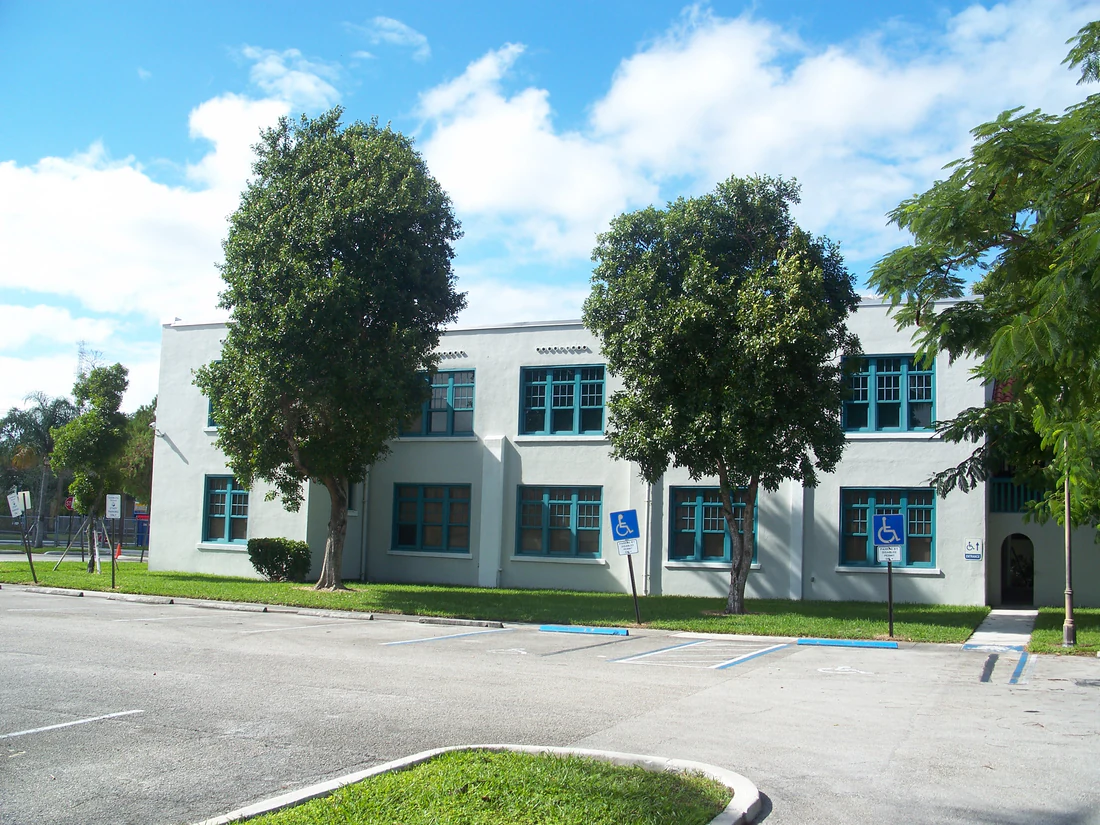
Black history and civil rights
In 1922, Fort Lauderdale passed its first ordinance to set a "color line" for Black residents. It restricted them to the west side of the Florida East Coast Railway's tracks. Dr. James Sistrunk moved to Fort Lauderdale that same year, and the county's timeline counts him among the first African-American doctors in the county. In his years as a doctor, he delivered more than 5,000 babies. In 1938, he opened Provident Hospital in northwest Fort Lauderdale, in a small house made of wood. The county's timeline says that until 1964, it was the county's only hospital for African-American citizens. That was the year Broward General was integrated.
In 1924, the Stranahans sold land on Northwest Fourth Avenue for $1.00 so that African-American students could have a school there. The new school, called the "Colored School," was finished in March 1924. In 1930, it was renamed for Dr. James Hardy Dillard. The Old Dillard Museum says the school started in 1907 with 10 students, in a wooden building that had one room. The county's timeline says African-American children got their first school in 1906, so the two sources do not agree on the year.
In 1935, a mob lynched Reuben Stacy, a Black resident who had been accused of trying to rape a white woman. It happened in Fort Lauderdale, on Davie Boulevard. In 1946, a federal court struck down the seven-month school year in place for Fort Lauderdale's African-American students. In 1961, Eula Johnson headed the local NAACP. On July 4 that year, she and Dr. Von D. Mizell, a civil rights activist, led the first in a series of wade-ins. They were held at Fort Lauderdale Beach, and the aim was to integrate the public beaches.
Sources: Broward County Libraries Division: A Broward County Historical Timeline; Old Dillard Museum, Broward County Public Schools: History
Next: Chapter 9, The Seminole Tribe of Florida →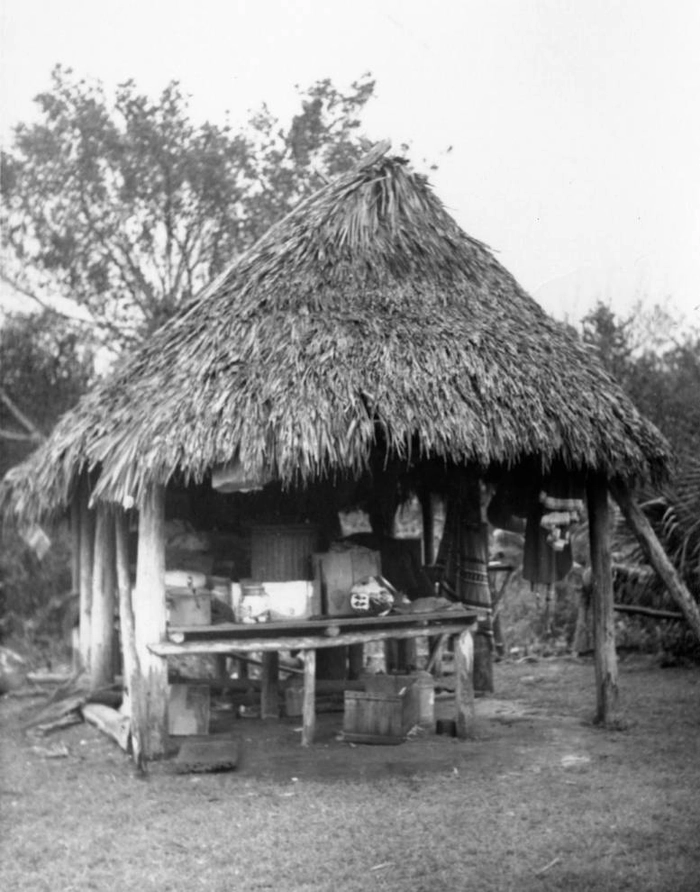
The Seminole Tribe of Florida
In 1926, Annie Tommie, a Seminole matriarch, and her family left their camp, which was on the North Fork of the New River. They went to live on the new Seminole Reservation at Dania, which is now called the Hollywood reservation. The county's timeline says hers was the last camp inside Fort Lauderdale's city limits.
In the 1950s, Seminole leaders of a new generation started holding regular meetings under an old oak tree at the Hollywood reservation. In 1957, a constitution set up a two-tiered tribal government that included a Tribal Council. The same year, the federal government formally recognized the Seminole Tribe of Florida. In 1959, the tribe opened the Okalee Indian Village, a new attraction.
Sources: Broward County Libraries Division: A Broward County Historical Timeline; Seminole Tribe of Florida: The Council Oak
Next: Chapter 10, World War II and the years after →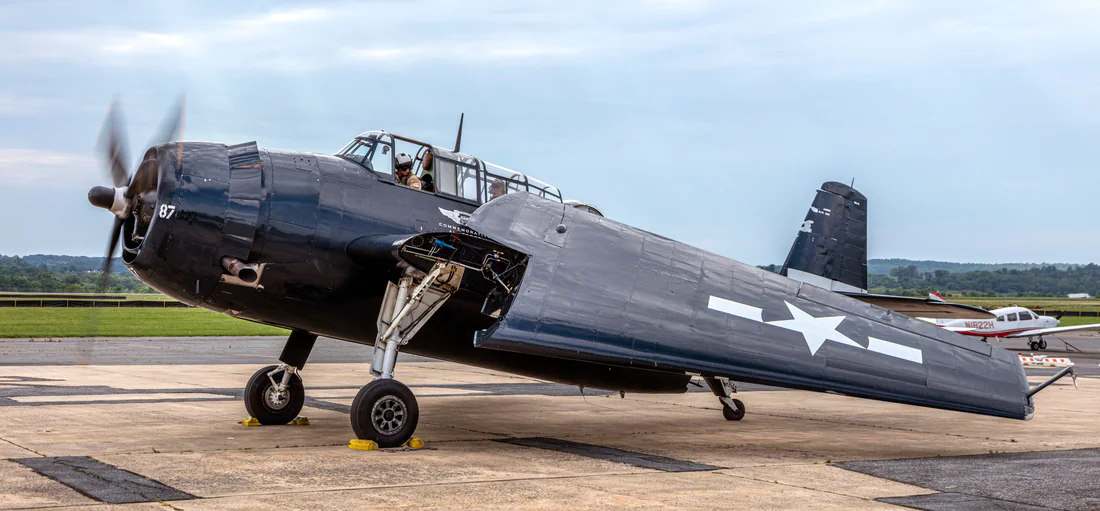
World War II and the years after
In 1940, Hugh Taylor Birch gave the state of Florida the deed to his home and beachfront property in Fort Lauderdale. The land became Birch State Park. The Fort Lauderdale Naval Air Station opened at Merle Fogg Field in 1942. It had 217 buildings spread over about one thousand acres. On December 5, 1945, a group of five TBM Avenger torpedo-bombers called Flight 19 vanished during a training flight. The planes had flown out of the naval air station in Fort Lauderdale.
In 1948, the county took over the air station field and opened Broward County International Airport. Plantation, on the west side of State Road 7, was incorporated in 1953. The Sunshine State Parkway opened in 1957 and is now named the Ronald Reagan Turnpike. The county's timeline calls it the first super highway to reach South Florida. The county airport got a new name in 1959: Fort Lauderdale-Hollywood International Airport.
In 1960, Junior College of Broward County, the school now called Broward College, opened to students. The movie Where the Boys Are was shot in Fort Lauderdale that year, and it premiered at the city's Gateway Theatre in December. College students arrived at the local beaches three months after the premiere. There were 50,000 of them.
Sources: Broward County Libraries Division: A Broward County Historical Timeline
Next: Chapter 11, Since 1961: two Stanley Cups, a renamed beach park and Brightline trains →
Since 1961: two Stanley Cups, a renamed beach park and Brightline trains
In 1991 the county's convention center opened at Port Everglades. The African-American Research Library and Cultural Center opened in 2002. It stands in Fort Lauderdale's oldest historically Black neighborhood. The county's history timeline says that when it opened, it was one of only three such centers in the nation.
In 2016 the state renamed John U. Lloyd Beach State Park in Dania Beach for Dr. Von D. Mizell and Eula Johnson, who led the 1961 wade-ins. The park was once a beach for Black residents, who at first could reach it only by boat. On January 13, 2018, Brightline began carrying passengers between Fort Lauderdale and West Palm Beach.
On June 24, 2024, the Florida Panthers beat the Edmonton Oilers in Sunrise to win the Stanley Cup. The NHL's website called it the team's first championship since it joined the league in 1993. On June 17, 2025, the Panthers beat Edmonton again and won the Cup for a second straight year. After both wins the players rode double-decker buses in a parade along Fort Lauderdale Beach, then held a rally on the beach. The county enlarged its convention center and added the Omni Fort Lauderdale, a hotel with 801 rooms that opened on December 18, 2025.
Sources: Broward County Libraries Division: A Broward County Historical Timeline; Florida International University: African American Research Library and Cultural Center-Broward County Library; Florida State Parks: Dr. Von D. Mizell-Eula Johnson State Park, History; Railway Gazette International: Brightline launches higher-speed inter-city service (January 15, 2018); NBC New York: Panthers win first ever Stanley Cup, hold off Oilers 2-1 in Game 7 (June 24, 2024); NHL.com (Edmonton Oilers): 2024 Stanley Cup Final, Game Seven recap, Panthers 2, Oilers 1; NHL.com: Panthers game-by-game recap on way to Stanley Cup title (June 18, 2025); Associated Press (on News4JAX): Rain doesn't stop the reign for the Panthers, who celebrate their Stanley Cup with parade and rally (June 30, 2024); Axios Miami: Panthers celebrate Stanley Cup win with beachfront parade (June 22, 2025); Broward County: Convention Center Expansion Project; South Florida Sun Sentinel (on AOL): New 801-room Omni Fort Lauderdale, one of Broward's biggest hotels, opens
Next: the whole story, in dates →The whole story, in dates
The Tequesta had camps where Fort Lauderdale is now.
Spanish explorer Sebastian Verezaluze came up the New River by ship.
Seminoles and settlers from the Bahamas and America lived on the New River.
Florida became a territory of the United States.
The Cooley family was attacked by Seminole and Black warriors.
Major William Lauderdale's soldiers made camp where the New River forks.
Soldiers set up a second Fort Lauderdale, east of the first one.
Frank Stranahan came to run his cousin's ferry and camp.
The first Miami-bound train arrived in Fort Lauderdale.
Frank Stranahan put up the building now called Stranahan House.
Dania was incorporated.
Work on dredging the canals began.
Fort Lauderdale was incorporated.
The act that created Broward County was approved.
Joseph W. Young started Hollywood by the Sea.
Fort Lauderdale passed its first ordinance setting a color line.
The school later named for Dr. James Hardy Dillard was finished.
Florida's land boom reached its peak.
A Category 4 hurricane hit Broward and Dade counties.
Port Everglades opened.
Dr. James Sistrunk opened Provident Hospital.
A naval air station opened at Merle Fogg Field.
Flight 19 vanished during a training flight.
Broward County International Airport opened.
The federal government recognized the Seminole Tribe of Florida.
The Okalee Indian Village opened.
The movie Where the Boys Are was shot in Fort Lauderdale.
Eula Johnson and Dr. Von D. Mizell led the first wade-in at Fort Lauderdale Beach.
The county's convention center opened at Port Everglades.
The African-American Research Library and Cultural Center opened in Fort Lauderdale.
John U. Lloyd Beach State Park was renamed for Dr. Von D. Mizell and Eula Johnson.
Brightline began carrying passengers between Fort Lauderdale and West Palm Beach.
The Florida Panthers won the Stanley Cup in Sunrise.
The Panthers won the Stanley Cup for a second straight year.
The new Omni Fort Lauderdale hotel at the enlarged convention center opened.
Where you can still see it
 01
01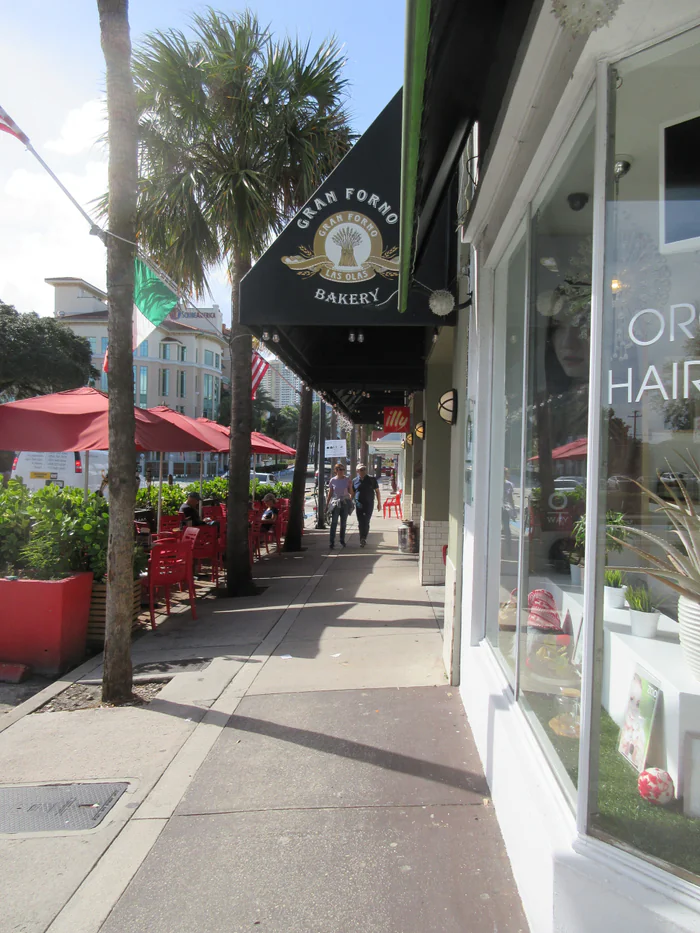 02
02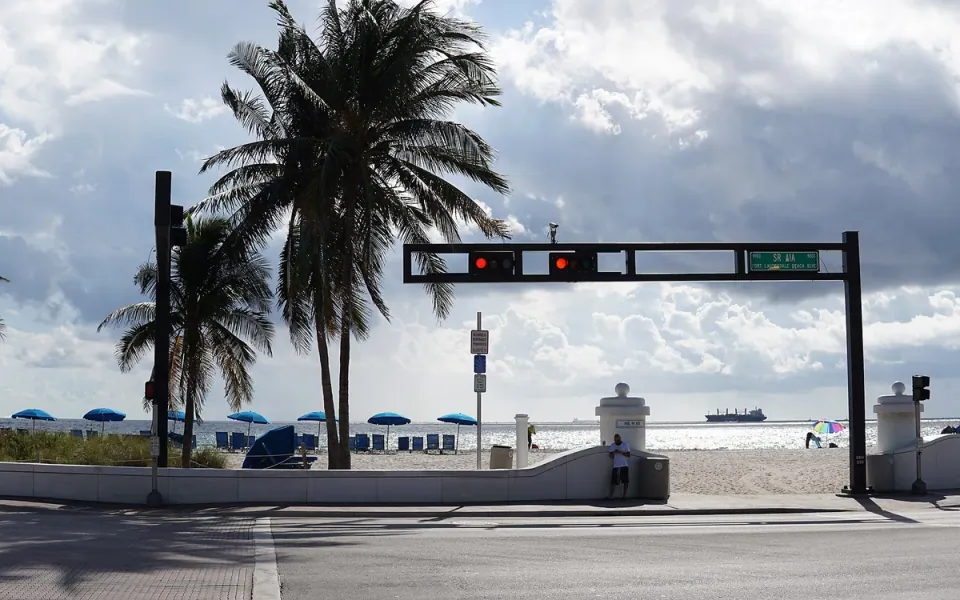 03
03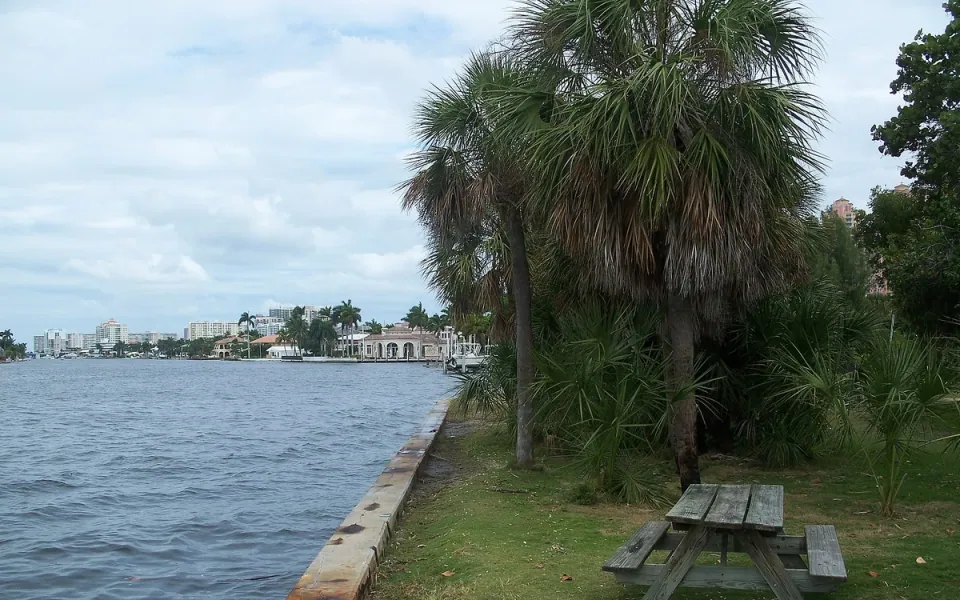 04
04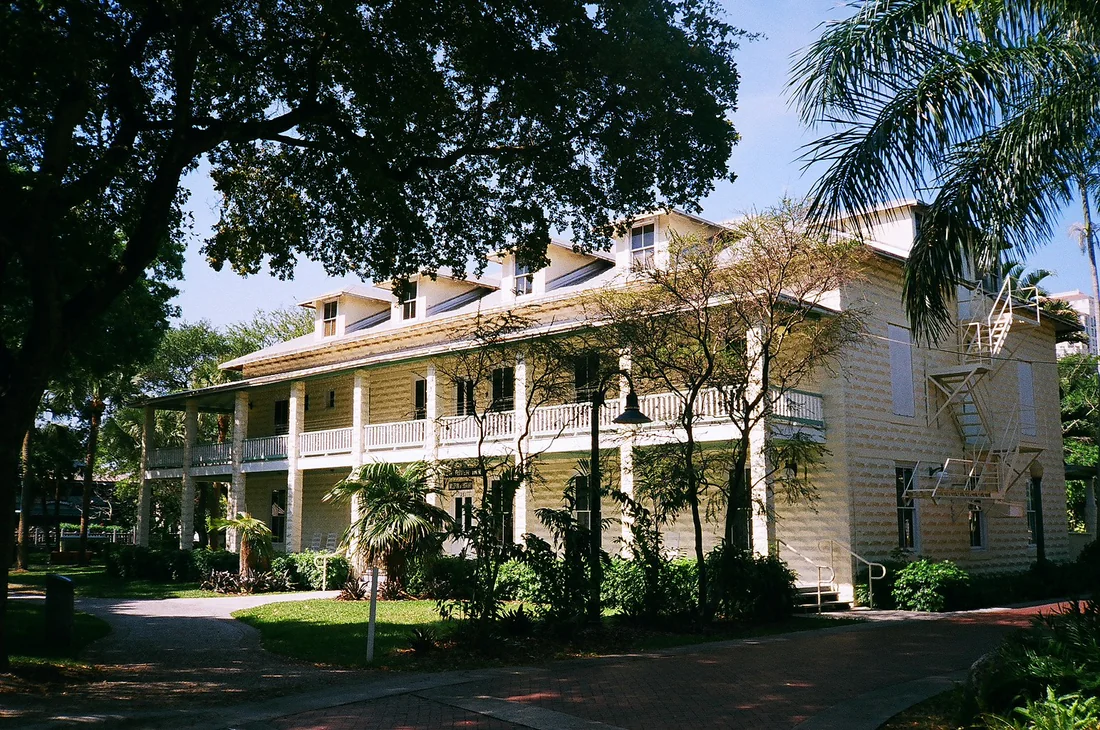 05
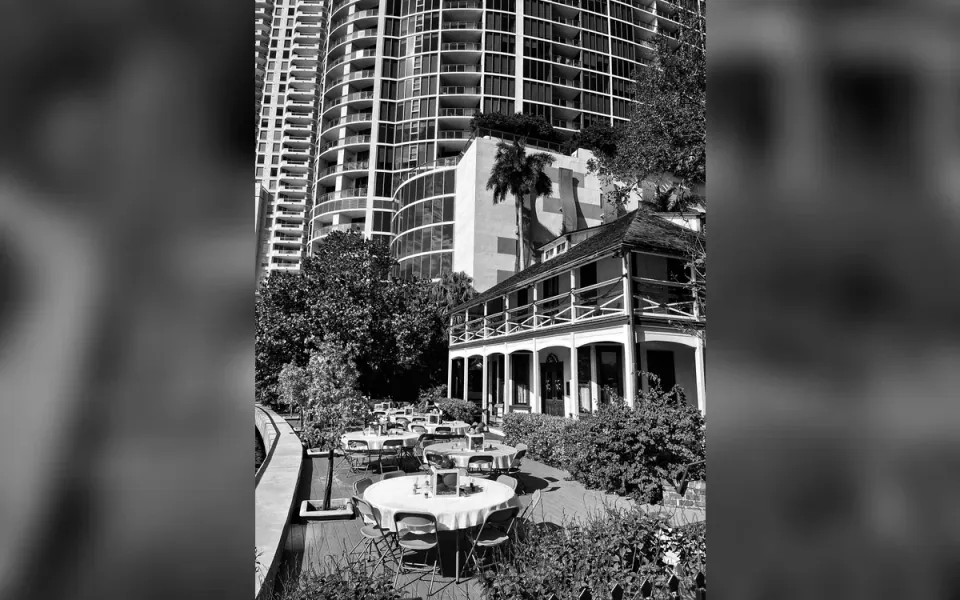
05History Fort Lauderdale and the New River Inn
Goes with: The railroad and the canals
Visit the History Fort Lauderdale museum campus →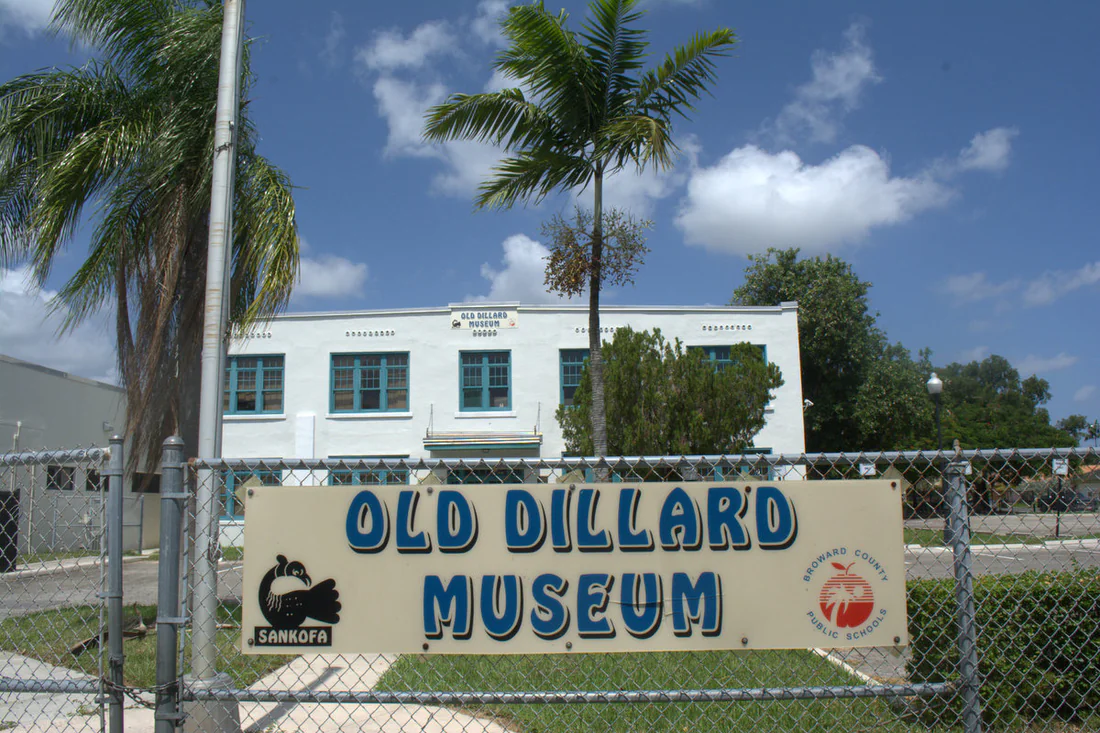 06
06Where this comes from.
- Broward County: A Brief History of Broward County ↗ Read October 15, 2026
- Broward County Libraries Division: A Broward County Historical Timeline ↗ Read October 15, 2026
- Florida Department of State: Historical marker, The First Fort Lauderdale ↗ Read October 15, 2026
- Florida Department of State: Historical marker, The Second Fort Lauderdale ↗ Read October 15, 2026
- Florida Department of State: Historical marker, Old Fort Lauderdale Village ↗ Read October 15, 2026
- History Fort Lauderdale: Museum Campus ↗ Read October 15, 2026
- Florida Memory: Florida Maps, Then and Now (Fort Lauderdale) ↗ Read October 15, 2026
- Florida Memory: A Brief Historical Sketch of Broward County ↗ Read October 15, 2026
- Florida Department of State: Seminole History ↗ Read October 15, 2026
- Florida Department of State: Napoleon Bonaparte Broward ↗ Read October 15, 2026
- Florida International University: Everglades Biographies, Napoleon Bonaparte Broward ↗ Read October 15, 2026
- National Park Service: National Register nomination form, Lock #1, North New River Canal ↗ Read October 15, 2026
- Fort Lauderdale Police Department: City History ↗ Read October 15, 2026
- Stranahan House Museum: Our History ↗ Read October 15, 2026
- Stranahan House Museum: Fort Lauderdale Historic House ↗ Read October 15, 2026
- Old Dillard Museum, Broward County Public Schools: History ↗ Read October 15, 2026
- Seminole Tribe of Florida: The Council Oak ↗ Read October 15, 2026
- Florida International University: African American Research Library and Cultural Center-Broward County Library ↗ Read October 16, 2026
- Florida State Parks: Dr. Von D. Mizell-Eula Johnson State Park, History ↗ Read October 16, 2026
- Railway Gazette International: Brightline launches higher-speed inter-city service (January 15, 2018) ↗ Read October 16, 2026
- NBC New York: Panthers win first ever Stanley Cup, hold off Oilers 2-1 in Game 7 (June 24, 2024) ↗ Read October 16, 2026
- NHL.com (Edmonton Oilers): 2024 Stanley Cup Final, Game Seven recap, Panthers 2, Oilers 1 ↗ Read October 16, 2026
- NHL.com: Panthers game-by-game recap on way to Stanley Cup title (June 18, 2025) ↗ Read October 16, 2026
- Associated Press (on News4JAX): Rain doesn't stop the reign for the Panthers, who celebrate their Stanley Cup with parade and rally (June 30, 2024) ↗ Read October 16, 2026
- Axios Miami: Panthers celebrate Stanley Cup win with beachfront parade (June 22, 2025) ↗ Read October 16, 2026
- Broward County: Convention Center Expansion Project ↗ Read October 16, 2026
- South Florida Sun Sentinel (on AOL): New 801-room Omni Fort Lauderdale, one of Broward's biggest hotels, opens ↗ Read October 16, 2026