Jacksonville is in Duval County, and the city and the county have had a single government since October 1, 1968. The county's story starts thousands of years ago, with the native people of the St. Johns River estuary. In 1564 the French built Fort Caroline on the St. Johns River, near its mouth.
This page tells the story in order, from the first peoples to the opening of Riverfront Plaza in 2025, then lists places in the county where you can still see it. The sources for each part are named at the end of that part, and all of them are listed at the bottom of the page.
The first peoples
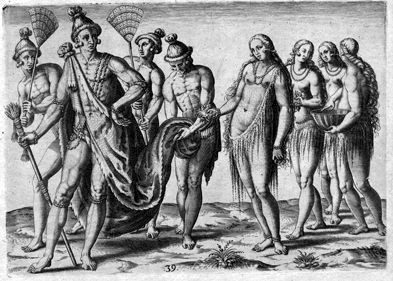
For thousands of years before Europeans came, the Timucua and their ancestors made their home in this area. They fished, hunted and gathered food in the marshes and forests, and collected clams and oysters. Their dugout canoes were made from tree trunks. They used the waterways to get from place to place. Over many generations, the shells they threw away built up into mounds. Shell mounds like these are found across the Timucuan Ecological and Historic Preserve.
The name Timucua covers several cultural traditions linked by a shared language. That language had a coastal dialect called Mocama, a word that means ocean or sea. Mocama was spoken on the coast between Georgia's Satilla River and Florida's St. Johns River. A Mocama village could have fewer than 100 people or as many as 500. Mocama speakers got most of their food from fishing. Archaeologists from the University of North Florida have dug at a spot believed to be Sarabay, a Mocama town. The site is inside Big Talbot Island State Park.
Once Europeans arrived, the Timucua did not survive for long. They had no immunity to the diseases Europeans carried, and those diseases devastated them. Their numbers fell from tens of thousands to only 550 on record in 1698. No native group known today uses the name Timucua for itself.
Sources: National Park Service: People - Timucuan Ecological & Historic Preserve; National Park Service: Timucuan Brochure and Map Text; University of North Florida, Indigenous Florida: Old World Mocama: 1450-1600 C.E.; University of North Florida: UNF Excavations Expose Activity Areas, Pits, Hearths, and Building Remains in the Center of the Mocama Town of Sarabay
Next: Chapter 2, The French at Fort Caroline →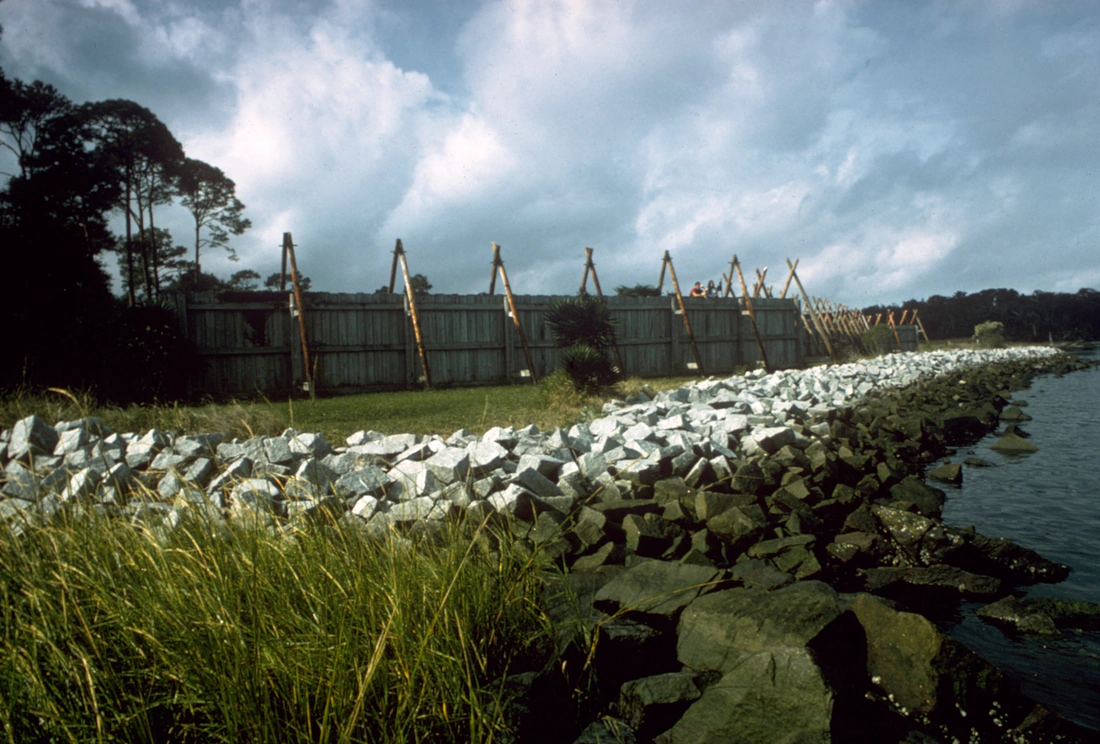
The French at Fort Caroline
Jean Ribault led a French voyage that reached the St. Johns River at its mouth on May 1, 1562. There the French met the Timucua. Before sailing north, they put up a stone marker. A second French group, led by René de Goulaine de Laudonnière, built Fort Caroline near the river's mouth in 1564. Admiral Gaspard de Coligny meant the fort to be a safe place for Huguenots, who were French Calvinists. The 200 people in the group gave the area its name, La Caroline, in honor of France's King Charles IX.
The French started building the fort on June 30, 1564. The Timucua helped with the work and gave the French food. Spain's King Philip II sent an armada under Pedro Menéndez de Avilés. Its task was to drive the French out of Florida. In the fall of 1565, Menéndez led his troops against the fort, and they killed most of the colonists they found there. Of the 200 people left at the fort, the Spanish spared only about 60, all women and children.
That same year, Ribault and his men were caught in a shipwreck near St. Augustine. A few survived the shipwreck and got back to France, but Menéndez killed the rest. The place where he killed them was later named Matanzas, which means killing or slaughter. In April 1568, Dominique de Gourgues landed with three ships at the fort, which the Spanish called San Mateo. He captured the fort, burned it, and killed the Spanish prisoners. The French made no further attempt to settle the area. No one knows exactly where the fort stood.
Sources: National Park Service: Timucuan Brochure and Map Text; National Park Service: People - Timucuan Ecological & Historic Preserve; National Park Service: Florida: Fort Caroline National Memorial; National Park Service: Colony and Conflict; National Park Service: The End of the Colony; Florida Department of State: The Huguenot Memorial Site (historical marker)
Next: Chapter 3, Spanish missions and the Cow Ford →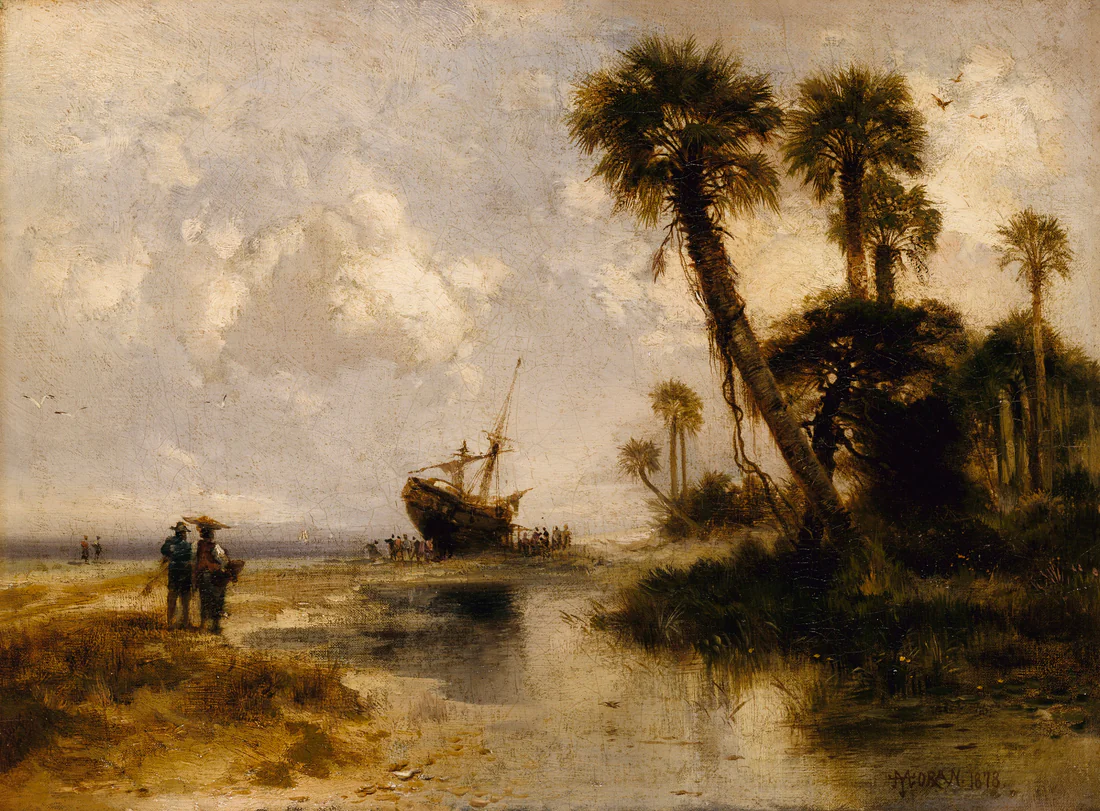
Spanish missions and the Cow Ford
One way Spain colonized Florida was by setting up missions to convert the native people to Christianity. Late in the 1500s, Franciscan friars started a mission named San Juan del Puerto on Fort George Island. Its purpose was to serve the Timucua. Father Francisco Pareja worked at the mission around 1600 and wrote a dictionary and a grammar of the Timucua language. He also wrote religious books in Timucua. In 1702, James Moore, governor of South Carolina, which was then a British colony, tried and failed to capture St. Augustine. His raid still destroyed the Spanish missions to the north of the city, San Juan del Puerto among them. In the 1730s, the British invaded Spanish Florida, and Georgia's governor, James Oglethorpe, built Fort George on the island. He renamed the island St. George.
The St. Johns River narrows at what is now downtown Jacksonville. Native people and early travelers crossed the river there, close to a spring of clear fresh water. The native name for the crossing was Wacca Pilatka, which meant cow's crossing. The English shortened it to Cow Ford. When the English turned an old Timucua trail into the King's Road, the road used this crossing. Cow Ford was the name Jacksonville went by for many years.
Sources: Florida Department of State: Site of the Mission of San Juan del Puerto (historical marker); Florida Department of State: Fort George Island (historical marker); Jacksonville History Center: What's in a name? How the city and its streets got theirs.; Florida Department of State: Site of Cow Ford (historical marker)
Next: Chapter 4, Plantations and slavery →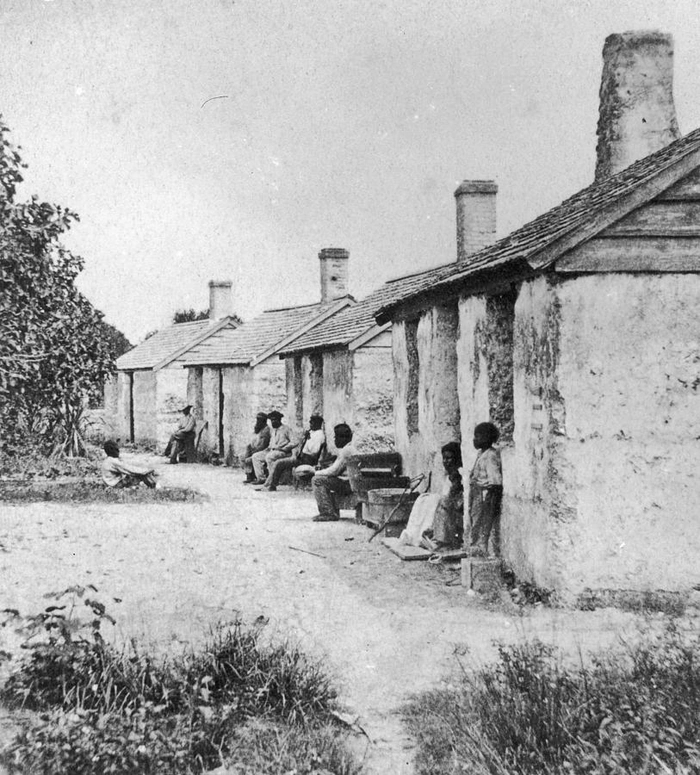
Plantations and slavery
From 1783 to 1821, the Second Spanish Period, Fort George Island was owned by three American planters in turn. First came Don Juan McQueen, then John Houstoun McIntosh, and finally Zephaniah Kingsley. Enslaved people built the plantation house, which was finished in 1798. When Kingsley made the island his home in 1814, the only way to get there was by boat. Kingsley Plantation's crops included Sea Island cotton and sugarcane.
Cabins set in a half circle were home to enslaved people: men, women and children. The cabins were built of tabby, made by mixing oyster shells with sand and water. Under the task system, each enslaved person was given a fixed amount of work to finish each day. One day's task might be to pick a quarter acre of cotton. Anna, Kingsley's wife, came from Senegal in West Africa. He had bought her as a slave in Havana, Cuba. Anna and her children gained their freedom in 1811. After that she came to own land and slaves herself.
Under Spain, Florida's racial policies were fairly liberal. That changed sharply in 1821, when Florida became a territory of the United States. In 1837, Anna moved to Haiti to get away from the oppressive laws of the new territory. Her two sons went with her, along with some former slaves. Kingsley had started a free colony there. In 1839, Kingsley's nephew bought Fort George Island from him. Anna came back from Haiti to Jacksonville in 1846. She died in Jacksonville in 1870.
Sources: Florida Department of State: Fort George Island (historical marker); National Park Service: Timucuan Brochure and Map Text; National Park Service: Chronology of Kingsley Plantation
Next: Chapter 5, Jacksonville and Duval County begin →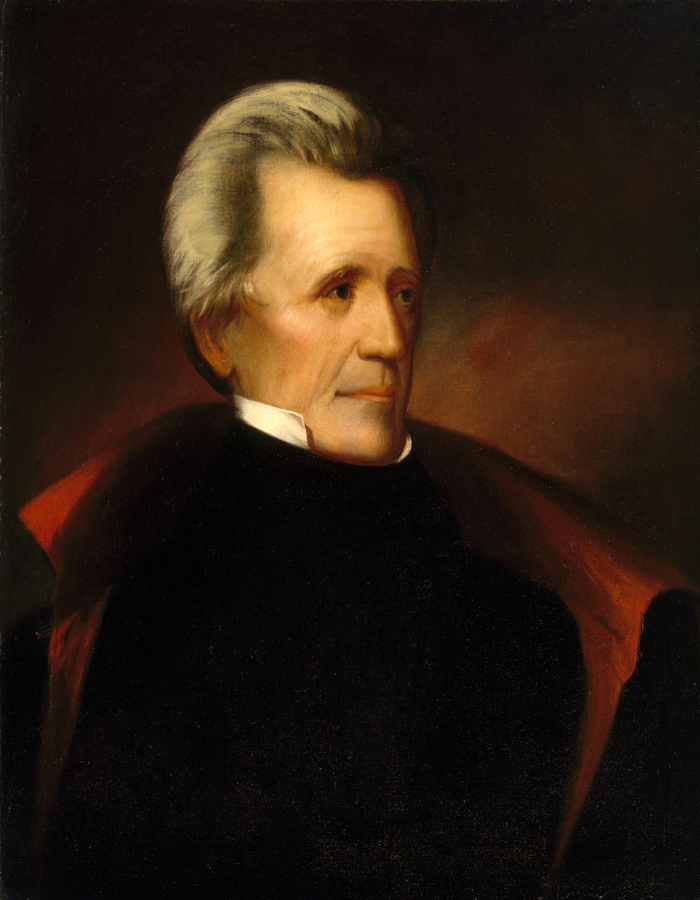
Jacksonville and Duval County begin
The area had about 250 residents in early June 1822. They were spread out along the St. Johns River, on both banks. Most travelers to the area could see that a town might grow at the Cow Ford. Isaiah D. Hart was foremost among them. The first survey of Jacksonville was made in June 1822. Its starting point was a bay tree at the lower end of Market Street. The town plan had 20 squares, with Bay, Catherine, Duval and Ocean Streets as its borders. The survey was done by four men who lived in the area. They were D.S.H. Miller, John Bellamy, Benjamin Chaires and Francis Ross.
John Warren, who lived in the town, suggested the name Jacksonville. The name honored General Andrew Jackson, and it was accepted without objection. The Jacksonville History Center calls Jackson the state's first American governor. It also says there is no firm record of him ever coming to this part of Florida.
On August 12, 1822, the Legislative Council of the Territory of Florida passed an act creating Duval County. The new county was formed from part of St. Johns County. A 1938 history of the county says it was named for William P. Duval, the first civil governor of Florida Territory. Duval served as the territory's governor from 1822 until 1834. The new county reached from the Suwannee River all the way to the Atlantic Ocean. Jacksonville was picked to be the county seat. Later, the land that is now Clay, Nassau and Alachua counties was taken out of Duval County.
Sources: Jacksonville History Center: What's in a name? How the city and its streets got theirs.; Florida Department of State: The Beginning (historical marker); Florida Memory: Historical Sketch of Duval County (Works Progress Administration, 1938); Action News Jax: Jacksonville Turns 200: Duval County is formed
Next: Chapter 6, The Civil War →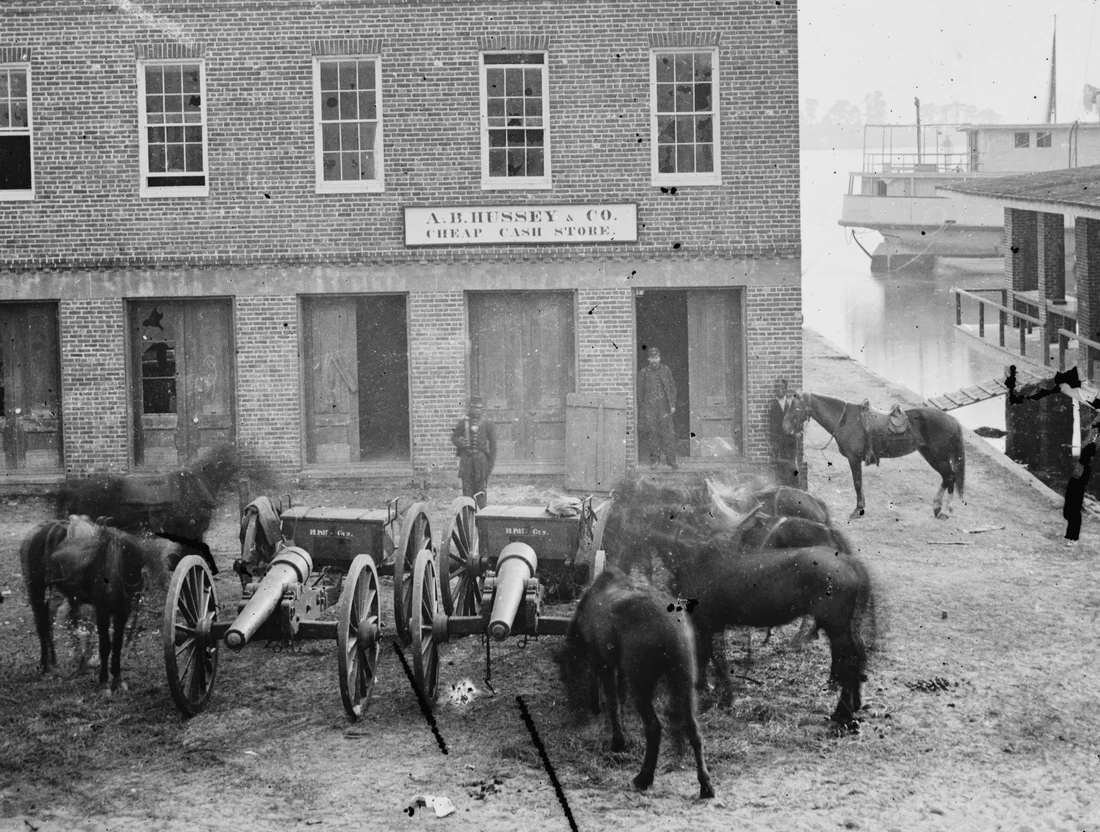
The Civil War
Jacksonville, a St. Johns River port, was important during the Civil War. Union troops occupied the city four times, and after February 1864 they held it for the rest of the war. Thousands of people escaped slavery by reaching the Union lines in Jacksonville. Thousands of freed people also joined the fight. They served as U.S. soldiers and sailors.
In February 1864, Confederate and Union troops fought at Olustee, in today's Baker County. The Union side was routed there. The 54th Massachusetts Infantry, an African American regiment, had been formed in 1863. It was among the units that fell back to Fort Hatch in Jacksonville. Also in 1864, the Union Army built a ring of breastworks, which are temporary fortifications, around the city. The defenses included nine gun batteries.
Early on April 1, 1864, the Union transport Maple Leaf struck a Confederate mine near Mandarin Point and sank. Four of the crew were killed. The wreck was located in 1981. Hundreds of artifacts have since been brought up from it.
Sources: Florida Department of State: Fort Hatch (historical marker); Jacksonville Today: THE JAXSON | 5 moments that shaped Jacksonville history; Action News Jax: Jacksonville: A strategic battleground in the Civil War | America 250; Florida Department of State: Maple Leaf (historical marker)
Next: Chapter 7, Winter visitors, steamboats and the beaches →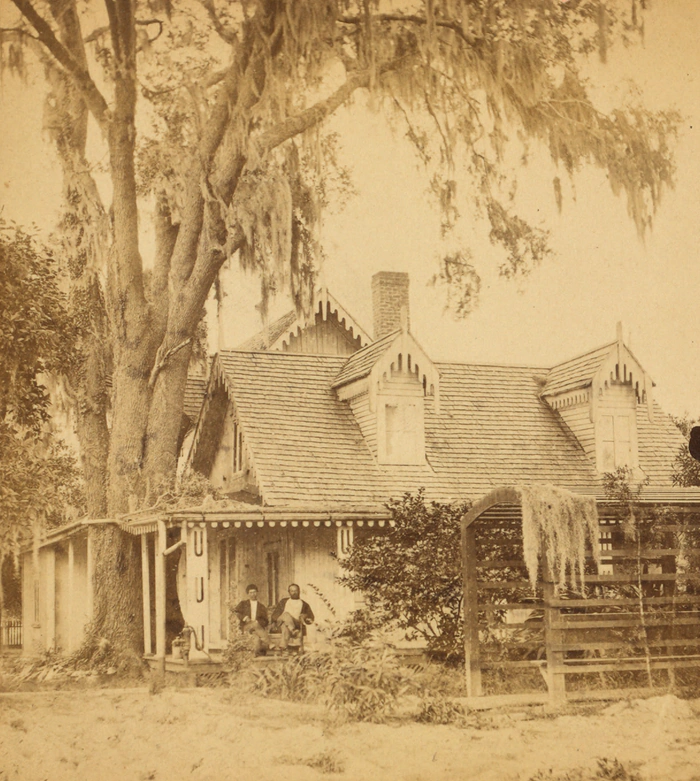
Winter visitors, steamboats and the beaches
Harriet Beecher Stowe, who wrote Uncle Tom's Cabin, bought 30 acres in Mandarin with her husband, Calvin, in 1867. They spent their winters there until 1883-1884. During her time in Florida, she wrote Palmetto Leaves, a set of sketches. Soon after the Civil War, John F. Rollins became the owner of Fort George Island. In the 1880s the island was a popular tourist resort for a short time. By 1877, tourists going to the Fort George Island Hotel came ashore at Pilot Town. A dock there was used by steamers running to Savannah, Charleston and Jacksonville. Yellow fever, fire and competition from other resort areas brought the island's tourist years to an end about 1890.
Napoleon Bonaparte Broward worked as a bar pilot. Bar pilots guided ships around the river's shifting sandbar. His tugboat, The Three Friends, first sailed for Cuba in 1896. In all it made eight trips through Spanish blockades, taking arms to Cuban revolutionaries. Later he served as the 19th governor of Florida.
Work started in 1883 on the Jacksonville and Atlantic Railroad. Its narrow-gauge track ran from the St. Johns River's south bank to the beach, a distance of 16.54 miles. The state marker says the first settlers there were a husband and wife, William Edward Scull and Eleanor Kennedy Scull. Ruby, the name given to the settlement, came from their first daughter. Ruby became Pablo Beach on May 13, 1886. On June 15, 1925, Pablo Beach became Jacksonville Beach. In 1900, Henry Flagler set aside Manhattan Beach for Black people who worked for his hotel companies or the Florida East Coast Railway. Pavilions run by Black business owners offered food, places to stay and entertainment. The resort lasted until 1938. Coastal erosion and pressure from white land developers made its end come sooner.
Sources: Florida Department of State: Harriet Beecher Stowe Home (historical marker); Florida Department of State: Fort George Island (historical marker); Florida Department of State: Pilot Town / Napoleon Bonaparte Broward (historical marker); Florida Department of State: First Settlers at Ruby, Florida (historical marker); Florida Department of State: Historic Manhattan Beach, Florida (historical marker)
Next: Chapter 8, The Great Fire of 1901 →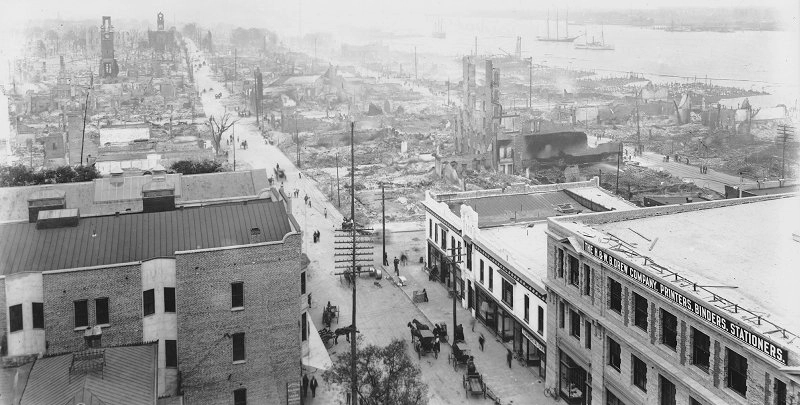
The Great Fire of 1901
The fire started in the Cleaveland Fibre Factory at 12:30 p.m. on May 3, 1901. Embers from a chimney set fire to sun-dried moss meant for stuffing mattresses. Dry weather and wind drove the fire east. It then turned south and burned all the way to the docks on Bay Street. By 8:30 p.m., firefighters and weakening winds had brought it under control.
In eight hours, the fire destroyed 146 city blocks. It burned 2,368 buildings and left nearly 10,000 people homeless. The fire killed seven people. The state historical marker calls it the most destructive burning of any Southern city in the nation's history.
The Afro-American Industrial and Benefits Association had opened its first office two months before the fire. That office was lost in the fire. The company was started in 1901 to offer death benefits and health insurance that African Americans in Florida could afford. The fire also destroyed the campus of Edward Waters College, which had been in Jacksonville since 1883. Most of downtown had burned. Afterward, the architect Henry John Klutho came to Jacksonville. He designed the St. James Building, which went up in 1910. It takes up a whole city block.
Sources: Florida Department of State: Jacksonville's 1901 Fire (historical marker); Florida Department of State: Florida's First African-American Insurance Company--1901-2001 (historical marker); Florida Department of State: Centennial Hall, Edward Waters College (historical marker); Florida Department of State: Henry John Klutho (historical marker)
Next: Chapter 9, The silent film studios →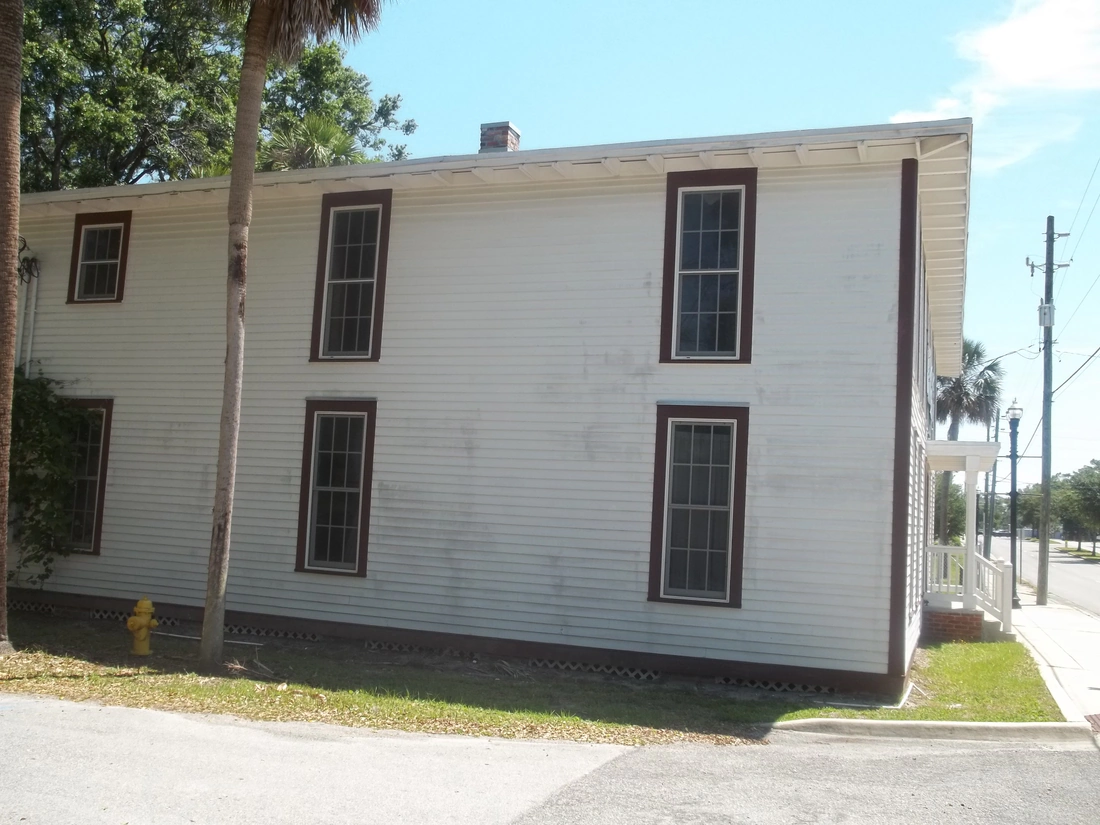
The silent film studios
In the early 1900s, people called Jacksonville the World's Winter Film Capital. The Florida Department of State says the city had over 30 film studios in 1916. The Thanhouser company of New Rochelle, New York, set up a studio in Jacksonville. It came for the warm sun in winter. Oliver Hardy worked for Jacksonville studios between 1914 and 1917.
When film companies started moving to Hollywood and elsewhere, Henry John Klutho tried to keep filmmaking going in Jacksonville. In 1917, he spent his own money on a studio complex he built behind his house. In 1920 he had to sell it. The complex was torn down in 1922. The state marker about Klutho says that changing local politics, World War I and the 1918 flu epidemic, all together, were too much for the film industry in Jacksonville.
In the early 1920s, Richard Norman bought a studio complex with five buildings. The complex is in the part of Jacksonville now known as the Arlington neighborhood. There he made feature films. They were meant for movie theaters that served African American communities. He gave dramatic roles to professional African American actors. The Florida Department of State says the Norman complex is the last studio complex left from the years when Jacksonville was among the leaders in silent film. In December 2016, the department announced that Norman Studios had been designated a National Historic Landmark.
Sources: Florida Department of State: Henry John Klutho (historical marker); Florida Department of State: Secretary Detzner Announces Recent Designation of the Norman Studios as a National Historic Landmark; Norman Studios Silent Film Museum: Early Filmmaking in Jacksonville, Florida - A Virtual Event Series
Next: Chapter 10, War, civil rights and one government →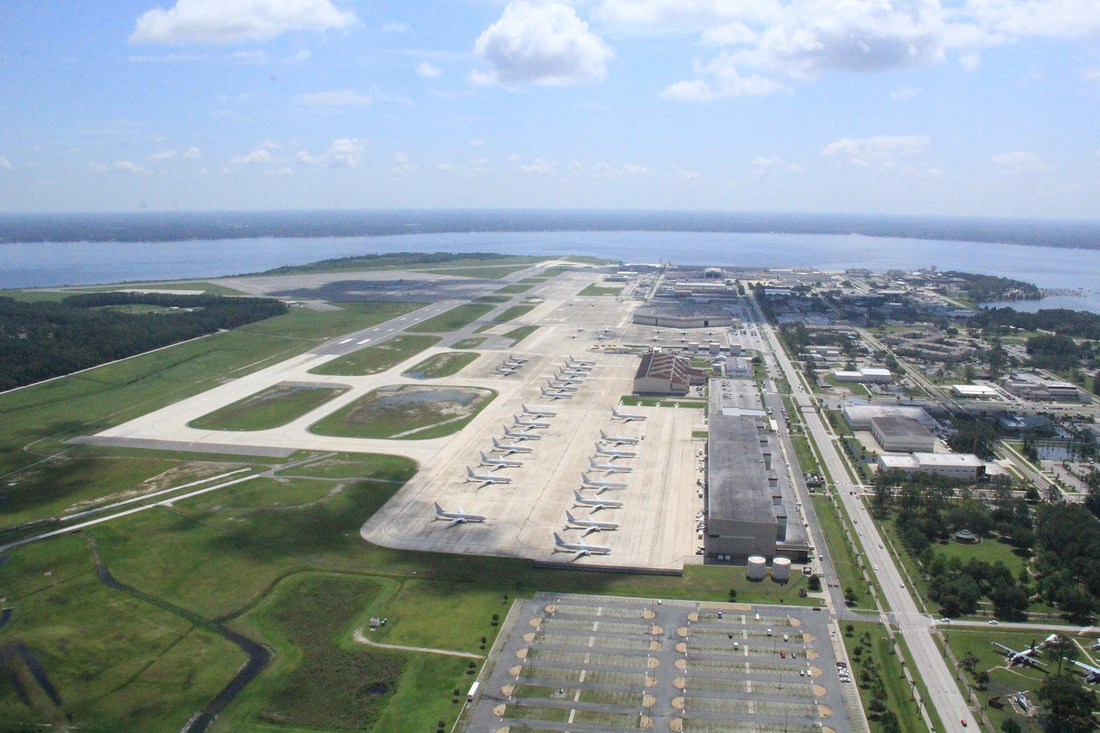
War, civil rights and one government
In 1940, Naval Air Station Jacksonville was set up at the edge of the city. A major sea base followed in 1942, where the St. Johns River reaches the ocean. On April 10, 1942, the German submarine U-123 attacked the tanker Gulfamerica. The attack took place close to shore at Jacksonville Beach. People on the boardwalk watched it happen. The attack killed 19 men. The ship was on fire for several days and then sank.
In 1891, A. Philip Randolph's family settled in Jacksonville. He went to school at the Cookman Institute. He was valedictorian of its class of 1907. In 1925 he organized the Brotherhood of Sleeping Car Porters and became its leader. The state marker calls it the nation's first labor union made up mostly of African Americans. On Saturday, August 27, 1960, members of the NAACP Youth Council, 40 in all, held a sit-in. They sat at the lunch counters for whites only in the W.T. Grant store and at Woolworth's. They were confronted by 150 white men holding baseball bats and ax handles. Many of the young people were hurt. Within ten years, Duval County's public schools started to desegregate, and lunch counters were opened to all.
Voters approved combining the city and county governments in 1967. More than 60 percent of the vote was in favor. One goal was to bring city services to people living in the unincorporated parts of the county. Another was to give the urban core tax money it badly needed. The governments of Jacksonville and Duval County became one on October 1, 1968.
Sources: Jacksonville Today: THE JAXSON | 5 moments that shaped Jacksonville history; Florida Department of State: SS Gulfamerica (historical marker); Florida Department of State: A. Philip Randolph Heritage Park (historical marker); Florida Department of State: 1960 Civil Rights Demonstration (historical marker); City of Jacksonville: Our Story
Next: Chapter 11, Since 1968: the Jaguars, a Super Bowl and Riverfront Plaza →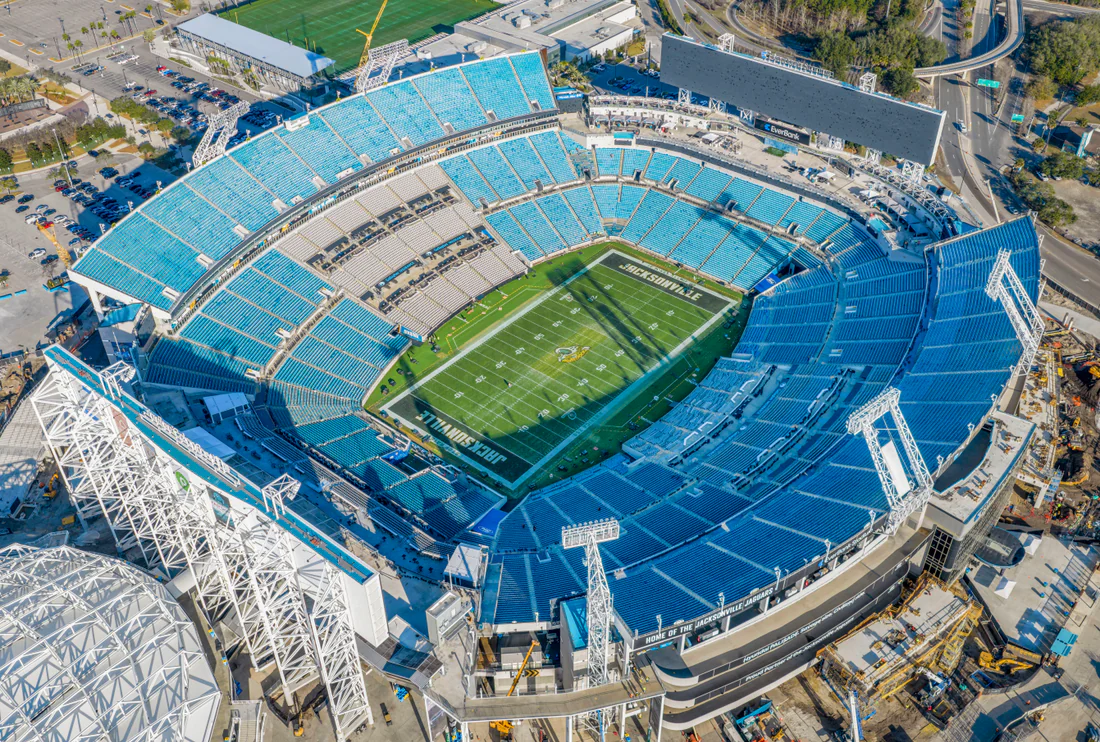
Since 1968: the Jaguars, a Super Bowl and Riverfront Plaza
The University of North Florida opened for classes on October 2, 1972. President Reagan signed the law creating the Timucuan Ecological and Historic Preserve on February 16, 1988. The National Park Service says the preserve protects a large salt marsh estuary on the Southeast coast. The Dames Point Bridge opened in 1989 under its official name, the Napoleon Bonaparte Broward Bridge. It crosses the St. Johns River and uses 21 miles of cable.
On November 30, 1993, the National Football League chose Jacksonville for its 30th team, the Jaguars. The Jaguars played their first game in 1995. Jacksonville hosted Super Bowl XXXIX on February 6, 2005. Paul McCartney played the halftime show. Five cruise ships docked on the St. Johns River because the city did not have enough hotel rooms.
On May 6, 2024, the city opened the LaVilla Link, the first finished part of the Emerald Trail. The path links LaVilla with the S-Line Rail Trail, which it meets at State Street. Riverfront Plaza officially opened on December 5, 2025, on land that was once the Jacksonville Landing. Its first phase has an event lawn, a riverwalk, and a playground built on the roof of a pavilion.
Sources: University of North Florida: UNF History; National Park Service: Establishing Ft. Caroline & the Timucuan Preserve; National Park Service: NPS Geodiversity Atlas, Timucuan Ecological and Historic Preserve; News4Jax: A look back: Dames Point Bridge celebrates 30 years; Jacksonville Jaguars: A City Stuns the Sports World; News4Jax: Jacksonville celebrates 30 years since NFL awarded Jaguars to city; News4Jax: 19 years ago the party was in Jacksonville. Here's a look back at the Super Bowl XXXIX; News4Jax: Jacksonville's Emerald Trail project takes step forward with opening of LaVilla Link; Jacksonville Today: LaVilla Link goes green as first stretch of Emerald Trail opens; Jacksonville Today: Expansive Riverfront Plaza and playground officially open
Next: the whole story, in dates →The whole story, in dates
The Timucua and their ancestors live in this area.
Jean Ribault's French voyage reaches the St. Johns River.
The French start building Fort Caroline.
Spanish troops led by Menéndez attack the fort and kill most of the colonists.
Dominique de Gourgues takes the fort and burns it.
Franciscan friars start the San Juan del Puerto mission.
Father Francisco Pareja writes a Timucua dictionary and grammar.
Only 550 Timucua are on record.
A raid from South Carolina destroys the San Juan del Puerto mission.
James Oglethorpe builds Fort George on Fort George Island.
Work on the Fort George Island plantation house is finished.
Anna Kingsley and her children gain their freedom.
Zephaniah Kingsley makes Fort George Island his home.
Florida becomes a territory of the United States.
Surveyors lay out the town of Jacksonville.
The territory's Legislative Council creates Duval County.
Anna Kingsley moves to Haiti with her sons.
Union troops begin holding Jacksonville for the rest of the war.
The Union transport Maple Leaf strikes a Confederate mine and sinks.
Harriet Beecher Stowe buys land in Mandarin.
Work starts on the railroad to the beach.
Henry Flagler sets aside Manhattan Beach for his Black workers.
The Great Fire burns 146 city blocks.
Jacksonville has over 30 film studios.
A. Philip Randolph organizes the Brotherhood of Sleeping Car Porters.
Naval Air Station Jacksonville is set up.
A German submarine attacks the tanker Gulfamerica near Jacksonville Beach.
NAACP Youth Council members holding a sit-in are attacked.
Voters approve combining the city and county governments.
Jacksonville and Duval County become a single government.
The University of North Florida opens for classes.
President Reagan signs the law creating the Timucuan Ecological and Historic Preserve.
The Dames Point Bridge opens across the St. Johns River.
The National Football League chooses Jacksonville for its 30th team, the Jaguars.
The Jaguars play their first game.
Jacksonville hosts Super Bowl XXXIX, with Paul McCartney at halftime.
The LaVilla Link, the first finished part of the Emerald Trail, opens.
Riverfront Plaza opens on land that was once the Jacksonville Landing.
Where you can still see it
 01
01 02
02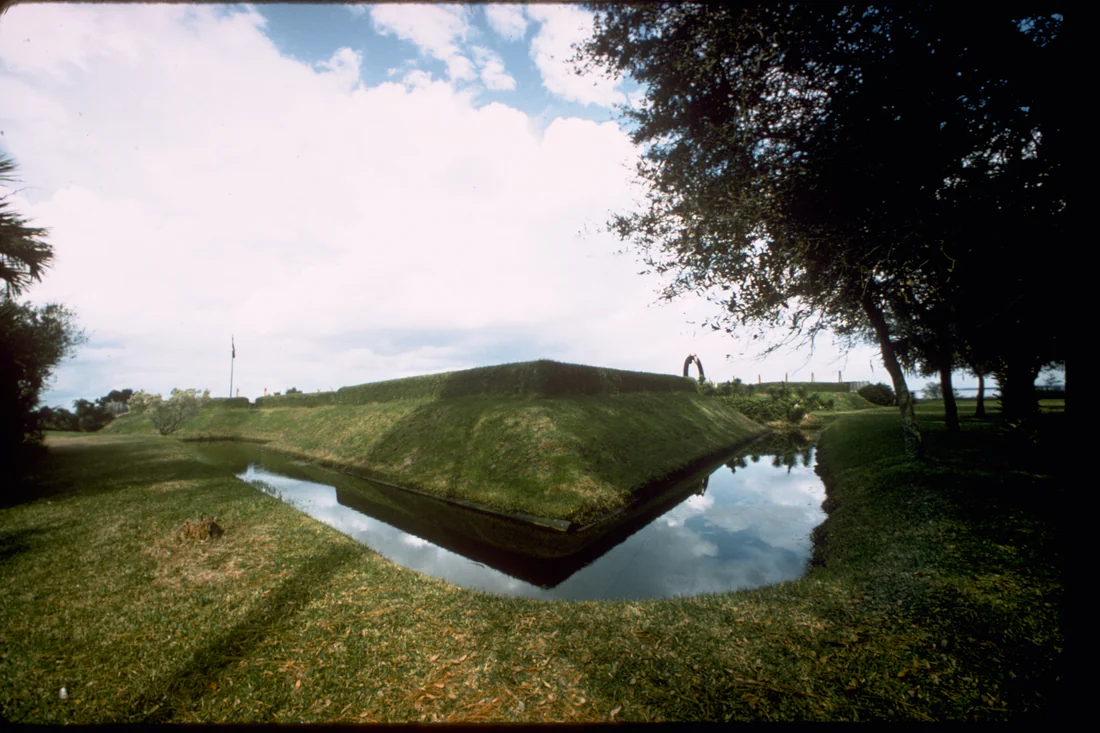 03
03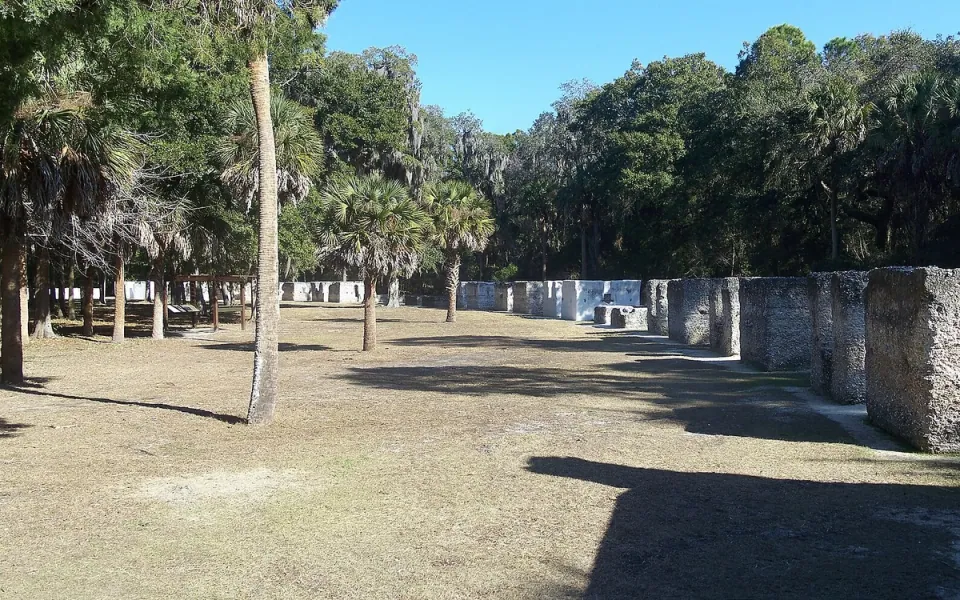 04
04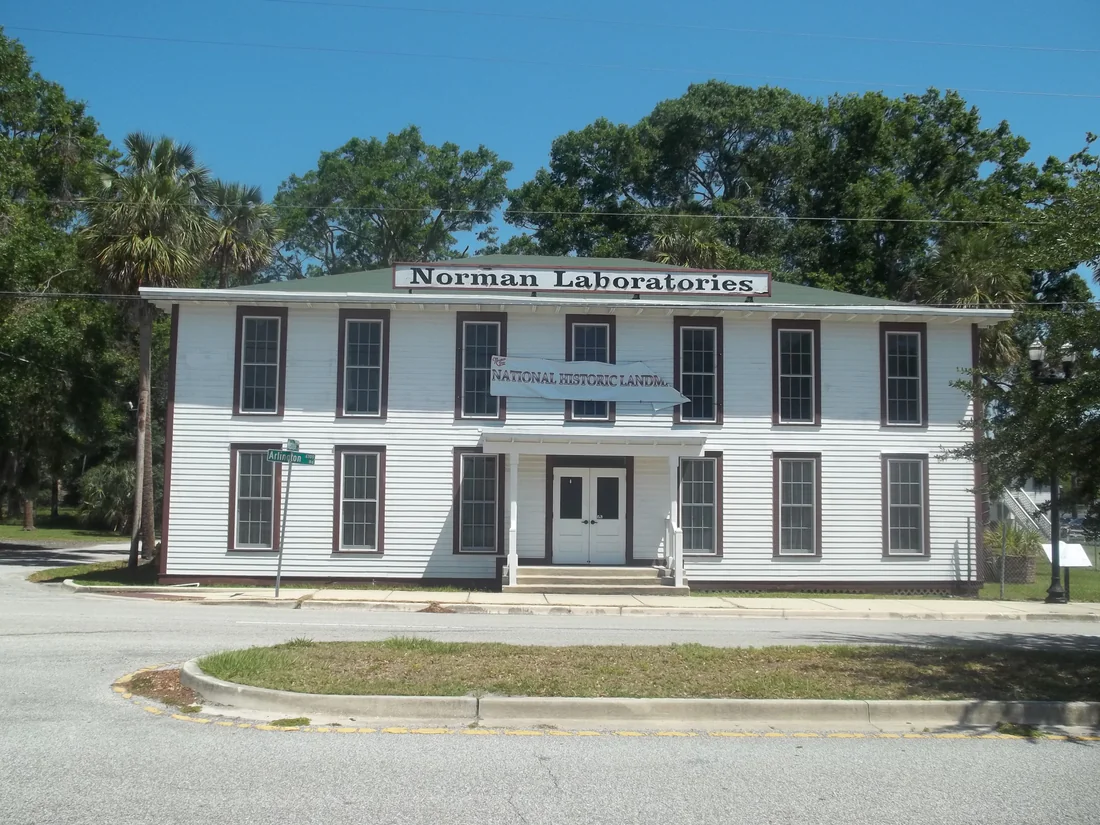 05
05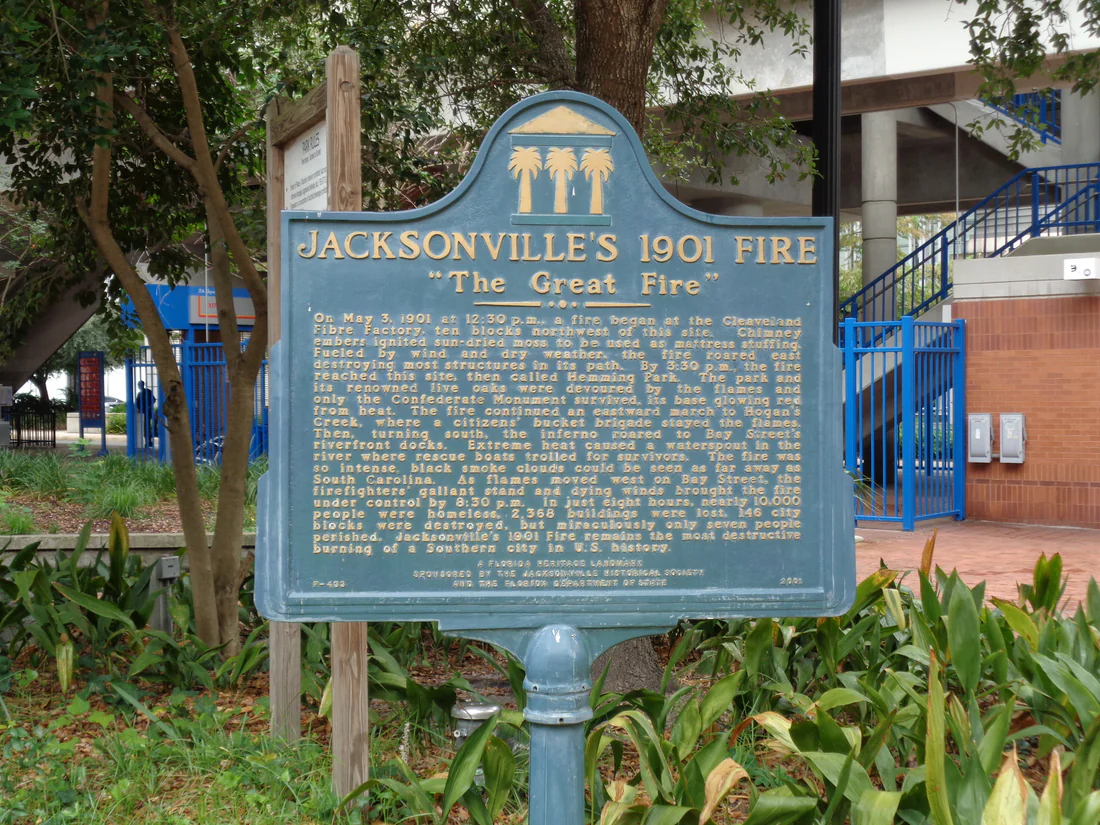 06
06Jacksonville's 1901 Fire historical marker
Goes with: The Great Fire of 1901
the state's page for this marker →Where this comes from.
- National Park Service: People - Timucuan Ecological & Historic Preserve ↗ Read October 15, 2026
- National Park Service: Timucuan Brochure and Map Text ↗ Read October 15, 2026
- University of North Florida, Indigenous Florida: Old World Mocama: 1450-1600 C.E. ↗ Read October 15, 2026
- University of North Florida: UNF Excavations Expose Activity Areas, Pits, Hearths, and Building Remains in the Center of the Mocama Town of Sarabay ↗ Read October 15, 2026
- National Park Service: Florida: Fort Caroline National Memorial ↗ Read October 15, 2026
- National Park Service: Colony and Conflict ↗ Read October 15, 2026
- National Park Service: The End of the Colony ↗ Read October 15, 2026
- Florida Department of State: The Huguenot Memorial Site (historical marker) ↗ Read October 15, 2026
- Florida Department of State: Site of the Mission of San Juan del Puerto (historical marker) ↗ Read October 15, 2026
- Florida Department of State: Fort George Island (historical marker) ↗ Read October 15, 2026
- Florida Department of State: Site of Cow Ford (historical marker) ↗ Read October 15, 2026
- National Park Service: Chronology of Kingsley Plantation ↗ Read October 15, 2026
- Jacksonville History Center: What's in a name? How the city and its streets got theirs. ↗ Read October 15, 2026
- Florida Department of State: The Beginning (historical marker) ↗ Read October 15, 2026
- Florida Memory: Historical Sketch of Duval County (Works Progress Administration, 1938) ↗ Read October 15, 2026
- Action News Jax: Jacksonville Turns 200: Duval County is formed ↗ Read October 15, 2026
- Florida Department of State: Fort Hatch (historical marker) ↗ Read October 15, 2026
- Jacksonville Today: THE JAXSON | 5 moments that shaped Jacksonville history ↗ Read October 15, 2026
- Action News Jax: Jacksonville: A strategic battleground in the Civil War | America 250 ↗ Read October 15, 2026
- Florida Department of State: Maple Leaf (historical marker) ↗ Read October 15, 2026
- Florida Department of State: Harriet Beecher Stowe Home (historical marker) ↗ Read October 15, 2026
- Florida Department of State: Pilot Town / Napoleon Bonaparte Broward (historical marker) ↗ Read October 15, 2026
- Florida Department of State: First Settlers at Ruby, Florida (historical marker) ↗ Read October 15, 2026
- Florida Department of State: Historic Manhattan Beach, Florida (historical marker) ↗ Read October 15, 2026
- Florida Department of State: Jacksonville's 1901 Fire (historical marker) ↗ Read October 15, 2026
- Florida Department of State: Florida's First African-American Insurance Company--1901-2001 (historical marker) ↗ Read October 15, 2026
- Florida Department of State: Centennial Hall, Edward Waters College (historical marker) ↗ Read October 15, 2026
- Florida Department of State: Henry John Klutho (historical marker) ↗ Read October 15, 2026
- Florida Department of State: Secretary Detzner Announces Recent Designation of the Norman Studios as a National Historic Landmark ↗ Read October 15, 2026
- Norman Studios Silent Film Museum: Early Filmmaking in Jacksonville, Florida - A Virtual Event Series ↗ Read October 15, 2026
- Florida Department of State: SS Gulfamerica (historical marker) ↗ Read October 15, 2026
- Florida Department of State: A. Philip Randolph Heritage Park (historical marker) ↗ Read October 15, 2026
- Florida Department of State: 1960 Civil Rights Demonstration (historical marker) ↗ Read October 15, 2026
- City of Jacksonville: Our Story ↗ Read October 15, 2026
- University of North Florida: UNF History ↗ Read October 16, 2026
- National Park Service: Establishing Ft. Caroline & the Timucuan Preserve ↗ Read October 16, 2026
- National Park Service: NPS Geodiversity Atlas, Timucuan Ecological and Historic Preserve ↗ Read October 16, 2026
- News4Jax: A look back: Dames Point Bridge celebrates 30 years ↗ Read October 16, 2026
- Jacksonville Jaguars: A City Stuns the Sports World ↗ Read October 16, 2026
- News4Jax: Jacksonville celebrates 30 years since NFL awarded Jaguars to city ↗ Read October 16, 2026
- News4Jax: 19 years ago the party was in Jacksonville. Here's a look back at the Super Bowl XXXIX ↗ Read October 16, 2026
- News4Jax: Jacksonville's Emerald Trail project takes step forward with opening of LaVilla Link ↗ Read October 16, 2026
- Jacksonville Today: LaVilla Link goes green as first stretch of Emerald Trail opens ↗ Read October 16, 2026
- Jacksonville Today: Expansive Riverfront Plaza and playground officially open ↗ Read October 16, 2026