Clay County was created on December 31, 1858, when Governor Madison Perry signed it into law, and it was named for the Whig politician Henry Clay. Green Cove Springs has been the county seat since 1871. The county is best known for Camp Blanding, a National Guard base that opened in 1939, where the state marker says about one million men had basic training. Its history goes back thousands of years, to burial mounds along Black Creek.
This page tells the story in order, from the first people on Black Creek to Keystone Heights at 100, then lists places in the county where you can still see it. The sources for each part are named at the end of that part, and all of them are listed at the bottom of the page.
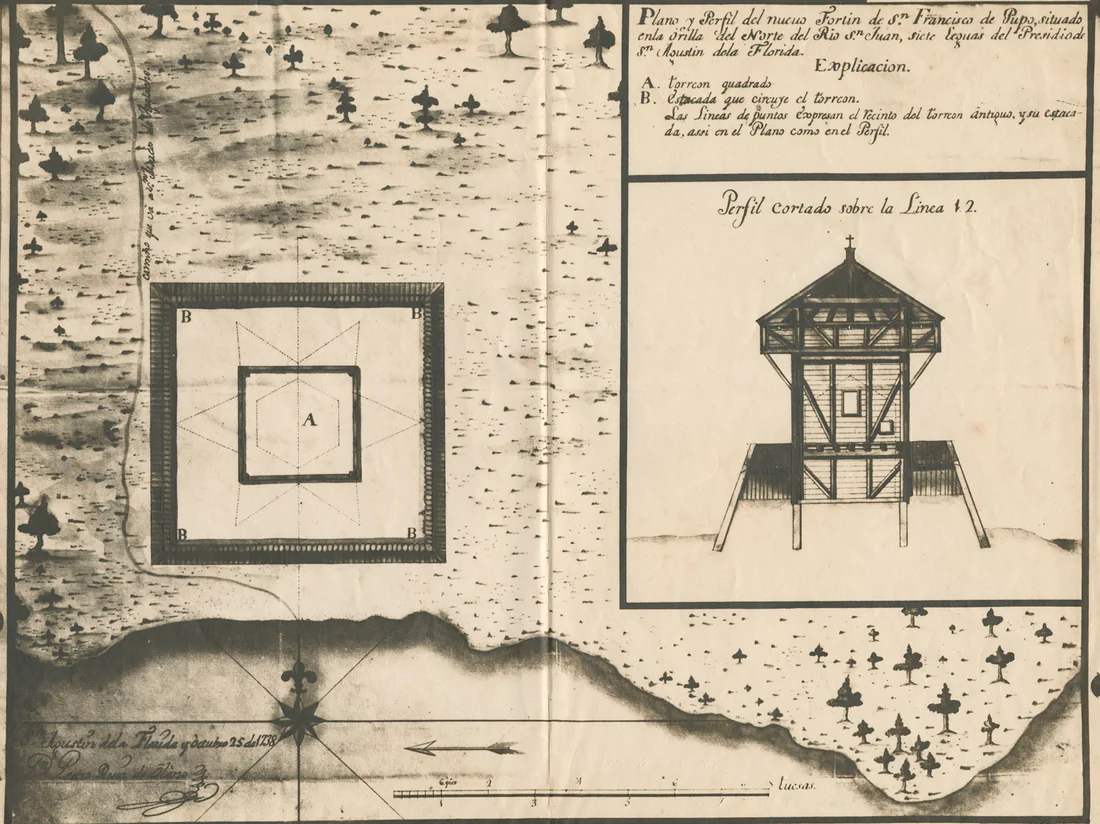
First peoples, Spanish friars and Fort Pupo
People lived on the banks of Black Creek long before written history, and some of their burial mounds are several thousand years old, the county archives say. The archives name two of these sites, the Bubba Midden and the Princess Mound. From 1950 to 1952 the archaeologist John Goggin studied the site of Fort Pupo. He found Native American pottery of the Orange Series, which the archives date to 1000 BC.
The Timucua who lived here were semi-nomadic, so Spanish missionaries had to gather them together in order to convert them. The name Pupo first appears in 1716, for the spot where the trail between the Franciscan missions near present-day Tallahassee and St. Augustine crossed the river, a historical marker says. Spain built a fort at Pupo, on the St. Johns River, before 1737.
After an attack by Yuchi Indians allied with the British, the fort was enlarged in 1738 into a 30-by-16 blockhouse. When the British general James Oglethorpe marched on St. Augustine in 1739 and 1740, he captured the Spanish blockhouses in person over two days, January 7 and 8. During British rule, indigo plantations lined the shores of Doctors Lake, the archives say.
Sources: Clay County Archives: Stories from the Water's Edge, by Archives Specialist Vishi Garig; Clay County Clerk of Court: Historical Markers & Historic Places
Next: Chapter 2, Spanish land grants: Clarke, Fleming and Kingsley →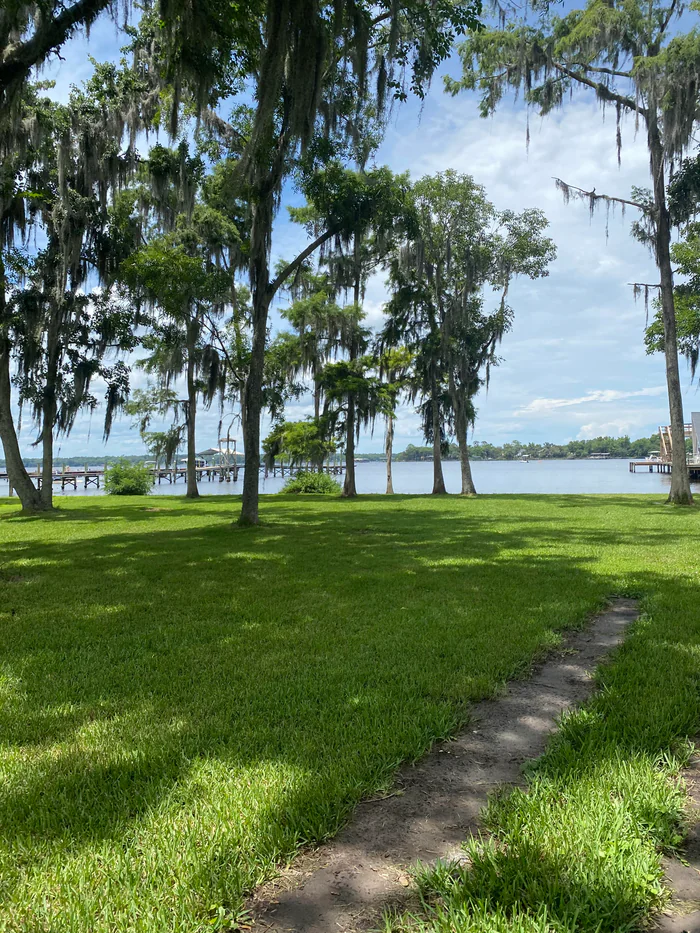
Spanish land grants: Clarke, Fleming and Kingsley
Green Cove Springs traces its start to a sawmill that George I. F. Clarke built nearby in 1816 under a Spanish land grant. In 1818 Spain granted Clarke 1,000 acres that took in the ruins of Fort Pupo. George Fleming received the land called Hibernia as a Spanish grant. Hibernia, an old name for Ireland, is the place now called Fleming Island.
Zephaniah Kingsley came to Spanish Florida in 1803, and his first plantation was Laurel Grove, on Doctors Lake in present Orange Park. In Havana in 1806 Kingsley bought Anta Madjiguene Ndiaye, a 13-year-old enslaved girl, and he later married her. The Park Service calls her Anna Madgigaine Jai, Kingsley's African wife. In 1812, during the Patriots' Rebellion, invading U.S. troops occupied Laurel Grove. Laurel Grove was later burned down, the county archives say.
Sources: Florida Department of State: Florida Historical Marker Details, Green Cove Springs; Clay County Clerk of Court: Historical Markers & Historic Places; Clay County Archives: Stories from the Water's Edge, by Archives Specialist Vishi Garig; Clay County Clerk of Court: Towns & Settlements; National Park Service: Kingsley Moves to Florida
Next: Chapter 3, Bellamy Road, Black Creek and the Second Seminole War →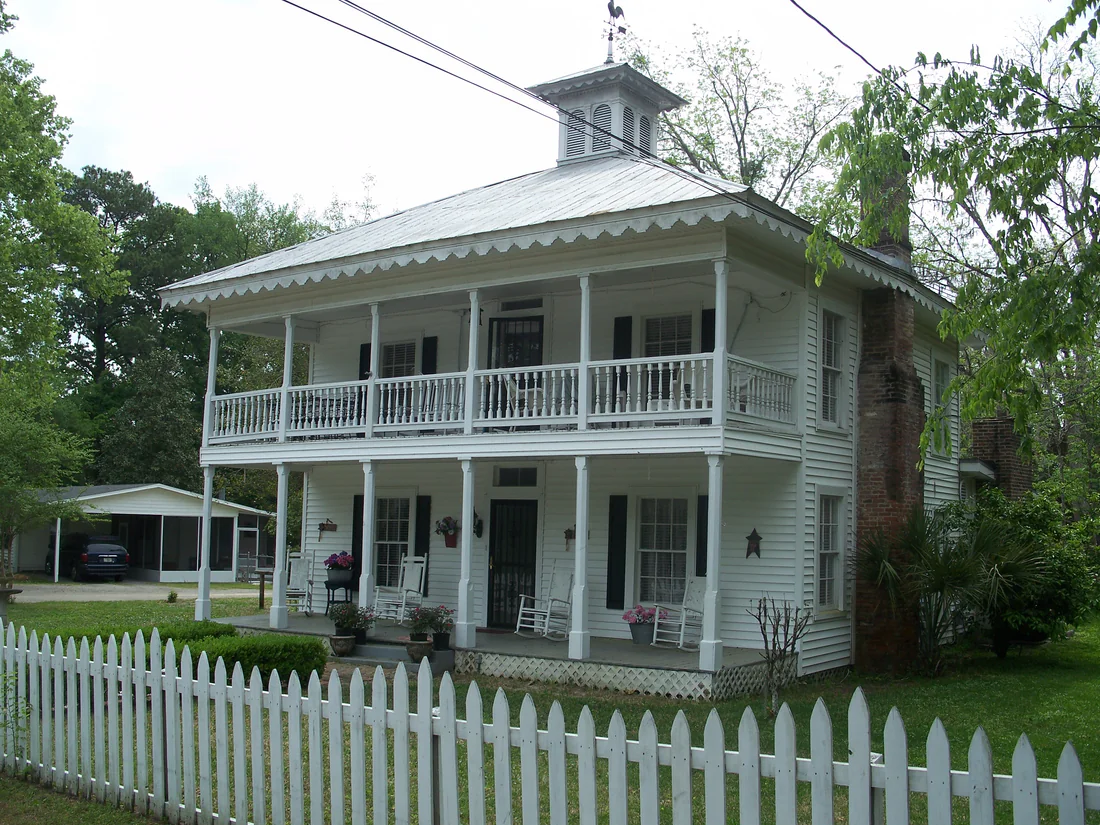
Bellamy Road, Black Creek and the Second Seminole War
In 1824 Congress set aside $20,000 for a public road, and the stretch from St. Augustine to Tallahassee went to John Bellamy. He finished it in 1826 with Native American guides and people he held as slaves. The Bellamy Road used the old river crossing at Pupo, a historical marker says.
The Methodist circuit rider Isaac Boring started a congregation at Black Creek no later than July 27, 1828. Its members met in homes until they built a church in 1847, which the marker calls Florida's oldest Methodist meeting place.
Middleburg grew in the early 1800s as a transportation center tied to the St. Johns River. The archives' list of towns says Garey's Ferry, named for Samuel Garey, was the town's first name, while the Middleburg marker says it was settled in the 1820s as Clark's Ferry. In the Second Seminole War, fought from 1835 to 1842, Middleburg became a major military depot. Its Fort Heileman, where the north and south prongs of Black Creek meet, was the biggest supply depot in the area, the county clerk's office says. The fort was named for Brevet Lieutenant Colonel Julius F. Heileman.
Sources: Clay County Clerk of Court: Historical Markers & Historic Places; Clay County Clerk of Court: Towns & Settlements; Clay County Clerk of Court: Our County's Founding
Next: Chapter 4, 1858: Clay County is created →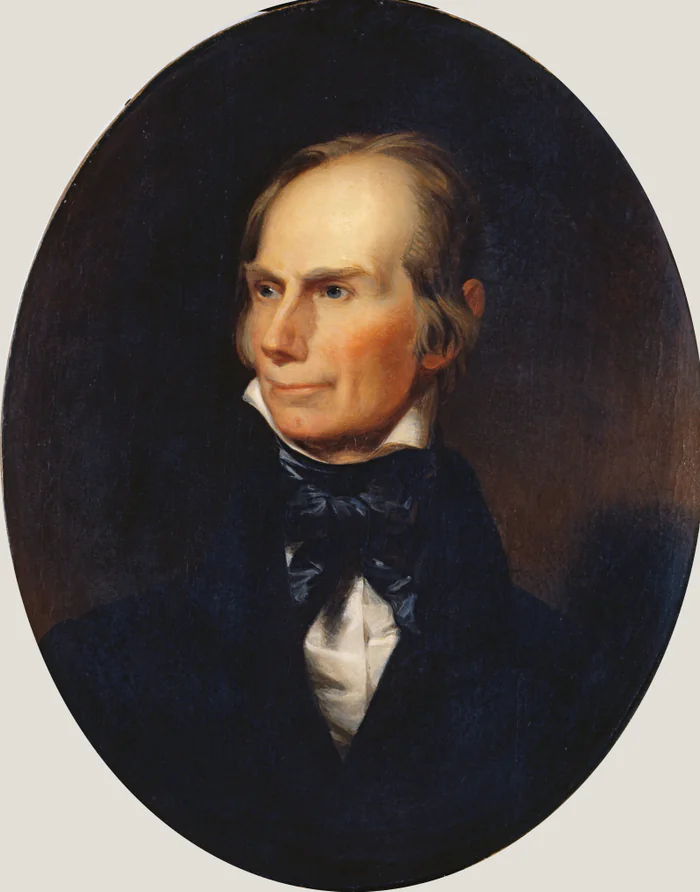
1858: Clay County is created
In 1858 this area was Duval County's Black Creek District, and the county courthouse was in Jacksonville. Merchants on Black Creek got goods from Jacksonville and farther away by steamboat and schooner. In the fall of 1858, people carried a petition around the district. More than 170 white men signed it, because only white men over 21 could vote.
On November 26, 1858, the district's representative, John G. Smith, brought a bill before the House to create the county. The House passed it 26 to 0, and the Senate passed it 35 to 0 on December 27, 1858. Clay County came into being on December 31, 1858, when Governor Madison Perry signed it into law.
The new county was named for Henry Clay, a popular Whig politician. Clay was a lawyer who served Kentucky in the U.S. Senate and House, and his nickname was "The Great Compromiser." Middleburg was chosen as the temporary county seat. In 1871 the seat moved to Green Cove Springs, which is still the county seat.
Sources: Clay County Clerk of Court: Our County's Founding; Clay County Clerk of Court: Historical Markers & Historic Places; Clay County Historical Society: About Our Historical Society
Next: Chapter 5, The Civil War on Black Creek and the St. Johns →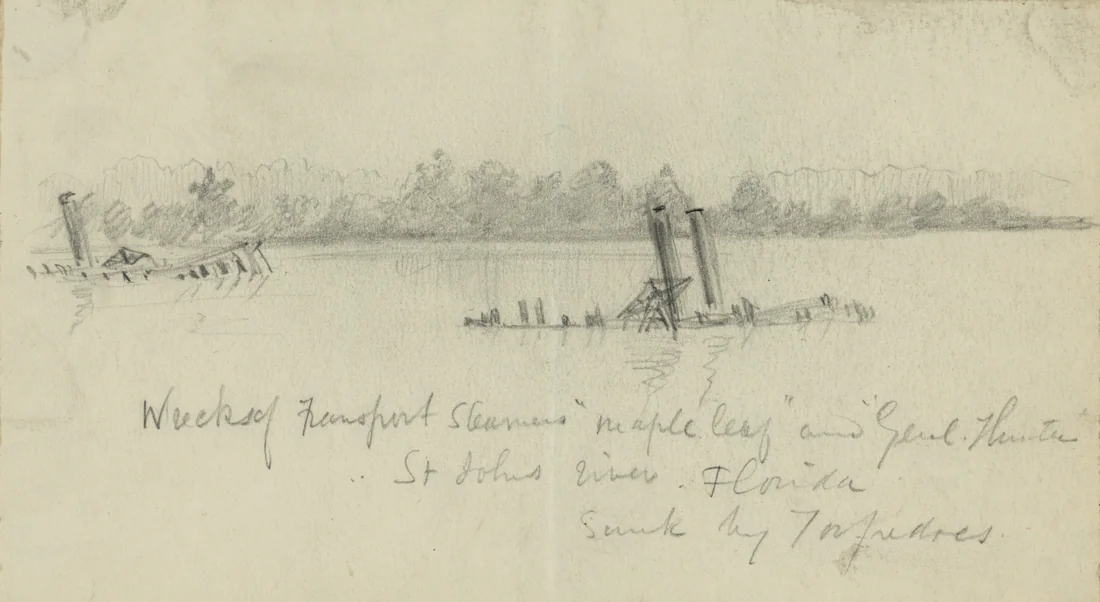
The Civil War on Black Creek and the St. Johns
During the Civil War, Black Creek carried troops and cotton. Mine warfare reached Clay County's shores in the spring of 1864, the county archives say. On April 1, 1864, near Mandarin, a Confederate mine sank the Maple Leaf, a ship the Union Army had leased. The wreck is now listed in the National Register of Historic Places.
Federal troops often skirmished with Confederates near Green Cove Springs and occupied the town in 1864, the state marker says. In 1864 much of Middleburg was burned by the 4th Massachusetts Cavalry. Two thousand Black troops were quartered in Middleburg, and Federal officers dined at the Clark House, Myrtice Truett wrote in 1980.
Sources: Clay County Archives: Stories from the Water's Edge, by Archives Specialist Vishi Garig; Florida Department of State: Florida Historical Marker Details, Green Cove Springs; Clay County Clerk of Court: Historical Markers & Historic Places; Clay County Archives: Middleburg, by Myrtice R. Truett, 1980
Next: Chapter 6, Green Cove Springs, grand hotels and the railroad →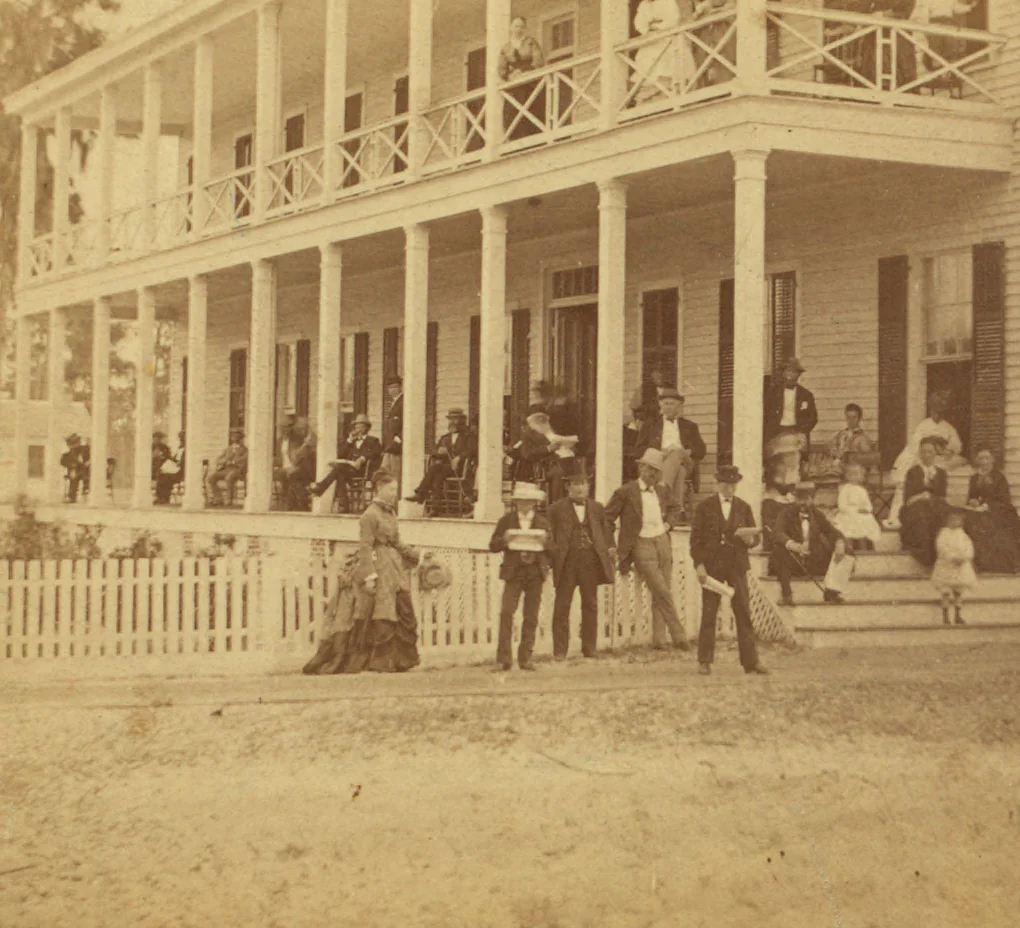
Green Cove Springs, grand hotels and the railroad
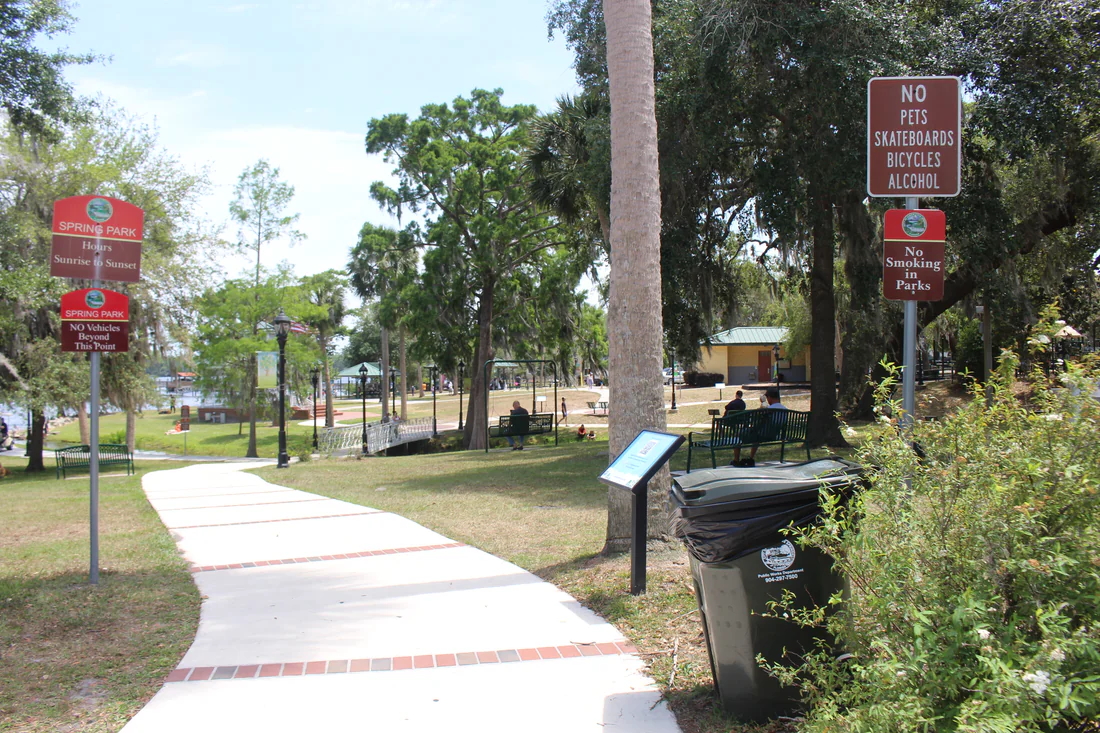
The first settlement at the spring, White Sulfur Springs, began in 1854. It was renamed Green Cove Springs in 1866 and was incorporated on November 2, 1874. River steamers carried visitors to the town, which was called the "Saratoga of the South" and was known as a healthful place. The state's historical marker for the city stands at Spring Park.
The Magnolia Hotel had 300 rooms and went up in the 1870s. The county archives call it the largest and grandest hotel in Clay County. Its guests included Harriet Beecher Stowe, President Grover Cleveland and Thomas Edison, and President Grant came for a day. It was a military academy by 1924, the year it burned down.
The Florida Winter Home and Improvement Company founded Orange Park in 1877. A large hotel and a wooden pier 1,200 feet long were built at the end of Kingsley Avenue. Trains of the Jacksonville, Tampa and Key West railroad began running between Jacksonville and Palatka on March 6, 1884. No station in the county was busier than Green Cove Springs, the archives say.
Sources: Florida Department of State: Florida Historical Marker Details, Green Cove Springs; Clay County Clerk of Court: Towns & Settlements; Action News Jax: Green Cove Springs celebrates 150th anniversary, here's what celebrations to look forward to; Clay County Archives: Stories from the Water's Edge, by Archives Specialist Vishi Garig; Clay County Clerk of Court: Railroads
Next: Chapter 7, The Orange Park Normal School, 1891 to 1917 →
The Orange Park Normal School, 1891 to 1917
Florida's 1885 constitution required Black and white students to be taught in separate public schools. The American Missionary Association opened the Orange Park Normal and Industrial School to teach Black students. It opened in October 1891 with 26 children, Cynthia Cheatwood of the Orange Park Historical Society told News4JAX. The school did well, and white children started attending too. That drew the notice of William Sheats, the state superintendent of public instruction and a staunch segregationist.
In 1895 he pushed the legislature to pass a law that made it illegal for any school in Florida, public or private, to teach Black and white students together. The state marker says no other school in Florida was racially integrated at the time. Several teachers and staff were arrested and jailed, News4JAX reported. Judge R.M. Call decided the case against the State of Florida. By 1917 the association had closed the school, the marker says, while News4JAX gives the closing year as 1913.
Sources: Florida Department of State: Florida Historical Marker Details, Orange Park Normal and Industrial School Site; News4JAX: Historic Orange Park Normal and Industrial School taught Black, white children under one roof in late 1800s
Next: Chapter 8, Augusta Savage and Dunbar High →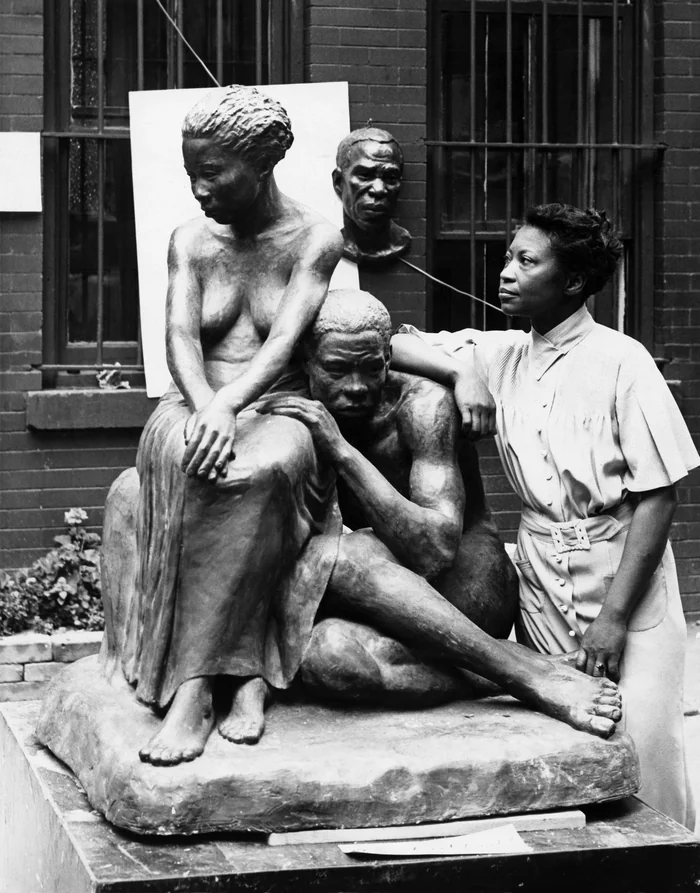
Augusta Savage and Dunbar High
The sculptor Augusta Savage was born in Green Cove Springs on February 29, 1892, as Augusta Christine Fells. The town made bricks, and she grew up working with clay. Her father, a poor Methodist minister, was firmly against her early interest in art. In 1921 she moved to Harlem to study at Cooper Union.
The Harlem Community Art Center named her its first director, the Smithsonian American Art Museum says. She made a sculpture on commission for the New York World's Fair of 1939, and the fair's commission renamed it "The Harp." It was inspired by James Weldon Johnson's poem "Lift Every Voice and Sing." She died on March 26, 1962.
Dunbar High opened in 1942 on land Savage had given, and Clay Today says it was the county's only high school for Black students. In 1964 its girls' team, the Lady Panthers, were state basketball champions. Because public schools were desegregated after the Civil Rights Act, Dunbar's last class graduated in 1967.
Sources: Smithsonian American Art Museum: Augusta Savage; University of Pennsylvania: Augusta Savage (1892 - 1962); Clay Today: Remembering Dunbar High, Black American anchors; Clay Today: Dunbar High continues to foster achievement against adversity
Next: Chapter 9, Moosehaven, Penney Farms, Keystone Heights and new parks →
Moosehaven, Penney Farms, Keystone Heights and new parks
In 1922 the Loyal Order of Moose bought 22 acres in Orange Park to make a home for its retired members, called Moosehaven. Moosehaven was formally dedicated on October 3, 1922, and its first 20 residents arrived that fall. In 1922 James Cash Penney, founder of the J.C. Penney stores, and his partners started the Florida Farms and Industries Company. In 1926 he honored his parents by building the Memorial Home Community. The legislature chartered the Town of Penney Farms in 1927.
Until 1921 the place now called Keystone Heights was known as Brooklyn. The town got its Keystone Inn in 1924 and was incorporated a year later, in 1925. Camp Chowenwaw was created for Girl Scouts in 1932 on 67 acres at Black Creek's mouth, and its name is the Creek word for sister. It was dedicated on July 1, 1933, when the first camper arrived, and today it is Camp Chowenwaw Park, a county park.
Gold Head Branch became a state park in 1935 on land given by Martin J. "Mike" Roess, and Florida State Parks calls it one of the state's first. The Civilian Conservation Corps sent 25 skilled craftsmen there in 1935, and the park opened on April 15, 1939. In 1966 the state renamed it Mike Roess Gold Head Branch State Park in his honor.
Sources: Florida Memory: Moosehaven retirement community chapel in Orange Park; Moose International: Moosehaven Celebrates Centennial, City of Contentment Is 100 Years Old; Clay County Clerk of Court: Historical Markers & Historic Places; Clay County Clerk of Court: Towns & Settlements; Florida Department of State: Florida Historical Marker Details, Camp Chowenwaw; Clay County Clerk of Court: Camp Chowenwaw; Florida State Parks: Mike Roess Gold Head Branch State Park, History
Next: Chapter 10, World War II: Camp Blanding and Lee Field →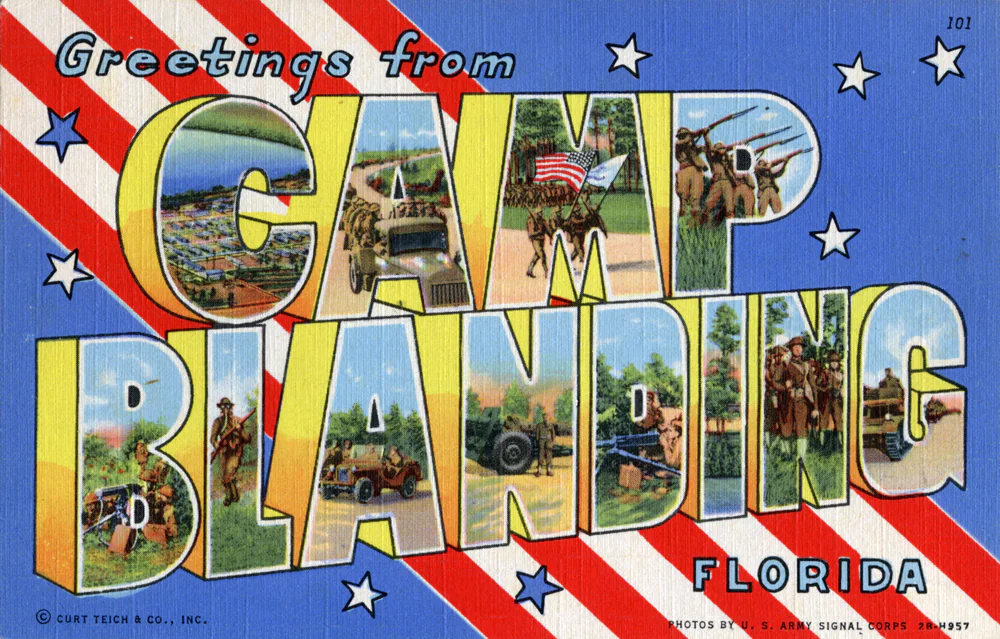
World War II: Camp Blanding and Lee Field
The National Guard opened Camp Blanding in 1939 and named it for Major General Albert Blanding. By 1941 it was Florida's fourth largest city, the state marker says, while the Museum of Florida History calls it the fifth largest. The marker says about one million men had basic training there, and the museum counts more than 800,000 recruits from 1940 to 1945. The camp also had a compound built for about 1,200 German prisoners of war, both soldiers and sailors. The Camp Blanding Museum stands outside the camp's main gate.
Naval Air Station Lee Field at Green Cove Springs, named for Ensign Benjamin Lee, opened in September 1940, the county archives say, but the Museum of Florida History gives March 1941. It trained pilots for the Navy and the Marine Corps by the thousands, and the archives call it the main base for training on the F6F Hellcat fighter. Those who served there included the television star Ed McMahon and President John F. Kennedy's brother Joe, Clay Today reports.
After the war the base was home to the Navy's Atlantic mothball fleet. The state marker dates the base's closing to 1961, and the county archives date it to 1960. The old base grounds are now Reynolds Park and the Clay County Port. The Military Museum of North Florida, which honors service members of every branch, stands on the same grounds.
Sources: Florida Department of State: Florida Historical Marker Details, Camp Blanding; Museum of Florida History: Camp Blanding; Clay County Clerk of Court: Modern War Era; Clay County Archives: Stories from the Water's Edge, by Archives Specialist Vishi Garig; Museum of Florida History: NAAS Green Cove Springs; Clay County Clerk of Court: Military Bases & Airfields; Clay Today: A blast from the past; Florida Department of State: Florida Historical Marker Details, Green Cove Springs
Next: Chapter 11, Since 1975: a history museum, a restored courthouse and Keystone Heights at 100 →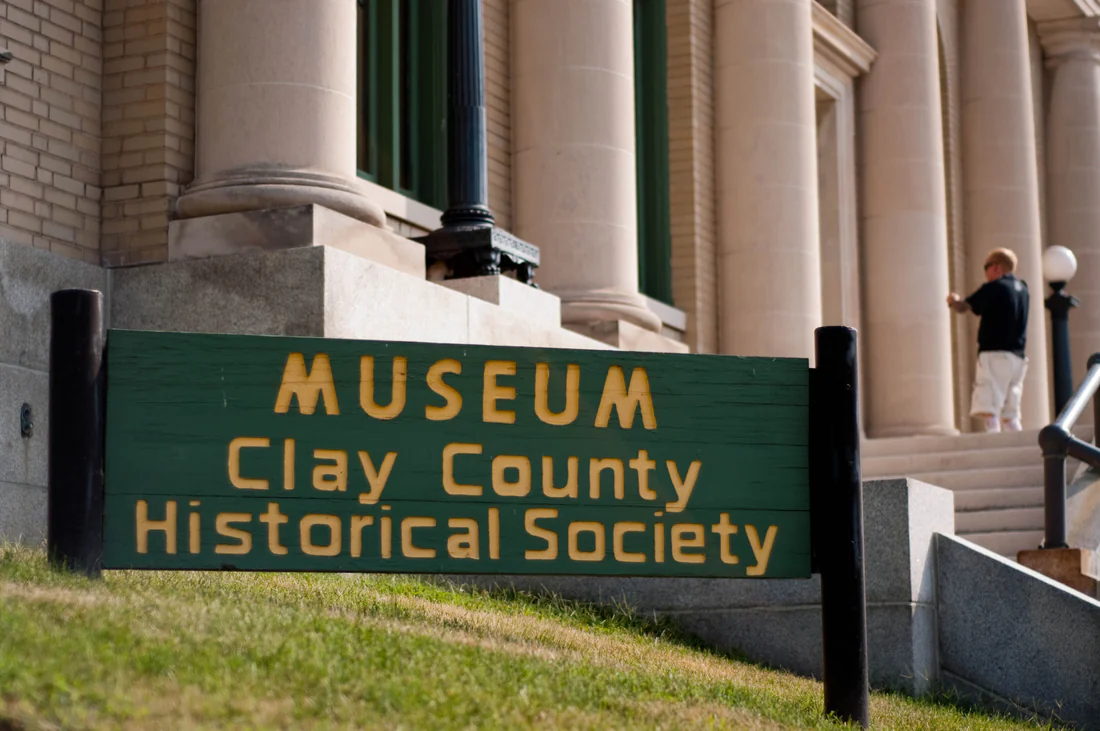
Since 1975: a history museum, a restored courthouse and Keystone Heights at 100
The Clay County Historical Society, founded in 1966, opened the Clay County Historical Museum in the annex of the 1890 courthouse in 1975. The old courthouse housed county government until 1973, and in 1975 it joined the National Register of Historic Places. A railroad collection, with a caboose and a train station from Elkton, was added in 1992. The old county jail, built in 1894 and used until 1972, was explored by the TV show "Ghost Hunters" in 2014, Clay Today reports. On July 28, 2022, county officials cut a ribbon at the renovated 1890 Historic Courthouse.
The Black Creek Ravines Conservation Area, east of Middleburg, was bought with Save Our Rivers money on September 20, 1996. Moosehaven, home to retired Moose members since 1922, is known for its Fourth of July fireworks show, News4JAX reported in 2025. In February 2024, Action News Jax reported that Green Cove Springs was marking 150 years since it was incorporated. That month a Legacy Wall, a timeline of Dunbar High and Augusta Savage history, was shown publicly for the first time at the Augusta Savage Arts and Community Center, on the old Dunbar campus.
On December 28, 2024, Keystone Heights residents held a gala to celebrate the town's history as it reached a century. The town celebrated its 100th anniversary all through 2025, with a Fourth of July parade and a Roaring '20s gala among the events, WCJB reported.
Sources: Clay County Historical Society: About Our Historical Society; Clay County Clerk of Court: Historical Markers & Historic Places; Clay Today: Clay County Archives provides unique window into the past; Clay County Clerk of Court: 1890 Historic Courthouse Renovation Complete; St. Johns River Water Management District: Black Creek Ravines Conservation Area Land Management Plan (2011); News4JAX: History beyond the fireworks: How Moosehaven has served the Orange Park community for 100+ years; Action News Jax: Green Cove Springs celebrates 150th anniversary, here's what celebrations to look forward to; Clay Today: Dunbar High continues to foster achievement against adversity; WCJB: Keystone Heights celebrates 100 years; WCJB: Counties and cities across North Central Florida celebrate major milestones
Next: the whole story, in dates →The whole story, in dates
Orange Series pottery later found at the Fort Pupo site dates from this time.
Pupo is first named, as the place where the mission trail crossed the river.
James Oglethorpe marches on St. Augustine and captures the Spanish blockhouses.
Zephaniah Kingsley buys Anta Madjiguene Ndiaye in Havana and later marries her.
Invading U.S. troops occupy Laurel Grove during the Patriots' Rebellion.
George I. F. Clarke builds a sawmill near the future Green Cove Springs.
Congress pays for a public road, and John Bellamy finishes the St. Augustine to Tallahassee stretch.
In the Second Seminole War, Middleburg's Fort Heileman is the area's biggest supply depot.
White Sulfur Springs, the first settlement at the spring, begins.
John G. Smith brings a bill for the new county before the House.
Governor Madison Perry signs the bill, and Clay County is created.
Mine warfare reaches the river along Clay County.
A Confederate mine sinks the Maple Leaf near Mandarin.
The county seat moves from Middleburg to Green Cove Springs.
Green Cove Springs is incorporated.
The Florida Winter Home and Improvement Company founds Orange Park.
Jacksonville, Tampa and Key West trains start running between Jacksonville and Palatka.
The Orange Park Normal and Industrial School opens with 26 children.
Augusta Savage is born in Green Cove Springs.
A state law bans teaching Black and white students together in any Florida school.
Augusta Savage moves to Harlem to study at Cooper Union.
Moosehaven is formally dedicated.
The legislature charters the Town of Penney Farms.
Camp Chowenwaw is dedicated, and the first camper arrives.
Gold Head Branch becomes a state park.
The National Guard opens Camp Blanding.
Naval Air Station Lee Field opens, by the county archives' date.
Dunbar High opens as the county's only high school for Black students.
The Navy closes its Green Cove Springs base, by the state marker's date.
Dunbar High's last class graduates.
The Clay County Historical Museum opens, and the 1890 courthouse joins the National Register.
The Black Creek Ravines Conservation Area is bought with Save Our Rivers money.
The TV show "Ghost Hunters" explores the old county jail.
County officials cut a ribbon at the renovated 1890 Historic Courthouse.
The Dunbar and Augusta Savage Legacy Wall is shown to the public for the first time.
Keystone Heights holds a gala as it reaches a century.
Keystone Heights celebrates its 100th anniversary all year, with a Fourth of July parade.
Where you can still see it
 01
01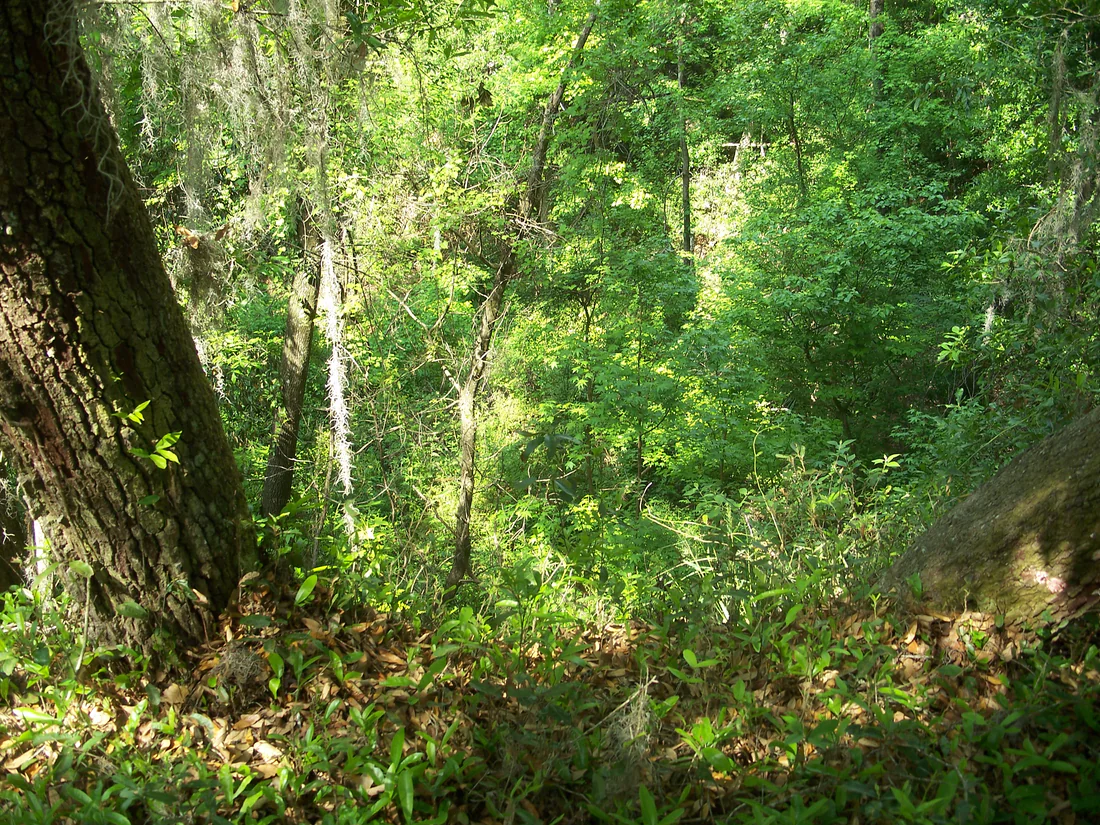 02
02Mike Roess Gold Head Branch State Park
Goes with: Moosehaven, Penney Farms, Keystone Heights and new parks
Open the place page →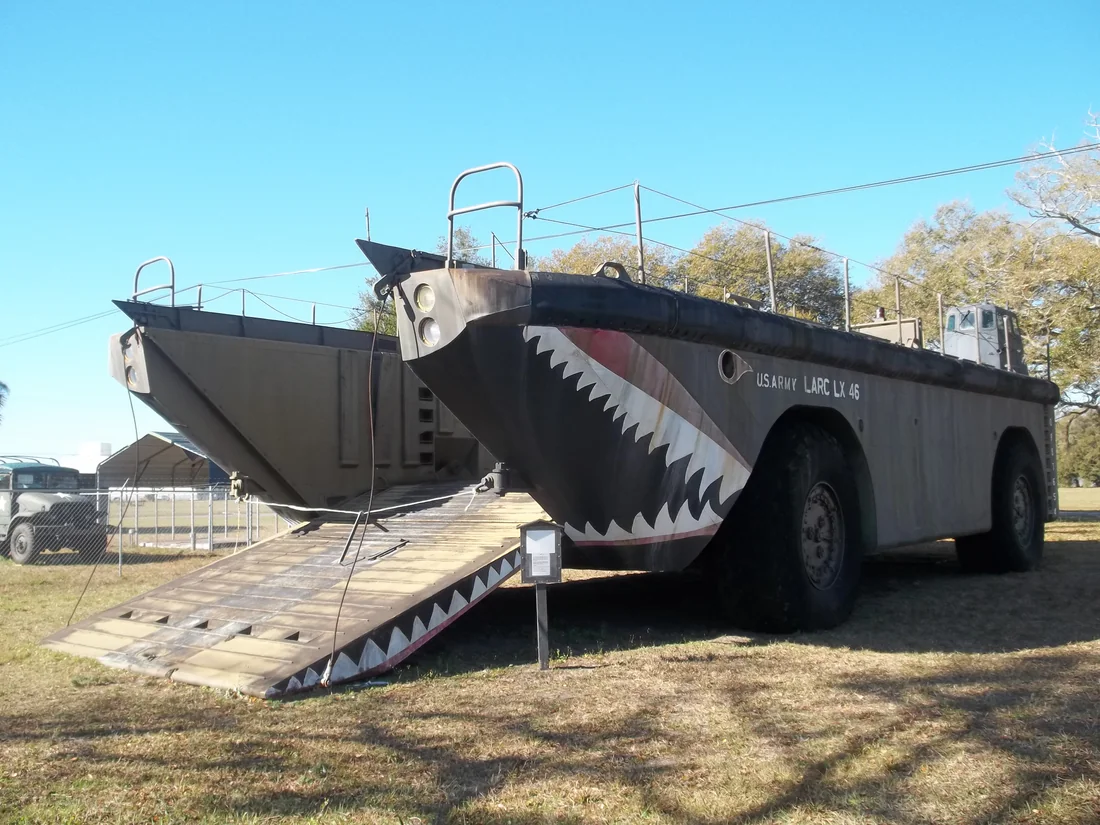 03
03Military Museum of North Florida
Goes with: World War II: Camp Blanding and Lee Field
Open the place page →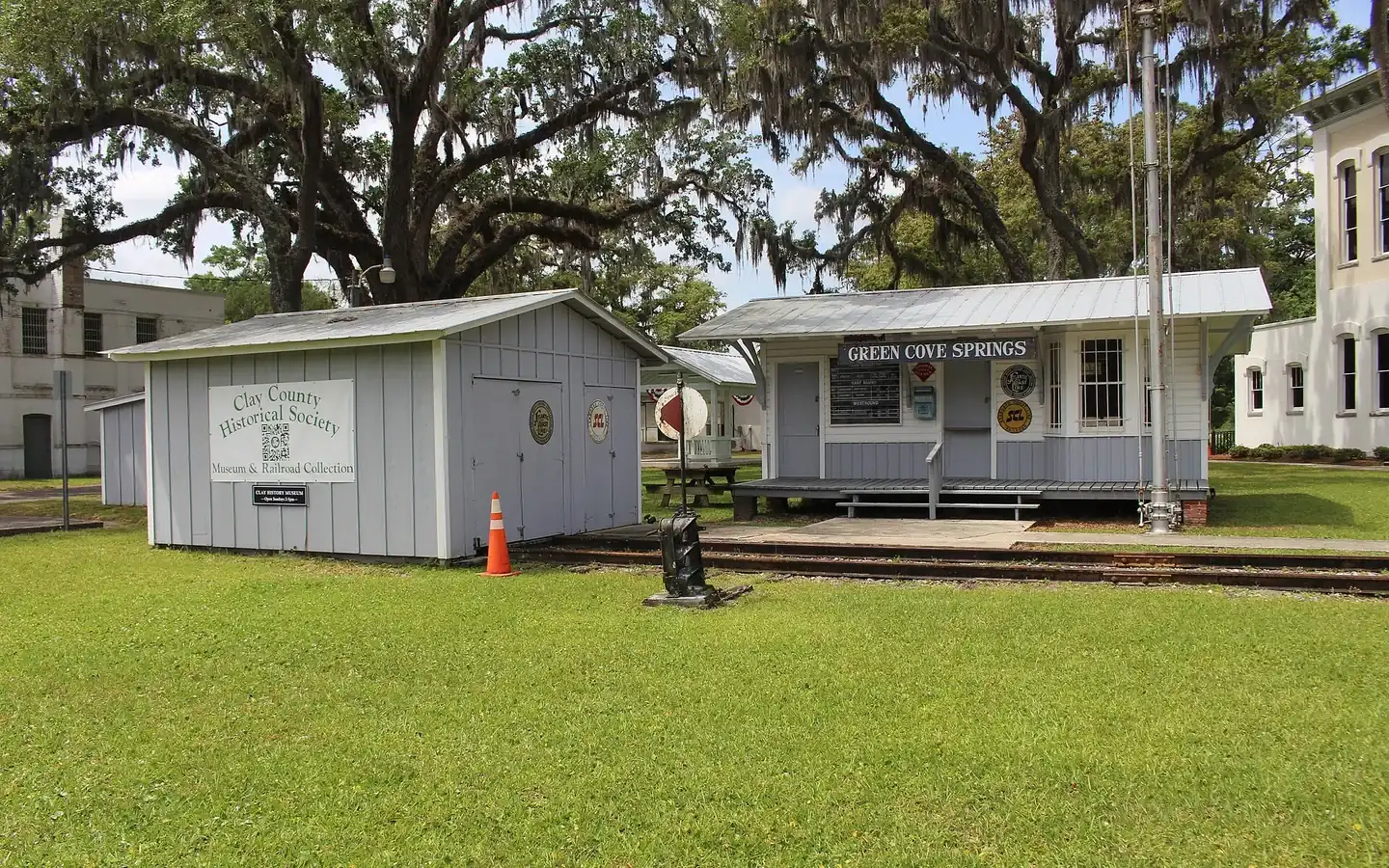 04
04Clay County Historical Museum
Goes with: Since 1975: a history museum, a restored courthouse and Keystone Heights at 100
Open the place page →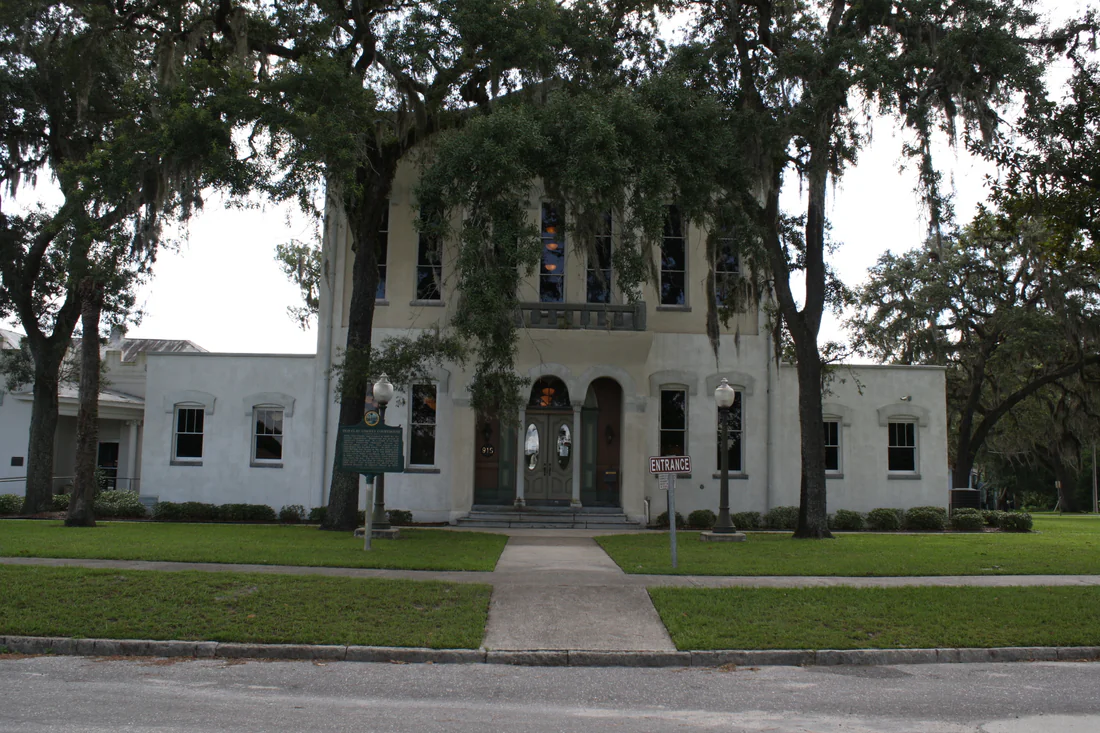 05
051890 Historic Courthouse
Goes with: Since 1975: a history museum, a restored courthouse and Keystone Heights at 100
1890 Historic Courthouse →Questions people ask
When was Clay County created?
Clay County came into being on December 31, 1858, when Governor Madison Perry signed it into law.
Chapter 4 →Who was Clay County named for?
The county was named for Henry Clay, a popular Whig politician.
Chapter 4 →What is the county seat of Clay County?
Middleburg was the first, temporary county seat, and in 1871 the seat moved to Green Cove Springs, which is still the county seat.
Chapter 4 →When did Camp Blanding open?
The National Guard opened Camp Blanding in 1939 and named it for Major General Albert Blanding.
Chapter 10 →Which famous artist was born in Clay County?
The sculptor Augusta Savage was born in Green Cove Springs on February 29, 1892.
Chapter 8 →Where this comes from.
Last updated October 17, 2026.
- Clay County Clerk of Court: Our County's Founding ↗ Read October 16, 2026
- Clay County Clerk of Court: Towns & Settlements ↗ Read October 16, 2026
- Clay County Clerk of Court: Historical Markers & Historic Places ↗ Read October 16, 2026
- Clay County Archives: Stories from the Water's Edge, by Archives Specialist Vishi Garig ↗ Read October 16, 2026
- Clay County Archives: Middleburg, by Myrtice R. Truett, 1980 ↗ Read October 16, 2026
- Clay County Clerk of Court: Railroads ↗ Read October 16, 2026
- Clay County Clerk of Court: Modern War Era ↗ Read October 16, 2026
- Clay County Clerk of Court: Military Bases & Airfields ↗ Read October 16, 2026
- Clay County Clerk of Court: Camp Chowenwaw ↗ Read October 16, 2026
- Clay County Clerk of Court: 1890 Historic Courthouse Renovation Complete ↗ Read October 16, 2026
- Florida Department of State: Florida Historical Marker Details, Green Cove Springs ↗ Read October 16, 2026
- Florida Department of State: Florida Historical Marker Details, Orange Park Normal and Industrial School Site ↗ Read October 16, 2026
- Florida Department of State: Florida Historical Marker Details, Camp Chowenwaw ↗ Read October 16, 2026
- Florida Department of State: Florida Historical Marker Details, Camp Blanding ↗ Read October 16, 2026
- Museum of Florida History: Camp Blanding ↗ Read October 16, 2026
- Museum of Florida History: NAAS Green Cove Springs ↗ Read October 16, 2026
- Florida State Parks: Mike Roess Gold Head Branch State Park, History ↗ Read October 16, 2026
- National Park Service: Kingsley Moves to Florida ↗ Read October 16, 2026
- Smithsonian American Art Museum: Augusta Savage ↗ Read October 16, 2026
- University of Pennsylvania: Augusta Savage (1892 - 1962) ↗ Read October 16, 2026
- Florida Memory: Moosehaven retirement community chapel in Orange Park ↗ Read October 16, 2026
- Moose International: Moosehaven Celebrates Centennial, City of Contentment Is 100 Years Old ↗ Read October 16, 2026
- News4JAX: Historic Orange Park Normal and Industrial School taught Black, white children under one roof in late 1800s ↗ Read October 16, 2026
- News4JAX: History beyond the fireworks: How Moosehaven has served the Orange Park community for 100+ years ↗ Read October 16, 2026
- Clay Today: Remembering Dunbar High, Black American anchors ↗ Read October 16, 2026
- Clay Today: Dunbar High continues to foster achievement against adversity ↗ Read October 16, 2026
- Clay Today: A blast from the past ↗ Read October 16, 2026
- Clay Today: Clay County Archives provides unique window into the past ↗ Read October 16, 2026
- Action News Jax: Green Cove Springs celebrates 150th anniversary, here's what celebrations to look forward to ↗ Read October 16, 2026
- WCJB: Keystone Heights celebrates 100 years ↗ Read October 16, 2026
- WCJB: Counties and cities across North Central Florida celebrate major milestones ↗ Read October 16, 2026
- St. Johns River Water Management District: Black Creek Ravines Conservation Area Land Management Plan (2011) ↗ Read October 16, 2026
- Clay County Historical Society: About Our Historical Society ↗ Read October 16, 2026