Volusia County was established on December 29, 1854, and is named for Volusia, a landing on the St. Johns River. Its county seat has been DeLand since 1888, when voters moved it from Enterprise. The county says its beach towns are most famous for auto racing, which began on the hard-packed sand in 1903. Its history reaches back at least 6,000 years, to the Mayaca people who lived at De Leon Springs.
This page tells the story in order, from the first peoples to the new museums, rebuilt Speedway and new trail of recent years, then lists places in the county where you can still see it. The sources for each part are named at the end of that part, and all of them are listed at the bottom of the page.
The First Peoples
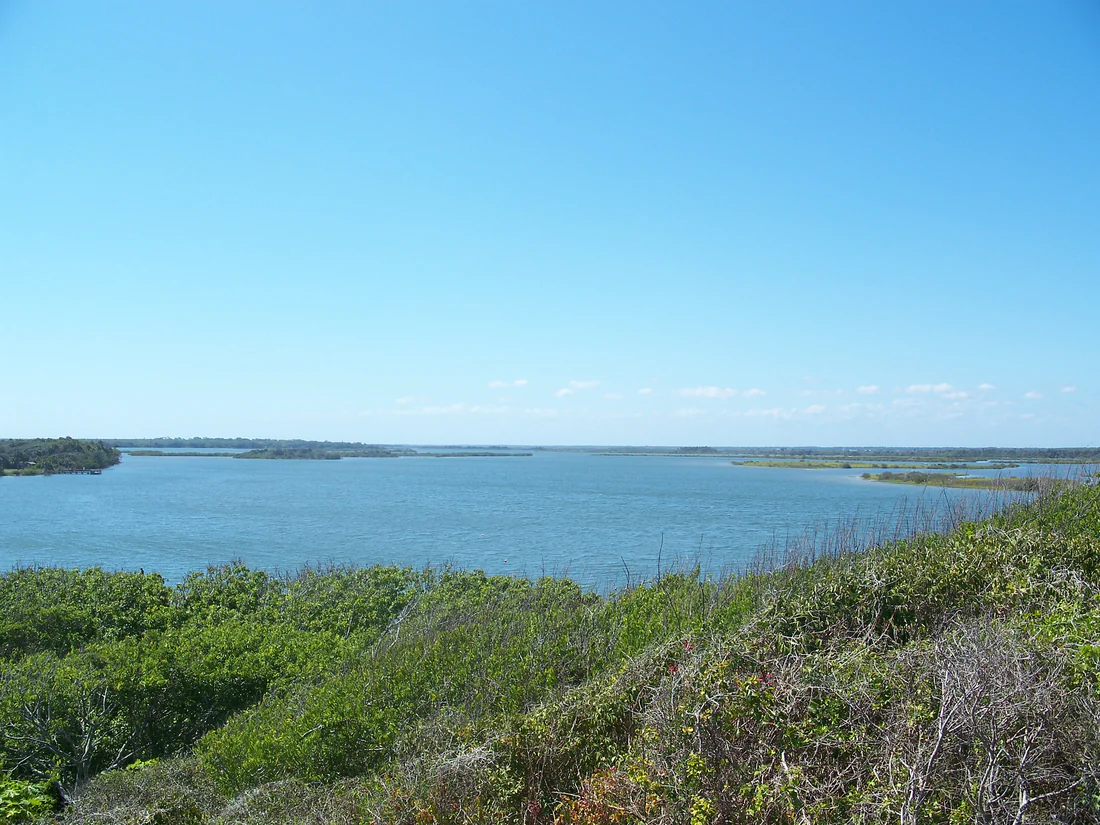
University of Florida researchers found signs that people lived beside Lake Monroe 6,200 years ago. A shell heap at Enterprise is made of the meal scraps of people who lived by the lake as long ago as 3,000 B.C. The state park service says the two oldest canoes ever found in the Western Hemisphere came out of the spring at De Leon Springs.
Fish and shellfish made the St. Johns River and the land now called Hontoon Island a good home for the Mayaca people. In 1955, a wooden owl about 10 feet tall was found in the river. No one is sure what it was for. It is thought to have marked the land that belonged to the Mayaca. A copy of the owl stands near the spot where it was found.
Near the ocean, the Timucuan people lived around Turtle Mound, now part of Canaveral National Seashore. The National Park Service says they lived along this coast for 2,000 years. Turtle Mound holds more than 35,000 cubic yards of shells from oysters. The county says no shell midden in the country stands higher. It is about 50 feet tall, and long ago it was at least 75 feet high.
Sources: Volusia County: The Earliest Inhabitants (Enterprise on the St. Johns River); Florida State Parks: Many Layers of History at De Leon Springs; Florida State Parks: Finding the Meaning of the Owl Totem; National Park Service: Turtle Mound Site, Canaveral National Seashore; Volusia County: Turtle Mound
Next: Chapter 2, Spanish Explorers and Missions →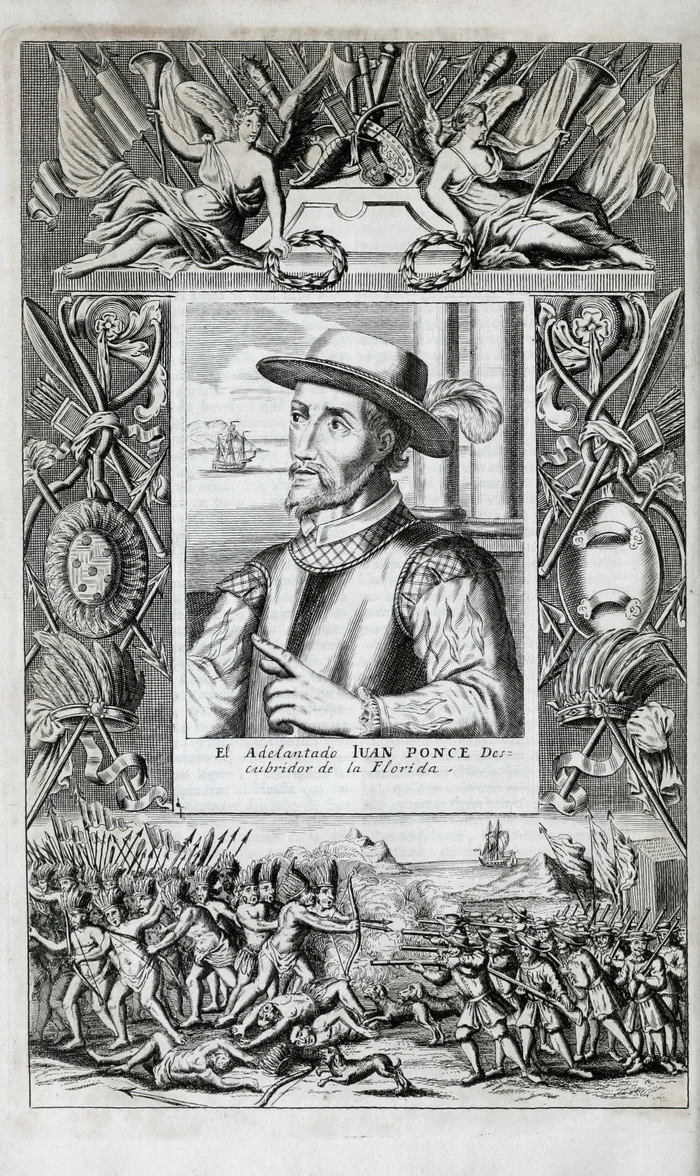
Spanish Explorers and Missions
Juan Ponce de Leon reached Florida in 1513. De Leon Springs carries his name, but the state park service says Spanish records place him no nearer than the coast by Cape Canaveral. In 1565, St. Augustine's founder, Pedro Menendez de Aviles, explored the St. Johns River. The county says the people living along the river then were probably Mayaca. Spanish missions were set up in the area in the late 1500s.
In 1605, the Spanish explorer Alvaro Mexia visited Turtle Mound, which was then called Surruque. He reported seeing native people push off in dugout canoes from the foot of the mound. Sailors could see the mound from miles out at sea, and it has guided ships since the early Spanish explorers came. The Spanish named one of the area's waterways Barra de Mosquitos in the 1600s, after the swarms of insects they met there.
The National Park Service says there were about 40,000 Timucuans when the Spanish came, but only a handful survived. They left with the Spanish when Spain gave up Florida in 1763.
Sources: National Park Service: Turtle Mound Site, Canaveral National Seashore; Florida State Parks: Many Layers of History at De Leon Springs; Volusia County: Early Visitors (Enterprise on the St. Johns River); Florida State Parks: De Leon Springs State Park History; Volusia County: Turtle Mound; Ponce de Leon Inlet Lighthouse & Museum (ponceinlet.org): A County By Any Other Name Would Be...?
Next: Chapter 3, British Florida and the New Smyrna Colony →
British Florida and the New Smyrna Colony
Britain took Florida from Spain in 1763. Britain offered land on easy terms to new planters, and Dr. Andrew Turnbull, a physician born in Scotland, was one who took up the offer. On April 2, 1767, he went into partnership with Sir Richard Temple and Sir William Duncan. Each of them was granted 20,000 acres. Their colony, New Smyrna, was named after the birthplace of Turnbull's wife, Gracia Maria Rubini.
Turnbull found his workers on Minorca, an island where crops had failed three years in a row and many farmers were poor. He recruited about 1,100 Minorcans as servants bound by contract. Another 200 came from Greece, and about 100 came from Italy, France, Corsica or Turkey. On April 17, 1768, Turnbull gathered all 1,403 colonists at Gibraltar. The crossing took almost four months.
By the time they landed at New Smyrna that August, 1,255 colonists remained. There was housing for only about 500 of them. Turnbull's main crop was indigo, which made a blue dye that sold for a high price in Europe. The colony came to an end in 1777. Most of the surviving colonists fled to St. Augustine for safety.
Sources: Volusia County: The New Smyrnea Colony, Origin and Demise; Historical Marker Database: The New Smyrna Odyssey (1768-1777) (marker erected 2000 by AHEPA Speedway Chapter 410)
Next: Chapter 4, Plantations and the Second Seminole War →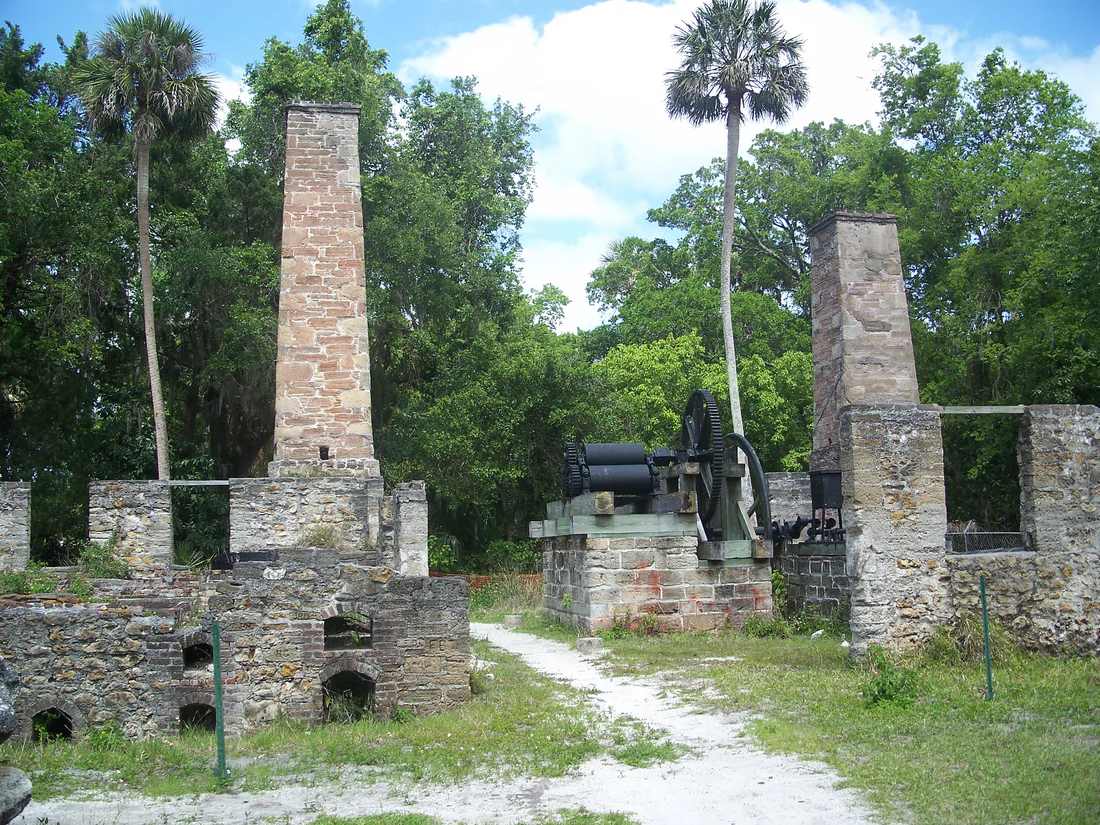
Plantations and the Second Seminole War
When Mosquito County was formed in 1824, it took in all of present-day Volusia County. New Smyrna was named its county seat on January 29, 1835. At what is now De Leon Springs, a planter named William Williams owned 2,020 acres. He called his land Spring Garden Plantation. The state park service says Florida's first sugar mill run by water power was built there in 1832, and John James Audubon came that same year to explore the waterways and paint the limpkin.
Henry Cruger and William dePeyster got 600 acres near New Smyrna in 1830 and set up a sugar factory. At what is now Port Orange, the Dunlawton sugar mill was built around 1830. Its name came from an owner, Charles Lawton, who joined his mother's maiden name to his own. The Second Seminole War broke out in 1835. In December 1835, the Seminoles drove off the overseer at the Cruger-dePeyster mill, burned it and destroyed other plantations across the region.
People enslaved on that plantation helped the Seminoles carry out the raid. In 1835, Seminoles also attacked Spring Garden, destroying the mill and taking enslaved people and cattle. In January 1836, Florida militia fought the Seminoles at the Dunlawton mill, in a battle involving about 120 Seminoles and African Americans who had escaped slavery. The Mosquito Inlet lighthouse, finished in the spring of 1835, was hit by storms and a Seminole attack, and in March 1836 it fell into the water without ever being lit.
Sources: Ponce de Leon Inlet Lighthouse & Museum (ponceinlet.org): A County By Any Other Name Would Be...?; Florida Memory (State Library and Archives of Florida): Volusia County, WPA historical sketch; Florida State Parks: De Leon Springs State Park History; Historical Marker Database: Risky Business, The Cruger-dePeyster Sugar Mill (marker erected by Volusia County); Florida Memory: Dunlawton Sugar Mill Ruins - Port Orange, Florida; Florida Memory: Dunlawton Sugar Plantation
Next: Chapter 5, Volusia County Is Created →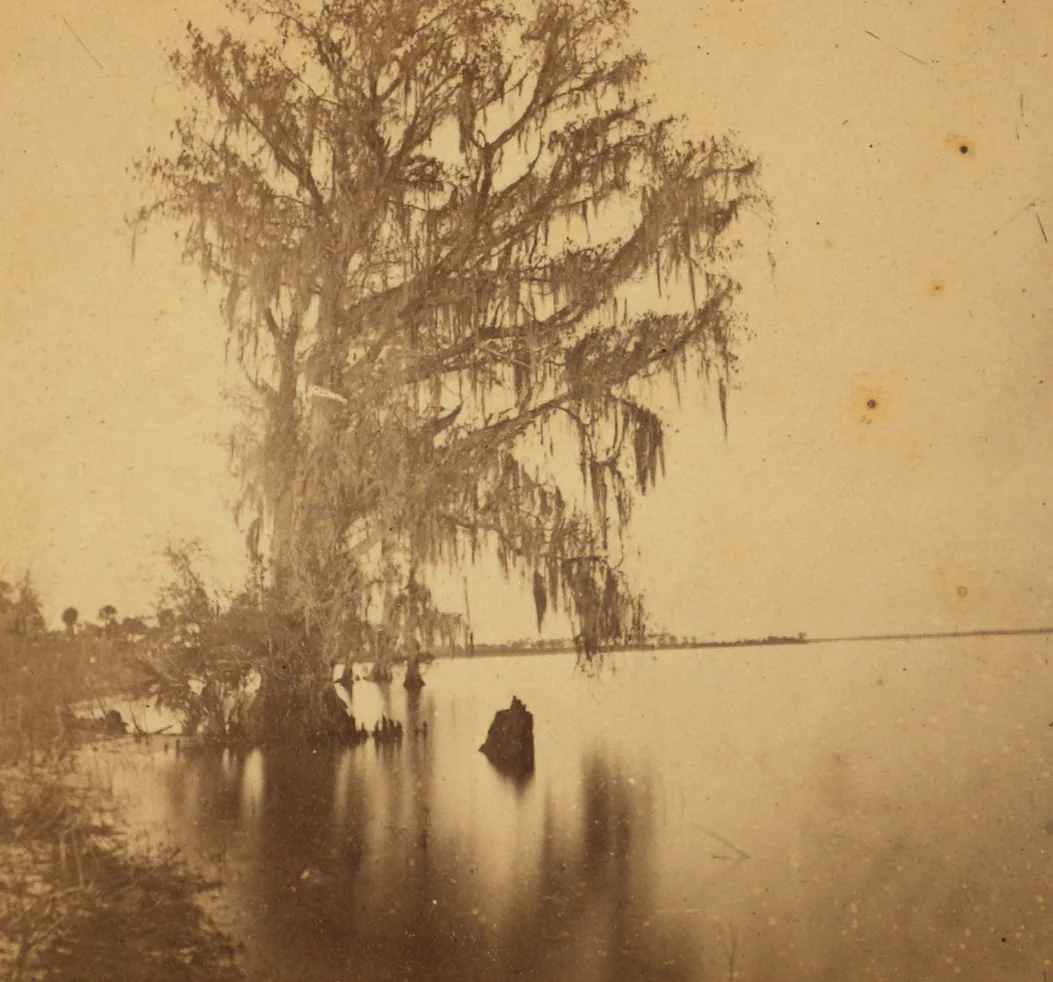
Volusia County Is Created
On February 24, 1843, Enterprise took over from New Smyrna as the county seat. On July 16, 1845, it moved again, to Mellonville. That year, Mosquito County was renamed Orange County. In 1851, Jacob Brock began buying land at Enterprise, where he laid out streets and built a wharf. The county says that from his wharf he ran the first regular steamboat line between Jacksonville and Lake Monroe.
On December 29, 1854, Volusia County was formed from the land of Orange County that lay east of the St. Johns River. Enterprise was its first county seat. By then, Brock had finished a hotel with 100 rooms. The early courthouse stood on land that Jacob Brock gave. In 1854, the whole county had barely more than 600 people.
The county's name comes from Volusia, a river landing on the St. Johns not far from Lake George. Volusia started out as a trading post early in the 1800s. No one has found a document that settles where the word came from. Stories passed down say it may come from a phrase meaning Land of the Euchee, or from a trading post worker whose name was something like Veluche.
Sources: Florida Memory (State Library and Archives of Florida): Volusia County, WPA historical sketch; Historical Marker Database: Enterprise (marker erected 1954 by Volusia County and the Volusia County Historical Commission); Volusia County: Jacob Brock's Enterprise, Boomtown on the River; Volusia County: What's in a Name?; University of South Florida, Florida Center for Instructional Technology: Volusia County maps; Museum of Arts & Sciences: Volusia County
Next: Chapter 6, The Civil War and a School for Freed People →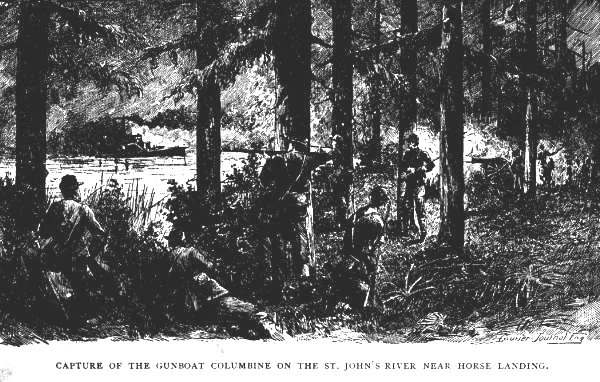
The Civil War and a School for Freed People
On March 16, 1864, during the Civil War, the Union ship USS Columbine was on patrol on the St. Johns River and Lake Monroe. It landed at Enterprise and sent a squad of 48th New York Infantry soldiers to wreck a sugar mill 2 miles from town. They destroyed most of the mill and took its sugar and molasses. Between 30 and 40 Confederate home guards forced them back to their ship.
In April 1864, Union troops heard that the owner of Spring Garden was supplying the Confederate Army, and they destroyed the plantation. The raid was known as Birney's Raid. The troops took the mill apart and destroyed crops to cut off supplies to the Confederacy, mostly corn and cattle.
The county says the oldest school in Enterprise was a school for freed people that Charles Chipman started in 1869. He wrote that he was teaching about 15 students in front of his shanty, by the glow of burning pine knots. He asked the Freedmen's Bureau to build a schoolhouse, but the bureau closed before it could.
Sources: Historical Marker Database: The Raid on Enterprise, The Sugar Mill Raid (marker erected 1999 by the Florida Confederation for the Preservation of Historic Sites); Florida State Parks: De Leon Springs State Park History; Florida State Parks: Many Layers of History at De Leon Springs; Volusia County: The Second Enterprise Courthouse
Next: Chapter 7, Steamboat Days at Enterprise →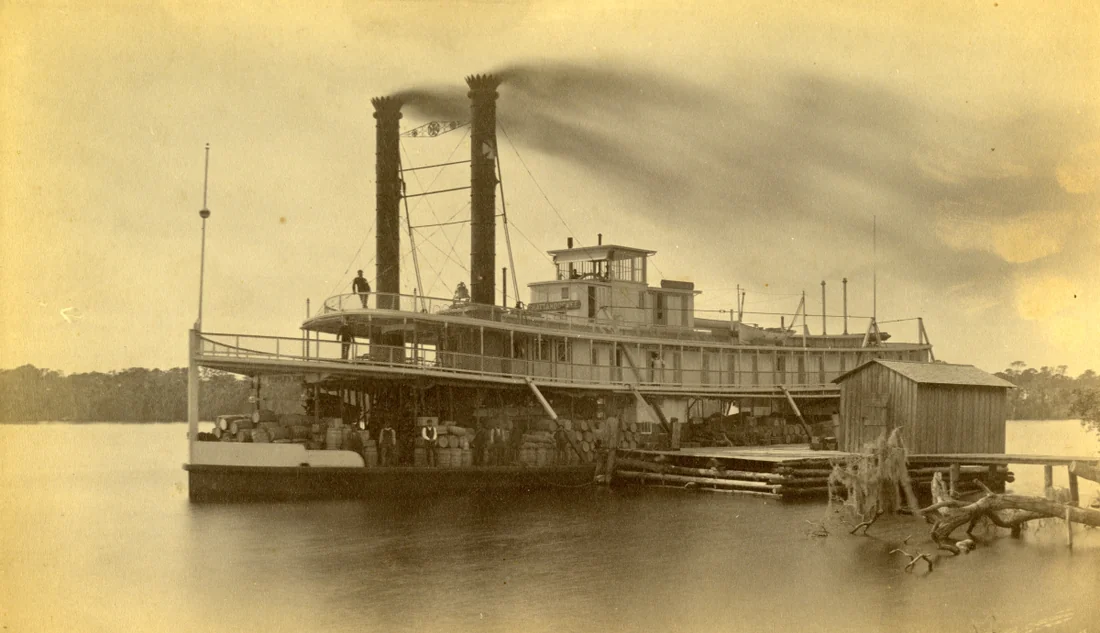
Steamboat Days at Enterprise
Once the Civil War ended, hundreds of visitors came to tour the St. Johns River. Harper's Weekly and other magazines promoted Enterprise as a paradise for hunting and fishing. Ulysses S. Grant, Grover Cleveland, Jay Gould and the Vanderbilts were among the guests at the Brock House. It became one of the best-known hotels in Florida. By the early 1880s, Enterprise had a courthouse, a jail, a post office and the Brock House Hotel.
In 1871, Frederick deBary, who sold champagne in New York, bought 5,000 acres west of Enterprise. He built DeBary Hall there as a winter retreat. He planted orange groves covering thousands of acres and sent the fruit north on his own steamboats.
During the 1880s, Black families in Enterprise raised money for their own church with fairs and potluck dinners. St. Paul's African Methodist Episcopal Church went up in the late 1880s. The county says it was one of Central Florida's earliest AME churches. In 1887, a short spur line linked Enterprise to the Jacksonville, Tampa and Key West Railroad. A severe freeze in the winter of 1894-1895 wiped out citrus in much of Florida.
Sources: Volusia County: The Golden Age of Steamboat Travel; Volusia County: The Brock House Hotel; Volusia County: Enterprise Prospers; Volusia County: Samuel Frederick deBary; Volusia County: DeBary Hall Historic Site; Volusia County: St. Paul's African Methodist Episcopal Church; Volusia County: The End of an Era
Next: Chapter 8, New Towns, Railroads and a New County Seat →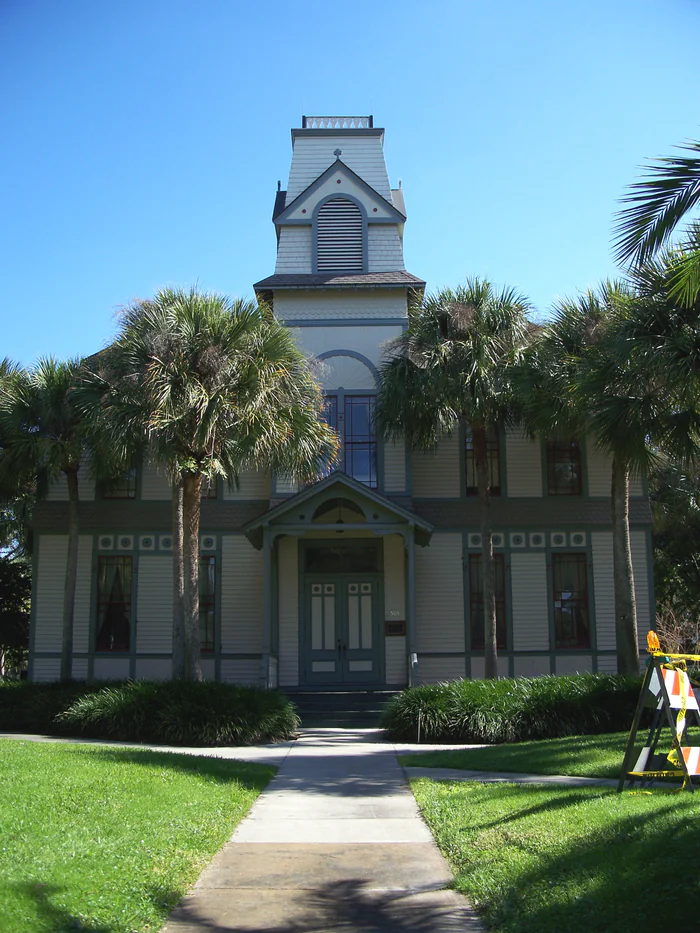
New Towns, Railroads and a New County Seat
Daytona was founded on the Halifax River in 1871. Ormond became an incorporated town in 1880. A big hotel at Ormond and the first stretch of the East Coast railroad made the area known as a winter resort. In 1883 and 1884, a railway was built from Enterprise to Titusville. Another company finished a 28-mile railroad to New Smyrna in 1886.
Henry A. DeLand was one of the well-known guests who stayed at Brock's hotel in Enterprise. Stetson University was founded at DeLand after the town was settled. In 1888, the voters of growing DeLand made their town the new county seat. A county marker at Enterprise says the town had only 800 people when the vote moved the seat. DeLand is still the county seat.
In DeLand, a young Chinese man named Lou Gim Gong gave the citrus business a new push. His work with citrus earned him the nickname "The Chinese Burbank." In the 1880s, new rail lines bypassed the river community of Volusia that gave the county its name. In the 1880s, hoping to draw tourists, the people of Spring Garden gave their town a new name, De Leon Springs. On the coast, work on a new lighthouse at Mosquito Inlet began in 1884, and its lamp was lit for the first time on November 1, 1887.
Sources: Florida Memory (State Library and Archives of Florida): Volusia County, WPA historical sketch; Volusia County: Samuel Frederick deBary; Volusia County: The Second Enterprise Courthouse; Historical Marker Database: Enterprise (marker erected 1954 by Volusia County and the Volusia County Historical Commission); Volusia County: History of Volusia County; Volusia County: What's in a Name?; Florida State Parks: Many Layers of History at De Leon Springs; Ponce de Leon Inlet Lighthouse & Museum: The Lighthouse
Next: Chapter 9, Racing on the Beach and the Birth of NASCAR →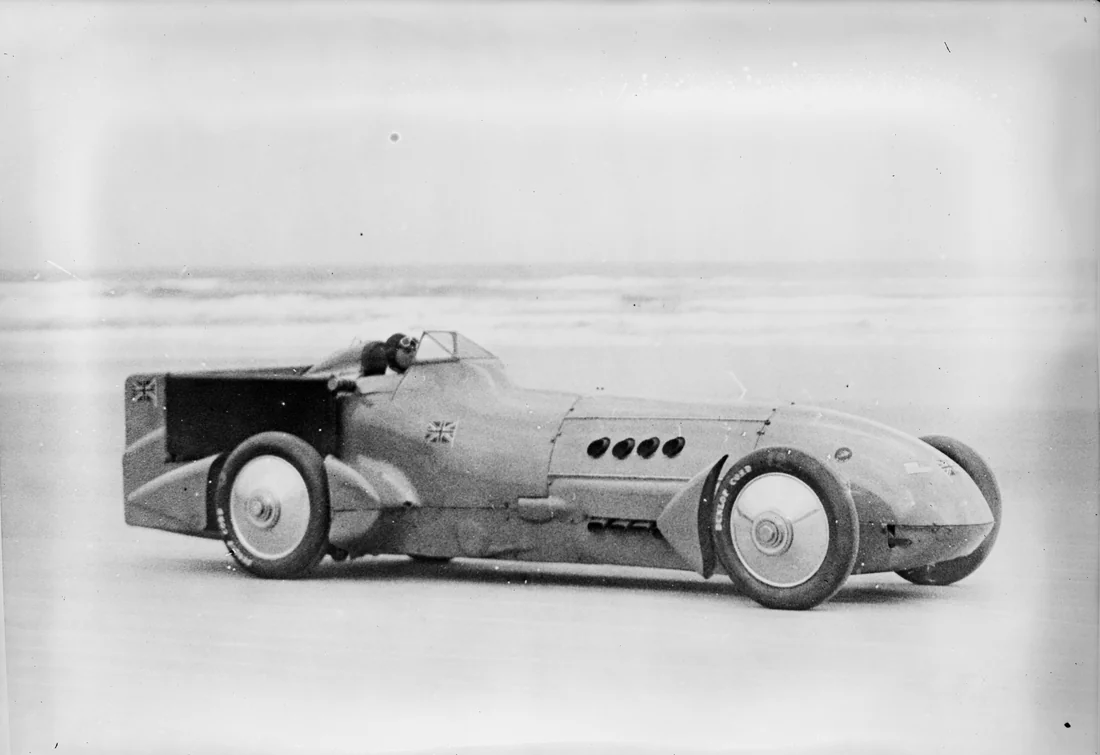
Racing on the Beach and the Birth of NASCAR
In 1902, J.F. Hathaway, a retired businessman, sent photographs of the beach to car magazines and newspapers, with a story praising the hard sand of Ormond Beach as an ideal race course. The county says the first timed trials took place on March 26, 1903. Alexander Winton drove his car, the Bullet, and H.T. Thomas drove the Pirate, a car brought by Ransom E. Olds. Two days later they raced each other for the Ormond Challenge Cup, and the Bullet won by a fifth of a second. The county calls Ormond Beach the Birthplace of Speed.
In January 1904, William K. Vanderbilt drove a Mercedes over a mile at 92.307 miles an hour, which a marker on the beach calls the first world record set there. Henry Flagler put up the Ormond Garage for the racers and their mechanics in the summer of 1904. Sir Malcolm Campbell brought five of his Bluebird cars to Daytona between 1928 and 1935, hoping to go faster than 300 miles an hour. On what turned out to be his last try at Daytona Beach, he averaged 276.82 miles an hour. After Campbell and others moved their speed runs to Utah, Sig Haughdahl suggested a 3.2-mile oval that ran along the sand one way and back along A1A the other.
On December 14, 1947, Bill France led a meeting of racing men at the Streamline Hotel in Daytona Beach. Out of that meeting came the National Association for Stock Car Auto Racing, known as NASCAR, which was incorporated the next year. The county says that by 1957 beach racing was nearing its end, because Daytona Beach kept spreading south and the state of the sand could not be predicted. On February 22, 1959, the new Daytona International Speedway held its first Daytona 500. Johnny Beauchamp went to Victory Lane thinking he had won, but the photo finish went to Lee Petty, and Bill France needed three days to name the winner.
Sources: Volusia County: Legacy of Speed; Historical Marker Database: Racing On The Beach 1903 (Winton and the Pirate); Volusia County: History of Volusia County; Historical Marker Database: Racing On The Beach 1904; Volusia County: Sir Malcolm Campbell and William H.G. France (Legacy of Speed); NASCAR: Daytona International Speedway through the years; Volusia County: NASCAR is born (Legacy of Speed); Volusia County: Beach Racing Era Ends (Legacy of Speed); HISTORY.com: Lee Petty wins first Daytona 500 (This Day in History, February 22); Volusia County: Daytona International Speedway (Legacy of Speed)
Next: Chapter 10, Mary McLeod Bethune, Jackie Robinson and Roadside Attractions →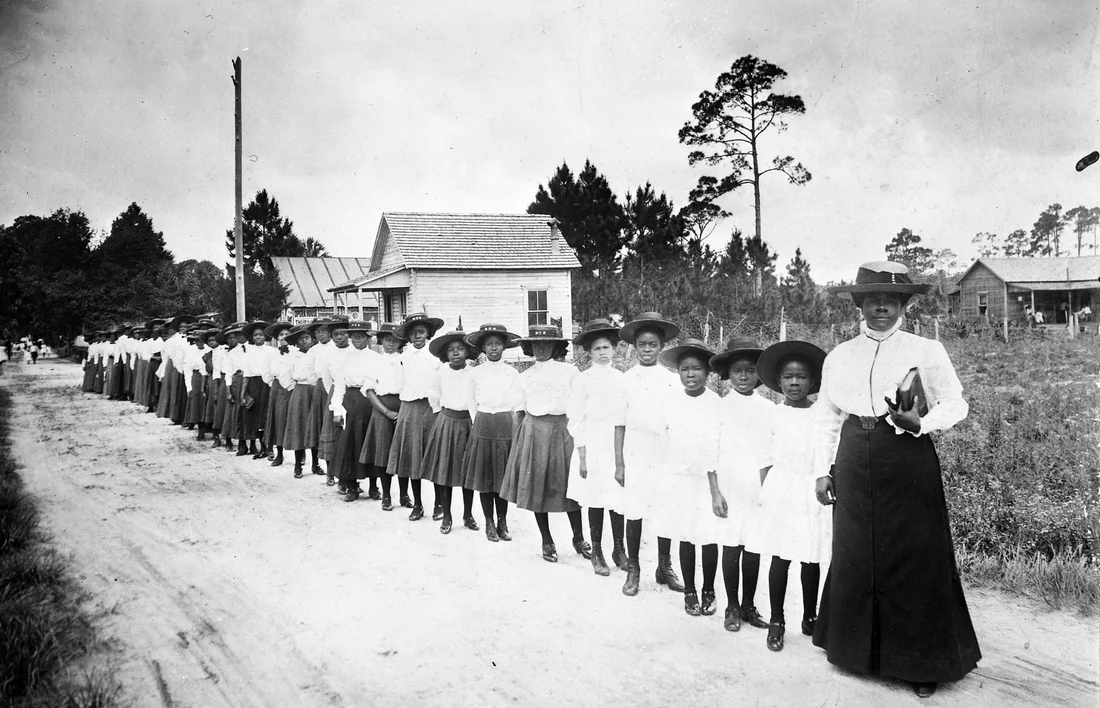
Mary McLeod Bethune, Jackie Robinson and Roadside Attractions
On October 3, 1904, Mary McLeod Bethune opened a school in Daytona Beach called the Daytona Literary and Industrial Training Institute for Negro Girls. The National Park Service says she started it with $1.50 and five girls, plus her own son. It joined Cookman Institute, an all-male school in Jacksonville, in 1923 and was renamed Bethune-Cookman College in 1931. Today it is Bethune-Cookman University. The county adds that she led in civil rights, was the first Black woman to run a federal agency and was one of the charter members of the United Nations.
On March 6, 1946, Jackie Robinson and Johnny Wright, two Black players, started spring training in Daytona Beach with their white Montreal Royals teammates. A state marker says no other city in segregated Florida, and perhaps none in the whole South, accepted integrated modern professional baseball. On March 17, 1946, Robinson took the field at Daytona Beach's City Island Ballpark, and the marker says that game broke the color barrier in Major League Baseball. In 1947 he moved up to the Brooklyn Dodgers. The county says no place in Florida had let him play in a game before this ballpark did, and it was renamed Jackie Robinson Ballpark in 1989 to honor the event.
In 1952, Dr. Perry Sperber took a lease on the Dunlawton Sugar Mill Gardens and made them into an attraction called Bongoland. A train carried visitors through the gardens past life-size statues of dinosaurs. In 1953, the spring at De Leon Springs opened as an attraction called Ponce de Leon Springs. In the 1960s, visitors could watch Queenie, an elephant that rode on water skis. After the attraction closed, the land became a private park and then, in 1982, a state park.
Sources: National Park Service, Mary McLeod Bethune Council House: Mary McLeod Bethune; Volusia County: Volusia Stories; Florida Department of State, Florida Historical Markers: Kelly Field and Jackie Robinson; Volusia County: History of Volusia County; Florida Memory: Dunlawton Sugar Plantation; Florida State Parks: De Leon Springs State Park History; Florida State Parks: Many Layers of History at De Leon Springs
Next: Chapter 11, Since 1990: New Museums, a Rebuilt Speedway and a New Trail →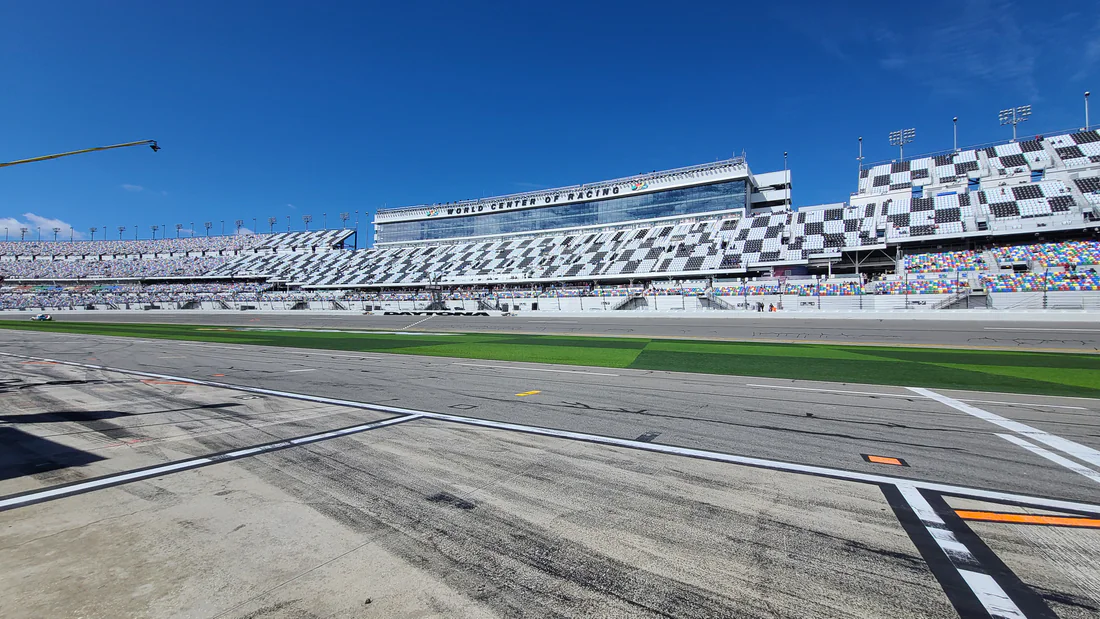
Since 1990: New Museums, a Rebuilt Speedway and a New Trail
The Museum of Arts & Sciences added its Root Family Museum in late 2001. The family's Root Glass Company designed and patented the original Coca-Cola bottle. The museum says its Coca-Cola collection is one of the largest in the world. The Cici and Hyatt Brown Museum of Art followed in February 2015. The museum says no collection of Florida art anywhere is larger.
Daytona International Speedway finished a $400 million rebuild, called Daytona Rising, ahead of the 2016 racing season. In January 2016, Jim France and his niece, Lesa France Kennedy, cut the ribbon inside the rebuilt track. At its first race, the Rolex 24 in the last week of January, racing legend A.J. Foyt said he knew of no other speedway in the world this nice.
On September 9, 2026, more than 100 cyclists and trail fans gathered in DeBary to open a new 1.3-mile stretch of trail. It filled a missing piece of the Spring-to-Spring Trail, part of the St. Johns River-to-Sea Loop. On October 14, 2026, six young green sea turtles cared for at the county's Marine Science Center were let go into the Atlantic at Ponce Inlet. Their names included Frogish, Highland Cow and Silkie Chicken.
Sources: Museum of Arts & Sciences: Root Family Museum; Museum of Arts & Sciences: About; Museum of Arts & Sciences: Cici and Hyatt Brown Museum of Art; NASCAR: Daytona rises even higher from beach sand (first published February 12, 2016); Volusia County: New DeBary Trail Segment Closes Key Gap in St. Johns River to Sea Loop (September 9, 2026); Volusia County: Six Rehabilitated Sea Turtles Return to the Ocean Following Care at the Marine Science Center (October 14, 2026)
Next: the whole story, in dates →The whole story, in dates
People are living beside Lake Monroe.
Juan Ponce de Leon reaches Florida.
Pedro Menendez de Aviles explores the St. Johns River.
Alvaro Mexia visits Turtle Mound, then called Surruque.
Spain gives up Florida, and the last Timucuans leave with the Spanish.
Turnbull gathers 1,403 colonists at Gibraltar.
1,255 colonists reach New Smyrna.
The New Smyrna colony ends, and most survivors flee to St. Augustine.
Mosquito County is formed, taking in all of present-day Volusia County.
A water-powered sugar mill is built at Spring Garden, and Audubon visits.
Seminoles burn the Cruger-dePeyster sugar mill near New Smyrna.
Militia and Seminoles fight at the Dunlawton mill.
The unlit Mosquito Inlet lighthouse falls into the water.
The county seat moves from New Smyrna to Enterprise.
Volusia County is formed, with Enterprise as county seat.
Union soldiers wreck a sugar mill near Enterprise.
Charles Chipman starts a school for freed people at Enterprise.
Daytona is founded on the Halifax River.
A spur line links Enterprise to the railroad.
The new lighthouse at Mosquito Inlet is lit for the first time.
DeLand voters make their town the county seat.
A severe freeze wipes out citrus in much of Florida.
The first timed speed trials are held on the beach.
William K. Vanderbilt drives a mile on the beach at 92.307 miles an hour.
Mary McLeod Bethune opens her school in Daytona Beach.
Bethune's school joins Cookman Institute.
Malcolm Campbell brings five Bluebird cars to Daytona.
Jackie Robinson plays at City Island Ballpark in Daytona Beach.
Bill France holds the Streamline Hotel meeting that leads to NASCAR.
Ponce de Leon Springs opens as an attraction.
Lee Petty wins the first Daytona 500 in a photo finish.
The ballpark is renamed Jackie Robinson Ballpark.
The Museum of Arts & Sciences adds its Root Family Museum.
The Cici and Hyatt Brown Museum of Art opens.
The rebuilt Daytona International Speedway has its ribbon cutting.
A new 1.3-mile trail segment opens in DeBary.
Six young green sea turtles go back into the Atlantic.
Where you can still see it
 01
01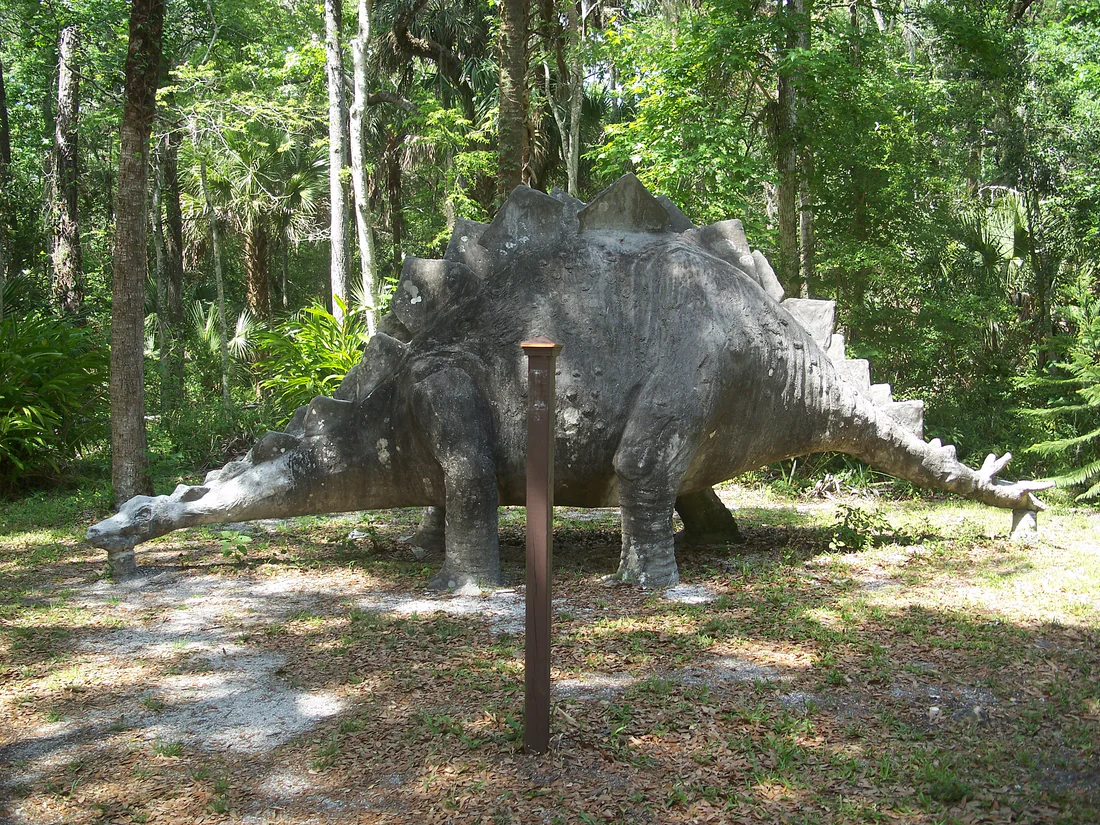 02
02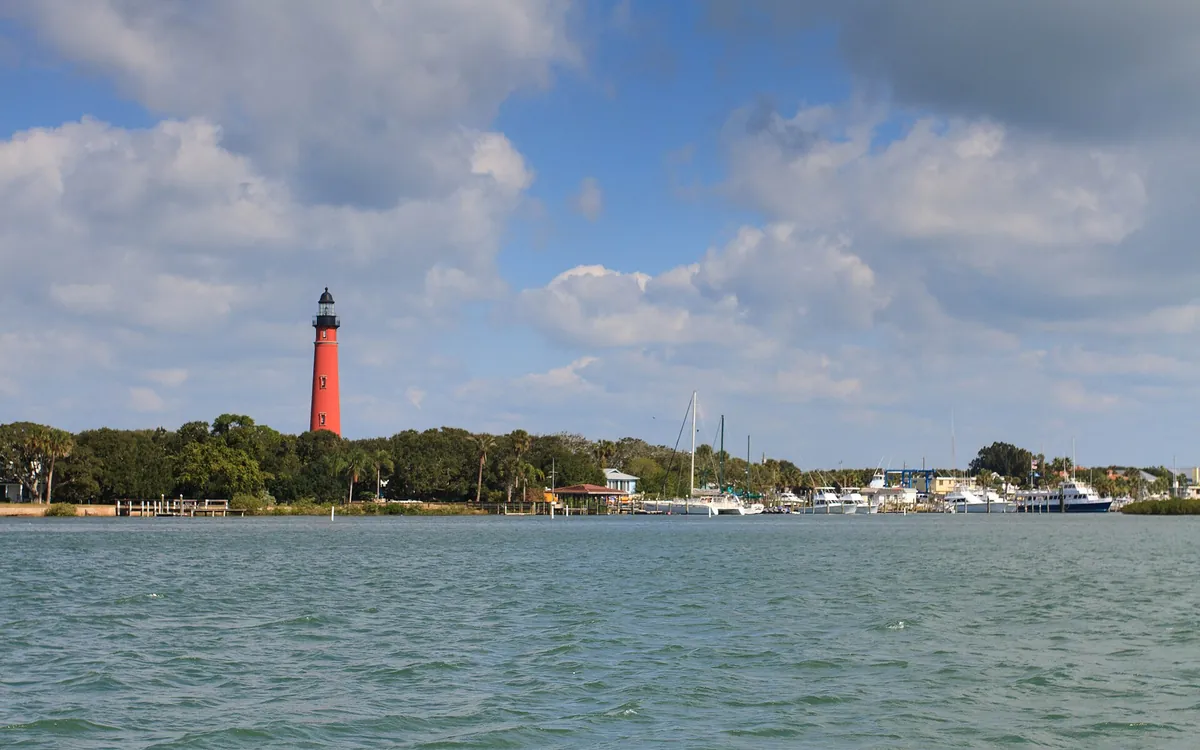 03
03Ponce de Leon Inlet Lighthouse & Museum
Goes with: New Towns, Railroads and a New County Seat
Open the place page →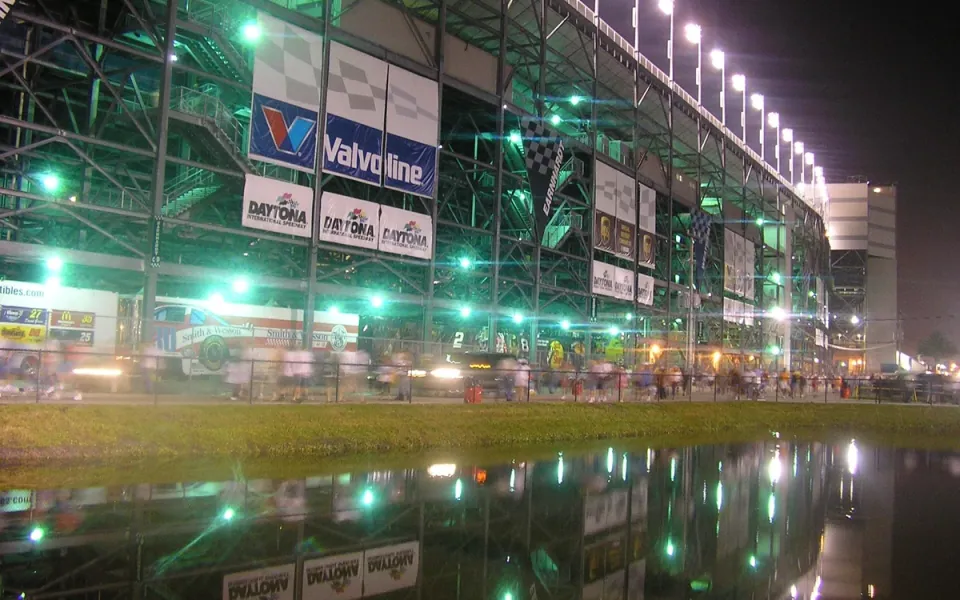 04
04Daytona International Speedway
Goes with: Racing on the Beach and the Birth of NASCAR
Open the place page →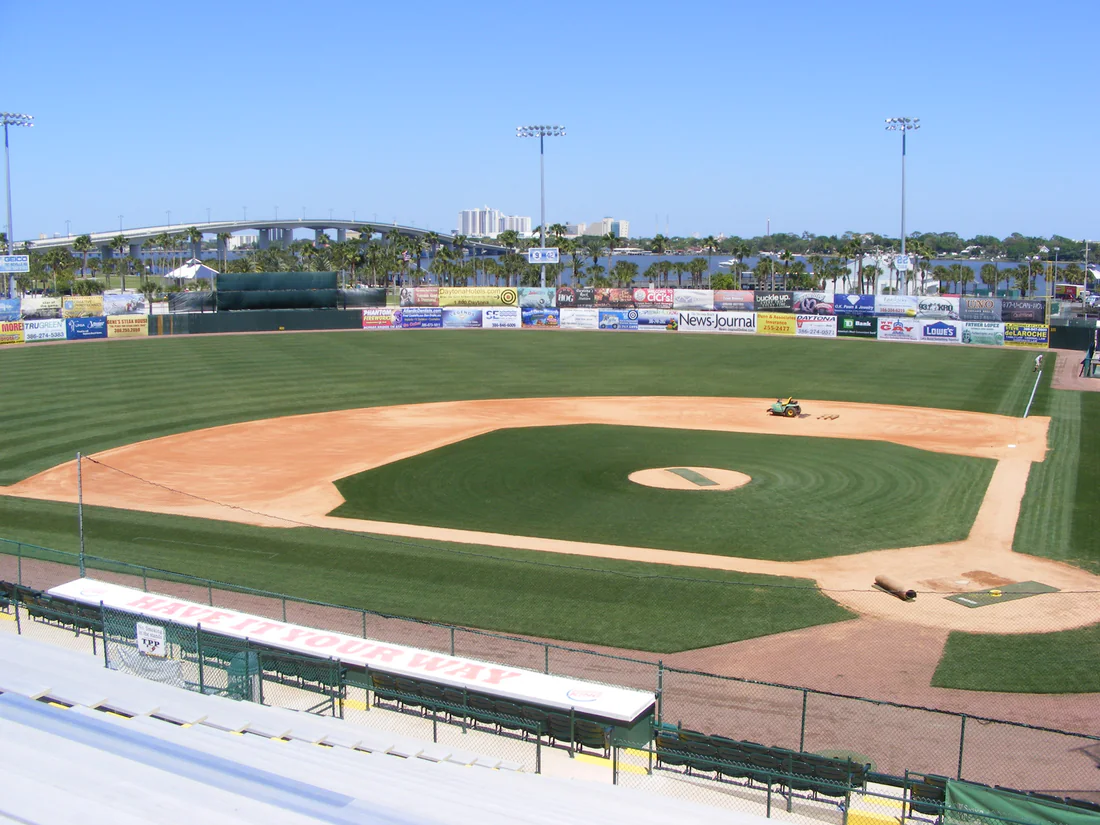 05
05Jackie Robinson Ballpark
Goes with: Mary McLeod Bethune, Jackie Robinson and Roadside Attractions
Open the place page →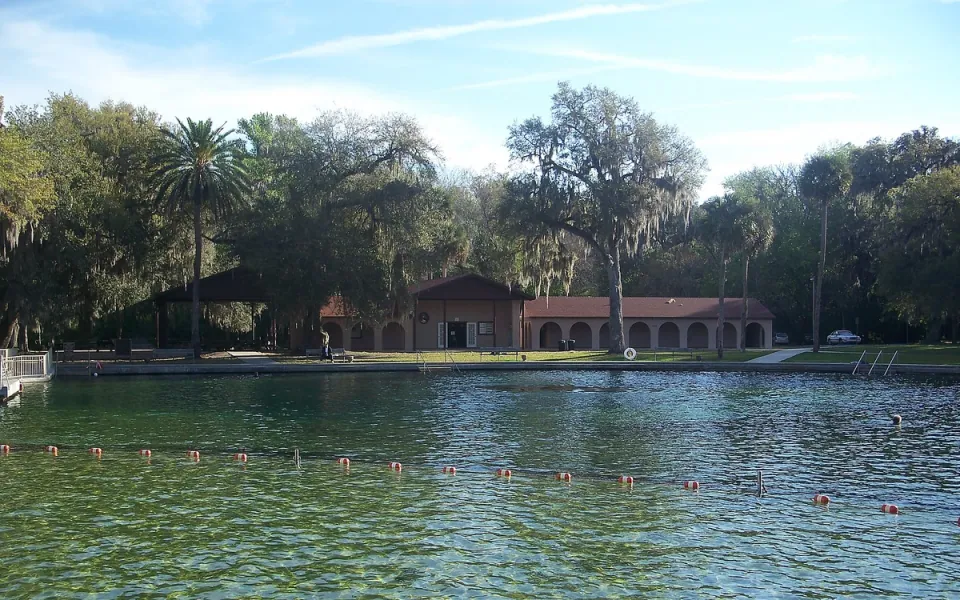 06
06De Leon Springs State Park
Goes with: Mary McLeod Bethune, Jackie Robinson and Roadside Attractions
Open the place page →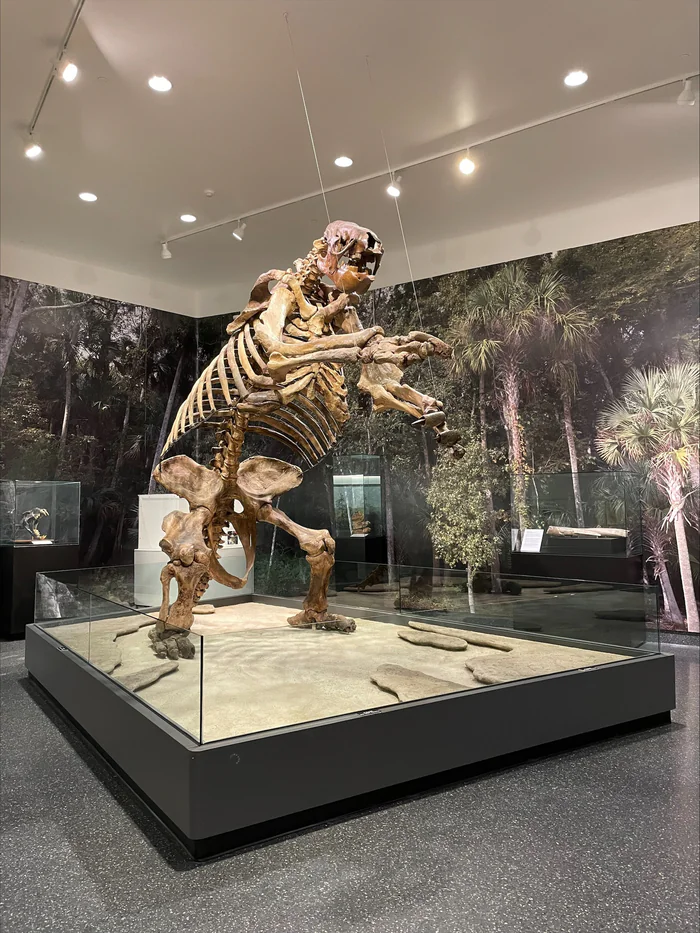 07
07Museum of Arts & Sciences
Goes with: Since 1990: New Museums, a Rebuilt Speedway and a New Trail
Open the place page →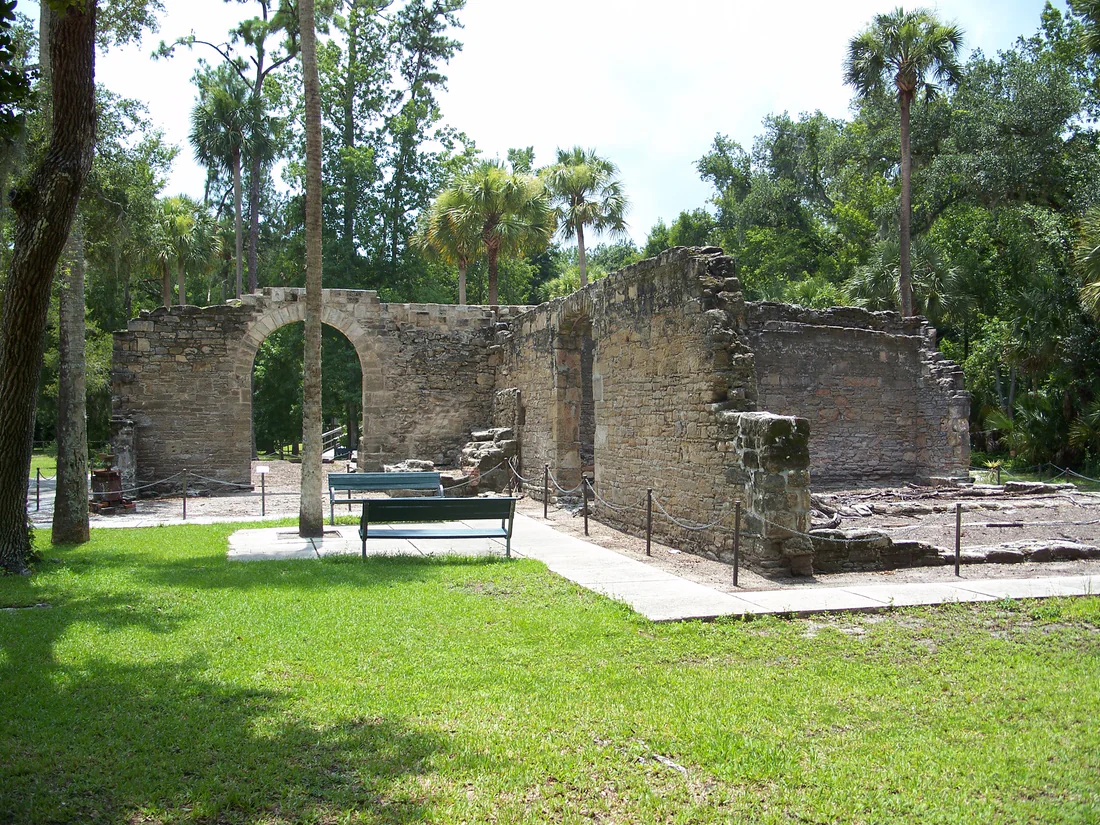 08
08Sugar Mill Ruins, New Smyrna Beach
Goes with: Plantations and the Second Seminole War
the county's Sugar Mill Ruins historic site →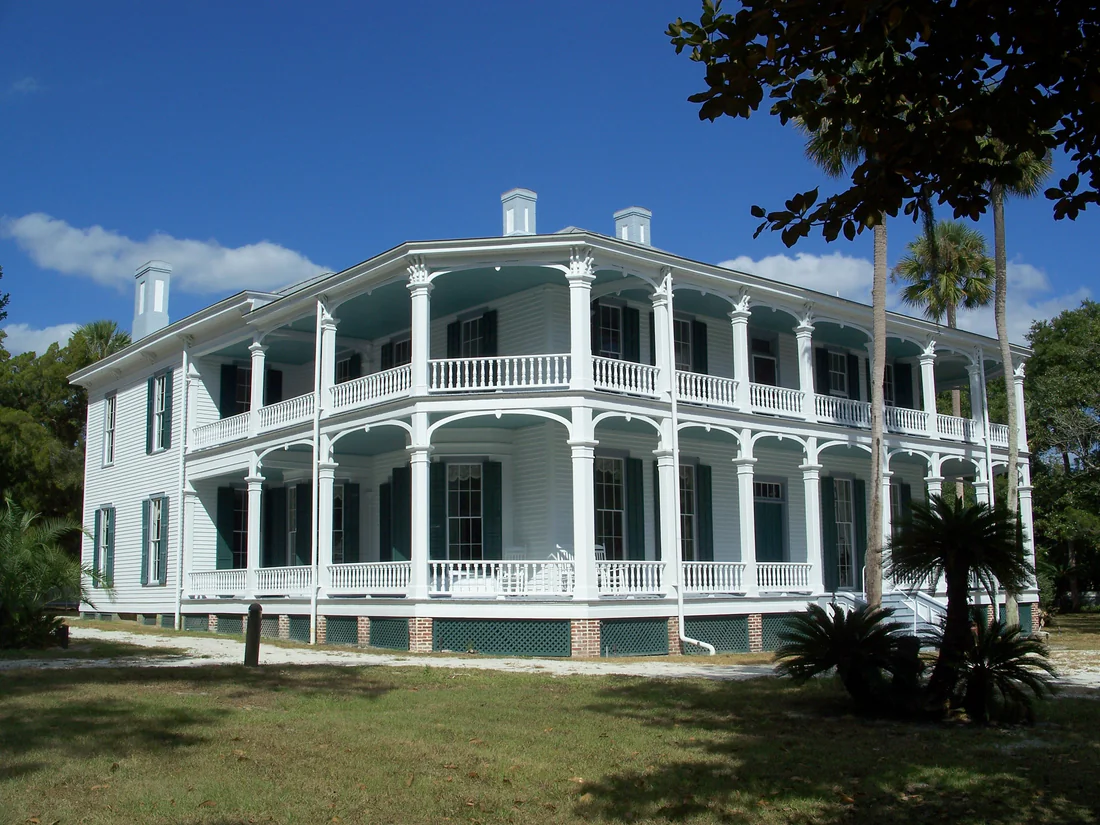 09
09Questions people ask
When was Volusia County created?
Volusia County was formed on December 29, 1854, from the land of Orange County that lay east of the St. Johns River.
Chapter 5 →What is Volusia County named for?
The county's name comes from Volusia, a river landing on the St. Johns not far from Lake George.
Chapter 5 →When did DeLand become the county seat of Volusia County?
In 1888, the voters of growing DeLand made their town the new county seat.
Chapter 8 →Where was NASCAR founded?
On December 14, 1947, Bill France led a meeting of racing men at the Streamline Hotel in Daytona Beach, and NASCAR came out of that meeting.
Chapter 9 →When did Mary McLeod Bethune open her school in Daytona Beach?
Mary McLeod Bethune opened her school in Daytona Beach on October 3, 1904.
Chapter 10 →Where this comes from.
- Volusia County: History of Volusia County ↗ Read October 16, 2026
- Volusia County: Volusia Stories ↗ Read October 16, 2026
- Volusia County: The Earliest Inhabitants (Enterprise on the St. Johns River) ↗ Read October 16, 2026
- Volusia County: Early Visitors (Enterprise on the St. Johns River) ↗ Read October 16, 2026
- Volusia County: Turtle Mound ↗ Read October 16, 2026
- Volusia County: What's in a Name? ↗ Read October 16, 2026
- Volusia County: The New Smyrnea Colony, Origin and Demise ↗ Read October 16, 2026
- Volusia County: Jacob Brock's Enterprise, Boomtown on the River ↗ Read October 16, 2026
- Volusia County: The Golden Age of Steamboat Travel ↗ Read October 16, 2026
- Volusia County: The Brock House Hotel ↗ Read October 16, 2026
- Volusia County: Enterprise Prospers ↗ Read October 16, 2026
- Volusia County: Samuel Frederick deBary ↗ Read October 16, 2026
- Volusia County: St. Paul's African Methodist Episcopal Church ↗ Read October 16, 2026
- Volusia County: The Second Enterprise Courthouse ↗ Read October 16, 2026
- Volusia County: The End of an Era ↗ Read October 16, 2026
- Volusia County: DeBary Hall Historic Site ↗ Read October 16, 2026
- Volusia County: New DeBary Trail Segment Closes Key Gap in St. Johns River to Sea Loop (September 9, 2026) ↗ Read October 16, 2026
- Volusia County: Six Rehabilitated Sea Turtles Return to the Ocean Following Care at the Marine Science Center (October 14, 2026) ↗ Read October 16, 2026
- National Park Service: Turtle Mound Site, Canaveral National Seashore ↗ Read October 16, 2026
- Florida State Parks: Finding the Meaning of the Owl Totem ↗ Read October 16, 2026
- Florida State Parks: De Leon Springs State Park History ↗ Read October 16, 2026
- Florida State Parks: Many Layers of History at De Leon Springs ↗ Read October 16, 2026
- Florida Memory (State Library and Archives of Florida): Volusia County, WPA historical sketch ↗ Read October 16, 2026
- Florida Memory: Dunlawton Sugar Plantation ↗ Read October 16, 2026
- Florida Memory: Dunlawton Sugar Mill Ruins - Port Orange, Florida ↗ Read October 16, 2026
- University of South Florida, Florida Center for Instructional Technology: Volusia County maps ↗ Read October 16, 2026
- Museum of Arts & Sciences: Volusia County ↗ Read October 16, 2026
- Museum of Arts & Sciences: About ↗ Read October 16, 2026
- Museum of Arts & Sciences: Cici and Hyatt Brown Museum of Art ↗ Read October 16, 2026
- Museum of Arts & Sciences: Root Family Museum ↗ Read October 16, 2026
- Ponce de Leon Inlet Lighthouse & Museum (ponceinlet.org): A County By Any Other Name Would Be...? ↗ Read October 16, 2026
- Historical Marker Database: Enterprise (marker erected 1954 by Volusia County and the Volusia County Historical Commission) ↗ Read October 16, 2026
- Historical Marker Database: The New Smyrna Odyssey (1768-1777) (marker erected 2000 by AHEPA Speedway Chapter 410) ↗ Read October 16, 2026
- Historical Marker Database: The Raid on Enterprise, The Sugar Mill Raid (marker erected 1999 by the Florida Confederation for the Preservation of Historic Sites) ↗ Read October 16, 2026
- Historical Marker Database: Risky Business, The Cruger-dePeyster Sugar Mill (marker erected by Volusia County) ↗ Read October 16, 2026
- Volusia County: Legacy of Speed ↗ Read October 16, 2026
- Volusia County: Sir Malcolm Campbell and William H.G. France (Legacy of Speed) ↗ Read October 16, 2026
- Volusia County: NASCAR is born (Legacy of Speed) ↗ Read October 16, 2026
- Volusia County: Beach Racing Era Ends (Legacy of Speed) ↗ Read October 16, 2026
- Volusia County: Daytona International Speedway (Legacy of Speed) ↗ Read October 16, 2026
- Historical Marker Database: Racing On The Beach 1903 (Winton and the Pirate) ↗ Read October 16, 2026
- Historical Marker Database: Racing On The Beach 1904 ↗ Read October 16, 2026
- NASCAR: Daytona International Speedway through the years ↗ Read October 16, 2026
- HISTORY.com: Lee Petty wins first Daytona 500 (This Day in History, February 22) ↗ Read October 16, 2026
- National Park Service, Mary McLeod Bethune Council House: Mary McLeod Bethune ↗ Read October 16, 2026
- Florida Department of State, Florida Historical Markers: Kelly Field and Jackie Robinson ↗ Read October 16, 2026
- Ponce de Leon Inlet Lighthouse & Museum: The Lighthouse ↗ Read October 16, 2026
- NASCAR: Daytona rises even higher from beach sand (first published February 12, 2016) ↗ Read October 16, 2026