FLORIDA PLACE TO EXPLORE
Twenty-four miles of beach and dune run through it, fifteen of those miles in Volusia County and nine in Brevard. There are three sections. Apollo Beach is the northern one, reached from New Smyrna Beach, and it is the part most people in this county use.
DRIVING & RACING EXPERIENCE
Before it, cars raced the Daytona Beach Road Course, which used the hard beach itself and a stretch of highway. The speedway sits on 447 acres. The tri-oval measures two and a half miles, with banking of thirty-one degrees in the turns, eighteen degrees at the tri-oval and three degrees on the back straight, which is what lets the cars run flat out the whole way around.
WATER & COAST
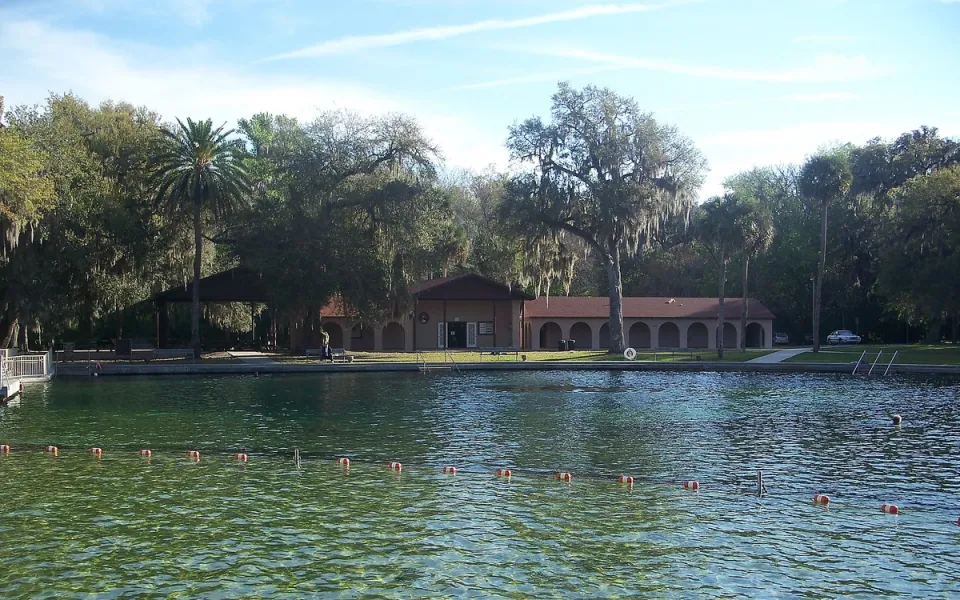
About 102 million gallons of water come out of it every day at a steady seventy-three degrees. That warmth is the whole point in winter. When the river drops below the mid-sixties, manatees move into the spring run to keep from dying of cold, and from November through March the park closes the water to swimmers, divers and paddlers so the animals are left alone.
MUSEUM & CULTURE
It was built of brick and first lit in 1887. Construction was supervised by Chief Engineer Orville E. Babcock until he drowned in the inlet in 1884, three years before the light went into service.
MUSEUM & CULTURE
It started in 1954 as a committee to found a children's museum, was incorporated the following year, and took its present name in 1961. The campus sits on the ninety-acre Tuscawilla Preserve, and the museum also runs Gamble Place, a separate 175-acre property.
WATER & COAST
The concrete promenade went in during the late 1920s. It was called the Broadwalk at first, until a local newspaper editor renamed it for the sake of the advertising. The coquina work and the bandshell were finished in 1938, and the bandshell still puts on free concerts through the summer.