Choose a corridor, not a countywide radius
Tie the shortlist to the actual job, school, airport, healthcare and family corridor; cross-county travel can dominate the day.
Open economic data ↗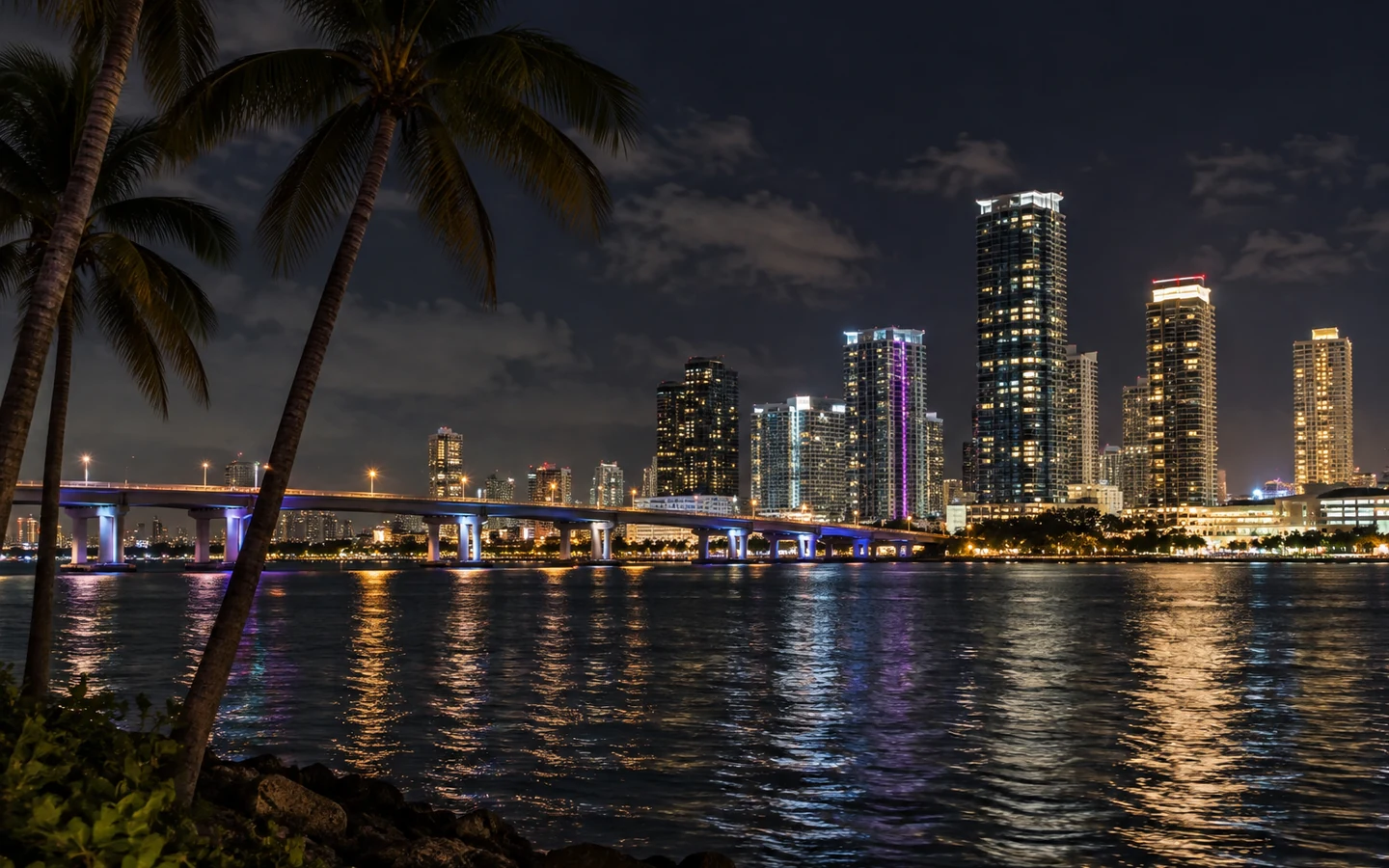
Complete Florida county guide
Florida’s global city region combines finance, trade, culture, universities, dense urban neighborhoods, broad suburbs, agriculture and Biscayne Bay.
Start with daily life
Miami-Dade is not a single-city decision. The urban core, Miami Beach, Coral Gables, Doral, northern municipalities, Kendall-area suburbs and the agricultural communities around Homestead can differ dramatically in housing, language, transportation, flood exposure and daily pace.
International trade, finance, aviation, healthcare, hospitality, higher education, construction and creative industries support a large and varied employment base. Travel may involve I-95, Florida’s Turnpike, the Palmetto or Dolphin expressways, Metrorail, Tri-Rail or Brightline, so the most useful housing search begins with a real work and family route.
A scouting trip should compare at least two distinct corridors and include transit when it could replace a car trip. Verify flood and storm-surge information separately, price condo or association obligations, and test ordinary errands in the language, traffic and neighborhood setting you would experience every week.
The numbers that matter if you are moving
U.S. Census Bureau, American Community Survey, published January 2026, read September 19, 2026. Survey figures are estimates; median home value is what owners estimate their home is worth, not a sale price.
Relocation decision desk
Do not rely on a countywide impression for an address-level decision. Use these questions during the shortlist, scouting and offer stages.
Tie the shortlist to the actual job, school, airport, healthcare and family corridor; cross-county travel can dominate the day.
Open economic data ↗Miami-Dade’s flood-zone map and five storm-surge planning zones answer different questions. Review both for the address.
Open insurance guidance ↗If Metrorail, Metromover, bus, Tri-Rail or Brightline could serve the routine, ride the full trip and include walking, parking and transfer time.
Open economic data ↗Review reserves, inspections, insurance, assessments, association records and building condition with qualified professionals before comparing monthly cost.
Find a county official ↗Confirm primary, specialty, hospital and insurance-network access from the neighborhood, including language needs and travel during peak periods.
Open health data ↗Evaluate shade, cooling cost, drainage, flood routes, backup power, elevators and household supplies for the building or property.
Open preparedness maps ↗Communities to compare
These are starting points, not a ranking. Add nearby towns and neighborhoods as you learn your daily route and housing priorities.
The City of Miami includes downtown and Brickell towers, historic neighborhoods, waterfront districts and extensive residential areas. Compare transit access, parking, condo reserves or assessments, flood exposure and the work route block by block rather than choosing by skyline.
Miami Beach offers a dense island city with beaches, historic districts, nightlife and walkable neighborhoods, but it requires careful review of bridge access, flooding, evacuation, building condition and condo finances. Test the mainland connection at the times your household will use it.
Coral Gables combines an established planned city, major employers, the University of Miami and strong access to central and south-county destinations. Compare the walkable center with residential sections and verify municipal rules, historic restrictions, trees and storm maintenance.
Homestead is a distinct south-county city near agriculture, the Everglades and access to the Florida Keys. Housing may offer more space, but the commute to central Miami can be substantial; also check storm exposure, insurance and access to specialty healthcare.
Five relocation checks
The regional pattern is a starting point. Verify the answer for the exact city, neighborhood and property you are considering.
 01
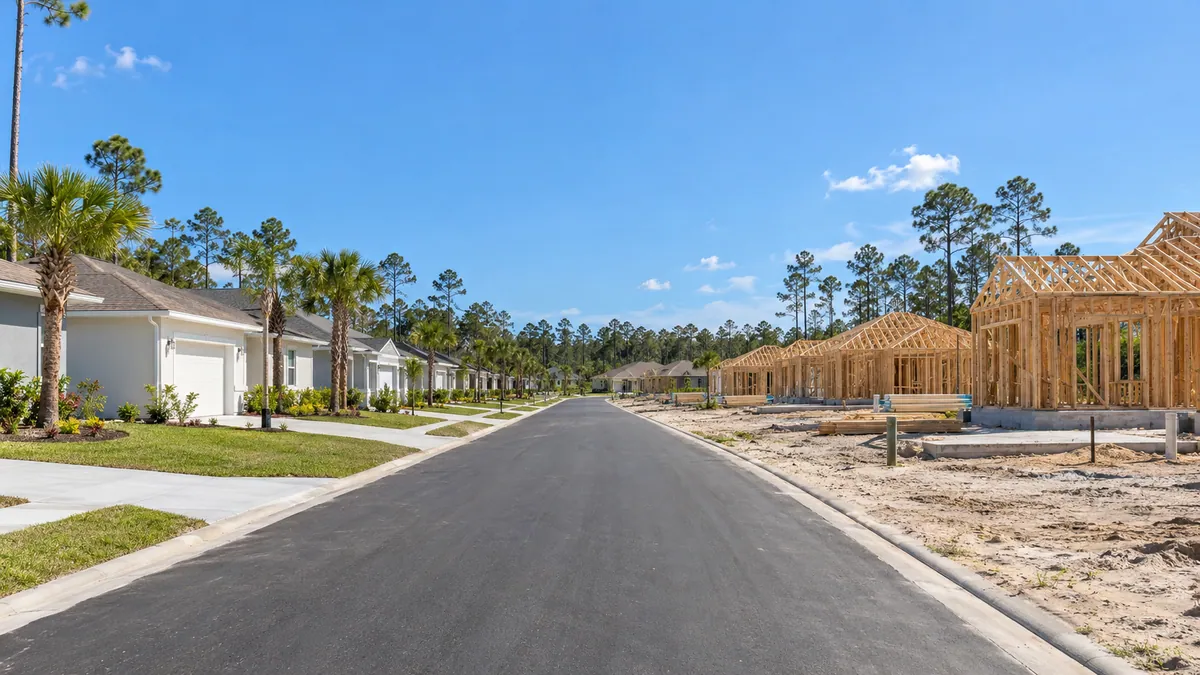
01Luxury towers, older condos, historic homes, broad suburbs, gated communities and Homestead-area housing cannot be compared on price alone. Building finance, parking, insurance and travel time are core costs.
VERIFY LOCALLY BEFORE YOU COMMIT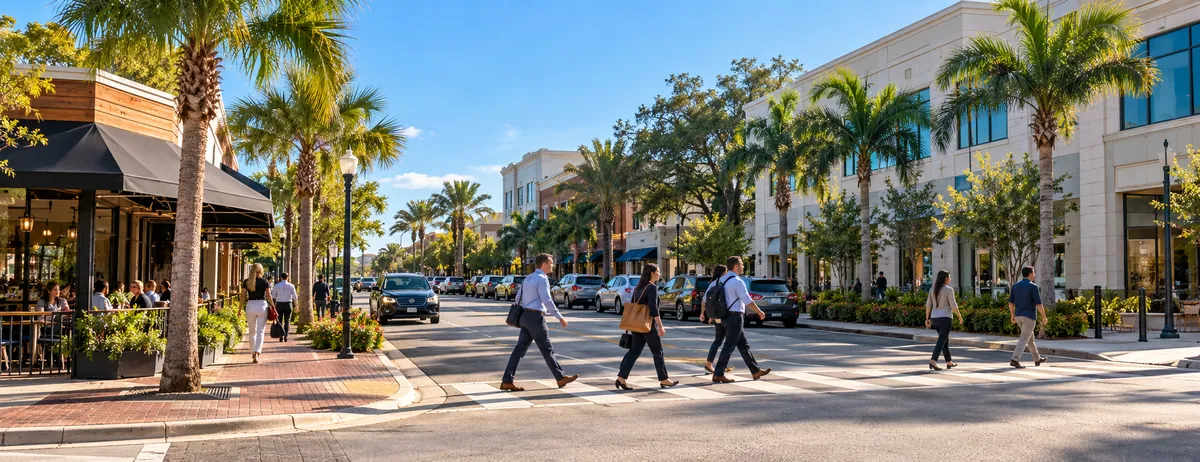 02
02Trade, finance, aviation, healthcare, tourism, media and higher education create strong but distributed employment centers. Airport, port and downtown proximity may matter more than countywide mileage.
VERIFY LOCALLY BEFORE YOU COMMIT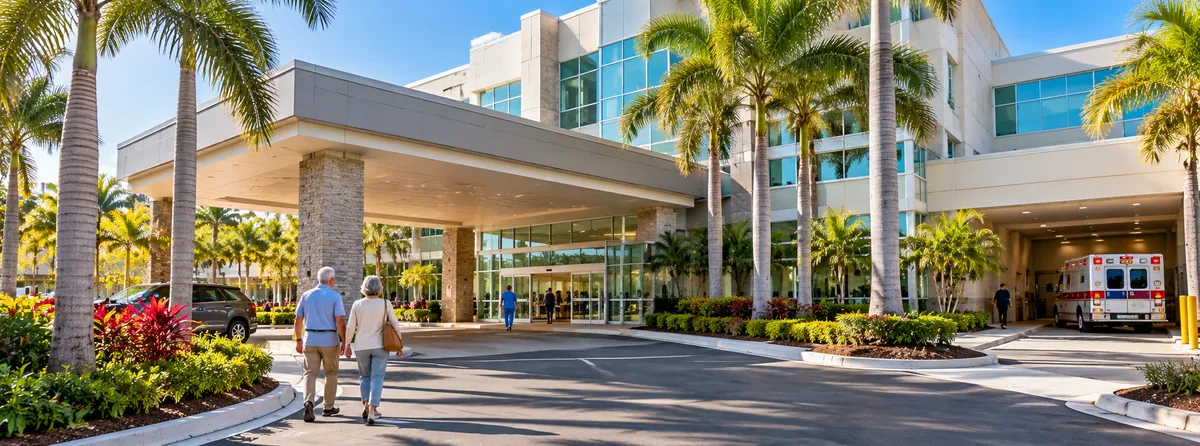 03
03Jackson Health, UHealth, Baptist Health, FIU, the University of Miami and Miami Dade College form a broad network. Confirm the precise campus, hospital and specialty route from the shortlist.
VERIFY LOCALLY BEFORE YOU COMMIT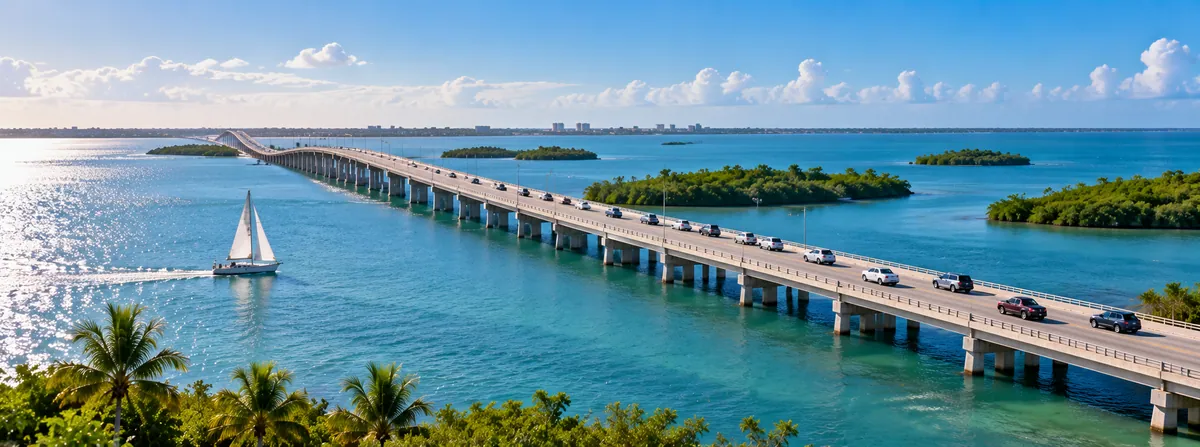 04
04Expressways, toll roads and rail can work together, but a trip’s first and last mile often determines convenience. Test the complete route rather than relying on a station or interchange nearby.
VERIFY LOCALLY BEFORE YOU COMMIT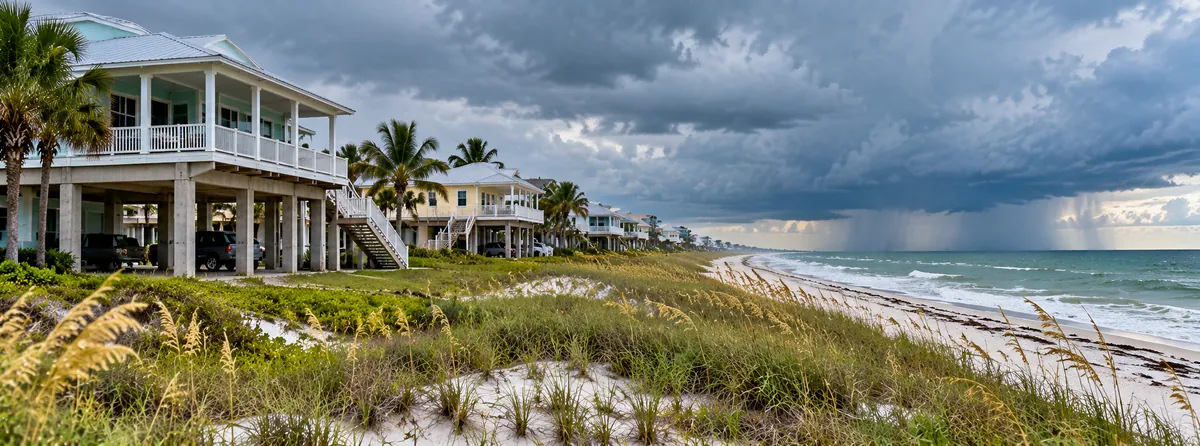 05
05Flood zones reflect flood risk while storm-surge planning zones guide hurricane evacuation planning. Add building elevation, drainage, insurance and road access before making an address-level decision.
VERIFY LOCALLY BEFORE YOU COMMITHospitals in Miami-Dade County
From the state's own hospital list. Each card opens the state's record for that hospital: its address, phone, services and inspection reports.
1,484 licensed beds
The state's record ↗Miami902 licensed beds
The state's record ↗Miami Beach664 licensed beds
The state's record ↗Miami560 licensed beds
The state's record ↗Aventura475 licensed beds
The state's record ↗Miami456 licensed beds
The state's record ↗Miami432 licensed beds
The state's record ↗Miami424 licensed beds
The state's record ↗North Miami Beach382 licensed beds
The state's record ↗Hialeah368 licensed beds
The state's record ↗Hialeah356 licensed beds
The state's record ↗Miami337 licensed beds
The state's record ↗Miami325 licensed beds
The state's record ↗Coral Gables281 licensed beds
The state's record ↗Miami262 licensed beds
The state's record ↗Hialeah247 licensed beds
The state's record ↗Coral Gables245 licensed beds
The state's record ↗Miami203 licensed beds
The state's record ↗Homestead147 licensed beds
The state's record ↗South Miami146 licensed beds
The state's record ↗Miami125 licensed beds
The state's record ↗Miami100 licensed beds
The state's record ↗Doral98 licensed beds
The state's record ↗Doral15 licensed beds
The state's record ↗The state licenses twelve more hospitals in Miami-Dade County with no emergency room; its list names them.
How do I compare hospitals in Florida? →How do I find a doctor who takes Medicare? →Search the state's hospital list ↗
Source: Florida Agency for Health Care Administration, FloridaHealthFinder, Locate a Facility (hospitals), read September 25, 2026.
Evergreen county experiences
Use enduring natural, historic and cultural places to understand the area beyond a real-estate showing.
Congress authorized it in 1934 and it was established in 1947, and it was the first national park created to protect a fragile living system rather than a mountain or a canyon. Marjory Stoneman Douglas argued the case for it and gave it the phrase everyone now uses, the river of grass.
Deering had the International Harvester fortune behind him and spent about fifteen million dollars of it here. F. Burrall Hoffman was the architect, Paul Chalfin the designer who chose and arranged almost everything inside, and Diego Suarez laid out the gardens.
Herzog and de Meuron designed it and the building is an argument about how to put a museum in the subtropics. Two hundred thousand square feet of usable space sits across three stories on a raised platform, with a wide perforated canopy reaching out past the walls to throw shade over open-air terraces where people gather without going inside.
Four systems meet inside it and each depends on the next: the mangrove forest along the shoreline, the shallow water of Biscayne Bay, the northernmost Florida Keys, and the coral reef offshore. There is ten thousand years of human history in the park, from the people who lived on these keys before Europeans arrived, through the wrecks on the reef, to the houses on stilts at Stiltsville standing over open water.
Robert H. Montgomery, an accountant who collected plants, founded it in 1936 and named it for his friend David Fairchild, the plant explorer who brought more than seventy-five thousand plants into the United States, mangoes and varieties of cotton and wheat among them.
It is the only tropical zoo in the continental United States, and that single fact shapes the collection: animals that would need heated houses further north live outdoors here all year. The exhibits are moated rather than caged, so the animals are seen across water and planting instead of through bars.
The museum descends from the Junior Museum of Miami, opened by the Junior League in 1950, and the new building cost three hundred and five million dollars to complete, with thirty-five million of it given by Phillip and Patricia Frost in 2011. The Gulf Stream Aquarium is the centerpiece: a cone-shaped tank a hundred feet across holding five hundred thousand gallons, with mahi-mahi, devil rays and hammerhead sharks in it, viewed from above, from the side and from beneath through an oculus in the floor of the level above.
It opened in 2009 and is curated by Jessica Goldman Srebnick. The idea was simple and it worked: a district of windowless warehouses has enormous quantities of flat wall, and those walls were given to artists.
Two very different buildings stand on it. Richmond Cottage is a three-story wooden house of 1900 that began as a twenty-two room hotel, described in its day as the most southerly hotel on the mainland of the United States.
It was established in 1967 and named for Bill Baggs, editor of The Miami News from 1957 until his death in 1969, who campaigned to keep this end of the key undeveloped. The Cape Florida Lighthouse stands in it and is the oldest standing structure in greater Miami.
Edward Leedskalnin was a Latvian immigrant with no training in building of any kind. Between 1923 and 1951 he quarried, cut and set more than eleven hundred tons of oolitic limestone using tools he made himself out of scrapped car parts, and he called the place Rock Gate.
It began as the Historical Association of Southern Florida, took the name HistoryMiami in 2010 and changed again this year, so a visitor will find both names still in use around the city. It became a Smithsonian Affiliate in July 2011 and was reaccredited by the American Alliance of Museums in 2023.
It was founded in 1983 as the Miami Youth Museum and took its present name in 1997. Arquitectonica designed the Watson Island building, which opened in 2003, and the shape of it is as much a part of the visit as what is inside.
The Rouse Company of Columbia, Maryland built it for ninety-three million dollars to a design by Benjamin C. Thompson, as a festival marketplace meant to bring people back into a downtown they had stopped visiting.
It was put up at Sacramenia near Segovia as the Monastery of Our Lady, Queen of the Angels, and renamed for Saint Bernard of Clairvaux after his canonization in 1174. Monks lived in it for about seven centuries until the upheavals of the 1830s, when the cloisters were seized and turned into a granary and stable.
The Lum brothers bought a hundred and sixty-five acres of it in 1870 meaning to grow coconuts, which failed. John Collins began a bridge from the mainland in 1913 and Carl Fisher put up the money to finish it that year, and the three of them, Collins, Lummus and Fisher, brought the town into being; it was incorporated on March 26, 1915.
The district runs from the Atlantic Ocean west to Alton Road, and from Sixth Street north to the Collins Canal and Dade Boulevard. Within those lines stands the largest concentration of Art Deco architecture in the world.
It was a modest southern and Jewish neighborhood in the 1930s. Cubans leaving after 1959 settled here in such numbers that by 1970 more than eighty-five in every hundred residents were Cuban, and this became the place exiles arrived at.
The quarry supplied the stone for the houses of Coral Gables and was abandoned in 1921. George Merrick, who was building the city, had the hole turned into what he called the Venetian Casino, with Phineas Paist designing and the artist Denman Fink shaping the look of it: bridges, mooring posts, loggias, caves and a waterfall, borrowed from Venice and set in oolitic rock.
Franz Scherr opened it as Parrot Jungle in Pinecrest on December 20, 1936; about a hundred people came that first day and paid twenty-five cents each. The Village of Pinecrest bought the original site in 2002 to make Pinecrest Gardens, and the attraction moved to Watson Island on June 28, 2003, as Parrot Jungle Island, taking the name Jungle Island exactly four years later.
Beaches in Miami-Dade County
Each card gives the beach, its visit category and its next steps: the practical visit guide, the official site where the beach has one, and directions. Always verify current parking, fees, water quality, lifeguard coverage and posted rules before leaving.
Not identified here as clothing-optional. This category does not guarantee child safety, calm water or lifeguard coverage.
Nudity is officially permitted in all or part of the destination. Read the current notice before taking children.
Nudity may be encountered in a remote area even without an official clothing-optional designation.
Miami-Dade County, Florida
Twenty-two public beach accesses run off Collins Avenue, every one of them step-free, most with a shower and several with restrooms. Newport Fishing Pier at Sunny Isles Beach Boulevard is the main way onto the sand. Metered parking is $2 an hour across the city and $3 at the Ellen Wynne and Pier Park lots. Lifeguards work from the station at 18070 Collins Avenue, 9:30 a.m. to 6 p.m. in daylight saving time and 9 a.m. to 5:30 p.m. the rest of the year.
Miami-Dade County, Florida
A 177-acre county park with 1.4 miles of sand between Bal Harbour and Sunny Isles, and the largest undeveloped stretch of beachfront left in the county. Lifeguards all year. Parking is $7 on weekdays and $10 on weekends and on holidays, and the lots are open from sunrise until an hour before sunset. The northern third, between towers 12 and 16, is the clothing-optional section, with its own concessions, showers and restrooms. Dogs have their own stretch between towers 2 and 3, and a bark park at $5.47 a vehicle.
Expect an officially designated clothing-optional area. Read the current county notice before visiting.
Miami-Dade County, Florida
The village's own way onto the sand runs down 102nd Street from Collins Avenue to the beach just south of the Oceana building: 25 feet wide, laid in pavers, with shaded seating, wood benches and a stainless steel body and foot shower. From spring 2026 the gates open with a Bal Harbour All Access Card, which residents collect at Bal Harbour Waterfront Park. The village office takes beach questions on 305.866.4633.
Miami-Dade County, Florida
The town's beach sits behind Collins Avenue, with step-free entrances at 88th and 96th Streets and another through the Community Center at 9301 Collins Avenue, where a beach wheelchair is kept for residents and hotel guests. A hard path with eight outdoor workout stations runs from 89th to 95th Street. The flags matter here: purple means dangerous marine life, and a red flag with a symbol on it means the water is closed. Conditions are on 305.866.3635.
Miami-Dade County, Florida
The beach at North Beach Oceanside Park, between 79th and 86th Streets at Collins Avenue, open sunrise to sunset. Restrooms at the pavilions, water fountains, parking around the edge, a volleyball court, a playground for children of five to twelve, and eleven outdoor fitness stations along the inside path from 82nd to 85th Street. Three pavilions can be rented.
Miami-Dade County, Florida
The only dog beach in Miami Beach, between 80th and 81st Streets on the ocean side of North Beach Oceanside Park, with the entrance at Collins Avenue and 81st Street. It opens on Fridays, Saturdays and Sundays only, 3 p.m. to 7 p.m. from March to October and 1:30 p.m. to 5:30 p.m. from November to February. Dogs are barred from every other city beach. Metered parking across the road, with restrooms and a water fountain in the park.
Miami-Dade County, Florida
Nine miles of oceanfront with the Beachwalk running the length of it, from South Pointe Park up to 87th Street. The path was widened and repaved in 2022, it is step-free the whole way, and it is open around the clock. Restrooms and water fountains sit at the beach entrances along it, with playgrounds and bicycle rentals on the route. It is part of the Atlantic Greenway Network, which runs from Maine to Key West.
Miami-Dade County, Florida
The 26-acre park behind the sand on Ocean Drive, from 5th Street to 14th Place, open from sunrise until midnight. Eighteen sand volleyball courts, two playgrounds, and restrooms at 6th, 10th and 14th Streets. The outdoor weights at Muscle Beach are at 9th Street and a barbell gym at 6th, both open from 7:30 a.m. until sunset. The lighting along the park dims through the turtle nesting season.
Miami-Dade County, Florida
A 17-acre park at 1 Washington Avenue at the southern tip of Miami Beach, open sunrise to sunset, looking out over the ship channel into Biscayne Bay. There are lifeguards on the beach and the access onto it is step-free. A playground with a splash zone and separate areas for children of two to five and five to twelve, restrooms by the concession, a fitness station and a bark park. Parking is paid.
Miami-Dade County, Florida
At 4020 Virginia Beach Drive on Virginia Key, run by its own trust. It opens at 7 a.m. and closes at 5 p.m. from November to March and at 6 p.m. from April to October, and it shuts on Thanksgiving and Christmas. Entry is $5 a vehicle Monday to Thursday, $10 Friday to Sunday and $12 on holidays. Read the rules before going: the park does not permit swimming or fishing in its waters, there are no pets except service animals, and no alcohol or glass.
Miami-Dade County, Florida
Two miles of sand on Key Biscayne with a sandbar offshore that keeps the water calm, parking for nearly 3,000 cars, and beach wheelchairs for anybody who needs one. Parking is $7 Monday to Thursday and $10 Friday to Sunday. Concessions, picnic areas with tables and grills, and cabanas for rent at the south end. No flotation devices, no glass, and no pets except service animals. The park also holds a 1949 carousel, a nature center open 9 a.m. to 4 p.m., a golf course and 27 tennis courts.
Miami-Dade County, Florida
At 1200 South Crandon Boulevard at the end of Key Biscayne, open 8 a.m. until sunset, 365 days a year, for $8 a vehicle. The 1825 lighthouse stands at the point, and the tower and the keeper's cottage are open at tour times with no extra charge and no booking. The Lighthouse Cafe does food and rents equipment, and there are picnic pavilions, restrooms, showers and a launch for canoes and kayaks.
Miami-Dade County, Florida
The county's first park, on Biscayne Bay in south Miami-Dade, where the swimming is in a man-made atoll pool flushed by the tide rather than on open sand. Lifeguards on weekends and on holidays. In summer it is open 9 a.m. to 5:30 p.m. on weekdays and to 6:30 p.m. on weekends, and an hour earlier each way in winter. Parking is $7 on weekdays and $10 on weekends. No flotation devices, no tents, no grills on the beach, and no pets in the park.
Miami-Dade County, Florida
At the south end of the county beside Biscayne National Park, with an atoll pool and a natural beach, open sunrise to sunset. Parking is $5 on weekdays and $7 on weekends and on holidays. The Herbert Hoover Marina next to it takes boats up to 50 feet and its ramps are open 6 a.m. to 10 p.m., and there are restrooms, outdoor showers and a restaurant. No flotation devices are allowed on the beach.
Official planning desk
 Miami-Dade Transportation & Public Works
Official transit planning, rider information, roads and transportation resources.
Open official source ↗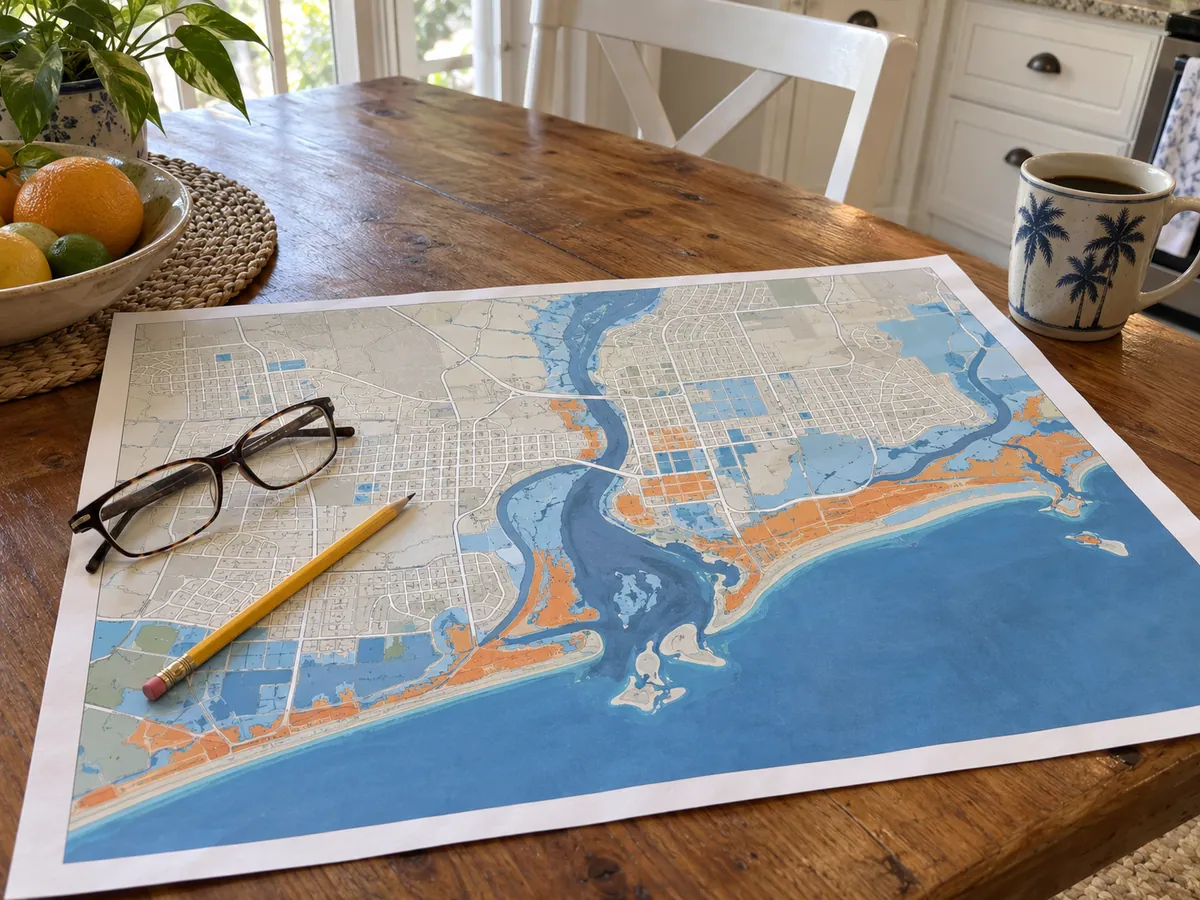 Miami-Dade Flood Zone Maps
County address-level flood-zone research and map guidance.
Open official source ↗Miami-Dade Storm Surge ZonesThe county’s separate hurricane storm-surge planning zones.
Open official source ↗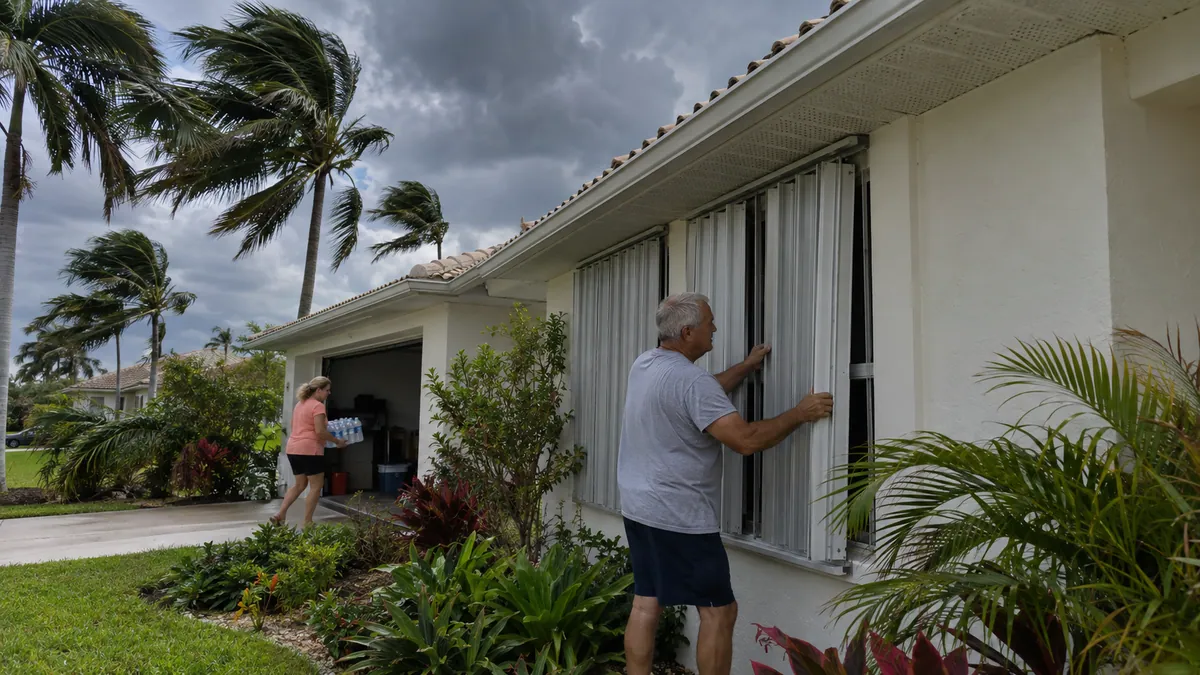 Miami-Dade Emergency Management
Current evacuation, assistance, alert and preparedness information.
Open official source ↗Compare nearby counties
 West Palm Beach · Boca Raton · Delray BeachPalm Beach County
 Fort Lauderdale · Hollywood · Pembroke PinesBroward County
 Key Largo · Islamorada · MarathonMonroe County
 Naples · Marco Island · ImmokaleeCollier County
 Clewiston · LaBelle · Port LaBelleHendry County