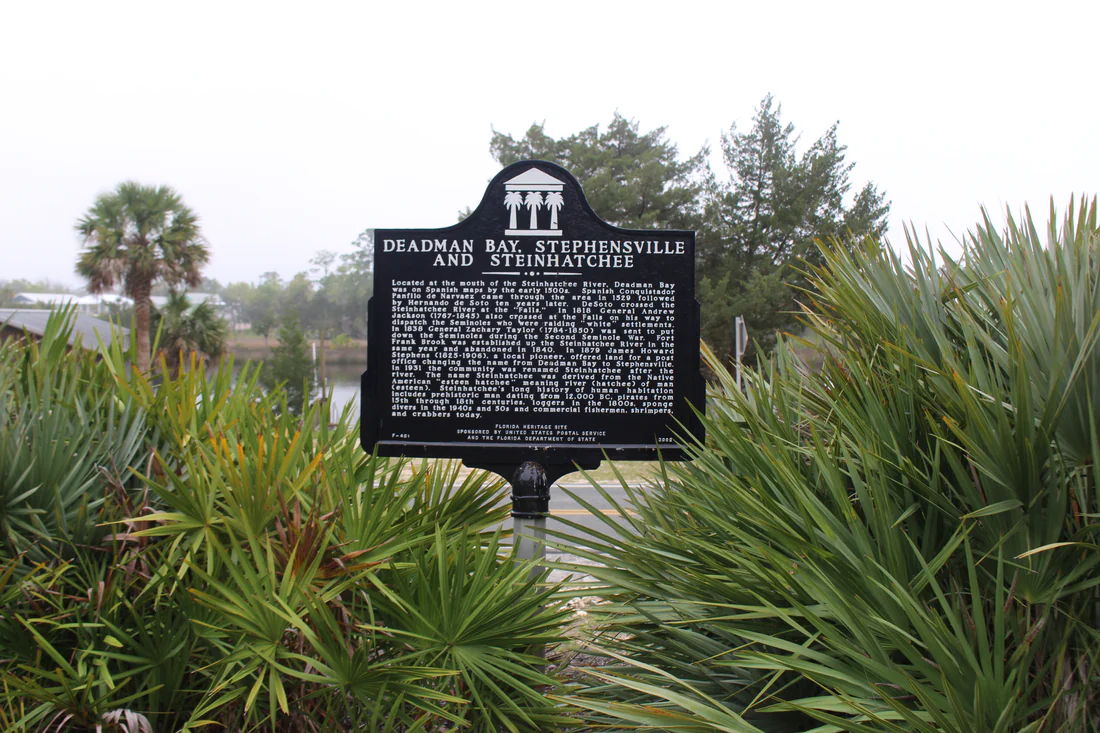
On December 23, 1856, Taylor County was formed from part of Madison County, and it took its name from Zachary Taylor, the 12th president, who had once led the Army in Florida. The county seat is Perry, which was called Rosehead until 1875, when it was renamed to honor Governor Madison Starke Perry. Its forests earned it a title in 1965, when Congressman Don Fuqua named it the Tree Capital of the South. Its history goes back much further, to prehistoric people who lived near Steinhatchee as early as 12,000 BC, a state marker says.
This page tells the story in order, from the first people at Steinhatchee to the Florida Forest Festival's return in 2025, then lists places in the county where you can still see it. The sources for each part are named at the end of that part, and all of them are listed at the bottom of the page.
The first people and the Spanish explorers
A state marker on Steinhatchee's history says people lived in the area in prehistoric times, as far back as 12,000 BC. Native Americans came to fish and hunt along the Econfina River and the Gulf Coast, the state park there says. The coastal land that is now the Big Bend Wildlife Management Area still shows archaeological signs of the native people who lived there. The name Steinhatchee comes from the Native American words esteen hatchee, meaning river of man.
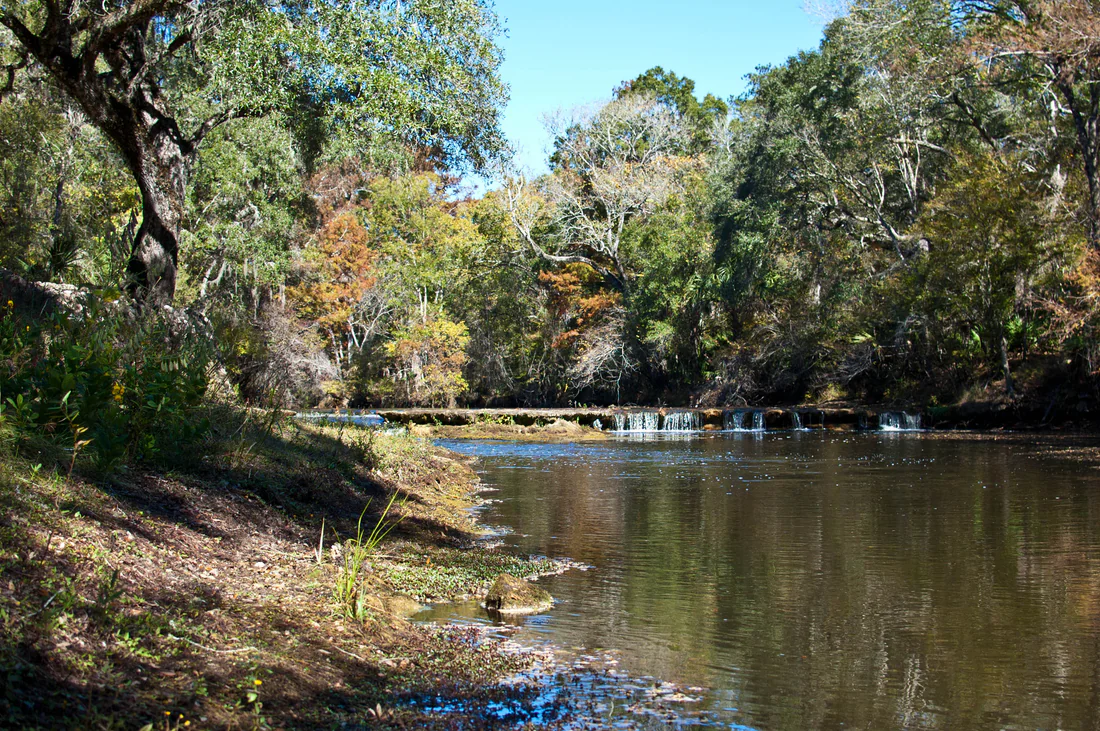
Spanish maps showed Deadman Bay, where the Steinhatchee River meets the Gulf, by the early 1500s. The marker says the conquistador Panfilo de Narvaez passed through in 1529, and Hernando de Soto came ten years after him. De Soto got across the Steinhatchee at a spot called the Falls. In the 1800s Native Americans and settlers crossed at Steinhatchee Falls too, and the banks there still show ruts cut by horse-drawn wagons.
W. T. Cash wrote in the Florida Historical Quarterly that during the first Spanish period a mission probably stood by the Thomas Mill shoals, in the lower part of the Fenholloway River. He thought Spaniards, or Indians working under them, farmed a fertile tract nearby called Thomas Mill Hammock.
Sources: Florida Department of State: Florida Historical Marker Details, Deadman Bay, Stephensville and Steinhatchee; Florida State Parks: Econfina River State Park, History; Florida Fish and Wildlife Conservation Commission: Big Bend Wildlife Management Area, History; Florida Department of Environmental Protection: Steinhatchee River Paddling Trail Guide; University of Central Florida, STARS: W. T. Cash, Taylor County History and Civil War Deserters, Florida Historical Quarterly, 1948
Next: Chapter 2, Jackson, Taylor and the Seminole War forts →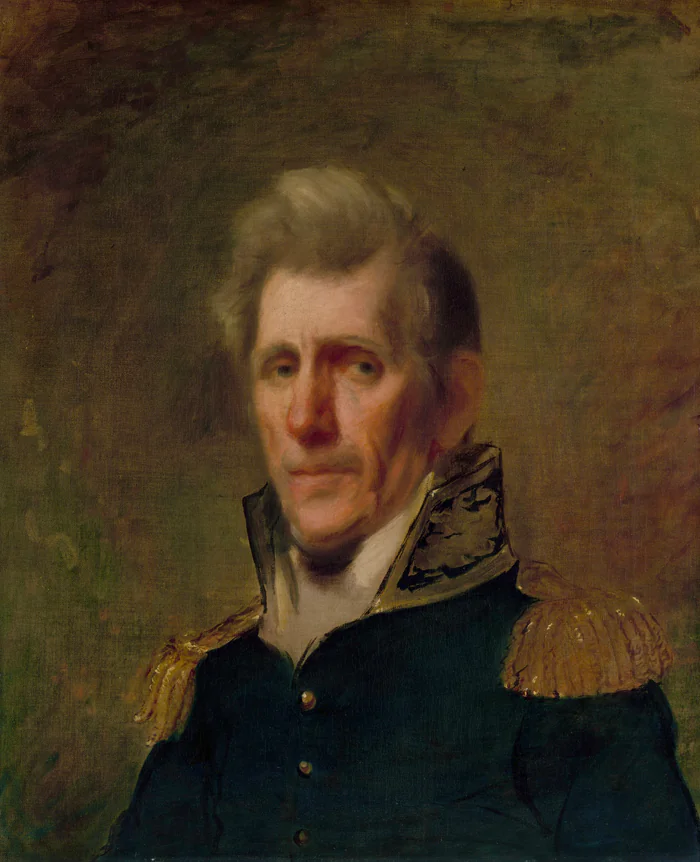
Jackson, Taylor and the Seminole War forts
General Andrew Jackson used the crossing at the Falls in 1818 on his way to fight the Seminoles. In 1838 General Zachary Taylor was ordered to subdue the Seminoles in the Second Seminole War. Fort Frank Brook went up on the Steinhatchee River that year and was abandoned in 1840. Fort Andrew was built on the left bank of the Fenholloway River on March 2, 1839, and was abandoned on June 6, 1840. Fort Mitchell, on the south branch of the Fenholloway, lasted from February 2 to May 28, 1840.
Cash wrote that many Indians lived in Thomas Mill Hammock during the war of 1835 to 1842. Without the war, he believed, settlement of the area would have started ten years sooner. Settlers were arriving before 1844 was over, he wrote. In 1853 the Spring Hill Missionary Baptist Church was built at Rosehead, the place later named Perry. A state marker calls it the county's oldest church.
Sources: Florida Department of State: Florida Historical Marker Details, Deadman Bay, Stephensville and Steinhatchee; University of Central Florida, STARS: W. T. Cash, Taylor County History and Civil War Deserters, Florida Historical Quarterly, 1948; Florida Department of State: Florida Historical Marker Details, Jerkins High School
Next: Chapter 3, A new county named for Zachary Taylor →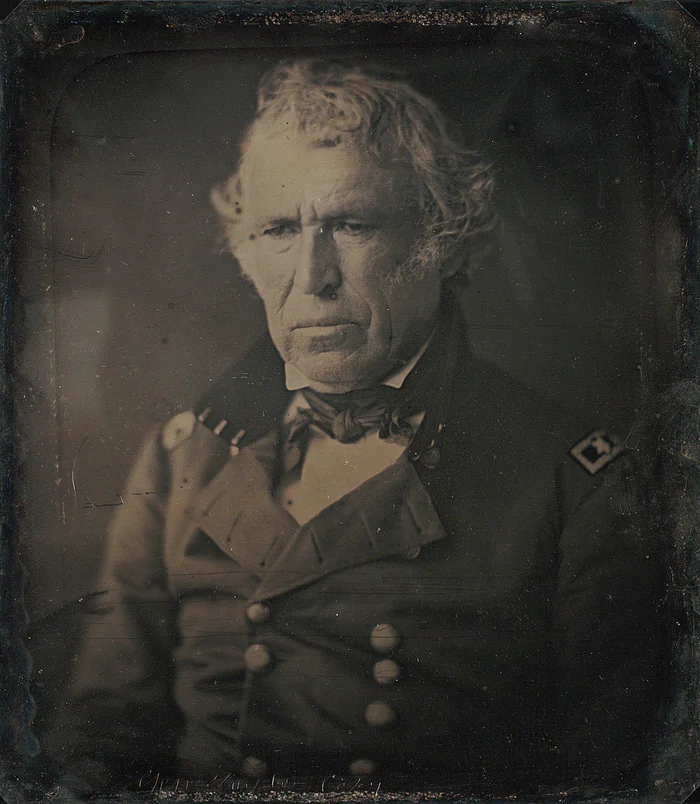
A new county named for Zachary Taylor
On December 23, 1856, Taylor County was formed from part of Madison County. It was Florida's 34th county. The new county was named for Zachary Taylor, who had been the country's 12th president. Years before, he had led the Army in Florida for a time during the Second Seminole War.
The members of the first county commission did not qualify until March 27, 1857. The board paid the Internal Improvement Board $75 for 40 acres to serve as the county site. Soon after, a log courthouse went up on the land. The county's own history gives 1858 as the year it was built.
That, Cash wrote, was the beginning of the town of Perry. In the first census, in 1860, the county had 1,384 people, and six Florida counties had fewer.
Sources: Florida Department of State: Florida Historical Marker Details, Taylor County; University of South Florida, Florida Center for Instructional Technology: Florida Maps, Taylor County; University of Central Florida, STARS: W. T. Cash, Taylor County History and Civil War Deserters, Florida Historical Quarterly, 1948; Taylor County, Florida: About Taylor County
Next: Chapter 4, Civil War deserters in the swamps →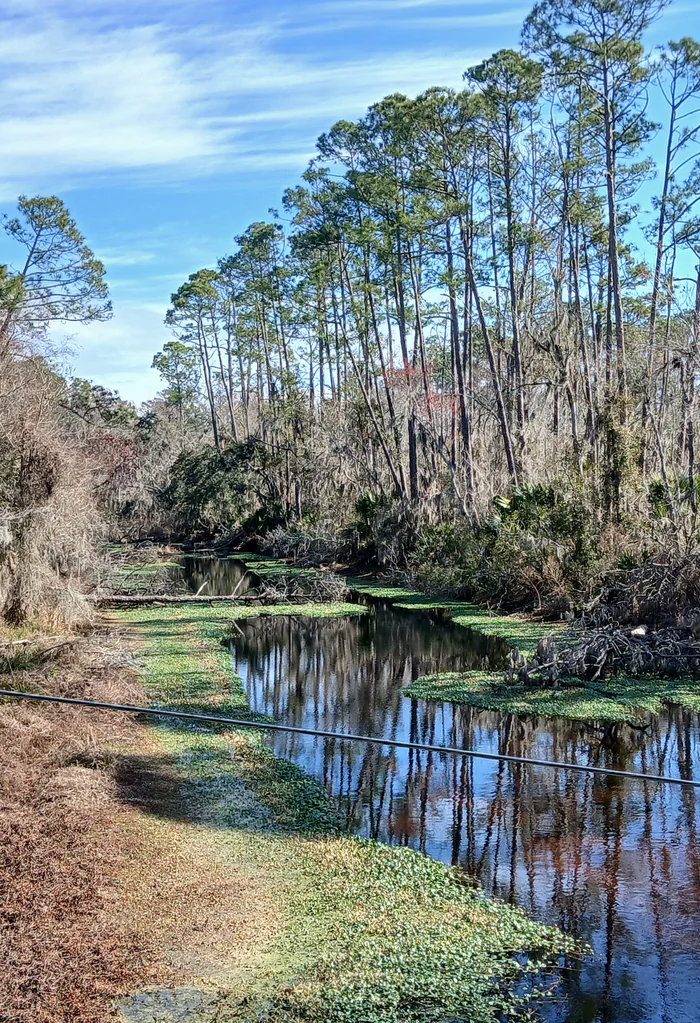
Civil War deserters in the swamps
During the Civil War the county's wide swamps made good hideouts, and Cash wrote that they were well used. Confederate deserters camped on the Econfina's banks, the state park says. They had pledged to help the Union's blockade ships. By river they carried Confederate prisoners, smuggled goods, fresh food and news to Federal gunboats.
William Strickland led the biggest deserter band in the county, Cash wrote. The band went by the names Independent Union Rangers and Florida Royals. In March 1864 troops led by Lieutenant Colonel H. D. Capers came to punish the deserters. Capers had the deserters' houses along the Econfina and Fenholloway rivers destroyed, on both sides of each river. His men seized the deserters' wives and took them to Camp Smith, which lay six miles south of Tallahassee.
When he was caught in March 1865, Strickland was on the rolls of the Second Florida Cavalry of the U.S. Army. The charge against him and a Union soldier caught with him was an attempt to burn a railroad bridge. Strickland was executed by shooting at Tallahassee that same month.
Sources: University of Central Florida, STARS: W. T. Cash, Taylor County History and Civil War Deserters, Florida Historical Quarterly, 1948; Florida State Parks: Econfina River State Park brochure
Next: Chapter 5, Rose Head becomes Perry →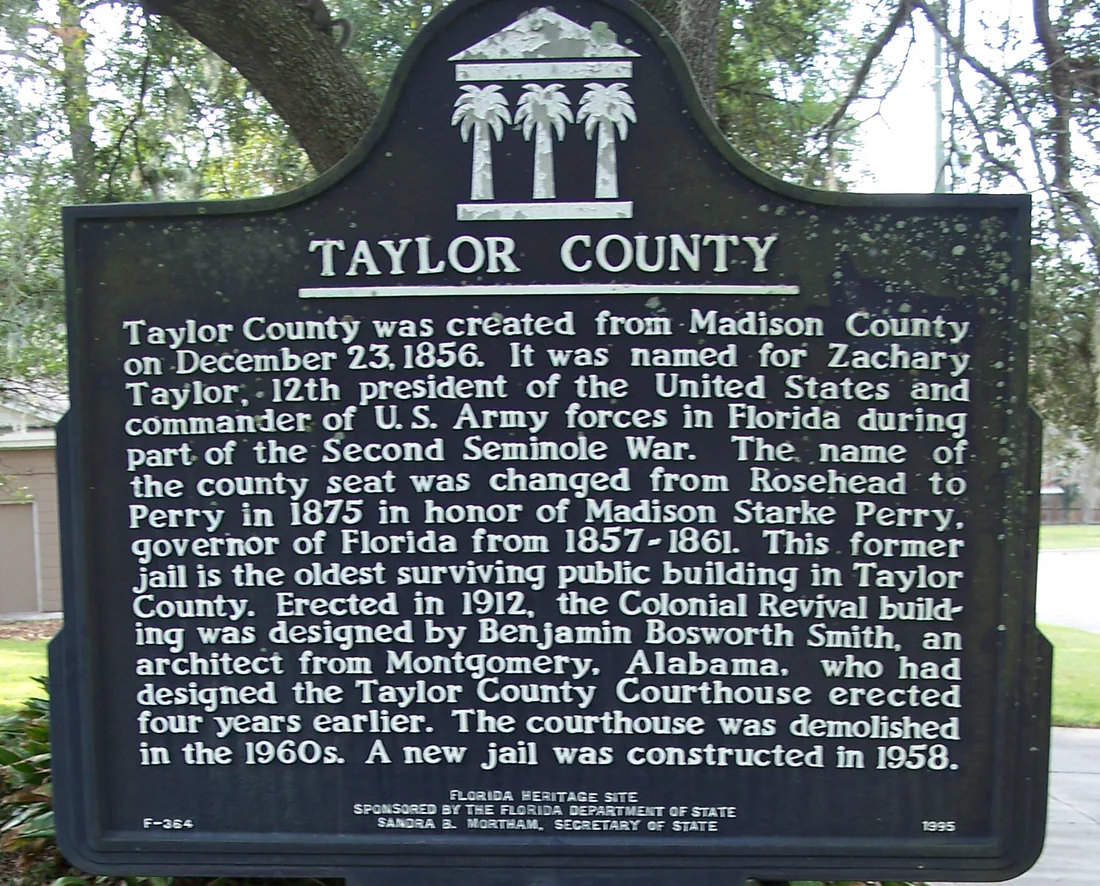
Rose Head becomes Perry
The county says Native Americans called the county seat Rosehead because so many wild rose bushes grew there. The county seat's first post office, opened in 1869, went by the name Rose Head.
A state marker says the town took the name Perry in 1875, to honor Madison Starke Perry. Perry had served as Florida's governor from 1857 to 1861. The county's own history says the town took the name Perrytown in 1875. It says the name was later shortened to Perry.
In 1879 the settlement at Deadman Bay was renamed Stephensville. James Howard Stephens, an early settler, had offered up land for the post office there.
Sources: Taylor County, Florida: About Taylor County; University of Central Florida, STARS: W. T. Cash, Taylor County History and Civil War Deserters, Florida Historical Quarterly, 1948; Florida Department of State: Florida Historical Marker Details, Taylor County; Florida Department of State: Florida Historical Marker Details, Deadman Bay, Stephensville and Steinhatchee
Next: Chapter 6, The Hampton Springs Hotel and the cypress trade →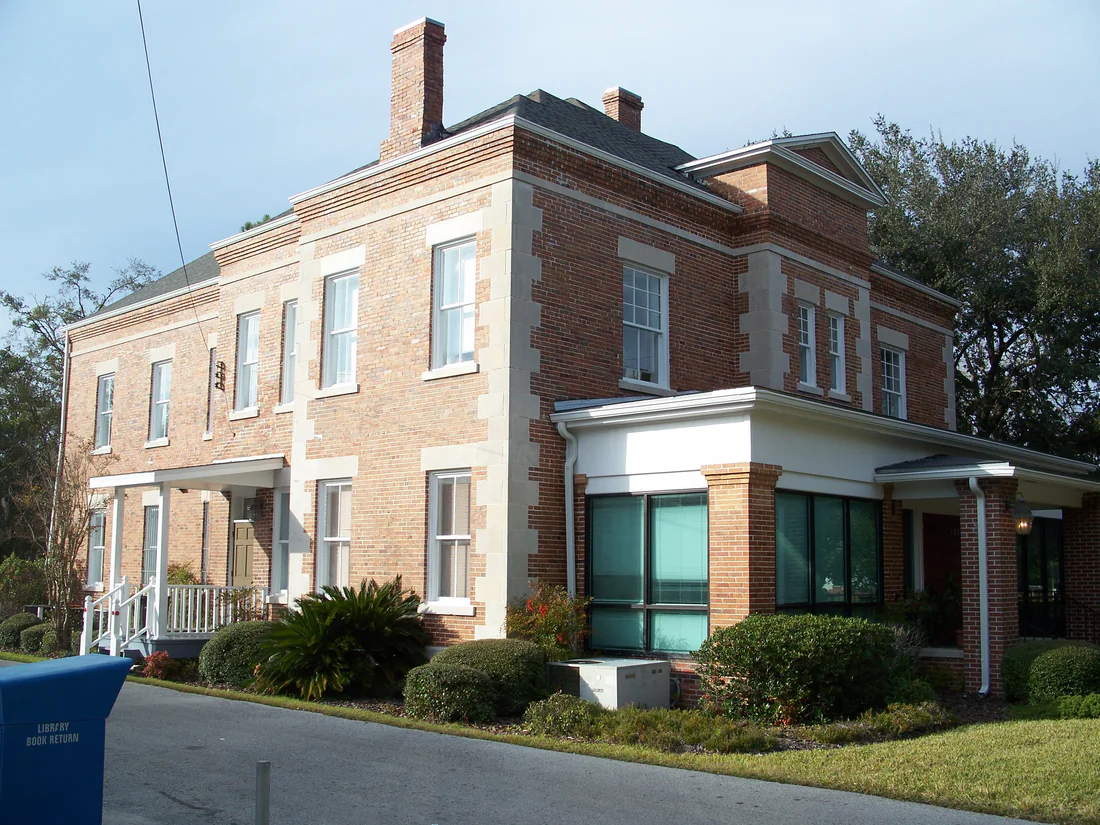
The Hampton Springs Hotel and the cypress trade
The Hampton Springs Hotel went up beside a sulfur spring in 1908. The state marker says its sulfur springs and baths were famous around the world for their healing powers. The marker counts its nine-hole golf course among the region's first. Guests also had a covered pool fed by the springs, tennis courts, stables, a casino, a grand ballroom and a railroad depot. The hotel even bottled its sulfur water and shipped it across the country.
In 1912 a new county jail went up, a Colonial Revival building designed by Benjamin Bosworth Smith. Smith came from Montgomery, Alabama, and had drawn the plans for the county courthouse four years earlier. The marker calls it the county's oldest surviving public building.
The Florida Historical Quarterly says logging operations in the county began in 1913. That year S. J. Carpenter, W. L. Burton and E. G. Swartz started the Burton-Swartz Cypress Company of Florida. Early in the 1900s, mature cypress was cut from the swamps and hauled out on railroad trams built mainly for that job. In the Big Bend Wildlife Management Area, what is left of those trams now makes raised roads for visitors.
Sources: Florida Department of State: Florida Historical Marker Details, Hampton Springs Hotel; Taylor County, Florida: About Taylor County; Florida Department of State: Florida Historical Marker Details, Taylor County; University of Central Florida, STARS: Drew Harrington, Burton-Swartz Cypress Company of Florida, Florida Historical Quarterly, 1984; Florida Fish and Wildlife Conservation Commission: Big Bend Wildlife Management Area, History
Next: Chapter 7, Racial terror in Perry in 1922 →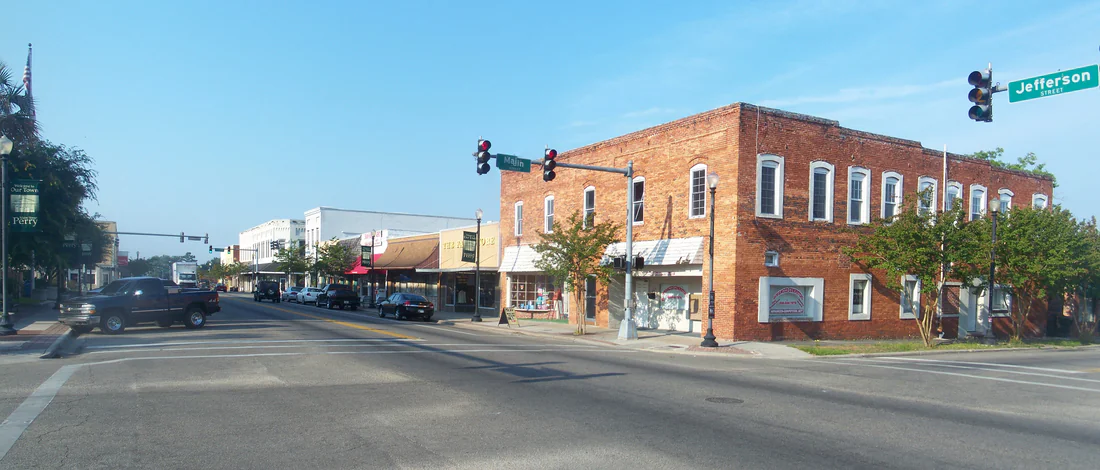
Racial terror in Perry in 1922
On December 2, 1922, the body of a white schoolteacher was discovered in Perry. Her name was Ruby Hendry, and she was 24. The Equal Justice Initiative says things found by her body were the property of a local white man. Even so, police insisted the killer must be a Black man, and they soon fixed on Charles Wright.
Police arrested Wright along with a friend, Arthur Young. A white mob seized Wright while he was being taken to jail, and it burned him alive. Arthur Young was lynched in public on December 12, 1922. The mob shot him many times, and his body was left hanging from a tree beside a highway in Perry.
Members of the mob then burned a church, a school, the Masonic hall and several homes owned by Black families. Many Black families, dozens by the Equal Justice Initiative's count, left for the North. Nobody was ever held to account for killing Wright and Young. In all, the Equal Justice Initiative has recorded 15 Black victims of lynching in Taylor County from 1877 to 1950.
Sources: Equal Justice Initiative: A History of Racial Injustice, December 12, 1922; JSTOR Daily: How a Murder Fueled Racial Terror in Florida
Next: Chapter 8, Steinhatchee, Foley and the war years →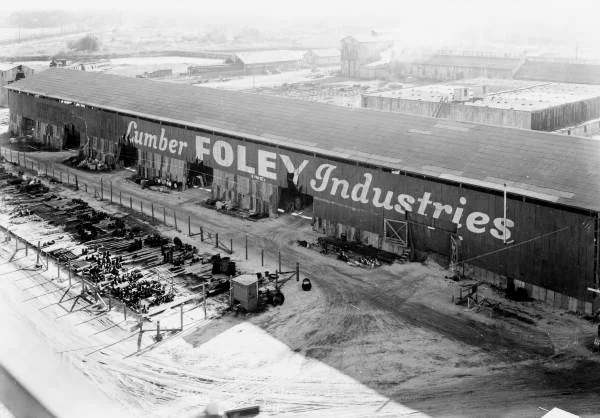
Steinhatchee, Foley and the war years
In 1931 the community at Stephensville took the name Steinhatchee, after the river. During the Great Depression, people took mullet from the Econfina River, salted it and packed it in barrels to trade.
Near Perry stood Foley, a company town. Many of its people, Black and white, worked for the Brooks-Scanlon Lumber Company. Most Black workers did manual and machine labor, while white workers held the manager jobs. A reservoir and the lumber mill split the town in two, with one quarter for Black residents and one for white residents. In 1937 a teacher named M. Taylor came from Orlando to teach at the school in Foley.
Her memoir tells of her Black students and of the people she came to know in Foley. From the mid-1930s to the mid-1940s, the Hampton Springs Hotel housed military personnel who were testing aircraft at the Perry-Foley Airport. People crossed the Steinhatchee River by ferry until 1948. That year a one-lane swing bridge, taken from Scott's Ferry near Blountstown, was installed. It stayed in use until 1983, when a concrete bridge took its place.
Sources: Florida Department of State: Florida Historical Marker Details, Deadman Bay, Stephensville and Steinhatchee; Florida State Parks: Econfina River State Park brochure; University of Florida Libraries: M. Taylor Memoir About Early Schooling in Florida; Florida Department of State: Florida Historical Marker Details, Hampton Springs Hotel; Florida Department of Environmental Protection: Steinhatchee River Paddling Trail Guide
Next: Chapter 9, Jerkins High School, the paper mill and the Pine Tree Festival →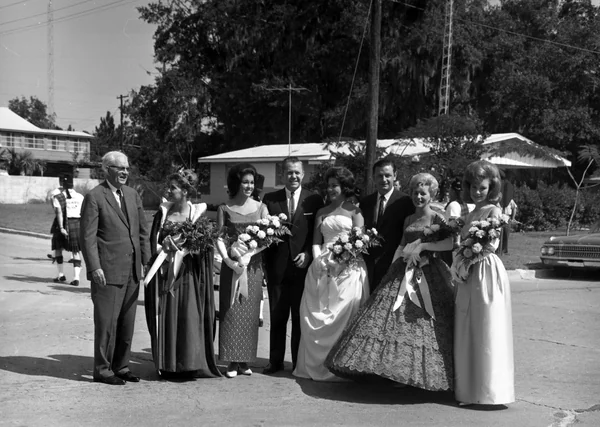
Jerkins High School, the paper mill and the Pine Tree Festival
Over the years several school buildings for Black students went up and were destroyed by fire, the state marker at the old Jerkins High School says. The marker says the worst fire came after the 1923 Rosewood Massacre in nearby Levy County. The Jerkins High School campus was built in 1950.
The school started out as Perry Negro High School and later took the name of Henry R. Jerkins, its principal, after his death. It was the first school in the county named for an African American, the marker says. Few Black schools in Florida taught all 12 grades, and Jerkins was one of them. Jerkins High School closed in 1970, after integration.
In 1954 Procter & Gamble built a paper mill at Foley. That same year, fire destroyed the Hampton Springs Hotel. The Pine Tree Festival, later renamed the Florida Forest Festival, began in 1956. Its first purpose was to teach about fire safety, Florida's forestry heritage and the timber business. In 1963 a crowd estimated at more than 25,000 came out for the eighth festival.
Sources: Florida Department of State: Florida Historical Marker Details, Jerkins High School; Tallahassee Democrat (on Yahoo News): Perry paper mill, 'lifeblood' of town, closing weeks after hard-hit by Hurricane Idalia; Florida Department of State: Florida Historical Marker Details, Hampton Springs Hotel; Florida Memory, State Archives of Florida: Part of crowd at the 8th annual Pine Tree Festival in Perry
Next: Chapter 10, The Tree Capital of the South →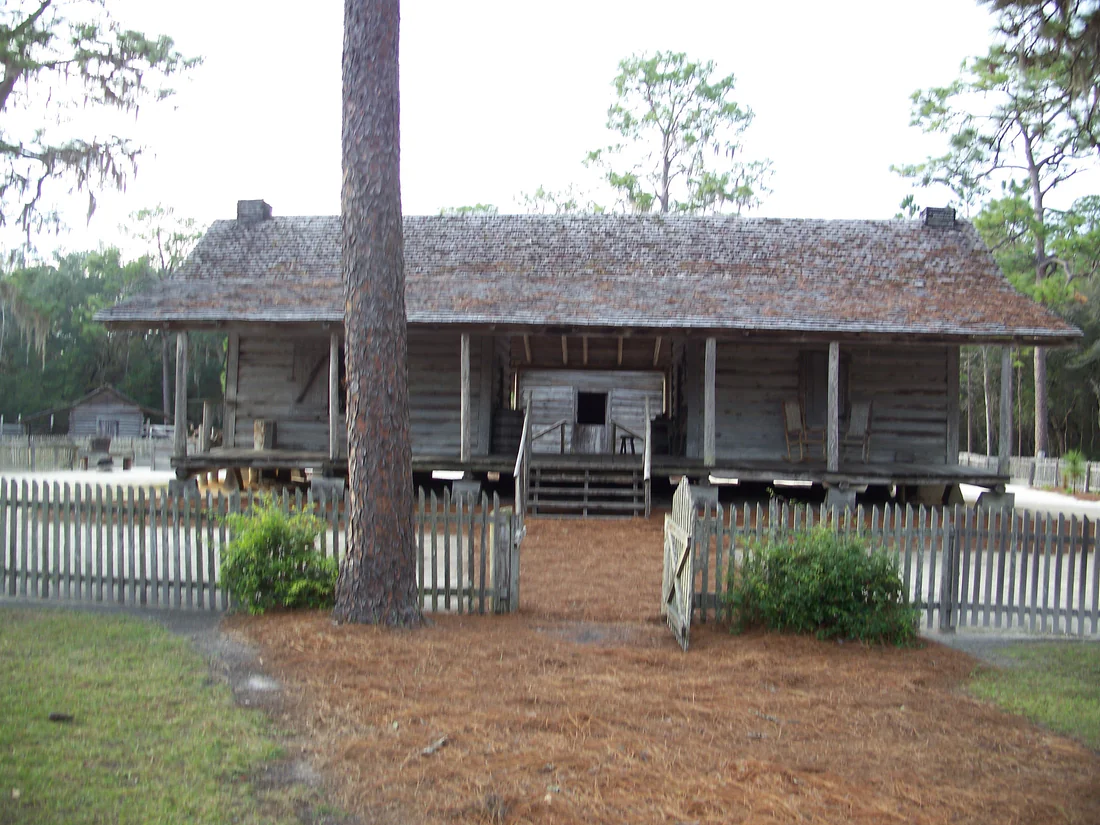
The Tree Capital of the South
In 1965 Congressman Don Fuqua called Taylor County, with more than 525,000 acres of forest, the Tree Capital of the South. To mark the honor, Forest Capital State Park was opened in 1968. In 1978 the park received a Moon Tree, a pine seedling that came from the Apollo 14 mission. Its museum covers Florida's forestry history and gives special attention to turpentine.
In 1972 the family of Senator Pete Gibson gave the park its Cracker Homestead. Wiley W. Whiddon's family had built it in 1863. It is a dogtrot house of hand-hewn logs, with a fireplace of clay and sticks in each room.
When watching wildlife grew popular in the mid-1900s, Buckeye Cellulose Corporation built a picnic area at Hagen's Cove, with a pavilion, tables and grills. Its out-of-the-way natural beach, its wildlife and its fishing and scalloping made the cove a popular place. In 1986 The Nature Conservancy bought the land from Buckeye Cellulose. In 1987 the state wildlife agency, now called FWC, bought it from the Conservancy, and it became the Big Bend Wildlife Management Area.
Sources: Florida State Parks: Forest Capital Museum State Park, History; Florida State Parks: Forest Capital Museum State Park brochure; Florida Fish and Wildlife Conservation Commission: Big Bend Wildlife Management Area, History
Next: Chapter 11, Since 1989: a river park, two new markers and the Forest Festival's comeback →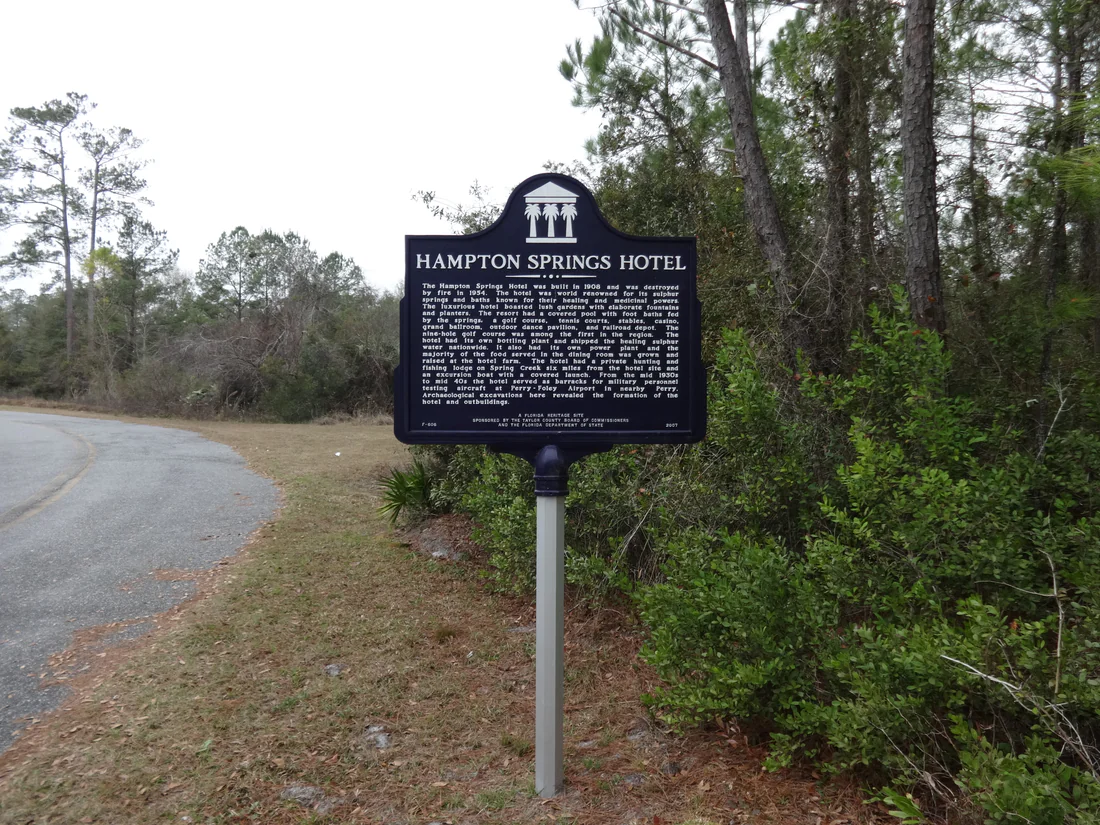
Since 1989: a river park, two new markers and the Forest Festival's comeback
Econfina River State Park opened in 1989 to protect 4,528 acres of natural land. Together with St. Marks National Wildlife Refuge to the west and other neighbors, the park protects one of Florida's last unspoiled stretches of coast, the park's brochure says. In 2000 Forest Capital got its present name, Forest Capital Museum State Park, in a statewide move to make park names match. In 2005 the Florida Forest Festival was held for the 50th time.
In 2007 a historical marker was placed at the old Hampton Springs Hotel site. Archaeologists had dug there and found the outline of the hotel and its outbuildings. The state's Jerkins High School marker in Perry, on Martin Luther King Avenue, dates from 2010.
Most of the 2024 Florida Forest Festival was canceled after Hurricane Helene. WCTV reported that the storm had destroyed the festival grounds. The 70th festival came back in 2025, and WCTV reported a crowd of more than 15,000 on October 25. It had more than 100 arts and crafts vendors, a car show and a contest for lumberjacks. Organizers served a fish fry dinner to about 3,000 people and called it the world's largest free fish fry.
Sources: Florida State Parks: Econfina River State Park, History; Florida State Parks: Econfina River State Park brochure; Florida State Parks: Forest Capital Museum State Park brochure; Florida Memory, State Archives of Florida: Hampton Springs Hotel in Taylor County; Florida Department of State: Florida Historical Marker Details, Hampton Springs Hotel; Florida Department of State: Florida Historical Marker Details, Jerkins High School; Perry Newspapers: The Florida Forest Festival is back and ready to celebrate its 70th year; WCTV: Florida Forest Festival returns for the first time since Hurricane Helene destroyed the grounds
Next: the whole story, in dates →The whole story, in dates
People are living in the Steinhatchee area, a state marker says.
Deadman Bay appears on Spanish maps.
Panfilo de Narvaez passes through, by the state marker's date.
Andrew Jackson uses the crossing at the Falls on his way to fight the Seminoles.
Zachary Taylor is sent against the Seminoles, and Fort Frank Brook goes up on the Steinhatchee River.
Fort Andrew is built on the Fenholloway River.
Settlers are arriving, W. T. Cash wrote.
Spring Hill Missionary Baptist Church is built at Rosehead.
Taylor County is formed from part of Madison County.
A log courthouse is built, by the county's own account.
Troops under H. D. Capers come to punish the deserters.
Strickland is captured and executed at Tallahassee.
The county seat's first post office opens under the name Rose Head.
The county seat is renamed to honor Madison Starke Perry.
Deadman Bay is renamed Stephensville.
The Hampton Springs Hotel goes up beside a sulfur spring.
A Colonial Revival county jail is built.
The Burton-Swartz Cypress Company of Florida is formed, and logging operations begin.
The body of a white schoolteacher, Ruby Hendry, is found in Perry.
A white mob lynches Arthur Young in Perry.
Stephensville takes the name Steinhatchee.
M. Taylor comes from Orlando to teach in Foley.
A one-lane swing bridge replaces the Steinhatchee River ferry.
The Jerkins High School campus is built.
Procter & Gamble builds a paper mill at Foley, and fire destroys the Hampton Springs Hotel.
The Pine Tree Festival, later the Florida Forest Festival, begins.
Don Fuqua calls Taylor County the Tree Capital of the South.
Forest Capital State Park opens.
Jerkins High School closes after integration.
The Whiddon family's 1863 Cracker Homestead is given to the park.
The park receives a Moon Tree from the Apollo 14 mission.
The coastal land becomes the Big Bend Wildlife Management Area.
Econfina River State Park opens.
The museum park takes the name Forest Capital Museum State Park.
A historical marker is placed at the Hampton Springs Hotel site.
The state's Jerkins High School marker in Perry dates from this year.
Hurricane Helene destroys the festival grounds, and most of the festival is canceled.
The 70th Florida Forest Festival returns, with a crowd of more than 15,000.
Where you can still see it
 01
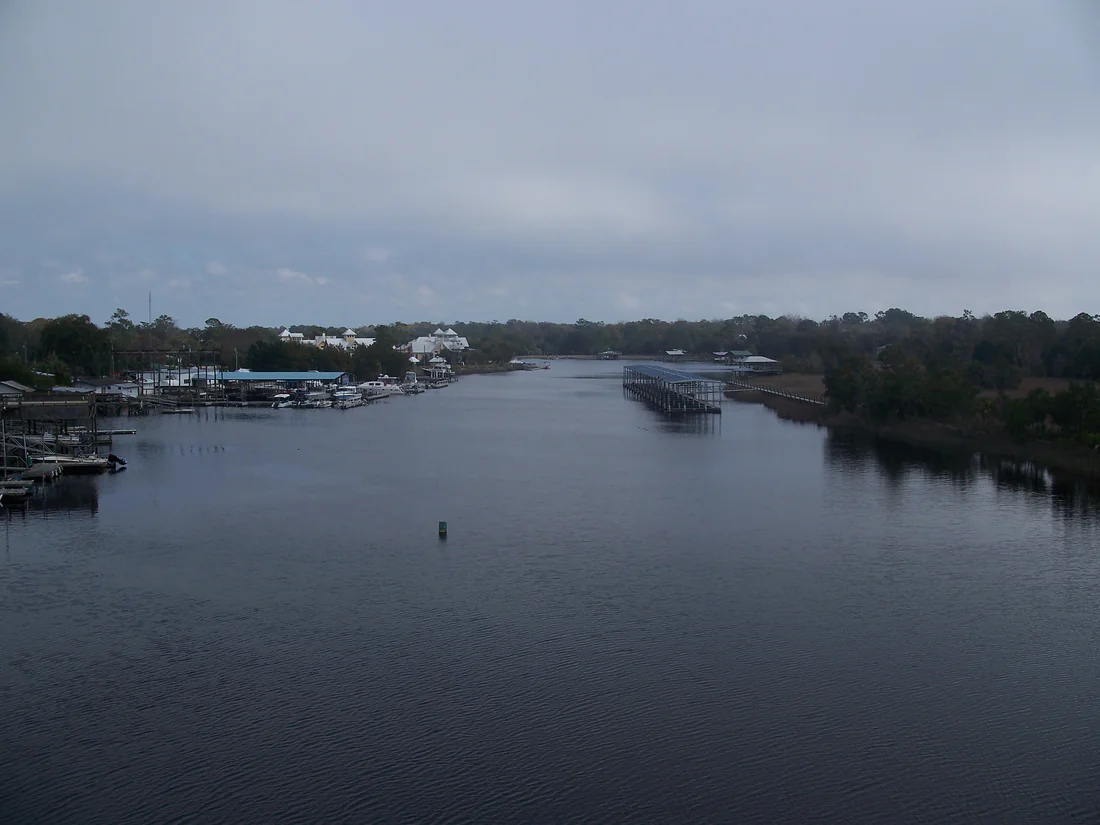 02
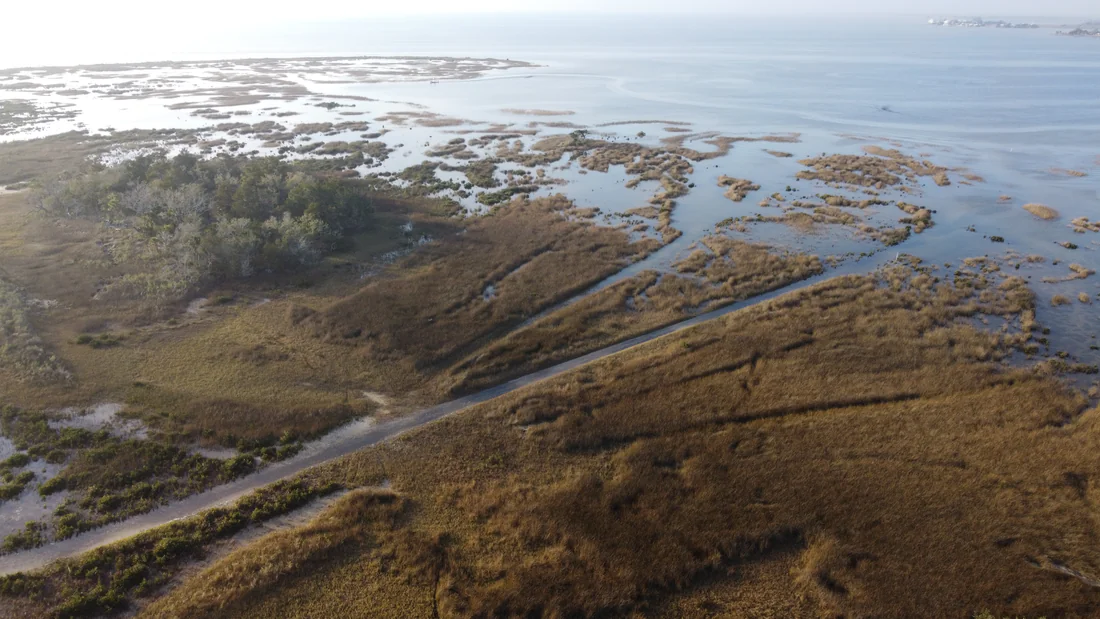 03
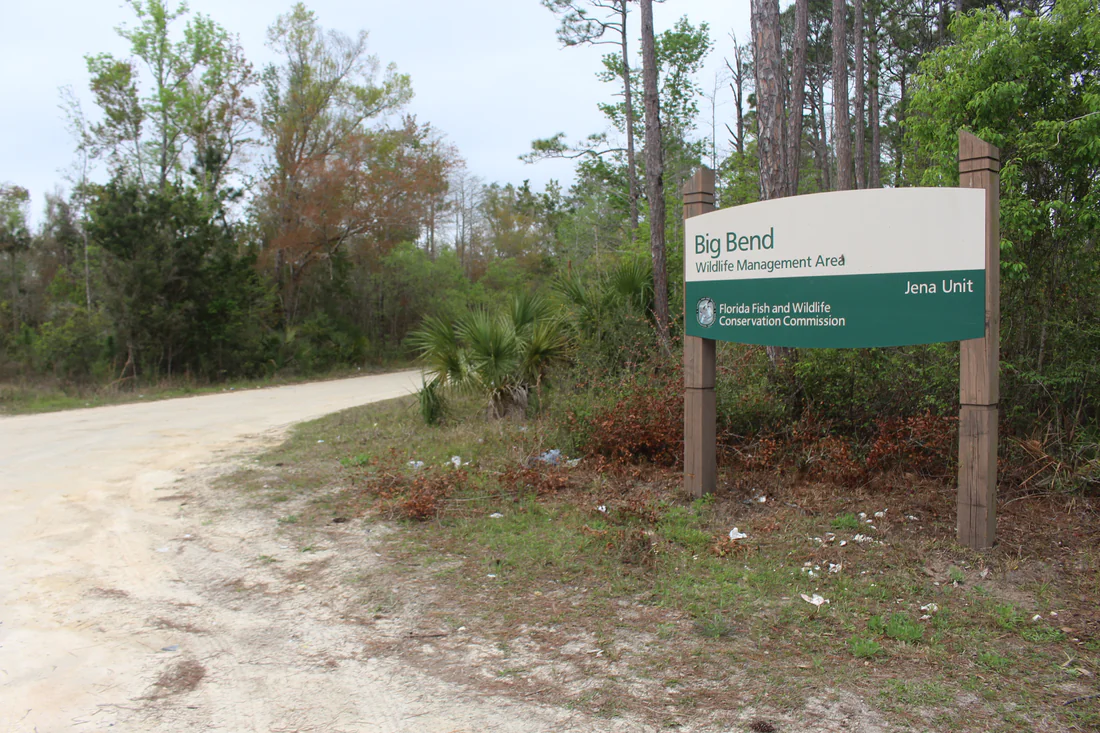 04
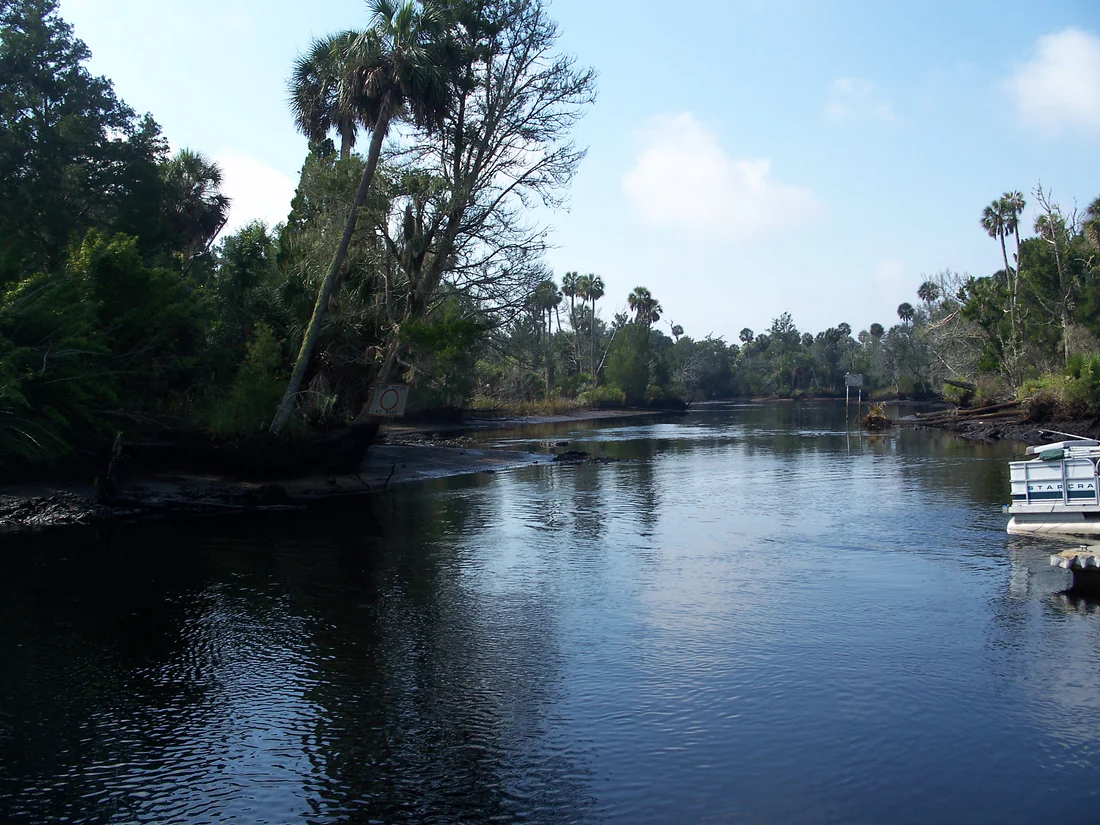 05
Econfina River State Park
Goes with: Since 1989: a river park, two new markers and the Forest Festival's comeback
Open the place page →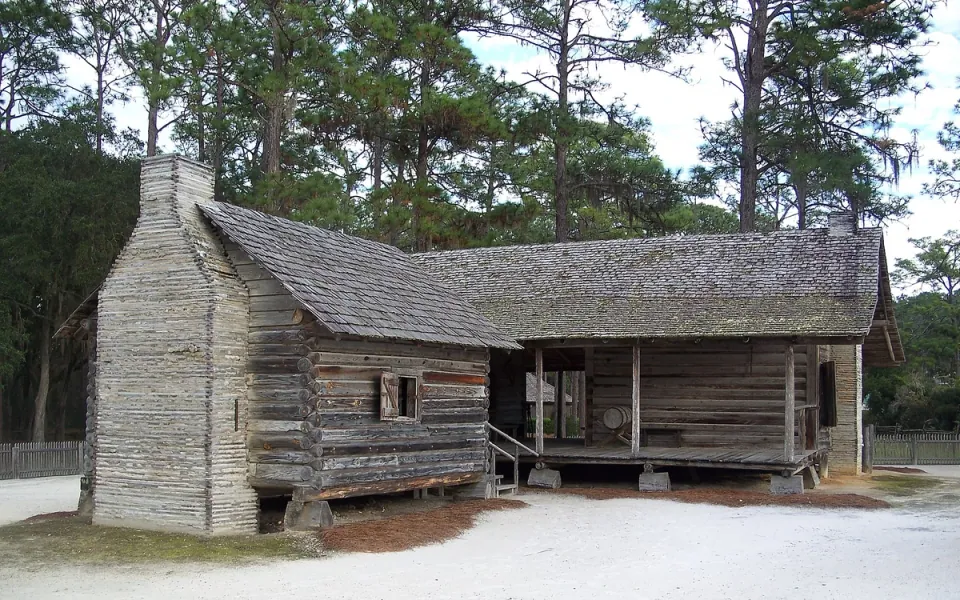 06
Forest Capital Museum State Park
Goes with: Since 1989: a river park, two new markers and the Forest Festival's comeback
Open the place page →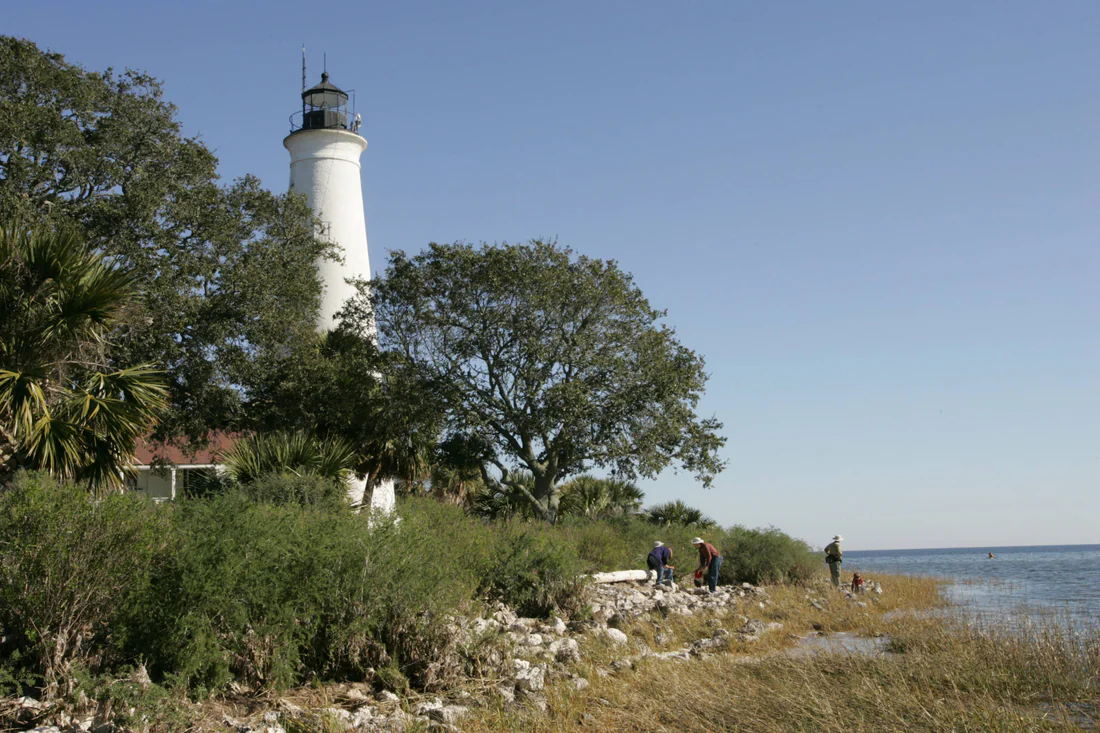 07
St. Marks National Wildlife Refuge
Goes with: Since 1989: a river park, two new markers and the Forest Festival's comeback
Open the place page →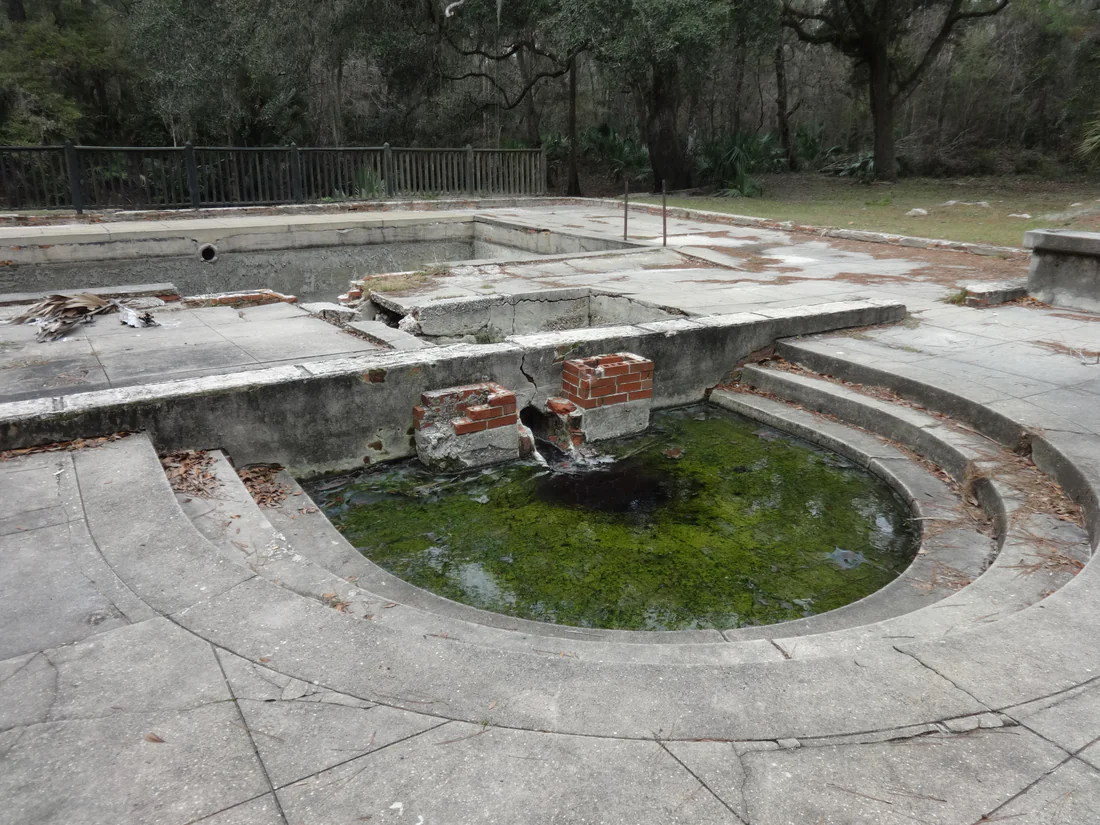 08
Hampton Springs Hotel site
Goes with: The Hampton Springs Hotel and the cypress trade
The Hampton Springs Hotel marker →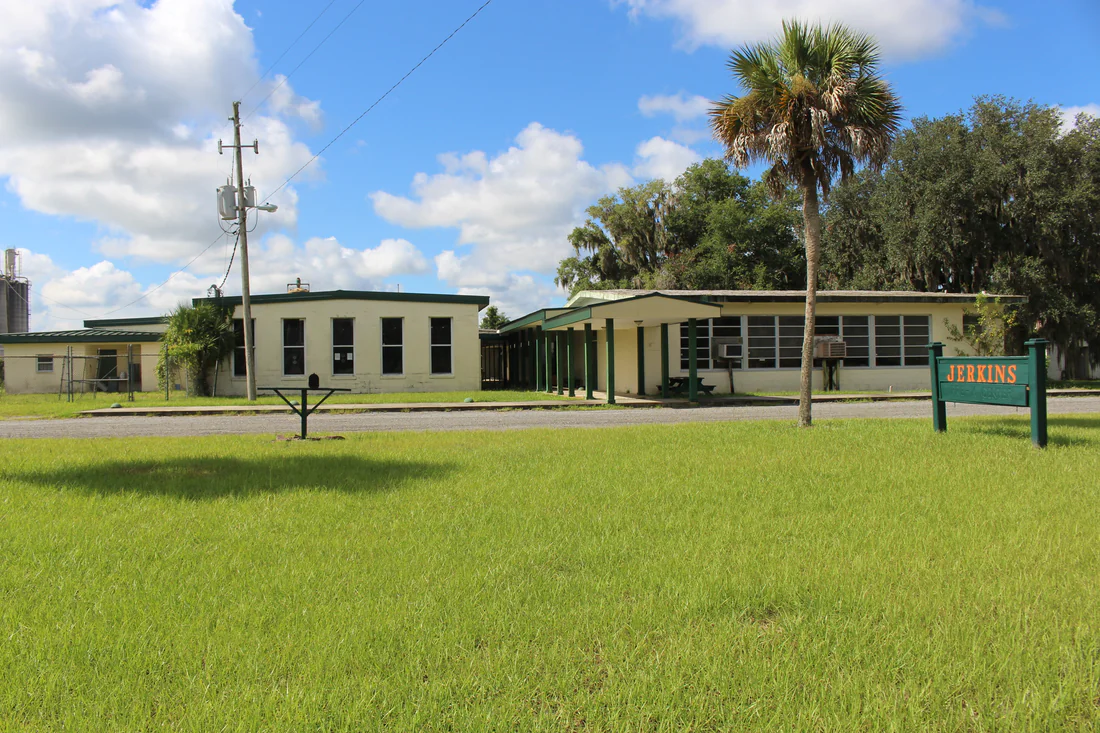 09
Jerkins High School
Goes with: Jerkins High School, the paper mill and the Pine Tree Festival
The Jerkins High School marker →Questions people ask
When was Taylor County created?
On December 23, 1856, Taylor County was formed from part of Madison County.
Chapter 3 →Who was Taylor County named for?
The new county was named for Zachary Taylor, who had been the country's 12th president.
Chapter 3 →How did Perry get its name?
A state marker says the town took the name Perry in 1875, to honor Madison Starke Perry.
Chapter 5 →Why is Taylor County called the Tree Capital of the South?
In 1965 Congressman Don Fuqua called Taylor County, with more than 525,000 acres of forest, the Tree Capital of the South.
Chapter 10 →When did the Florida Forest Festival begin?
The Pine Tree Festival, later renamed the Florida Forest Festival, began in 1956.
Chapter 9 →Where this comes from.
Last updated October 20, 2026.
- Florida Department of State: Florida Historical Marker Details, Taylor County ↗ Read October 19, 2026
- Florida Department of State: Florida Historical Marker Details, Deadman Bay, Stephensville and Steinhatchee ↗ Read October 19, 2026
- Florida Department of State: Florida Historical Marker Details, Hampton Springs Hotel ↗ Read October 19, 2026
- Florida Department of State: Florida Historical Marker Details, Jerkins High School ↗ Read October 19, 2026
- University of South Florida, Florida Center for Instructional Technology: Florida Maps, Taylor County ↗ Read October 19, 2026
- Taylor County, Florida: About Taylor County ↗ Read October 19, 2026
- University of Central Florida, STARS: W. T. Cash, Taylor County History and Civil War Deserters, Florida Historical Quarterly, 1948 ↗ Read October 19, 2026
- University of Central Florida, STARS: Drew Harrington, Burton-Swartz Cypress Company of Florida, Florida Historical Quarterly, 1984 ↗ Read October 19, 2026
- Florida State Parks: Forest Capital Museum State Park, History ↗ Read October 19, 2026
- Florida State Parks: Forest Capital Museum State Park brochure ↗ Read October 19, 2026
- Florida State Parks: Econfina River State Park, History ↗ Read October 19, 2026
- Florida State Parks: Econfina River State Park brochure ↗ Read October 19, 2026
- Florida Department of Environmental Protection: Steinhatchee River Paddling Trail Guide ↗ Read October 19, 2026
- Florida Fish and Wildlife Conservation Commission: Big Bend Wildlife Management Area, History ↗ Read October 19, 2026
- Equal Justice Initiative: A History of Racial Injustice, December 12, 1922 ↗ Read October 19, 2026
- JSTOR Daily: How a Murder Fueled Racial Terror in Florida ↗ Read October 19, 2026
- University of Florida Libraries: M. Taylor Memoir About Early Schooling in Florida ↗ Read October 19, 2026
- Florida Memory, State Archives of Florida: Hampton Springs Hotel in Taylor County ↗ Read October 19, 2026
- Florida Memory, State Archives of Florida: Part of crowd at the 8th annual Pine Tree Festival in Perry ↗ Read October 19, 2026
- Tallahassee Democrat (on Yahoo News): Perry paper mill, 'lifeblood' of town, closing weeks after hard-hit by Hurricane Idalia ↗ Read October 19, 2026
- Perry Newspapers: The Florida Forest Festival is back and ready to celebrate its 70th year ↗ Read October 19, 2026
- WCTV: Florida Forest Festival returns for the first time since Hurricane Helene destroyed the grounds ↗ Read October 19, 2026