Gilchrist County was created on December 4, 1925, from part of Alachua County. It was named for Albert W. Gilchrist, Florida's 20th governor, and its county seat is Trenton. News reports in 2025 called it the youngest county in Florida, and visitors come every year to camp by its freshwater springs and rivers. Its history goes back nearly 14,000 years, to the first people in the Fanning Springs area.
This page tells the story in order, from the first people at the springs and rivers to the county's 100th birthday in 2025, then lists places in the county where you can still see it. The sources for each part are named at the end of that part, and all of them are listed at the bottom of the page.
The first people at the springs and rivers
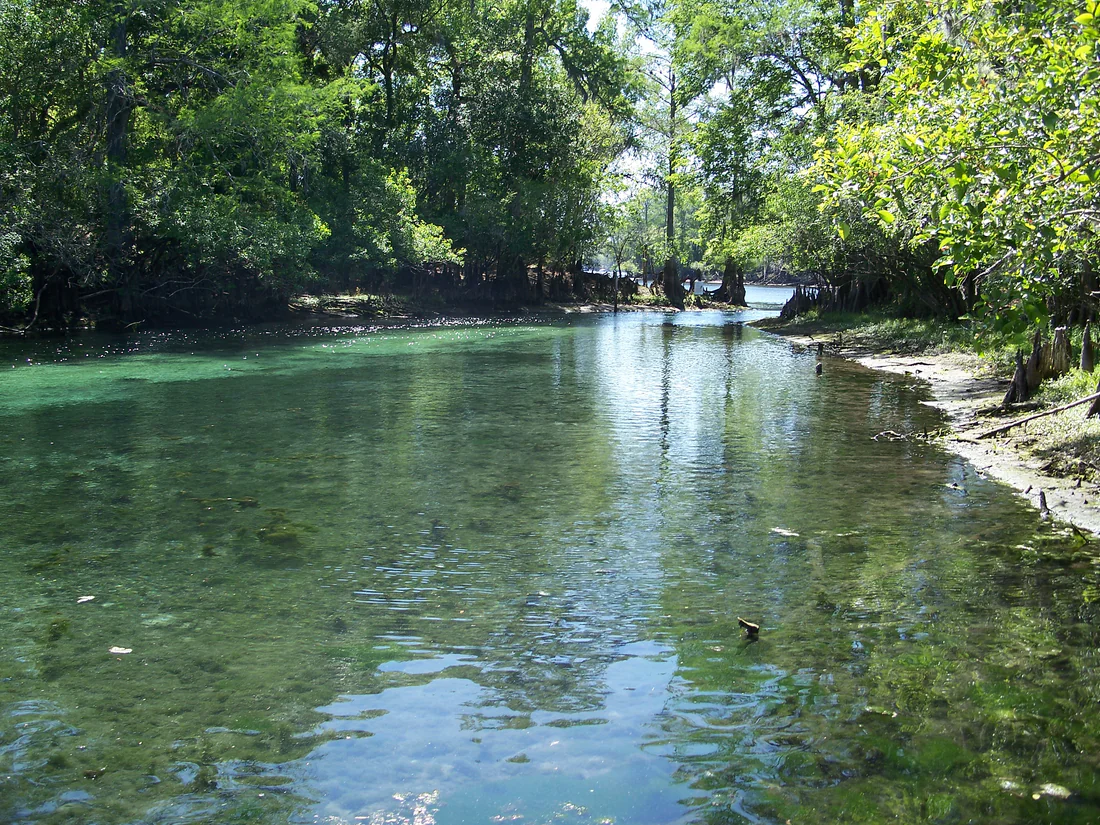
Paleo-Indian people began to arrive in the Fanning Springs area nearly 14,000 years ago. Several Native sites found at Fanning Springs State Park confirm it. In the 2,000 years that followed, as the climate grew warmer, Native Americans learned to live on animals, fish, shellfish and wild plants.
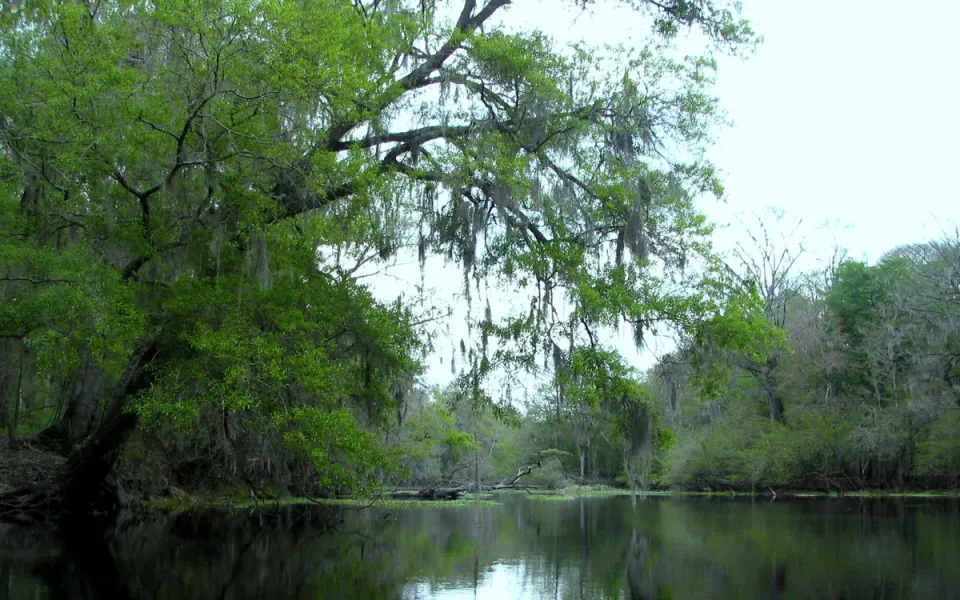
The Kentucky Lake site in Gilchrist County holds remains from Native American times, from the U.S. Army era and from the years before the Civil War. The Santa Fe River forms the county's northern edge, and the Suwannee River forms its western edge.
Sources: Florida State Parks: Fanning Springs State Park history; Florida Department of Environmental Protection: Nature Coast State Trail, Trail Chapter; State Archives of Florida, Florida Memory: History of Gilchrist County (typed county history and courthouse record)
Next: Chapter 2, 1838: Fort Fanning and the Second Seminole War →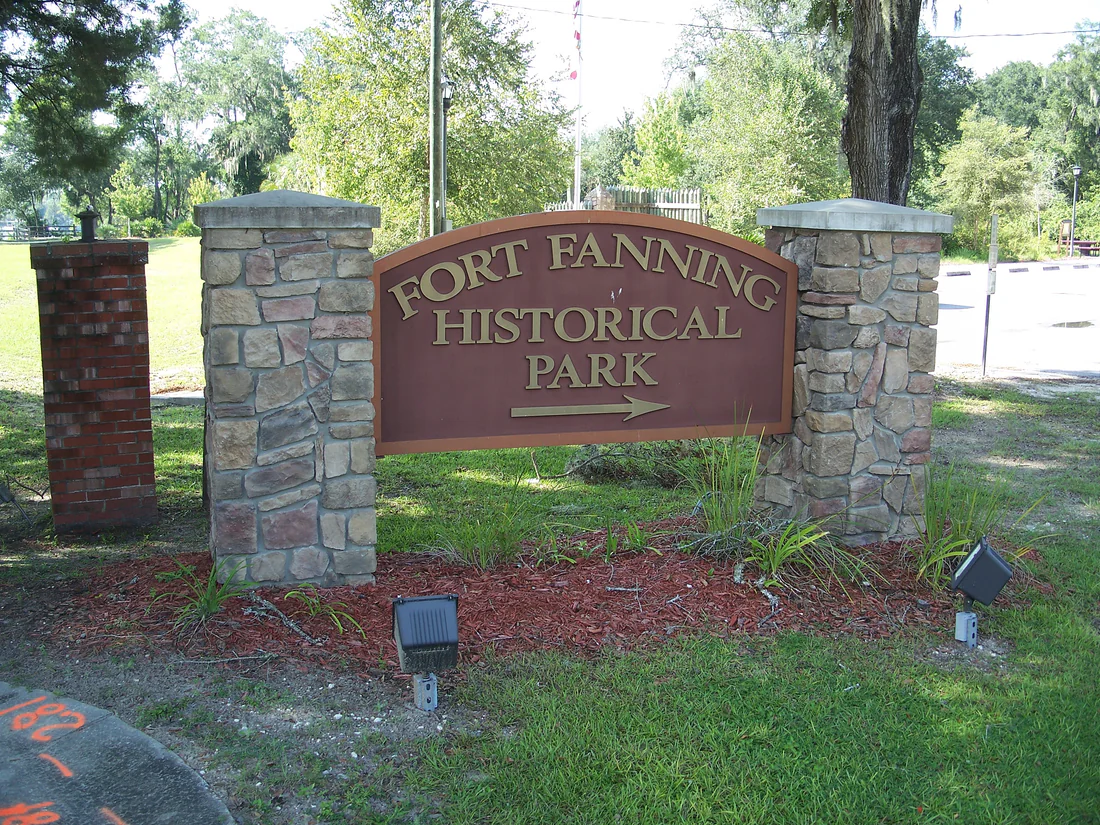
1838: Fort Fanning and the Second Seminole War
Fort Fanning was built near the springs in 1838, in the Second Seminole War. The county history in the State Archives of Florida gives an earlier date, about 1836 or 1837. The fort was first called Palmetto. It was later renamed for Colonel Alexander Campbell Wilder Fannin, who lived from 1788 to 1846.
In the First Seminole War, Fannin had served in General Andrew Jackson's forces. In the Second Seminole War, his goal was to capture Seminoles so they could be sent to the West. The county history says 31 American soldiers died at the camp while the fort was held.
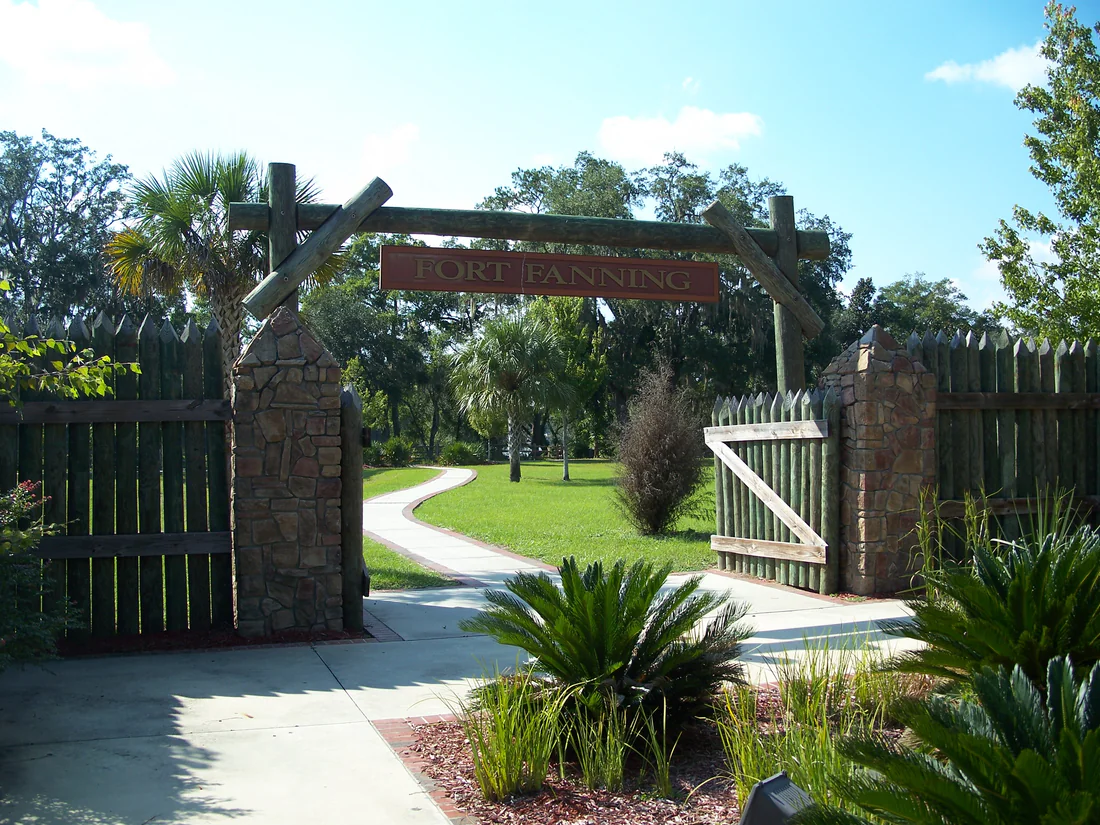
The fort was made of wood in a warm, damp climate, and nothing of it is left. Its marker stands in Fort Fanning Historic Park, off U.S. 19, just north of the state park at Fanning Springs.
Sources: Historical Marker Database: The History of Fort Fanning (marker in Fort Fanning Historical Park); Florida State Parks: Fanning Springs State Park history; State Archives of Florida, Florida Memory: History of Gilchrist County (typed county history and courthouse record)
Next: Chapter 3, Early settlers, river landings and the Civil War →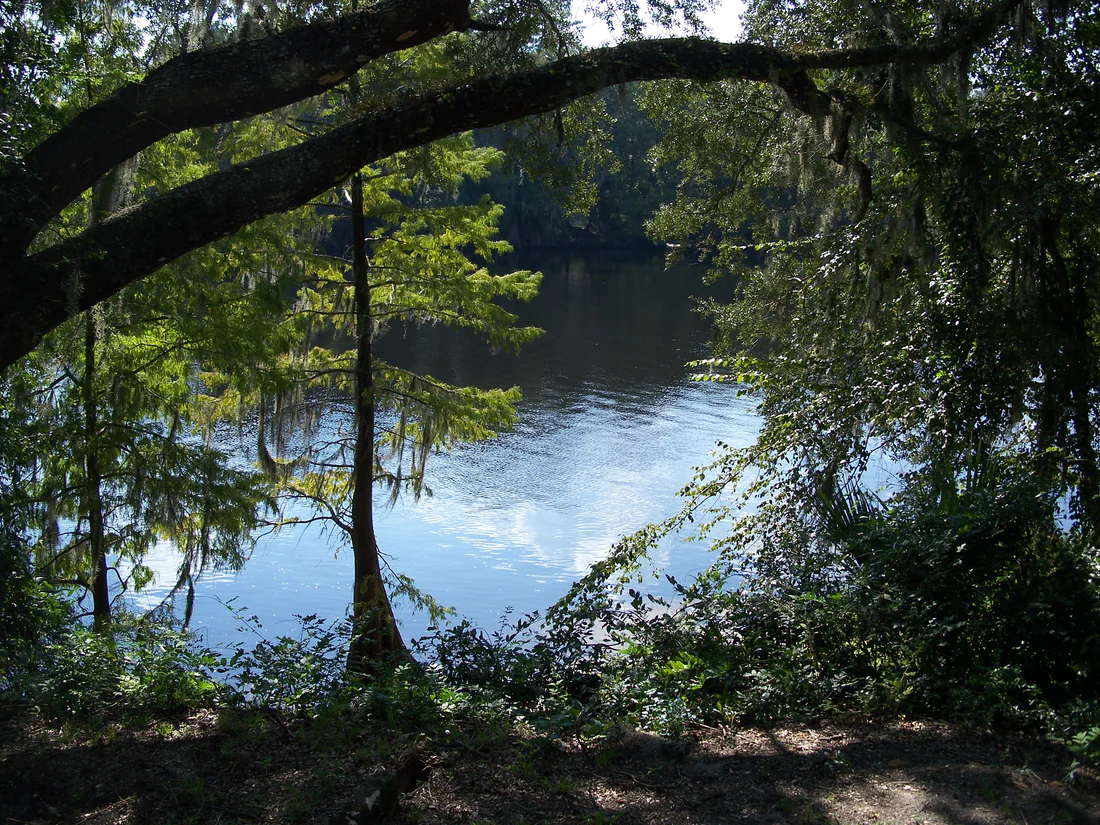
Early settlers, river landings and the Civil War
The county history names John B. Stanley, who came around 1840, as one of the first settlers in what is now Gilchrist County. Until railroads crossed the Suwannee in the early 1900s, the Fanning Springs area was the local boat landing. Boats carried off cotton, lumber, turpentine and other goods from the plantations, and they brought in supplies for homes and farms.
During the Civil War, planters kept hundreds of bales of cotton at the old fort. Union raiders and deserters destroyed it or stole it.
A ferry crossed the river from Wilcox Landing for many years. Before the Civil War it was kept by Mr. Martin Sr., and during the war his son Robert ran it. Soldiers of both sides, Confederate and Union, made Robert take them across. Confederates took the family's livestock, and someone hostile to the family accused the Martins of hiding deserters. All of them but Robert were taken to Tallahassee and held in cabins, but the charge was never proven, and they were freed.
Sources: State Archives of Florida, Florida Memory: History of Gilchrist County (typed county history and courthouse record); Historical Marker Database: The History of Fort Fanning (marker in Fort Fanning Historical Park)
Next: Chapter 4, From Joppa to Trenton →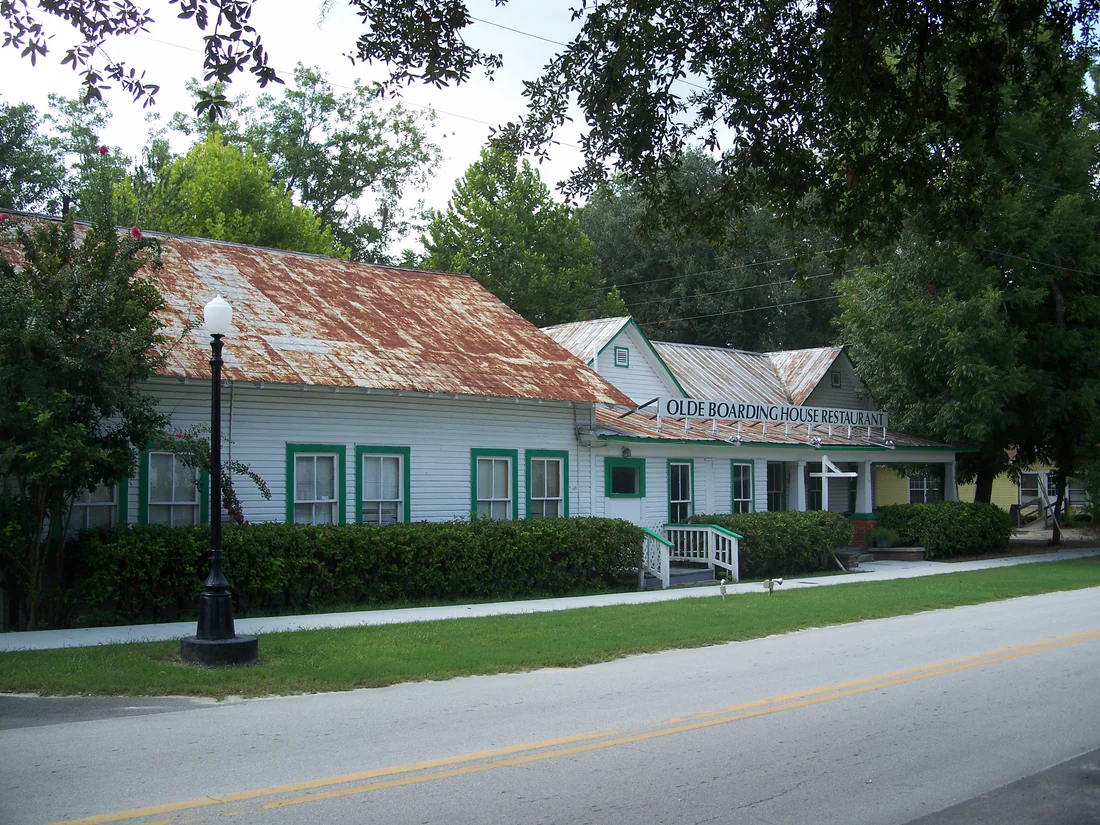
From Joppa to Trenton
William F. Smith came from Levy County in 1870 and started a Christian church named Joppa Church. The area was first known as Joppa. The City of Trenton's history says Ben Boyd, an 18-year-old Confederate soldier, had to leave his hometown of Trenton, Tennessee, after a fight at a racetrack, as most people tell it. Boyd moved to the Joppa area, and by most accounts he simply chose to rename it Trenton. In 1883 the Joppa post office officially took the name Trenton.
In 1886 the land that became the city was sold by the Florida State Board of Education at $1.25 per acre, in the far western part of Alachua County. Trenton was incorporated as a town on December 12, 1908. By 1912 Main Street had a general store, a meat market, the Farmers and Merchants Bank and a dry goods store, along with a post office and a drug store that shared one building. The general store was said to sell anything from toothpicks to coffins. By 1925 the town also had a pool hall, a cafe that had hitching posts close by, a movie theater, and a barber shop that some say was busy until 10 or 11 o'clock on Saturday nights.
Sources: State Archives of Florida, Florida Memory: History of Gilchrist County (typed county history and courthouse record); City of Trenton: Our History
Next: Chapter 5, Railroads reach Bell and Trenton →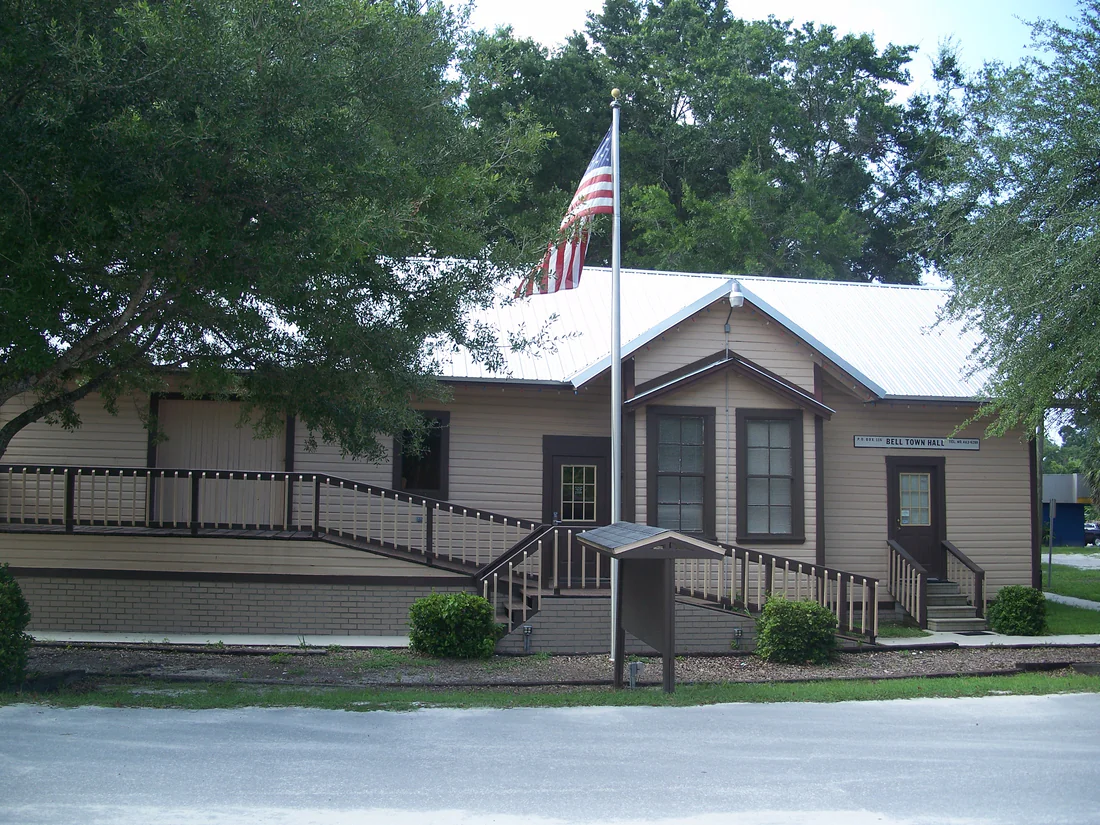
Railroads reach Bell and Trenton
The county history says the Seaboard Air Line laid the county's first railroad in 1897, from Alachua to Wannee beside the Suwannee River. Wilcox Landing, a stop for many steamboats, was renamed Wannee when the railroad arrived. Bell was incorporated in 1901, after the Seaboard line reached it. When the timber was mostly cut, most of Bell's people moved away, but farming and stock raising later made it prosperous.
In 1902 the American Bridge Company built a steel railroad trestle across the Suwannee River. The Atlantic Coast Line later ran through Tyler, Trenton and Wilcox, with 22 miles of track in the county. The county history says the line was finished in 1907. The City of Trenton's history gives 1906, when the line came through and linked Trenton to Perry and Tallahassee. Steamboats kept using the landing at Fort Fannin until about 1907.
George W. Roberts settled near the river around 1890, and the Farmers' Alliance set up a settlement on his land. It was named Yular, for his daughter, Yular Roberts, and it faded after the railroad reached Trenton. The county history says Tyler, in the phosphate belt, was the county's first town with electric lights.
Sources: State Archives of Florida, Florida Memory: History of Gilchrist County (typed county history and courthouse record); Florida State Parks: History of the Nature Coast State Trail; City of Trenton: Our History
Next: Chapter 6, Turpentine, cotton and watermelons →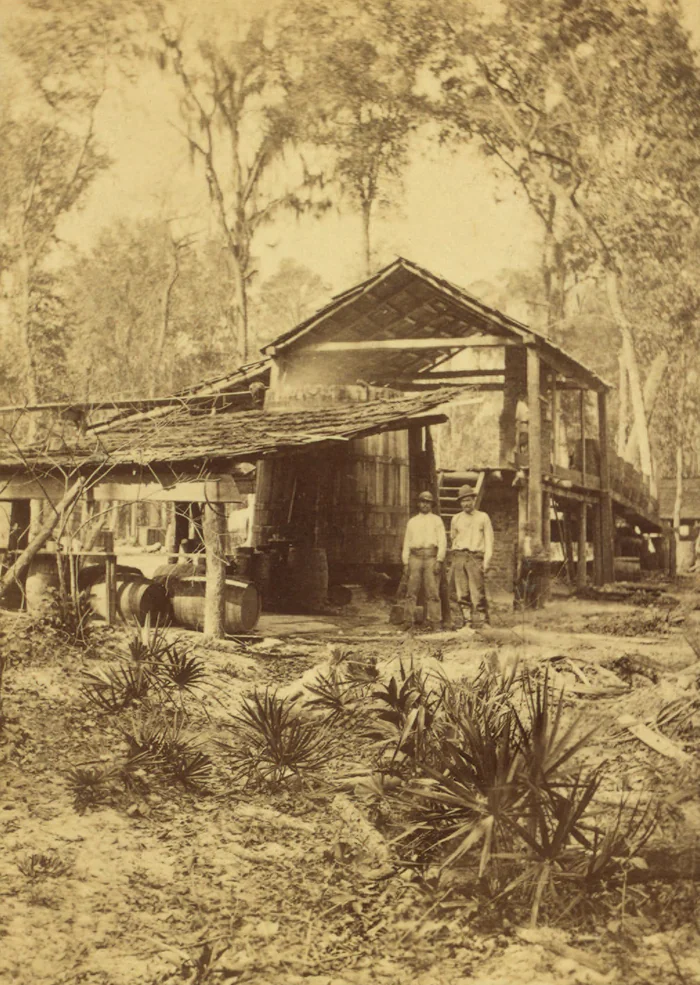
Turpentine, cotton and watermelons
Pulpwood, turpentine, cotton and watermelons were the main goods shipped out of the Trenton area. In the early days, lumber and turpentine were very large businesses, the county history says. When it was written, three turpentine plants were still at work, and much of the cut-over land was being replanted with trees.
Farming, the history says, had always been the county's basic industry. Its main crops were corn, peanuts, tobacco, long and short cotton, watermelons, sweet potatoes, sugar cane and cucumbers. In 1930 the county had 476 farms covering 70,447 acres. The history claimed that no other place in the state marketed more hogs and turkeys in a season. People once tried to mine the county's phosphate, but freight rates were too high, and the work stopped.
In 1925 J. F. Haigler built a Coca-Cola bottling plant in Trenton. It stood downtown, beside the old railway depot and the Crystal Ice House.
Sources: City of Trenton: Our History; State Archives of Florida, Florida Memory: History of Gilchrist County (typed county history and courthouse record); Historical Marker Database: Coca Cola Bottling Plant (Florida Quilt Trail marker, Trenton)
Next: Chapter 7, 1925: Melon County becomes Gilchrist County →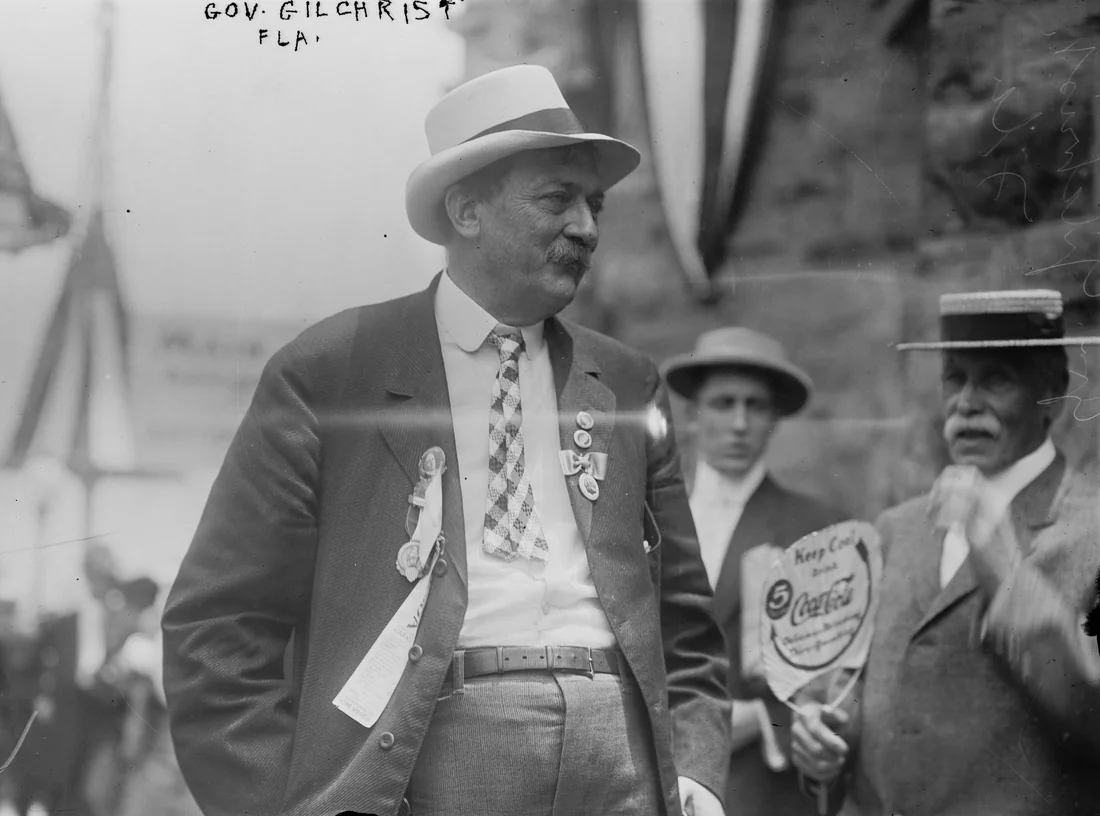
1925: Melon County becomes Gilchrist County
People in western Alachua County wanted the county to build a road linking Fannin, on the Suwannee River, with Gainesville, the county seat more than 40 miles away. They told Alachua to build the road or they would leave the county. Alachua still said no. Western Alachua County voted 267 to 21 for a new county.
A state law created Gilchrist County on December 4, 1925. It became Florida's 67th county, and the county history called it the newest. State Senator Dr. J. H. Colson brought the bill, and Governor John W. Martin signed it.
Because the area grew many fine watermelons, the new county was going to be called Melon County. Then word reached the Legislature that former governor Albert W. Gilchrist was dying, and an amendment changed the name to Gilchrist. Gilchrist had been Florida's 20th governor, in office from 1909 to 1913. Born in Greenwood, South Carolina, in 1858, he graduated from West Point and later grew oranges in Punta Gorda. His death came on May 15, 1926, in New York City.
Sources: State Archives of Florida, Florida Memory: History of Gilchrist County (typed county history and courthouse record); City of Trenton: Our History; University of South Florida, Florida Center for Instructional Technology: Gilchrist County; Museum of Florida History: Albert Waller Gilchrist (governors' portraits)
Next: Chapter 8, Trenton wins the county seat, and a courthouse burns →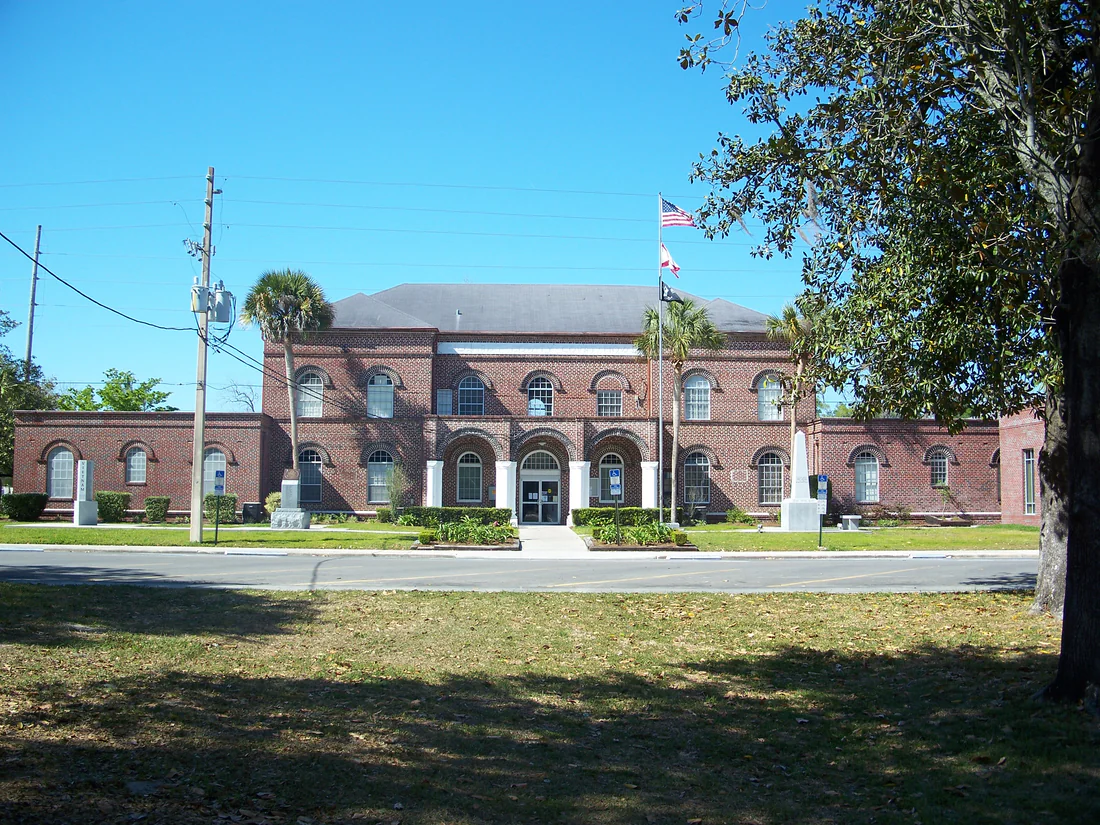
Trenton wins the county seat, and a courthouse burns
The first meeting of the county commission took place in Trenton on January 7, 1926, in a former school building. Trenton was chosen as the temporary county seat. It then beat Bell in a vote for the permanent seat. The county history dates that vote October 4, 1926, and says Trenton won narrowly. The City of Trenton's history dates it May 1926 and gives the count as 867 to 508.
Trenton remains the county seat. The Gilchrist County jail opened in 1928. The county's first courthouse was a two-story building that had been a school. In November 1932 fire destroyed the courthouse. The county history gives two dates for the fire, November 18 and November 19, and it also disagrees with itself about how many records were saved.
On March 29, 1933, H. McN. Wade won the contract to build a new courthouse for $18,162. Built of brick with two floors, it was finished on August 2, 1933, for about $20,000.
Sources: State Archives of Florida, Florida Memory: History of Gilchrist County (typed county history and courthouse record); City of Trenton: Our History; University of South Florida, Florida Center for Instructional Technology: Gilchrist County; WUFT: Haunted Gilchrist County jail infamous among visitors and paranormal investigators (October 28, 2015)
Next: Chapter 9, A new bridge, new water and separate schools →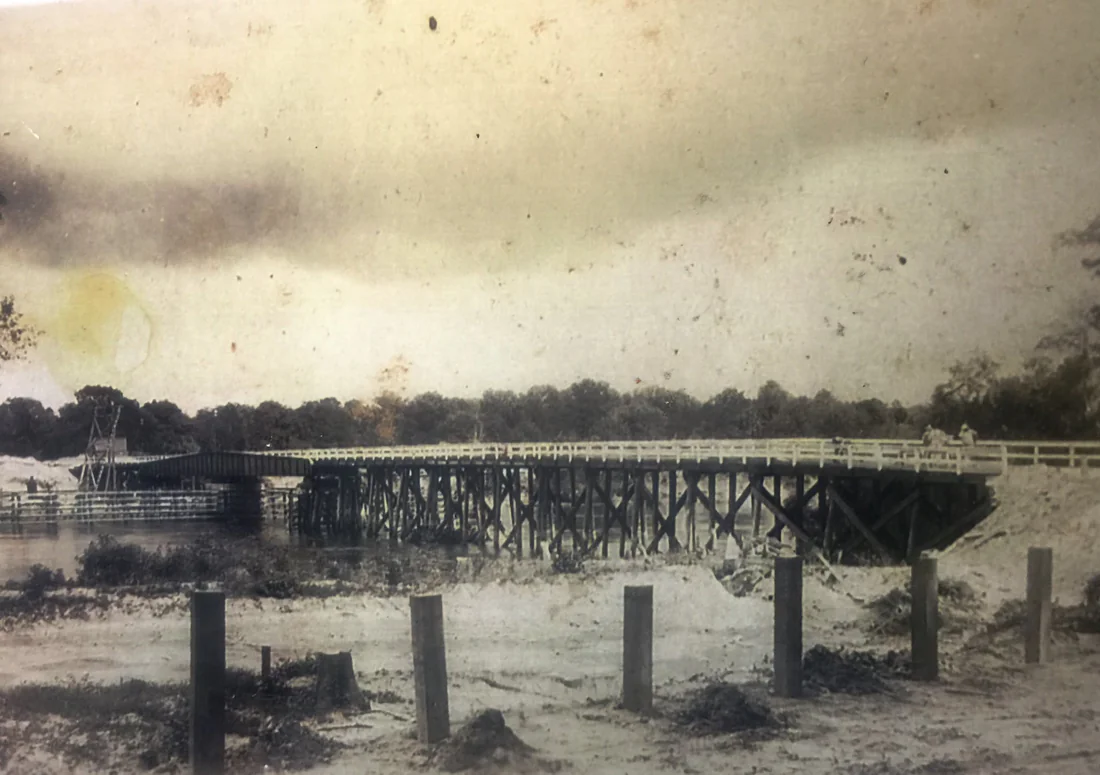
A new bridge, new water and separate schools
On September 27, 1923, Alachua, Dixie and Levy counties formally accepted the Three County Suwannee River Bridge at a meeting held at Old Fort Fannin. The State of Florida later replaced it with a wider all-steel bridge. The county history dates the new bridge to 1935, but a state marker says it got the official name Benjamin Chaires Bridge in 1934, honoring a pioneer settler of Dixie County. When it was done, people from the area were so happy that they held a square dance on it. The state kept one of its four spans as a monument, and it still carries a plaque with Stephen Foster's song "Way Down Upon the Suwannee River."
In 1936, three miles of track between Wannee and Bell were taken up. Trenton's city water had come from a private company since about 1908. In the spring of 1937, a PWA project gave the city a new water system.
The county kept separate schools for white and Black children. In 1936 there were 985 white students and 170 Black students. Some Black churches were also used as schools. The county history says the Black population fell 12.3 percent between 1930 and 1936, as there was less work for Black laborers during the Depression and many moved away.
Sources: State Archives of Florida, Florida Memory: History of Gilchrist County (typed county history and courthouse record); Historical Marker Database: Fanning Springs Bridge (Florida Department of State marker)
Next: Chapter 10, Springs, a Coca-Cola plant and an empty jail →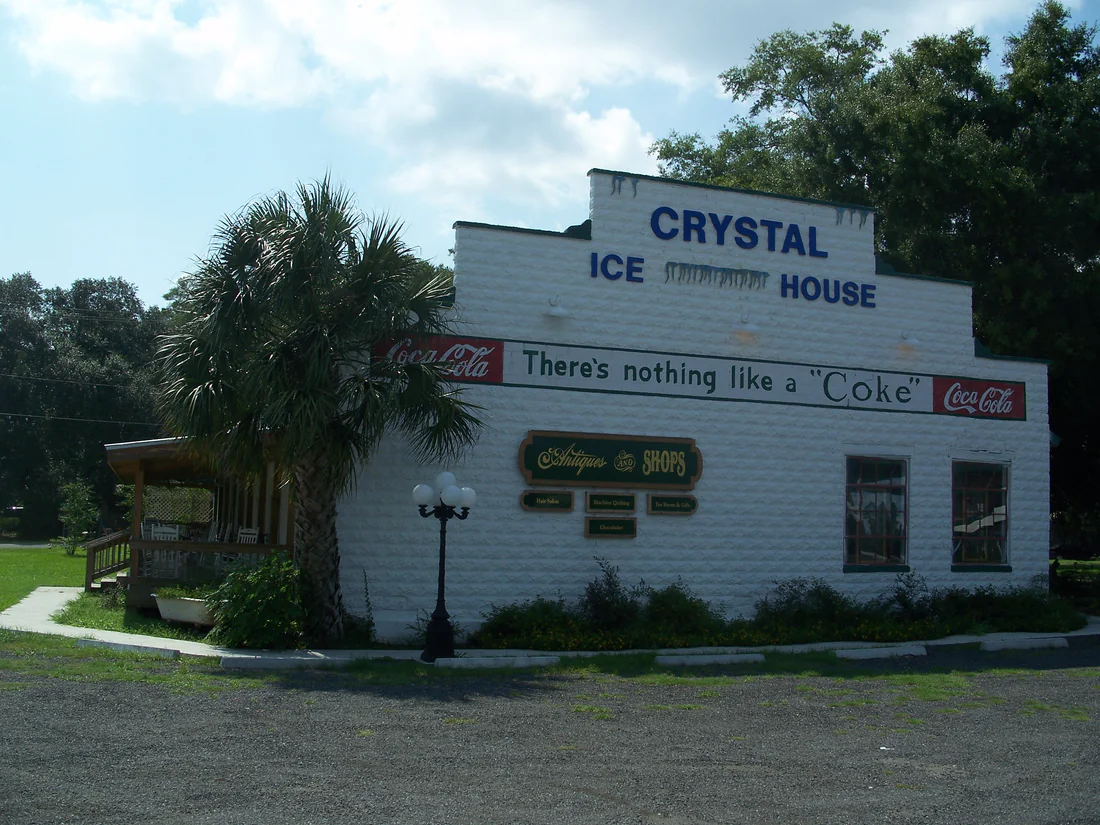
Springs, a Coca-Cola plant and an empty jail
The county history described Fannin Springs as cold and so clear that its many-colored bottom showed plainly, with places for bathing and boating. Gilchrist Blue Springs opened as a private park in 1958 and became a well-liked local spot for recreation. The Springs Eternal Project, run by the Alachua Conservation Trust, says Jacques Cousteau visited in 1974 and described Ginnie as "visibility forever."
The Florida Coca-Cola Company, based in Daytona Beach, bought the Trenton bottling plant in 1956. Eudell Parrish, who was born in Trenton, managed it for 33 years. Many in Trenton remember looking through its big front window as children to watch the bottling, and being handed a warm Coke by the manager. The plant closed on New Year's Day 1975, after 50 years in business.
A house was built onto the rear of the county jail in 1966. Its eight cells have stood empty since 1968. Once it stopped being a jail, the city rented it out as a home for families.
Sources: State Archives of Florida, Florida Memory: History of Gilchrist County (typed county history and courthouse record); Florida State Parks: Ruth B. Kirby Gilchrist Blue Springs State Park history; Springs Eternal Project (Alachua Conservation Trust): Ginnie Springs; Historical Marker Database: Coca Cola Bottling Plant (Florida Quilt Trail marker, Trenton); WUFT: Haunted Gilchrist County jail infamous among visitors and paranormal investigators (October 28, 2015)
Next: Chapter 11, Since 1990: a rail trail, a new state park and a 100th birthday →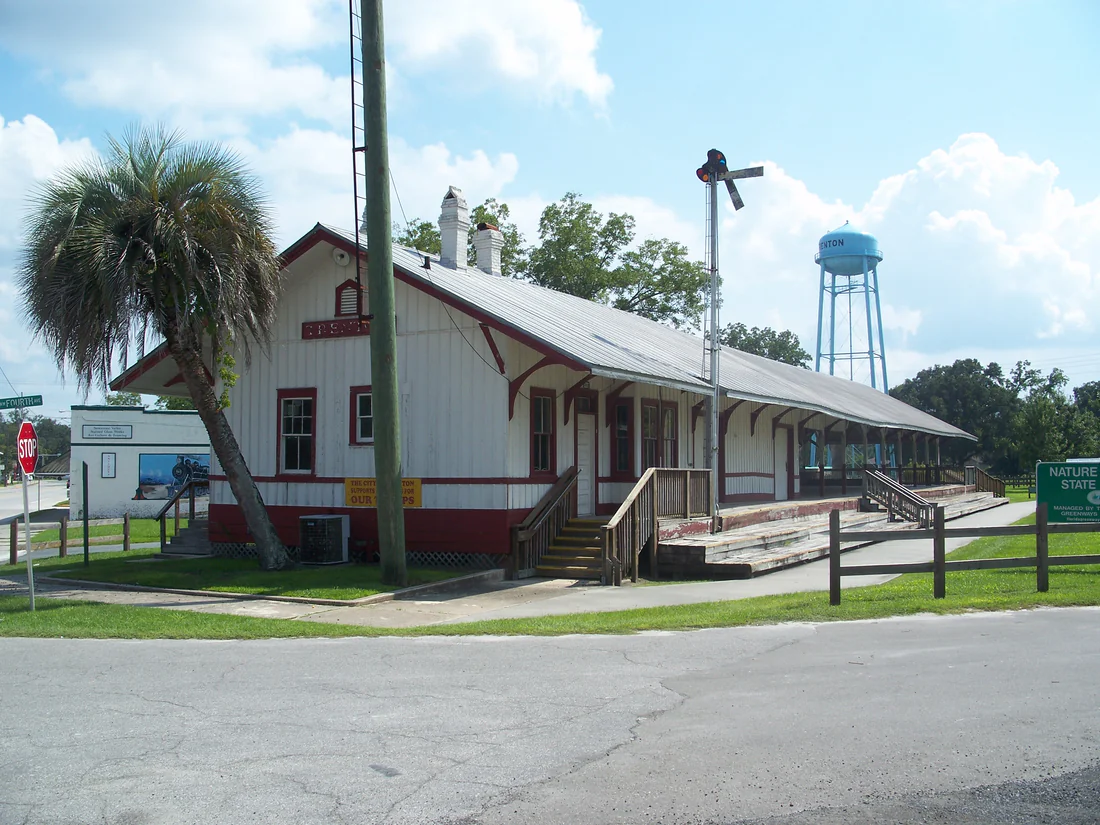
Since 1990: a rail trail, a new state park and a 100th birthday
On December 18, 1996, the state acquired old rail lines from CSX Transportation for the Nature Coast State Trail. The paved trail follows the old Atlantic Coast Line route for 32 miles and links Trenton, Fanning Springs, Chiefland and Cross City. In downtown Trenton, the old Trenton Rail Depot stands at the center of a small park on South Main Street.
On June 14, 2017, Governor Rick Scott and the Cabinet approved buying the 407-acre Blue Springs property, which has many springs and a mile of shore on the Santa Fe River. On October 30, 2017, it opened as Ruth B. Kirby Gilchrist Blue Springs State Park, Florida's 175th state park. On March 28, 2024, Wyatt Langford of Trenton, who had started six years on the Trenton High School varsity baseball team, played his first major league game for the Rangers, against the Cubs, and got his first hit.
Gilchrist County marked its 100th year in 2025. On January 31, 2025, fireworks at Hart Springs Park in Bell celebrated the county's 100th anniversary. On September 20, 2025, the Gilchrist County 100-Year Feast at the county's Agricultural Complex sold 750 tickets and served gator tail, roasted pig and deviled eggs. On December 4, 2025, the county's 100th birthday, people gathered at the Gilchrist County Courthouse for a block party with games and a food drive. By April 2026, Trenton's city commissioners had approved a plan by the jail's owner, Lee Irwin, to turn the old county jail into a history museum.
Sources: Florida Department of Environmental Protection: Nature Coast State Trail, Trail Chapter; Florida State Parks: Nature Coast State Trail history; Florida State Parks: Ruth B. Kirby Gilchrist Blue Springs State Park history; MLB.com: Wyatt Langford's rocket-fast rise to the majors (March 28, 2024); WCJB: Counties and cities across North Central Florida celebrate major milestones (December 26, 2025); WCJB: Fire starts during Gilchrist County's 100th anniversary celebration (January 31, 2025); WUFT: Gilchrist County celebrates 100 years of its founding with a feast (September 20, 2025); WCJB: Gilchrist County celebrates 100th birthday (December 4, 2025); WCJB: Historic Gilchrist County jail to be transformed into museum in Trenton (April 3, 2026)
Next: the whole story, in dates →The whole story, in dates
Paleo-Indian people begin to arrive in the Fanning Springs area.
Fort Fanning is built during the Second Seminole War.
John B. Stanley, named in the county history as one of the first settlers, arrives.
Union raiders and deserters destroy or steal cotton stored at the old fort.
William F. Smith arrives from Levy County and starts Joppa Church.
The Joppa post office takes the name Trenton.
George W. Roberts settles near the river, and Yular grows on his land.
The Seaboard Air Line lays the county's first railroad.
Bell is incorporated.
A steel railroad trestle is built across the Suwannee River.
The Atlantic Coast Line comes through Trenton.
Steamboats stop using the landing at Fort Fannin.
Trenton is incorporated as a town.
Trenton's Main Street has a bank, a post office and several stores.
Alachua, Dixie and Levy counties accept the new bridge over the Suwannee.
J. F. Haigler builds a Coca-Cola bottling plant in Trenton.
A state law creates Gilchrist County.
The county commission meets for the first time, in Trenton.
Former governor Albert W. Gilchrist dies in New York City.
Trenton beats Bell in a vote for the permanent county seat.
The county jail opens.
Fire destroys the courthouse.
The new brick courthouse is finished.
The new Suwannee bridge gets the official name Benjamin Chaires Bridge, a state marker says.
The county's schools enroll 985 white students and 170 Black students.
A PWA project gives Trenton a new water system.
The Florida Coca-Cola Company buys the Trenton bottling plant.
Gilchrist Blue Springs opens as a private park.
The jail's eight cells stand empty from this year on.
Jacques Cousteau visits and describes Ginnie as "visibility forever."
The Coca-Cola plant closes after 50 years.
The state acquires rail lines for the Nature Coast State Trail.
Ruth B. Kirby Gilchrist Blue Springs State Park opens as Florida's 175th state park.
Wyatt Langford of Trenton plays his first major league game.
The Gilchrist County 100-Year Feast sells 750 tickets.
A block party at the courthouse marks the county's 100th birthday.
Trenton's city commissioners have approved a plan to turn the old jail into a history museum.
Where you can still see it
 01
 02
 03
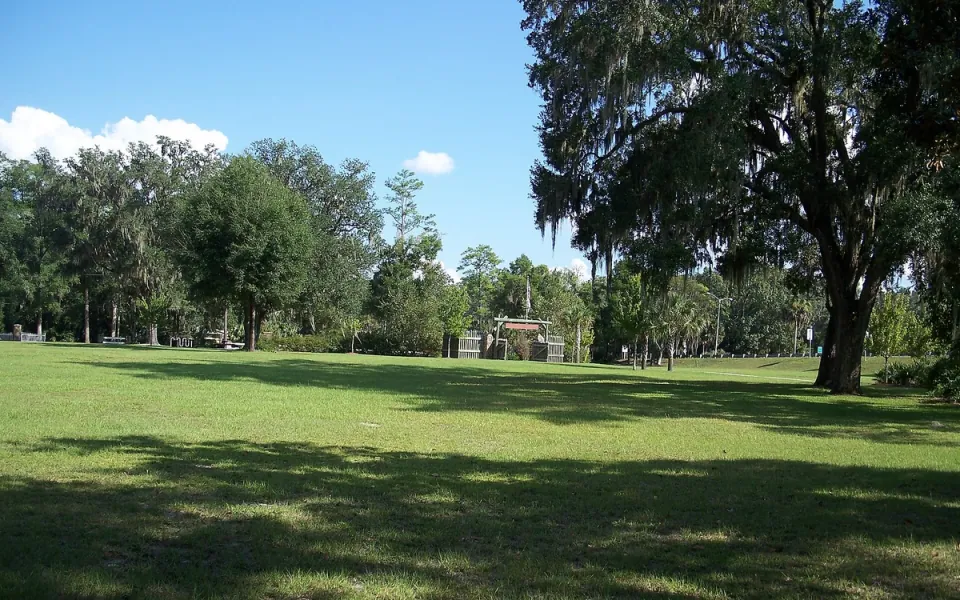
Fort Fanning Historic Park
Goes with: 1838: Fort Fanning and the Second Seminole War
Open the place page →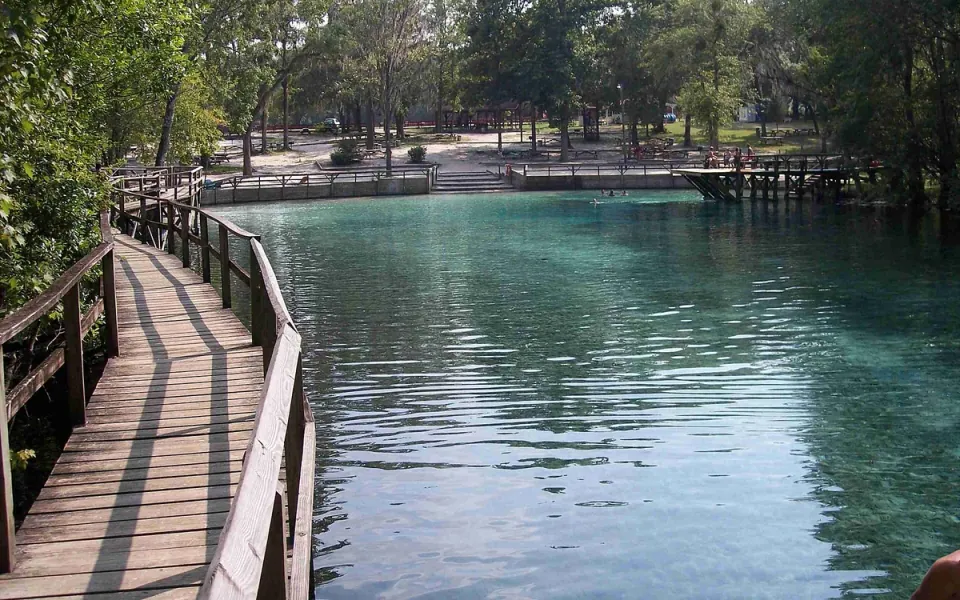 04
Gilchrist Blue Springs State Park
Goes with: Since 1990: a rail trail, a new state park and a 100th birthday
Open the place page →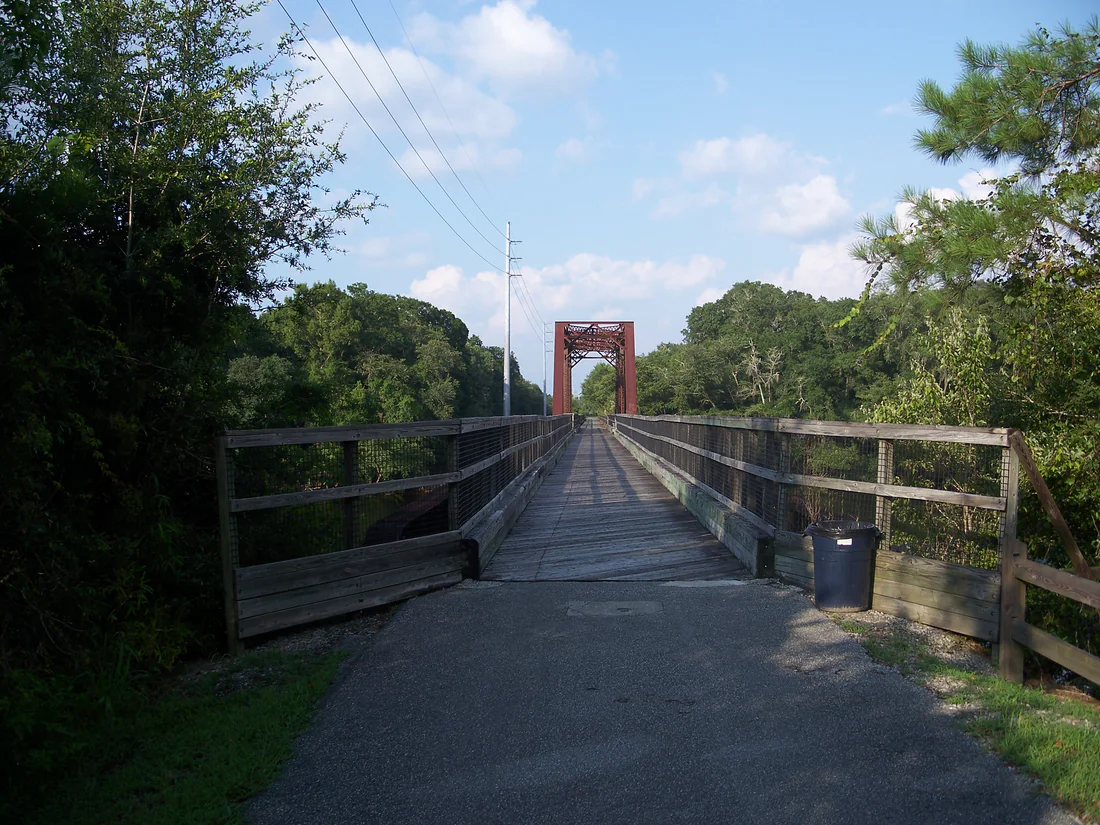 05
Nature Coast State Trail
Goes with: Since 1990: a rail trail, a new state park and a 100th birthday
Open the place page →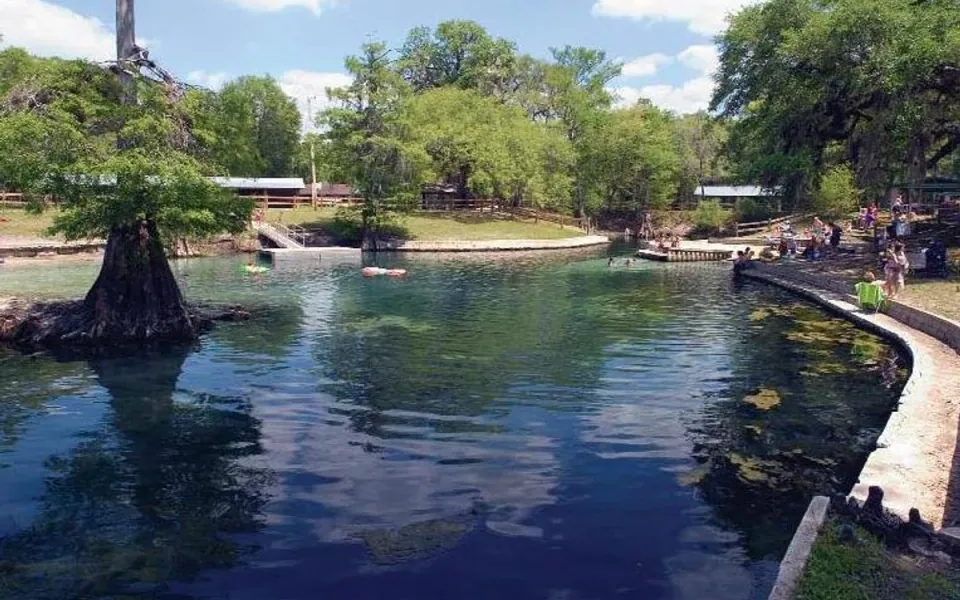 06
Hart Springs Park
Goes with: Since 1990: a rail trail, a new state park and a 100th birthday
Open the place page →Questions people ask
When was Gilchrist County created?
A state law created Gilchrist County on December 4, 1925.
Chapter 7 →Who was Gilchrist County named for?
It was named for former governor Albert W. Gilchrist, who had been Florida's 20th governor, in office from 1909 to 1913.
Chapter 7 →What is the county seat of Gilchrist County?
Trenton is the county seat, after it beat Bell in a 1926 vote for the permanent seat.
Chapter 8 →What was Gilchrist County almost called?
It was going to be called Melon County, because the area grew many fine watermelons.
Chapter 7 →When was Fort Fanning built?
Fort Fanning was built near the springs in 1838, in the Second Seminole War, though the county history gives about 1836 or 1837.
Chapter 2 →Where this comes from.
Last updated October 20, 2026.
- State Archives of Florida, Florida Memory: History of Gilchrist County (typed county history and courthouse record) ↗ Read October 19, 2026
- City of Trenton: Our History ↗ Read October 19, 2026
- University of South Florida, Florida Center for Instructional Technology: Gilchrist County ↗ Read October 19, 2026
- Museum of Florida History: Albert Waller Gilchrist (governors' portraits) ↗ Read October 19, 2026
- Florida State Parks: Fanning Springs State Park history ↗ Read October 19, 2026
- Historical Marker Database: The History of Fort Fanning (marker in Fort Fanning Historical Park) ↗ Read October 19, 2026
- Historical Marker Database: Fanning Springs Bridge (Florida Department of State marker) ↗ Read October 19, 2026
- Historical Marker Database: Coca Cola Bottling Plant (Florida Quilt Trail marker, Trenton) ↗ Read October 19, 2026
- Florida State Parks: History of the Nature Coast State Trail ↗ Read October 19, 2026
- Florida State Parks: Nature Coast State Trail history ↗ Read October 19, 2026
- Florida Department of Environmental Protection: Nature Coast State Trail, Trail Chapter ↗ Read October 19, 2026
- Florida State Parks: Ruth B. Kirby Gilchrist Blue Springs State Park history ↗ Read October 19, 2026
- Springs Eternal Project (Alachua Conservation Trust): Ginnie Springs ↗ Read October 19, 2026
- WUFT: Haunted Gilchrist County jail infamous among visitors and paranormal investigators (October 28, 2015) ↗ Read October 19, 2026
- WCJB: Historic Gilchrist County jail to be transformed into museum in Trenton (April 3, 2026) ↗ Read October 19, 2026
- MLB.com: Wyatt Langford's rocket-fast rise to the majors (March 28, 2024) ↗ Read October 19, 2026
- WCJB: Fire starts during Gilchrist County's 100th anniversary celebration (January 31, 2025) ↗ Read October 19, 2026
- WUFT: Gilchrist County celebrates 100 years of its founding with a feast (September 20, 2025) ↗ Read October 19, 2026
- WCJB: Gilchrist County celebrates 100th birthday (December 4, 2025) ↗ Read October 19, 2026
- WCJB: Counties and cities across North Central Florida celebrate major milestones (December 26, 2025) ↗ Read October 19, 2026