Madison County was created on December 26, 1827, and named for James Madison, the fourth U.S. president. Its county seat is the city of Madison, founded on May 2, 1838, which became the seat when it moved from San Pedro. Musician Ray Charles spent his early childhood in the town of Greenville, and Madison Blue Spring, now a state park, is a first-magnitude spring on the Withlacoochee River. Its story reaches back to Native people of the Archaic period, and possibly the Paleoindian period, who left stone tools at Madison Blue Spring.
This page tells the story in order, from the first peoples at Madison Blue Spring to the museum, spring park and Ray Charles memorials since 1990, then lists places in the county where you can still see it. The sources for each part are named at the end of that part, and all of them are listed at the bottom of the page.
The First Peoples and Hernando de Soto
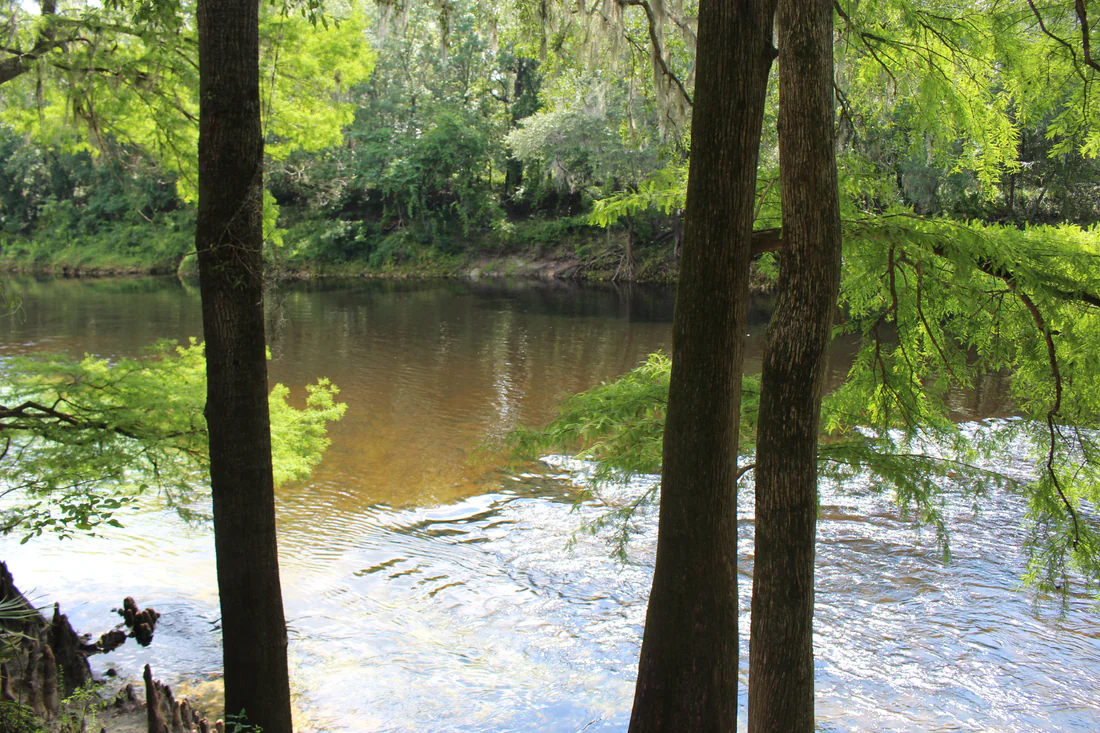
The only recorded archaeological site inside Madison Blue Spring State Park is a thin scatter of stone flakes and finished tools. State site records list it as Archaic, and possibly Paleoindian. The tools now lie under the spring run and the Withlacoochee River, but that ground was likely dry during the Pleistocene. Florida State Parks says local people once used the spring for fresh water. The park has never had a full archaeological survey.
In 1539, Hernando de Soto and 700 soldiers landed at Tampa Bay and later passed through the Suwannee Valley. According to a local history, he had a bridge built over the Suwannee River and crossed into what is now southern Madison County. His army reached the Aucilla River two days after that and was attacked there, one of several attacks by Native people on the march.
Sources: Florida Department of Environmental Protection: Madison Blue Spring State Park, park chapter of the unit management plan; Florida State Parks: Madison Blue Spring State Park, History; Greene Publishing: De Soto Sought Wealth in Madison County (December 10, 2020)
Next: Chapter 2, Spanish Missions, 1623 to 1704 →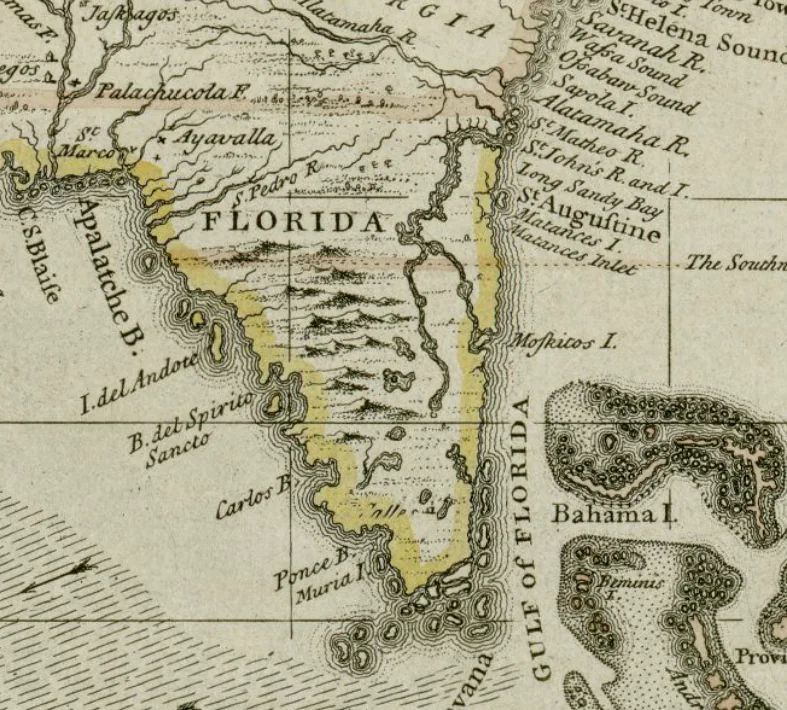
Spanish Missions, 1623 to 1704
One reason Spain built missions across Florida was to keep England and France from settling the land. Most of the people brought into the missions spoke the Timucua language. San Pedro y San Pablo de Potohiriba stood beside Lake Sampala, west of Hopewell, from 1623 to 1656. A second San Pedro de Potohiriba mission, on San Pedro Bay's east side, lasted from 1656 to 1704. Santa Elena de Machava, beside Alligator Creek to the west of Sirmans, lasted from 1628 to 1704.
Most of these missions were abandoned after the Timucua Rebellion of 1656, and again after raids by South Carolina militia and their Native allies in 1702 to 1704. In 1840, a Spanish mission bell marked with the date 1758 turned up in a pond close to Madison.
Sources: Greene Publishing: Spanish Missions in Madison County (July 14, 2016); Florida Memory, State Library and Archives of Florida: WPA Madison County (county history typescript)
Next: Chapter 3, Madison County Is Created in 1827 →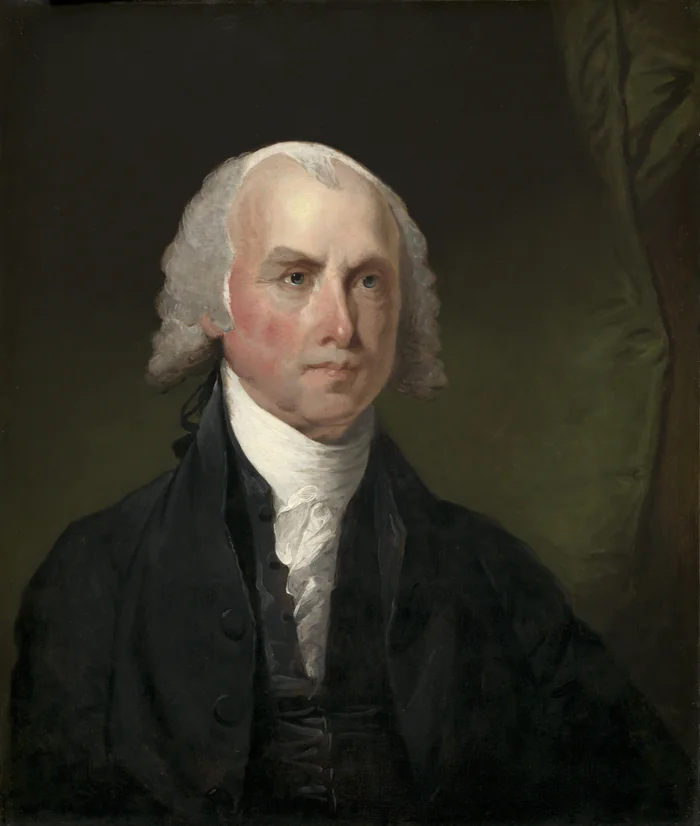
Madison County Is Created in 1827
Madison County was created by the Legislative Council on December 26, 1827. The county took its name from James Madison, who was the fourth U.S. president. Mrs. Elizabeth Carter's home at San Pedro is the first recorded building to serve as the county's courthouse. A log courthouse went up nearby soon after. The county's first marriage license was issued on January 25, 1831.
Dennis Hankins is the earliest clerk of the county court on record. In May 1831, Hankins and Silas Coker each hosted voters at home for the election of the territorial delegate to Congress. The first Superior Court in the county was organized at the San Pedro courthouse on June 6, 1835. San Pedro stayed the county seat until 1838.
Sources: Florida Memory, State Library and Archives of Florida: WPA Madison County (county history typescript); Greene Publishing: History of the Madison County Courthouse (April 29, 2021)
Next: Chapter 4, Newtown Becomes Madison, and the Seminoles Are Forced Out →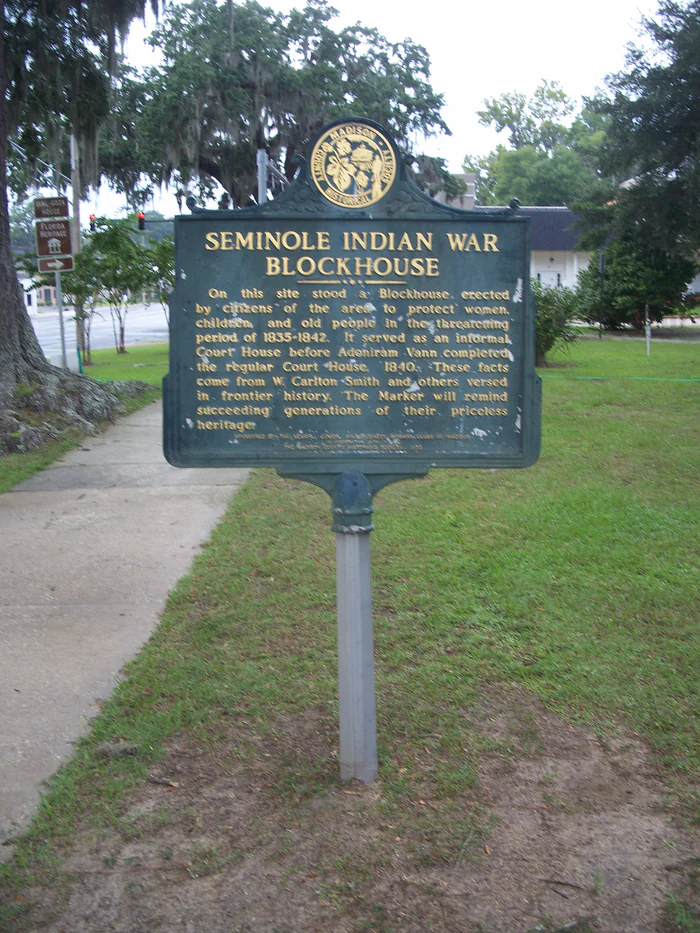
Newtown Becomes Madison, and the Seminoles Are Forced Out
John Charles McGehee came from South Carolina and settled in Madison County in the early 1830s. He was picked in 1838 for the St. Joseph Convention, the meeting that drafted Florida's first constitution.
In May 1838, the county chose Newtown, a more central spot, as its new county seat. The town of Madison was founded there on May 2, 1838, on land obtained from Madison C. Livingston. A blockhouse had already been built at the site a few years before. The town's name was shortened over the years, from Court House to C.H. and then to plain Madison, and so the town became the City of Madison. Adoniram Vann built the town's first courthouse in 1840.
After settlers had suffered from Indian raids for several years, citizens met at the courthouse on August 27, 1842, and asked the U.S. government for mounted troops to patrol the border. That year, a band of citizens led by Colonel William Bailey and Captain Andrew Jackson Lea did most of the work of driving the Seminoles out of the county.
Sources: Florida Department of State, Florida Historical Markers: John C. McGehee; Florida Memory, State Library and Archives of Florida: WPA Madison County (county history typescript); Florida Department of State, Florida Historical Markers: City of Madison; Greene Publishing: History of the Madison County Courthouse (April 29, 2021)
Next: Chapter 5, Cotton, Slavery, Factories and the First Train →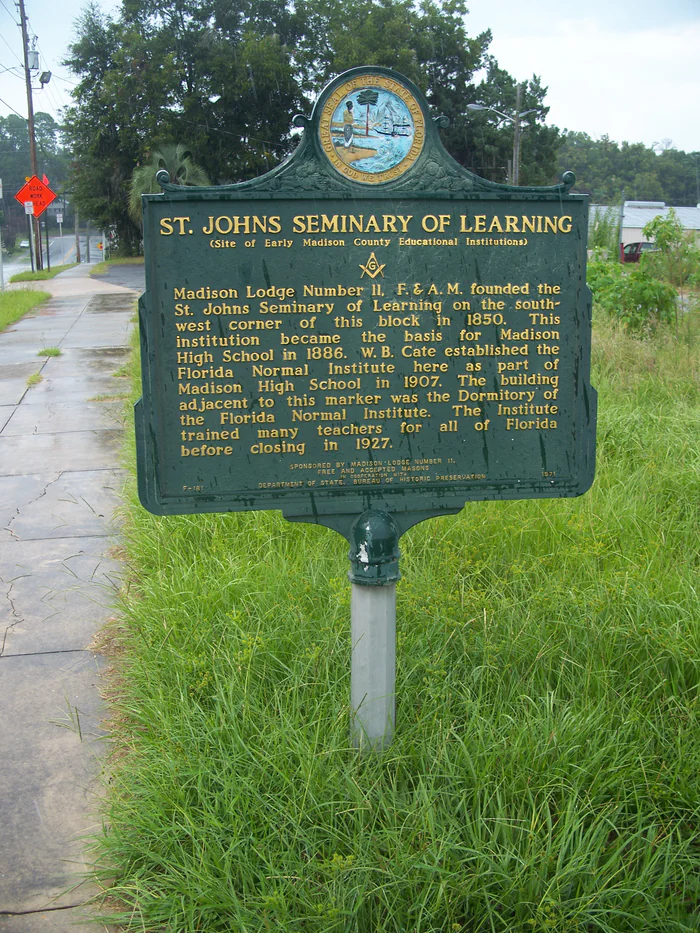
Cotton, Slavery, Factories and the First Train
William Bailey, the region's largest enslaver, built up The Cedars, a 4,000-acre cotton plantation on land that later became part of Livingston Place. In 1850, The Cedars held some 269 enslaved African Americans who were forced to work its land. Their forced labor produced 8,000 bushels of corn and 550 bales of cotton that year.
In 1851, Roswell H. Willard opened Stillapika, a shoe factory some ten miles south of the town of Madison. A WPA county history calls it the first business of its kind in Florida. The Tallahassee Floridian reported on December 3, 1853, that 26 enslaved workers there made 11,000 pairs of shoes a year. Also in 1851, Captain N. P. Willard built a $30,000 cotton factory in Madison, which burned in 1857.
The St. Johns Seminary of Learning was started in 1850 by Madison Lodge Number 11, F.& A.M. Two new counties, Taylor and Lafayette, were cut from Madison County in 1856. Work on the Georgia and Pensacola Railroad through the county started in 1859, on a route that crossed the Aucilla River, ran through Sandy Ford, now Greenville, and passed just south of Madison. Madison held a celebration for the first train on July 4, 1860.
Sources: Florida Department of State, Florida Historical Markers: The Cedars; Florida Memory, State Library and Archives of Florida: WPA Madison County (county history typescript); Florida Department of State, Florida Historical Markers: St. Johns Seminary of Learning; Greene Publishing: Madison County's First Train (September 10, 2021)
Next: Chapter 6, The Civil War Years →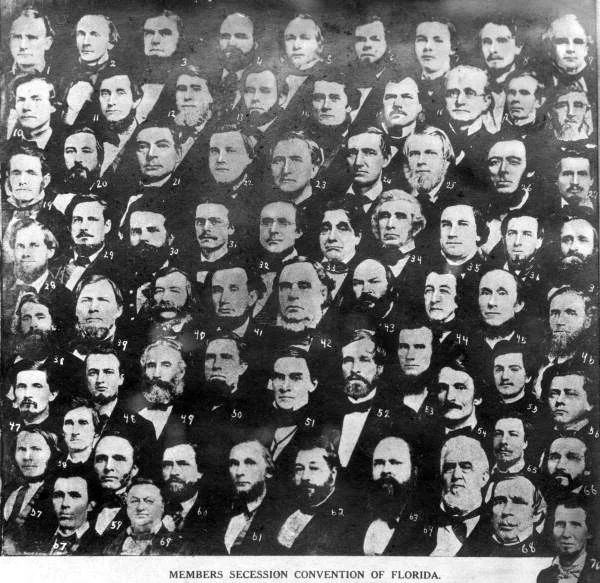
The Civil War Years
McGehee, a wealthy slave owner and strong secessionist, was elected permanent chairman of Florida's Secession Convention. Its delegates voted 62 to 7 for Florida to leave the Union. Madison County's first company of Confederate volunteers set out for Pensacola on April 3, 1861.
Richard G. Bradford, a captain from Madison, was killed on October 9, 1861, in the Battle of Santa Rosa Island, fought over Fort Pickens at Pensacola Harbor. The state marker calls him the first Florida officer in the Confederate army to die in the war. In his honor, the legislature renamed New River County as Bradford County, and Governor John Milton signed the law on December 6, 1861.
During the war, shoes made at Stillapika went to Confederate camps, and women at home got their shoes free. The Wardlaw-Smith House, a Greek Revival home built in the early 1860s for Benjamin F. Wardlaw, served as a Confederate hospital after the February 1864 Battle of Olustee. Oak Ridge Cemetery in Madison holds the graves of 31 Confederate soldiers killed at Olustee. In 1865, Confederate Secretary of War John C. Breckinridge escaped along a route that passed through Madison.
Sources: Florida Department of State, Florida Historical Markers: John C. McGehee; Florida Memory, State Library and Archives of Florida: WPA Madison County (county history typescript); Florida Department of State, Florida Historical Markers: Captain Richard G. Bradford; Florida Department of State, Florida Historical Markers: The Wardlaw-Smith House; Florida Department of State, Florida Historical Markers: Madison Oak Ridge Cemetery; Florida Department of State, Florida Historical Markers: City of Madison
Next: Chapter 7, Governor Drew's Ellaville and the Growth of Greenville →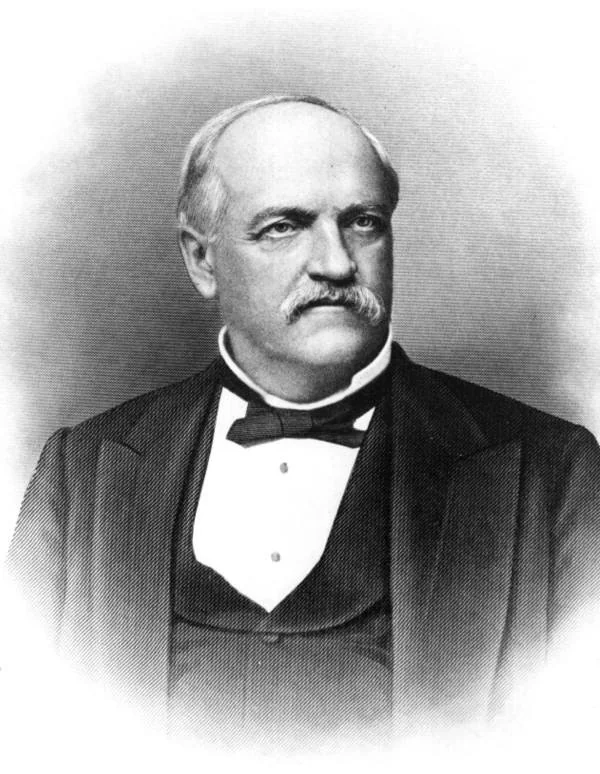
Governor Drew's Ellaville and the Growth of Greenville
In the mid-1860s, George F. Drew set up a sawmill and manufacturing center at Ellaville, near where the Withlacoochee River meets the Suwannee. His two-story mansion nearby, built in the late 1860s, had color-matched oak parquet floors and formal gardens, and it stood until fire destroyed it in 1970. Drew served as governor of Florida from 1877 to 1881, just after Reconstruction. Ellaville thrived as long as the yellow pine lasted, then declined after 1900, and the town was gone once its post office shut in 1942. A flywheel from the Ellaville sawmill is on display at nearby Suwannee River State Park.
Greenville began in 1850 as a place called Sandy Ford, and Samuel Williams became its first postmaster in 1854. The railroad knew it as Station 5, and in the 1860s it took the name Greenville, after Greenville, South Carolina. Elijah Hays helped the town grow after 1876. He bought much of the land the town sits on and ran farms, stores, a cotton gin and a turpentine still.
The town of Madison's first courthouse burned in March 1876, on March 23 according to the local paper and on March 26 according to the WPA history. Work on a new brick courthouse began in March 1880.
Sources: Florida Department of State, Florida Historical Markers: Drew Mansion Site / The Town of Ellaville; Greene Publishing: The Town of Ellaville (July 7, 2016); Florida Department of State, Florida Historical Markers: The Town of Greenville; Greene Publishing: Just Who Was Haffye Hays? (March 26, 2020); Greene Publishing: History of the Madison County Courthouse (April 29, 2021); Florida Memory, State Library and Archives of Florida: WPA Madison County (county history typescript)
Next: Chapter 8, Sea Island Cotton, an Opera House and a New Courthouse →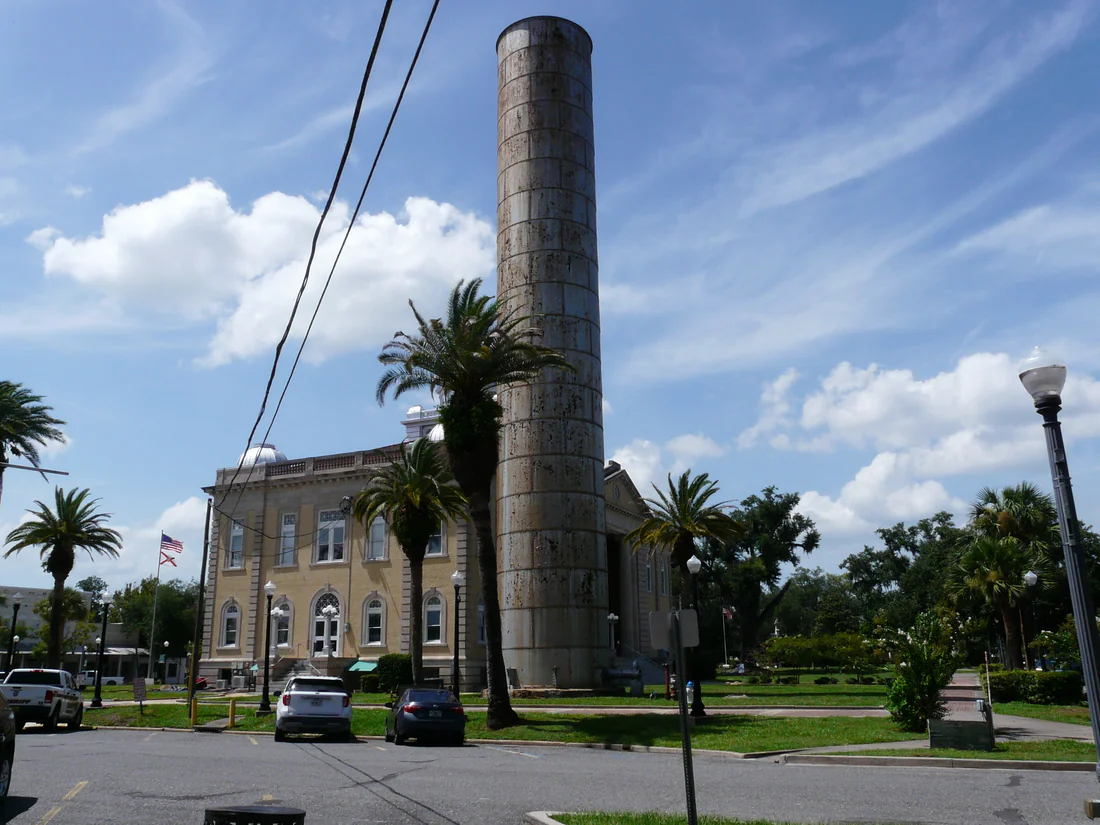
Sea Island Cotton, an Opera House and a New Courthouse
The Florida Manufacturing Company began in Madison in 1874 under Captain John L. Inglis, according to the state marker, while the WPA history dates its founding to 1882. In one year the plant ginned as many as 10,000 bales of long staple Sea Island cotton. The WPA history calls it the world's largest sea island cotton ginnery. J. & P. Coats bought the plant in 1890. The work ended after the Mexican boll weevil arrived in 1916.
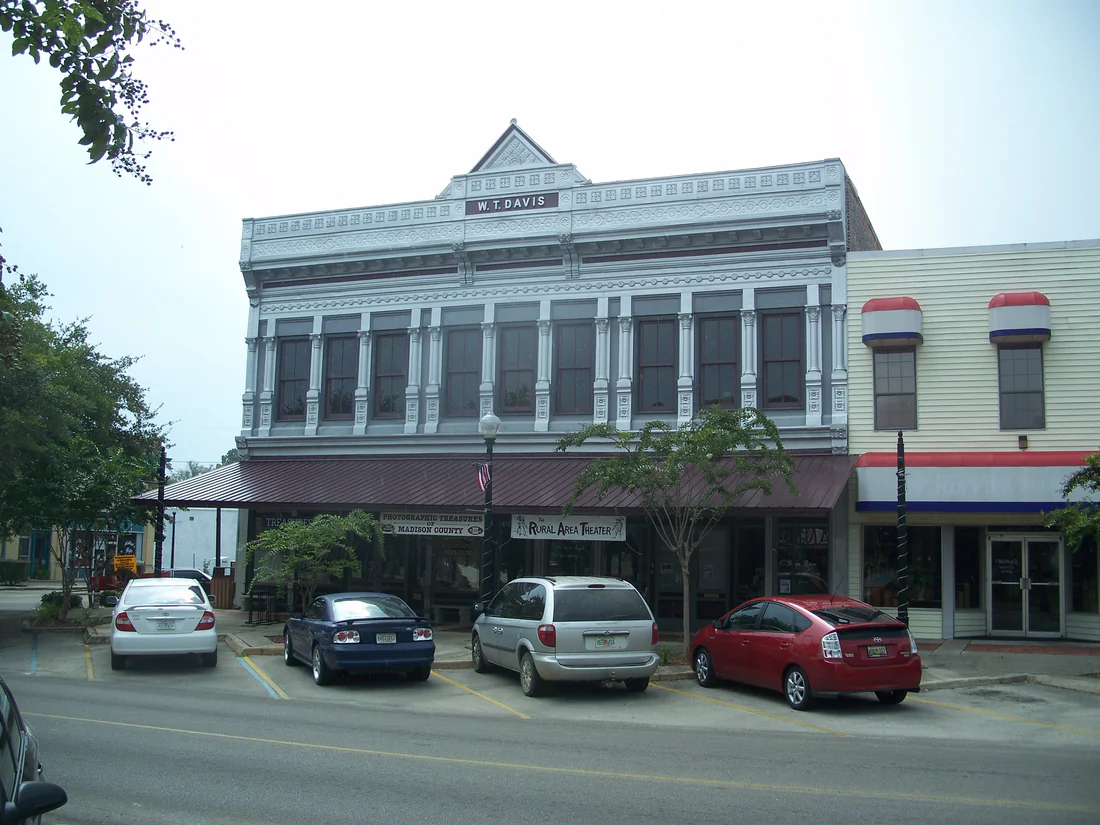
In 1892, William Turner Davis put up the W.T. Davis Building, with a front of galvanized sheet metal from the Mesker Brothers Iron Works of St. Louis. From 1892 to 1910, its second floor was the town's opera house and a place for shows and social events. The Madison Water Standpipe went up in 1894 to supply the city with water, and the local paper counts it as one of just two left standing in the state. In 1907, W.B. Cates opened the Florida Normal Institute within Madison High School, and it prepared teachers for schools across Florida until it closed in 1927.
The brick courthouse burned in 1912, according to the local paper, though the WPA history gives the year as 1911. The present courthouse, built of brick and concrete, went up in 1913. Its Seth Thomas clock and bell were installed on August 27, 1914.
Sources: Florida Department of State, Florida Historical Markers: The Florida Manufacturing Company; Florida Memory, State Library and Archives of Florida: WPA Madison County (county history typescript); Florida Department of State, Florida Historical Markers: W.T. Davis Building; Greene Publishing: History of the Madison County Courthouse (April 29, 2021); Florida Department of State, Florida Historical Markers: St. Johns Seminary of Learning
Next: Chapter 9, Quail Plantations, Cherry Lake Farms and Young Ray Charles →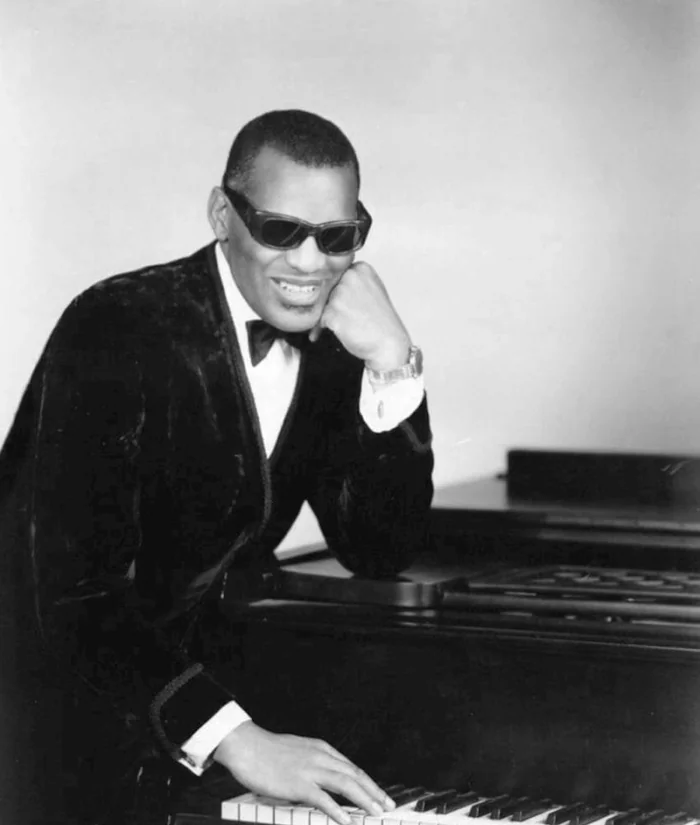
Quail Plantations, Cherry Lake Farms and Young Ray Charles
In 1926, a group of New York investors that included Gerald M. Livingston purchased the old Cedars land, and Livingston later bought out his partners. From 1926 to 1994, the Livingstons of New York used it as a winter estate they called Dixie Plantation, which grew to more than 18,000 acres across the Florida-Georgia line. In 1936, the architect John Russell Pope, known for the Jefferson Memorial, designed a three-story brick mansion there overlooking Lake Windom. At the peak in 1940, in the years of Jim Crow, 400 Black workers lived there with their families in a community of their own.
In the early 1930s, the federal relief agency FERA bought 15,000 acres at Cherry Lake for a New Deal farm settlement. More than a hundred families had come there from Tampa, Jacksonville, Miami and other cities by 1935. They lived in 170 cottages with phones, water and electricity. Around 1937, a 12-acre piece of land on the lake's west shore was leased for a camp, and the site later became a 4-H camp.
Ray Charles was born in 1930, and until he was about five he lived in a small Greenville house with his mother, Aretha Williams, and his adopted grandmother, Margaret Robinson. The house had no indoor plumbing and no electricity. He got his first piano lessons from Wiley Pitman, who owned the nearby Red Wing Cafe. His sight failed at age seven, and he then left for the Florida School for the Deaf and Blind in St. Augustine.
Sources: Florida Department of State, Florida Historical Markers: The Cedars; Florida Department of State, Florida Historical Markers: Livingston Place; Greene Publishing: History of Cherry Lake (April 7, 2016); Greene Publishing: Madison County in the Thirties (June 28, 2018); Florida Department of State, Florida Historical Markers: Ray Charles Childhood Home; WTXL ABC 27: Artist paints interactive piano mural to honor Ray Charles' North Florida roots (June 24, 2026)
Next: Chapter 10, A War Hero, a Lynching and Two Colleges →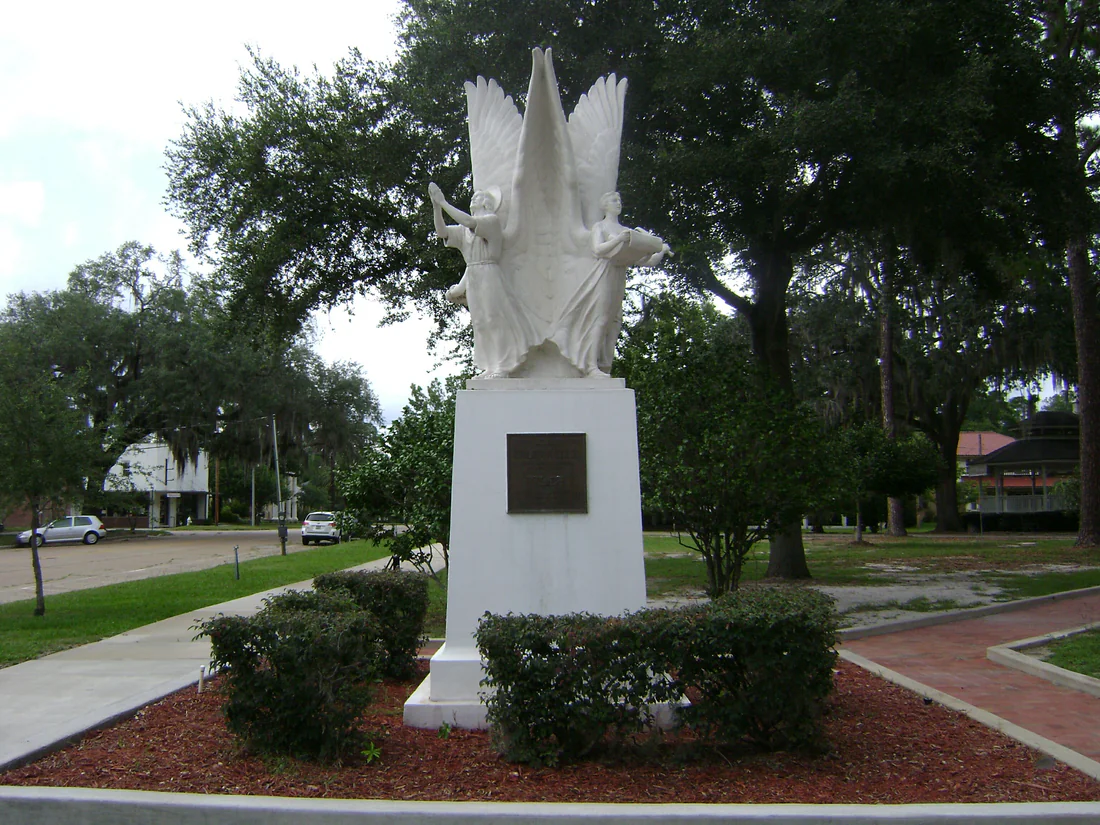
A War Hero, a Lynching and Two Colleges
Colin P. Kelly Jr. of Madison County, who had graduated from West Point in 1937, was flying B-17 bombers in the Philippines when Japan attacked the islands in December 1941. On December 10, 1941, his crew bombed a ship off Luzon that they believed was the battleship Haruna, but they had perhaps hit a large transport or a light cruiser, and neither one sank. On the way back to Clark Field, a Japanese fighter badly damaged the bomber, and Kelly was killed in the crash after ordering his crew to bail out. On June 14, 1944, the Four Freedoms Monument was dedicated to his memory in Four Freedoms Park, across from the Madison County Courthouse. Designed by Walter Russell and given by the Women's National Institute, it stands for the four freedoms that President Franklin D. Roosevelt named on January 6, 1941.
On October 11, 1945, Jesse James Payne, a young Black sharecropper who had a wife and child, was lynched in Madison County. After being taken from the county jail, he was shot to death, and no one was ever held to account. An article in the Florida Historical Quarterly says it was the only lynching on record that year, as World War II was ending.
The Florida Legislature approved North Florida Junior College in 1957, and Dr. Marshall W. Hamilton was named president of the new school in Madison in March 1958. Suwannee River Junior College opened in Madison in 1959 for Black students from north Florida and south Georgia, whose chances at higher education were limited by segregation and economic hurdles. The state marker says it was the first college in Florida with a woman as president, Jenyethel Merritt, who led it for five of its seven years. In 1966, it closed and merged with North Florida Junior College, which had been all-white.
Sources: Florida Memory, State Library and Archives of Florida: Four Freedoms Memorial to Captain Colin P. Kelly Jr. Program, 1944; Florida Department of State, Florida Historical Markers: The Four Freedoms Monument; Museum of Florida History: Four Freedoms Monument (World War II historical sites); Florida Memory, State Library and Archives of Florida: Letter from Mather Academy in Camden, South Carolina, Asking for the Removal of Sheriff Lonnie Turner Davis (December 6, 1945); Florida Historical Quarterly, via University of Central Florida STARS: "Whitewash" in Florida: The Lynching of Jesse James Payne and its Aftermath (Jack E. Davis); North Florida College: History; Florida Department of State, Florida Historical Markers: Suwannee River Junior College; North Florida College: Suwannee River Junior College
Next: Chapter 11, Since 1990: Ray Charles Remembered, a Museum and a Spring Park →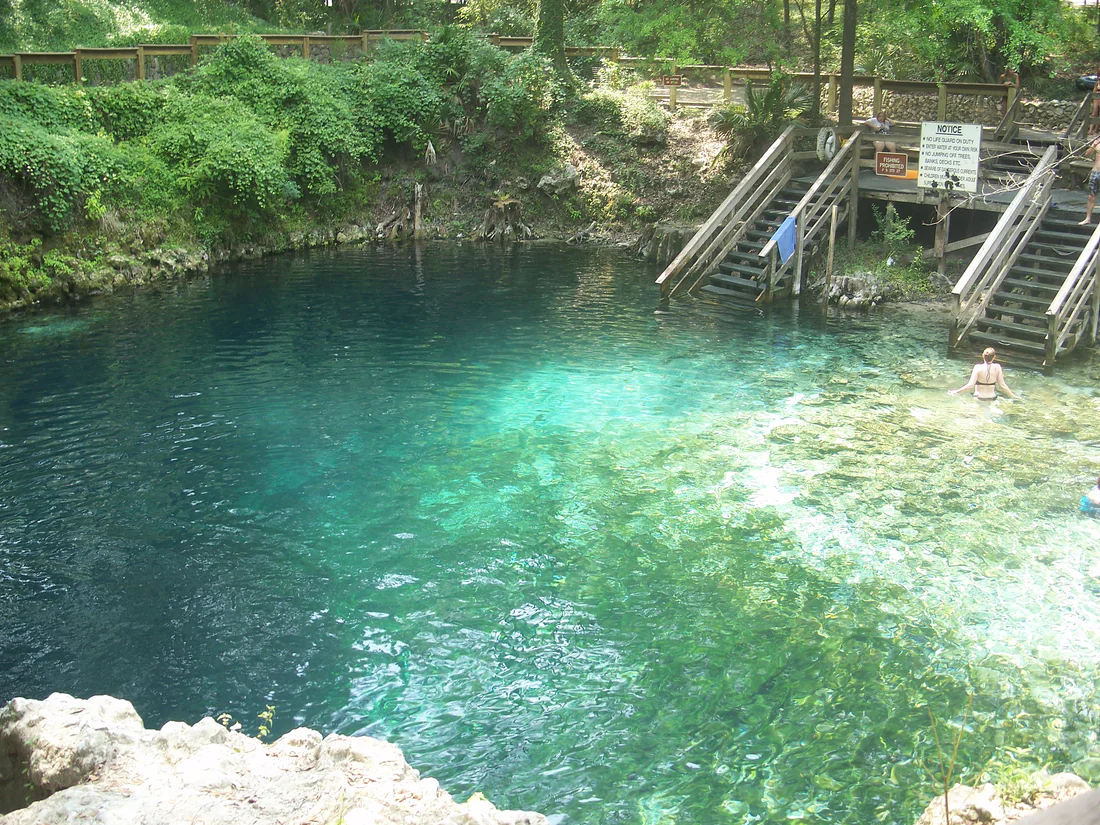
Since 1990: Ray Charles Remembered, a Museum and a Spring Park
In 1998, Judge Charles McClure of Tallahassee donated the W.T. Davis Building, and it was restored as the home of the Treasures of Madison County Museum. The building joined the National Register of Historic Places in 2015, and a state marker was put up there on June 3, 2016. On October 26, 2002, the state bought the land at Madison Blue Spring, a first-magnitude spring on the Withlacoochee River's west bank. A six-mile rail trail between Hanson and the Withlacoochee River, on the old Valdosta Southern line, was finished in 2007. Called the Four Freedoms Trail, it now reaches from Madison north to the Georgia line at the Withlacoochee River.
In 2006, Greenville bought the run-down house where Ray Charles had lived as a boy, which was slated to be torn down. That same year, a bronze statue of Charles was put up in the town's Haffye Hays Park, two years after his death. With a grant from the Florida Bureau of Historic Preservation, the town finished rebuilding the Ray Charles Childhood Home in 2008. In 2025, the Hot Tamales Band played a tribute concert in the park to mark the 95th birthday he would have had. On July 18, 2026, Greenville unveiled a new piano mural honoring Ray Charles, painted by Quincy artist Devonte King.
In 2013, the Livingston family's foundation gave Livingston Place to Tall Timbers, a research and land conservation group, which restored the main house in 2021. In 2016, the college in Madison celebrated the 50th anniversary of its merger with Suwannee River Junior College.
Sources: Greene Publishing: Historical Marker Established for W.T. Davis Building (June 9, 2016); Florida Department of State, Florida Historical Markers: W.T. Davis Building; Florida Department of Environmental Protection: Madison Blue Spring State Park, park chapter of the unit management plan; WTXL ABC 27: Road Trip story on the Madison County rail trail (July 16, 2015); TrailLink: Four Freedoms Trail; Florida Department of State, Florida Historical Markers: Ray Charles Childhood Home; WTXL ABC 27: Artist paints interactive piano mural to honor Ray Charles' North Florida roots (June 24, 2026); WCTV: Greenville celebrates Ray Charles' 95th birthday and lasting impact (September 24, 2025); Greene Publishing: Just Who Was Haffye Hays? (March 26, 2020); Greene Publishing: Ray Charles Memorialized with Piano (July 21, 2026); Florida Department of State, Florida Historical Markers: Livingston Place; North Florida College: Suwannee River Junior College
Next: the whole story, in dates →The whole story, in dates
Hernando de Soto and 700 soldiers land at Tampa Bay and later pass through the Suwannee Valley.
Mission San Pedro y San Pablo de Potohiriba stands beside Lake Sampala.
Most of the missions are abandoned after the Timucua Rebellion.
Missions are abandoned again after raids by South Carolina militia and their Native allies.
The Legislative Council creates Madison County, named for James Madison.
The county's first Superior Court is organized at the San Pedro courthouse.
The town of Madison is founded on land from Madison C. Livingston.
Adoniram Vann builds the first courthouse in Madison.
Citizens meet at the courthouse and ask for mounted troops to patrol the border.
Some 269 enslaved African Americans are forced to work at The Cedars plantation.
Roswell H. Willard opens the Stillapika shoe factory south of Madison.
Madison celebrates the first train on the Georgia and Pensacola Railroad.
Madison County's first company of Confederate volunteers leaves for Pensacola.
Captain Richard G. Bradford of Madison is killed in the Battle of Santa Rosa Island.
The Wardlaw-Smith House becomes a Confederate hospital after the Battle of Olustee.
The first courthouse in Madison burns.
George F. Drew serves as governor of Florida.
J. & P. Coats buys the Florida Manufacturing Company's cotton plant.
William Turner Davis builds the W.T. Davis Building, with an opera house upstairs.
The present brick and concrete courthouse goes up.
The Mexican boll weevil arrives, and the cotton plant's work ends.
New York investors including Gerald M. Livingston buy the old Cedars land.
Ray Charles is born, and he lives in a small Greenville house until about age five.
More than a hundred families have moved to the Cherry Lake farm settlement.
Colin P. Kelly Jr.'s crew bombs a ship off Luzon, and he is killed on the flight back.
The Four Freedoms Monument is dedicated to Kelly's memory in Madison.
Jesse James Payne is lynched in Madison County.
Suwannee River Junior College opens in Madison for Black students.
Suwannee River Junior College merges with North Florida Junior College.
Judge Charles McClure donates the W.T. Davis Building, later restored as a museum.
The state buys the land at Madison Blue Spring.
Greenville buys Ray Charles's boyhood home, and his statue goes up in Haffye Hays Park.
The town finishes rebuilding the Ray Charles Childhood Home.
A tribute concert in Greenville marks Ray Charles's 95th birthday.
Greenville unveils a piano mural honoring Ray Charles.
Where you can still see it
 01
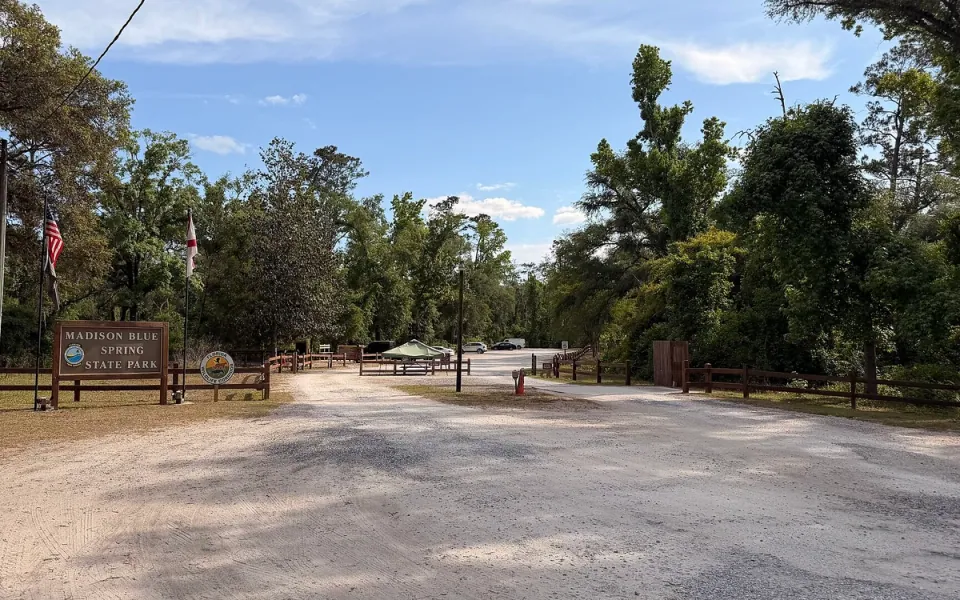
Madison Blue Spring State Park
Goes with: The First Peoples and Hernando de Soto
Open the place page →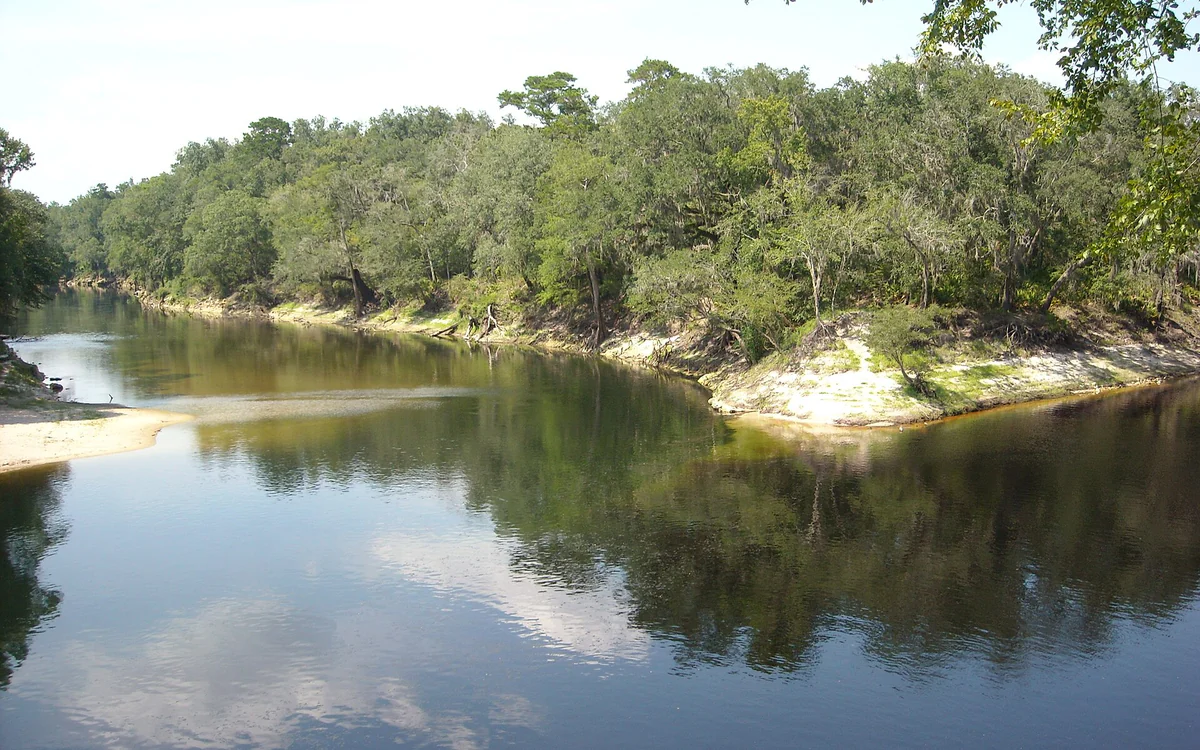 02
Suwannee River State Park
Goes with: Governor Drew's Ellaville and the Growth of Greenville
Open the place page →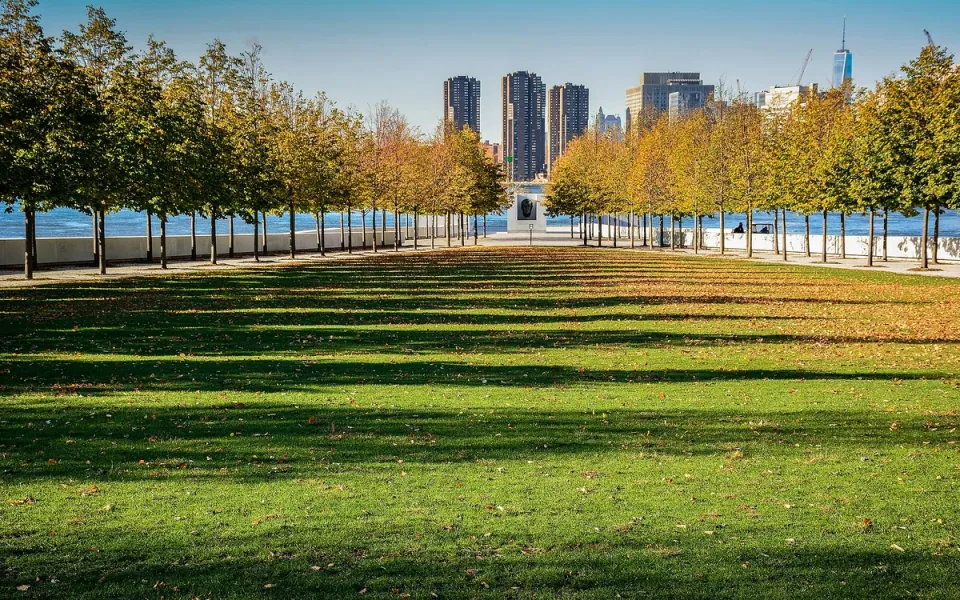 03
 04
Treasures of Madison County Museum
Goes with: Since 1990: Ray Charles Remembered, a Museum and a Spring Park
Open the place page →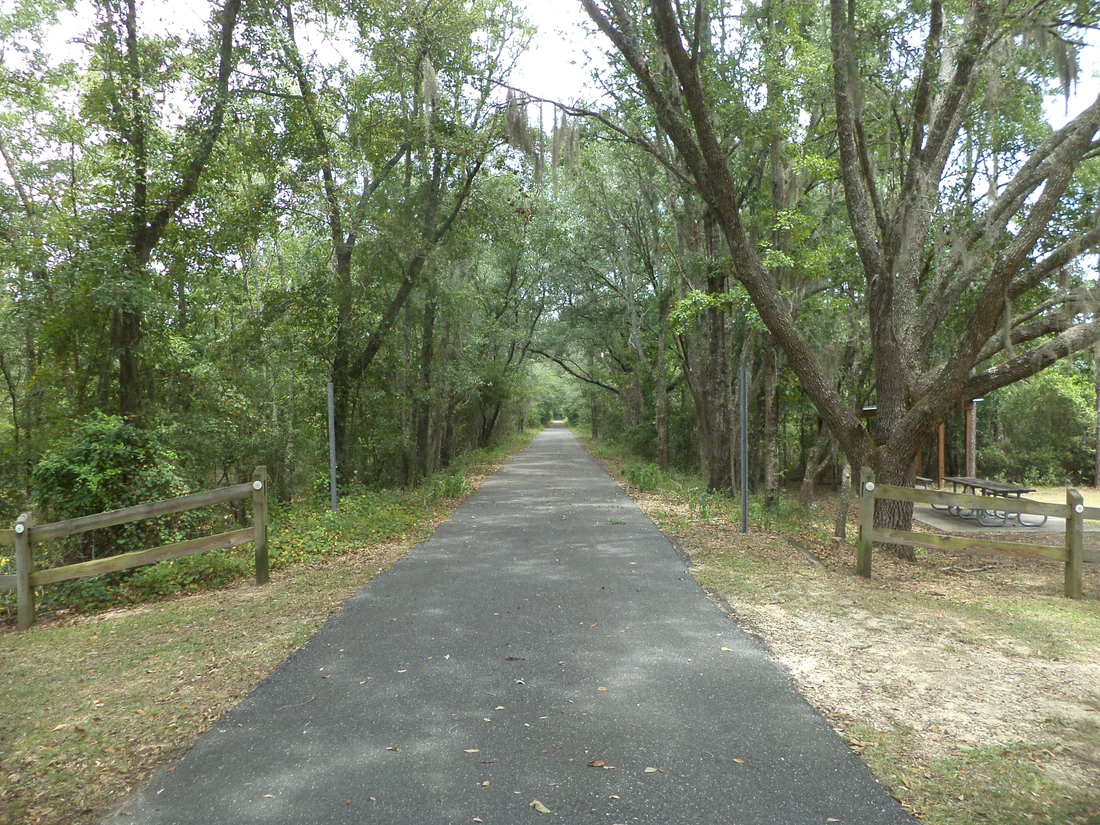 05
Four Freedoms Trail
Goes with: Since 1990: Ray Charles Remembered, a Museum and a Spring Park
Open the place page →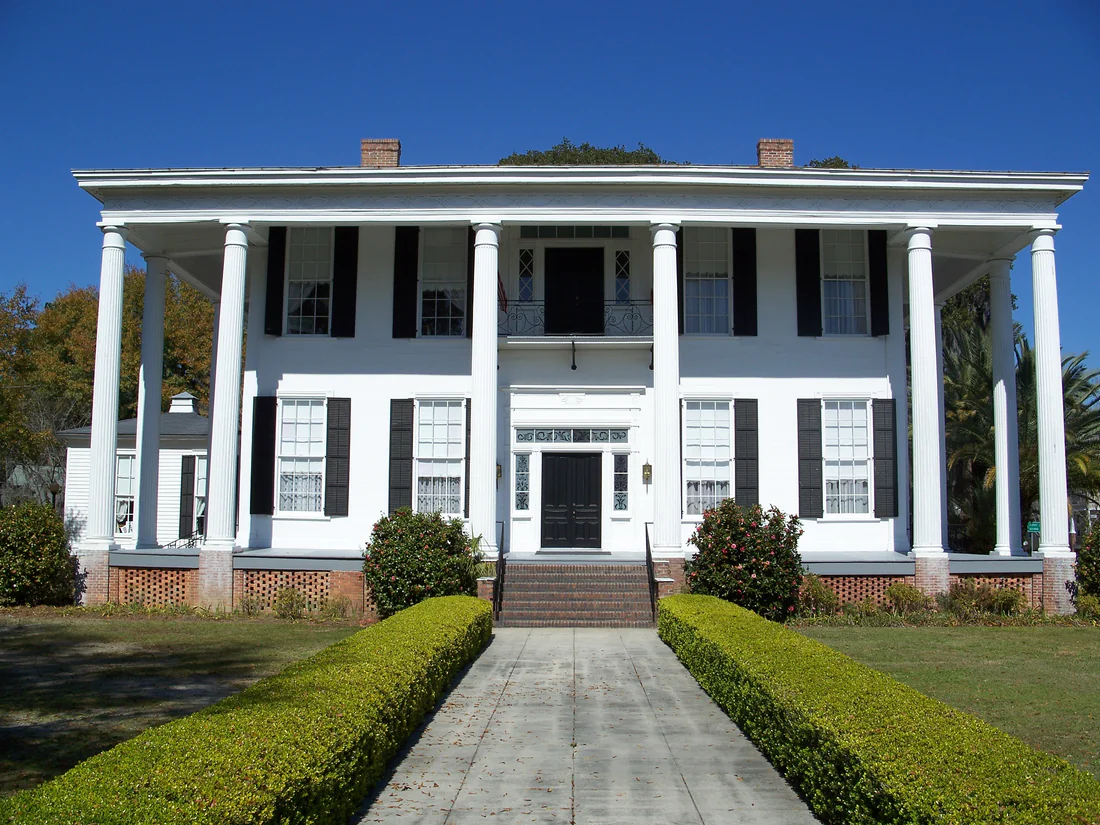 06
Wardlaw-Smith House
Goes with: The Civil War Years
Read the state marker for the Wardlaw-Smith House →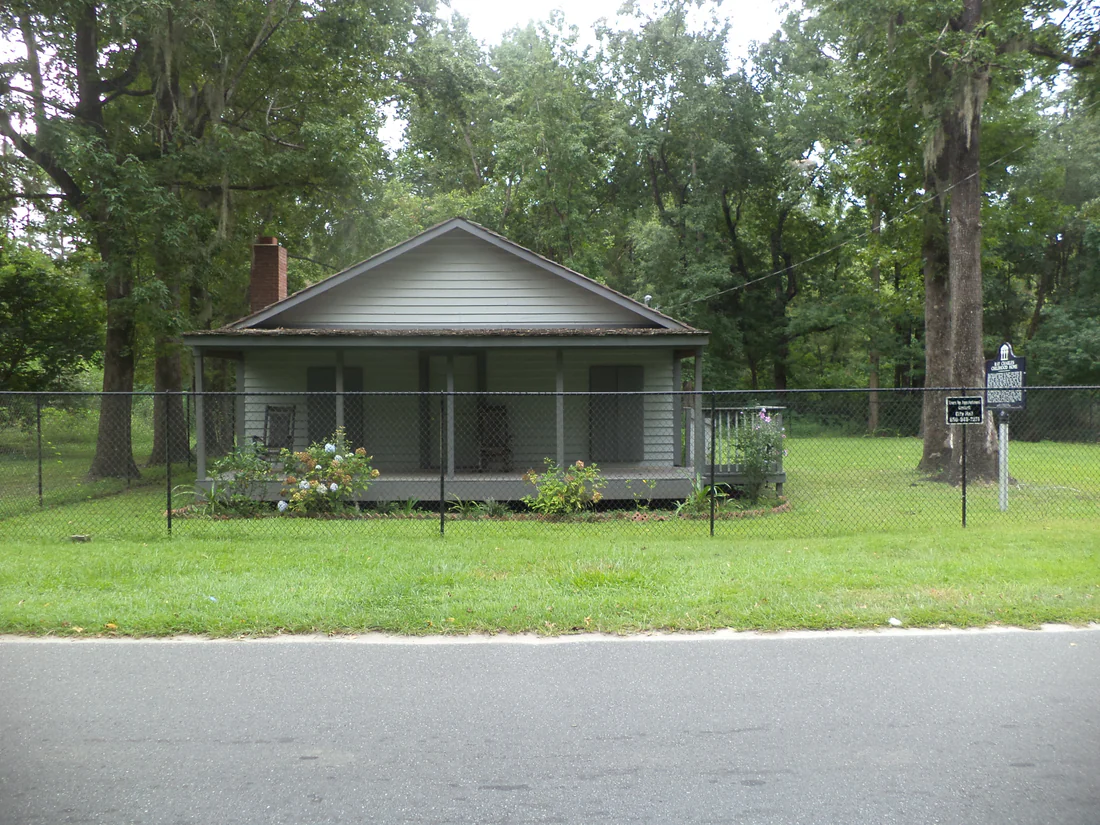 07
Ray Charles Childhood Home
Goes with: Since 1990: Ray Charles Remembered, a Museum and a Spring Park
Read the state marker for the Ray Charles Childhood Home →Questions people ask
When was Madison County created?
Madison County was created by the Legislative Council on December 26, 1827.
Chapter 3 →Who was Madison County named for?
It was named for James Madison, the fourth U.S. president.
Chapter 3 →What is the county seat of Madison County, and when was it founded?
The county seat is the town of Madison, founded on May 2, 1838, on land obtained from Madison C. Livingston.
Chapter 4 →Where did Ray Charles live as a small boy?
Until he was about five, Ray Charles lived in a small house in Greenville with his mother, Aretha Williams, and his adopted grandmother, Margaret Robinson.
Chapter 9 →What is the Four Freedoms Monument in Madison?
It is a monument designed by Walter Russell and dedicated on June 14, 1944, to the memory of Colin P. Kelly Jr. of Madison County.
Chapter 10 →Where this comes from.
Last updated October 20, 2026.
- Florida Department of Environmental Protection: Madison Blue Spring State Park, park chapter of the unit management plan ↗ Read October 19, 2026
- Florida State Parks: Madison Blue Spring State Park, History ↗ Read October 19, 2026
- Greene Publishing: De Soto Sought Wealth in Madison County (December 10, 2020) ↗ Read October 19, 2026
- Greene Publishing: Spanish Missions in Madison County (July 14, 2016) ↗ Read October 19, 2026
- Florida Memory, State Library and Archives of Florida: WPA Madison County (county history typescript) ↗ Read October 19, 2026
- Greene Publishing: History of the Madison County Courthouse (April 29, 2021) ↗ Read October 19, 2026
- Florida Department of State, Florida Historical Markers: John C. McGehee ↗ Read October 19, 2026
- Florida Department of State, Florida Historical Markers: City of Madison ↗ Read October 19, 2026
- Florida Department of State, Florida Historical Markers: The Cedars ↗ Read October 19, 2026
- Florida Department of State, Florida Historical Markers: St. Johns Seminary of Learning ↗ Read October 19, 2026
- Greene Publishing: Madison County's First Train (September 10, 2021) ↗ Read October 19, 2026
- Florida Department of State, Florida Historical Markers: Captain Richard G. Bradford ↗ Read October 19, 2026
- Florida Department of State, Florida Historical Markers: The Wardlaw-Smith House ↗ Read October 19, 2026
- Florida Department of State, Florida Historical Markers: Madison Oak Ridge Cemetery ↗ Read October 19, 2026
- Florida Department of State, Florida Historical Markers: Drew Mansion Site / The Town of Ellaville ↗ Read October 19, 2026
- Greene Publishing: The Town of Ellaville (July 7, 2016) ↗ Read October 19, 2026
- Florida Department of State, Florida Historical Markers: The Town of Greenville ↗ Read October 19, 2026
- Greene Publishing: Just Who Was Haffye Hays? (March 26, 2020) ↗ Read October 19, 2026
- Florida Department of State, Florida Historical Markers: The Florida Manufacturing Company ↗ Read October 19, 2026
- Florida Department of State, Florida Historical Markers: W.T. Davis Building ↗ Read October 19, 2026
- Florida Department of State, Florida Historical Markers: Livingston Place ↗ Read October 19, 2026
- Greene Publishing: History of Cherry Lake (April 7, 2016) ↗ Read October 19, 2026
- Greene Publishing: Madison County in the Thirties (June 28, 2018) ↗ Read October 19, 2026
- Florida Department of State, Florida Historical Markers: Ray Charles Childhood Home ↗ Read October 19, 2026
- Florida Memory, State Library and Archives of Florida: Four Freedoms Memorial to Captain Colin P. Kelly Jr. Program, 1944 ↗ Read October 19, 2026
- Florida Department of State, Florida Historical Markers: The Four Freedoms Monument ↗ Read October 19, 2026
- Museum of Florida History: Four Freedoms Monument (World War II historical sites) ↗ Read October 19, 2026
- Florida Memory, State Library and Archives of Florida: Letter from Mather Academy in Camden, South Carolina, Asking for the Removal of Sheriff Lonnie Turner Davis (December 6, 1945) ↗ Read October 19, 2026
- Florida Historical Quarterly, via University of Central Florida STARS: "Whitewash" in Florida: The Lynching of Jesse James Payne and its Aftermath (Jack E. Davis) ↗ Read October 19, 2026
- North Florida College: History ↗ Read October 19, 2026
- Florida Department of State, Florida Historical Markers: Suwannee River Junior College ↗ Read October 19, 2026
- North Florida College: Suwannee River Junior College ↗ Read October 19, 2026
- Greene Publishing: Historical Marker Established for W.T. Davis Building (June 9, 2016) ↗ Read October 19, 2026
- WTXL ABC 27: Road Trip story on the Madison County rail trail (July 16, 2015) ↗ Read October 19, 2026
- TrailLink: Four Freedoms Trail ↗ Read October 19, 2026
- WTXL ABC 27: Artist paints interactive piano mural to honor Ray Charles' North Florida roots (June 24, 2026) ↗ Read October 19, 2026
- WCTV: Greenville celebrates Ray Charles' 95th birthday and lasting impact (September 24, 2025) ↗ Read October 19, 2026
- Greene Publishing: Ray Charles Memorialized with Piano (July 21, 2026) ↗ Read October 19, 2026