Nassau County was established on December 29, 1824, out of what was then Duval County, as Florida's tenth county. Like Nassau Sound and the Nassau River, it takes its name from the Duchy of Nassau, a German state. Its county seat is Fernandina Beach, on Amelia Island, an island that has seen eight flags raised over it. Fernandina Beach is often called the birthplace of modern commercial shrimping, and the island's human history goes back more than 4,000 years.
This page tells the story in order, from the Timucua and the first people on Amelia Island to Burney Park, a museum at American Beach and The Amelia car show, then lists places in the county where you can still see it. The sources for each part are named at the end of that part, and all of them are listed at the bottom of the page.
The Timucua and the first people on Amelia Island
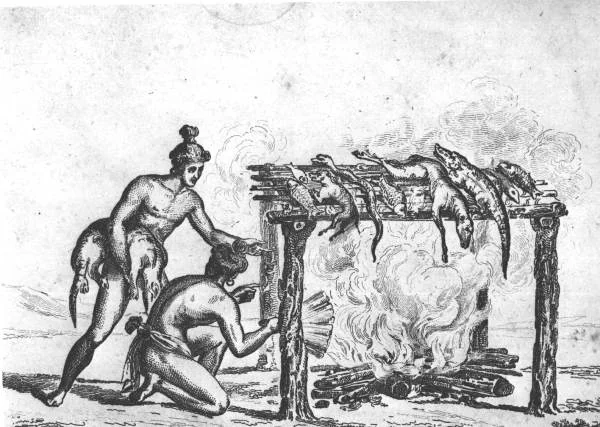
The Amelia Island Museum of History says the story of the island's native people goes back more than 4,000 years, to Paleo-Indians who in time became the Timucua. On a bluff high above the Amelia River, Indians camped as early as 2,000 to 1,000 B.C., says a state marker. The Isle of Eight Flags Shrimp Festival's history of the island says the Timucua lived there from around 2500 B.C., with plenty of plants and shellfish. The museum calls the Timucua the island's first residents, the people who met the Europeans when they arrived.
Sources: Amelia Island Museum of History: Permanent Exhibit; Florida Department of State: Historical marker, Plaza San Carlos; Isle of Eight Flags Shrimp Festival: The History; Amelia Island Museum of History: Learn
Next: Chapter 2, The French and the Spanish, 1562 to 1702 →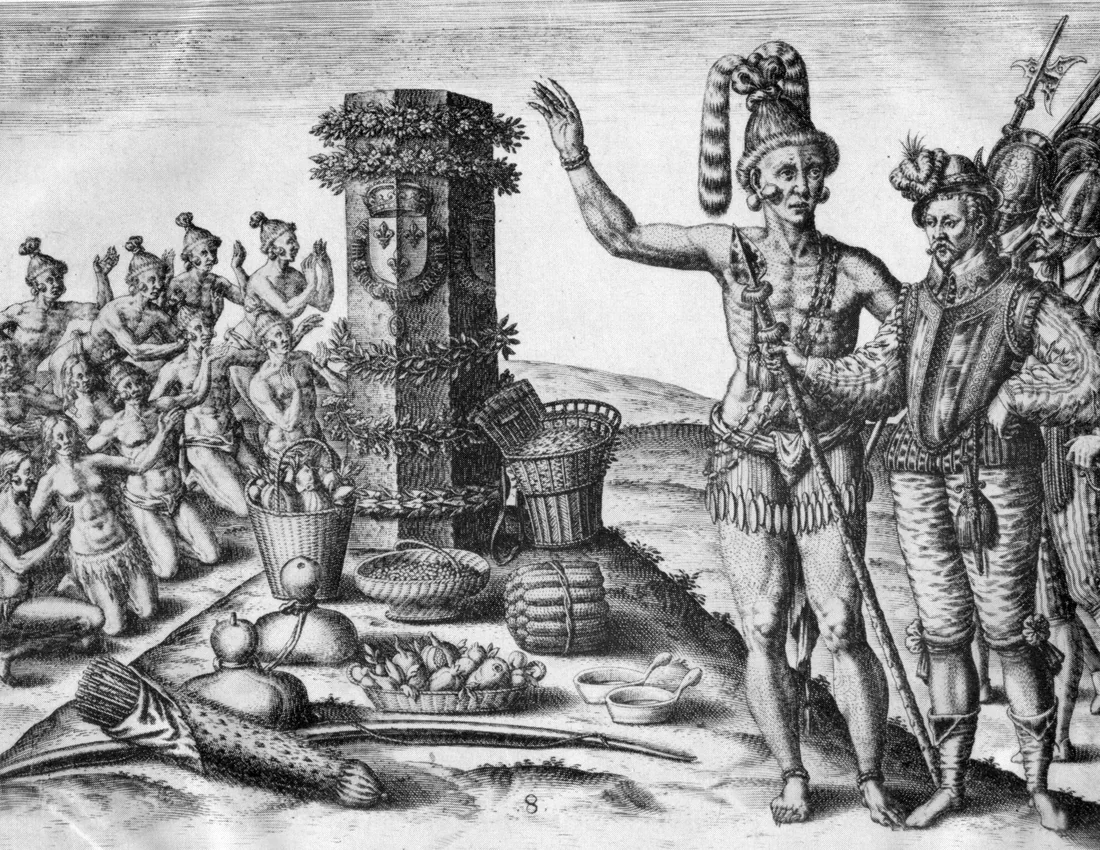
The French and the Spanish, 1562 to 1702
On May 3, 1562, French ships led by Captain Jean Ribault entered the St. Marys River and dropped anchor in Cumberland Sound. The French went ashore on a large island south of the sound and named it Isle de Mai, the Island of May, for the time of year. In a 2012 resolution, Nassau County's commissioners said France's flag was the first one flown over the island. In 1565 Spanish soldiers under Pedro Menendez de Aviles drove the French out of northeast Florida. After the French left, the county's history says, the Nassau area became a buffer between Spain and Great Britain.
By 1675 Franciscans and Indians had a village on the bluff above the Amelia River. Florida State Parks says the spot also became Spanish Florida's farthest-north military post that year. In 1685 British raids pushed the mission of Santa Catalina de Guale off St. Catherine's Island, Georgia, and it moved to the empty Santa Maria mission on Amelia Island. A Spanish sentinel's house there is on record from 1696. In 1702 the mission was abandoned again when South Carolina's governor, James Moore, led British and Indian forces into Florida.
Sources: Nassau County Board of County Commissioners: Resolution 2012-72, 450th anniversary of Jean Ribault's arrival (City of Jacksonville, Commemorate 450); Isle of Eight Flags Shrimp Festival: The History; Nassau County: 2030 Comprehensive Plan, Economic Development Element, Background Data and Analysis; Florida Department of State: Historical marker, Plaza San Carlos; Florida State Parks: History of Fernandina Plaza
Next: Chapter 3, Oglethorpe, British Florida and the Revolution, 1736 to 1783 →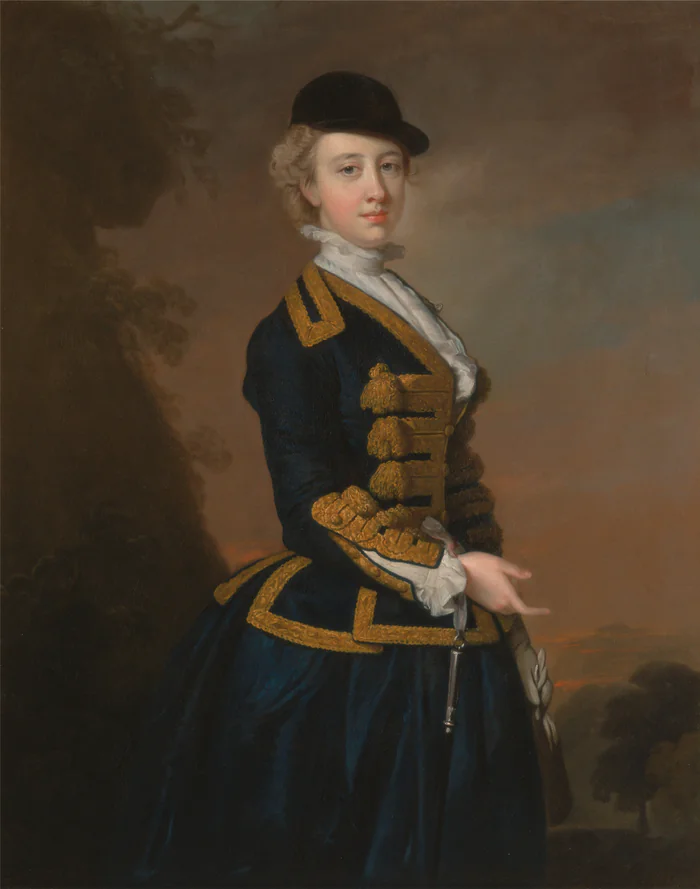
Oglethorpe, British Florida and the Revolution, 1736 to 1783
James Oglethorpe, the founder of Georgia, renamed the island Amelia Island for Princess Amelia, a daughter of King George II, although it still belonged to Spain. From 1736 to 1742 Oglethorpe kept Highlanders posted on the bluff above the Amelia River. Florida State Parks says work on the first fortifications at the site of today's Fort Clinch began in 1736. Once his soldiers were gone in 1742, the land sat between English and Spanish territory until Florida became British in 1763.
British rule brought plantations along the coast, where forced labor grew rice and indigo. During the British years a small trading settlement called Mills Ferry, later known as Kings Ferry, grew up on the St. Marys River, where the King's Road crossed it. Tall longleaf pines along the river were cut to make masts for British Navy ships.
In 1777 an American force of Continental troops and Georgia militia marched into East Florida to try to capture St. Augustine. On May 17, 1777, British regulars, rangers and Indian allies attacked part of it on Thomas Creek, south of where the creek meets the Nassau River. The Americans lost many men and turned back from Florida. When Spain took Florida back in 1783, British Loyalists sailed away from the harbor below the bluff.
Sources: Isle of Eight Flags Shrimp Festival: The History; Florida Department of State: Historical marker, Plaza San Carlos; Florida State Parks: History of Fort Clinch; Nassau County: 2030 Comprehensive Plan, Economic Development Element, Background Data and Analysis; Florida Department of State: Historical marker, Kings Ferry; Florida Department of State: Historical marker, Battle of Thomas Creek
Next: Chapter 4, Smugglers, Patriots and pirates, 1798 to 1821 →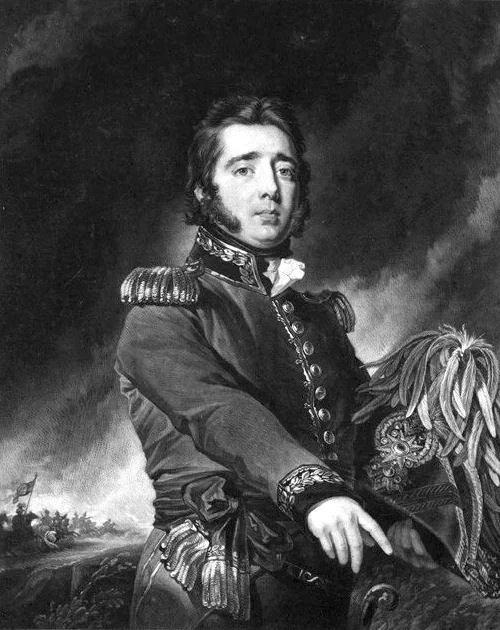
Smugglers, Patriots and pirates, 1798 to 1821
Bosque Bello Cemetery, whose name is Spanish for beautiful woods, was established in 1798. The Embargo Act of 1807 closed American ports to trade with Europe, and Fernandina, a town on the border, became a center for smuggling. In 1810 Enrique White, the Spanish governor, gave the town the name Fernandina, and its street plan, a Spanish grid, was finished in 1811. The county's history says the plan was redrawn in March 1812 and calls Fernandina the last town Spain laid out in the New World.
On March 17, 1812, Americans calling themselves the Patriots took the Spanish battery, but after one day the United States flag took the place of theirs. Spain took back control in May 1813. On August 8, 1813, Spanish loyalists attacked an American camp at Eleazar Waterman's plantation, and Buckner Harris and his men turned them back in less than twenty minutes.
Spain finished Fort San Carlos, built of wood and earth, on the bluff in 1816. In June 1817 Gregor MacGregor, acting for rebel South American governments, seized the fort and claimed the island for the Green Cross. After he left in September, the pirate Luis Aury took control and claimed the island for the Republic of Mexico. United States troops occupied the fort in December 1817, and Spain handed Florida to the United States in 1821. The fort's site is now Fernandina Plaza Historic State Park.
Sources: City of Fernandina Beach: Request for Proposal 25-01, Bosque Bello National Register of Historic Places; Florida Department of State: Historical marker, Plaza San Carlos; City of Fernandina Beach: Appendix A, Historic Context and References from the Historic Properties Survey; Nassau County: 2030 Comprehensive Plan, Economic Development Element, Background Data and Analysis; Florida Department of State: Historical marker, The Battle of Waterman's Bluff; Florida Department of State: Historical marker, Fort San Carlos; Isle of Eight Flags Shrimp Festival: The History; Florida State Parks: Fernandina Plaza Historic State Park
Next: Chapter 5, 1824: Nassau County begins →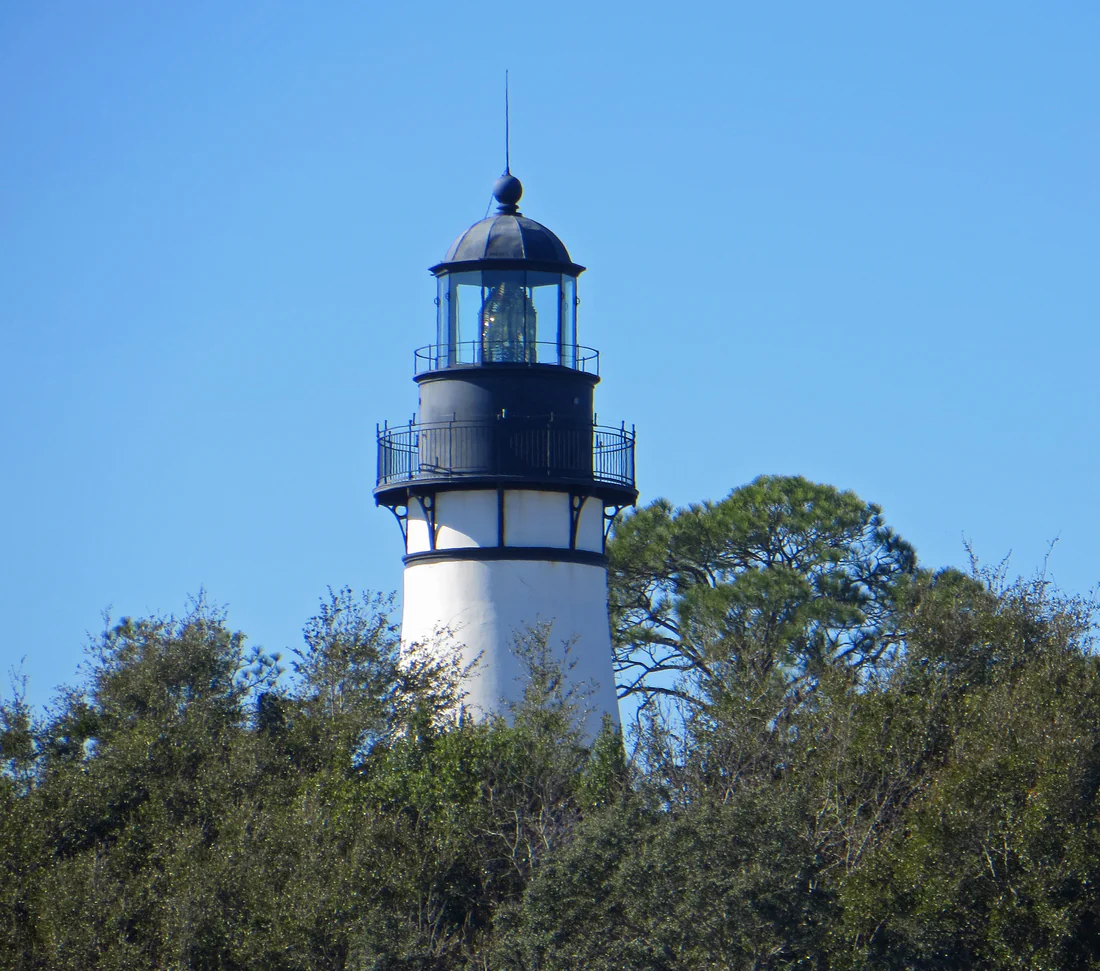
1824: Nassau County begins
Nassau County was established on December 29, 1824, out of what was then Duval County. The county's history says it was Florida's tenth county, with Fernandina as its county seat. The News-Leader says the county took its name from the same source as Nassau Sound, the Nassau River and Nassau, the port in the Bahamas. That source was the Duchy of Nassau, a German state, probably because of its link to William III, Prince of Orange, who became king of England in 1689.
Fernandina was made a town by the territory's lawmakers, in an act a state marker dates to January 1, 1825, and a city history survey to December 1824. The town did not grow much at first. Later the seat was moved to a site near the plantation that John D. and Martha Braddock had started in 1807, and a log cabin courthouse was built there. It moved again to Callahan and did not return to Fernandina until 1866, after the Civil War.
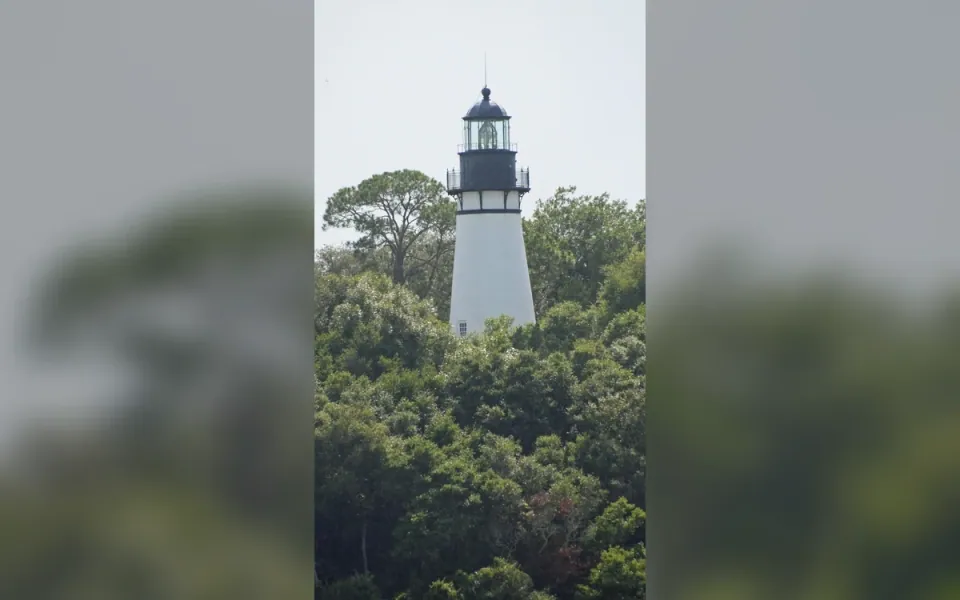
After the channel at the harbor entrance shifted south, work crews took apart the lighthouse on Cumberland Island and rebuilt it on Amelia Island. The city says the Amelia Island Lighthouse was built in 1838 and calls it Florida's oldest operating lighthouse. The city's history survey gives March 4, 1839, as the day the rebuilding was finished.
Sources: Fernandina Beach News-Leader: Nassau County turns 200; Fernandina Beach News-Leader: Treasures of Nassau: Frontier Florida; Nassau County: 2030 Comprehensive Plan, Economic Development Element, Background Data and Analysis; Florida Department of State: Historical marker, Fernandez Grant; City of Fernandina Beach: Appendix A, Historic Context and References from the Historic Properties Survey; City of Fernandina Beach: Amelia Island Lighthouse Renovations
Next: Chapter 6, Yulee's railroad from the Atlantic to the Gulf, 1853 to 1861 →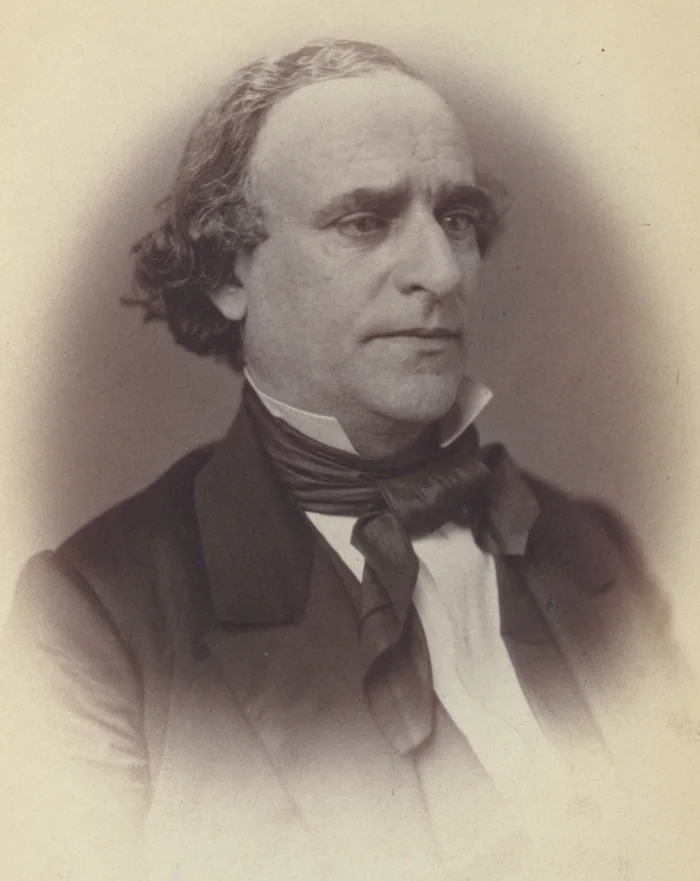
Yulee's railroad from the Atlantic to the Gulf, 1853 to 1861
David L. Yulee became president of the Florida Railroad Company when it was incorporated on January 8, 1853. That year the company announced that Fernandina would be the eastern end of the line. Wet ground south of the old town kept the railroad from starting there, so the company laid out a new town about one mile south, on the old Fernandez plantation. The company built its headquarters, depot and docks at the foot of Centre Street. The federal government approved a post office for the village on May 11, 1855.
Work on the line began at Fernandina in 1855, by the county's account and a 2017 state marker, though a 1961 marker gives 1856. On March 1, 1861, the last tracks were laid at Cedar Key, giving Florida its first railroad from coast to coast. At 156 miles, it was longer than any other railroad in Florida before the Civil War, says the 2017 marker. Yulee, who was Florida's first U.S. senator, was called the Father of Florida's railroads, and the town of Yulee was named for him.
Sources: Florida Department of State: Historical marker, Florida's First Atlantic to Gulf Railroad; Florida Department of State: Historical marker, Fernandez Grant; City of Fernandina Beach: Appendix A, Historic Context and References from the Historic Properties Survey; Nassau County: 2030 Comprehensive Plan, Economic Development Element, Background Data and Analysis; Florida Department of State: Historical marker, Florida's First Cross-Peninsula Railroad
Next: Chapter 7, Fort Clinch and the Civil War, 1847 to 1869 →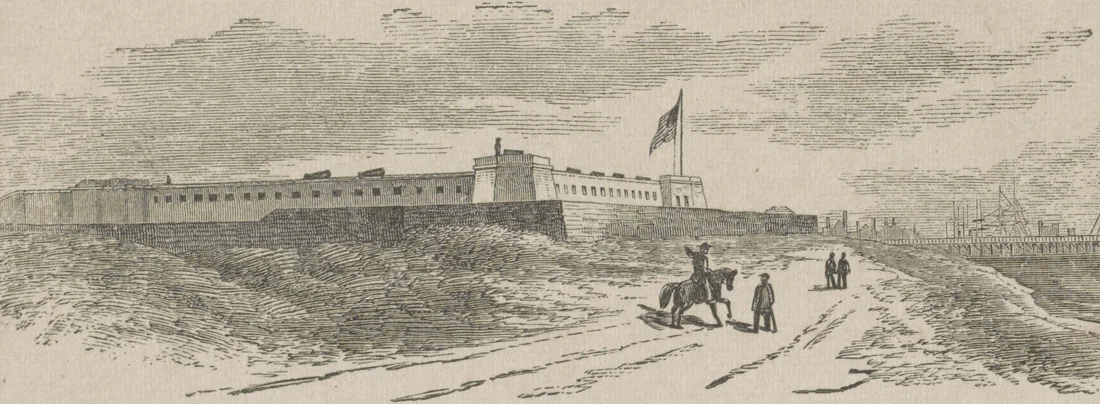
Fort Clinch and the Civil War, 1847 to 1869
Workers started building Fort Clinch in 1847. It took the name of General Duncan Lamont Clinch, a leader in the Second Seminole War. The fort was roughly two-thirds finished when the Civil War broke out, and Confederate forces took it over. General Robert E. Lee ordered the Confederates to leave, and Union troops arrived in March 1862.
The county's history gives March 2, 1862, as the day Union troops took the fort, and a city history survey gives March 4. Fernandina and Amelia Island stayed under Union military control until the war ended. Amelia Island was a safe place during the war for free Black people, for people who had escaped slavery and for enslaved people freed by Union troops. After Union forces captured the island in 1862, freed people founded Franklin Town at its south end.
In 1864 the Confederacy took the Florida Railroad apart so it could build a line between Live Oak and Lawton, Georgia. By 1869 the fort was empty. The Isle of Eight Flags Shrimp Festival counts eight flags that have flown over Amelia Island: French, Spanish, English, Patriot, Green Cross, Mexican, Confederate and United States.
Sources: Florida State Parks: History of Fort Clinch; Florida State Parks: Fort Clinch State Park history; Nassau County: 2030 Comprehensive Plan, Economic Development Element, Background Data and Analysis; City of Fernandina Beach: Appendix A, Historic Context and References from the Historic Properties Survey; Florida Department of State: Historical marker, Historic American Beach; Florida Department of State: Historical marker, Florida's First Cross-Peninsula Railroad; Fernandina Beach News-Leader: Local history shines through bicentennial events, Shrimp Fest; Isle of Eight Flags Shrimp Festival: The History
Next: Chapter 8, Lumber, tourists and a new courthouse, 1867 to 1898 →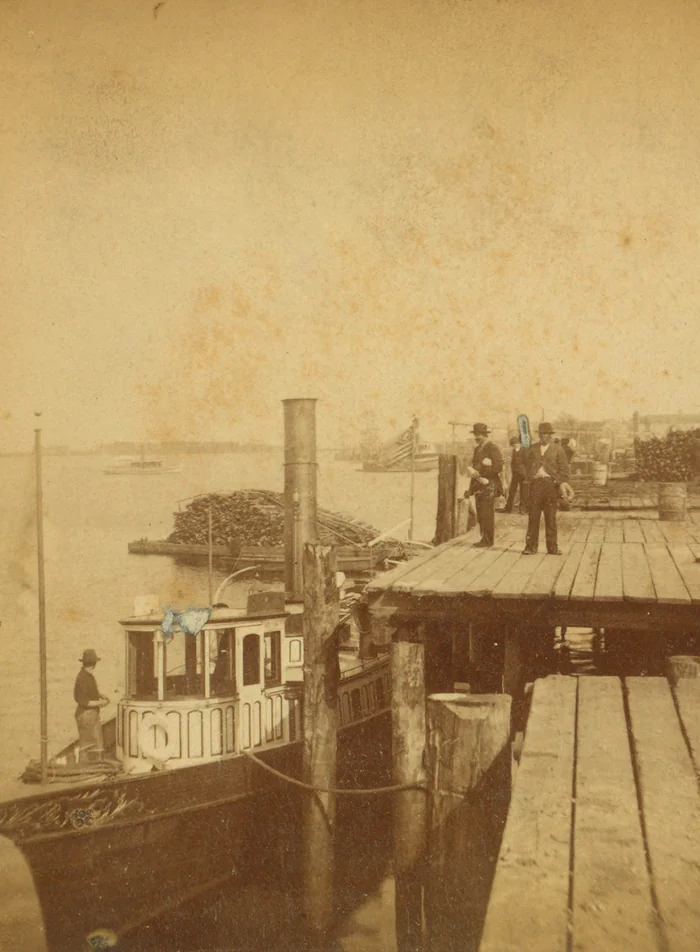
Lumber, tourists and a new courthouse, 1867 to 1898
In 1867 the naturalist John Muir walked from Fernandina toward Cedar Key, following the Florida Railroad's route. At Kings Ferry, William and Jackson Mizell arrived in 1870 and built up a small mill until, a state marker says, it was the largest milling operation in the county. Many African Americans stayed in the area after 1865 and worked in the mills, the forests and the docks, loading lumber onto ships bound for ports around the world. Fires and yellow fever struck Fernandina and the island in the 1870s. In the 1880s the port of Fernandina was busy again, sending out lumber, phosphate and naval stores.
Tourists from the North came by steamship and railroad, and hotels and bath houses were built along the beaches. The Amelia Island Museum of History calls this the island's Golden Age. Many Victorian homes from the late 1800s still stand in Fernandina Beach's 50-block historic district, the county says. The Nassau County Courthouse, in the Italianate style, was designed by A.E. McClure of Jacksonville. Its cornerstone carries the date 1891, but the ceremony to lay it was put off until April 12, 1892.
In 1898, during the Spanish-American War, the Army camped soldiers bound for Cuba at Camp Amelia, just east of downtown Fernandina. The Army also used Fort Clinch for barracks and for storing ammunition that year, and it was abandoned again before a year had passed.
Sources: Florida Department of State: Historical marker, John Muir's Walk on the Florida Railroad; Florida Department of State: Historical marker, Kings Ferry; Nassau County: 2030 Comprehensive Plan, Economic Development Element, Background Data and Analysis; Amelia Island Museum of History: Permanent Exhibit; Florida Department of State: Historical marker, Nassau County Historic Courthouse; Florida State Parks: History of Fort Clinch
Next: Chapter 9, Black history: Peck High School and American Beach →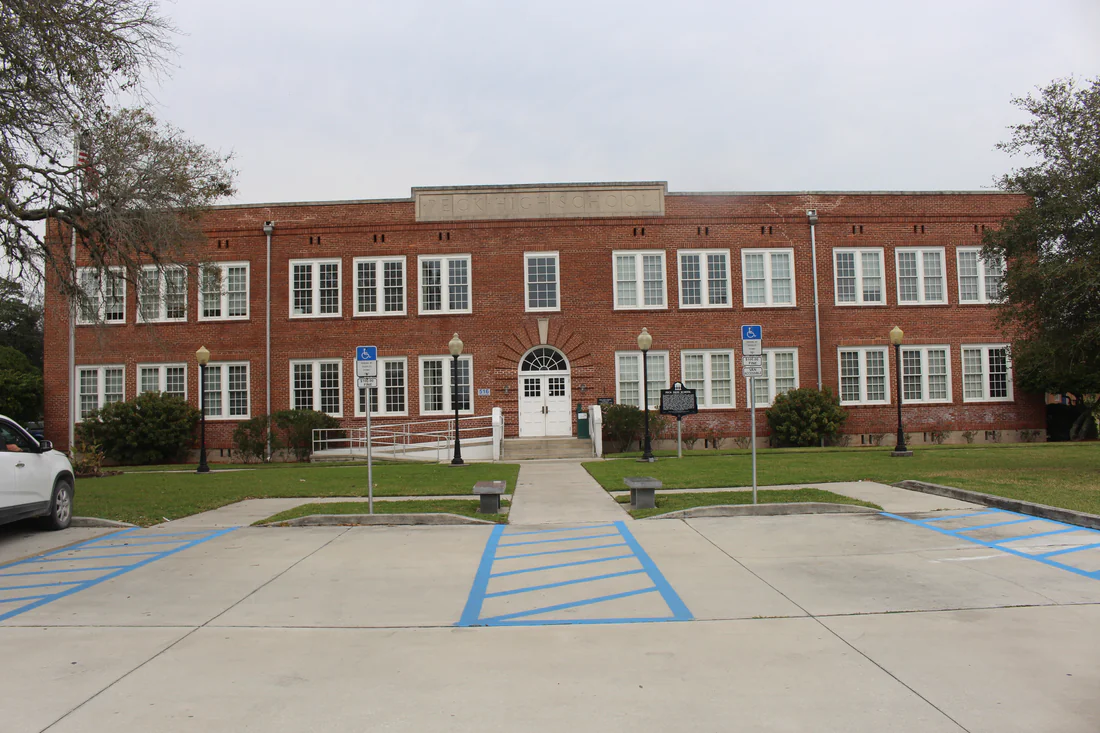
Black history: Peck High School and American Beach
In 1880 Henry B. Delaney led a petition asking for a school for African American children in Fernandina. Colored School No. 1 opened in 1885 in a four-room building on the corner of Atlantic Avenue and 11th Street. William H. Peck, a Howard graduate, became principal in 1888 and stayed in that post until 1931. The school was renamed for him in 1911, and the new Peck High School, built with help from the Rosenwald Foundation, was finished in 1927 for grades 1 to 12.
In January 1935 the Afro-American Life Insurance Company, led by Abraham Lincoln Lewis, bought 33 acres with 1,000 feet of beach and founded American Beach. Florida's beaches were segregated until the Civil Rights Act of 1964, so Black visitors came to American Beach from across the Southeast, where few beaches were open to them. In 1948 Willie B. Evans and his friend Ernest Favors built Evans' Rendezvous, a 200-seat nightclub by the ocean, and people came by the busload. The Civil Rights Act opened other beaches in 1964, and later that year Hurricane Dora wrecked homes and businesses at American Beach.
Peck closed in 1969, when Fernandina's schools were desegregated. Bryant Academy in Yulee, which served Black children from 1950 to 1969, became Yulee Elementary School under the county's desegregation plan. In 1972 new development pushed the people of Franklin Town north to American Beach. MaVynee Betsch, a great-granddaughter of Lewis known as the Beach Lady, moved back to American Beach in 1975, and a state marker credits her efforts with protecting the 60-foot NaNa dune, which is now part of the Timucuan Ecological and Historic Preserve.
Sources: Florida Department of State: Historical marker, Peck High School; Florida Department of State: Historical marker, First Home on American Beach; Florida Department of State: Historical marker, Historic American Beach; Florida Department of State: Historical marker, Evans' Rendezvous; Florida Department of State: Historical marker, Bryant Academy; Florida Department of State: Historical marker, A Dune System Called NaNa
Next: Chapter 10, Shrimp boats, paper mills and a state park, 1897 to 1973 →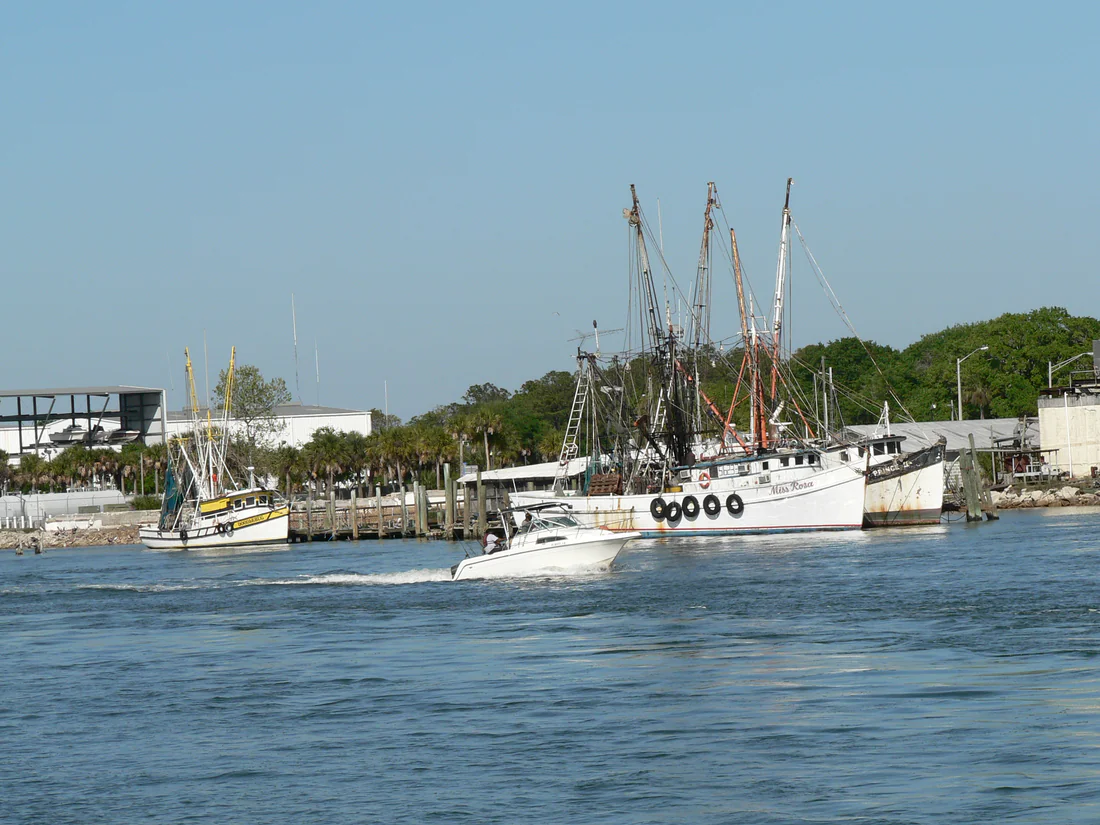
Shrimp boats, paper mills and a state park, 1897 to 1973
The county says many people regard Fernandina Beach as the place where modern commercial shrimping was born. Its history calls 1897 to 1920 the golden years of shrimping in Fernandina, when the catch grew a hundredfold. Between 1903 and 1910 a Sicilian in Fernandina, Sollecito Salvatore, who came to be called Mike Salvador, put an engine on a rowboat, News4JAX reports.
The Army sold Fort Clinch to private owners in 1926, and in 1935 it became Fort Clinch State Park, one of the first state parks in Florida. Workers of the Civilian Conservation Corps began restoring the fort's buildings in 1936. Container Corporation began work on a mill about a mile north of downtown Fernandina in June 1937, during the Great Depression. Rayonier started its own Fernandina mill the same year, and the mill turned out its first pulp on December 10, 1939. In 1942 the city bought land that it leased to the federal government for a small Navy airfield, which after the war became the city's Fernandina Beach Municipal Airport.
In 1951 Fernandina merged with its neighbor, the town of Fernandina Beach, and took the neighbor's name. The first shrimp boat races, counted as the first shrimp festival, were held in Fernandina Beach on June 7, 1964. In 1971 Charles Fraser's Sea Pines Company, from Hilton Head, South Carolina, bought open land at Amelia Island's south end for what became the Amelia Island Plantation resort. In 1973 the Fernandina Beach Historic District was listed on the National Register of Historic Places.
Sources: Nassau County: 2030 Comprehensive Plan, Economic Development Element, Background Data and Analysis; News4JAX (WJXT): How Fernandina Beach became known as the 'Birthplace of the Modern Shrimping Industry'; Florida State Parks: History of Fort Clinch; Florida State Parks: Fort Clinch State Park history; Jacksonville Daily Record: Rayonier, celebrating its 75th anniversary, remains critical to Nassau County; Encyclopaedia Britannica: Fernandina Beach; Fernandina Beach News-Leader: Local history shines through bicentennial events, Shrimp Fest; Florida Memory: Nassau County Courthouse on the southwest corner of Centre and 5th streets in the Fernandina Beach Historic District
Next: Chapter 11, Since 1990: Burney Park, a museum at American Beach and The Amelia car show →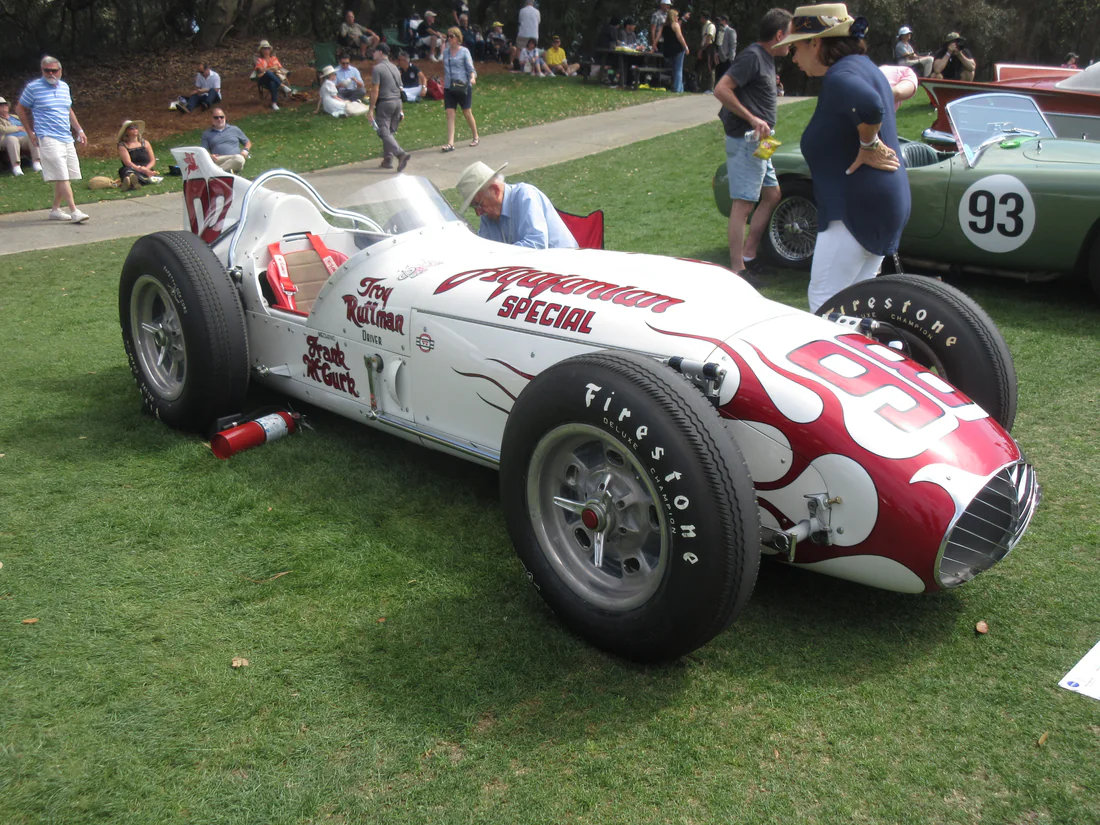
Since 1990: Burney Park, a museum at American Beach and The Amelia car show
Burney Park at American Beach was dedicated in October 1990, and a state marker says it was the county's first park to honor a person of color. It honors Isadore Horace Burney II, who was president of the Afro-American Life Insurance Company from 1967 to 1976. Money from state grants and from the city of Fernandina Beach restored the old Peck High School in the 1990s, and it reopened as the Peck Center. In 1991 the Ritz-Carlton opened a hotel on Amelia Island. Bill Warner, a Jacksonville car collector and magazine photographer, founded The Amelia Concours d'Elegance in 1996, a classic car show that takes place every March at the hotel and the golf course beside it.
The National Register of Historic Places added the American Beach Historic District in 2002, with the Lewis house as one of its buildings. The 1938 county jail, which the county turned over to an early form of the Amelia Island Museum of History after it built a new jail in Yulee, was listed in the National Register in 2009. The A. L. Lewis Museum at American Beach, also called the American Beach Museum, opened in early September 2014.
In March 2025 bad weather moved the 30th Amelia up a day, and thousands of people came out on Saturday. Its Best of Show awards went to an Alfa Romeo 8C 2.9 from 1938 and to the 1967 Lotus 49 first raced by Jimmy Clark. In April 2025 the city held a groundbreaking ceremony to restore the Amelia Island Lighthouse inside and out, including its brick and granite staircase. On Saturday, March 7, 2026, the 31st Amelia honored the four-time IndyCar champion Dario Franchitti, and a 1931 Duesenberg J roadster won Best of Show.
Sources: Florida Department of State: Historical marker, Burney Park; Florida Department of State: Historical marker, Peck High School; Nassau County: 2030 Comprehensive Plan, Economic Development Element, Background Data and Analysis; Jacksonville Today (WJCT): Italian curves and British racer lead awards at 30th Amelia Concours; Florida Department of State: Historical marker, First Home on American Beach; Florida Department of State: Historical marker, Old Nassau County Jail; ABC News 4 (WCIV): American Beach: Surviving the sands of time; City of Fernandina Beach: Amelia Island Lighthouse Renovations; Jacksonville Today (WJCT): Classic cars draw thousands to Amelia Concours d'Elegance
Next: the whole story, in dates →The whole story, in dates
Indians camp on the bluff above the Amelia River.
Jean Ribault's French ships enter the St. Marys River.
Franciscans and Indians have a village on the bluff.
The island's mission is abandoned during James Moore's invasion.
Oglethorpe posts Highlanders on the bluff.
British forces turn back Americans at Thomas Creek.
Spain gets Florida back, and Loyalists sail from the harbor.
Governor Enrique White names the town Fernandina.
The Patriots take the Spanish battery.
Gregor MacGregor seizes Fort San Carlos.
United States troops occupy the fort.
Nassau County is established from Duval County.
The Amelia Island Lighthouse is built, by the city's date.
Work starts on Fort Clinch.
The Florida Railroad Company is incorporated, with Yulee as president.
The last tracks are laid at Cedar Key.
Union troops arrive at Fort Clinch.
The Confederacy takes the Florida Railroad apart.
Fernandina becomes the county seat again.
John Muir walks the railroad's route from Fernandina.
Colored School No. 1 opens in Fernandina.
The courthouse cornerstone is laid.
Troops bound for Cuba camp at Camp Amelia.
Mike Salvador puts an engine on a rowboat.
American Beach is founded.
Fort Clinch becomes a state park.
Container Corporation starts its mill north of downtown.
The first shrimp boat races are held.
Peck High School closes as schools are desegregated.
MaVynee Betsch moves back to American Beach.
Burney Park is dedicated.
Bill Warner founds The Amelia.
The American Beach Historic District joins the National Register.
The A. L. Lewis Museum at American Beach opens.
Thousands come to the 30th Amelia.
The city holds a groundbreaking to restore the lighthouse.
The 31st Amelia honors Dario Franchitti.
Where you can still see it
 01
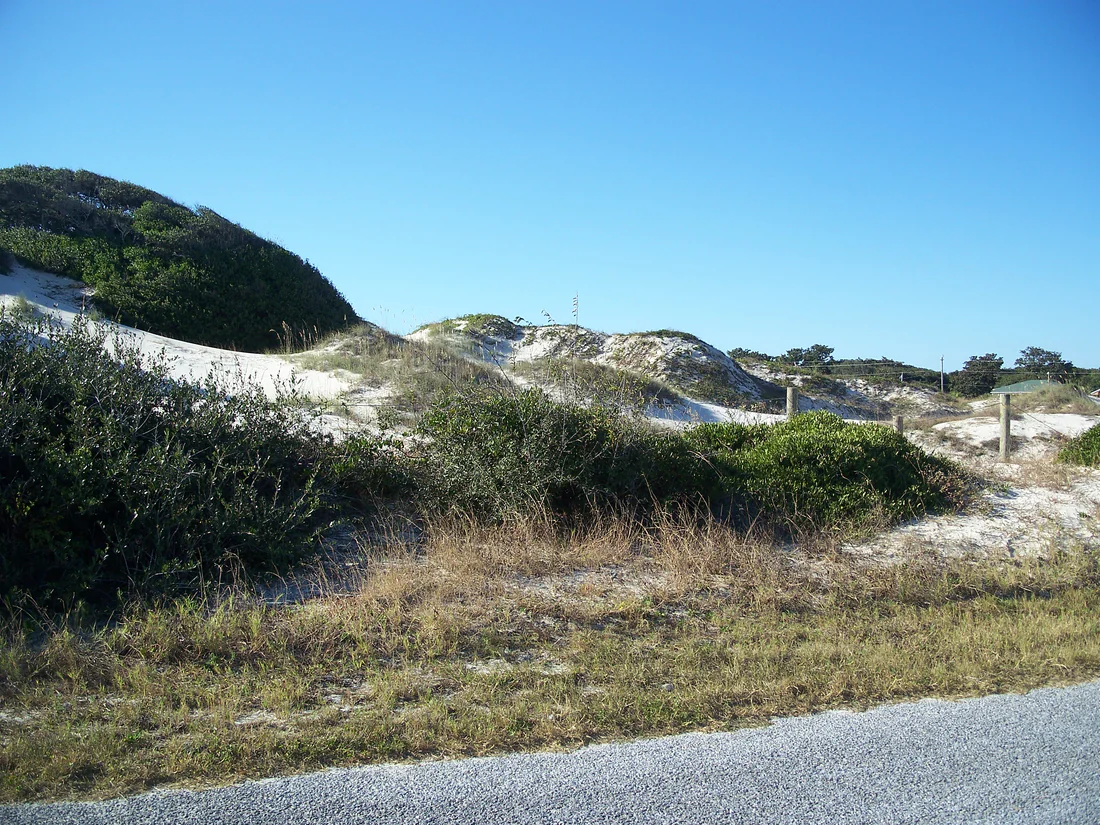 02
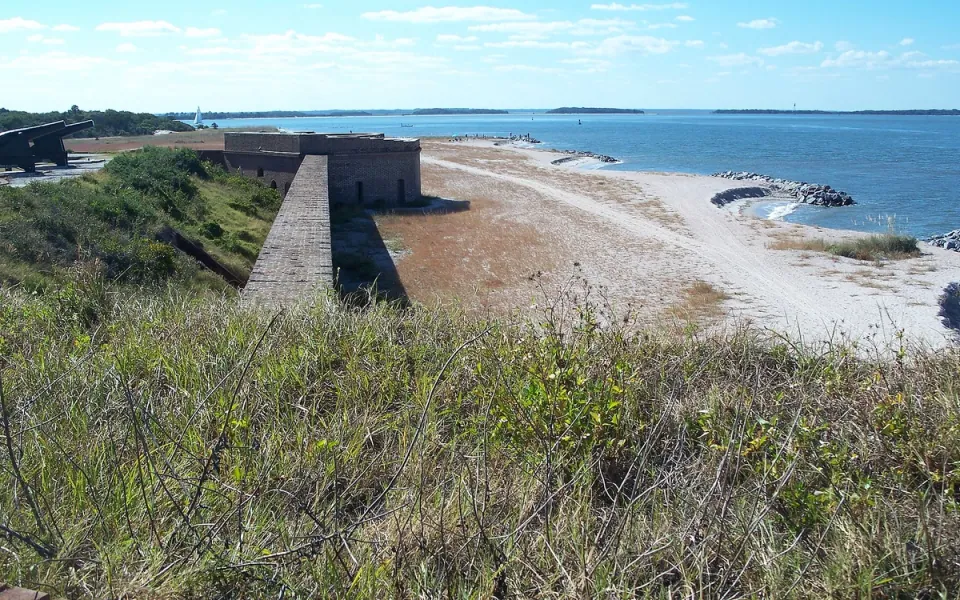 03
Fort Clinch State Park
Goes with: Shrimp boats, paper mills and a state park, 1897 to 1973
Open the place page →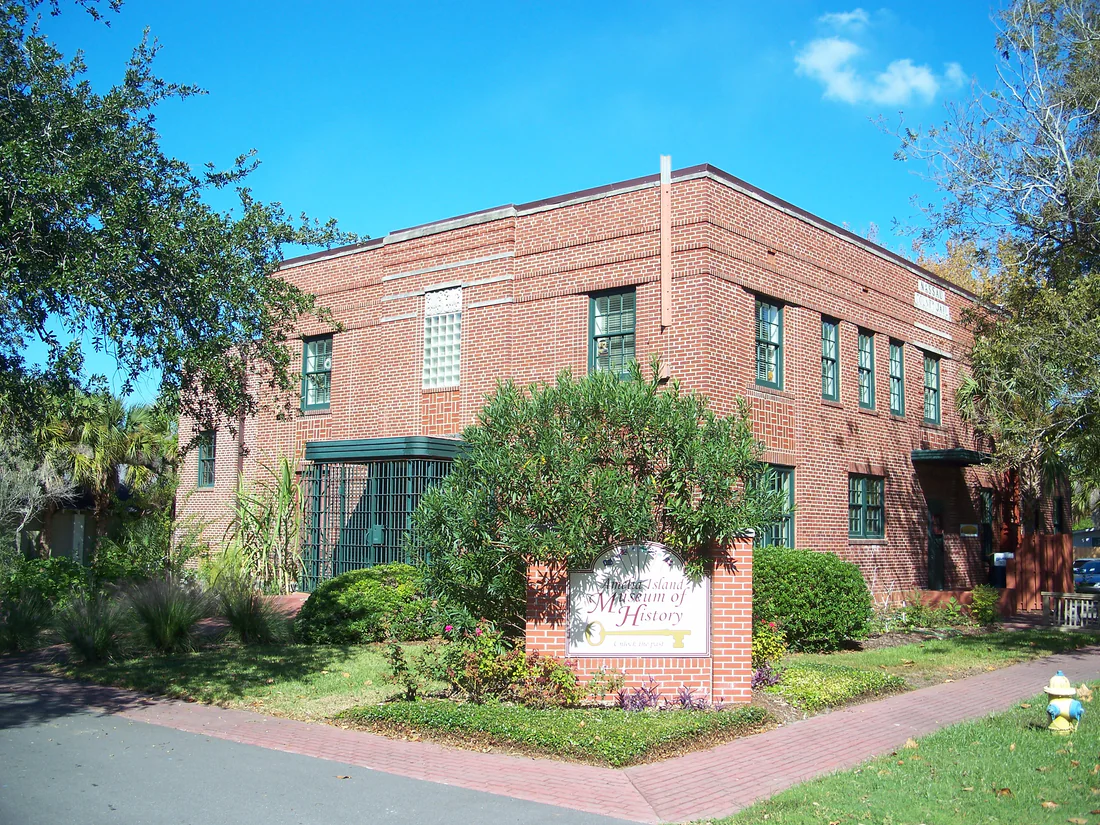 04
Amelia Island Museum of History
Goes with: Since 1990: Burney Park, a museum at American Beach and The Amelia car show
Open the place page →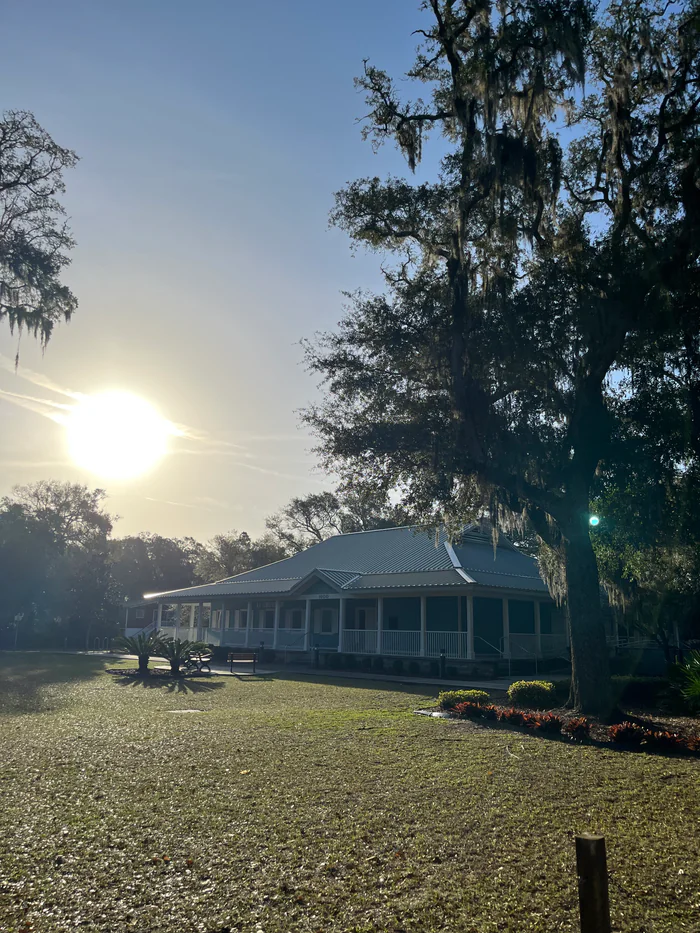 05
American Beach Museum
Goes with: Since 1990: Burney Park, a museum at American Beach and The Amelia car show
Open the place page →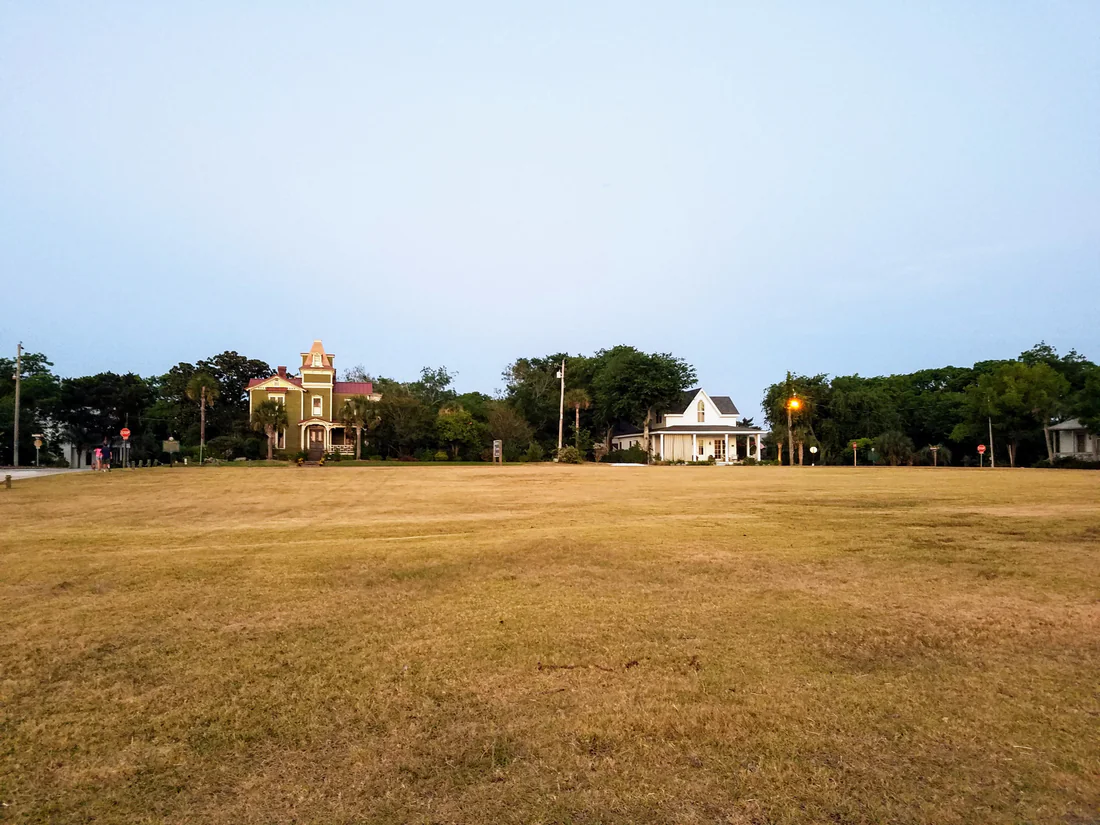 06
Fernandina Plaza Historic State Park
Goes with: Smugglers, Patriots and pirates, 1798 to 1821
Fernandina Plaza Historic State Park (Florida State Parks) →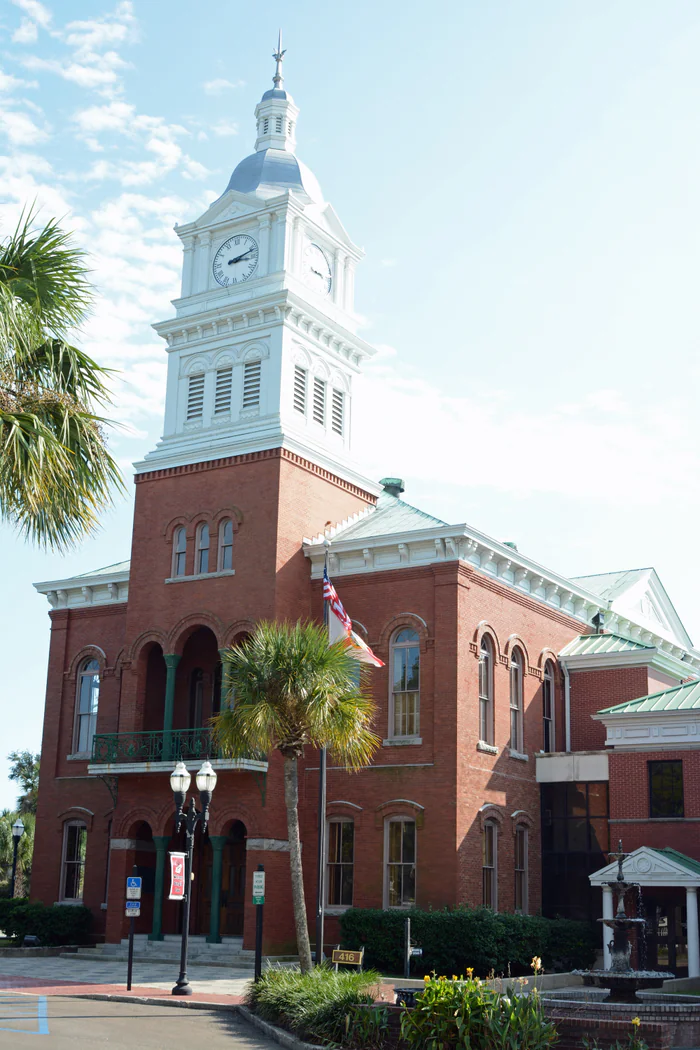 07
Nassau County Courthouse
Goes with: Lumber, tourists and a new courthouse, 1867 to 1898
Nassau County Historic Courthouse (state historical marker) →Questions people ask
When was Nassau County created?
Nassau County was established on December 29, 1824, out of what was then Duval County.
Chapter 5 →What is Nassau County named for?
The News-Leader says the county took its name from the same source as Nassau Sound and the Nassau River, the Duchy of Nassau, a German state.
Chapter 5 →What is the county seat of Nassau County?
Fernandina was the first county seat, and after the seat moved to the Braddock plantation site and to Callahan it returned to Fernandina in 1866.
Chapter 5 →Why is Amelia Island called the Isle of Eight Flags?
The Isle of Eight Flags Shrimp Festival counts eight flags that have flown over Amelia Island: French, Spanish, English, Patriot, Green Cross, Mexican, Confederate and United States.
Chapter 7 →When was American Beach founded?
The Afro-American Life Insurance Company, led by Abraham Lincoln Lewis, founded American Beach in January 1935.
Chapter 9 →Where this comes from.
Last updated October 18, 2026.
- Fernandina Beach News-Leader: Treasures of Nassau: Frontier Florida ↗ Read October 18, 2026
- Fernandina Beach News-Leader: Nassau County turns 200 ↗ Read October 18, 2026
- Fernandina Beach News-Leader: Local history shines through bicentennial events, Shrimp Fest ↗ Read October 18, 2026
- Amelia Island Museum of History: Permanent Exhibit ↗ Read October 18, 2026
- Amelia Island Museum of History: Learn ↗ Read October 18, 2026
- Florida State Parks: History of Fort Clinch ↗ Read October 18, 2026
- Florida State Parks: Fort Clinch State Park history ↗ Read October 18, 2026
- Florida State Parks: History of Fernandina Plaza ↗ Read October 18, 2026
- Florida State Parks: Fernandina Plaza Historic State Park ↗ Read October 18, 2026
- Isle of Eight Flags Shrimp Festival: The History ↗ Read October 18, 2026
- Nassau County Board of County Commissioners: Resolution 2012-72, 450th anniversary of Jean Ribault's arrival (City of Jacksonville, Commemorate 450) ↗ Read October 18, 2026
- Nassau County: 2030 Comprehensive Plan, Economic Development Element, Background Data and Analysis ↗ Read October 18, 2026
- City of Fernandina Beach: Appendix A, Historic Context and References from the Historic Properties Survey ↗ Read October 18, 2026
- City of Fernandina Beach: Amelia Island Lighthouse Renovations ↗ Read October 18, 2026
- City of Fernandina Beach: Request for Proposal 25-01, Bosque Bello National Register of Historic Places ↗ Read October 18, 2026
- Florida Department of State: Historical marker, Plaza San Carlos ↗ Read October 18, 2026
- Florida Department of State: Historical marker, Battle of Thomas Creek ↗ Read October 18, 2026
- Florida Department of State: Historical marker, Kings Ferry ↗ Read October 18, 2026
- Florida Department of State: Historical marker, Fort San Carlos ↗ Read October 18, 2026
- Florida Department of State: Historical marker, The Battle of Waterman's Bluff ↗ Read October 18, 2026
- Florida Department of State: Historical marker, Fernandez Grant ↗ Read October 18, 2026
- Florida Department of State: Historical marker, Florida's First Atlantic to Gulf Railroad ↗ Read October 18, 2026
- Florida Department of State: Historical marker, Florida's First Cross-Peninsula Railroad ↗ Read October 18, 2026
- Florida Department of State: Historical marker, John Muir's Walk on the Florida Railroad ↗ Read October 18, 2026
- Florida Department of State: Historical marker, Nassau County Historic Courthouse ↗ Read October 18, 2026
- Florida Department of State: Historical marker, Historic American Beach ↗ Read October 18, 2026
- Florida Department of State: Historical marker, Peck High School ↗ Read October 18, 2026
- Florida Department of State: Historical marker, Bryant Academy ↗ Read October 18, 2026
- Florida Department of State: Historical marker, First Home on American Beach ↗ Read October 18, 2026
- Florida Department of State: Historical marker, Evans' Rendezvous ↗ Read October 18, 2026
- Florida Department of State: Historical marker, A Dune System Called NaNa ↗ Read October 18, 2026
- Florida Department of State: Historical marker, Burney Park ↗ Read October 18, 2026
- Florida Department of State: Historical marker, Old Nassau County Jail ↗ Read October 18, 2026
- Florida Memory: Nassau County Courthouse on the southwest corner of Centre and 5th streets in the Fernandina Beach Historic District ↗ Read October 18, 2026
- News4JAX (WJXT): How Fernandina Beach became known as the 'Birthplace of the Modern Shrimping Industry' ↗ Read October 18, 2026
- Jacksonville Daily Record: Rayonier, celebrating its 75th anniversary, remains critical to Nassau County ↗ Read October 18, 2026
- Encyclopaedia Britannica: Fernandina Beach ↗ Read October 18, 2026
- ABC News 4 (WCIV): American Beach: Surviving the sands of time ↗ Read October 18, 2026
- Jacksonville Today (WJCT): Italian curves and British racer lead awards at 30th Amelia Concours ↗ Read October 18, 2026
- Jacksonville Today (WJCT): Classic cars draw thousands to Amelia Concours d'Elegance ↗ Read October 18, 2026