Putnam County was created on January 13, 1849, from parts of St. Johns and Alachua counties, and it was named for Benjamin Alexander Putnam, a lawyer, legislator and Seminole War veteran. Palatka, on the St. Johns River, is the county seat. After the Civil War, Palatka became one of Florida's leading tourist centers, a state marker says. The county's history goes back thousands of years, to the burial mound and village at Mount Royal near Welaka.
This page tells the story in order, from the first people at Mount Royal to Dunns Creek State Park, the St. Johns River Center and Palatka's Main Street, then lists places in the county where you can still see it. The sources for each part are named at the end of that part, and all of them are listed at the bottom of the page.
The first people at Mount Royal
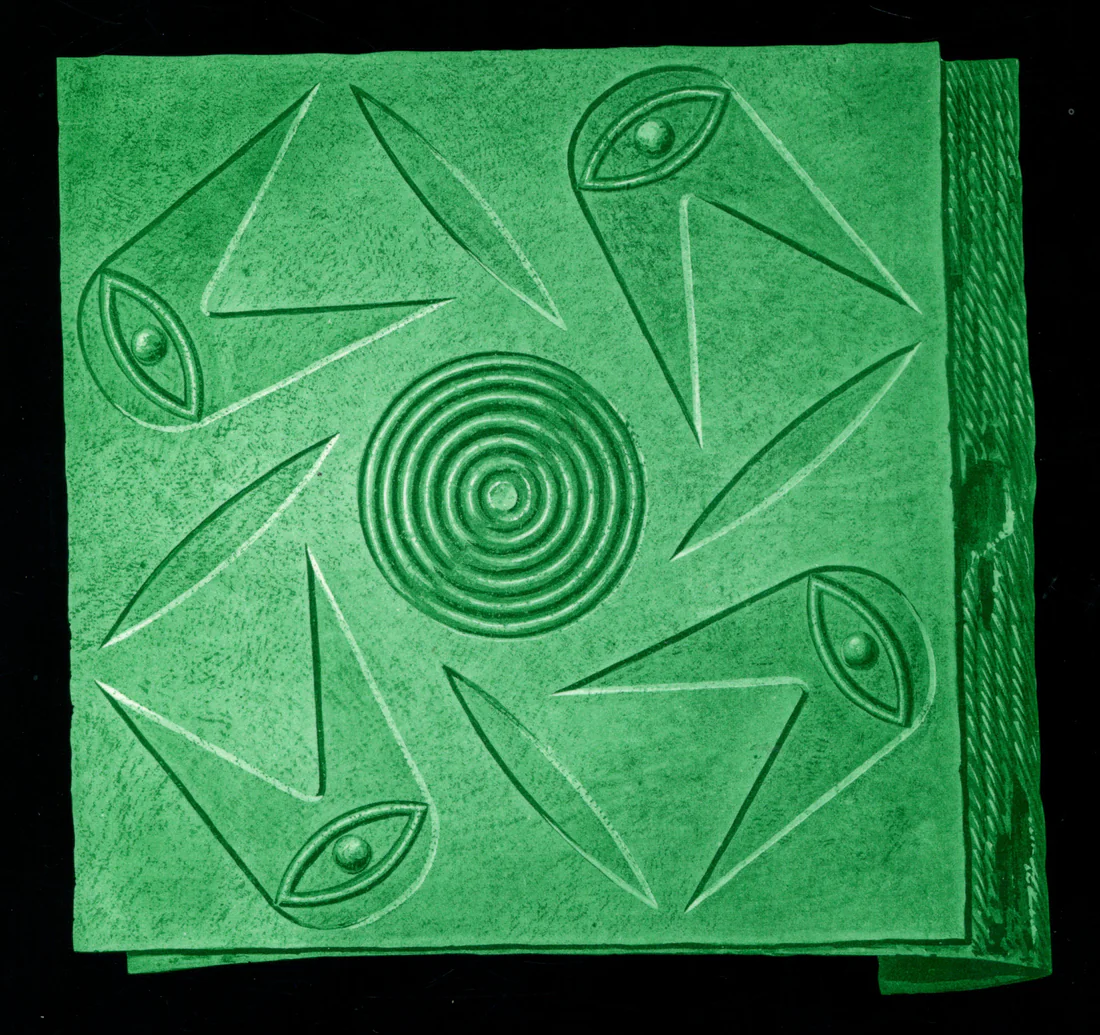
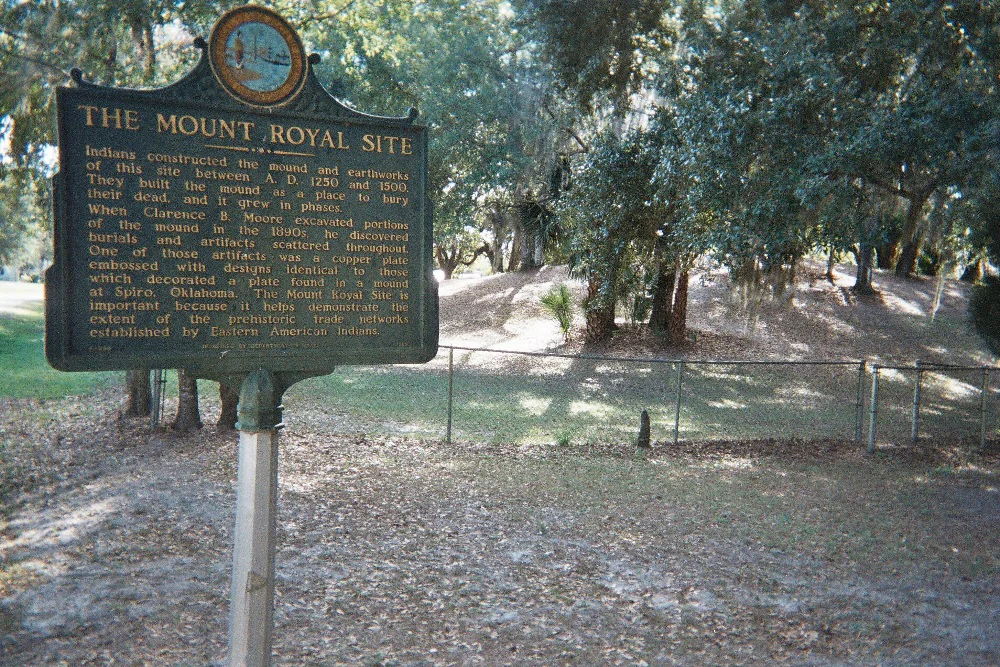
People have lived at Mount Royal, near Welaka, for thousands of years, a state marker there says. The site holds earthworks, a village area and a Native American burial mound. Florida State Parks says that in this region, many people of the St. Johns II culture spoke Timucuan.
In 1893 and 1894 the archaeologist Clarence B. Moore dug into the Mount Royal mounds. He found burials along with decorated pottery, polished stone tools, copper ornaments and beads of shell and pearl. The copper pieces resemble finds from Mississippian sites in Oklahoma, Alabama and Georgia, and they date to between A.D. 1000 and 1500.
Sources: Florida Department of State: Florida Historical Marker Details, The Mount Royal Site; Florida State Parks: Dunns Creek State Park, History
Next: Chapter 2, Spanish missions, cattle and the British →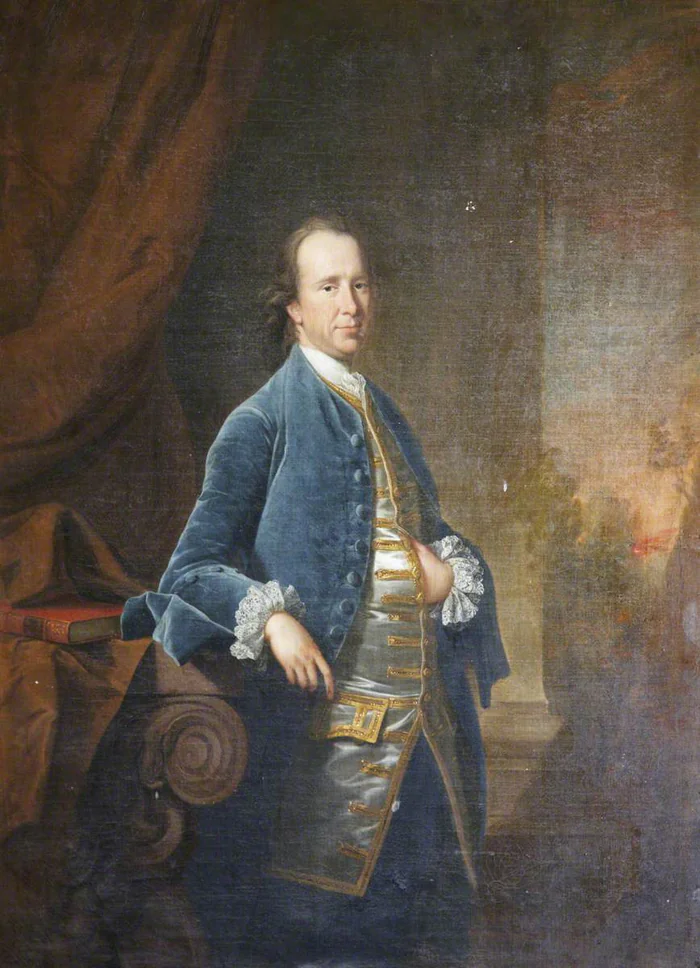
Spanish missions, cattle and the British
Digs at the Mount Royal village in 1983 and in 1994 and 1995 found traces of six buildings. They held Spanish objects and probably belonged to the Mission of San Antonio de Anacape, which the marker dates from 1587 to 1675. The Spanish were developing Palatka, along with Gainesville and Tallahassee, as early as 1655, the Putnam County Historical Society says. Palatka became the main place where cattle crossed the St. Johns River on the way to the slaughterhouse. The society says the name Palatka comes from a Native American word for "cow ford" or "cow crossing."
Britain ruled Florida from 1763 to 1783. In 1765 John Dunn, a coffee planter and lawyer, got a grant to farm land "between the two lakes," and Dunns Creek takes its name from him. In 1767 the English philanthropist Denys Rolle started a colony on the east side of the St. Johns River with 200 indentured servants taken from the streets of London. Enslaved Black people were brought in to raise cattle and citrus and to make turpentine. When Britain handed Florida to Spain in 1783, the colony was abandoned, Rolle went back to England, and the colony's Black people resettled in the Bahamas.
William Bartram, a British naturalist, came to Mount Royal in 1765 and 1766, and returned in 1774. His account of the great mound, published in 1791, is among the earliest accounts of a North American Indian mound, the marker says.
Sources: Florida Department of State: Florida Historical Marker Details, The Mount Royal Site; Putnam County Historical Society: A Brief History of Palatka; Florida State Parks: Dunns Creek State Park, History; Florida Department of State: Florida Historical Marker Details, Rollestown
Next: Chapter 3, A trading post and Fort Shannon →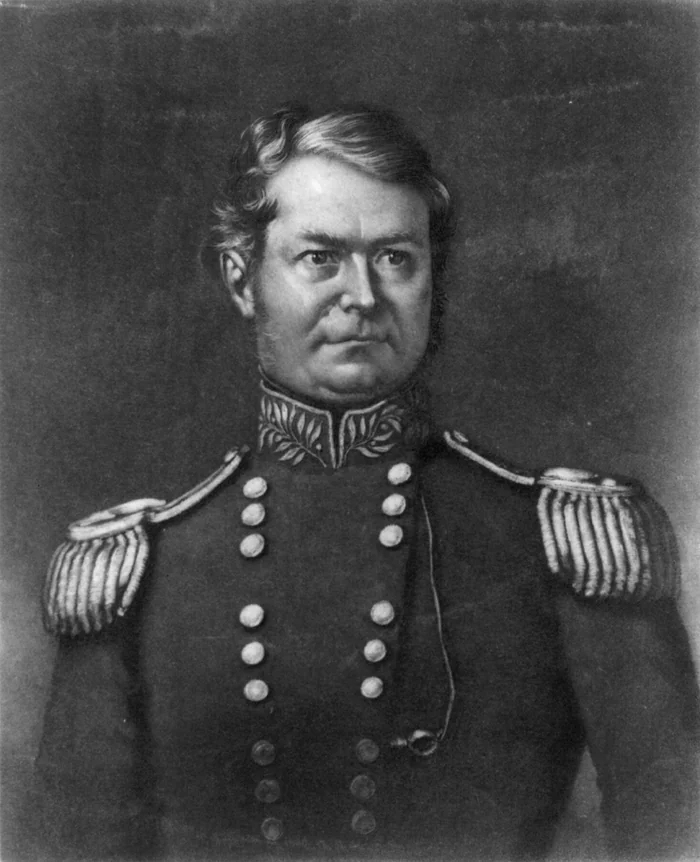
A trading post and Fort Shannon
Americans set up a trading post at Palatka in 1821, the Florida Department of State says. Large ocean-going ships could come up the St. Johns River as far as Palatka but no farther, the historical society says. Seminoles attacked and burned Palatka in December 1835, early in the Second Seminole War, the society says. The state marker in Palatka gives the year as 1836.
In May 1838 the U.S. government set up Fort Shannon at Palatka, and a state marker calls it one of Florida's major supply depots of the war. It was a garrison, a supply depot and a hospital for the forts farther south in Florida. Its buildings included barracks, blockhouses, a hospital and stables for over 400 horses. Gen. William J. Worth ran the post until he became commander of the armies in Florida.
William T. Sherman, Zachary Taylor and Winfield Scott were all stationed there, the Palatka marker says. While the fort stood, Palatka looked like a military town and was under Army control. The historical society dates the building of the fort to the early 1840s.
Sources: Florida Department of State: Secretary Byrd Designates Palatka Main Street as Florida Main Street Program of the Month (April 15, 2024); Putnam County Historical Society: A Brief History of Palatka; Florida Department of State: Florida Historical Marker Details, Palatka; Florida Department of State: Florida Historical Marker Details, Fort Shannon
Next: Chapter 4, 1849: Putnam County is created →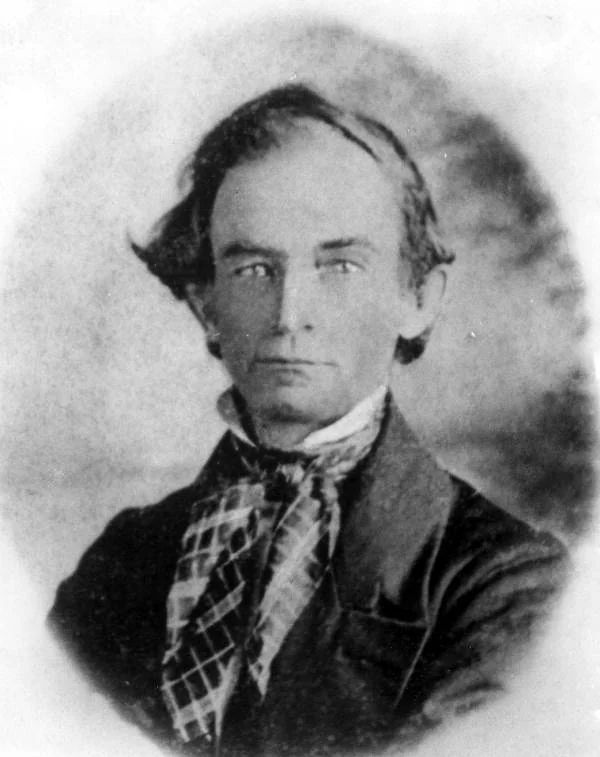
1849: Putnam County is created
On January 13, 1849, Putnam County was created from parts of St. Johns and Alachua counties, the University of South Florida's map collection says. It was Florida's 28th county. It was named for Benjamin Alexander Putnam (1801 to 1869), a lawyer and legislator who fought against the Seminoles and was the Florida Historical Society's first president, the University of Central Florida says. Palatka became the county seat.
Robert Raymond Reid paid $5,000 for Palatka on April 3, 1851, the historical society says. Two preachers who had held services in homes south of Palatka met local people at Mud Lake on July 19, 1852, to form a Baptist church, which in May 1871 took the name Peniel Baptist Church. Its first baptisms, three days later, were of Bryant Osteen and of Jesse, a Black man enslaved by a church member named Weeks.
Judge Isaac H. Bronson, a former congressman from New York, prepared Palatka's city charter and petitioned for the town to become the county seat. On January 8, 1853, the State of Florida chartered the City of Palatka. Bronson gave the land for the county courthouse and for St. Mark's Episcopal Church, whose parish dates from 1853 and whose church building was finished in 1854.
Sources: University of South Florida, Florida Center for Instructional Technology: FL Maps, Putnam County; University of Central Florida, RICHES: Putnam County Collection; Florida Department of State: Florida Historical Marker Details, Bronson-Mulholland House; Putnam County Historical Society: A Brief History of Palatka; Florida Department of State: Florida Historical Marker Details, Peniel Baptist Church; Florida Department of State: Florida Historical Marker Details, St. Marks Episcopal Church
Next: Chapter 5, Sunny Point and the Civil War →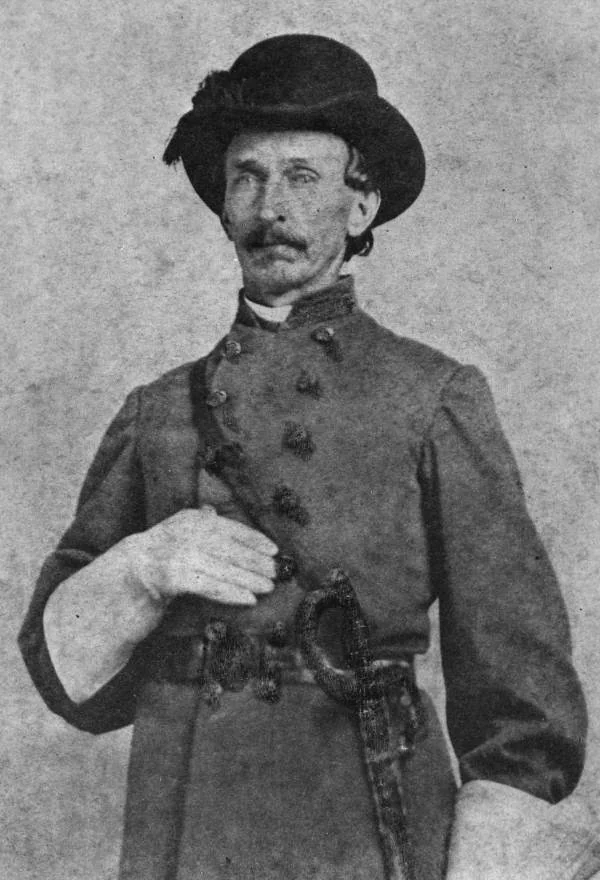
Sunny Point and the Civil War
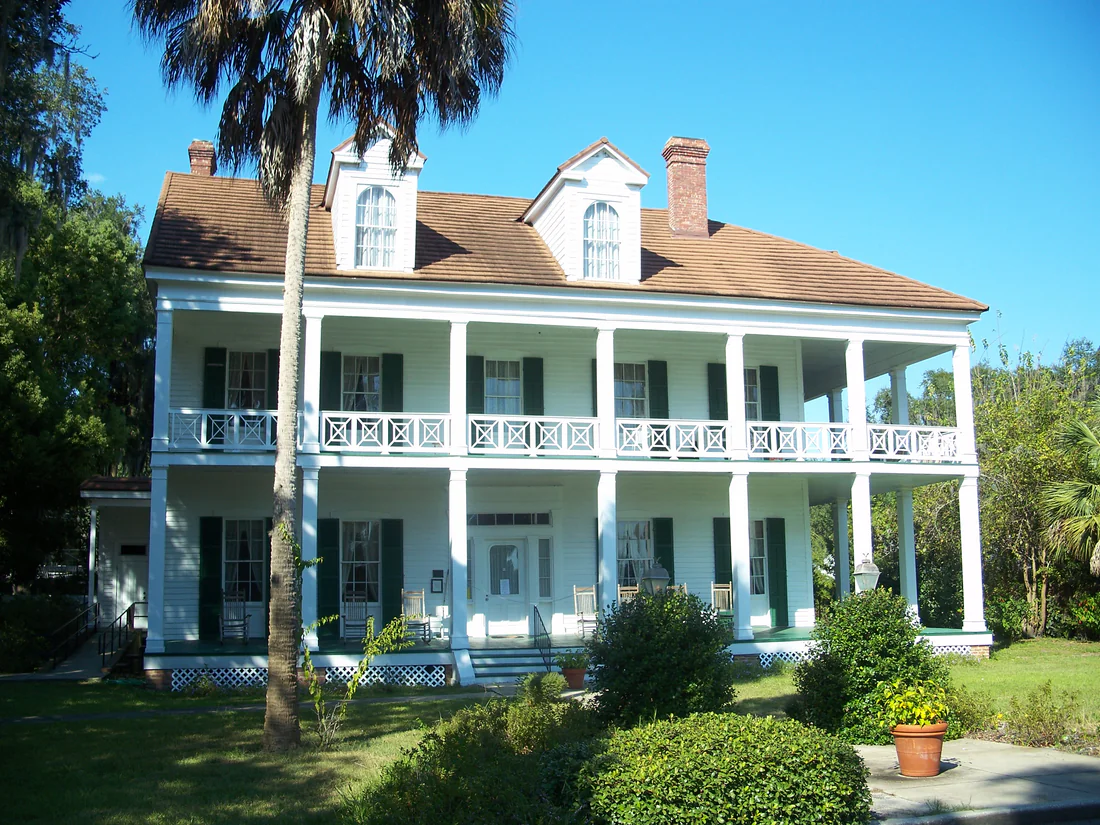
Bronson's home, now known as the Bronson-Mulholland House, was built around 1853 on ten acres beside the St. Johns River. He named the estate "Sunny Point," and orange groves surrounded the Greek Revival house. After Bronson died in 1855, he was buried on the grounds. His widow lived there until 1861, when the outbreak of war sent her back to New York.
During the war, Union gunboats took control of the St. Johns River and Union forces occupied Palatka, the historical society says. Union and Confederate troops each occupied the Bronson house at different times. In 1862 Company C of the 5th Florida Infantry, a Confederate unit, camped at Camp Call, which seems to have been beside the ravines above town.
On May 23, 1864, Captain John Jackson Dickison and men of the 2nd Florida Cavalry ambushed the Union gunboat Columbine at Horse Landing, near Palatka. The Confederates captured the boat and burned it, Navy records say. The marker at Horse Landing, placed in 2001 with private donations, calls it the only known case of cavalry sinking an enemy gunboat. In July 1864 Dickison's men battled Union troops in Palatka, and the Union army pulled out during the night and left Dickison holding the town for several weeks, a Florida State Parks marker says. From 1866 to 1868 Charlotte Henry, a friend of Bronson's widow, ran a school for the children of freed slaves in the Bronson house.
Sources: Florida Department of State: Florida Historical Marker Details, Bronson-Mulholland House; Putnam County Historical Society: A Brief History of Palatka; Historical Marker Database: The Civil War and the Ravines (Florida State Parks marker); Historical Marker Database: Battle At Horse Landing; Naval History and Heritage Command: Columbine I (Dictionary of American Naval Fighting Ships)
Next: Chapter 6, The Gem City of the St. Johns →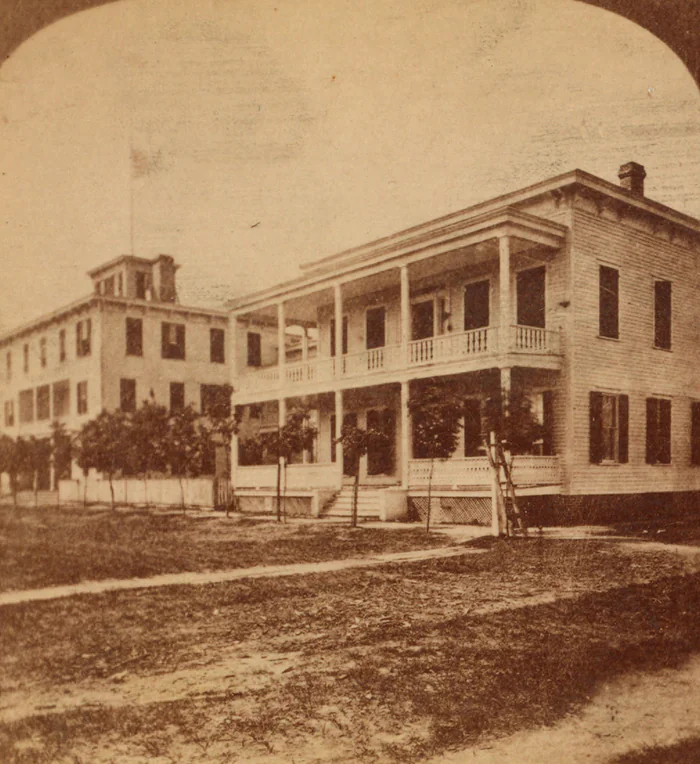
The Gem City of the St. Johns
Palatka's nickname from 1865 to 1895 was the "Gem City of the St. Johns," Florida State Parks says. It was a major port that rivaled Jacksonville for trade on the river. By 1885 seven steamboat lines ran out of Palatka, among them Hubbard Hart's Ocklawaha River Line, the historical society says. Steamships on Crescent Lake brought settlers and visitors to Crescent City, the city says.
During the 1880s five new railroad lines came to Palatka. On November 7, 1884, a great fire burned nearly all of Palatka's business district. The Putnam House hotel went up in 89 days in 1885, the Palatka Daily News says, and it was torn down in 1922. By 1890 Palatka had eight first-class hotels.
In the 1870s the farm settlement of Banana, a mile south of today's Melrose, grew corn, peanuts and sugar cane, a 2023 state marker says. The Great Freezes of 1894 and 1895 nearly destroyed Palatka's citrus industry for good, the historical society says.
Sources: Florida State Parks: Ravine Gardens State Park, History; Putnam County Historical Society: A Brief History of Palatka; City of Crescent City: We are Crescent City, Florida; Palatka Daily News: New piece is his 6th mural in Palatka; Florida Department of State: Florida Historical Marker Details, The Historic Banana Community
Next: Chapter 7, Cypress, Annie Oakley and the Hotel James →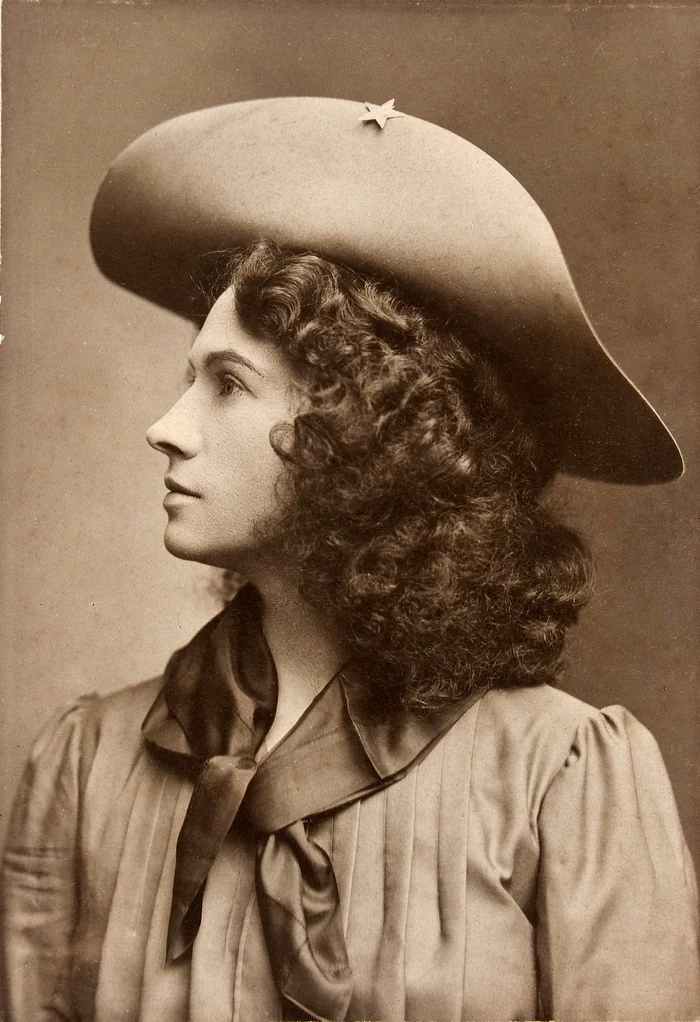
Cypress, Annie Oakley and the Hotel James
By 1910 Palatka was a major industrial center, the historical society says. The society calls the Wilson Cypress Company the world's largest cypress mill, turning out 60,000 shingles and 80,000 feet of lumber a day. In 1908 Annie Oakley gave shooting and riding shows on the 100 block of Palatka, the Palm Coast Observer reports.
The local businessman George E. Welch built the Hotel James, and its original core went up in 1916. Henry John Klutho designed it and its 1924 addition, and the state calls it an excellent example in Palatka of the Prairie Style. Shops filled its first floor, and hotel rooms took up the second and third floors. Donald Ross designed the Palatka Golf Club course in 1925, the city says.
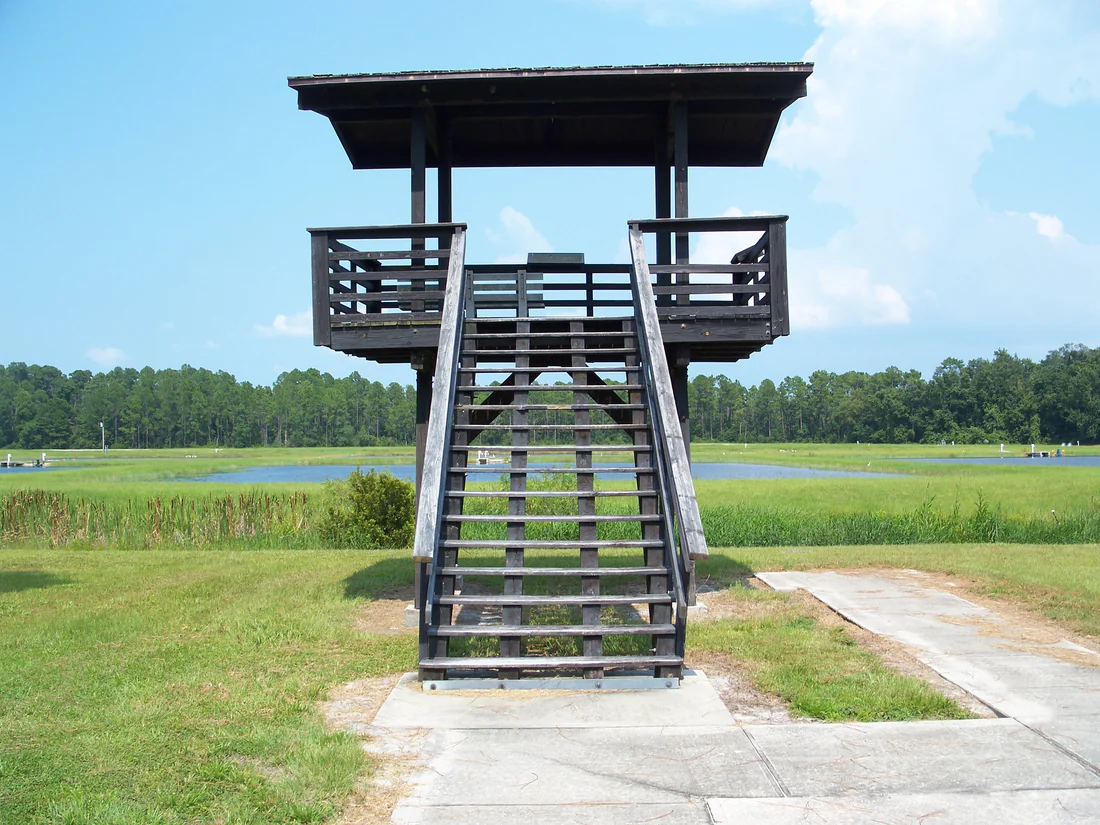
In 1926 the State of Florida built the Welaka National Fish Hatchery. In 1938 it passed to the U.S. Fish and Wildlife Service. Florida Memory describes it as a warm water hatchery that raises fish native to the Southeast for lakes, streams and rivers.
Sources: Putnam County Historical Society: A Brief History of Palatka; Palm Coast Observer: A brush with Annie Oakley (December 22, 2012); Florida Department of State: Secretary Lee Announces the Designation of the Hotel James on the National Register of Historic Places (October 30, 2019); City of Palatka: Parks; U.S. Fish and Wildlife Service: Welaka National Fish Hatchery, About Us; Florida Memory: View of the Welaka National Fish Hatchery - Welaka, Florida
Next: Chapter 8, A. Philip Randolph and the county's Black schools →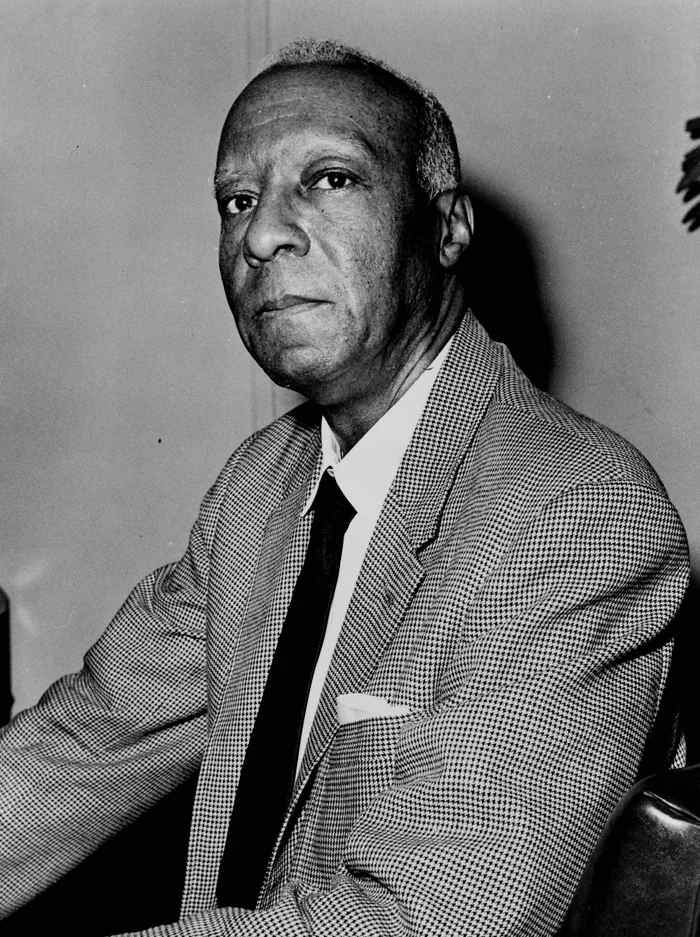
A. Philip Randolph and the county's Black schools
A. Philip Randolph, the labor and civil rights leader, was born in Crescent City on April 15, 1889, a state marker there says. In 1925 he founded the Brotherhood of Sleeping Car Porters, a union he led until 1968. Randolph came up with the idea for the March on Washington for Jobs and Freedom, and more than 200,000 people came to the capital for it on August 28, 1963. President Johnson gave him the Presidential Medal of Freedom in 1964.
Central Academy School opened in Palatka in 1892, and a state marker calls it the only public school for the town's Black residents. In 1925, under Principal Clarence C. Walker, it won accreditation from the state. The marker says it was the first public school in Florida to be accredited and the first school rated a "Negro standard high school." Fire destroyed the 1892 building in 1936, and a new school, built with help from the Works Progress Administration, opened for the 1937 to 1938 school year.
In 1938 the one-room Lincoln Lane School was built in Interlachen for Black children in grades 1 through 8. Its school year was shorter than at white schools, its textbooks were secondhand, and its teachers were paid less, a state marker says. Central Academy closed in 1971, when Putnam County's public schools were integrated. It joined the National Register of Historic Places in 1998.
Sources: Florida Department of State: Florida Historical Marker Details, Asa Philip Randolph; Florida Department of State: Florida Historical Marker Details, Central Academy School; Florida Department of State: Florida Historical Marker Details, Lincoln Lane Schoolhouse
Next: Chapter 9, The 1930s: Ravine Gardens and Billy Graham →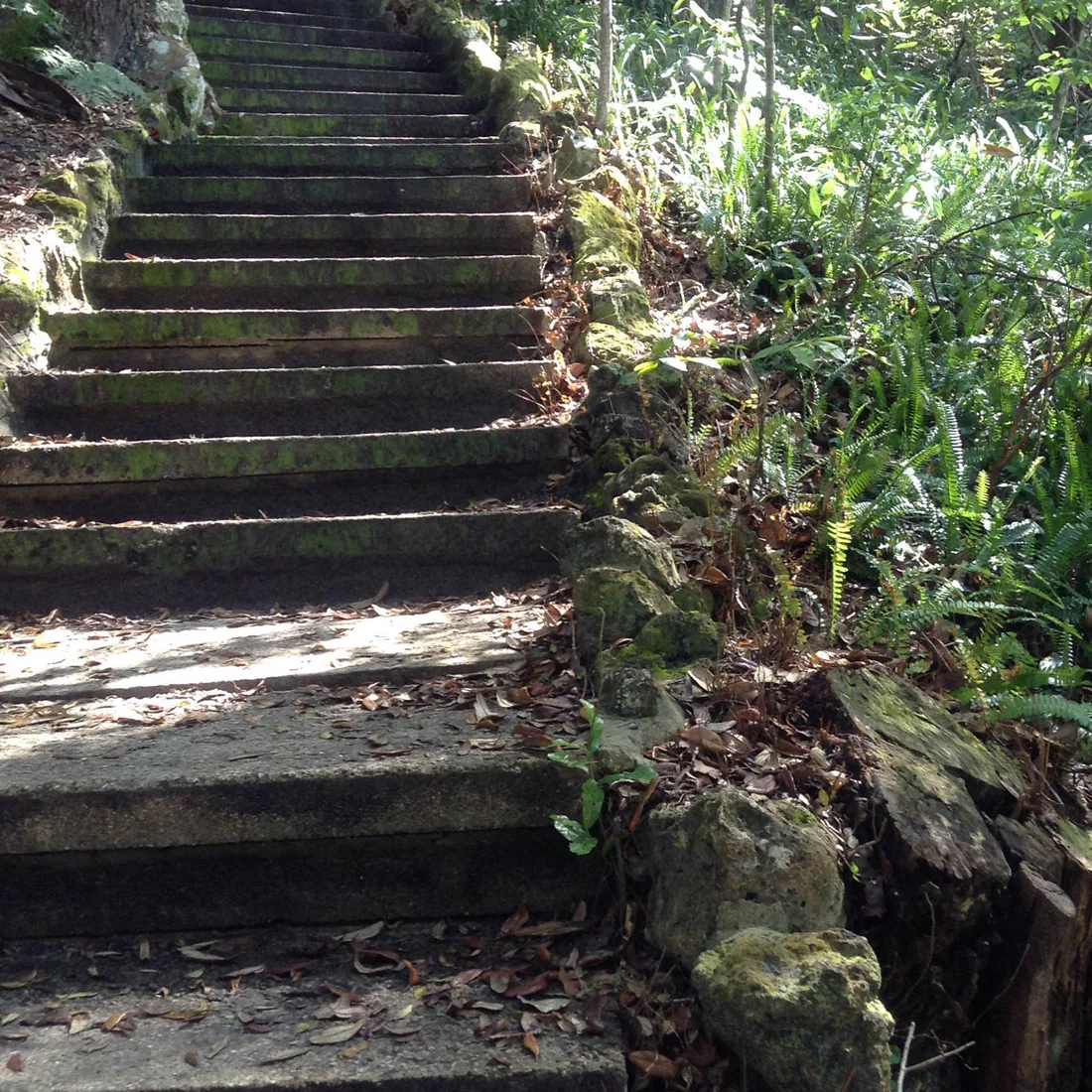
The 1930s: Ravine Gardens and Billy Graham
By 1933 the Great Depression had hit Palatka hard. Thomas Byrd Gillespie, a local paving contractor who sat on a county relief committee, had the idea of turning the Whitewater Branch ravines into a formal garden. He paid the landscape architect Richard Forester with his own money to draw up a plan. Relief workers built the gardens, and Florida State Parks gives the official opening as July 4, 1933.
Late in 1933, federal officials sent Julius F. Stone to see what was being done with the project's 40,000 azaleas, and he urged more funding. The Works Progress Administration took over the work in 1935. More than 270,000 plants were set on the ravine slopes, probably paid for by the WPA, the park says. Florida State Parks says the gardens were once claimed to have the world's biggest single collection of azaleas.
Billy Graham was ordained as an evangelist on January 14, 1939, by the Reverend Cecil Underwood at Peniel Baptist Church. Graham later wrote that the little white frame church was hot and that he was nervous. World War II ended the WPA and the building work in the gardens. The gardens closed as the 1960s ended because they had become hard and costly for the city to run, and in January 1970 they became Ravine Gardens State Park.
Sources: Florida State Parks: Ravine Gardens State Park, History; Florida State Parks: Azaleas at Ravine Gardens; Florida Department of State: Florida Historical Marker Details, Peniel Baptist Church
Next: Chapter 10, The paper mill and the Cross Florida Barge Canal →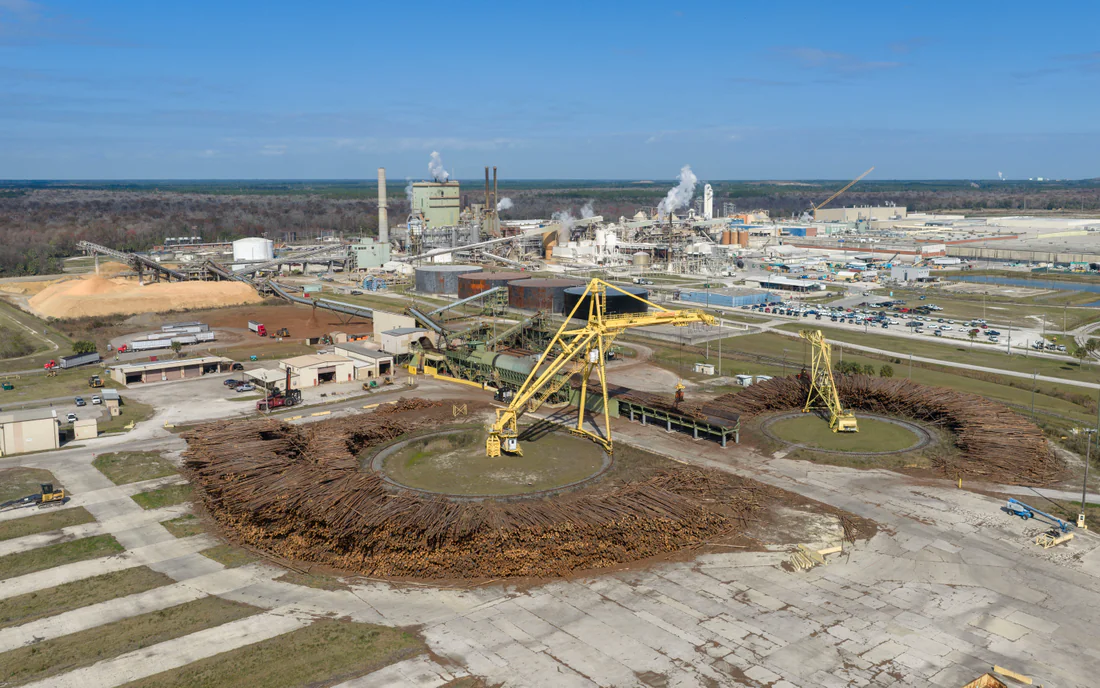
The paper mill and the Cross Florida Barge Canal
The Hudson Pulp and Paper Company built a large plant on Palatka's northern outskirts, and it made its first sheet of paper on November 5, 1947. Hudson started with 279 workers, and within three decades it had 2,400. Georgia-Pacific bought the mill in 1979.
On February 27, 1964, President Lyndon B. Johnson came to a site south of Rodman to dedicate the start of work on the 185-mile Cross Florida Barge Canal. In 1968 the Army Corps of Engineers built the Rodman Dam, which stopped the flow of the Ocklawaha River and formed Rodman Reservoir. Scientists and activists campaigned against the costly project, and a court order won by environmental groups under Marjorie Harris Carr halted construction. President Richard Nixon ended the canal by executive order in 1971, and the dredging suddenly stopped.
The canal lands sat idle until 1992, when they were designated a greenway, later named for Carr. In 1998 the Florida Legislature named the dam the Kirkpatrick Dam, for Senator George Kirkpatrick, who kept fighting efforts to open it. The Rodman Recreation Area sits on top of the former Rodman Dam. When the state lowers the reservoir every few years, the cypress stumps of a drowned forest rise out of the water.
Sources: Georgia-Pacific: Palatka Paper Mill Celebrates 75 Years (November 3, 2022); Florida Department of State: Florida Historical Marker Details, Cross Florida Barge Canal Memorial; Florida Phoenix: Killing the Kirkpatrick Dam? The tale of Florida's longest-running environmental wrangle (July 2, 2020); Historical Marker Database: Kenwood Recreation Area, Where the Canal Ended (Florida State Parks marker); Florida State Parks: Rodman Recreation Area; Historical Marker Database: Kirkpatrick Dam (Florida State Parks marker)
Next: Chapter 11, Since 2000: Dunns Creek State Park, a river center and Main Street →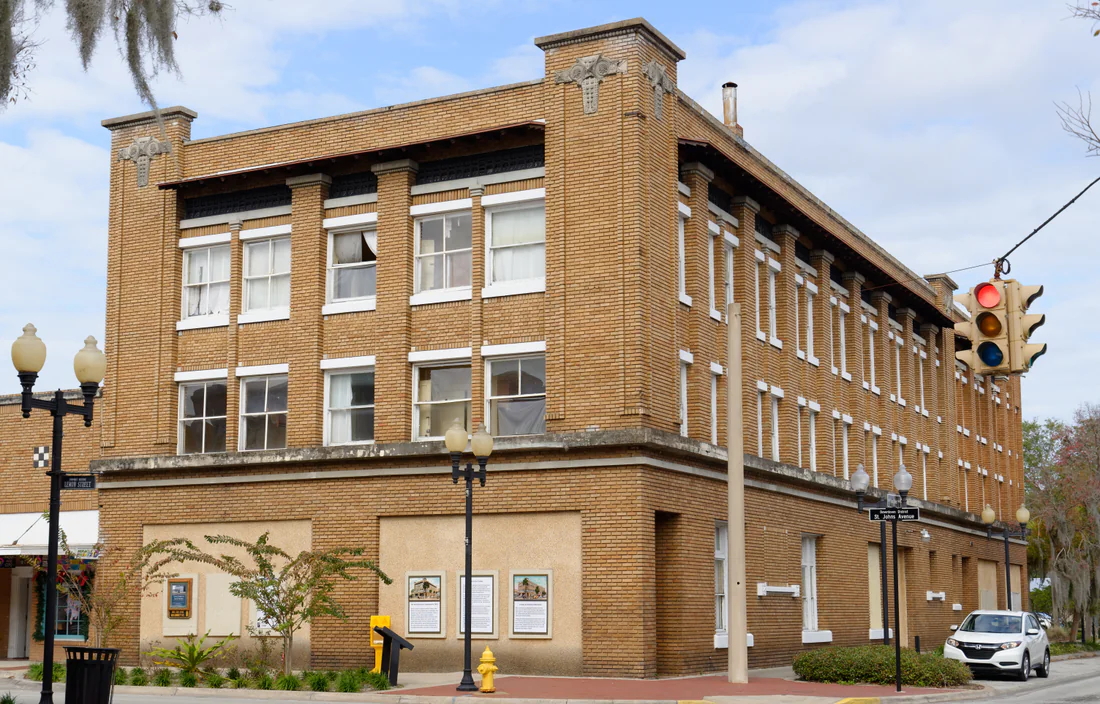
Since 2000: Dunns Creek State Park, a river center and Main Street
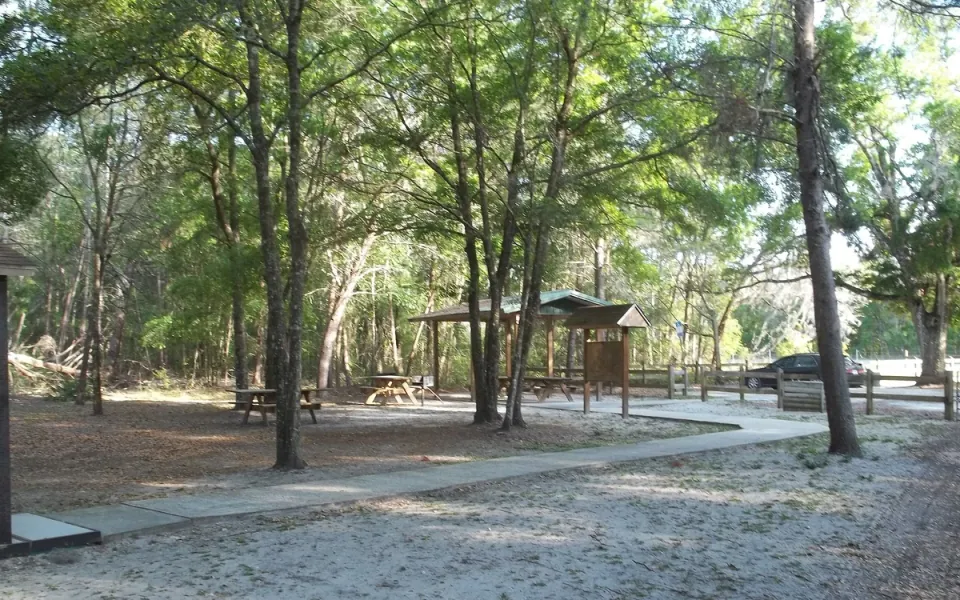
On October 10, 2001, the Florida Park Service took over Dunns Creek State Park from the Nature Conservancy. In November 2012 a Palm Coast artist finished a 58-by-13-foot Annie Oakley mural at 1023 St. Johns Avenue for Palatka's Conlee-Snyder Mural Committee. In July 2015 the St. Johns River Center opened on the corner of St. Johns Avenue and Memorial Drive in Palatka, as a hands-on place for students and teachers to learn about the river and its wetlands. Georgia-Pacific's Palatka pulp and paper mill and the City of Palatka worked together on the center.
In 2019 the Hotel James joined the National Register of Historic Places. In January 2024 Main Street Palatka was reorganized, and that April the Florida Department of State named it the Florida Main Street Program of the Month. The state noted that the Palatka Main Street program dates from 1989 and that the Hotel James and other historic district buildings were being restored.
In September 2025 the Putnam County Historical Society held its Occupation of Palatka event, a Civil War living history weekend with a school day for students and a military day. The Putnam County Historical Museum and the Bronson-Mulholland House stayed open throughout the event.
Sources: Florida State Parks: Dunns Creek State Park, History; Palm Coast Observer: A brush with Annie Oakley (December 22, 2012); Koch Industries: Wetlands Wonder: Student River Center Opens in Palatka (July 16, 2015); News4JAX: St. Johns River Center to open (July 10, 2015); Florida Department of State: Secretary Lee Announces the Designation of the Hotel James on the National Register of Historic Places (October 30, 2019); Florida Department of State: Secretary Byrd Designates Palatka Main Street as Florida Main Street Program of the Month (April 15, 2024); Putnam County Historical Society: Union Occupation of Palatka
Next: the whole story, in dates →The whole story, in dates
Copper ornaments later dug up at Mount Royal date from this period.
The marker dates the Mission of San Antonio de Anacape, probably at Mount Royal, to these years.
John Dunn gets a grant to farm land between the two lakes.
Denys Rolle founds a colony on the east side of the St. Johns River.
Britain hands Florida to Spain, and Rolle's colony is abandoned.
Americans set up a trading post at Palatka.
Seminoles burn Palatka early in the Second Seminole War.
Fort Shannon is set up at Palatka.
Putnam County is created from parts of St. Johns and Alachua counties.
A Baptist church, later named Peniel Baptist Church, is formed at Mud Lake.
The State of Florida charters the City of Palatka.
Confederate soldiers camp at Camp Call by the ravines.
Dickison's cavalry ambushes and captures the gunboat Columbine at Horse Landing.
After a battle in Palatka, the Union army pulls out of the town.
Palatka is called the Gem City of the St. Johns.
Charlotte Henry runs a school for children of freed slaves in the Bronson house.
Five new railroad lines come to Palatka.
A great fire burns nearly all of Palatka's business district.
A. Philip Randolph is born in Crescent City.
Central Academy School opens in Palatka.
The Great Freezes nearly destroy Palatka's citrus industry.
Annie Oakley gives shooting and riding shows in Palatka.
The original core of the Hotel James goes up.
Randolph founds the Brotherhood of Sleeping Car Porters.
The State of Florida builds the Welaka National Fish Hatchery.
Ravine Gardens officially opens.
Billy Graham is ordained at Peniel Baptist Church.
The Hudson mill makes its first sheet of paper.
More than 200,000 people come to the March on Washington that Randolph first proposed.
President Johnson dedicates the start of work on the barge canal.
The Rodman Dam is built and forms Rodman Reservoir.
President Nixon ends the canal project.
The canal lands are designated a greenway.
The Florida Park Service takes over Dunns Creek State Park.
The Annie Oakley mural on St. Johns Avenue is finished.
The St. Johns River Center opens in Palatka.
Palatka Main Street is named the Florida Main Street Program of the Month.
The Occupation of Palatka living history weekend is held.
Where you can still see it
 01
 02
 03
 04
Welaka National Fish Hatchery
Goes with: Cypress, Annie Oakley and the Hotel James
Open the place page → 05
 06
Dunns Creek State Park
Goes with: Since 2000: Dunns Creek State Park, a river center and Main Street
Open the place page →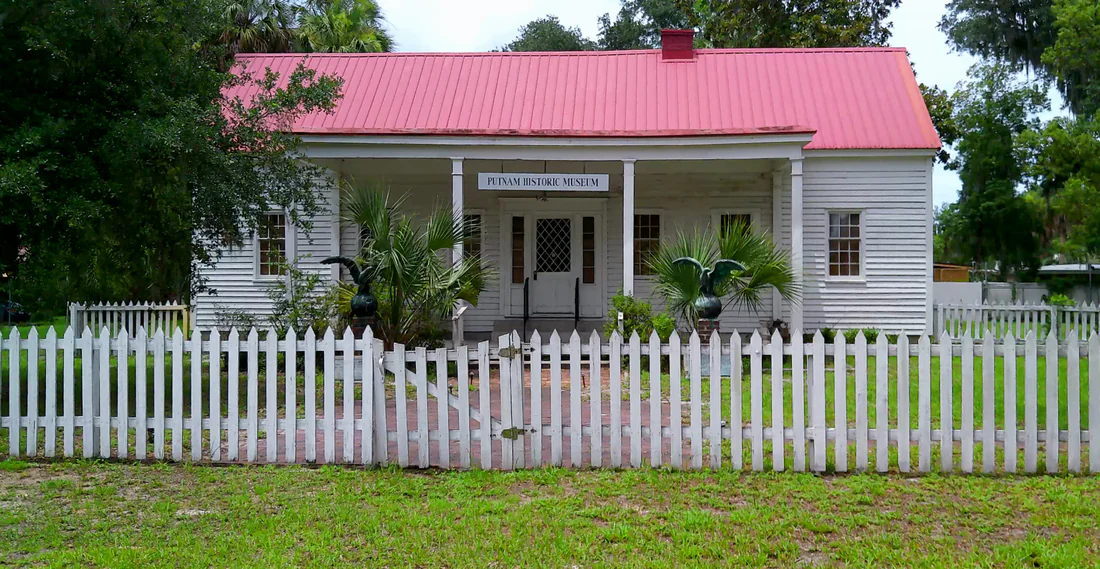 07
Putnam County Historical Museum
Goes with: Since 2000: Dunns Creek State Park, a river center and Main Street
Putnam County Historical Society →Questions people ask
When was Putnam County created?
Putnam County was created on January 13, 1849, from parts of St. Johns and Alachua counties.
Chapter 4 →Who was Putnam County named for?
It was named for Benjamin Alexander Putnam (1801 to 1869), a lawyer and legislator who fought against the Seminoles and was the Florida Historical Society's first president.
Chapter 4 →What does the name Palatka mean?
The Putnam County Historical Society says the name comes from a Native American word for "cow ford" or "cow crossing."
Chapter 2 →Which civil rights leader was born in Putnam County?
A. Philip Randolph, the labor and civil rights leader, was born in Crescent City on April 15, 1889.
Chapter 8 →Where this comes from.
Last updated October 18, 2026.
- University of South Florida, Florida Center for Instructional Technology: FL Maps, Putnam County ↗ Read October 18, 2026
- University of Central Florida, RICHES: Putnam County Collection ↗ Read October 18, 2026
- Florida Department of State: Florida Historical Marker Details, The Mount Royal Site ↗ Read October 18, 2026
- Florida Department of State: Florida Historical Marker Details, Rollestown ↗ Read October 18, 2026
- Florida Department of State: Florida Historical Marker Details, Palatka ↗ Read October 18, 2026
- Florida Department of State: Florida Historical Marker Details, Fort Shannon ↗ Read October 18, 2026
- Florida Department of State: Florida Historical Marker Details, Bronson-Mulholland House ↗ Read October 18, 2026
- Florida Department of State: Florida Historical Marker Details, St. Marks Episcopal Church ↗ Read October 18, 2026
- Florida Department of State: Florida Historical Marker Details, Peniel Baptist Church ↗ Read October 18, 2026
- Florida Department of State: Florida Historical Marker Details, The Historic Banana Community ↗ Read October 18, 2026
- Florida Department of State: Florida Historical Marker Details, Asa Philip Randolph ↗ Read October 18, 2026
- Florida Department of State: Florida Historical Marker Details, Central Academy School ↗ Read October 18, 2026
- Florida Department of State: Florida Historical Marker Details, Lincoln Lane Schoolhouse ↗ Read October 18, 2026
- Florida Department of State: Florida Historical Marker Details, Cross Florida Barge Canal Memorial ↗ Read October 18, 2026
- Florida Department of State: Secretary Byrd Designates Palatka Main Street as Florida Main Street Program of the Month (April 15, 2024) ↗ Read October 18, 2026
- Florida Department of State: Secretary Lee Announces the Designation of the Hotel James on the National Register of Historic Places (October 30, 2019) ↗ Read October 18, 2026
- Putnam County Historical Society: A Brief History of Palatka ↗ Read October 18, 2026
- Putnam County Historical Society: Union Occupation of Palatka ↗ Read October 18, 2026
- Florida State Parks: Dunns Creek State Park, History ↗ Read October 18, 2026
- Florida State Parks: Ravine Gardens State Park, History ↗ Read October 18, 2026
- Florida State Parks: Azaleas at Ravine Gardens ↗ Read October 18, 2026
- Florida State Parks: Rodman Recreation Area ↗ Read October 18, 2026
- Historical Marker Database: The Civil War and the Ravines (Florida State Parks marker) ↗ Read October 18, 2026
- Historical Marker Database: Battle At Horse Landing ↗ Read October 18, 2026
- Historical Marker Database: Kenwood Recreation Area, Where the Canal Ended (Florida State Parks marker) ↗ Read October 18, 2026
- Historical Marker Database: Kirkpatrick Dam (Florida State Parks marker) ↗ Read October 18, 2026
- Naval History and Heritage Command: Columbine I (Dictionary of American Naval Fighting Ships) ↗ Read October 18, 2026
- City of Crescent City: We are Crescent City, Florida ↗ Read October 18, 2026
- Palatka Daily News: New piece is his 6th mural in Palatka ↗ Read October 18, 2026
- Palm Coast Observer: A brush with Annie Oakley (December 22, 2012) ↗ Read October 18, 2026
- City of Palatka: Parks ↗ Read October 18, 2026
- U.S. Fish and Wildlife Service: Welaka National Fish Hatchery, About Us ↗ Read October 18, 2026
- Florida Memory: View of the Welaka National Fish Hatchery - Welaka, Florida ↗ Read October 18, 2026
- Georgia-Pacific: Palatka Paper Mill Celebrates 75 Years (November 3, 2022) ↗ Read October 18, 2026
- Florida Phoenix: Killing the Kirkpatrick Dam? The tale of Florida's longest-running environmental wrangle (July 2, 2020) ↗ Read October 18, 2026
- News4JAX: St. Johns River Center to open (July 10, 2015) ↗ Read October 18, 2026
- Koch Industries: Wetlands Wonder: Student River Center Opens in Palatka (July 16, 2015) ↗ Read October 18, 2026