Columbia County was formed on February 4, 1832, and its county seat is Lake City, a town once called Alligator. Columbia is a poetic name, and histories differ on whether it stands for the United States or for Christopher Columbus. The Florida Agricultural College opened in Lake City in 1884, and in 1903 it was renamed the University of Florida. Native Americans used the Ichetucknee River and its springs for thousands of years, and in 1972 the spring was named a National Natural Landmark.
This page tells the story in order, from the first peoples and Spanish missions at the springs to the restored Fort White depot, Florida Gateway College and the county's parks since 1990, then lists places in the county where you can still see it. The sources for each part are named at the end of that part, and all of them are listed at the bottom of the page.
Springs, Mounds and Spanish Missions
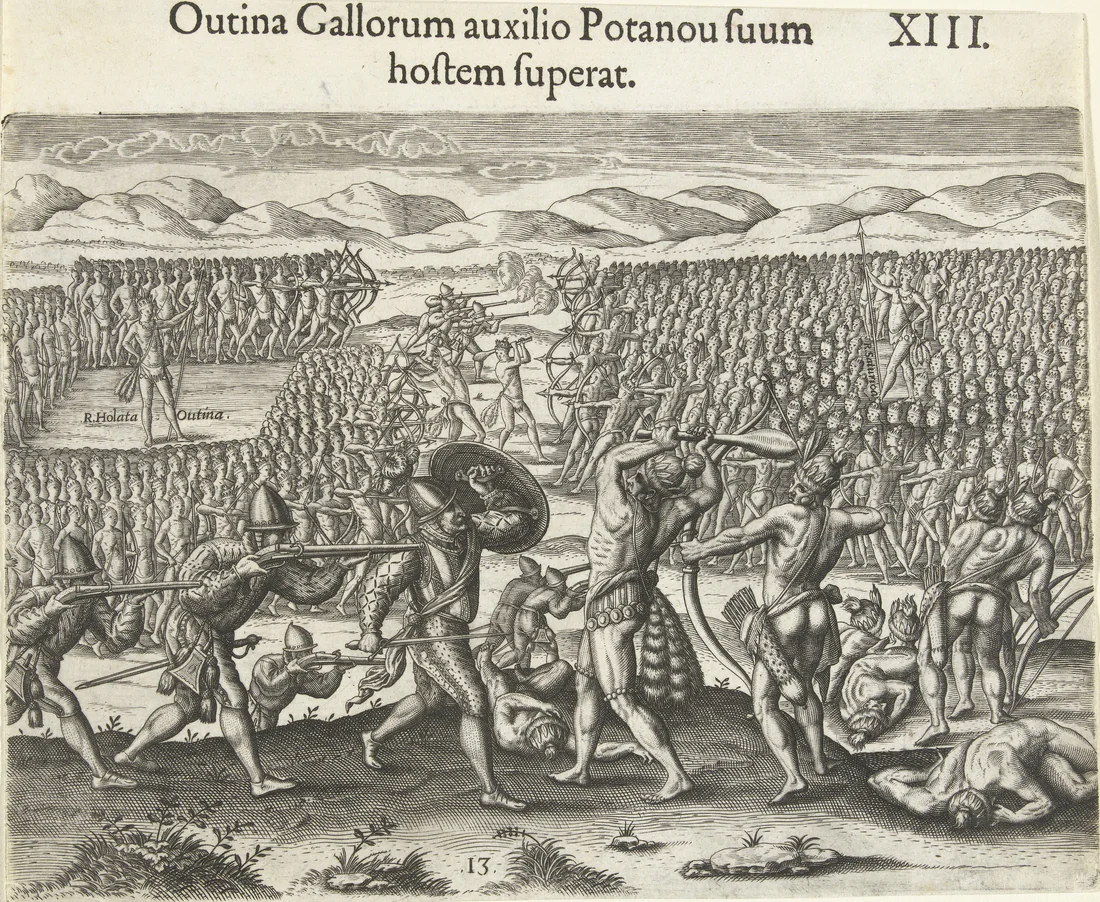
People used the Ichetucknee River and its springs for thousands of years. In Columbia County, the McKeithen site dates from the Weeden Island period, A.D. 200 to 900. It was a village with several mounds. Archaeologists led by Jerry Milanich dug there in the late 1970s and found many Weeden Island pots, some whole or nearly whole. One group of Timucua living in what is now Columbia County was the Utina.
In 1539, the Spanish explorer Hernando de Soto passed near present-day Lake City. He was headed to the Apalachee towns near Tallahassee, where he spent the winter. Spanish missionaries printed catechisms and other church books in Timucuan, which the Spanish used as a shared language with every tribe in the region. Florida State Parks calls the Mission de San Martin de Timucua perhaps the greatest historical treasure of the Ichetucknee. Built in 1608, it was one of the main inland missions serving St. Augustine, and it thrived for most of that century.
Sources: Florida State Parks: Ichetucknee Springs State Park, History; Florida Museum of Natural History, University of Florida: Excavated Collections, Florida Archaeology and Bioarchaeology; University Press of Florida: Archaeology of Northern Florida, A.D. 200-900: The McKeithen Weeden Island Culture; LakeCityHistory.com: Edward F. Keuchel, A History of Columbia County, Florida (1996), Chapter I, page 1
Next: Chapter 2, Alligator Town and the Seminole War →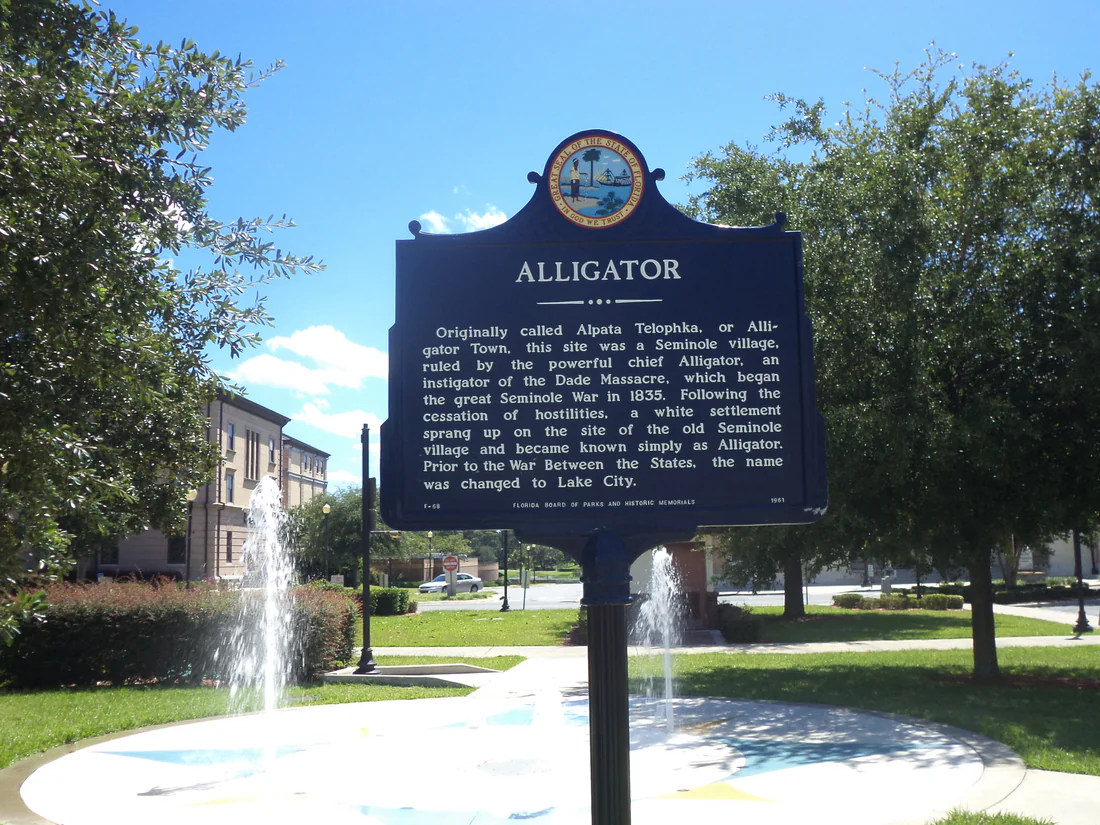
Alligator Town and the Seminole War
A state marker in downtown Lake City says the spot was once a Seminole village named Alpata Telophka, or Alligator Town. A University of South Florida page says the name Alligator came from Halpatter Tustenugee, a chief called the alligator warrior.
Settlers in the Alligator area started the Bethel congregation as early as the 1820s. Their first church was a small log building, and the one standing today went up in 1855. The marker says it is one of only a few churches from before the Civil War that still stand in rural Florida. The 1830 census found 27 white households at the Alligator settlement, along with mail service.
The marker in Lake City says Chief Alligator helped bring about the Dade Massacre, the event that started the Seminole War of 1835. Forts built during the war included Fort Lancaster, on land that later became downtown Lake City, and Fort White, by the Santa Fe River. The state marker at Fort White dates its fort to 1837, while a 2025 state press release says 1836. The last Indian attack in the area came in 1842.
Sources: Florida Department of State, Florida Historical Markers: Alligator; Florida Center for Instructional Technology, University of South Florida: Exploring Florida, Columbia County Maps; Florida Department of State, Florida Historical Markers: Bethel United Methodist Church; LakeCityHistory.com: H. Morris Williams and Kevin M. McCarthy, Lake City, Florida: A Sesquicentennial Tribute (2009), web page 13; LakeCityHistory.com: H. Morris Williams and Kevin M. McCarthy, Lake City, Florida: A Sesquicentennial Tribute (2009), web page 14; Florida Department of State, Florida Historical Markers: Town of Fort White; Florida Department of State: Secretary Byrd Recognizes Florida Main Street's Newest Community (April 15, 2025)
Next: Chapter 3, Columbia County Is Formed in 1832 →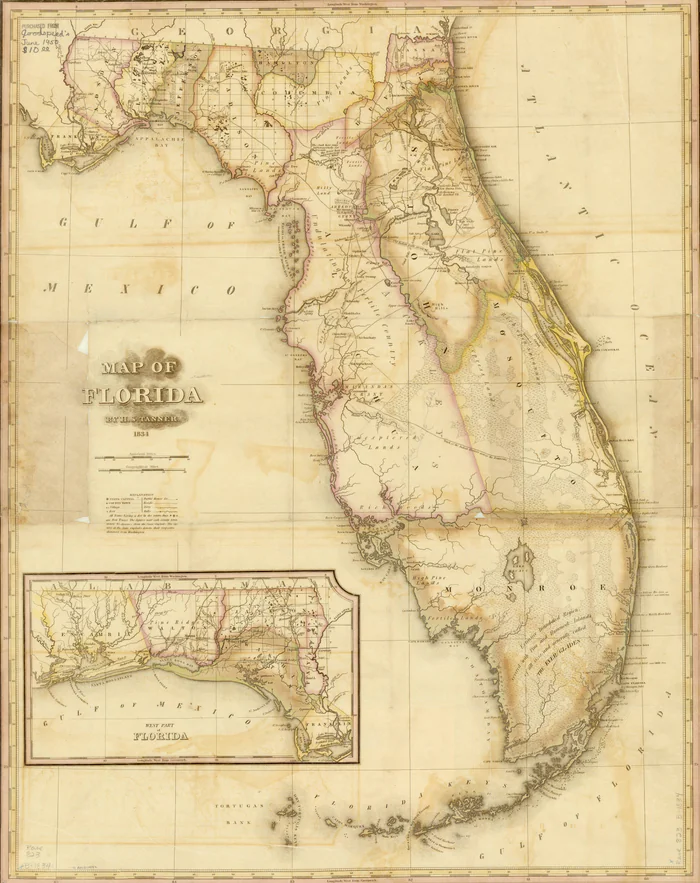
Columbia County Is Formed in 1832
The legislative council created Columbia County on February 4, 1832. Edward Keuchel's 1996 county history says the name Columbia was a poetic name for the United States. A 2009 history of Lake City says it came from a poetic name for Christopher Columbus, and a University of South Florida page says it honors Columbus. Both of those sources call it Florida's 16th county.
At first the county took in the land that is now Baker, Bradford, Suwannee and Union counties. In 1839, the council moved the county's southern line and gave Newnansville back to Alachua County. Two of those areas, Baker and Bradford, became counties of their own in 1862. Lake City, named for the many lakes around it, is the county seat. Fires wiped out the county's records three times during its first century.
Sources: LakeCityHistory.com: Edward F. Keuchel, A History of Columbia County, Florida (1996), Early Settlement, page 27; LakeCityHistory.com: H. Morris Williams and Kevin M. McCarthy, Lake City, Florida: A Sesquicentennial Tribute (2009), web page 13; Florida Center for Instructional Technology, University of South Florida: Exploring Florida, Columbia County Maps; LakeCityHistory.com: Edward F. Keuchel, A History of Columbia County, Florida (1996), Foreword
Next: Chapter 4, The Railroad Comes and Alligator Becomes Lake City →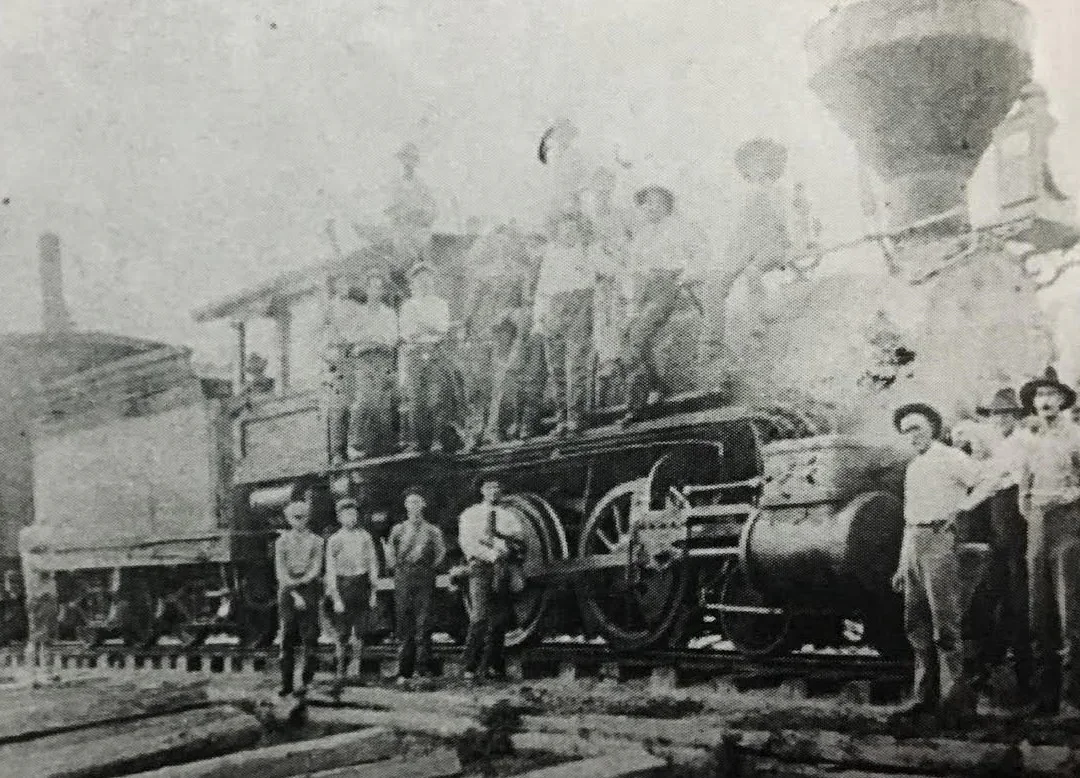
The Railroad Comes and Alligator Becomes Lake City
Iron rails reached Baldwin from Jacksonville in 1858. That November, workers finished the line all the way to Alligator. Officials incorporated the town in 1859 and renamed it Lake City. An envelope postmarked in 1857 shows the old name, Alligator. One local story says the newly arrived mayor's wife would not put up her lace curtains in a place named Alligator.
Also in 1859, church leaders founded Bethlehem Lutheran Church, which the 2009 history calls Florida's first organized Lutheran church. The Pensacola and Georgia line ran from Lake City to Quincy in the Panhandle. A guidebook first printed in 1869 described Lake City as a promising town with several hundred people.
Sources: LakeCityHistory.com: H. Morris Williams and Kevin M. McCarthy, Lake City, Florida: A Sesquicentennial Tribute (2009), web page 17; LakeCityHistory.com: H. Morris Williams and Kevin M. McCarthy, Lake City, Florida: A Sesquicentennial Tribute (2009), web page 18; LakeCityHistory.com: H. Morris Williams and Kevin M. McCarthy, Lake City, Florida: A Sesquicentennial Tribute (2009), web page 19; LakeCityHistory.com: H. Morris Williams and Kevin M. McCarthy, Lake City, Florida: A Sesquicentennial Tribute (2009), web page 30
Next: Chapter 5, Olustee, the Wounded and Rebuilding in Brick →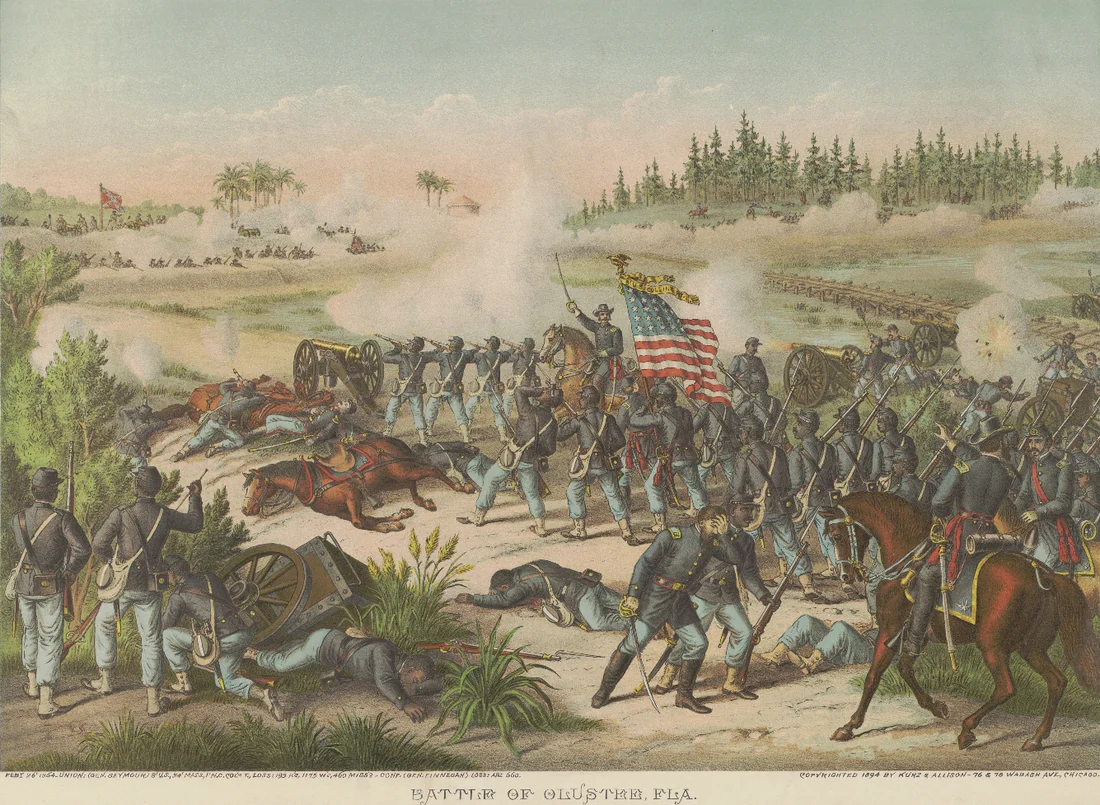
Olustee, the Wounded and Rebuilding in Brick
Early in 1864, Union soldiers left Jacksonville and marched west, aiming for Lake City and Tallahassee. Their goal was to destroy the railroads that aided the Confederate side and to capture the state capital. On February 20, 1864, the two armies met at Olustee, just east of Lake City in what is now Baker County. The Confederates won and drove the Northern soldiers back to Jacksonville.
The Union counted 1,861 men as killed, wounded or missing, and the Confederates counted 946. The 2009 history calls Olustee Florida's only major battle of the war. By the night of February 21, nearly 30 train cars carrying wounded soldiers had come into Lake City.
Abraham Grant, born into slavery on August 25, 1848, ran away and joined the Union army. He came back to Lake City once the war ended. On May 19, 1888, the African Methodist Episcopal Church elected him its 19th bishop. In 1874, a fire burned many of Lake City's wooden buildings, and the town turned to building with brick. The Lake City Reporter began printing around 1874 or 1875, and the Bigelow Building, the town's first brick store, went up in 1876.
Sources: LakeCityHistory.com: H. Morris Williams and Kevin M. McCarthy, Lake City, Florida: A Sesquicentennial Tribute (2009), Battle of Olustee, web page 24; LakeCityHistory.com: H. Morris Williams and Kevin M. McCarthy, Lake City, Florida: A Sesquicentennial Tribute (2009), web page 25; LakeCityHistory.com: H. Morris Williams and Kevin M. McCarthy, Lake City, Florida: A Sesquicentennial Tribute (2009), Chapter Nine, web page 65; LakeCityHistory.com: H. Morris Williams and Kevin M. McCarthy, Lake City, Florida: A Sesquicentennial Tribute (2009), Chapter Seven, web page 35; The New Schaff-Herzog Encyclopedia of Religious Knowledge, vol. 5: Grant, Abraham (Christian Classics Ethereal Library)
Next: Chapter 6, Leno, Fort White and the River Towns →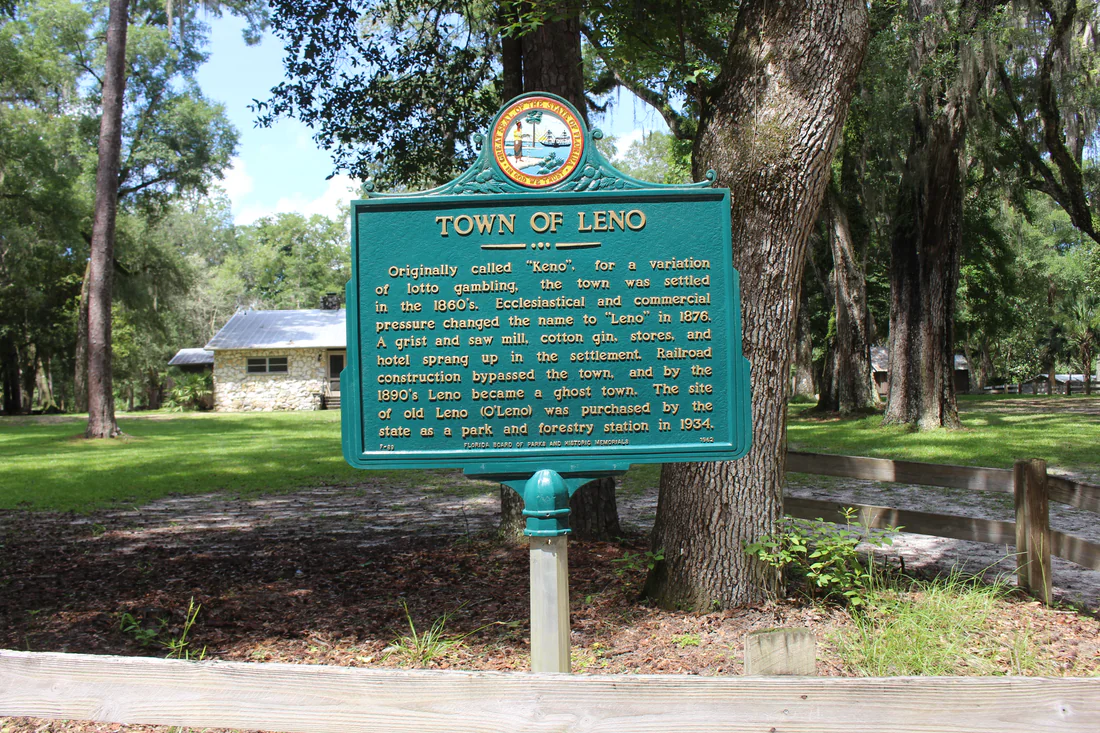
Leno, Fort White and the River Towns
On the Santa Fe River, a town first named Keno, after a gambling game, was settled in the 1860s. Colonel Whetstone's request for a post office was turned down because of the name, so in 1876 the town became Leno. The park says it grew to have two grist mills, a sawmill and six cotton gins. In 1894 the railroad was routed through Fort White instead, and by 1896 everyone had left Leno. People from nearby towns and farms still met there for picnics and swims, and the name Old Leno was later shortened to O'Leno.
Fort White was founded in 1870 and named for a fort from the Second Seminole War. After trains arrived in 1888, the town grew quickly on phosphate mining, citrus and cotton. The state marker says it had become the county's second-largest city before 1900. By 1884 the town of Ichetucknee had a post office, a gristmill and a blacksmith shop. From the late 1890s into the early 1900s, the land around Ichetucknee Springs was an early base of North Florida's phosphate industry.
Hard freezes during the winter of 1896 to 1897 wiped out the local citrus business, and phosphate mining stopped by 1910. Before World War I, the boll weevil had put an end to cotton growing.
Sources: Florida State Parks: O'Leno State Park, History; Florida Department of State, Florida Historical Markers: Town of Leno; Florida State Parks: O'Leno State Park, Park History; Florida Department of State, Florida Historical Markers: Town of Fort White; Florida State Parks: Ichetucknee Springs State Park, History
Next: Chapter 7, Lake City's College Years →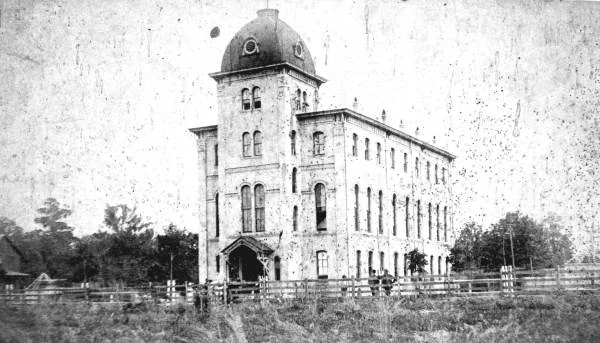
Lake City's College Years
In 1884, the Florida Agricultural College opened in Lake City. Six towns had bid for it, and Lake City won by offering $15,000 in cash plus 100 acres. The first building was dedicated on February 21, 1884, and Lake City celebrated. The 2009 history says no school in Florida had called itself a college before it. Federal money paid for the Florida Experiment Station, set up at Lake City in 1888.
The Florida Legislature gave the school the name University of Florida in 1903. The Buckman Act of 1905 reshaped higher education across Florida. Andrew Sledd, picked as president in 1904, accepted the plan to take the school to Gainesville and drove one of the wagons himself. At the time it had a little more than 100 students, taught by fewer than 12 teachers.
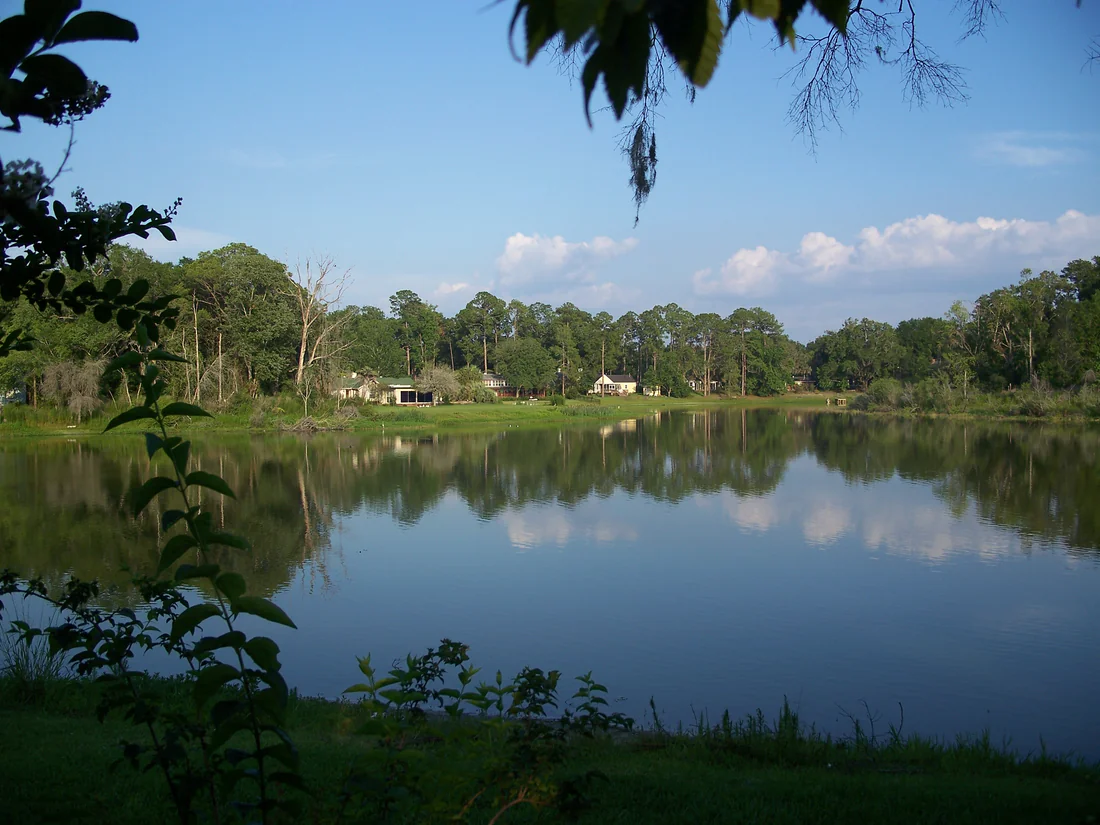
Columbia College, a Baptist school, used the old campus until it closed in 1917 and joined Stetson University in DeLand. Homes were going up around Lake Isabella in these years, and in 1900 the city built a waterworks and generator on the lake's west bank. The area's 147 historic buildings, dating from 1866 to about 1940, make up the Lake Isabella Historic District (its formal National Register name adds the word Residential).
Sources: LakeCityHistory.com: H. Morris Williams and Kevin M. McCarthy, Lake City, Florida: A Sesquicentennial Tribute (2009), web page 41; UF/IFAS, University of Florida: History; LakeCityHistory.com: H. Morris Williams and Kevin M. McCarthy, Lake City, Florida: A Sesquicentennial Tribute (2009), web page 42; University of Florida College of Public Health and Health Professions: History of the University of Florida; LakeCityHistory.com: H. Morris Williams and Kevin M. McCarthy, Lake City, Florida: A Sesquicentennial Tribute (2009), web page 86; LakeCityHistory.com: H. Morris Williams and Kevin M. McCarthy, Lake City, Florida: A Sesquicentennial Tribute (2009), web page 118; National Park Service: National Register of Historic Places Registration Form, Lake Isabella Historic Residential District (1993)
Next: Chapter 8, The VA Hospital, Osceola National Forest and O'Leno →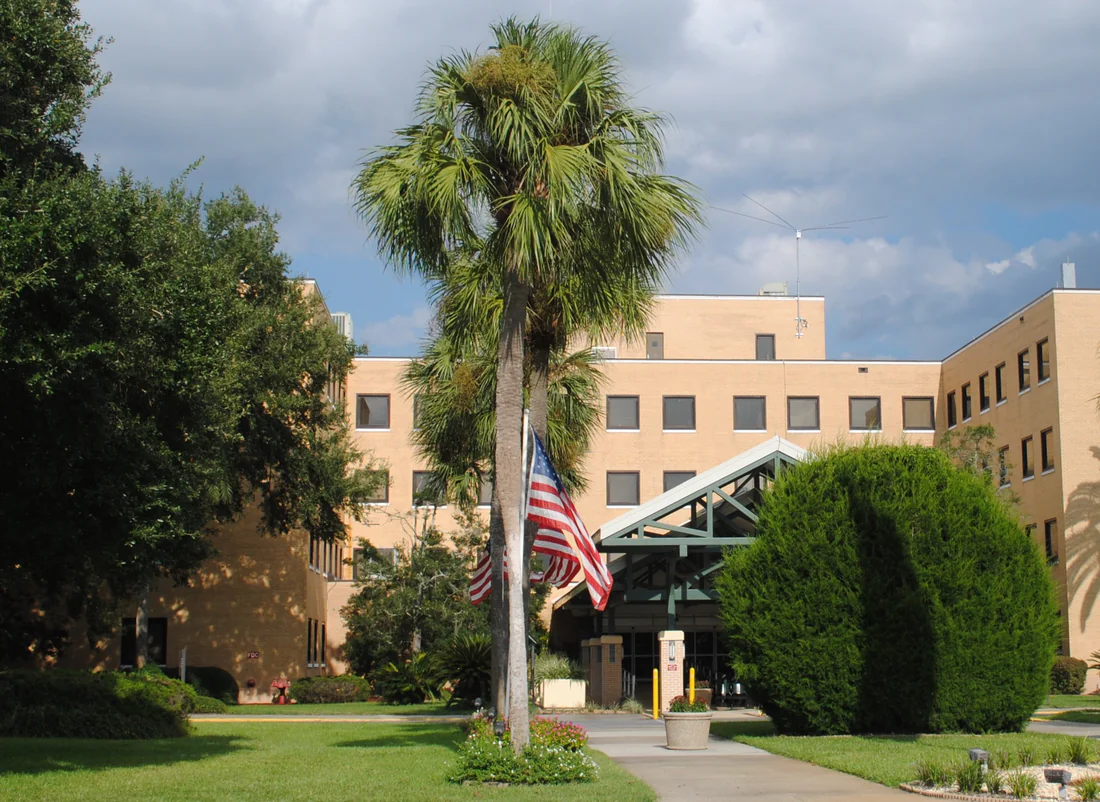
The VA Hospital, Osceola National Forest and O'Leno
The federal government planned to turn the old college buildings into what it called a recuperating hospital. A Lake City group went to Washington and showed the U.S. Surgeon General that the town's malaria death rate, four per 1,000, was far lower than Tampa's twelve per 1,000. The government gave Lake City the hospital, and it took its first patient on December 6, 1920. Its first name was U.S. Public Health Service Hospital No. 63.
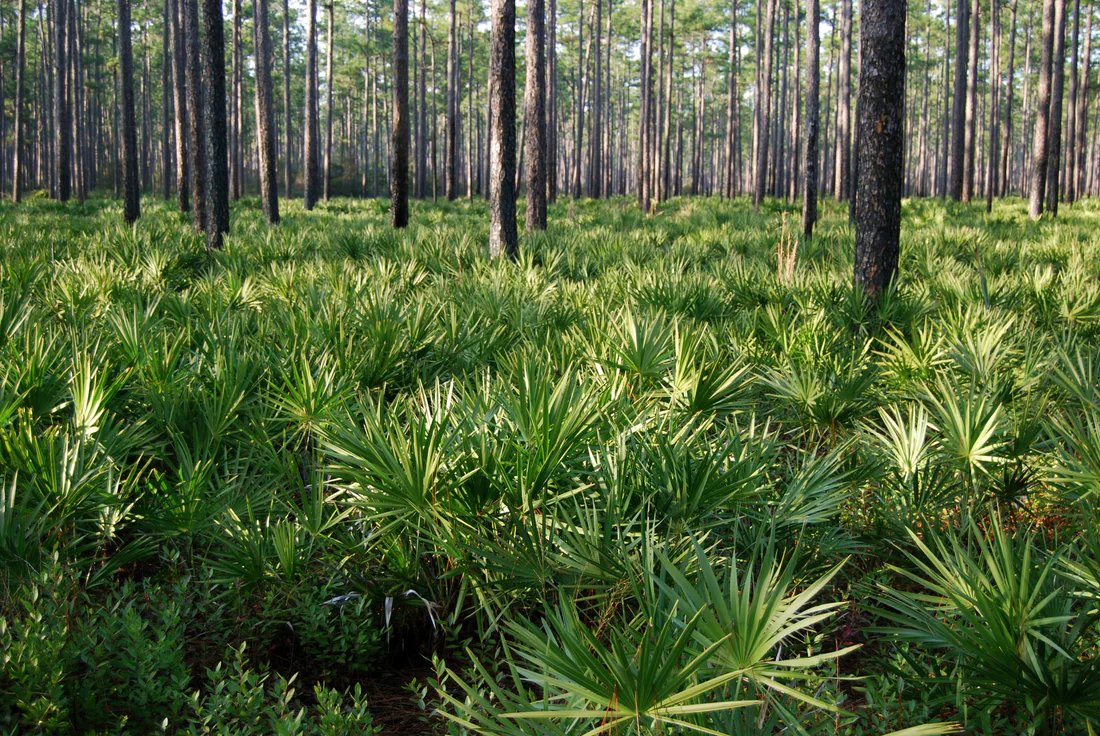
Many local farmers took up tobacco in the 1920s, and a building in town was turned into a tobacco warehouse. County commissioners agreed to let the federal government buy forest land, and in 1929 some 78,000 acres in the northeast part of the county were bought. That land became the core of the Osceola National Forest, which President Herbert Hoover proclaimed in 1931. In 1932, the U.S. Department of Agriculture opened the Olustee Naval Stores Experiment Station in the forest.
At O'Leno, Civilian Conservation Corps workers from Company 418 arrived in July 1935. Over 1935 and 1936 they cleared the land, laid out roads and trails, and put up many of the buildings. O'Leno State Park opened in 1940 as one of the state's original nine parks. Fred Cone, born at Benton in Columbia County in 1871, was a Lake City lawyer and banker who served as Florida's 27th governor from 1937 to 1941.
Sources: LakeCityHistory.com: H. Morris Williams and Kevin M. McCarthy, Lake City, Florida: A Sesquicentennial Tribute (2009), web page 118; VA North Florida/South Georgia Veterans Health System: History; LakeCityHistory.com: H. Morris Williams and Kevin M. McCarthy, Lake City, Florida: A Sesquicentennial Tribute (2009), web page 152; LakeCityHistory.com: Edward F. Keuchel, A History of Columbia County, Florida (1996), page 182; Florida State Parks: O'Leno State Park, History; Florida Department of State: Frederick Preston Cone
Next: Chapter 9, Richardson School and the Civil Rights Years →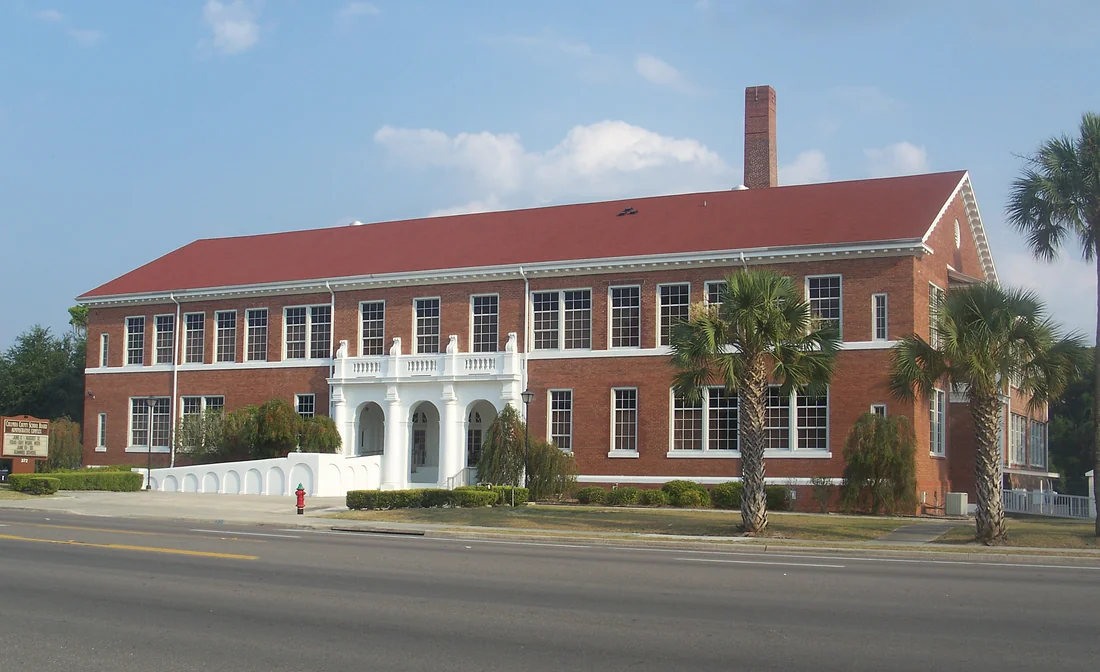
Richardson School and the Civil Rights Years
The first school for freed Black people in the county opened in 1866. The Lake City School for Colored Students began in 1906, and in 1913 it grew from six grades to nine. Richardson Academy opened in 1928 with 300 students. Grades 11 and 12 were added in 1930, and the school's basketball team won a state championship in 1967-68.
In the late 1960s, under a freedom of choice plan, a few Black students began attending schools that had been all white. Keuchel's history names Reginald Evans, Melissa Williams and Robert Allen among them and calls them true pioneers. Alyce Caesar was a leader in integrating Lake City's restaurants after the Civil Rights Act of 1964. She brought Black students, a few at a time, into restaurants that had served only white customers, and no serious incidents followed.
Early in 1970, a court ordered the county to integrate its public schools. Teachers were assigned by lottery, and the students were integrated in September 1970. Columbia High became the county's one public high school, and from 1971 to 1976 Richardson served as a ninth-grade center before it closed. Its gym and cafeteria now serve the neighborhood as a community center.
Sources: Florida Department of State, Florida Historical Markers: Finley/Richardson High School; LakeCityHistory.com: Edward F. Keuchel, A History of Columbia County, Florida (1996), Since the Second World War, page 208; LakeCityHistory.com: Edward F. Keuchel, A History of Columbia County, Florida (1996), Since the Second World War, page 207; LakeCityHistory.com: Edward F. Keuchel, A History of Columbia County, Florida (1996), Since the Second World War, page 209
Next: Chapter 10, Navy Pilots, a Forestry School and Ichetucknee Springs →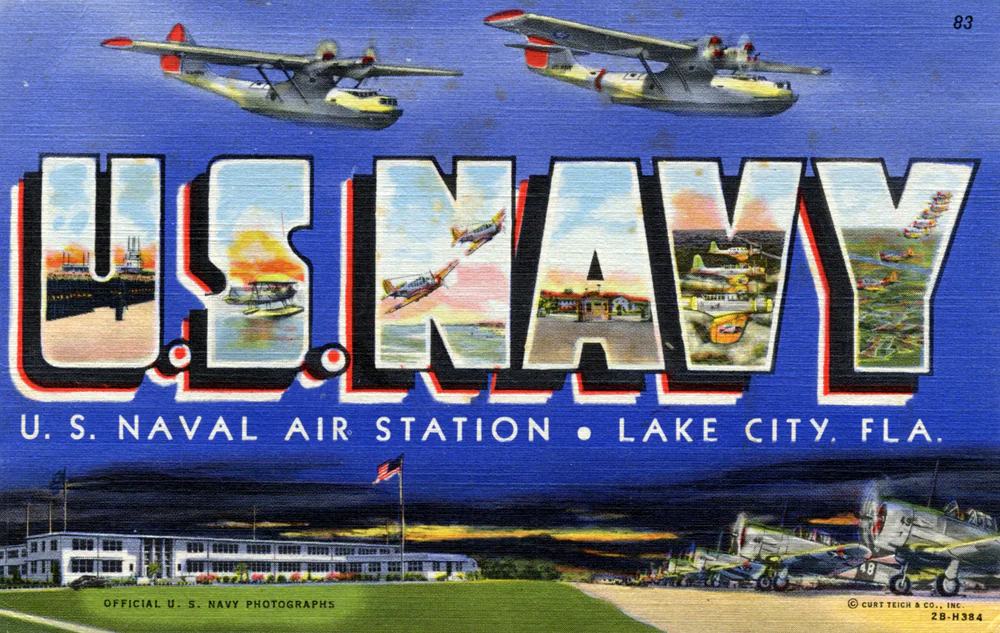
Navy Pilots, a Forestry School and Ichetucknee Springs
The Navy put Naval Air Station Lake City into service on December 8, 1942, one year and one day after Pearl Harbor. It trained Navy and Marine pilots, and up to 200 WAVES served there later in the war. After the war, the old base became the site of the Lake City airport, and a forestry school opened there in 1947 using buildings left from the Navy.
The state founded Lake City Junior College in 1961, using the old forestry school's campus. Classes began in the fall of 1962, and 62 of that year's 375 students were in the Forest Ranger School. Lake City native Pat Summerall played four sports at Columbia High School and graduated in 1948. He spent 10 seasons in the NFL, then became a broadcaster who called 16 Super Bowls for network TV.
County families had long picnicked at Ichetucknee Springs, coming first by train and later by car. In the 1950s and 1960s, while the land belonged to the Loncala Phosphate Company, people discovered tubing on the river. On September 11, 1963, recreation boards in Columbia and Suwannee counties asked the state to buy or lease the land along the Ichetucknee River. The state bought the land for Ichetucknee Springs State Park in 1970, and in 1972 the spring was named a National Natural Landmark by the U.S. Department of the Interior. In 1983, a local preservation board agreed to buy and restore John Vinzant Jr.'s home as the Lake City-Columbia County Historical Museum.
Sources: LakeCityHistory.com: Edward F. Keuchel, A History of Columbia County, Florida (1996), page 198; Museum of Florida History: Lake City Municipal Airport and Florida Gateway College (World War II Historical Sites); LakeCityHistory.com: H. Morris Williams and Kevin M. McCarthy, Lake City, Florida: A Sesquicentennial Tribute (2009), web page 164; Florida Gateway College: Our History; LakeCityHistory.com: Edward F. Keuchel, A History of Columbia County, Florida (1996), Since the Second World War, page 203; LakeCityHistory.com: H. Morris Williams and Kevin M. McCarthy, Lake City, Florida: A Sesquicentennial Tribute (2009), web page 170; Florida High School Athletic Association: Hall of Fame, Pat Summerall; LakeCityHistory.com: Edward F. Keuchel, A History of Columbia County, Florida (1996), Since the Second World War, page 210; Florida State Parks: Ichetucknee Springs State Park, History; LakeCityHistory.com: H. Morris Williams and Kevin M. McCarthy, Lake City, Florida: A Sesquicentennial Tribute (2009), web page 258
Next: Chapter 11, Since 1990: A Restored Depot, a New College Name and a Main Street for Fort White →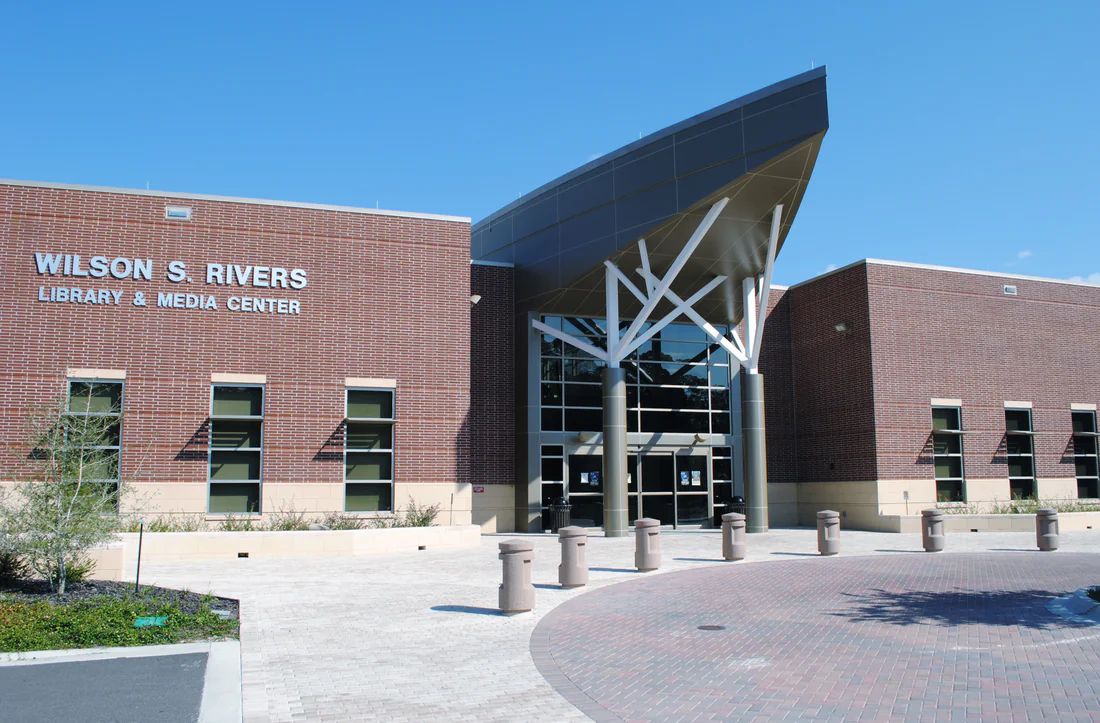
Since 1990: A Restored Depot, a New College Name and a Main Street for Fort White
Fort White bought its old train depot in 2003, moved it to Mayor's Park and restored it. Built around 1900, the depot had been the main way into town for newcomers and travelers. On February 3, 2025, Florida's Secretary of State made Main Street of Fort White part of the Florida Main Street program. The National Register of Historic Places added the Fort White Depot on September 9, 2026.
On July 1, 2010, Lake City Community College, which had added the word community to its name in 1970, became Florida Gateway College. It began its first four-year degree, in nursing, in 2012, and a bachelor's degree in business administration starting in fall 2024. In March 2021, the VA marked 100 years of care at the Lake City hospital.
In 2006, Pat Summerall was named to the Florida High School Athletic Association Hall of Fame. The state's marker list dates a historical marker for Finley/Richardson High School in Lake City to 2021. At Falling Creek Falls, a boardwalk leads to a root-beer-colored waterfall, 10 to 12 feet high, that spills over limestone. At Rum Island Park on the Santa Fe River, a ramp lets visitors using wheelchairs into the clear spring water.
Sources: Florida Department of State: Secretary Byrd Announces the Designation of the Fort White Depot in the National Register of Historic Places (September 30, 2026); Florida Department of State: Secretary Byrd Recognizes Florida Main Street's Newest Community (April 15, 2025); National Park Service: Weekly List of Actions Taken on Properties, 9/8/2026 through 9/10/2026; Florida Gateway College: Our History; VA North Florida/South Georgia Veterans Health System: NF/SGVHS Celebrates a Century of Service at the Lake City VA Medical Center (March 26, 2021); Florida High School Athletic Association: Hall of Fame, Pat Summerall; Florida Department of State, Florida Historical Markers: Finley/Richardson High School; Columbia County, Florida: Falling Creek Falls; Columbia County, Florida: Rum Island Park
Next: the whole story, in dates →The whole story, in dates
People of the Weeden Island period live at the McKeithen site.
Hernando de Soto passes near present-day Lake City.
The Mission de San Martin de Timucua is built at Ichetucknee.
Settlers near Alligator start the Bethel congregation.
The legislative council creates Columbia County.
The Dade Massacre starts the Seminole War, and the marker ties Chief Alligator to it.
The last Indian attack in the area takes place.
The rail line from Jacksonville reaches Alligator.
The town is incorporated and renamed Lake City.
Confederate troops win the Battle of Olustee, just east of Lake City.
The county's first school for freed Black people opens.
Fort White is founded.
A fire burns many of Lake City's wooden buildings.
Keno is renamed Leno.
The first building of the Florida Agricultural College is dedicated.
The railroad reaches Fort White.
Abraham Grant is elected the 19th bishop of the African Methodist Episcopal Church.
The railroad is routed through Fort White instead of Leno.
The college is renamed the University of Florida.
The Buckman Act reshapes higher education in Florida.
The Lake City School for Colored Students begins.
Columbia College closes on the old campus.
The new federal hospital takes its first patient.
Richardson Academy opens with 300 students.
President Herbert Hoover proclaims the Osceola National Forest.
Civilian Conservation Corps workers arrive at O'Leno.
O'Leno State Park opens.
The Navy puts Naval Air Station Lake City into service.
A forestry school opens at the old base.
Lake City Junior College holds its first classes.
The state buys the land for Ichetucknee Springs State Park.
Students in the county's public schools are integrated.
Ichetucknee Spring is named a National Natural Landmark.
Fort White buys, moves and restores its old depot.
Lake City Community College becomes Florida Gateway College.
Florida Gateway College begins a business bachelor's degree.
Main Street of Fort White joins the Florida Main Street program.
The Fort White Depot is added to the National Register of Historic Places.
Where you can still see it
 01
 02
Osceola National Forest
Goes with: The VA Hospital, Osceola National Forest and O'Leno
Open the place page →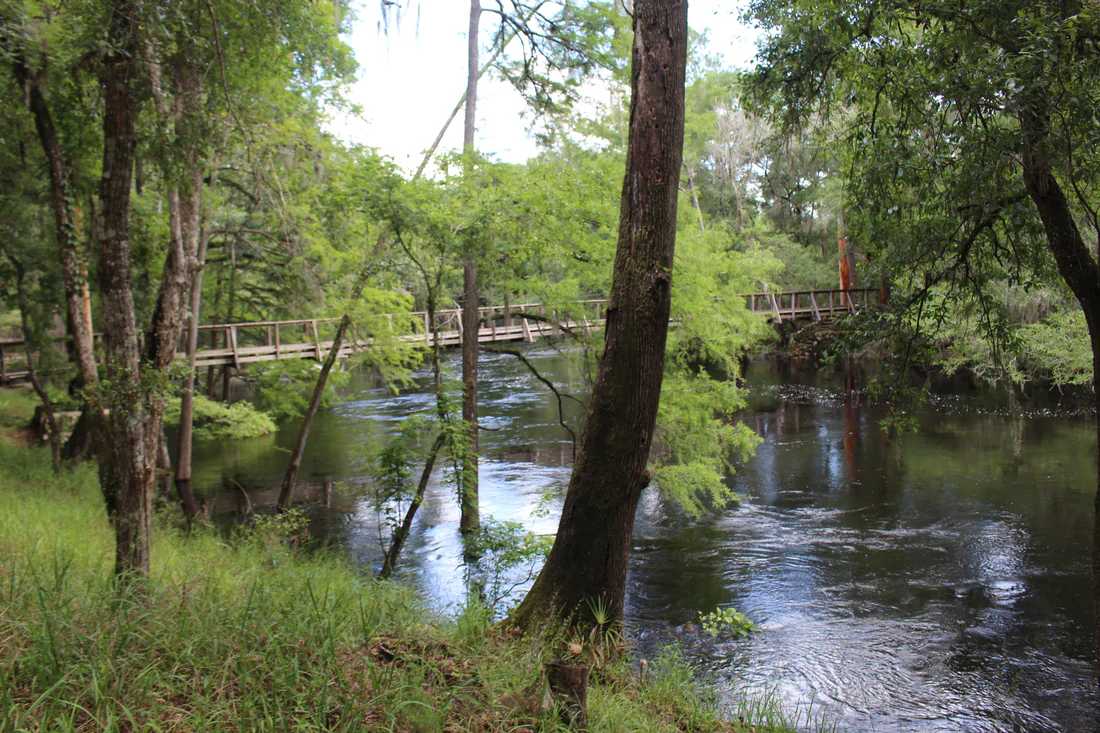 03
O'Leno State Park
Goes with: The VA Hospital, Osceola National Forest and O'Leno
Open the place page →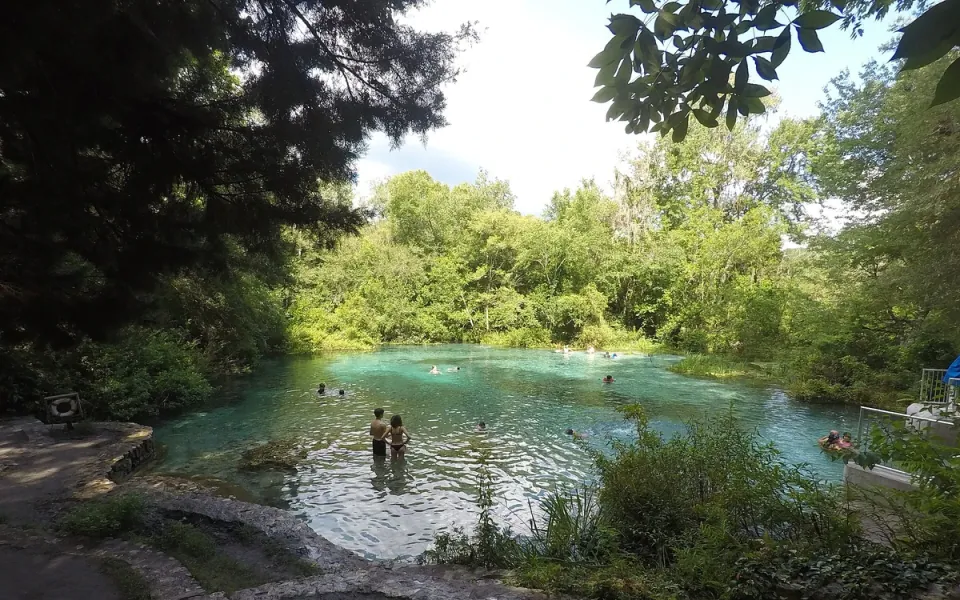 04
Ichetucknee Springs State Park
Goes with: Navy Pilots, a Forestry School and Ichetucknee Springs
Open the place page →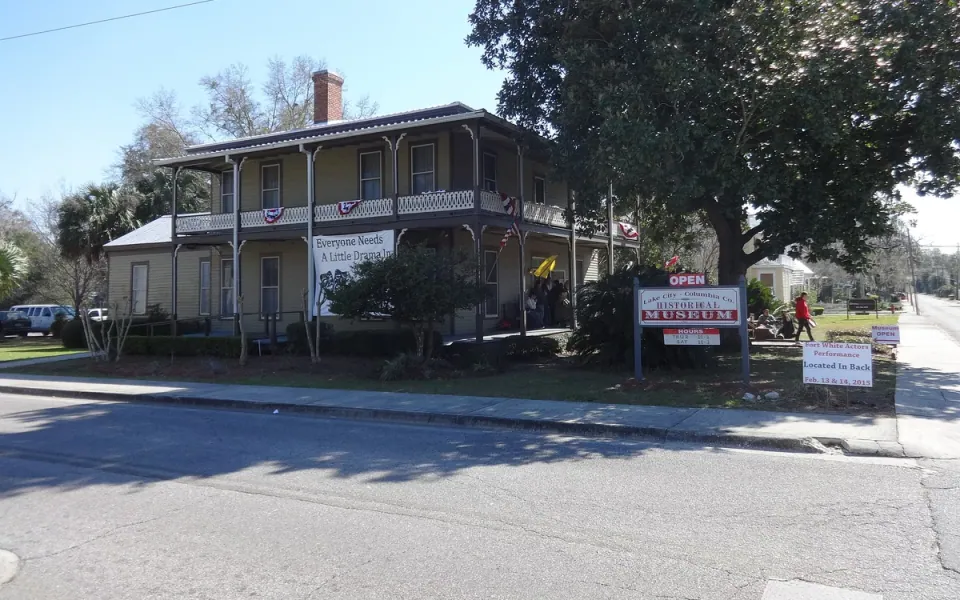 05
Lake City–Columbia County Historical Museum
Goes with: Navy Pilots, a Forestry School and Ichetucknee Springs
Open the place page →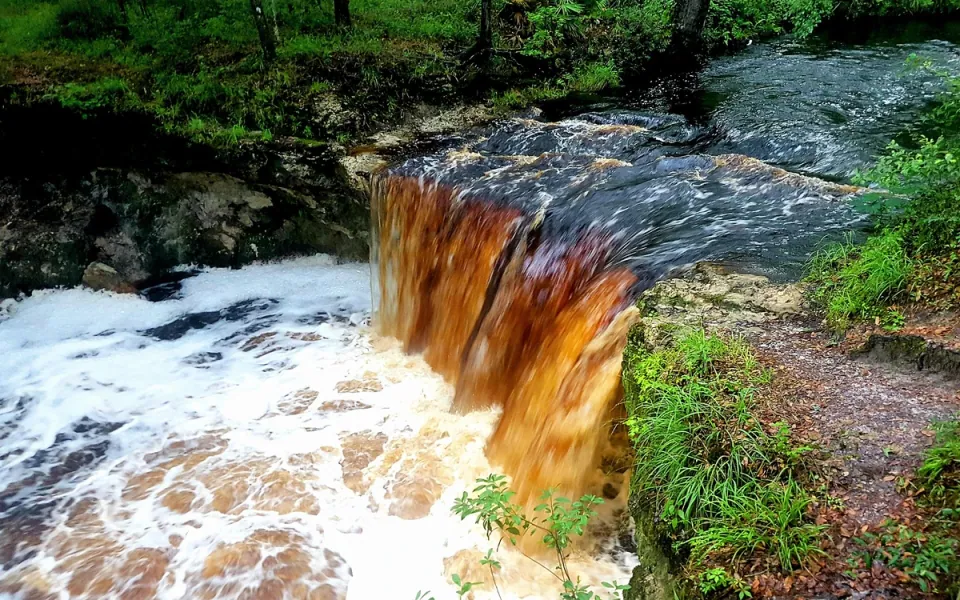 06
Falling Creek Falls
Goes with: Since 1990: A Restored Depot, a New College Name and a Main Street for Fort White
Open the place page →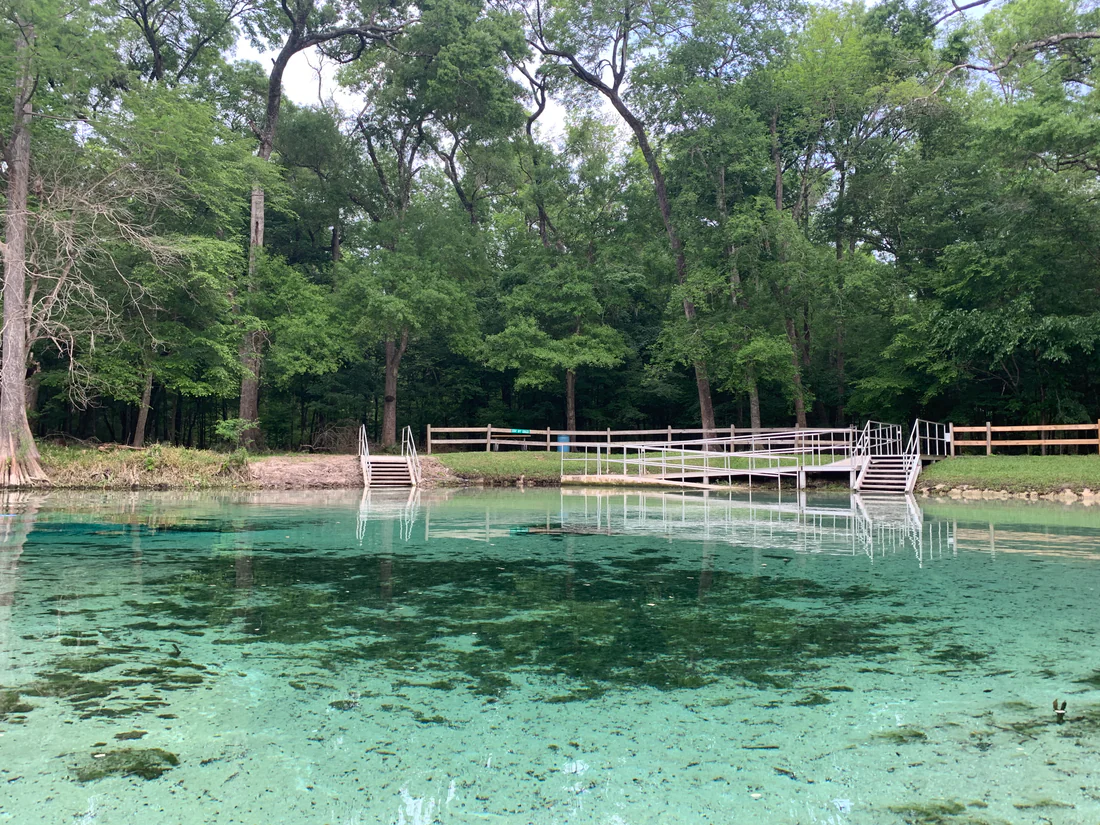 07
Rum Island Park
Goes with: Since 1990: A Restored Depot, a New College Name and a Main Street for Fort White
Open the place page →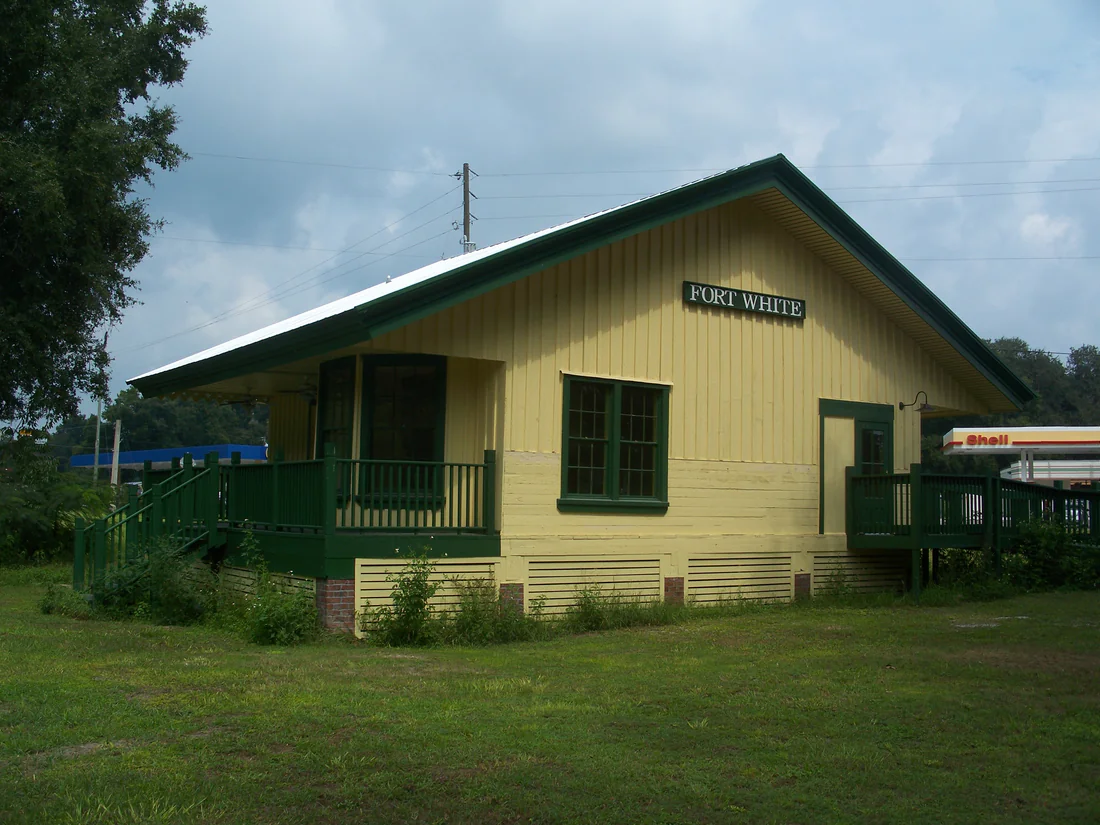 08
Fort White Depot
Goes with: Since 1990: A Restored Depot, a New College Name and a Main Street for Fort White
Read the state's announcement about the Fort White Depot →Questions people ask
When was Columbia County created?
The legislative council created Columbia County on February 4, 1832.
Chapter 3 →Who was Columbia County named for?
Sources differ, as Keuchel's county history says Columbia was a poetic name for the United States, while a 2009 Lake City history and a University of South Florida page tie it to Christopher Columbus.
Chapter 3 →What was Lake City's old name?
Lake City was called Alligator until officials incorporated the town in 1859 and renamed it.
Chapter 4 →Did the University of Florida start in Lake City?
Yes, the Florida Agricultural College opened in Lake City in 1884 and was renamed the University of Florida in 1903, before the school moved to Gainesville.
Chapter 7 →When did Ichetucknee Springs become a state park?
The state bought the land for Ichetucknee Springs State Park in 1970.
Chapter 10 →Where this comes from.
Last updated October 18, 2026.
- Florida State Parks: Ichetucknee Springs State Park, History ↗ Read October 18, 2026
- Florida Museum of Natural History, University of Florida: Excavated Collections, Florida Archaeology and Bioarchaeology ↗ Read October 18, 2026
- University Press of Florida: Archaeology of Northern Florida, A.D. 200-900: The McKeithen Weeden Island Culture ↗ Read October 18, 2026
- LakeCityHistory.com: Edward F. Keuchel, A History of Columbia County, Florida (1996), Chapter I, page 1 ↗ Read October 18, 2026
- LakeCityHistory.com: Edward F. Keuchel, A History of Columbia County, Florida (1996), Foreword ↗ Read October 18, 2026
- LakeCityHistory.com: Edward F. Keuchel, A History of Columbia County, Florida (1996), Early Settlement, page 27 ↗ Read October 18, 2026
- LakeCityHistory.com: Edward F. Keuchel, A History of Columbia County, Florida (1996), page 182 ↗ Read October 18, 2026
- LakeCityHistory.com: Edward F. Keuchel, A History of Columbia County, Florida (1996), page 198 ↗ Read October 18, 2026
- LakeCityHistory.com: Edward F. Keuchel, A History of Columbia County, Florida (1996), Since the Second World War, page 203 ↗ Read October 18, 2026
- LakeCityHistory.com: Edward F. Keuchel, A History of Columbia County, Florida (1996), Since the Second World War, page 207 ↗ Read October 18, 2026
- LakeCityHistory.com: Edward F. Keuchel, A History of Columbia County, Florida (1996), Since the Second World War, page 208 ↗ Read October 18, 2026
- LakeCityHistory.com: Edward F. Keuchel, A History of Columbia County, Florida (1996), Since the Second World War, page 209 ↗ Read October 18, 2026
- LakeCityHistory.com: Edward F. Keuchel, A History of Columbia County, Florida (1996), Since the Second World War, page 210 ↗ Read October 18, 2026
- LakeCityHistory.com: H. Morris Williams and Kevin M. McCarthy, Lake City, Florida: A Sesquicentennial Tribute (2009), web page 13 ↗ Read October 18, 2026
- LakeCityHistory.com: H. Morris Williams and Kevin M. McCarthy, Lake City, Florida: A Sesquicentennial Tribute (2009), web page 14 ↗ Read October 18, 2026
- LakeCityHistory.com: H. Morris Williams and Kevin M. McCarthy, Lake City, Florida: A Sesquicentennial Tribute (2009), web page 17 ↗ Read October 18, 2026
- LakeCityHistory.com: H. Morris Williams and Kevin M. McCarthy, Lake City, Florida: A Sesquicentennial Tribute (2009), web page 18 ↗ Read October 18, 2026
- LakeCityHistory.com: H. Morris Williams and Kevin M. McCarthy, Lake City, Florida: A Sesquicentennial Tribute (2009), web page 19 ↗ Read October 18, 2026
- LakeCityHistory.com: H. Morris Williams and Kevin M. McCarthy, Lake City, Florida: A Sesquicentennial Tribute (2009), Battle of Olustee, web page 24 ↗ Read October 18, 2026
- LakeCityHistory.com: H. Morris Williams and Kevin M. McCarthy, Lake City, Florida: A Sesquicentennial Tribute (2009), web page 25 ↗ Read October 18, 2026
- LakeCityHistory.com: H. Morris Williams and Kevin M. McCarthy, Lake City, Florida: A Sesquicentennial Tribute (2009), web page 30 ↗ Read October 18, 2026
- LakeCityHistory.com: H. Morris Williams and Kevin M. McCarthy, Lake City, Florida: A Sesquicentennial Tribute (2009), Chapter Seven, web page 35 ↗ Read October 18, 2026
- LakeCityHistory.com: H. Morris Williams and Kevin M. McCarthy, Lake City, Florida: A Sesquicentennial Tribute (2009), web page 41 ↗ Read October 18, 2026
- LakeCityHistory.com: H. Morris Williams and Kevin M. McCarthy, Lake City, Florida: A Sesquicentennial Tribute (2009), web page 42 ↗ Read October 18, 2026
- LakeCityHistory.com: H. Morris Williams and Kevin M. McCarthy, Lake City, Florida: A Sesquicentennial Tribute (2009), Chapter Nine, web page 65 ↗ Read October 18, 2026
- LakeCityHistory.com: H. Morris Williams and Kevin M. McCarthy, Lake City, Florida: A Sesquicentennial Tribute (2009), web page 86 ↗ Read October 18, 2026
- LakeCityHistory.com: H. Morris Williams and Kevin M. McCarthy, Lake City, Florida: A Sesquicentennial Tribute (2009), web page 118 ↗ Read October 18, 2026
- LakeCityHistory.com: H. Morris Williams and Kevin M. McCarthy, Lake City, Florida: A Sesquicentennial Tribute (2009), web page 152 ↗ Read October 18, 2026
- LakeCityHistory.com: H. Morris Williams and Kevin M. McCarthy, Lake City, Florida: A Sesquicentennial Tribute (2009), web page 164 ↗ Read October 18, 2026
- LakeCityHistory.com: H. Morris Williams and Kevin M. McCarthy, Lake City, Florida: A Sesquicentennial Tribute (2009), web page 170 ↗ Read October 18, 2026
- LakeCityHistory.com: H. Morris Williams and Kevin M. McCarthy, Lake City, Florida: A Sesquicentennial Tribute (2009), web page 258 ↗ Read October 18, 2026
- Florida Department of State, Florida Historical Markers: Alligator ↗ Read October 18, 2026
- Florida Department of State, Florida Historical Markers: Bethel United Methodist Church ↗ Read October 18, 2026
- Florida Department of State, Florida Historical Markers: Town of Fort White ↗ Read October 18, 2026
- Florida Department of State, Florida Historical Markers: Town of Leno ↗ Read October 18, 2026
- Florida Department of State, Florida Historical Markers: Finley/Richardson High School ↗ Read October 18, 2026
- Florida Center for Instructional Technology, University of South Florida: Exploring Florida, Columbia County Maps ↗ Read October 18, 2026
- UF/IFAS, University of Florida: History ↗ Read October 18, 2026
- University of Florida College of Public Health and Health Professions: History of the University of Florida ↗ Read October 18, 2026
- Florida State Parks: O'Leno State Park, History ↗ Read October 18, 2026
- Florida State Parks: O'Leno State Park, Park History ↗ Read October 18, 2026
- Museum of Florida History: Lake City Municipal Airport and Florida Gateway College (World War II Historical Sites) ↗ Read October 18, 2026
- Florida Gateway College: Our History ↗ Read October 18, 2026
- Florida Department of State: Secretary Byrd Announces the Designation of the Fort White Depot in the National Register of Historic Places (September 30, 2026) ↗ Read October 18, 2026
- Florida Department of State: Secretary Byrd Recognizes Florida Main Street's Newest Community (April 15, 2025) ↗ Read October 18, 2026
- National Park Service: Weekly List of Actions Taken on Properties, 9/8/2026 through 9/10/2026 ↗ Read October 18, 2026
- National Park Service: National Register of Historic Places Registration Form, Lake Isabella Historic Residential District (1993) ↗ Read October 18, 2026
- VA North Florida/South Georgia Veterans Health System: History ↗ Read October 18, 2026
- VA North Florida/South Georgia Veterans Health System: NF/SGVHS Celebrates a Century of Service at the Lake City VA Medical Center (March 26, 2021) ↗ Read October 18, 2026
- Florida High School Athletic Association: Hall of Fame, Pat Summerall ↗ Read October 18, 2026
- Florida Department of State: Frederick Preston Cone ↗ Read October 18, 2026
- Columbia County, Florida: Falling Creek Falls ↗ Read October 18, 2026
- Columbia County, Florida: Rum Island Park ↗ Read October 18, 2026
- The New Schaff-Herzog Encyclopedia of Religious Knowledge, vol. 5: Grant, Abraham (Christian Classics Ethereal Library) ↗ Read October 18, 2026