Gadsden County was created in 1823 as Florida's fifth county, and it was named for James Gadsden, who served as an aide to General Andrew Jackson in the 1818 Florida campaign. Quincy, named for John Quincy Adams, is the county seat, and Florida Memory says the town once had 25 Coca-Cola millionaires. Shade tobacco grown for cigar wrappers became the county's major industry, and Florida Memory calls Quincy the American center of that crop until the 1970s. Its history goes back nearly 2,000 years, to the platform mounds at Chattahoochee Landing on the Apalachicola River.
This page tells the story in order, from the mound builders at Chattahoochee Landing to an arts museum, a rebuilt mound and new river markers, then lists places in the county where you can still see it. The sources for each part are named at the end of that part, and all of them are listed at the bottom of the page.
The mound builders at Chattahoochee Landing
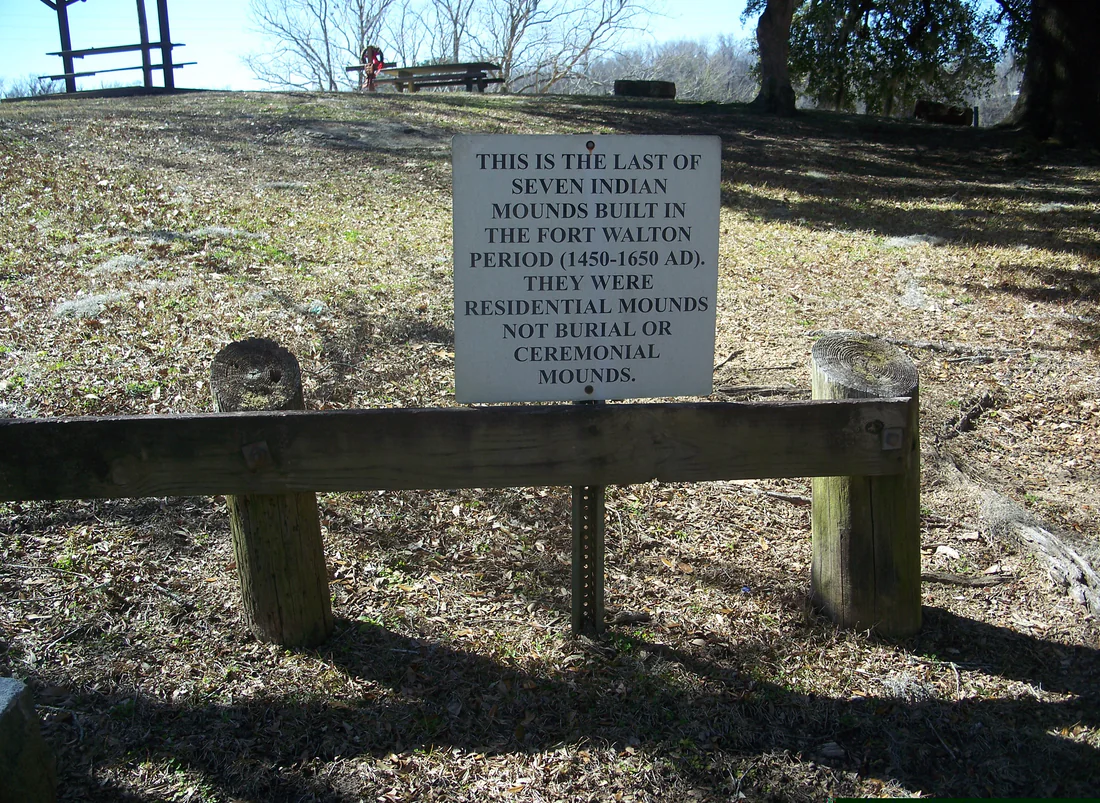
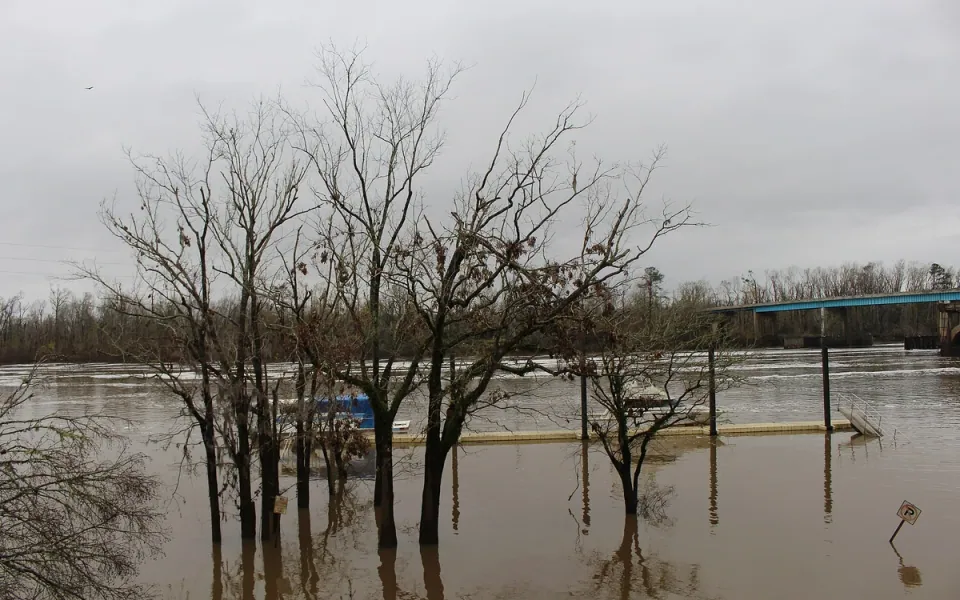
At least seven platform mounds once stood at what is now Chattahoochee River Landing Park, just below the point where the Chattahoochee and Flint rivers join to form the Apalachicola. The building started nearly 2,000 years ago, in the Swift Creek era. A marker in the park ties the builders to the large ceremonial complex at Kolomoki Mound, near Blakely, Georgia. People of the Mississippian era, from A.D. 900 to 1450, may have completed the mounds, and archaeologists call that time the Fort Walton period in this part of Florida.
Early research suggests the mounds lined up with the winter solstice and other events in the sky, so the site worked as a giant calendar. Leaders lived on top of the mounds, and villages and fields of corn and melons spread around them. People fished in the river and gathered nuts and fruit from the floodplain forests. The biggest mound, which the marker calls Mound B or the Great Platform Mound, has two flat levels on top that likely held a chief's home or a temple.
Sources: Historical Marker Database: The Chattahoochee Landing Mound Group (Chattahoochee River Landing Park marker); Historical Marker Database: Chattahoochee Landing Mound Group (Chattahoochee Main Street and City of Chattahoochee marker)
Next: Chapter 2, Spanish travelers, a British officer and a border survey →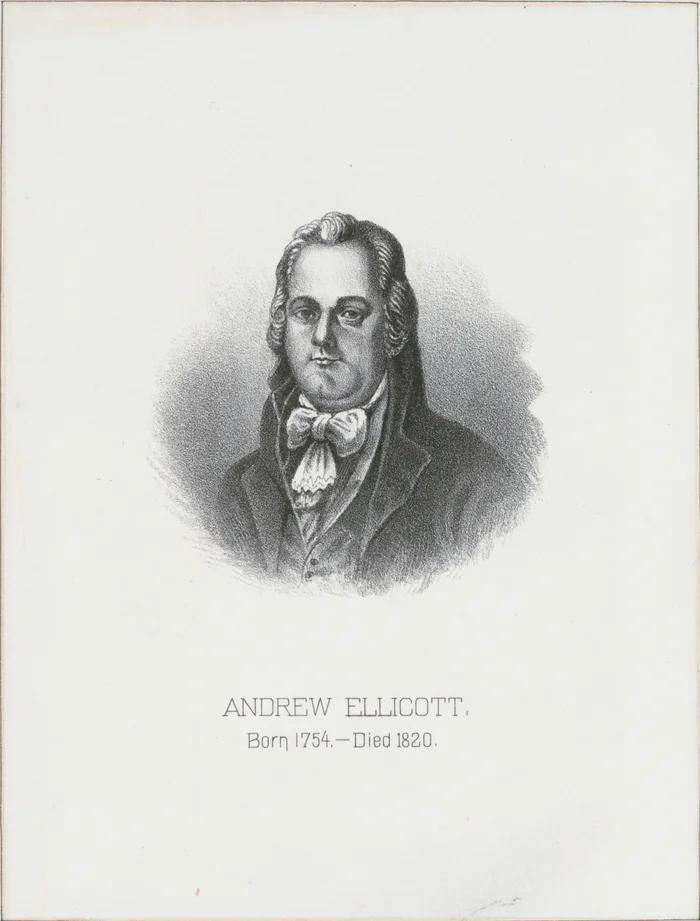
Spanish travelers, a British officer and a border survey
A colonial road from St. Augustine, known as the Mission Road or Old Spanish Trail, crossed the Apalachicola River near today's Chattahoochee. Spanish missionaries and soldiers were crossing here by 1674, and a city marker says the mound site was empty when the first Spanish explorers arrived that year. In 1686, the marker says, an explorer wrote the earliest account of the crossing, giving the river's width as 540 feet. Governor Laureano de Torres y Ayala crossed on June 8, 1693, and a friar with him wrote that they went over in a dugout canoe.
Spanish use of the road nearly ended after raiders led by the English wiped out the missions of North Florida between 1702 and 1704. An English officer, Lt. Phillip Pittman, described the crossing around 1768 and placed it near the Creek town of Tomothlies. On August 23, 1799, Andrew Ellicott for the United States and Estevan Minor for Spain arrived by schooner to survey the new border between Spanish Florida and the United States. They put up a temporary observatory on the bluff above the landing, but in September they left by schooner after a warning that Tallassee warriors planned to attack.
Sources: Historical Marker Database: Old Spanish Trail, Florida's Historic Mission Road (Chattahoochee River Landing Park marker); Historical Marker Database: Chattahoochee Landing Mound Group (Chattahoochee Main Street and City of Chattahoochee marker); Historical Marker Database: Ellicott's Camp and Observatory (Chattahoochee River Landing Park marker)
Next: Chapter 3, A British fort, Black marines and the First Seminole War →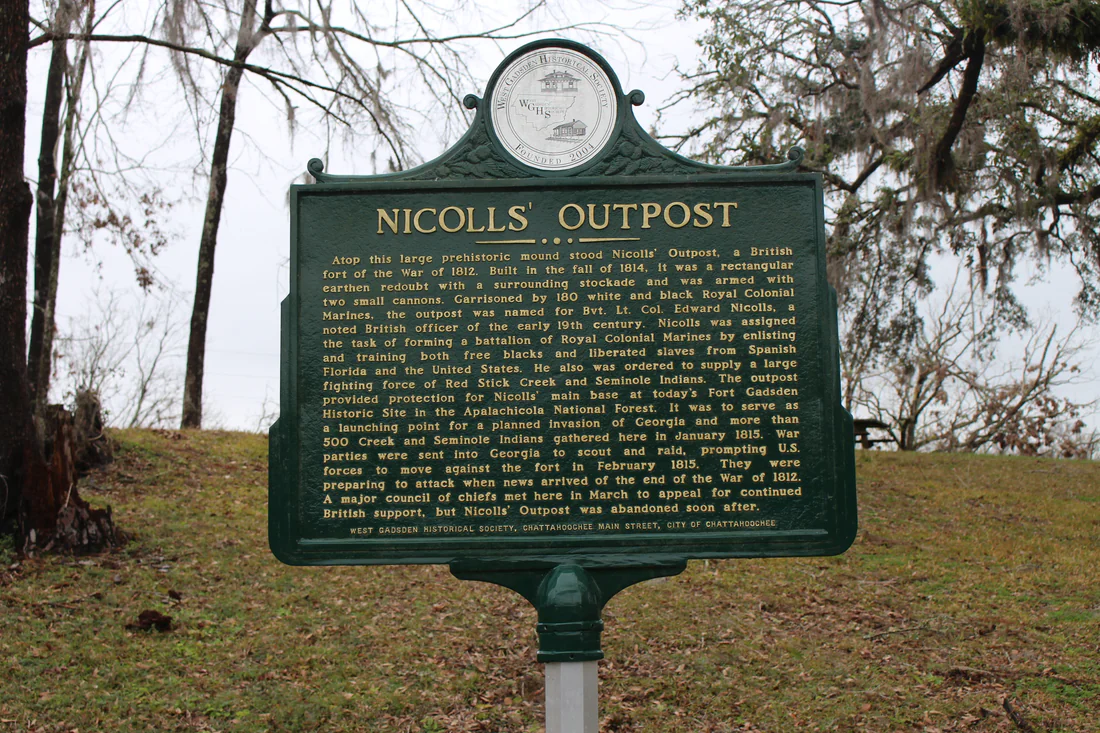
A British fort, Black marines and the First Seminole War
In the fall of 1814, during the War of 1812, the British built Nicolls' Outpost, an earthen fort with a stockade, on top of a large mound here. Its garrison of 180 Royal Colonial Marines included both white and Black men. A state marker says the marine companies here and at Prospect Bluff were made up largely of Black men who had freed themselves from slavery, known as maroons. In February 1815, over 500 Creek and Seminole Indians massed here for a planned attack on Georgia, until word came that the War of 1812 was over. Nicolls held a council of chiefs here on March 10, 1815, but the British left the post soon after.
The First Seminole War started in November 1817 with a U.S. attack on Fowltown, a Lower Creek village near today's Bainbridge, Georgia. On November 30, 1817, Native American and maroon warriors struck back by attacking an Army supply boat at this spot. Lt. Richard W. Scott and many of his 40-man company fell in the first volley. A marker at the site calls it the first time U.S. troops lost a battle in the Seminole Wars. The marker says the battle played a key part in talks with Spain and helped make Florida part of the United States in 1821.
General Andrew Jackson was ordered to invade Spanish Florida, and in the spring of 1818 his army crossed into it at what is now Chattahoochee. James Gadsden, a West Point graduate who had come to the area as a young lieutenant around 1817, campaigned with Jackson as his aide.
Sources: Historical Marker Database: Nicolls' Outpost (West Gadsden Historical Society marker, 2014); Historical Marker Database: The Front Line of Freedom (marker erected 2026); Historical Marker Database: The Treaty of Nicolls' Outpost (Florida Department of State marker, 2026); Historical Marker Database: The First Seminole War (Chattahoochee marker); Historical Marker Database: The Scott Battle of 1817 (Chattahoochee River Landing Park marker); Florida Memory: History of Gadsden County (WPA typescript); University of South Florida, Florida Center for Instructional Technology: FL Maps, Gadsden County; Florida Department of State: Florida Historical Marker Details, Gadsden County
Next: Chapter 4, Gadsden County and Quincy, its county seat →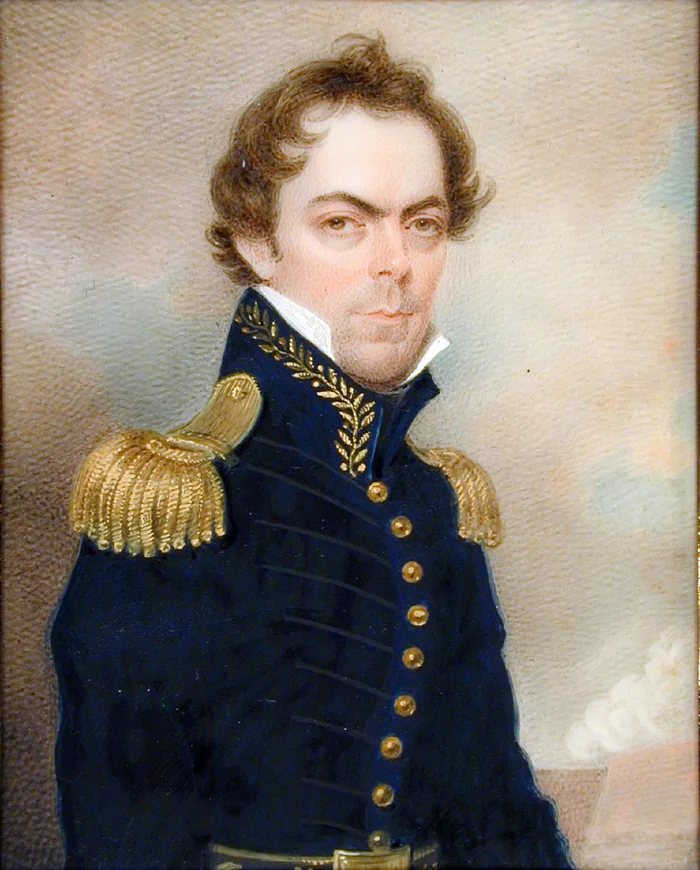
Gadsden County and Quincy, its county seat
Florida's Legislative Council created Gadsden County in June 1823, two years after Spain handed Florida to the United States. The sources differ on the day, with a National Register form giving June 24 and a University of South Florida map site giving June 4. It was Florida's fifth county, and at first it reached west from the Suwannee to the Apalachicola River and south from Georgia to the Gulf of Mexico. It was named for James Gadsden, an Army engineer and later a diplomat, who in 1853 negotiated the Gadsden Purchase of land from Mexico.
In 1824 Godfrey Stephens received the deed to 160 acres where Quincy now stands, for $235, on condition that a town be laid out with a lot for the county seat. Quincy became the seat of county government in 1825 and was incorporated in 1828. The town was named for John Quincy Adams, then the U.S. Secretary of State and later the sixth president.
Planters came with their families and enslaved people from Virginia and the Carolinas, and the county grew cotton, sugar cane and tobacco before the Civil War. Fighting with Native Americans unsettled this frontier until 1840, a state marker says. The first courthouse was built of logs, and when it burned in 1849, nearly all the county's records were lost. The Quincy Academy, incorporated in 1832, also burned in 1849, and its Classic Revival replacement taught local students until 1912.
Sources: National Park Service: National Register of Historic Places Nomination Form, Quincy Historic District; University of South Florida, Florida Center for Instructional Technology: FL Maps, Gadsden County; Florida Department of State: Florida Historical Marker Details, Gadsden County; Florida Memory: History of Gadsden County (WPA typescript); Historical Marker Database: The Quincy Academy (marker F-254, 1976)
Next: Chapter 5, The arsenal at Chattahoochee and the Civil War →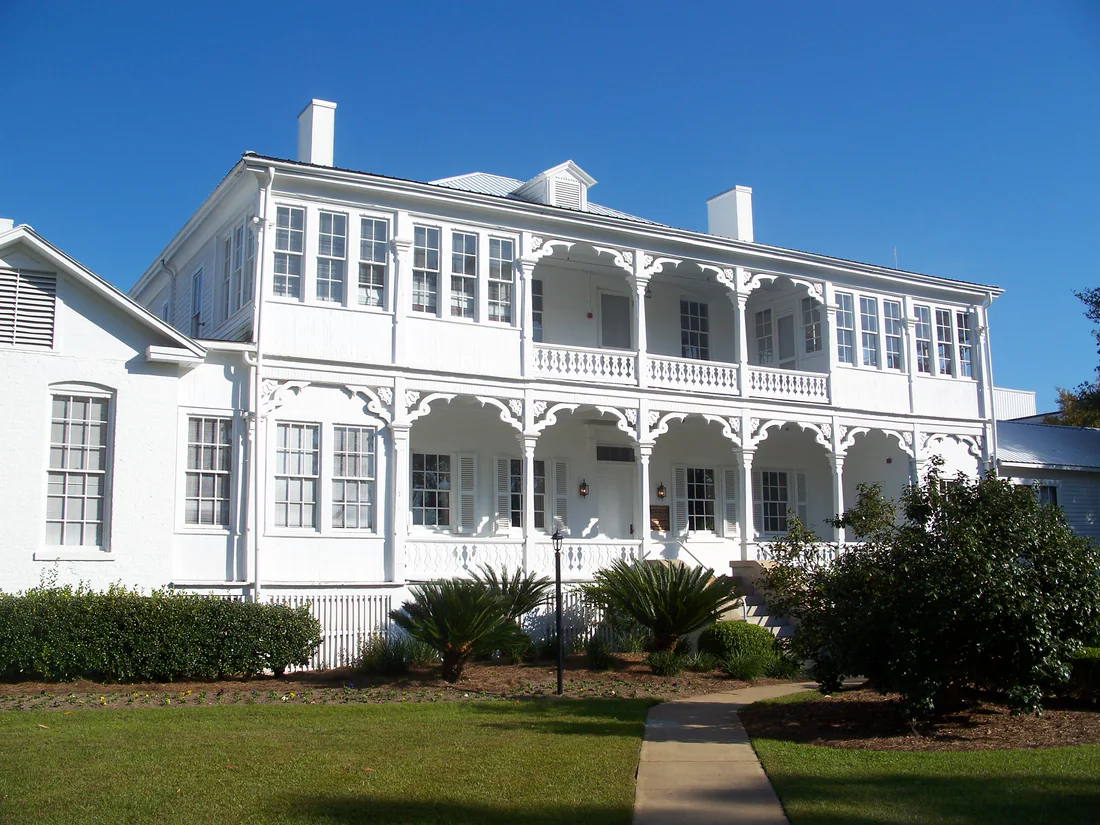
The arsenal at Chattahoochee and the Civil War
Under an 1832 act of Congress, the U.S. Army built an arsenal at Chattahoochee, first called the Mt. Vernon Arsenal. It held weapons during the Second Seminole War, and its buildings were finished in 1839. Nine buildings, of brick made nearby, formed a 400-foot square behind a wall 30 inches thick.
In January 1861, a few days before Florida left the Union, state militia troops took over the arsenal. The Confederacy then used it as a camp of instruction for soldiers. Quincy was a crossroads and supply center through the war, and in emergencies its public buildings, churches and homes became hospitals. Soldiers Cemetery in Quincy was set aside early in the war for men who died far from their families. After the war, the county's tobacco plantations had lost their enslaved workers and their capital, and they did not recover until the mid-1880s, a National Register form says.
The Freedmen's Bureau used the arsenal from 1866 to 1868, and in 1869 the buildings went to the state for use as a prison. In 1876 it became what a state marker calls Florida's first mental health hospital, and the old arsenal grounds are now part of the Florida State Hospital. The Apalachicola Arsenal Powder Magazine, built to store gunpowder, is, its marker says, the only original outbuilding still standing.
Sources: Historical Marker Database: United States Arsenal (1832-1861) (Florida Board of Parks and Historic Memorials marker, 1960); Historical Marker Database: Apalachicola Arsenal, Officer's Quarters and Guard Room (Florida Department of State marker F-810, 2014); Tallahassee Magazine: Historical Transformation; Historical Marker Database: Soldiers Cemetery (Florida Department of State marker, 2006); National Park Service: National Register of Historic Places Nomination Form, Quincy Historic District; Florida Department of State: Florida Historical Marker Details, Apalachicola Arsenal Powder Magazine; WTXL: WTXL Road Trip: The Beginnings of Chattahoochee
Next: Chapter 6, Shade tobacco and cigar leaf →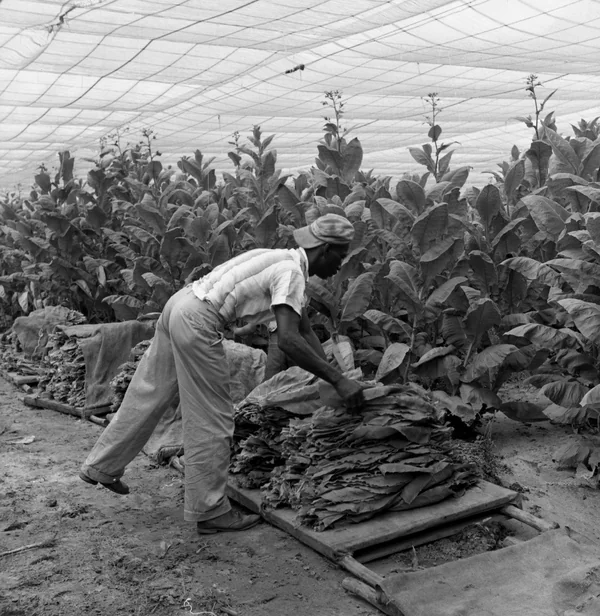
Shade tobacco and cigar leaf
After the early years of cotton and sugar cane, farmers also raised livestock, timber, rice and wine grapes. A state marker says Cuban tobacco grown in shade had become the county's major industry by 1890. The leaf was grown under shade to make cigar wrappers, and cords held up the fast-growing plants. Florida Memory says the county was one of only two places in the United States that grew shade tobacco. It also calls Quincy the American center of shade tobacco growing until the 1970s.
White Owl and King Edward cigars were made in the county, the marker says. Factories in Quincy and Havana turned out cigars and cigarettes. Mining fuller's earth and growing tomatoes also became important industries.
The National Register form for the Quincy Historic District says the town's buildings reflect two boom times, from the 1840s to the Civil War and from the late 1890s into the early 1900s. The district covers 16 blocks around the courthouse square. Florida Memory says tobacco was a main crop in Gadsden County for more than 150 years. In the 1970s, the tobacco market dried up as growers in Central and South America took it over.
Sources: Florida Department of State: Florida Historical Marker Details, Gadsden County; Florida Memory: Plantation Culture: Land and Labor in Florida History; Florida Memory: Florida Cigars: Artistry, Labor, and Politics in Florida's Oldest Industry; National Park Service: National Register of Historic Places Nomination Form, Quincy Historic District; Florida Memory: Quincy Goes Better with a Coke
Next: Chapter 7, The Quincy State Bank and the Coca-Cola millionaires →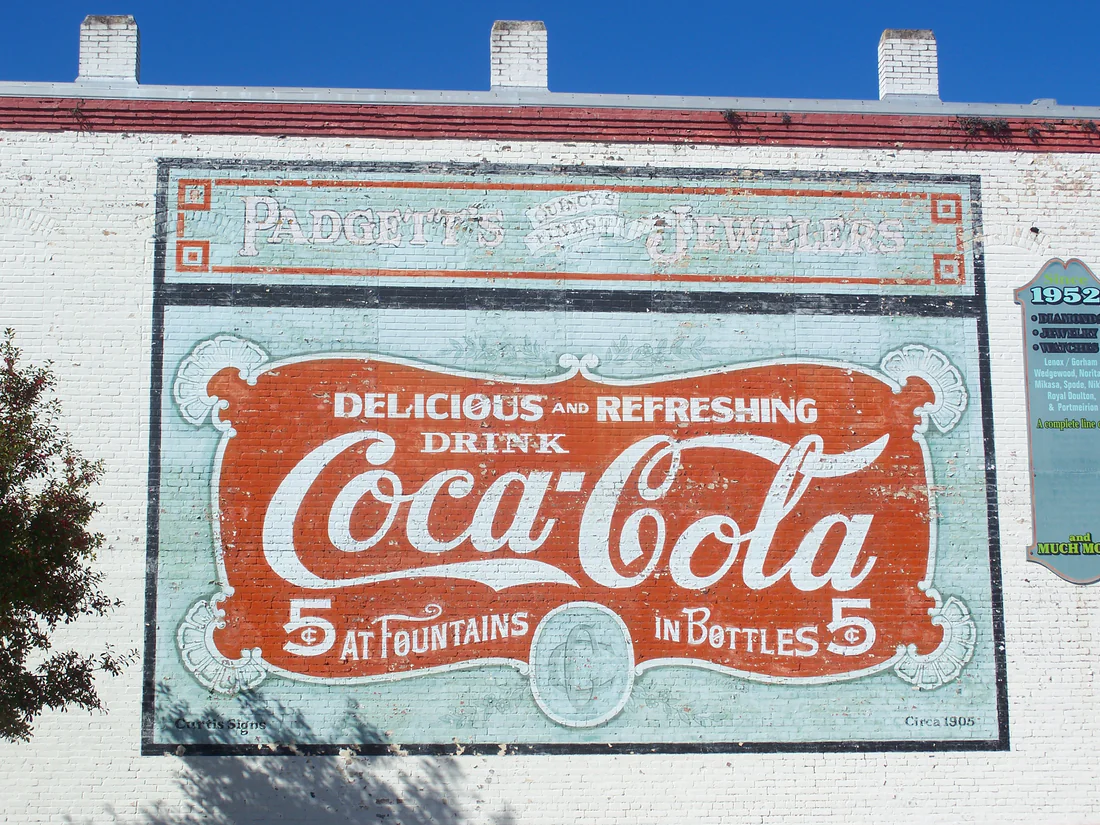
The Quincy State Bank and the Coca-Cola millionaires
The Quincy State Bank opened on August 20, 1889, under State Charter No. 1, and a state marker calls it the county's pioneer commercial bank. Mark W. "Pat" Munroe was its president from 1892 until he died in 1940, and locals called it the Coke bank. In 1893 Munroe built a plain Victorian house of heart pine for Edith Adelaide Walker, his first wife. The Pat Munroe House was later given to the City of Quincy.
Coca-Cola stock went on public sale in 1919, and Munroe bought shares soon after. In the 1920s he bought many more at about $40 each, and he urged his friends and bank customers to do the same. Munroe insisted on lending one borrower, Woodward, $4,000 on his promise to put half of it into Coke stock.
Florida Memory counts 25 original Coca-Cola millionaires in Quincy. Just before World War II, it says, Quincy had the highest income per person of any town in the country. The bank's doors never closed during the bank crisis of 1933.
Sources: Historical Marker Database: The Quincy State Bank (Florida Board of Parks and Historic Memorials marker, 1964); Florida Memory: Quincy Goes Better with a Coke; Historical Marker Database: Pat Munroe House (marker F-630, 2008)
Next: Chapter 8, Railroads, new towns and Victory Bridge →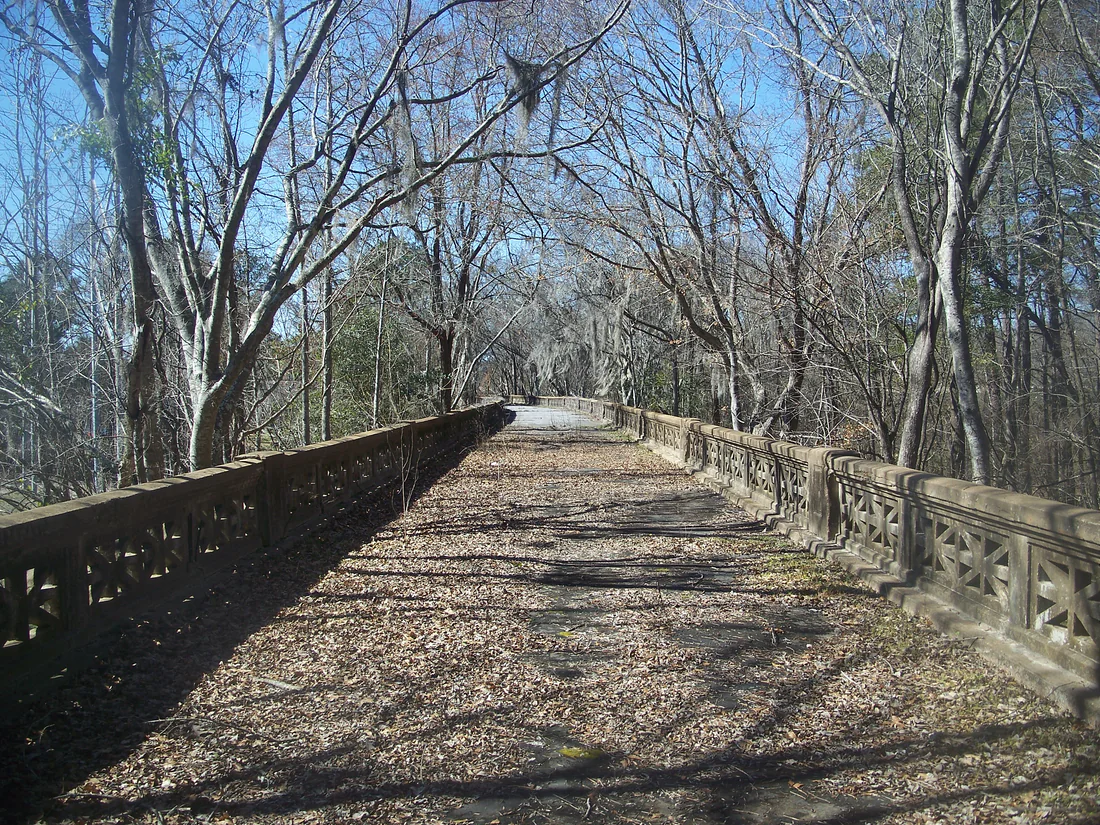
Railroads, new towns and Victory Bridge
In the late 1800s the railroad pushed west into Gadsden County, and in 1897 the Humphrey Company started a settlement at Gretna. Gretna's town plat was drawn in 1905, and its schoolhouse, on land deeded in 1908 for $100, held classes until 1935. R.A. Gray, whom the marker calls Florida's longest-serving Secretary of State, was the principal there from 1910 to 1911.
The Georgia-Florida railroad from Cuthbert, Georgia, to Tallahassee passed a mile from the community of Salem, and the new town grew up on the land around Sam Z. Fletcher's home. Building began in 1904, and the town was named Havana for the "Little Cubie" shade tobacco that paid so well there. Havana was incorporated on December 5, 1906. The Apalachicola Northern Railroad opened in 1907, linking River Junction at Chattahoochee with the port of Apalachicola, and it reached Port St. Joe in 1910. Greensboro began as a junction on that line, its depot was built in 1907, and the town was incorporated in 1911.
A marker calls Victory Bridge, completed in 1922, the first bridge across the Apalachicola River, and its name honors the Allied win in World War I. Gadsden and Jackson counties paid for it with federal help, and it replaced ferries that had run at the site for 100 years. The marker says it carried America's first tourist road from coast to coast, and its main span stayed in use until the state built the U.S. 90 bridge in the 1950s.
Sources: Historical Marker Database: Old Gretna School House (marker F-634, 2008); Historical Marker Database: Town of Havana (Havana Garden Club marker, 2006); Historical Marker Database: Greensboro Depot (marker erected 2022); Historical Marker Database: Victory Bridge (Chattahoochee River Landing Park marker)
Next: Chapter 9, Black churches, schools and civil rights →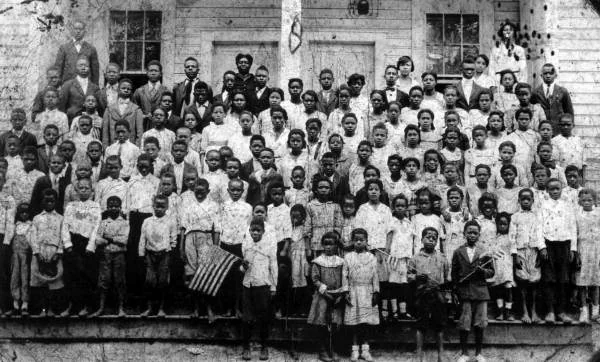
Black churches, schools and civil rights
Arnett Chapel African Methodist Episcopal Church in Quincy was organized in 1866, and its roots go back to 1865. A state marker says no African American congregation still active in Quincy or the county is older. Its first church, a plain white frame building on land bought from Brister Gunn, one of Quincy's free Black men, went up in 1898.
Florida Memory says Dr. William Spencer Stevens, born in Tallahassee in 1882, was the area's first Black doctor to open a medical practice of his own. In 1914 he was named supervisor of Quincy's city schools, a post he held until he died in 1949. With help from the Rosenwald Fund, Quincy's Black community built a school that was first called the Dunbar School and later carried Stevens's name. A county newspaper reported on September 19, 1929, that the new Stevens High School building had opened with 450 students enrolled.
Stevens High served Quincy's Black students until 1955, when they moved into a new building, Carter-Parramore High School. WTXL reports that in 1970 Carter-Parramore became the first school in the county to desegregate. Patricia Stephens Due, the civil rights activist, spent her childhood in Quincy in the 1940s. She recalled that after Dr. Stevens tried to register Black voters, whites tied him to a tree. The old Stevens School building, which most recently housed the African Artifact and Cultural Museum, burned on March 26, 2017.
Sources: Historical Marker Database: Arnett Chapel African Methodist Episcopal Church (marker F-958, 2017); Florida Memory: Remembering the Historic William S. Stevens School; WTXL: Historic Gadsden County school planned to be torn down
Next: Chapter 10, Lake Talquin, the old academy and the Leaf →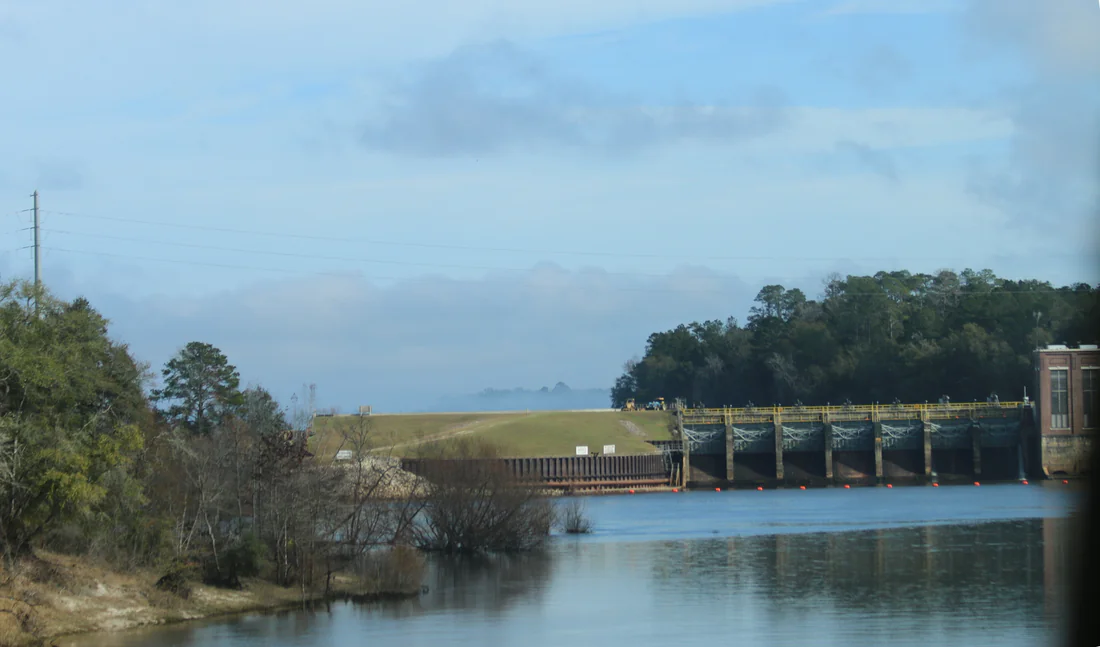
Lake Talquin, the old academy and the Leaf
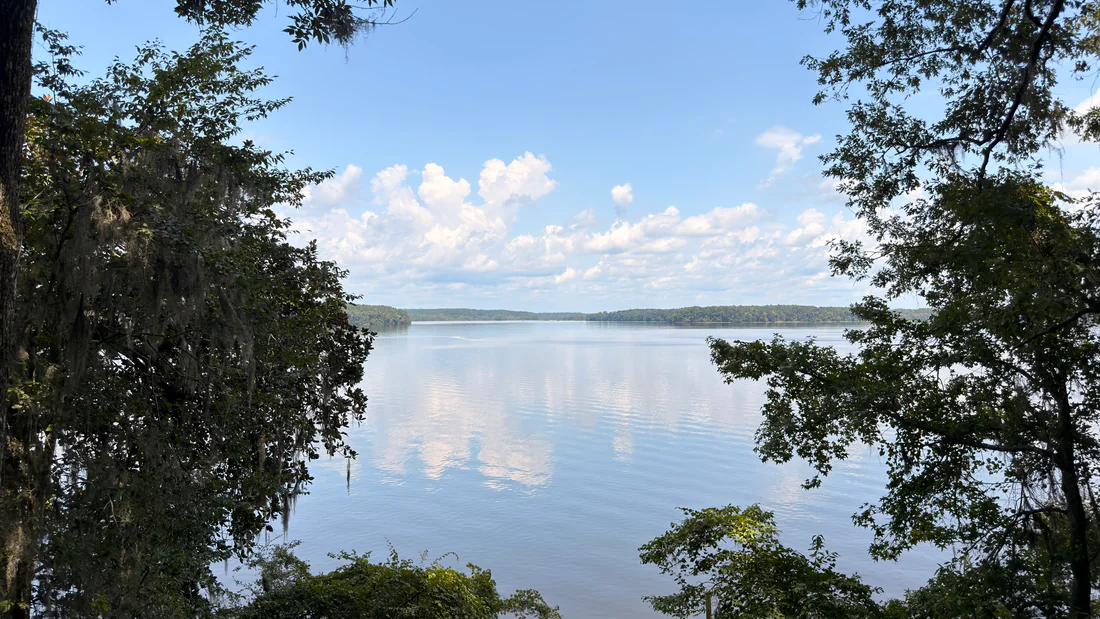
Lake Talquin formed in 1927, when a dam at Jackson Bluff blocked the Ochlockonee River to make hydroelectric power. Its name combines Tallahassee and Quincy, the two nearby cities. Lake Talquin State Park began in 1970 on land donated by Florida Power Corp.
The Quincy Woman's Club Library moved into the old Quincy Academy building in 1931. The academy building joined the National Register of Historic Places in 1974.
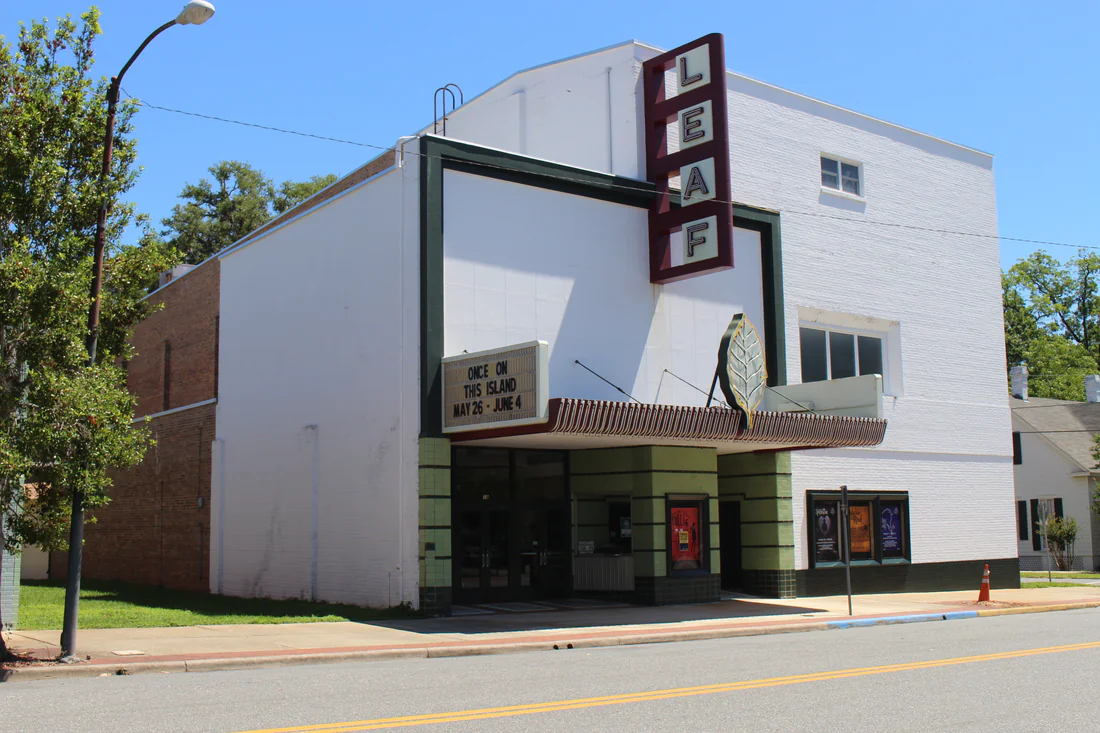
The Leaf Theater in Quincy became a movie house in 1949, and its name comes from the county's tobacco. Munroe's daughter and other heirs to Coke fortunes helped pay to restore the Leaf on Washington Street in 1983. It is now home to the Quincy Music Theatre, which people also call The Leaf.
Sources: Florida State Parks: Lake Talquin State Park, Park History; Historical Marker Database: The Quincy Academy (marker F-254, 1976); WFSU Public Media: Musical comedy "Dirty Rotten Scoundrels" opens at the Quincy Music Theatre; Florida Memory: Quincy Goes Better with a Coke
Next: Chapter 11, Since 1990: an arts museum, a rebuilt mound and new river markers →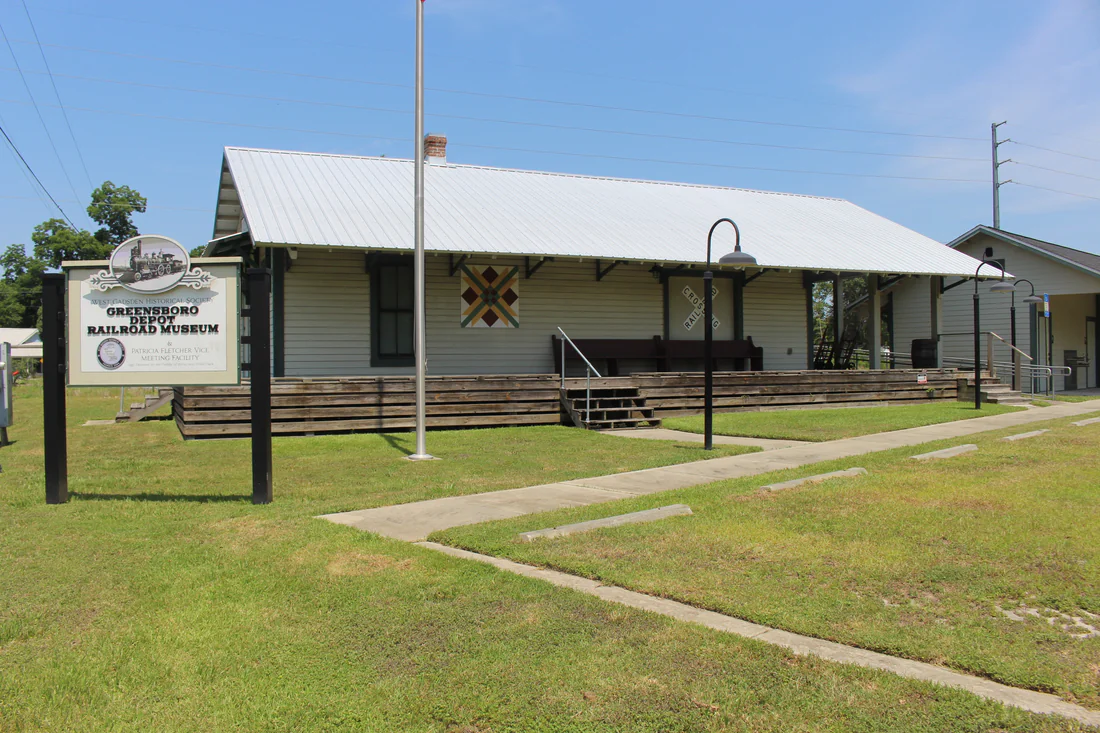
Since 1990: an arts museum, a rebuilt mound and new river markers
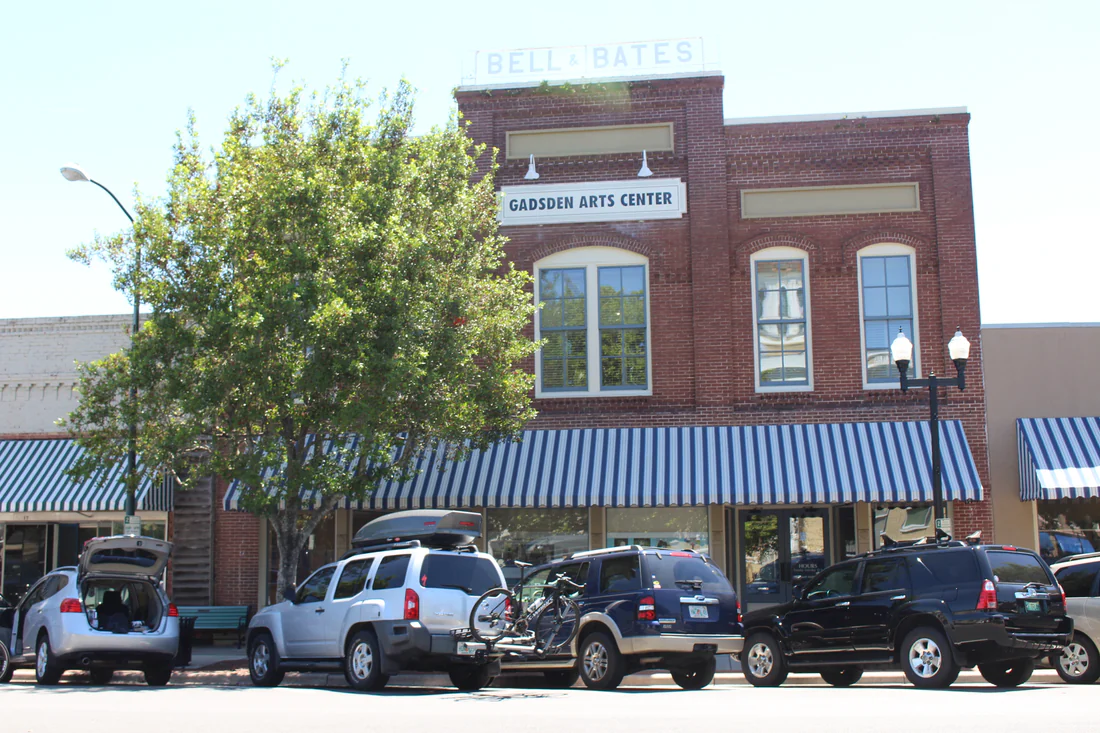
The Gadsden Arts Center was incorporated in 1994. The Bell & Bates Hardware Store had stood on Quincy's square for 85 years when it looked for a new home in 1997, and Mark and Patsy Bates then gave its building, from about 1912, to the arts center. Gadsden Arts raised $1.4 million to turn the hardware store into a museum. The American Alliance of Museums first accredited the Gadsden Arts Center & Museum on March 1, 2016, and renewed its accreditation in 2026.
In 2007 the Greensboro Depot, which its marker calls the last surviving depot of the Apalachicola Northern line, was moved to save it, and it was restored as a railroad museum. The arsenal's powder magazine in Chattahoochee was restored by 2013 and now holds a local history museum. Archaeologists found the site of a destroyed mound at Chattahoochee River Landing Park in 2011, and it was rebuilt with local money as Karen's Mound in 2017. The Bear Creek Educational Forest, 492 acres within Lake Talquin State Forest five miles south of Quincy, reached its 10th anniversary in 2015.
In May 2025 the Quincy Music Theatre opened the musical comedy "Dirty Rotten Scoundrels" as the last show of its season. In 2026, two new markers backed by the Florida Department of State went up at the river landing in Chattahoochee. One tells of the council Nicolls held there on March 10, 1815, and the other tells of the Black Colonial Marines and the soldiers of the 5th West India Regiment who served there.
Sources: Gadsden Arts Center & Museum: Our History; Historical Marker Database: Greensboro Depot (marker erected 2022); Florida Department of State: Florida Historical Marker Details, Apalachicola Arsenal Powder Magazine; Tallahassee Magazine: Historical Transformation; Historical Marker Database: Karen's Mound (City of Chattahoochee marker); WTXL: Bear Creek Educational Forest Celebrates Ten Years; WFSU Public Media: Musical comedy "Dirty Rotten Scoundrels" opens at the Quincy Music Theatre; Historical Marker Database: The Treaty of Nicolls' Outpost (Florida Department of State marker, 2026); Historical Marker Database: The Front Line of Freedom (marker erected 2026)
Next: the whole story, in dates →The whole story, in dates
People begin building platform mounds at Chattahoochee Landing.
Mississippian-era people may complete the mounds.
Spanish missionaries and soldiers are crossing the Apalachicola River here.
Governor Laureano de Torres y Ayala crosses the river by dugout canoe.
Andrew Ellicott and Estevan Minor arrive to survey the border.
The British build Nicolls' Outpost on a mound at Chattahoochee.
Warriors attack Lt. Richard W. Scott's Army supply boat.
Andrew Jackson's army enters Spanish Florida at present-day Chattahoochee.
Florida's Legislative Council creates Gadsden County.
Godfrey Stephens receives the deed to the land where Quincy stands.
Quincy is incorporated.
The Army finishes the arsenal at Chattahoochee.
Fire destroys the log courthouse and nearly all county records.
Florida militia troops take over the arsenal.
Arnett Chapel AME Church is organized in Quincy.
The old arsenal becomes a mental health hospital.
The Quincy State Bank opens under State Charter No. 1.
Shade-grown Cuban tobacco is the county's major industry.
The Humphrey Company starts a settlement at Gretna.
Havana is incorporated.
The Apalachicola Northern Railroad opens.
Dr. William Spencer Stevens becomes supervisor of Quincy's city schools.
Coca-Cola stock goes on public sale, and Pat Munroe buys shares soon after.
Victory Bridge over the Apalachicola River is completed.
A dam at Jackson Bluff forms Lake Talquin.
The Quincy State Bank stays open through the bank crisis.
The Leaf in Quincy becomes a movie house.
Stevens High students move to Carter-Parramore High School.
Carter-Parramore becomes the first county school to desegregate, WTXL reports.
The shade tobacco market dries up.
Coke heirs help pay to restore the Leaf.
The Gadsden Arts Center is incorporated.
Restoration of the arsenal's powder magazine is finished.
The Gadsden Arts Center & Museum is first accredited by the American Alliance of Museums.
Karen's Mound is rebuilt at Chattahoochee River Landing Park.
The Quincy Music Theatre opens "Dirty Rotten Scoundrels."
Two new state-backed markers go up at the river landing in Chattahoochee.
Where you can still see it
 01
Chattahoochee River Landing
Goes with: The mound builders at Chattahoochee Landing
Open the place page → 02
 03
 04
 05
Gadsden Arts Center & Museum
Goes with: Since 1990: an arts museum, a rebuilt mound and new river markers
Open the place page →Questions people ask
When was Gadsden County created?
Florida's Legislative Council created Gadsden County in June 1823, and it was Florida's fifth county.
Chapter 4 →Who was Gadsden County named for?
It was named for James Gadsden, an Army engineer and later a diplomat, who in 1853 negotiated the Gadsden Purchase of land from Mexico.
Chapter 4 →What is the county seat of Gadsden County?
Quincy, named for John Quincy Adams, became the seat of county government in 1825 and was incorporated in 1828.
Chapter 4 →Why is Quincy known for Coca-Cola millionaires?
Banker Pat Munroe bought Coca-Cola stock in the 1920s and urged his friends and bank customers to do the same, and Florida Memory counts 25 original Coca-Cola millionaires in Quincy.
Chapter 7 →When did shade tobacco become Gadsden County's main industry?
A state marker says Cuban tobacco grown in shade had become the county's major industry by 1890.
Chapter 6 →Where this comes from.
Last updated October 19, 2026.
- University of South Florida, Florida Center for Instructional Technology: FL Maps, Gadsden County ↗ Read October 19, 2026
- Florida Department of State: Florida Historical Marker Details, Gadsden County ↗ Read October 19, 2026
- Florida Department of State: Florida Historical Marker Details, Apalachicola Arsenal Powder Magazine ↗ Read October 19, 2026
- National Park Service: National Register of Historic Places Nomination Form, Quincy Historic District ↗ Read October 19, 2026
- Florida Memory: History of Gadsden County (WPA typescript) ↗ Read October 19, 2026
- Florida Memory: Quincy Goes Better with a Coke ↗ Read October 19, 2026
- Florida Memory: Remembering the Historic William S. Stevens School ↗ Read October 19, 2026
- Florida Memory: Florida Cigars: Artistry, Labor, and Politics in Florida's Oldest Industry ↗ Read October 19, 2026
- Florida Memory: Plantation Culture: Land and Labor in Florida History ↗ Read October 19, 2026
- Historical Marker Database: The Chattahoochee Landing Mound Group (Chattahoochee River Landing Park marker) ↗ Read October 19, 2026
- Historical Marker Database: Chattahoochee Landing Mound Group (Chattahoochee Main Street and City of Chattahoochee marker) ↗ Read October 19, 2026
- Historical Marker Database: Old Spanish Trail, Florida's Historic Mission Road (Chattahoochee River Landing Park marker) ↗ Read October 19, 2026
- Historical Marker Database: Ellicott's Camp and Observatory (Chattahoochee River Landing Park marker) ↗ Read October 19, 2026
- Historical Marker Database: Nicolls' Outpost (West Gadsden Historical Society marker, 2014) ↗ Read October 19, 2026
- Historical Marker Database: The Front Line of Freedom (marker erected 2026) ↗ Read October 19, 2026
- Historical Marker Database: The Treaty of Nicolls' Outpost (Florida Department of State marker, 2026) ↗ Read October 19, 2026
- Historical Marker Database: The Scott Battle of 1817 (Chattahoochee River Landing Park marker) ↗ Read October 19, 2026
- Historical Marker Database: The First Seminole War (Chattahoochee marker) ↗ Read October 19, 2026
- Historical Marker Database: United States Arsenal (1832-1861) (Florida Board of Parks and Historic Memorials marker, 1960) ↗ Read October 19, 2026
- Historical Marker Database: Apalachicola Arsenal, Officer's Quarters and Guard Room (Florida Department of State marker F-810, 2014) ↗ Read October 19, 2026
- Historical Marker Database: Soldiers Cemetery (Florida Department of State marker, 2006) ↗ Read October 19, 2026
- Historical Marker Database: The Quincy Academy (marker F-254, 1976) ↗ Read October 19, 2026
- Historical Marker Database: The Quincy State Bank (Florida Board of Parks and Historic Memorials marker, 1964) ↗ Read October 19, 2026
- Historical Marker Database: Pat Munroe House (marker F-630, 2008) ↗ Read October 19, 2026
- Historical Marker Database: Arnett Chapel African Methodist Episcopal Church (marker F-958, 2017) ↗ Read October 19, 2026
- Historical Marker Database: Town of Havana (Havana Garden Club marker, 2006) ↗ Read October 19, 2026
- Historical Marker Database: Old Gretna School House (marker F-634, 2008) ↗ Read October 19, 2026
- Historical Marker Database: Greensboro Depot (marker erected 2022) ↗ Read October 19, 2026
- Historical Marker Database: Victory Bridge (Chattahoochee River Landing Park marker) ↗ Read October 19, 2026
- Historical Marker Database: Karen's Mound (City of Chattahoochee marker) ↗ Read October 19, 2026
- Tallahassee Magazine: Historical Transformation ↗ Read October 19, 2026
- WTXL: WTXL Road Trip: The Beginnings of Chattahoochee ↗ Read October 19, 2026
- WTXL: Historic Gadsden County school planned to be torn down ↗ Read October 19, 2026
- Florida State Parks: Lake Talquin State Park, Park History ↗ Read October 19, 2026
- Gadsden Arts Center & Museum: Our History ↗ Read October 19, 2026
- WFSU Public Media: Musical comedy "Dirty Rotten Scoundrels" opens at the Quincy Music Theatre ↗ Read October 19, 2026
- WTXL: Bear Creek Educational Forest Celebrates Ten Years ↗ Read October 19, 2026