Calhoun County was created on January 26, 1838, and named for John C. Calhoun, a United States senator from South Carolina. Its county seat moved to Blountstown in 1880, and the town takes its name from Chief John Blount. The county's own history says the 29-mile Marianna and Blountstown Railroad, which ran from 1909 to 1972, was Florida's shortest railroad. Its story reaches back much further, to the Apalachicola River region, which the county's chamber of commerce counts among the first parts of Florida where people lived.
This page tells the story in order, from the river peoples and Chief John Blount's reservation to a pioneer settlement, Goat Day and the old courthouse, then lists places in the county where you can still see it. The sources for each part are named at the end of that part, and all of them are listed at the bottom of the page.
River Peoples and Chief Blount's Reservation
The Calhoun County Chamber of Commerce counts the Apalachicola River region among the first parts of Florida where people lived. In the early 1700s, Creek people from Georgia and Alabama started making homes along the river. The chamber says Apalachicola is an Indian word, and it translates the word as people living on the other side.
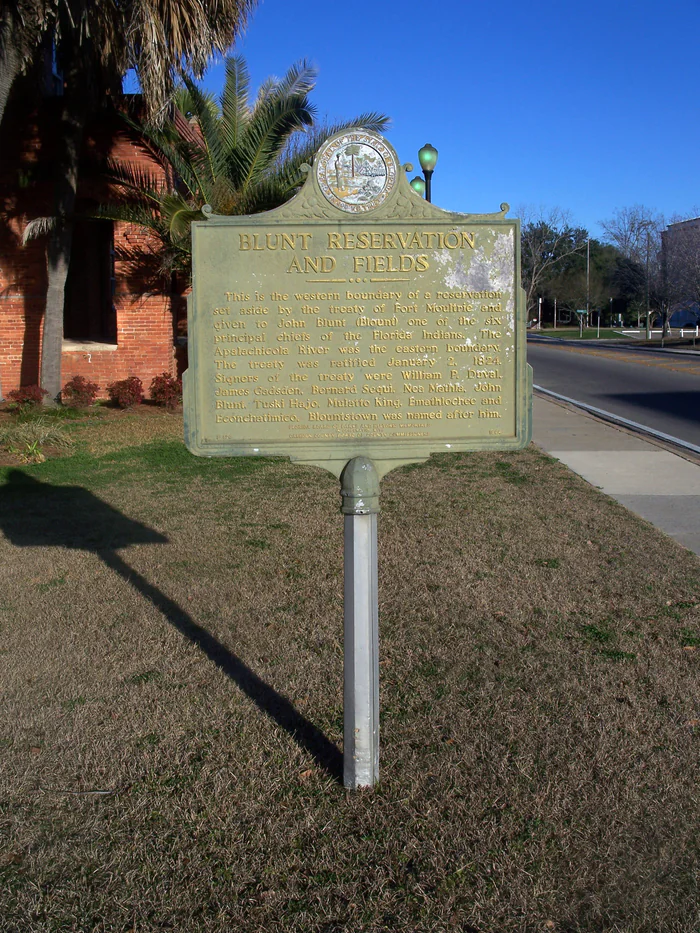
John Blount, one of the six head chiefs of the Florida Indians, received a reservation under a treaty made at Fort Moultrie. The Apalachicola River formed its eastern edge. Ratification of the treaty came on January 2, 1824. William P. Duval, James Gadsden and Tuski Hajo signed it, and so did Blount himself.
The town of Blountstown takes its name from him. Blount was later moved away to Texas. His land beside the Apalachicola River then went back to the United States. Shadrick Sutton bought most of the old reservation.
Sources: Calhoun County Chamber of Commerce: Tourism; Florida Department of State, Division of Historical Resources: Blunt Reservation and Fields (historical marker); Calhoun County, Florida: History of Calhoun County
Next: Chapter 2, Chipola, Ocheesee and the Cotton Years →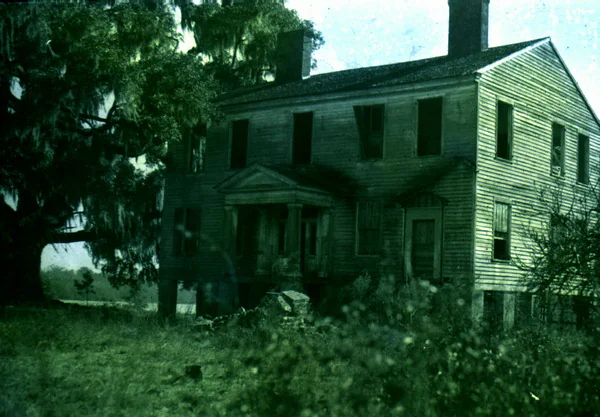
Chipola, Ocheesee and the Cotton Years
A WPA history of the county says the first settlement in what is now Calhoun County was called Chipola. Ocheesee Bluff, on the Apalachicola River, was where the earliest military road between Pensacola and St. Augustine crossed it. In 1829 the real estate promoters Perry and Mill laid out a town and sold its lots. In 1832 the territorial legislature formed Fayette County and made Ocheesee its seat. Lawmakers did away with Fayette County in 1834, and Ocheesee stayed small.
From 1840 to 1860, growing cotton paid very well for the county's farmers. The county history calls Jason Gregory its most outstanding planter. Gregory bought up nearly every lot in Ocheesee. In the late 1850s, as many as 30 steamboats worked the Apalachicola River between Georgia and Alabama and the town of Apalachicola.
Sources: Florida Memory: History of Calhoun County (WPA typescript with 1937 cover letter); Calhoun County, Florida: History of Calhoun County
Next: Chapter 3, Calhoun County Is Created in 1838 →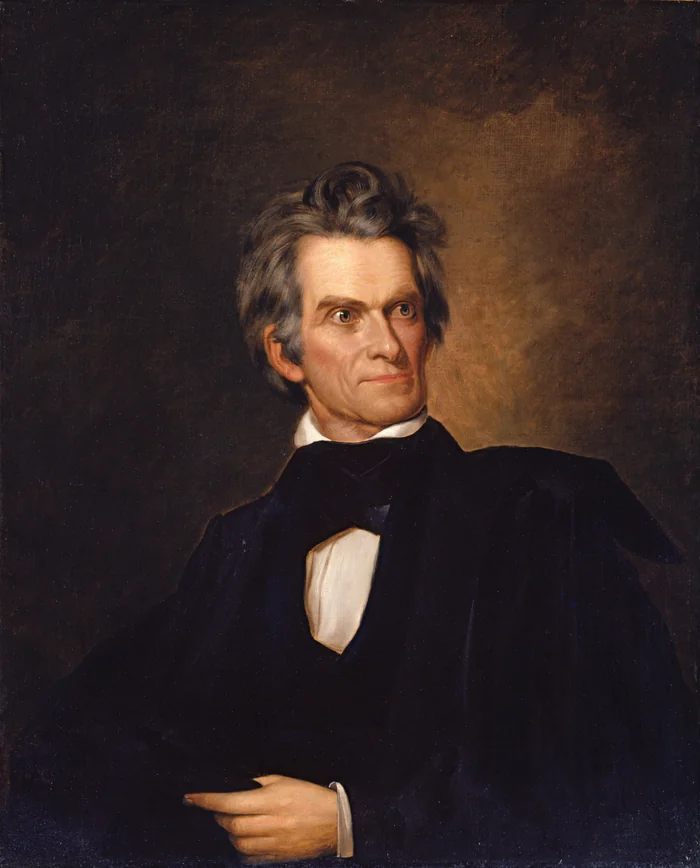
Calhoun County Is Created in 1838
Calhoun County came into being on January 26, 1838. It was named for John C. Calhoun, a United States senator from South Carolina. The WPA history says it was formed from parts of Franklin and Jackson counties. Its purpose was to build up St. Joseph as a trading rival to Apalachicola.
St. Joseph, a seaport, was the first county seat, and it grew fast. The WPA history says St. Joseph had been one of the leading cities in Florida. It also says the first constitutional convention met there in 1838. The territory's first constitution was drafted and approved in St. Joseph.
A railroad was laid from St. Joseph to Iola, running beside the Apalachicola on its western side. A large share of the cotton bound for Apalachicola went to St. Joseph by train instead.
Sources: Florida Natural Areas Inventory (ARROW): History, Calhoun County; Calhoun County, Florida: History of Calhoun County; Florida Memory: History of Calhoun County (WPA typescript with 1937 cover letter)
Next: Chapter 4, St. Joseph Falls and the Seat Moves to Abe Springs Bluff →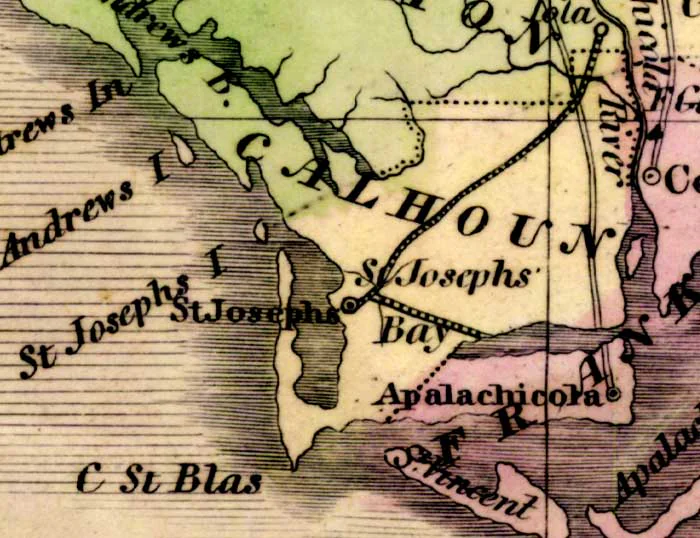
St. Joseph Falls and the Seat Moves to Abe Springs Bluff
Yellow fever killed most of St. Joseph's people in 1841, the WPA history says. It says a hurricane and a tidal wave in 1843 finished the town. An FNAI timeline instead says a hurricane wiped out St. Joseph in 1850. The state marker at Abe Springs Bluff places both the fever and the storm in the early 1840s.
For a while after that, the county had no seat of government. State lawmakers tried without success to name a new seat between 1845 and 1847. In 1848 the county's voters chose among the proposed sites. The next January, Abe Springs Bluff, a more central site away from the coast, was officially named the county seat.
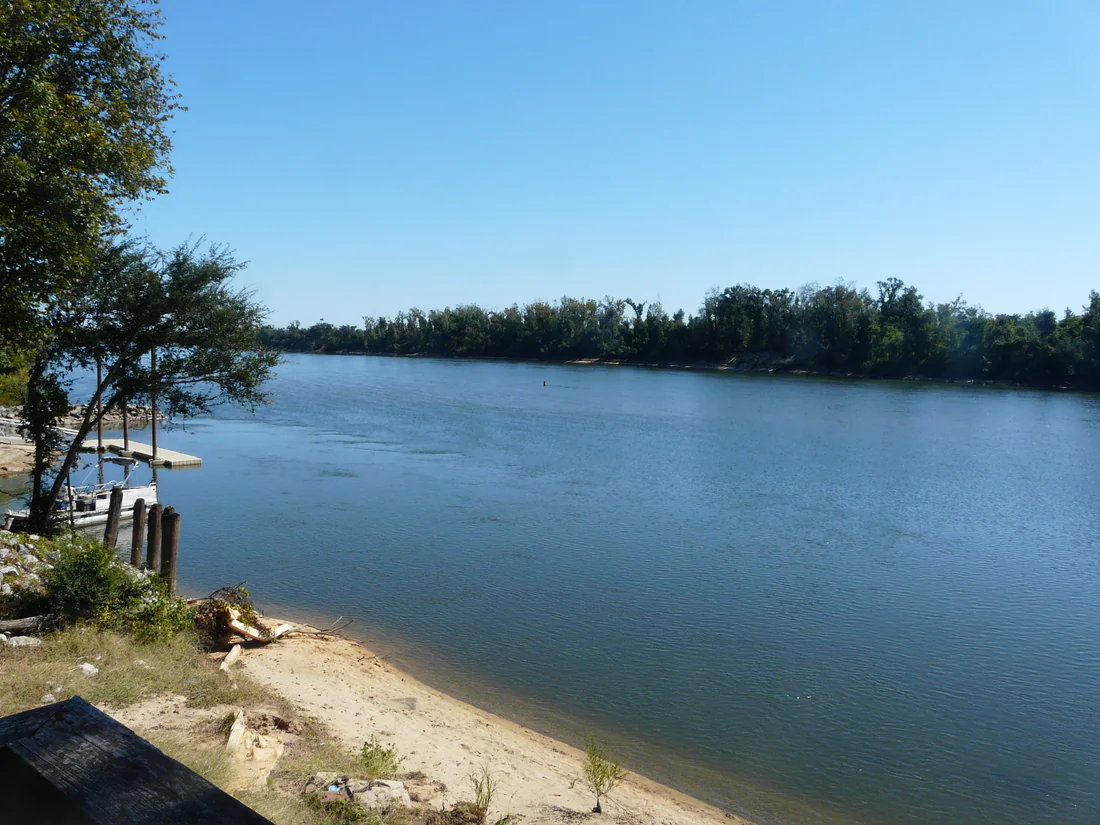
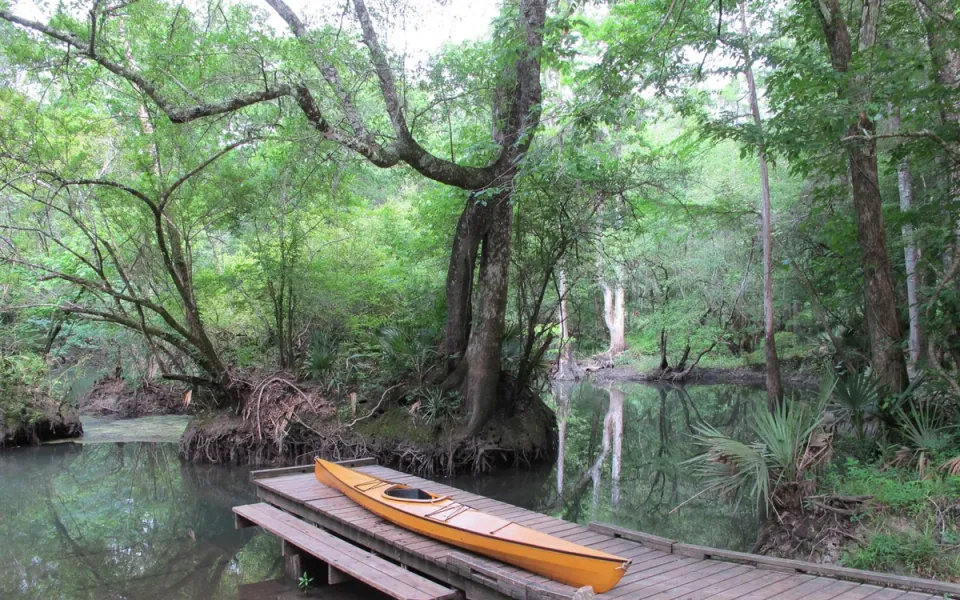
Abe Springs Bluff never became a real town, the marker says, and was only a courthouse site. Its one-story wooden courthouse stood on a lonely spot above the Chipola River. The WPA history says this courthouse burned in 1862, and most of the county's records were lost.
Sources: Florida Memory: History of Calhoun County (WPA typescript with 1937 cover letter); Florida Natural Areas Inventory (ARROW): History, Calhoun County; Florida Department of State, Division of Historical Resources: Abe Springs Bluff Courthouse (historical marker)
Next: Chapter 5, Steamboats and a New County Seat at Blountstown →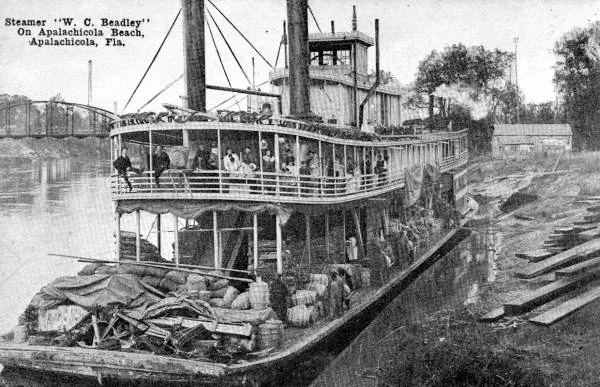
Steamboats and a New County Seat at Blountstown
After the Civil War, more and more steamboats worked the Apalachicola River. They carried passengers, crops and factory goods between the Gulf and towns upriver in Florida, Alabama and Georgia. A river port was set up, and a town of 26 blocks was mapped out for Blountstown.
The state marker says that in 1880, after the Abe Springs Bluff courthouse burned, the county seat moved to Blountstown. About 100 people lived there then. Just 79 of 308 registered voters cast ballots on the move, and every one of them voted for it. County commissioners met in Blountstown for the first time on May 17, 1880.
A two-story wooden courthouse went up on the square set aside for it. The WPA history dates that courthouse to 1882 and places it on a bluff above the Apalachicola River. Homes, shops and a hotel were built close by, but few of the planned streets were ever made.
Sources: Florida Department of State, Division of Historical Resources: "Old Blountstown" Courthouse (historical marker); Florida Memory: History of Calhoun County (WPA typescript with 1937 cover letter); Florida Natural Areas Inventory (ARROW): History, Calhoun County
Next: Chapter 6, New Blountstown and the 1904 Courthouse →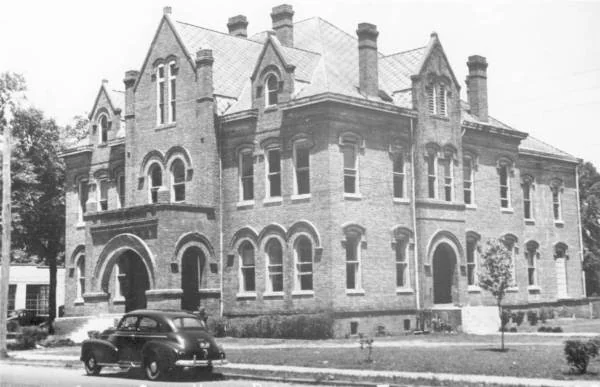
New Blountstown and the 1904 Courthouse
River floods drove some people to move to higher ground. A new section called New Blountstown began to grow as the century turned. Blountstown was chartered as a city in May 1903. Its first mayor, Francis Marion Yon, laid out its streets, alleys, blocks and lots.
In 1904 a much bigger courthouse of brick, two stories tall, was built a little over a mile northwest of the first one. Frank Lockwood and Benjamin Bosworth were its architects. FNAI's history calls it one of just two courthouses in the Romanesque Revival style still standing in Florida. The WPA history says an addition was built in 1914.
All of the county's offices worked out of the building until 1973. That year a new, modern courthouse was dedicated as the seat of government. The first Blountstown courthouse, at the Bluff, became a private home and was torn down in the mid-1940s.
Sources: Florida Department of State, Division of Historical Resources: "Old Blountstown" Courthouse (historical marker); Calhoun County, Florida: History of Calhoun County; Florida Natural Areas Inventory (ARROW): History, Calhoun County; Florida Memory: History of Calhoun County (WPA typescript with 1937 cover letter)
Next: Chapter 7, Cypress, Pine, Turpentine and Neal Lumber →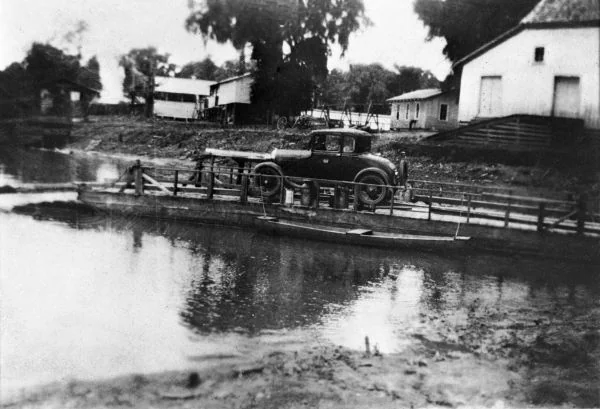
Cypress, Pine, Turpentine and Neal Lumber
By about 1900, timber and naval stores had become the county's main ways of making money. Huge cypress trees, many older than 300 years, were cut in the swamps. The logs were rafted down the Chipola and the Apalachicola to large sawmills.
Because the county's longleaf pine was of such high quality, northern money heavily backed the naval stores operators there. Turpentine camps opened all over the county, and big company sawmills moved in. Many laborers from Georgia and South Carolina were brought in to do the work.
The FNAI timeline says Neal Lumber and Manufacturing Company left Brewton, Alabama, for Blountstown in 1919. The county's own history gives the year as 1917. The company put up a veneer mill close by and purchased timber and forest land on the Apalachicola River. Neal employed more than 500 people before World War II. It supplied veneer and pine and hardwood lumber to Florida and the Southeast until it stopped manufacturing in the late 1960s.
Sources: Calhoun County, Florida: History of Calhoun County; Florida Natural Areas Inventory (ARROW): History, Calhoun County
Next: Chapter 8, The M&B Railroad, 1909 to 1972 →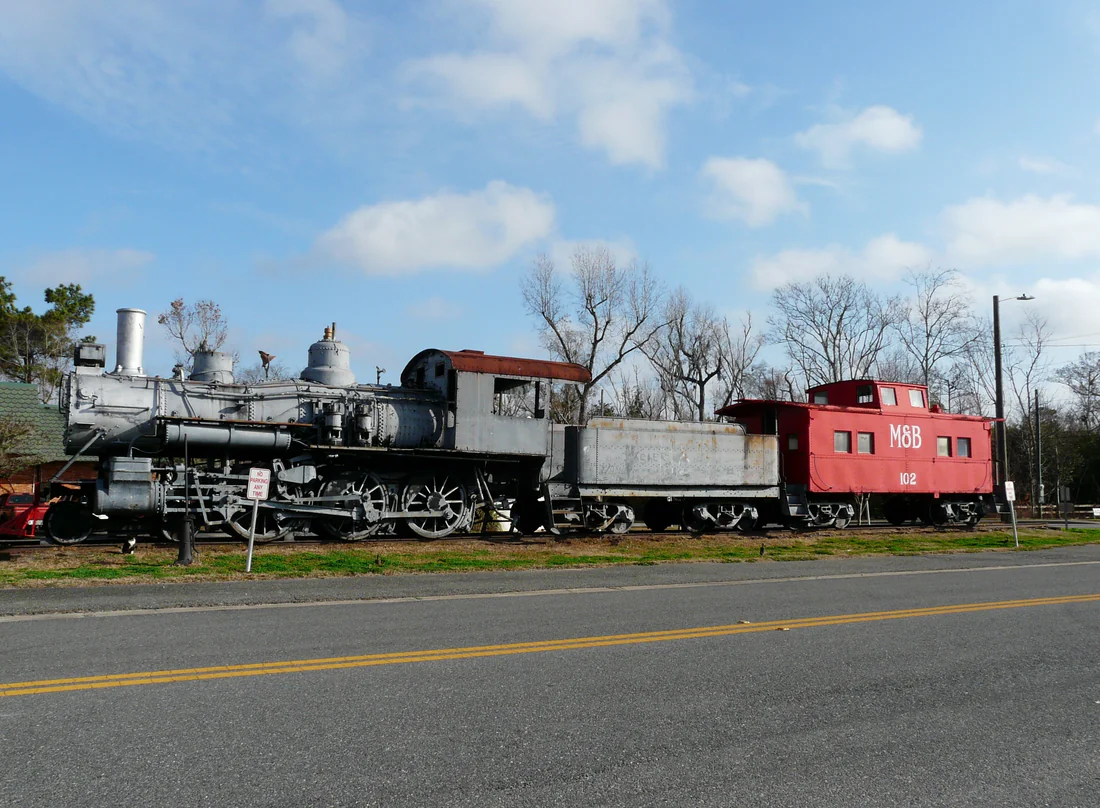
The M&B Railroad, 1909 to 1972
The Marianna and Blountstown Railroad ran for 63 years, from 1909 to 1972, and tied the county to the nation's rail lines and trade. Its line was 29 miles long, and the county says it was Florida's shortest railroad while it ran. Until 1938 the tracks went on another 16 miles south to Scotts Ferry.
Until 1929, when few people yet traveled by car, the M&B also carried passengers. Millions of board feet of longleaf pine lumber went out from local sawmills on the line. Mail, factory goods and building materials rode the line too.
Steam locomotive No. 444 was still at work in 1947, when the M&B's first diesel engine came. Today the engine rests on the exact spot where the M&B roadbed ran. The chamber of commerce says a railroad museum displays manifests, tickets, old typewriters and telegraphs from the line.
Sources: Calhoun County, Florida: History of Calhoun County; Calhoun County Chamber of Commerce: Tourism
Next: Chapter 9, New Counties, Schools, a Bridge and Two World Wars →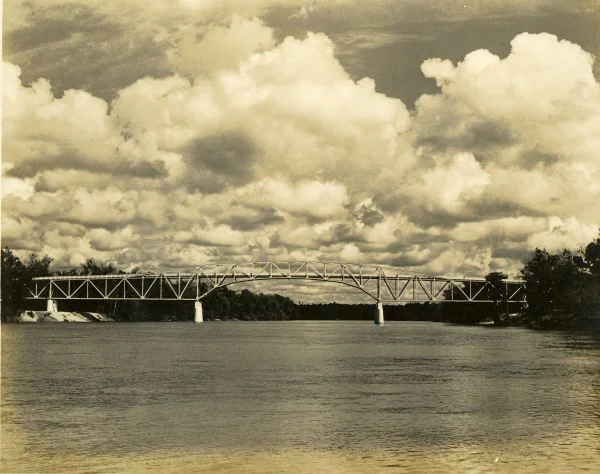
New Counties, Schools, a Bridge and Two World Wars
In 1913 Bay County was formed from parts of Calhoun and Washington counties. Altha was incorporated in 1914, and the WPA history named it the only other sizable town in the county. In April 1917 the nation went to war with Germany, and within two weeks the National Guard had been sent to military camps.
By the early 1920s the county had high schools at Blountstown, Altha, Port St. Joe and Wewahitchka. In 1925 the county was divided to create Gulf County.
The WPA paid for the Calhoun-Liberty Bridge, and work on it began in 1936. The bridge crossed the Apalachicola River to join Calhoun and Liberty counties, and it was finished in October 1938. After Pearl Harbor, volunteers and draftees from the county were sent right away to training camps.
Sources: Florida Memory: History of Calhoun County (WPA typescript with 1937 cover letter); Calhoun County, Florida: History of Calhoun County; Florida Natural Areas Inventory (ARROW): History, Calhoun County
Next: Chapter 10, Two Native Sons and Governor Fuller Warren →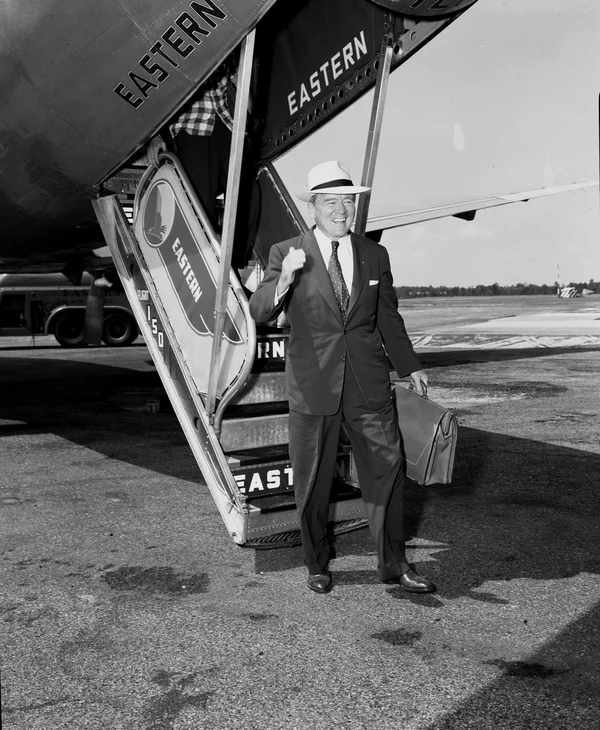
Two Native Sons and Governor Fuller Warren
The county's history says two of its native sons won high offices in state government. One was Rivers Buford, who was Chief Justice of the Florida Supreme Court for several terms. The other was Fuller Warren, a Blountstown native born October 3, 1905. His 1973 obituary says he was picking cotton at eight years old, paid 75 cents a week along with a place to sleep and meals.
At 21 he served in the 1927 session of the Florida House of Representatives. He represented Calhoun County there, a University of Florida guide to his papers says. In World War II he was a gunnery officer in the Navy and crossed the Atlantic 20 times.
He served as governor of Florida from January 4, 1949, until January 6, 1953. During his term, ranchers were barred from letting their cattle wander on Florida's highways. Warren's death came on September 23, 1973, in Miami.
Sources: Calhoun County, Florida: History of Calhoun County; Florida Department of State: Fuller Warren; Walton County Heritage Association: Fuller Warren obituary (News-Herald, September 25, 1973); University of Florida, George A. Smathers Libraries: A Guide to the Fuller Warren Papers
Next: Chapter 11, Since 1989: A Pioneer Settlement, Goat Day and the Old Courthouse →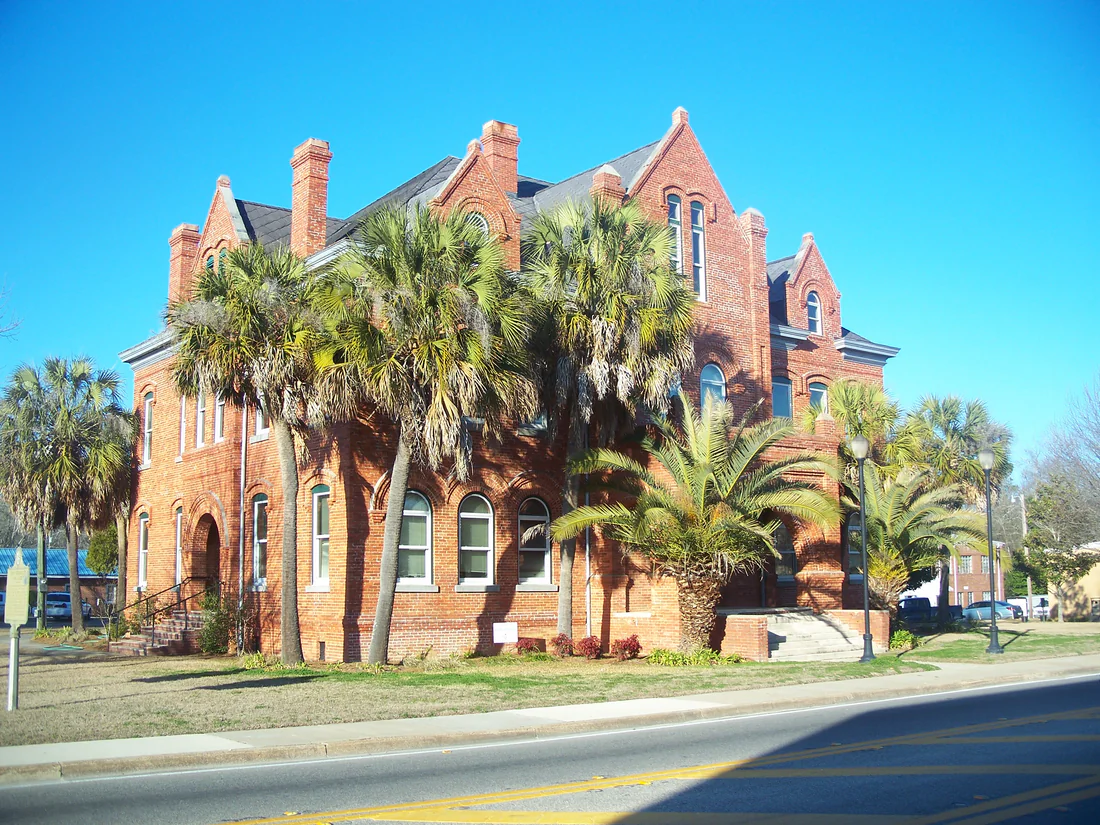
Since 1989: A Pioneer Settlement, Goat Day and the Old Courthouse
In July 1989, Willard and Linda Smith started the Panhandle Pioneer Settlement. A land-grant lease from the county let the settlement move its first buildings from their old sites. Today the settlement has 18 old buildings dating from 1820 to the 1940s. They were brought from around Calhoun County and set out on five acres like a farm community.
Among the buildings is the Altha Calaboose, which Haywood Baggett and Miles Richards built in 1927. The settlement says the two builders were the first people put in it, later that same year, for trading horses with no license. In August 2023 a settlement worker said its general store had just been revamped.
In October 2024 the Calhoun-Liberty Journal noted that the two-story courthouse, listed on the National Register of Historic Places, had stood since 1904. The paper said the building had been made to be warmed by a wood heater and cooled by an open window. In October 2025 the settlement and the Rotary Club of Blountstown held the 40th yearly Goat Day and Pioneer Day at Sam Atkins Park. The next year the Calhoun-Liberty Journal reported that 125 vendors had taken part.
Sources: Panhandle Pioneer Settlement: Home; Panhandle Pioneer Settlement: About Us; Calhoun County Chamber of Commerce: Tourism; Panhandle Pioneer Settlement: Attractions; WMBB News 13: Go back in time with local celebration (August 14, 2023); Calhoun-Liberty Journal: New county office building to go up in Blountstown (October 25, 2024); WMBB News 13: Blountstown to celebrate the 40th Annual Goat and Pioneer Day (October 17, 2025); Calhoun-Liberty Journal: Events (September 2, 2026)
Next: the whole story, in dates →The whole story, in dates
Creek people from Georgia and Alabama begin making homes along the Apalachicola River.
The treaty that gave John Blount his reservation is ratified.
The promoters Perry and Mill lay out a town and sell its lots.
The territorial legislature forms Fayette County, with Ocheesee as its seat.
Calhoun County comes into being.
The first constitutional convention meets at St. Joseph.
Growing cotton pays very well for the county's farmers.
Yellow fever kills most of St. Joseph's people.
A hurricane and a tidal wave finish St. Joseph, the WPA history says.
State lawmakers try without success to name a new county seat.
Abe Springs Bluff becomes the county seat.
As many as 30 steamboats work the Apalachicola River.
The Abe Springs courthouse burns and most county records are lost, the WPA history says.
The county seat moves to Blountstown.
County commissioners meet in Blountstown for the first time.
A courthouse goes up on a bluff above the Apalachicola River, the WPA history says.
Blountstown is chartered as a city.
The two-story brick courthouse is built.
Fuller Warren is born in Blountstown.
The Marianna and Blountstown Railroad begins its 63 years of service.
Bay County is formed from parts of Calhoun and Washington counties.
Altha is incorporated.
Within two weeks of war with Germany, the National Guard is sent to military camps.
Neal Lumber and Manufacturing Company comes to Blountstown, the FNAI timeline says.
The county is divided to create Gulf County.
Fuller Warren, 21, serves in the Florida House of Representatives.
The M&B stops carrying passengers.
Work begins on the Calhoun-Liberty Bridge.
The Calhoun-Liberty Bridge over the Apalachicola River is finished.
The M&B's first diesel engine arrives.
Fuller Warren serves as governor of Florida.
Neal Lumber stops manufacturing.
The Marianna and Blountstown Railroad ends its run.
A new, modern courthouse is dedicated as the seat of government.
Willard and Linda Smith start the Panhandle Pioneer Settlement.
The settlement's general store has just been revamped.
The Calhoun-Liberty Journal notes the courthouse has stood since 1904.
The 40th yearly Goat Day and Pioneer Day are held at Sam Atkins Park.
Where you can still see it
 01
 02
Chipola River
Goes with: St. Joseph Falls and the Seat Moves to Abe Springs Bluff
Open the place page →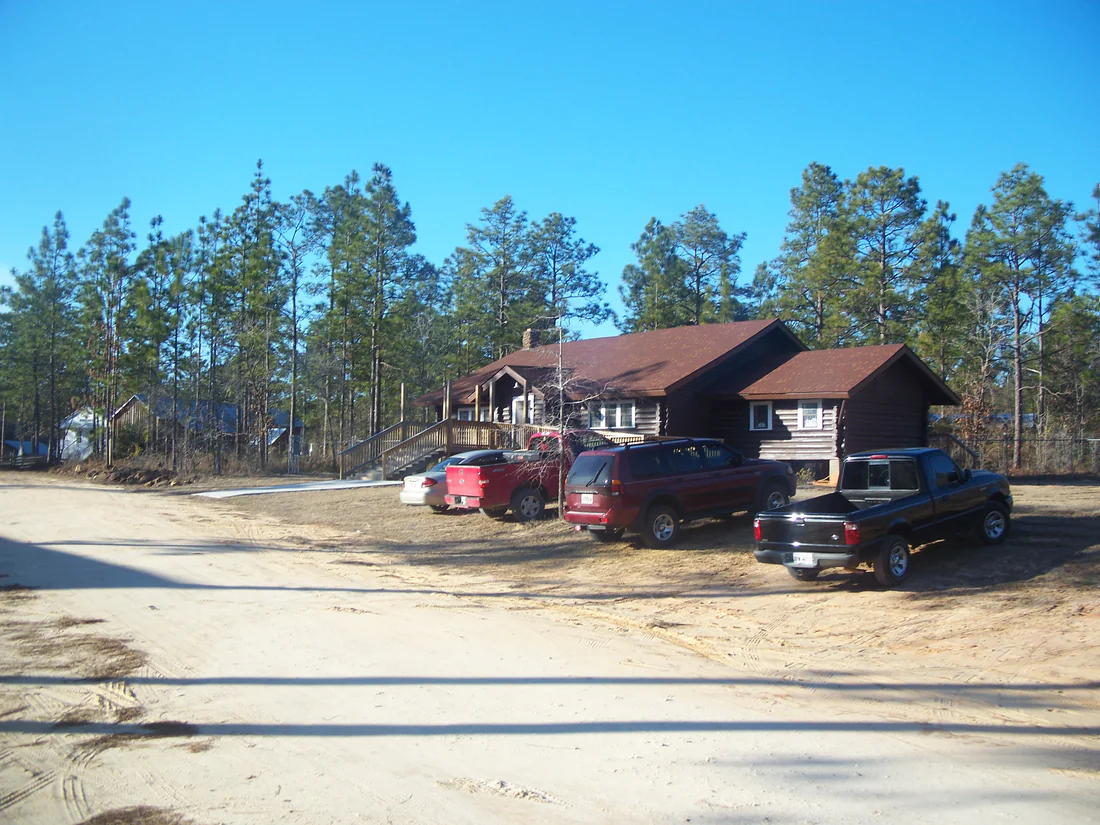 03
Panhandle Pioneer Settlement
Goes with: Since 1989: A Pioneer Settlement, Goat Day and the Old Courthouse
Open the place page →Questions people ask
Who was Calhoun County named for?
It was named for John C. Calhoun, a United States senator from South Carolina.
Chapter 3 →Who is Blountstown named for?
Blountstown takes its name from John Blount, one of the six head chiefs of the Florida Indians.
Chapter 1 →When did Blountstown become the county seat of Calhoun County?
The state marker says that in 1880, after the Abe Springs Bluff courthouse burned, the county seat moved to Blountstown.
Chapter 5 →What was the M&B Railroad?
The Marianna and Blountstown Railroad ran for 63 years, from 1909 to 1972, and the county says its 29-mile line was Florida's shortest railroad.
Chapter 8 →Where this comes from.
Last updated October 20, 2026.
- Calhoun County Chamber of Commerce: Tourism ↗ Read October 19, 2026
- Florida Department of State, Division of Historical Resources: Blunt Reservation and Fields (historical marker) ↗ Read October 19, 2026
- Calhoun County, Florida: History of Calhoun County ↗ Read October 19, 2026
- Florida Memory: History of Calhoun County (WPA typescript with 1937 cover letter) ↗ Read October 19, 2026
- Florida Natural Areas Inventory (ARROW): History, Calhoun County ↗ Read October 19, 2026
- Florida Department of State, Division of Historical Resources: Abe Springs Bluff Courthouse (historical marker) ↗ Read October 19, 2026
- Florida Department of State, Division of Historical Resources: "Old Blountstown" Courthouse (historical marker) ↗ Read October 19, 2026
- Florida Department of State: Fuller Warren ↗ Read October 19, 2026
- University of Florida, George A. Smathers Libraries: A Guide to the Fuller Warren Papers ↗ Read October 19, 2026
- Walton County Heritage Association: Fuller Warren obituary (News-Herald, September 25, 1973) ↗ Read October 19, 2026
- Panhandle Pioneer Settlement: Home ↗ Read October 19, 2026
- Panhandle Pioneer Settlement: About Us ↗ Read October 19, 2026
- Panhandle Pioneer Settlement: Attractions ↗ Read October 19, 2026
- WMBB News 13: Go back in time with local celebration (August 14, 2023) ↗ Read October 19, 2026
- Calhoun-Liberty Journal: New county office building to go up in Blountstown (October 25, 2024) ↗ Read October 19, 2026
- WMBB News 13: Blountstown to celebrate the 40th Annual Goat and Pioneer Day (October 17, 2025) ↗ Read October 19, 2026
- Calhoun-Liberty Journal: Events (September 2, 2026) ↗ Read October 19, 2026