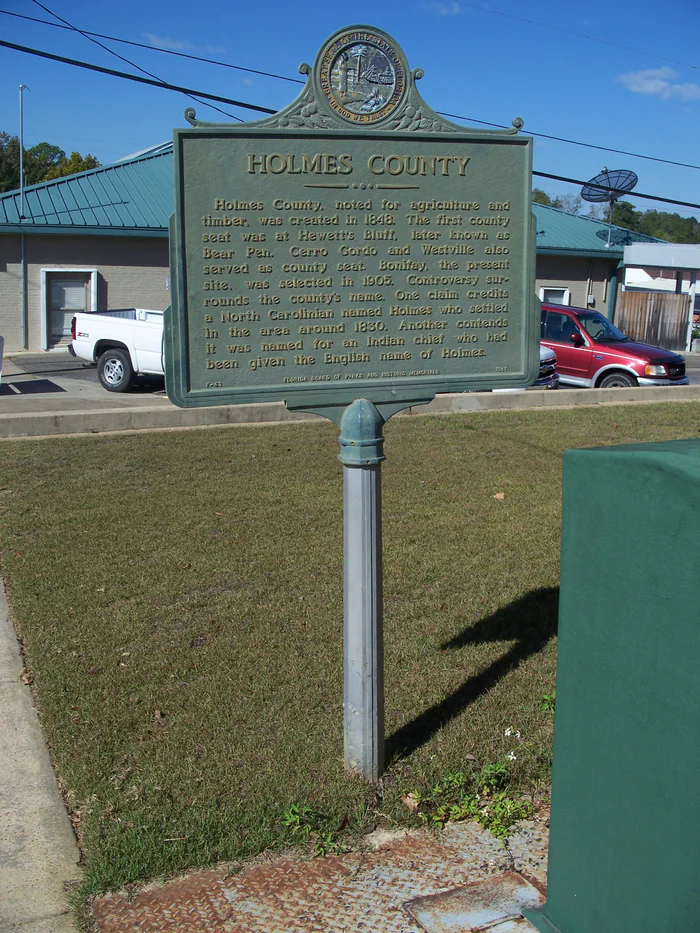
Holmes County was formed in 1848 from Calhoun and Walton counties, and Bonifay has been its county seat since 1905. Its namesake is disputed between Thomas J. Holmes, a settler from North Carolina, and a chief named Holmes who led a band of Red Stick Creeks. A state historical marker in Bonifay describes it as a county known for farming and timber. Its history goes back to the Native Americans who used Ponce de Leon Springs for drinking water and recreation.
This page tells the story in order, from the first peoples at Ponce de Leon Springs to a returning pitcher plant and a new park plan, then lists places in the county where you can still see it. The sources for each part are named at the end of that part, and all of them are listed at the bottom of the page.
The First Peoples and a Spanish Name
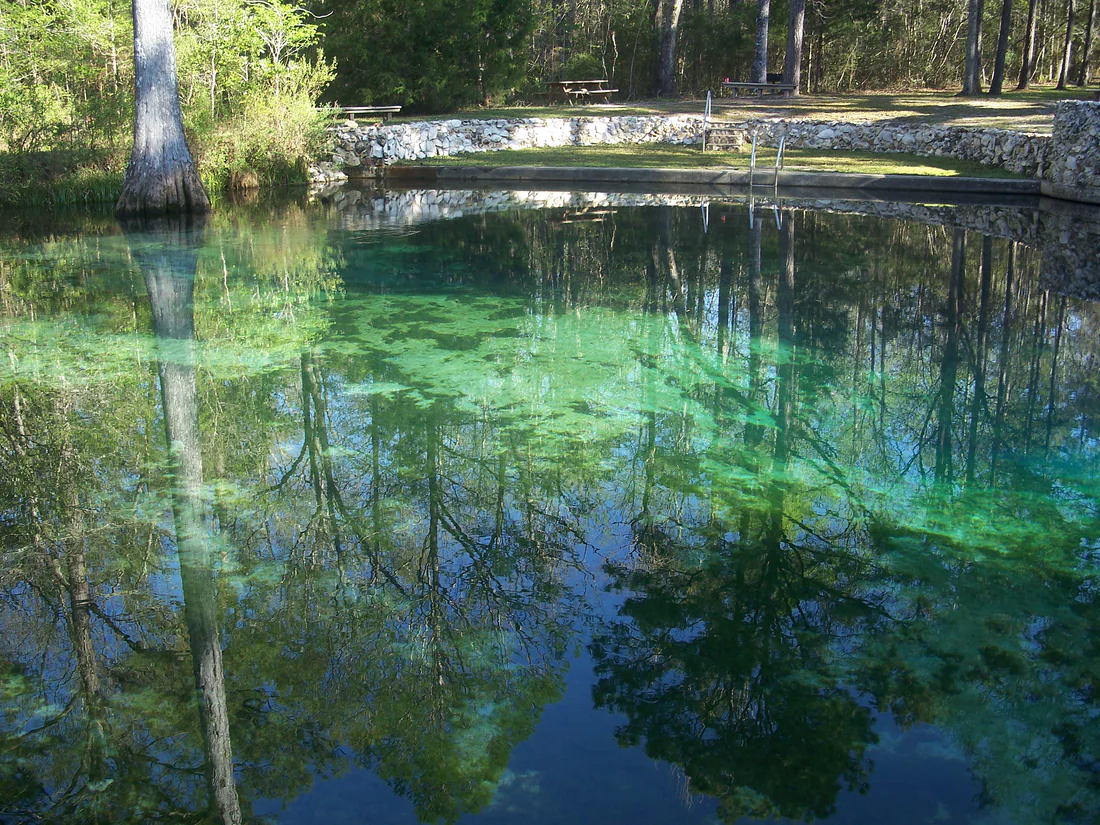
Native Americans used Ponce de Leon Springs for drinking water and recreation before European settlers came. Native American stone artifacts and pottery have been found in the park. European pottery and bricks from later years have turned up there too. A site next to the park has yielded Santa Rosa-Swift Creek artifacts.
The spring carries the name of Juan Ponce de Leon, and the state park says his 1513 expedition was the first Spanish one to Florida. The park adds that he is said never to have reached the Florida Panhandle. It also says the spring is not truly the fountain of youth he hoped to find, though it has refreshed many visitors.
Sources: Florida State Parks: Ponce de Leon Springs State Park History; Florida Department of Environmental Protection: Ponce de Leon Springs State Park Unit Management Plan (October 2016); Florida State Parks: Ponce de Leon Springs State Park
Next: Chapter 2, Holmes Creek and Two Men Named Holmes →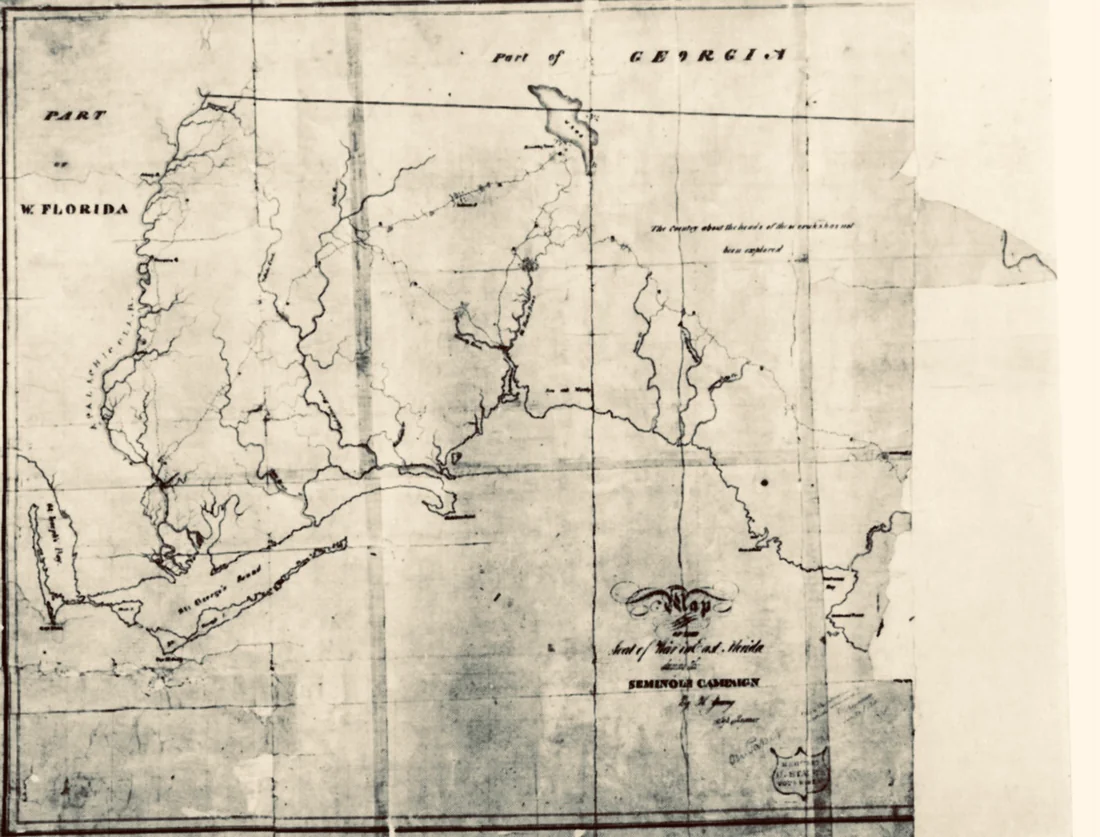
Holmes Creek and Two Men Named Holmes
Holmes Creek runs along the county's eastern edge and carried the Holmes name even before the county was formed. Its older name was Weekaywehatchee, a Creek Indian word meaning spring creek. The county says people still debate who it was named for.
One account points to a chief named Holmes, who led a band of Red Stick Creeks that made homes in the area after 1814. He was killed in 1818 by raiders Andrew Jackson sent out during the First Seminole War. The other account names Thomas J. Holmes, a North Carolina man who settled there about 1830.
Sources: Holmes County Board of County Commissioners: Holmes County, Florida
Next: Chapter 3, A New County in 1848 →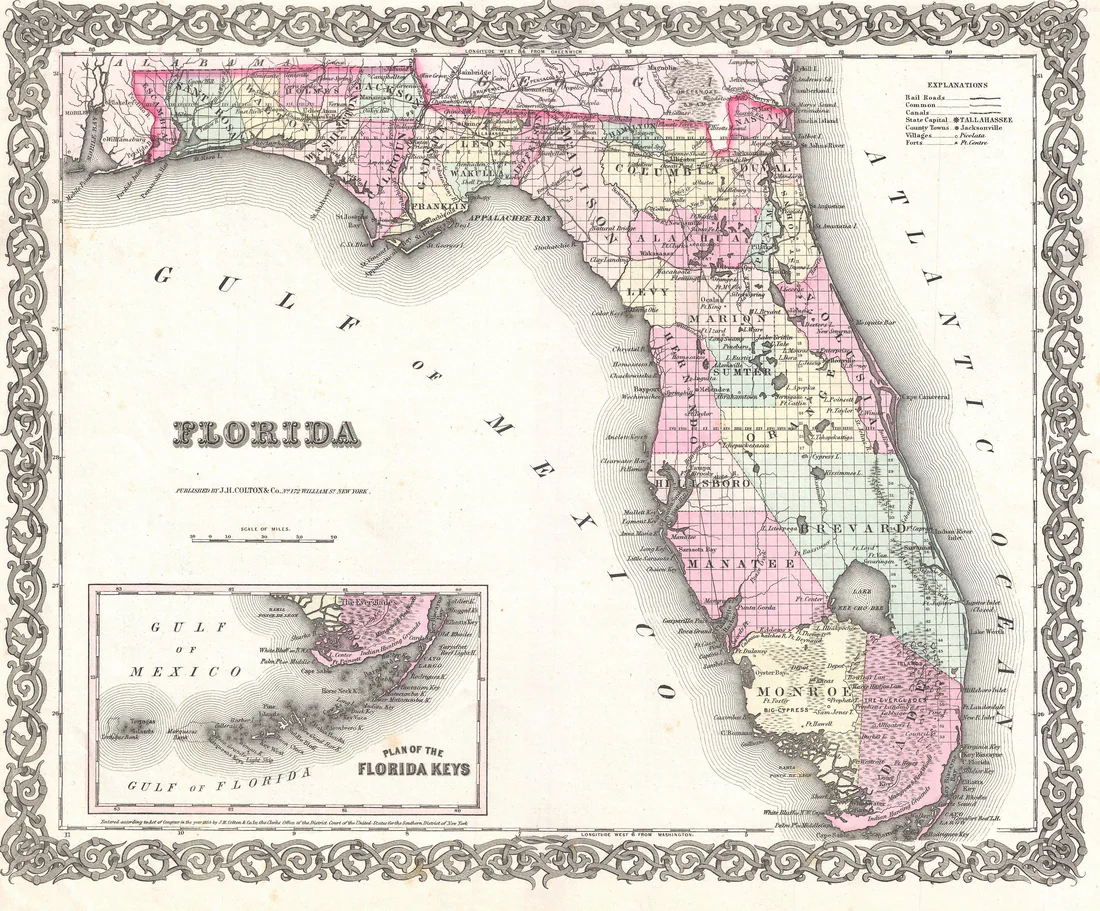
A New County in 1848
Holmes County was formed in 1848 from Calhoun and Walton counties. A 1937 report on the county said the name came from one of its early residents. A state historical marker in Bonifay, put up in 1961, says there is controversy over the county's name. The marker calls Holmes a county known for farming and timber.
Sources: Florida Memory, State Archives of Florida: Holmes County Florida, Homes for Holmes (Historical Records Survey, 1937); Florida Department of State: Florida Historical Marker Details, Holmes County
Next: Chapter 4, Four County Seats, from Hewett's Bluff to Westville →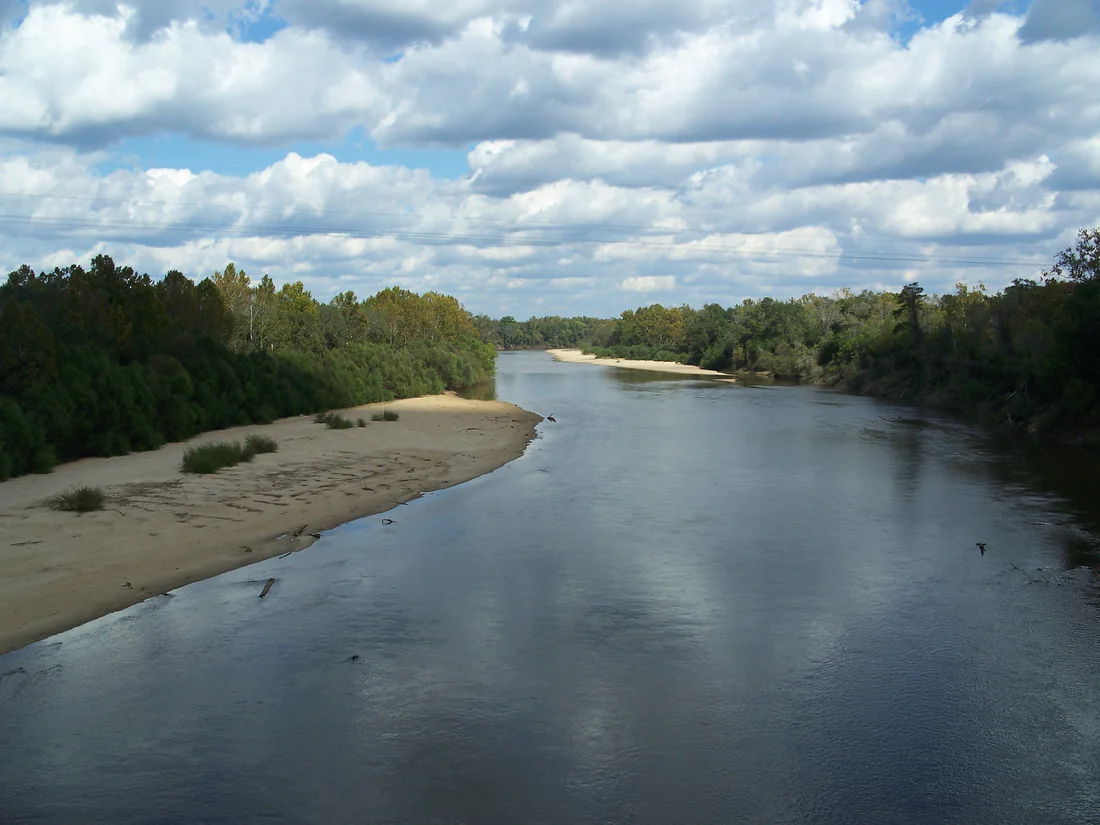
Four County Seats, from Hewett's Bluff to Westville
The county says it has used four county seats over the years. The first, Hewett's Bluff, took the name Bear Pen and later Cerro Gordo. A 1937 report says the first courthouse was a little wooden building beside the Choctawhatchee River at old Cerro Gordo. Next came Pittman's Ferry, then Westville.
A letter written in Bonifay on May 15, 1937, by William R. Miller tells how the seat moved, using the memories of old residents. It says that along toward 1875, a mob met at Westville and resolved to move the seat. They carried off the records and the old courthouse's building material to Westville. The letter describes Westville as a thriving little town and home to most county officers. That courthouse burned at Westville in 1902.
Sources: Holmes County Board of County Commissioners: Holmes County, Florida; Florida Memory, State Archives of Florida: Holmes County Florida, Homes for Holmes (Historical Records Survey, 1937)
Next: Chapter 5, The Railroad and the Founding of Bonifay →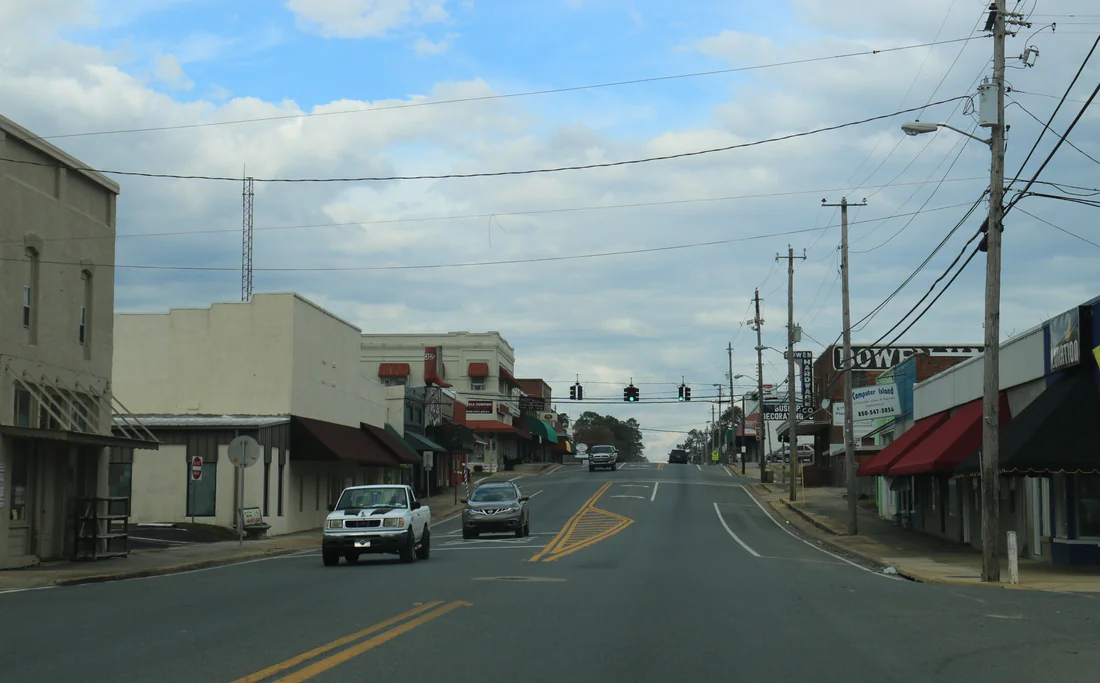
The Railroad and the Founding of Bonifay
In the late 1800s, the place that became Bonifay was known as the Four Hills area. The railroad was laid in 1882. G. W. Banfill, a Wisconsin man, arrived from the north around that time. Waukesha Street got its name from his hometown in Wisconsin.
The city credits him as its founder. The town took its name from Judge Frank Bonifay, who was a railroad official.
Banfill's Hotel Eureka was the first building to go up on Waukesha Street. It stood where Waukesha Street meets Pennsylvania Avenue, on the east corner. For years people knew it for its good food and as a place to gather. The hotel was later torn down. Waukesha Street is also State Road 79.
Sources: City of Bonifay: History
Next: Chapter 6, Bonifay Becomes the County Seat →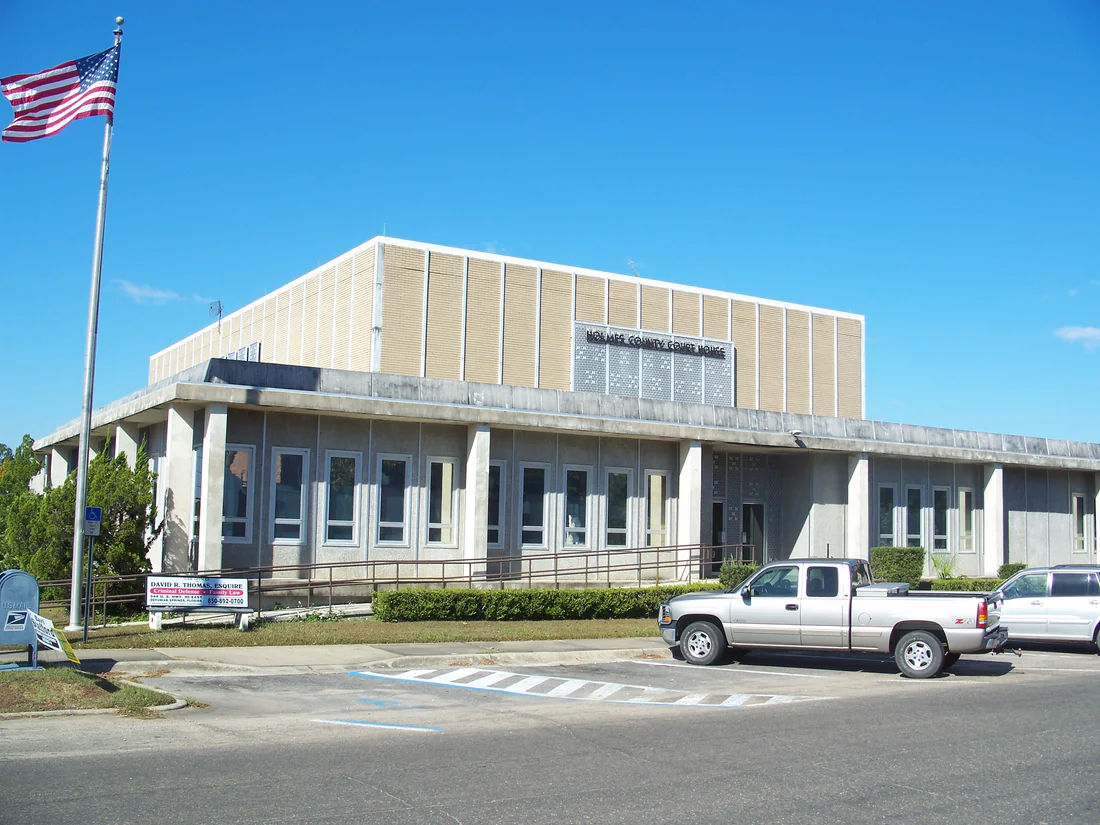
Bonifay Becomes the County Seat
The 1937 letter says the seat stayed at Westville until about 1904, when a lawful election moved it to Bonifay. The state marker, the county and the city all give 1905 as the year Bonifay became the seat. Bonifay got its first courthouse in 1907. The same year, T. J. Dauthtrey became the city's first mayor.
The family of W. D. Williams started the Holmes County Advertiser newspaper in 1907. In 1921 the Florida Legislature incorporated the Town of Bonifay as a city.
Sources: Florida Memory, State Archives of Florida: Holmes County Florida, Homes for Holmes (Historical Records Survey, 1937); Florida Department of State: Florida Historical Marker Details, Holmes County; Holmes County Board of County Commissioners: Holmes County, Florida; City of Bonifay: History
Next: Chapter 7, Longleaf Pine and Turpentine →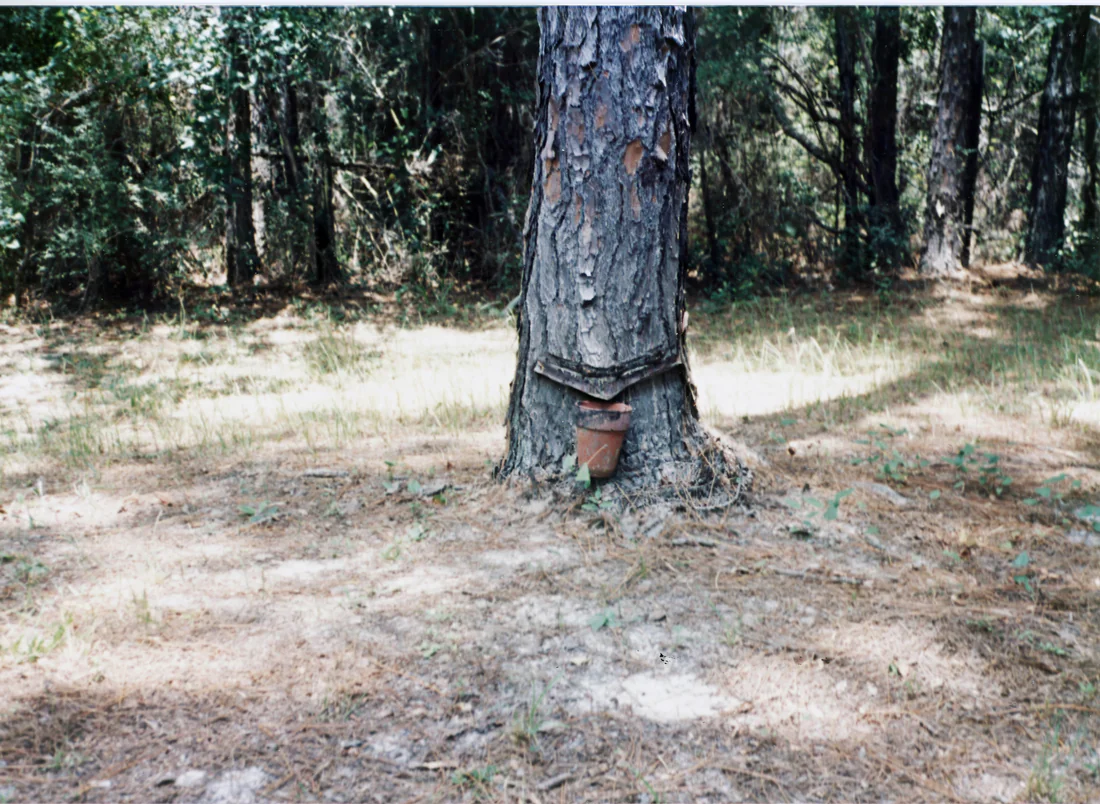
Longleaf Pine and Turpentine
In the early 1900s, cutting timber and making turpentine were the chief industries in this part of Florida. Longleaf pine was good wood for houses, businesses and the railroad across the Panhandle. To make turpentine, workers cut deep grooves into a pine's bark so that resin would run out. The resin went into paint, ink, glue and medicines, among many other goods.
Ponce de Leon Springs State Park protects more than 40 acres of old turpentine woods. Turpentine workers used them between the early 1900s and 1950. Many cat-face trees in the park still carry metal turpentine cups and gutters. A railroad there was reportedly used by the timber and turpentine trade and was taken apart in the 1930s or 1940s.
Sources: Florida State Parks: Ponce de Leon Springs State Park History; Florida Department of Environmental Protection: Ponce de Leon Springs State Park Unit Management Plan (October 2016)
Next: Chapter 8, A Swimming Spot at Ponce de Leon Springs →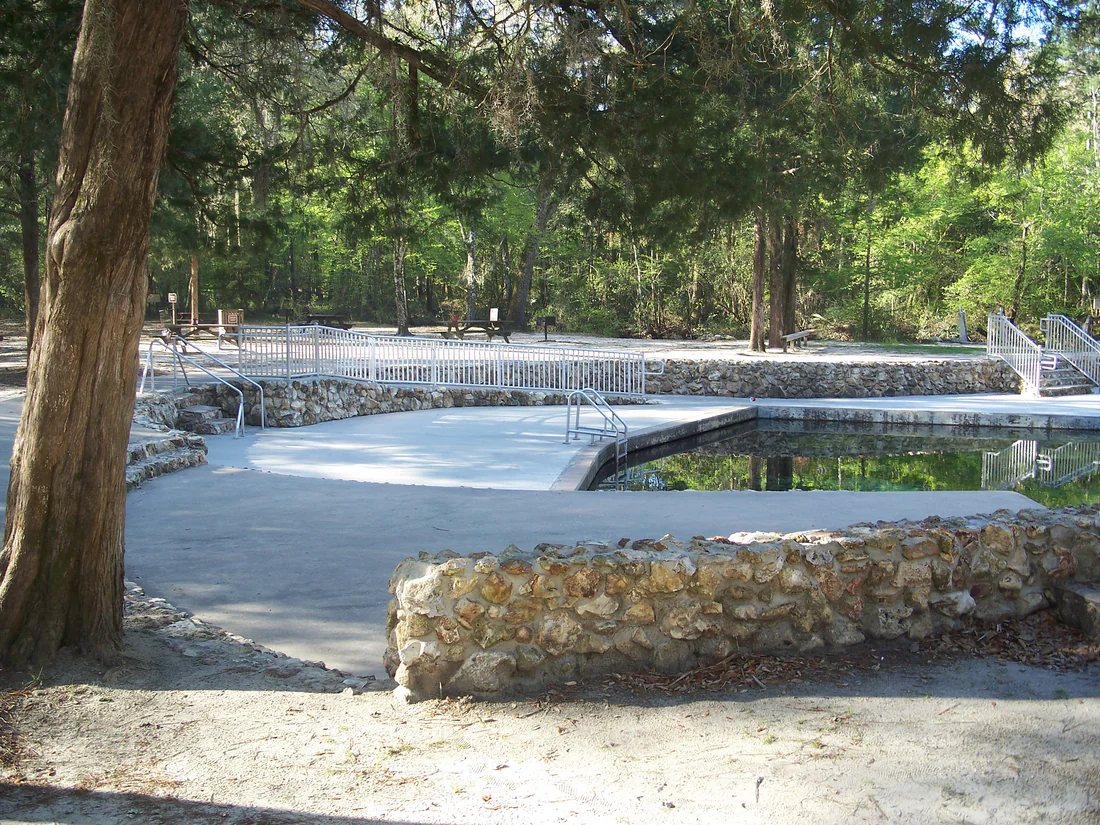
A Swimming Spot at Ponce de Leon Springs
The Smithgall family owned the spring in the mid-1920s. They added a restroom with showers, a place to eat and a skating rink. They also built a wooden wall around the spring to keep its banks from washing away. Their 1920s house, a craftsman-style cottage, stood near the spring vent. It was later moved and changed.
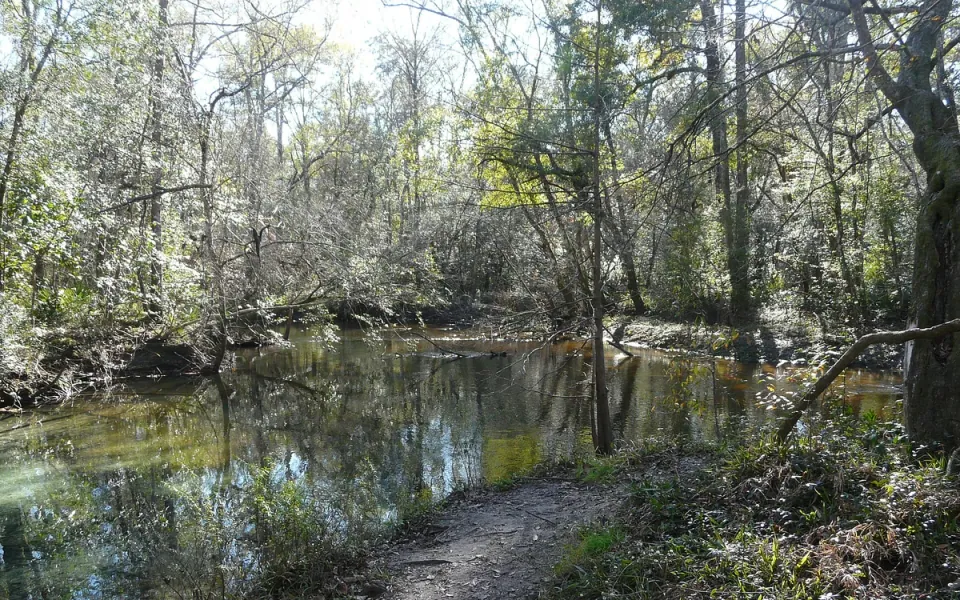
The skating rink and the eatery are gone now. The water stays at 68 degrees Fahrenheit all year. The spring rises from three boils, and its run flows about 350 feet to Sandy Creek, which is a blackwater stream. From there the creek leaves the park and joins the Choctawhatchee River.
Sources: Florida State Parks: Ponce de Leon Springs State Park History; Florida Department of Environmental Protection: Ponce de Leon Springs State Park Unit Management Plan (October 2016); Florida State Parks: Ponce de Leon Springs State Park
Next: Chapter 9, Holmes County in 1937 →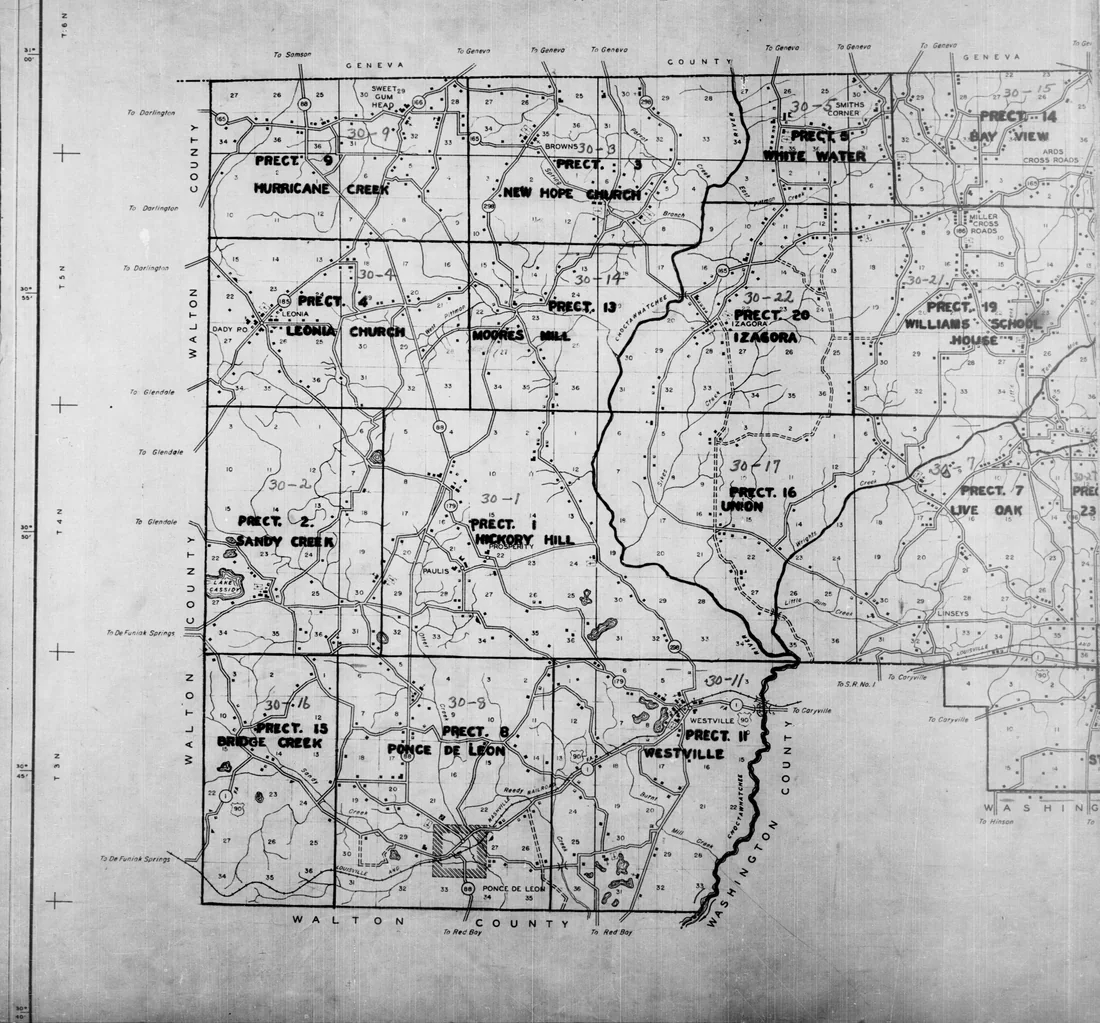
Holmes County in 1937
A 1937 report titled Homes for Holmes, kept in the files of the Historical Records Survey, describes the county in that year. On February 16, 1937, County Judge Theodore L. Belser approved a county history that Miss Bertha Williams had written. The report said no county in northwest Florida was smaller.
It named five small towns as trading points: Bonifay, Esto, Noma, Ponce de Leon and Westville. The county had 1,811 farms. Farmers grew corn, cotton and peanuts, along with sugar cane, watermelons and velvet beans.
Four naval stores were working in the county, and two of them were inside Bonifay. Two large sawmills ran at Ponce de Leon, with smaller ones around the county. The L & N was the county's one railroad, and state highways 39 and 1 crossed at Bonifay. Students went to 17 elementary schools, three junior high schools and five consolidated high schools.
The Spring Becomes a State Park
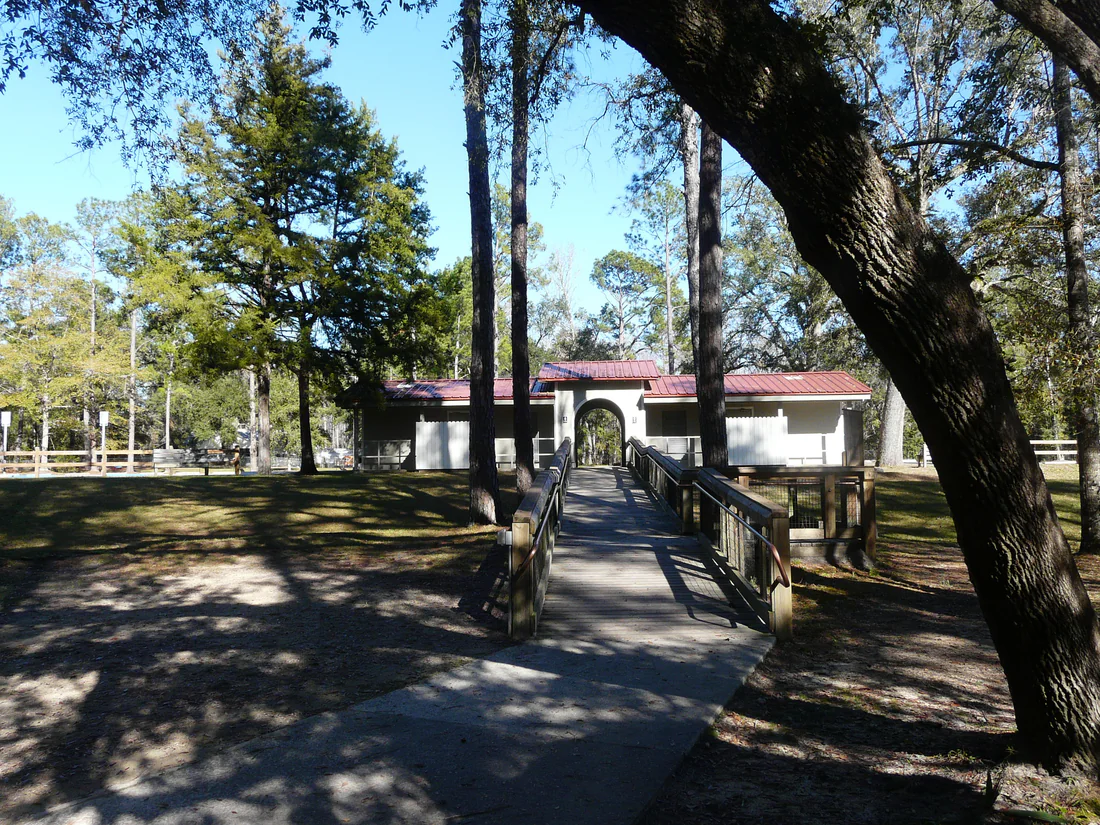
The state first acquired the land for Ponce de Leon Springs State Park on September 4, 1970, using the Land Acquisition Trust Fund. The land was meant for outdoor recreation, conservation and history, among other uses. In 1974 Charles Benda and Associates built the park's entrance station, bathhouse, shop building and four picnic shelters. The entrance station and bathhouse are in a Mediterranean or Spanish style.
The trustees who hold title to the land leased it to the Division of Recreation and Parks for 50 years on August 17, 1983. Fire was brought back to the park's pine woods in 1986.
Elba Wilson Carswell wrote several books on the area's past. His Holmes Valley: A West Florida cradle of Christianity came out in 1969. Holmesteading: A history of Holmes County, Florida followed in 1986.
Sources: Florida Department of Environmental Protection: Ponce de Leon Springs State Park Unit Management Plan (October 2016); Florida Department of State, Division of Library and Information Services: Florida County Histories, H-J
Next: Chapter 11, Since 1990: A History Book, a Returning Pitcher Plant and a New Park Plan →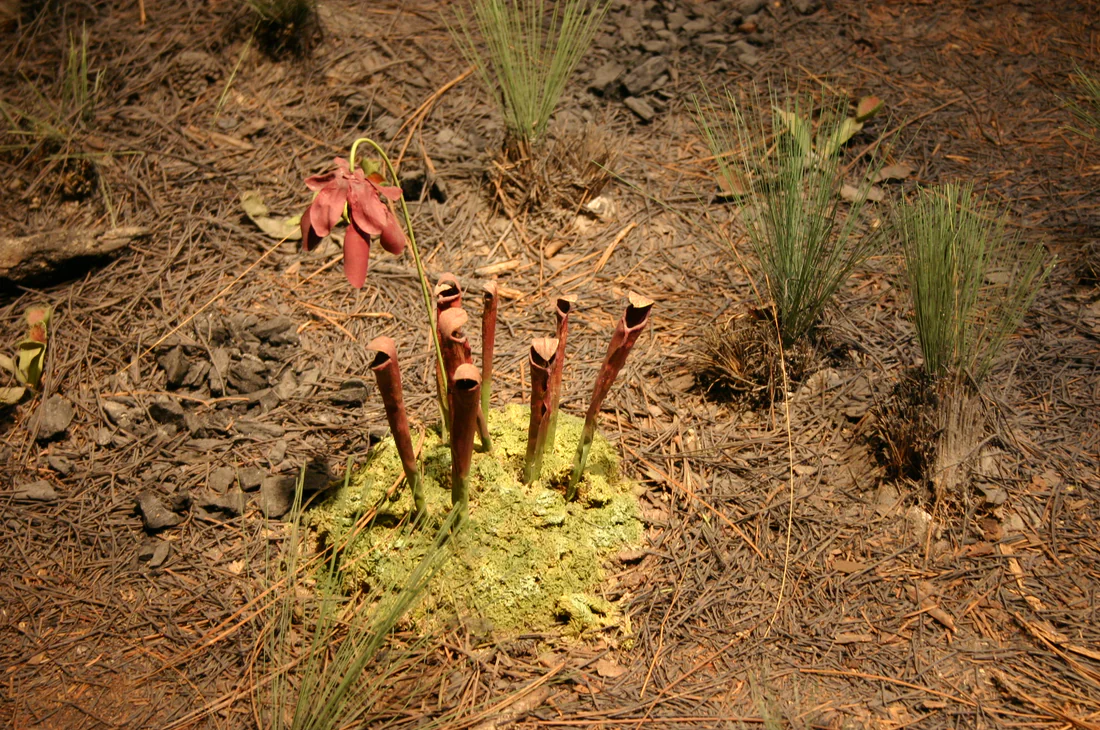
Since 1990: A History Book, a Returning Pitcher Plant and a New Park Plan
In 1993 Carswell published another book, This is the place. The state approved a management plan for the park in 2004.
In 2009 the park began work to restore parts of a seepage slope and to bring back the red pitcher plant. In 2010 the park reintroduced the red pitcher plant, after repeated searches for it where it had been recorded before.
On June 2 and 3, 2016, the public could comment on a new draft plan at a workshop and at a meeting of an advisory group. The approved plan is dated October 2016. Volunteer Jim Quyle started helping at the park in September 2022.
Sources: Florida Department of State, Division of Library and Information Services: Florida County Histories, H-J; Florida Department of Environmental Protection: Ponce de Leon Springs State Park Unit Management Plan (October 2016); Florida State Parks: Ponce de Leon Springs State Park
Next: the whole story, in dates →The whole story, in dates
Juan Ponce de Leon leads what the state park calls the first Spanish expedition to Florida.
A chief named Holmes and a band of Red Stick Creeks settle in the area.
Raiders sent by Andrew Jackson kill the chief during the First Seminole War.
Thomas J. Holmes comes from North Carolina and settles in the area.
Holmes County is formed from Calhoun and Walton counties.
A mob takes the records and the old courthouse's building material to Westville, a 1937 letter says.
The railroad is laid, and G. W. Banfill arrives at Four Hills around this time.
The courthouse at Westville burns.
An election moves the county seat to Bonifay, by the 1937 letter's account.
Bonifay becomes the county seat, as the state marker, the county and the city date it.
Bonifay gets its first courthouse, and T. J. Dauthtrey becomes the first mayor.
The family of W. D. Williams starts the Holmes County Advertiser.
The Florida Legislature incorporates the Town of Bonifay as a city.
The Smithgall family owns Ponce de Leon Springs.
A railroad reportedly used by the timber and turpentine trade at the park is taken apart.
County Judge Theodore L. Belser approves a county history by Miss Bertha Williams.
William R. Miller writes a letter in Bonifay about how the county seat moved.
A state historical marker about the county goes up in Bonifay.
Elba Wilson Carswell's book Holmes Valley comes out.
The state first acquires the land for Ponce de Leon Springs State Park.
Charles Benda and Associates build the park's entrance station, bathhouse, shop building and picnic shelters.
The trustees lease the park land to the Division of Recreation and Parks for 50 years.
Fire is brought back to the park's pine woods.
Carswell's Holmesteading, a history of Holmes County, comes out.
Carswell publishes This is the place.
The state approves a management plan for the park.
The park begins restoring parts of a seepage slope.
The park reintroduces the red pitcher plant.
The public comments on a new draft park plan at a workshop and an advisory group meeting.
The new park plan, marked approved, is dated this month.
Jim Quyle starts volunteering at the park.
Where you can still see it
 01
 02
Questions people ask
When was Holmes County created?
Holmes County was formed in 1848 from Calhoun and Walton counties.
Chapter 3 →Who was Holmes County named for?
It is debated: one account points to a chief named Holmes who led a band of Red Stick Creeks, and the other to Thomas J. Holmes, a North Carolina man who settled in the area about 1830.
Chapter 2 →What is the county seat of Holmes County?
Bonifay, which the state marker, the county and the city all say became the county seat in 1905.
Chapter 6 →How did Bonifay get its name?
The town took its name from Judge Frank Bonifay, who was a railroad official.
Chapter 5 →When did the state acquire Ponce de Leon Springs?
The state first acquired the land for Ponce de Leon Springs State Park on September 4, 1970.
Chapter 10 →Where this comes from.
Last updated October 20, 2026.
- Holmes County Board of County Commissioners: Holmes County, Florida ↗ Read October 19, 2026
- Florida Department of State: Florida Historical Marker Details, Holmes County ↗ Read October 19, 2026
- City of Bonifay: History ↗ Read October 19, 2026
- Florida State Parks: Ponce de Leon Springs State Park History ↗ Read October 19, 2026
- Florida State Parks: Ponce de Leon Springs State Park ↗ Read October 19, 2026
- Florida Department of Environmental Protection: Ponce de Leon Springs State Park Unit Management Plan (October 2016) ↗ Read October 19, 2026
- Florida Memory, State Archives of Florida: Holmes County Florida, Homes for Holmes (Historical Records Survey, 1937) ↗ Read October 19, 2026
- Florida Department of State, Division of Library and Information Services: Florida County Histories, H-J ↗ Read October 19, 2026