Franklin County was created on February 8, 1832, and named for Benjamin Franklin. Its county seat is Apalachicola, which in the cotton era ranked third among ports on the Gulf. It is also where Dr. John Gorrie built an ice machine and, in 1851, became the first person in the United States to patent mechanical refrigeration. Its history reaches back to the people who lived at Alligator Point and Bald Point 3,000 years before Spain's explorers came.
This page tells the story in order, from the first people on the bay and islands to two lighthouses saved, a maritime museum and new reefs offshore, then lists places in the county where you can still see it. The sources for each part are named at the end of that part, and all of them are listed at the bottom of the page.
The first people on the bay and islands
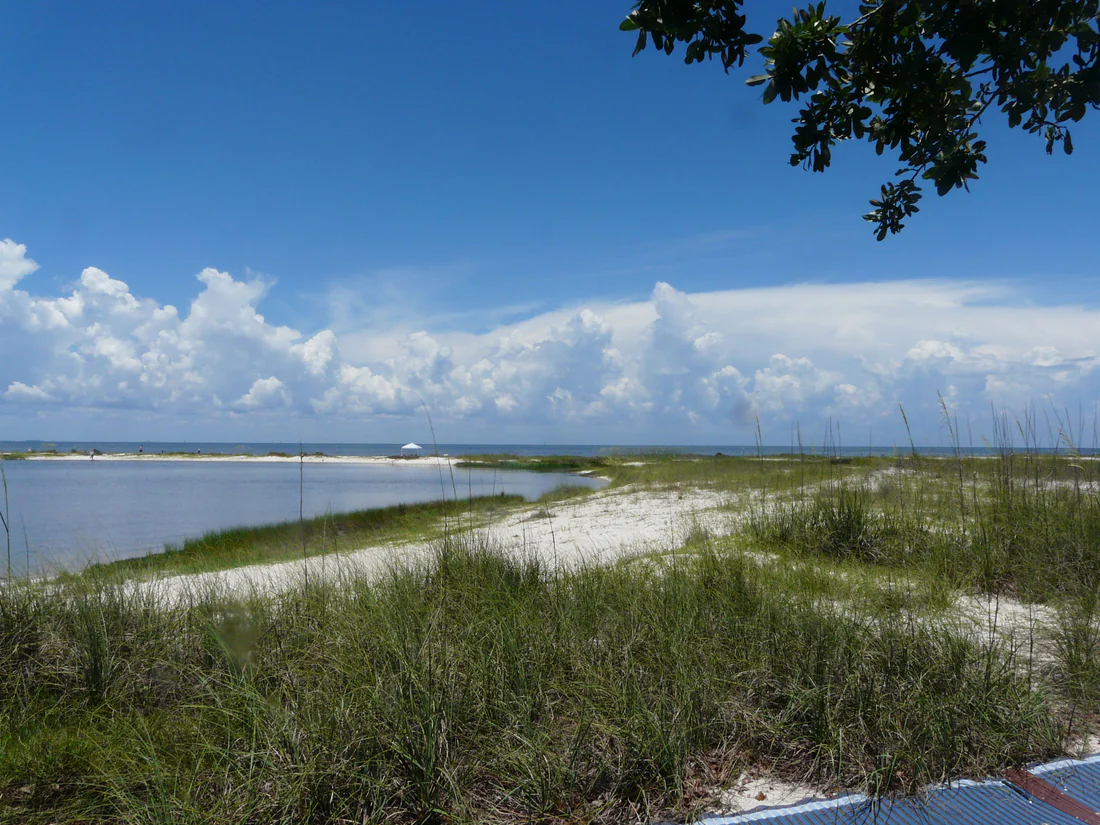
People were living at Alligator Point and Bald Point 3,000 years before Spain's explorers came. Native people visited St. George Island to gather seafood during the island's estimated 5,000 years. Finds there include pottery with cut designs, stone game pieces and a grinding stone.
The county's tourism office says more than 40,000 Indians once lived in the region. The first Apalachicola Indians belonged to the Mississippian culture, and Seminoles and Creeks came later. The Apalachees were the main tribe between the Apalachicola River and the Suwannee. Creek Indians were living on St. George Island by the 1600s.
Sources: Florida's Forgotten Coast (Franklin County Tourist Development Council): History of Franklin County Florida; Florida State Parks: Dr. Julian G. Bruce St. George Island State Park, History; Florida Natural Areas Inventory: ARROW, History of Franklin County
Next: Chapter 2, Spanish explorers, a Spanish fort and William Bowles →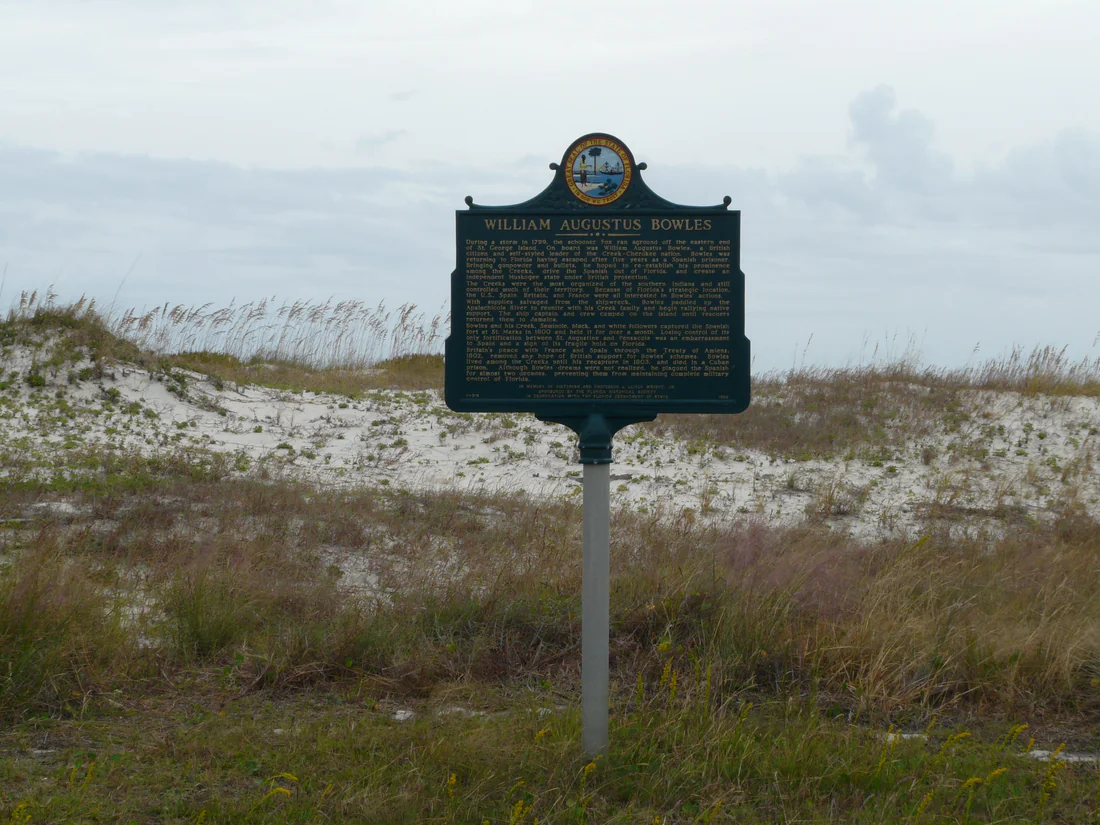
Spanish explorers, a Spanish fort and William Bowles
In 1528 Panfilo de Narvaez came to a spot near present-day Apalachicola. The Florida Natural Areas Inventory counts this as the first time Europeans explored what is now Franklin County. The journal of his trip describes an island that may be Dog Island, St. Vincent Island or St. George Island. De Soto's party probably saw St. George Island too, in 1539.
The first known European settlement in the county was a fort that Spain built in 1705 where the Apalachicola River reaches the bay. In 1763 the Treaty of Paris gave Florida to Britain. Spain got it back when the American Revolution ended.
In 1799 the schooner Fox wrecked off St. George Island with William Augustus Bowles on board. Bowles, a British citizen, called himself a leader of the Creek and Cherokee. He later took the Spanish fort at San Marcos, but the Spanish caught him again in 1803.
Sources: Florida Natural Areas Inventory: ARROW, History of Franklin County; Florida State Parks: Dr. Julian G. Bruce St. George Island State Park, History
Next: Chapter 3, Negro Fort at Prospect Bluff →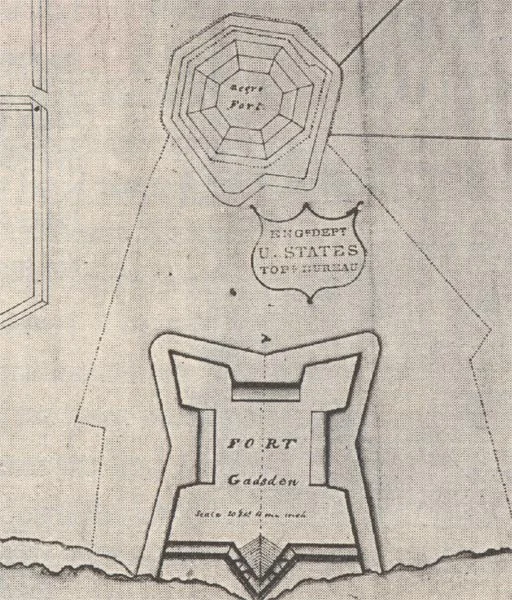
Negro Fort at Prospect Bluff
In the late 1700s, people who had escaped slavery and Seminole Indians formed a community around Prospect Bluff that reached nearly 1,000 people. In the fall of 1814, near the end of the War of 1812, British troops built a fort on the bluff, on the east bank of the Apalachicola. It was also a training post for a battalion of Black Colonial Marines. When the British left in 1815, they turned it over to about 80 former Colonial Marines, along with their families.
It became known as Negro Fort, and its community numbered 300 to 350 men, women and children. The county's tourism office says that in 1815 and 1816 it was North America's largest settlement of free Black people. American slave owners saw the fort as a threat.
On July 27, 1816, U.S. forces acting on orders from General Andrew Jackson attacked it. A shot from an American boat hit the powder magazine, and the blast destroyed the fort. Of the 300 people inside, all but 30 were killed. In 1818 Lieutenant James Gadsden built a new fort on the old site, and it took the name Fort Gadsden. In 1972 the site, now in the Apalachicola National Forest, was added to the National Register of Historic Places.
Sources: WUWF Public Media: The history behind Prospect Bluff; National Park Service: National Register of Historic Places Inventory-Nomination Form, Fort Gadsden Historic Memorial; Florida's Forgotten Coast (Franklin County Tourist Development Council): The Fort at Prospect Bluff; Florida Memory: View of earth works at Fort Gadsden - Franklin County, Florida
Next: Chapter 4, West Point, Apalachicola and a new county →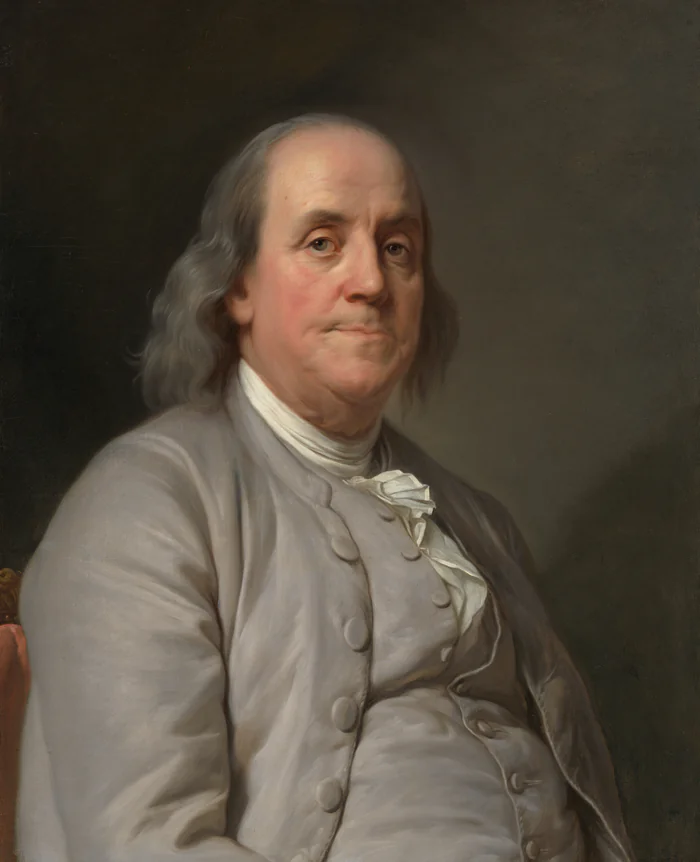
West Point, Apalachicola and a new county
In 1821 Florida passed from Spain to the United States under the Adams-Onis Treaty. The town that became Apalachicola went by Cottonton in 1824, and in 1827 it was incorporated under the name West Point. It took the historic name Apalachicola in 1831. A state historical marker at the courthouse says the town dates back to the days of the Creek Indians.
Franklin County was created on February 8, 1832, as Florida's 17th county. It was named for Benjamin Franklin. Apalachicola was made the county seat the same year. Sources disagree about where the county's land came from. The Florida Natural Areas Inventory says parts of Gadsden and Washington counties, while a University of South Florida map site says part of Escambia County.
Sources: Florida Natural Areas Inventory: ARROW, History of Franklin County; Florida Department of State: Florida Historical Marker Details, Franklin County; Second Judicial Circuit of Florida: Franklin County; University of South Florida, Florida Center for Instructional Technology: FL Maps, Franklin County
Next: Chapter 5, The cotton port →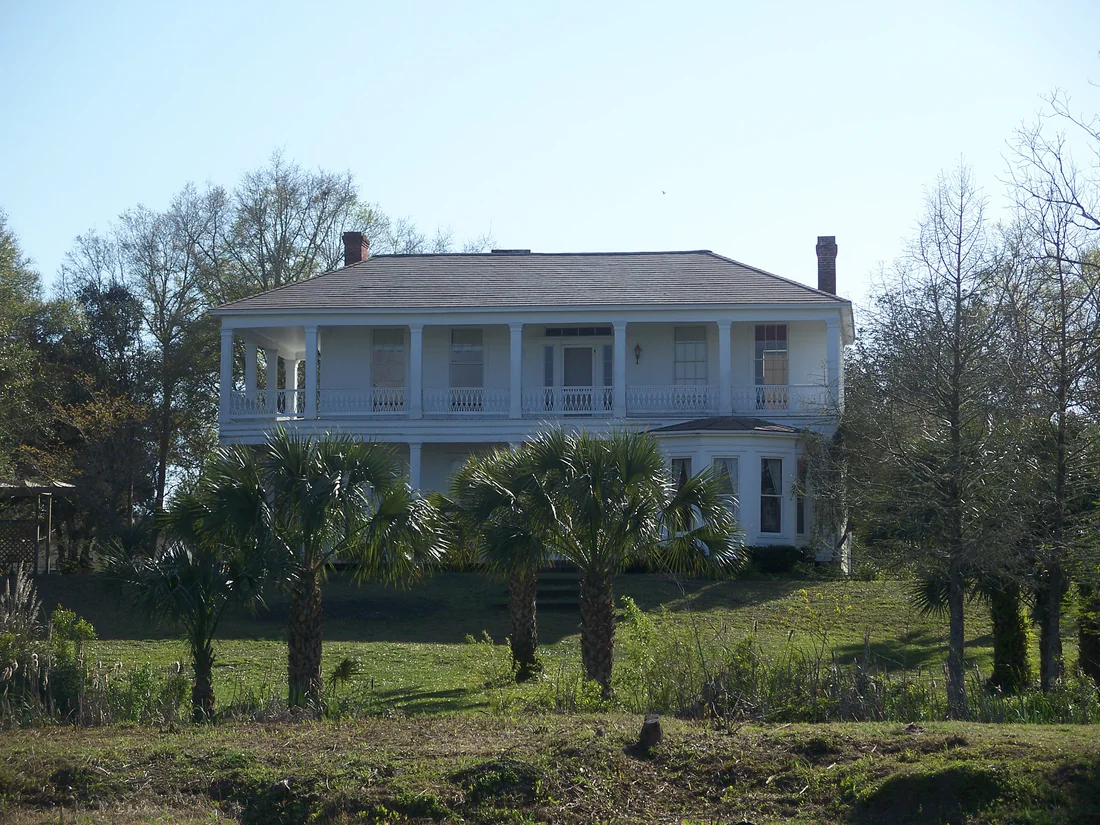
The cotton port
Less than ten years after it took the name Apalachicola, the town had a cotton boom that lasted almost 20 years. Steamboats piled with cotton from upriver farms crowded the waterfront. In the winter of 1853 the port handled 140,000 bales of cotton. Only New Orleans and Mobile ranked ahead of it among ports on the Gulf Coast.
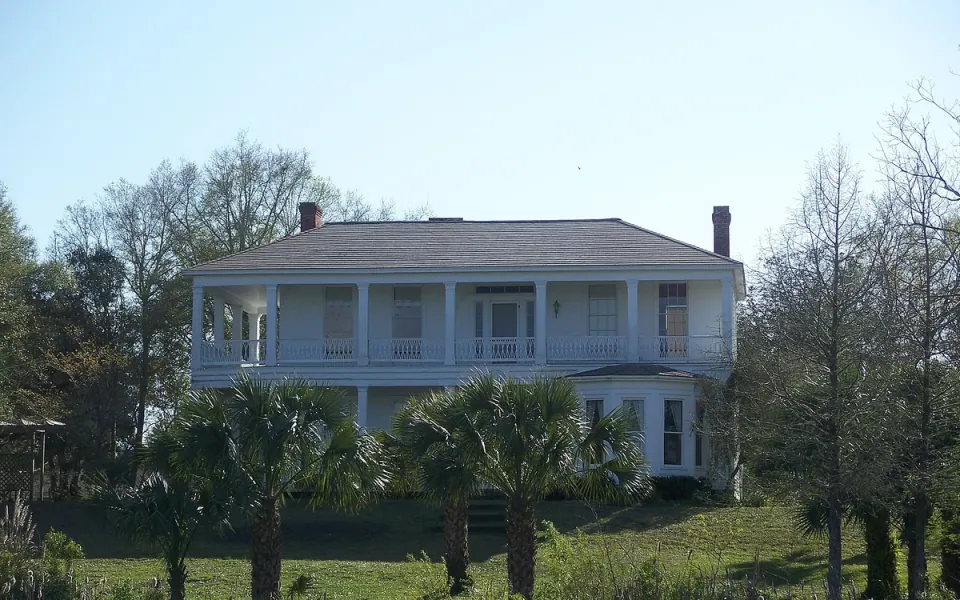
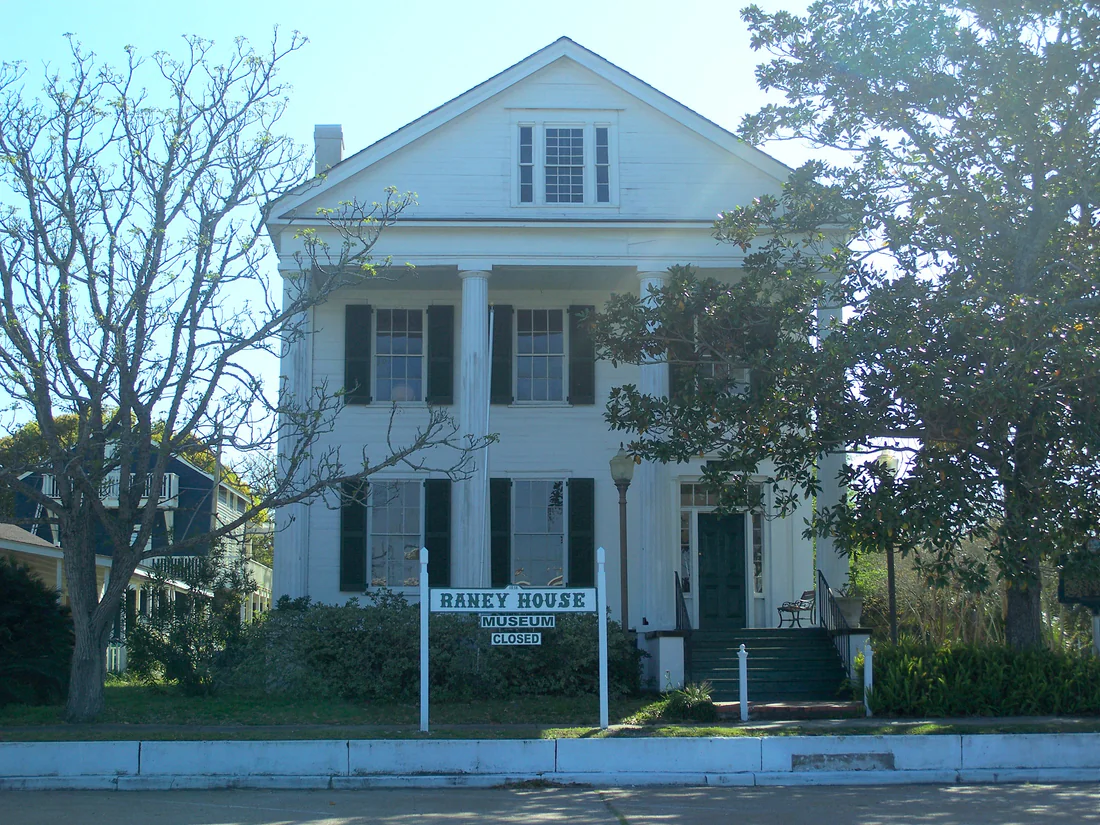
In 1834 Thomas Orman, a cotton merchant, brought his family to Apalachicola on a barge. In 1838 he built a house above the river, with woodwork, doors and windows made in Syracuse, New York, and sent by ship. The state bought the house in 2001 and made it Orman House Historic State Park. David and Harriet Raney also built their home in 1838, and it is now the Raney House Museum.
Trinity Episcopal Church, which the county's tourism office calls the town's first organized church, was formed in 1836. Its white pine building was made in pieces in White Plains, New York, and shipped around the Florida Keys. When the First Baptist Church was organized in 1848, seven of its ten members were Black and three were white.
Sources: Florida's Forgotten Coast (Franklin County Tourist Development Council): The Cotton Era in Franklin County; Florida Natural Areas Inventory: ARROW, History of Franklin County; Florida State Parks: Orman House Historic State Park, History; Florida State Parks: Orman House Tour; Florida's Forgotten Coast (Franklin County Tourist Development Council): Apalachicola Historic Landmarks; Florida's Forgotten Coast (Franklin County Tourist Development Council): 2026 Franklin County Visitor Guide
Next: Chapter 6, Dr. John Gorrie and the ice machine →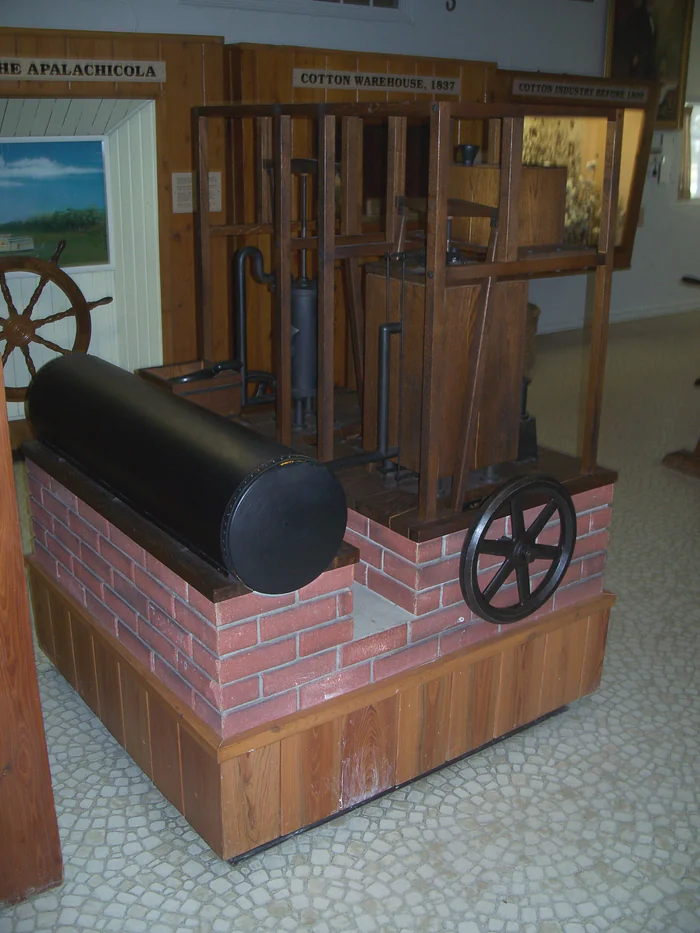
Dr. John Gorrie and the ice machine
Dr. John Gorrie, who grew up in Columbia, South Carolina, moved to Apalachicola in 1833. He was mayor by 1837, and he also served as postmaster and city treasurer and helped found Trinity Church. Yellow fever killed up to 70 percent of the people who caught it. By 1841 he was trying to find a way to cool the rooms of his yellow fever patients. He thought marsh gases caused the disease and wanted to reduce them.
His work led to a machine that made ice, a forerunner of modern refrigeration and air conditioning. He received a London patent on August 22, 1850, and U.S. Patent No. 8080 on May 6, 1851. It was the first U.S. patent ever given for mechanical refrigeration, according to Florida State Parks. Gorrie died in 1855 without managing to sell his invention.
The Southern Ice Exchange put up a monument to him in 1899. The museum that is now John Gorrie Museum State Park was dedicated in 1957, and his grave lies on the park grounds across from it. Another Apalachicola resident, the botanist Dr. Alvan W. Chapman, also became known around the world.
Sources: Florida State Parks: John Gorrie Museum State Park, History; Florida State Parks: John Gorrie Museum State Park brochure; Florida State Parks: John Gorrie Museum State Park; Florida Natural Areas Inventory: ARROW, History of Franklin County; Florida State Parks: Orman House Historic State Park, History
Next: Chapter 7, Lighthouses and the Civil War →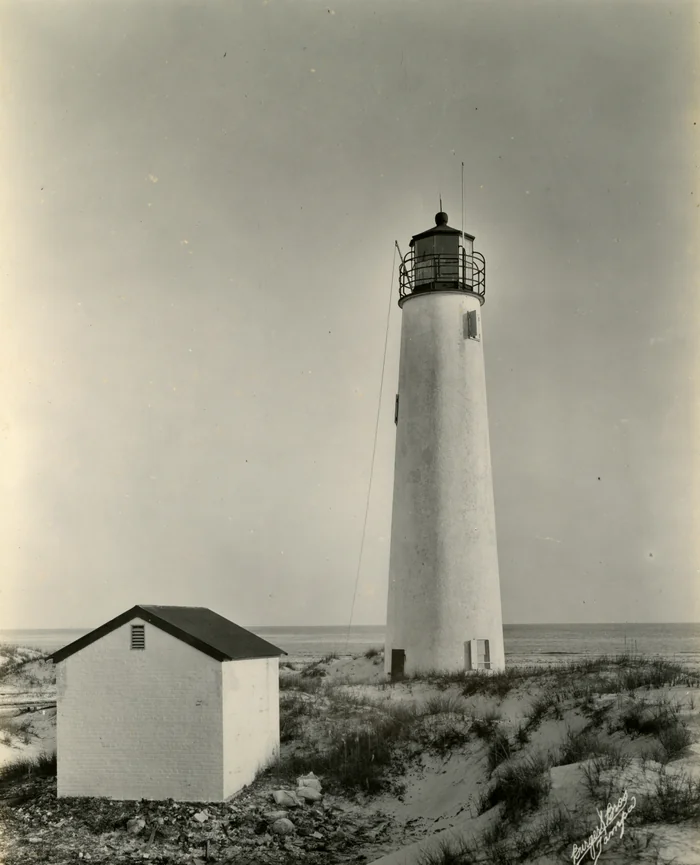
Lighthouses and the Civil War
The first lighthouse on St. George Island went up in 1833 near West Pass and stood 65 feet tall. A second tower was finished at Cape St. George in 1848, but a hurricane flattened it in August 1851. The third tower, finished in 1852, was set farther inland on a base of pine pilings sunk deep in the sand. On Dog Island, a 50-foot brick lighthouse first shone on March 1, 1839. Hurricanes wrecked the Dog Island towers one after another, and the third one fell in 1873.
In 1861, when the Civil War began, Apalachicola had 1,906 residents and was Florida's sixth largest town. Union ships blockaded the St. George area, though some vessels still got in and out. Governor Milton called Apalachicola the state's first line of defense and in 1862 asked for more Confederate troops. After the troops pulled out, many residents left for Georgia and Alabama.
The Cape St. George light went dark for the war so it would not help Union ships, and keeper James Reilly relit it on August 1, 1865. Railroads that came in the 1850s had already hurt the town's cotton trade, and the wartime blockade closed the harbor.
Sources: Florida's Forgotten Coast (Franklin County Tourist Development Council): Franklin County Maritime Heritage Museum, Lighthouses; Florida Natural Areas Inventory: ARROW, History of Franklin County; St. George Lighthouse Association: History; Florida's Forgotten Coast (Franklin County Tourist Development Council): History of Franklin County Florida; Florida State Parks: John Gorrie Museum State Park brochure
Next: Chapter 8, Lumber, sponges, oysters and two new towns →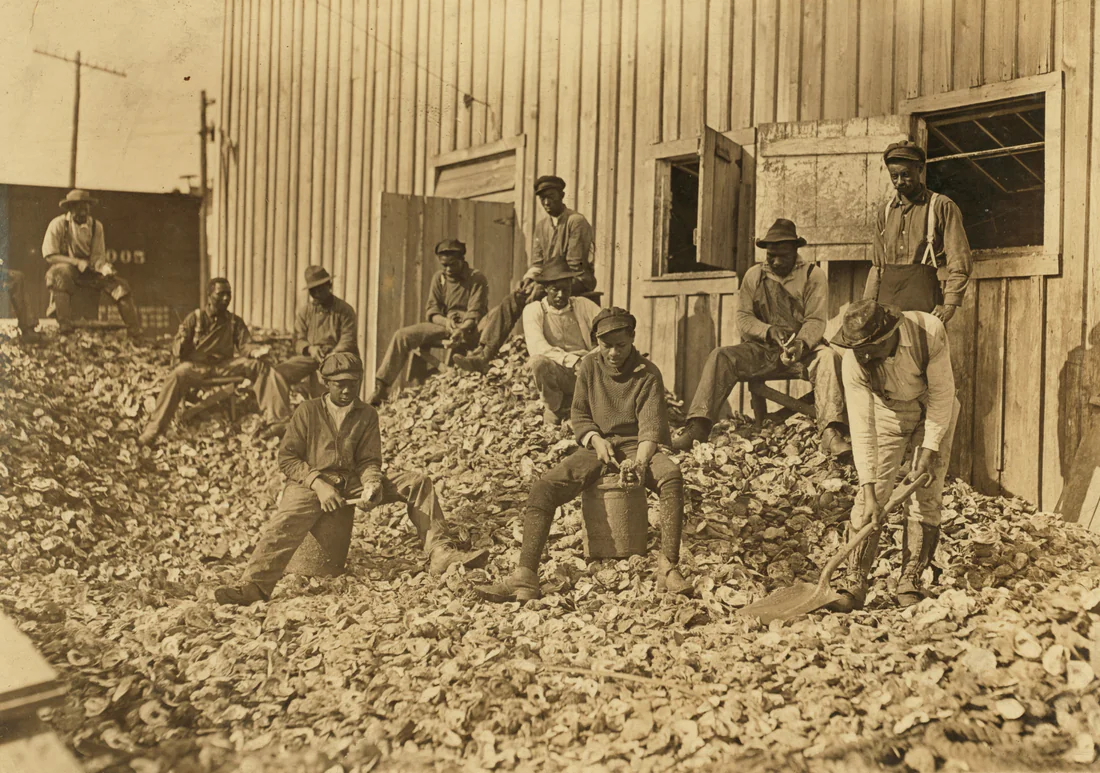
Lumber, sponges, oysters and two new towns
With no farming or industry to depend on, lumbering started up again in 1870. The sponge trade ran from the mid-1870s into the early 1900s, and by 1879 Apalachicola had 16 sponge boats. In 1895 the local sponge trade ranked third in the state, with two warehouses and about 100 men at work.
Oysters were sold in town as early as 1836, and by 1850 they were packed in barrels to ship by steamer. The Odd Fellows Hall on Sixth Street, built between 1881 and 1883, was the meeting place of the town's Black Odd Fellows lodge. In 1885 John G. Ruge and a brother started the Ruge Brothers Canning Company. The Florida Natural Areas Inventory says they became the first successful commercial oyster packers in Florida by using pasteurization.
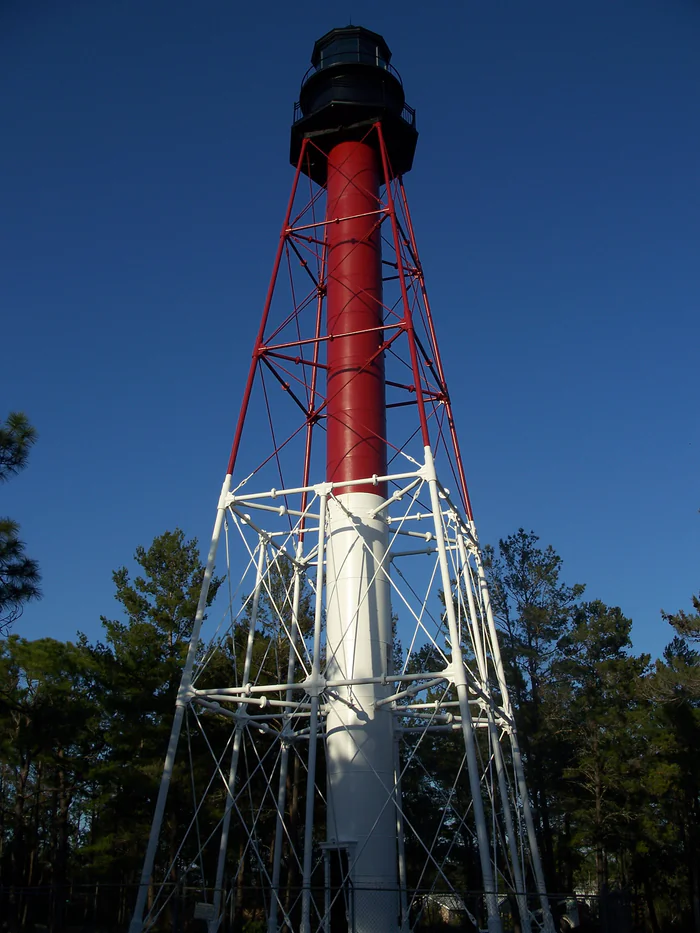
Oliver Kelley did the most to build up Carrabelle, and in 1877 he bought 1,920 acres there. He named the town Rio Carrabelle after his niece, Carrie Hall, who was thought of as the belle of the community. In 1895 work began on the Crooked River Lighthouse west of Carrabelle, an iron and steel tower 103 feet tall that replaced the lost Dog Island lights. In 1898 the Brown family started Eastpoint as an experimental colony, where families from Nebraska shared all profits.
Sources: Florida Natural Areas Inventory: ARROW, History of Franklin County; Florida's Forgotten Coast (Franklin County Tourist Development Council): The Sponge Industry in Franklin County; Florida's Forgotten Coast (Franklin County Tourist Development Council): Oyster Industry of Franklin County; Florida's Forgotten Coast (Franklin County Tourist Development Council): Apalachicola Historic Landmarks; Florida's Forgotten Coast (Franklin County Tourist Development Council): Franklin County Maritime Heritage Museum, Lighthouses; Florida's Forgotten Coast (Franklin County Tourist Development Council): History of Franklin County Florida
Next: Chapter 9, The 1900 fire, the railroad and William Popham →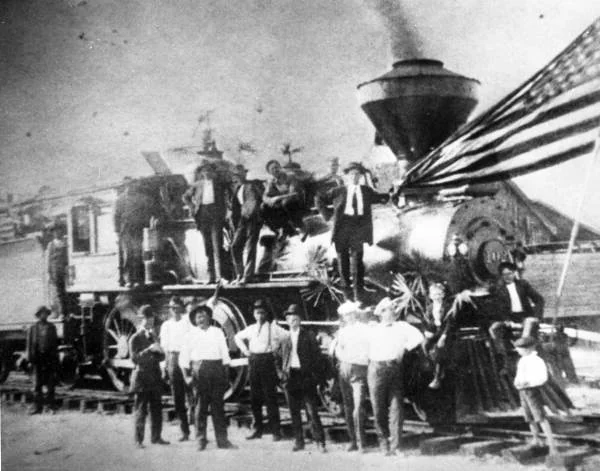
The 1900 fire, the railroad and William Popham
On May 25, 1900, a kitchen fire in Apalachicola spread fast and burned 71 buildings, almost the whole business district. The Apalachicola Northern Railroad, chartered in 1903, ran its first train into town on April 30, 1907. Alex Fortunas opened the Dixie Theater in April 1913, and for many years it was the town's main place for shows. By 1915 several canneries were sending canned seafood, shrimp among it, to markets in the North.
A Baptist preacher and writer named William L. Popham turned up in Apalachicola in January 1917. He sold 1,000 shares in an oyster business tied to buying St. George Island, and by late summer 1921 he had bought the island for $27,224.50. Voters made him mayor in November 1923. On January 21, 1925, he and his partners were found guilty of mail fraud. The John Gorrie Bridge between Apalachicola and Eastpoint opened in November 1935.
Holy Family, a Catholic school for Apalachicola's Black population, was built in 1929. It was used for school and church until 1964. The city took over the building in 2004, and it opened again in 2012 as a senior citizens center.
Sources: Florida Natural Areas Inventory: ARROW, History of Franklin County; Florida's Forgotten Coast (Franklin County Tourist Development Council): Apalachicola Historic Landmarks; Florida's Forgotten Coast (Franklin County Tourist Development Council): Shrimping in Franklin County
Next: Chapter 10, Camp Gordon Johnston, an island park and a refuge →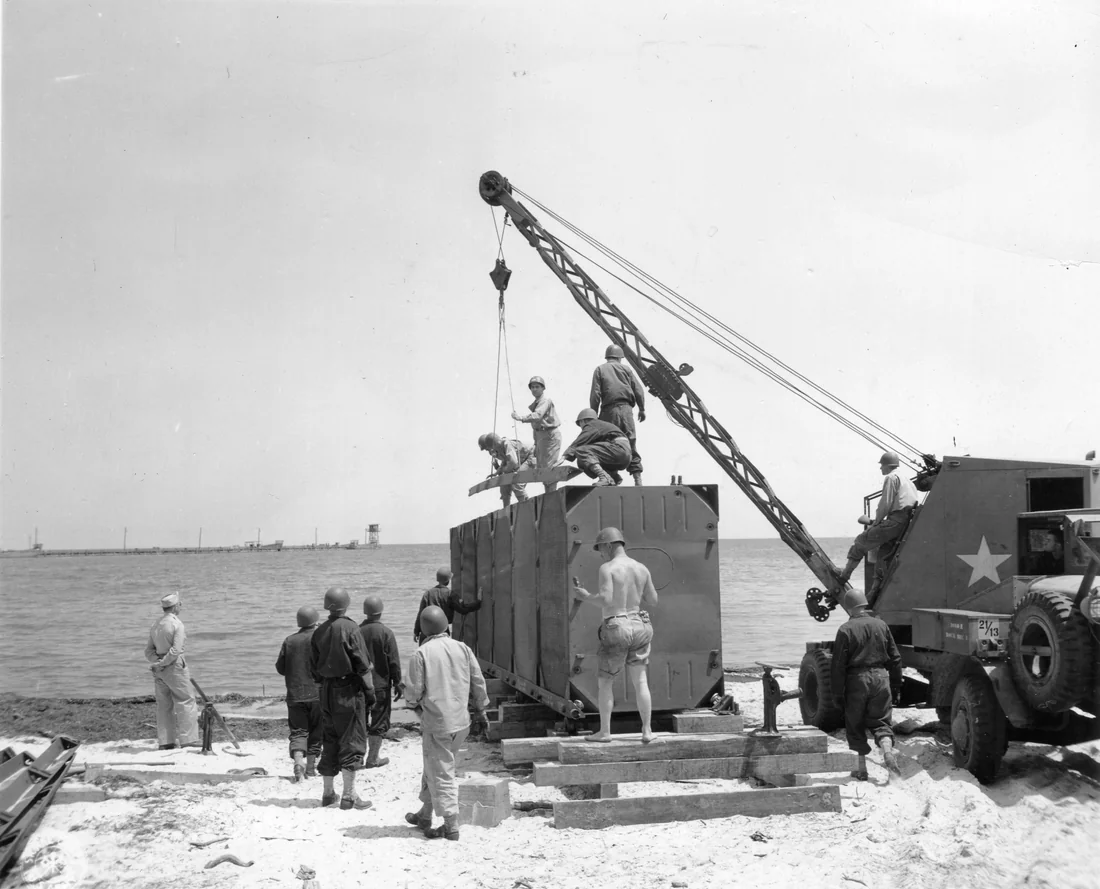
Camp Gordon Johnston, an island park and a refuge
Camp Gordon Johnston opened in 1942, first under the name Camp Carrabelle, as a place where infantry divisions trained for landings from the sea. It covered the coast from Alligator Point to Carrabelle, along with St. George Island, Dog Island, Lanark and St. Teresa. Sources disagree on how many soldiers trained there. The Florida Natural Areas Inventory estimates 250,000 troops trained for D-Day, while the county's visitor guide says over 25,000 trainees came through.
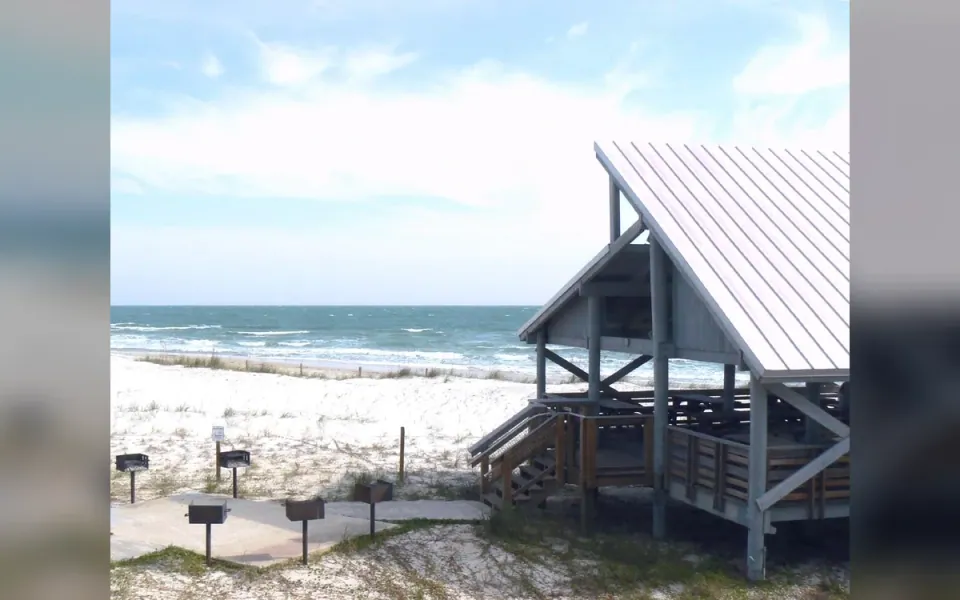
Troops practiced landings on the dunes of St. George Island, and bits of practice bombs and shells still turn up in the state park there. The Camp Gordon Johnston Museum tells how troops trained on the county's beaches for the D-Day landings in Normandy. After World War II, Battery Park in Apalachicola was home first to Harbor Days, which promoted the town as a port, and then to the Florida Seafood Festival.
The state bought land for a park on St. George Island in 1963, and the Bryant G. Patton Bridge over Apalachicola Bay was finished in 1965. Also in 1963, a police phone box was built in Carrabelle, and for a while it served as the town's police station. Known as the World's Smallest Police Station, it has appeared on TV shows such as "Ripley's Believe It or Not!" In 1968 the federal government bought St. Vincent Island for a wildlife refuge, now the St. Vincent National Wildlife Refuge. The island park opened in 1980 and is now named Dr. Julian G. Bruce St. George Island State Park.
Sources: Florida's Forgotten Coast (Franklin County Tourist Development Council): History of Franklin County Florida; Florida Natural Areas Inventory: ARROW, History of Franklin County; Florida's Forgotten Coast (Franklin County Tourist Development Council): 2026 Franklin County Visitor Guide; Florida State Parks: Dr. Julian G. Bruce St. George Island State Park, History; Florida's Forgotten Coast (Franklin County Tourist Development Council): Apalachicola Historic Landmarks
Next: Chapter 11, Since 1990: two lighthouses saved, a maritime museum and new reefs →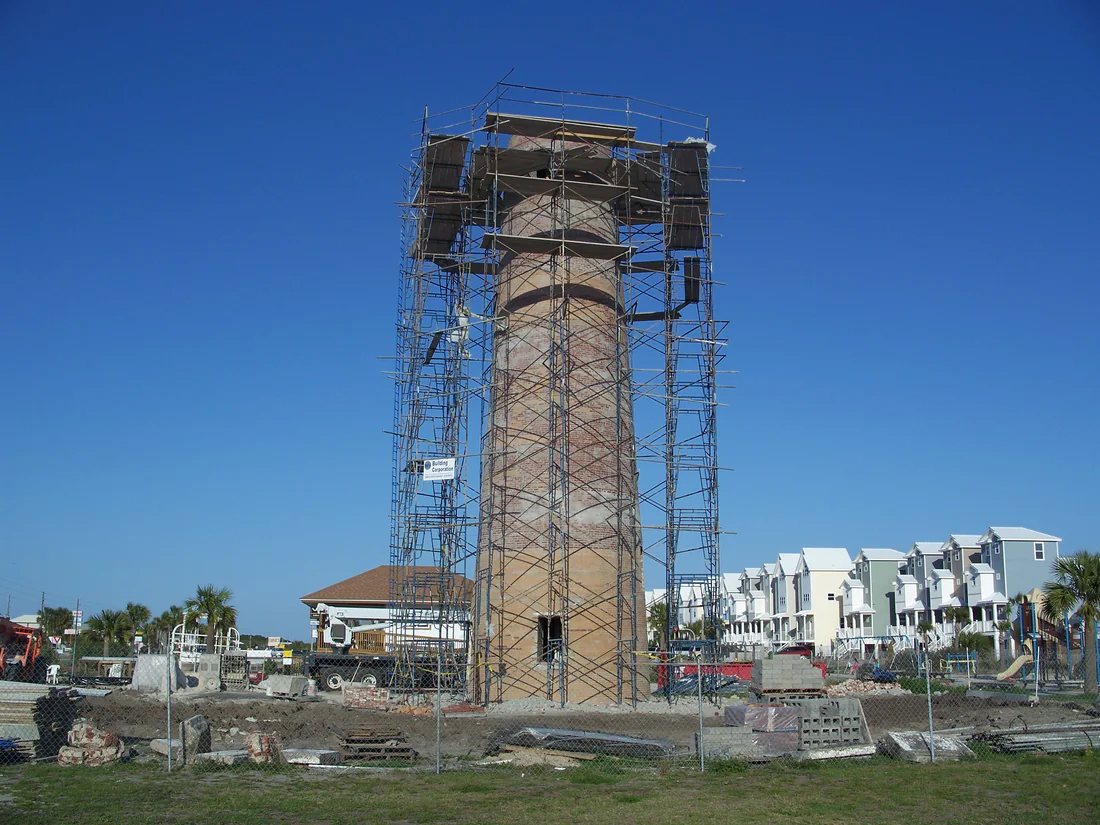
Since 1990: two lighthouses saved, a maritime museum and new reefs
The Dixie Theater reopened on July 31, 1998. The Coast Guard shut down the Crooked River Lighthouse in 1995, and public and private money paid for a restoration finished in 2007.
Beach erosion brought down the Cape St. George Lighthouse on October 21, 2005, after 153 years. The St. George Lighthouse Association worked with the state to save the pieces, and the lighthouse was rebuilt in the middle of St. George Island. It was opened to visitors on December 1, 2008, and over 22,000 bricks from the old tower were used to build it. In 2011 the association finished a copy of the original keeper's house, which holds a lighthouse museum.
In 2019 the old Lombardi oyster plant just west of Apalachicola was renovated, and it now holds the Franklin County Maritime Heritage Museum. In 2018 Hurricane Michael uncovered new earthworks, ditches and the spot of the fort's field oven at Prospect Bluff. In 2025, 65 concrete pyramids were sunk off St. George Island and Dog Island, finishing a three-year effort by Franklin County and the Apalachicola Artificial Reef Association. In September 2025 a panel of three judges picked Kingsley Hopper, a Port St. Joe High School junior, as Miss Florida Seafood. The Apalachicola Times called that year's Florida Seafood Festival, its 62nd, the state's "oldest" maritime festival.
Sources: Florida's Forgotten Coast (Franklin County Tourist Development Council): Apalachicola Historic Landmarks; Florida's Forgotten Coast (Franklin County Tourist Development Council): Franklin County Maritime Heritage Museum, Lighthouses; St. George Lighthouse Association: History; Florida's Forgotten Coast (Franklin County Tourist Development Council): Maritime Heritage Museum in Apalachicola Florida; WUWF Public Media: The history behind Prospect Bluff; Florida's Forgotten Coast (Franklin County Tourist Development Council): 2026 Franklin County Visitor Guide; The Apalachicola Times: Kingsley's the queen!; The Apalachicola Times: State's grandest seafood festival opens Friday
Next: the whole story, in dates →The whole story, in dates
People are living at Alligator Point and Bald Point.
Panfilo de Narvaez comes to a spot near present-day Apalachicola.
Creek Indians are living on St. George Island.
Spain builds a fort where the Apalachicola River reaches the bay.
The Treaty of Paris gives Florida to Britain.
People who escaped slavery and Seminole Indians form a community around Prospect Bluff.
The schooner Fox wrecks off St. George Island with William Augustus Bowles on board.
British troops build a fort on Prospect Bluff.
U.S. forces destroy Negro Fort.
Florida passes from Spain to the United States.
The town takes the name Apalachicola.
Franklin County is created, and Apalachicola becomes the county seat.
Dr. John Gorrie moves to Apalachicola.
The first lighthouse on St. George Island goes up near West Pass.
Thomas Orman and David and Harriet Raney build their homes.
The First Baptist Church is organized with seven Black and three white members.
Gorrie receives U.S. Patent No. 8080.
The third Cape St. George lighthouse tower is finished.
The port handles 140,000 bales of cotton.
Keeper James Reilly relights the Cape St. George light.
John G. Ruge and a brother start the Ruge Brothers Canning Company.
Work begins on the Crooked River Lighthouse.
The Brown family starts Eastpoint as an experimental colony.
A kitchen fire burns 71 buildings in Apalachicola.
The Apalachicola Northern Railroad runs its first train into town.
Holy Family is built as a Catholic school for Apalachicola's Black population.
The John Gorrie Bridge opens between Apalachicola and Eastpoint.
Camp Gordon Johnston opens, first as Camp Carrabelle.
A police phone box is built in Carrabelle.
The federal government buys St. Vincent Island for a wildlife refuge.
The state park on St. George Island opens.
The Dixie Theater reopens.
The Cape St. George Lighthouse falls.
The rebuilt lighthouse opens to visitors.
The old Lombardi oyster plant is renovated.
Sixty-five concrete reef pyramids are sunk off St. George Island and Dog Island.
Judges pick Kingsley Hopper as Miss Florida Seafood.
Where you can still see it
 01
 02
 03
 04
Dr. Julian G. Bruce St. George Island State Park
Goes with: Camp Gordon Johnston, an island park and a refuge
Open the place page →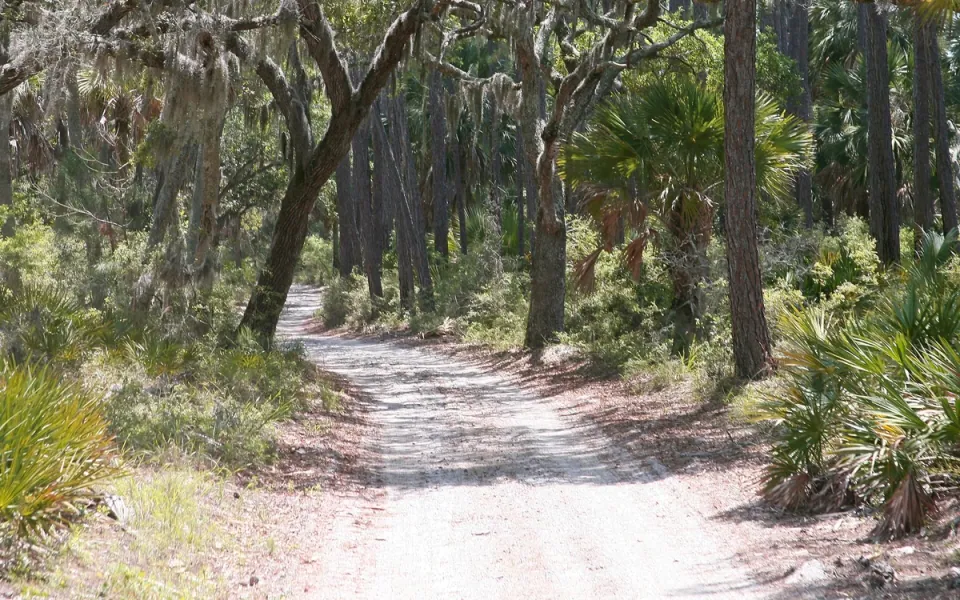 05
St. Vincent National Wildlife Refuge
Goes with: Camp Gordon Johnston, an island park and a refuge
Open the place page →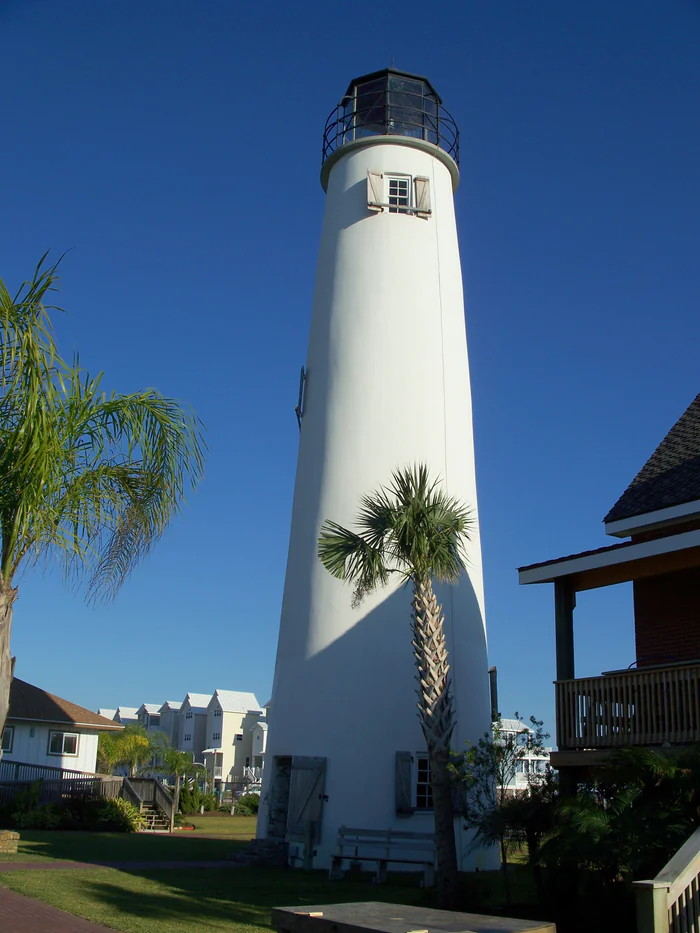 06
Cape St. George Lighthouse
Goes with: Since 1990: two lighthouses saved, a maritime museum and new reefs
Open the place page →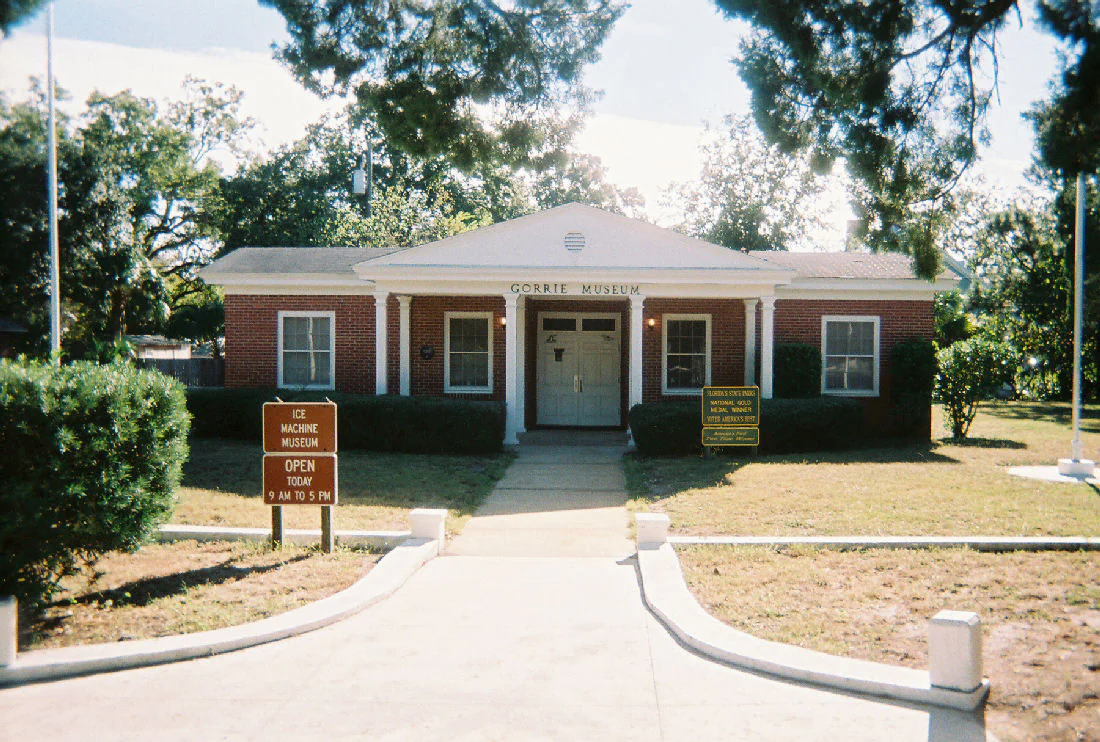 07
John Gorrie Museum State Park
Goes with: Dr. John Gorrie and the ice machine
John Gorrie Museum State Park →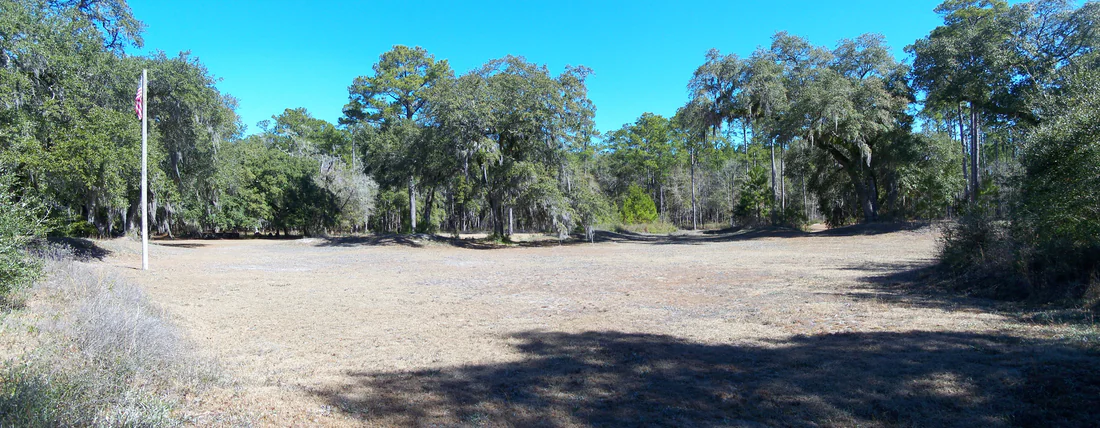 08
Fort Gadsden
Goes with: Negro Fort at Prospect Bluff
The National Register nomination for Fort Gadsden →Questions people ask
When was Franklin County created?
Franklin County was created on February 8, 1832, as Florida's 17th county.
Chapter 4 →What is the county seat of Franklin County?
Apalachicola was made the county seat in 1832, the same year the county was created.
Chapter 4 →What did Dr. John Gorrie of Apalachicola invent?
His work led to a machine that made ice, and he received U.S. Patent No. 8080 for it on May 6, 1851.
Chapter 6 →When was the fort at Prospect Bluff destroyed?
U.S. forces attacked the fort on July 27, 1816, and a shot that hit its powder magazine destroyed it.
Chapter 3 →Where this comes from.
Last updated October 20, 2026.
- Florida Natural Areas Inventory: ARROW, History of Franklin County ↗ Read October 19, 2026
- University of South Florida, Florida Center for Instructional Technology: FL Maps, Franklin County ↗ Read October 19, 2026
- Second Judicial Circuit of Florida: Franklin County ↗ Read October 19, 2026
- Florida Department of State: Florida Historical Marker Details, Franklin County ↗ Read October 19, 2026
- WUWF Public Media: The history behind Prospect Bluff ↗ Read October 19, 2026
- Florida Memory: View of earth works at Fort Gadsden - Franklin County, Florida ↗ Read October 19, 2026
- National Park Service: National Register of Historic Places Inventory-Nomination Form, Fort Gadsden Historic Memorial ↗ Read October 19, 2026
- Florida's Forgotten Coast (Franklin County Tourist Development Council): The Fort at Prospect Bluff ↗ Read October 19, 2026
- Florida State Parks: John Gorrie Museum State Park, History ↗ Read October 19, 2026
- Florida State Parks: John Gorrie Museum State Park ↗ Read October 19, 2026
- Florida State Parks: John Gorrie Museum State Park brochure ↗ Read October 19, 2026
- Florida State Parks: Orman House Historic State Park, History ↗ Read October 19, 2026
- Florida State Parks: Orman House Tour ↗ Read October 19, 2026
- Florida State Parks: Dr. Julian G. Bruce St. George Island State Park, History ↗ Read October 19, 2026
- St. George Lighthouse Association: History ↗ Read October 19, 2026
- Florida's Forgotten Coast (Franklin County Tourist Development Council): Franklin County Maritime Heritage Museum, Lighthouses ↗ Read October 19, 2026
- Florida's Forgotten Coast (Franklin County Tourist Development Council): History of Franklin County Florida ↗ Read October 19, 2026
- Florida's Forgotten Coast (Franklin County Tourist Development Council): Apalachicola Historic Landmarks ↗ Read October 19, 2026
- Florida's Forgotten Coast (Franklin County Tourist Development Council): The Cotton Era in Franklin County ↗ Read October 19, 2026
- Florida's Forgotten Coast (Franklin County Tourist Development Council): Oyster Industry of Franklin County ↗ Read October 19, 2026
- Florida's Forgotten Coast (Franklin County Tourist Development Council): The Sponge Industry in Franklin County ↗ Read October 19, 2026
- Florida's Forgotten Coast (Franklin County Tourist Development Council): Shrimping in Franklin County ↗ Read October 19, 2026
- Florida's Forgotten Coast (Franklin County Tourist Development Council): 2026 Franklin County Visitor Guide ↗ Read October 19, 2026
- Florida's Forgotten Coast (Franklin County Tourist Development Council): Maritime Heritage Museum in Apalachicola Florida ↗ Read October 19, 2026
- The Apalachicola Times: Kingsley's the queen! ↗ Read October 19, 2026
- The Apalachicola Times: State's grandest seafood festival opens Friday ↗ Read October 19, 2026