Jackson County was created on August 12, 1822, as Florida's third county, and it was named for Andrew Jackson. Marianna, which the Scottish businessman Robert Beveridge established in 1827, is the county seat. Its story includes the Battle of Marianna in 1864, one of only a few Civil War battles in Florida, and Florida Caverns State Park, which the Civilian Conservation Corps built. People first lived here sometime between about 5000 and 1000 B.C.
This page tells the story in order, from the caves and the first people along the Chipola River to a national title, the Bellamy Bridge Heritage Trail and a new marker in Two Egg, then lists places in the county where you can still see it. The sources for each part are named at the end of that part, and all of them are listed at the bottom of the page.
The caves and the first people
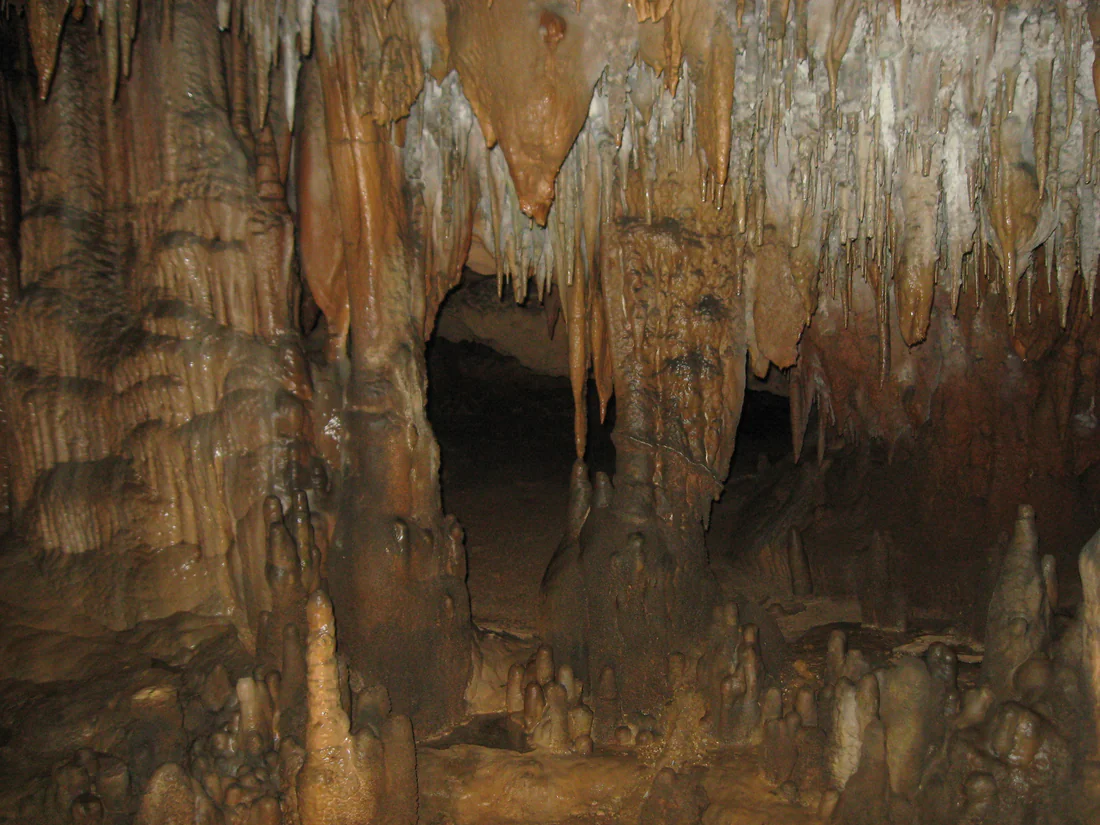
Florida State Parks traces the story of the Florida Caverns back 38 million years, to a time when the sea stood much higher. Inside, the caves hold stalactites, stalagmites, flowstones and draperies. People first lived in what is now Jackson County sometime between about 5000 and 1000 B.C., the Florida Natural Areas Inventory says.
The Fort Walton civilization followed, and it lasted from A.D. 900 into the middle 1700s. The Fort Walton people were the ancestors of the Apalachee, who lived east of the Apalachicola River when the Spanish arrived. Before white settlers came, Native villages of 50 to 200 people each stood along the Chipola River, says a county history kept by Florida Memory. The same history says Native people once took shelter in caves in the county's north.
Sources: Florida State Parks: Natural and Cultural History of Florida Caverns; Florida State Parks: Florida Caverns State Park; Florida Natural Areas Inventory, ARROW: History, Jackson County; Florida Memory: History of Jackson County, by Alvirda Johnston (WPA transcript)
Next: Chapter 2, Spanish missions and Andrew Jackson's march →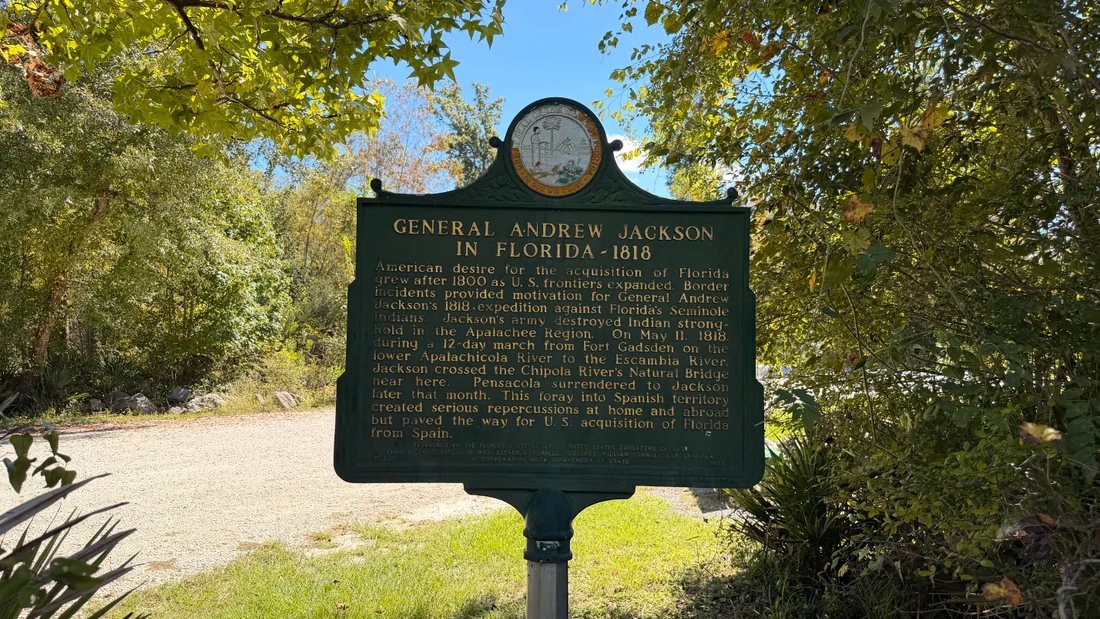
Spanish missions and Andrew Jackson's march
In 1674 the Spanish set up two missions in what would become Jackson County. They were San Carlos de los Chacatos and San Nicholas de Tolentino, the Florida Natural Areas Inventory history says. In 1693 Governor Torres y Ayala reported camping at a limestone cave and a large spring. That spring is today's Blue Springs. Raids led by Colonel James Moore in 1703 and 1704 destroyed all of Spain's Apalachee missions.
In February 1763 Spain handed Florida over to England, and in 1783 the British gave the two Floridas back to Spain. On May 11, 1818, General Andrew Jackson's army crossed the Natural Bridge of the Chipola River, during a 12-day march that began at Fort Gadsden and ended at the Escambia River. A state marker for the crossing stands in Florida Caverns State Park. Jackson was leading a campaign against the Seminoles, and Pensacola surrendered to him later that month. The United States acquired Florida on July 10, 1821, the Florida Natural Areas Inventory history says.
Sources: Florida Natural Areas Inventory, ARROW: History, Jackson County; Florida Department of State: Florida Historical Marker Details, General Andrew Jackson in Florida - 1818
Next: Chapter 3, 1822: Jackson County is created →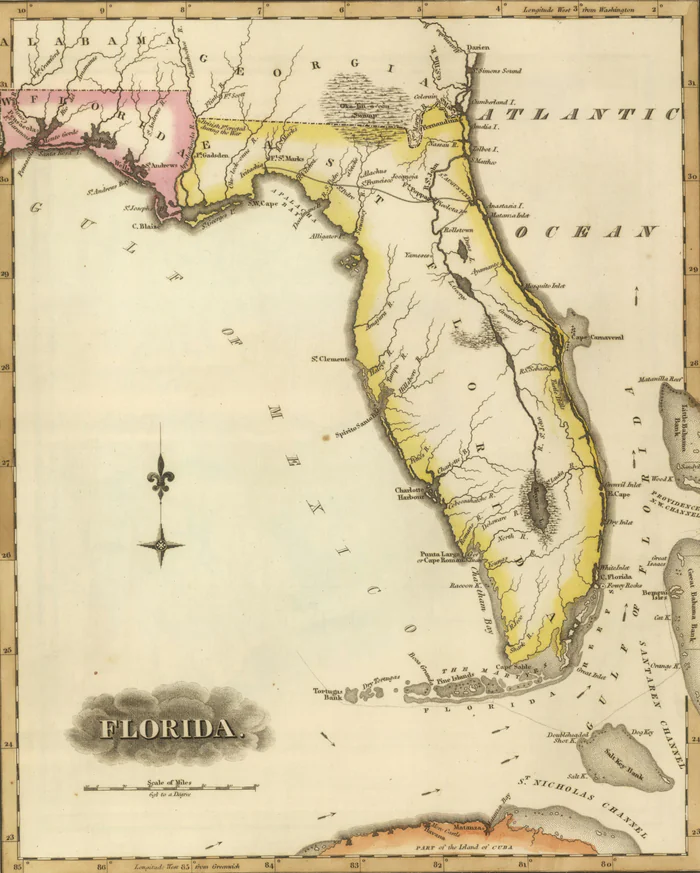
1822: Jackson County is created
On August 12, 1822, the Territorial Legislative Council passed an act dividing West Florida in two. One part became Escambia County, and the other became Jackson County, Florida's third county. At first its land stretched from the Choctawhatchee River to the Suwannee River. That area is now part of seventeen counties in North Florida, the state marker says. It was named for Andrew Jackson, who had served as governor of East and West Florida and later became the seventh U.S. president.
Greenwood, then called Panhandle, was the county's first real settlement, says an older county history kept by Florida Memory. Settlers from North Carolina arrived there in 1823 and 1824.
From 1822 to 1830 the county had no permanent seat, the Florida Natural Areas Inventory says. The Florida Memory history names Webbville as the first seat of the county. Webbville's name honored Colonel James Webb, who served on the Legislative Council. No trace of the town is left, that history says.
Sources: Florida Department of State: Florida Historical Marker Details, Jackson County; University of South Florida, Florida Center for Instructional Technology: FL Maps, Jackson County; Florida Memory: History of Jackson County, by Alvirda Johnston (WPA transcript); Florida Natural Areas Inventory, ARROW: History, Jackson County
Next: Chapter 4, Marianna, cotton and slavery →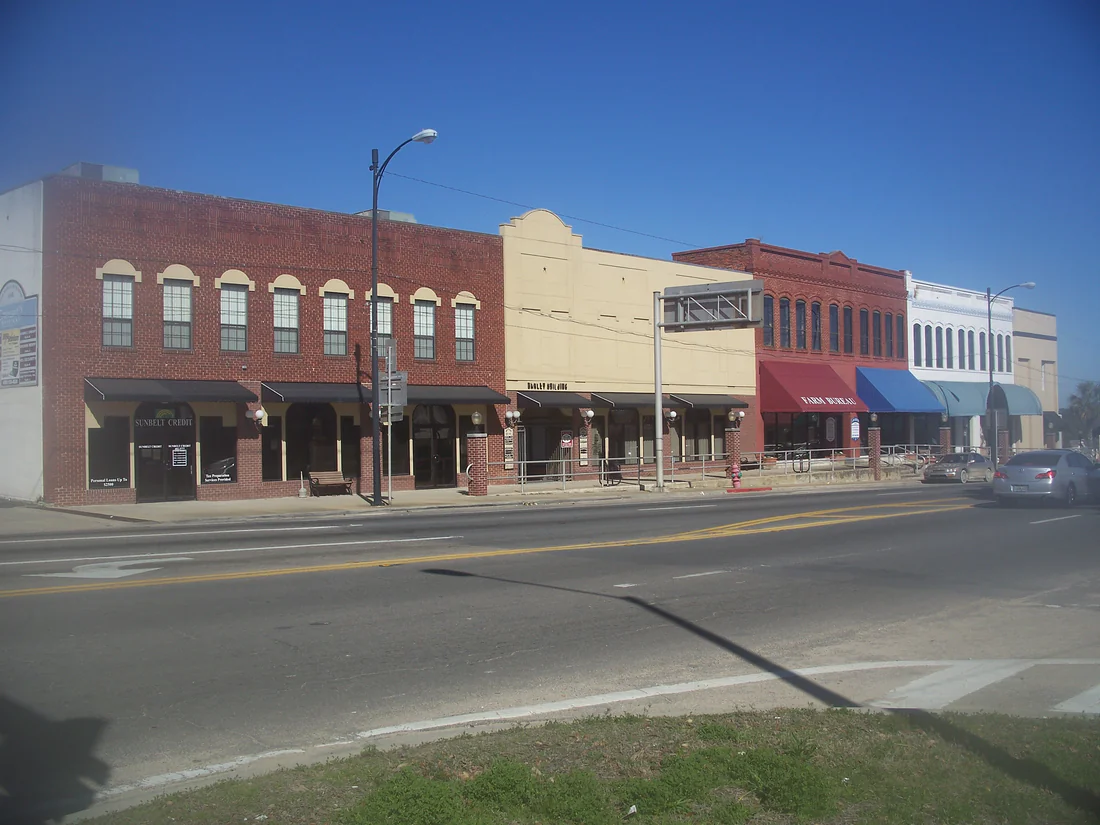
Marianna, cotton and slavery
Robert Beveridge, a Scottish businessman, founded Marianna in 1827, the Florida Department of State says. The town was named for his two daughters, Mary and Anna, the Florida Memory history says. A state marker gives November 5, 1828, as the date the town was incorporated, while the Florida Memory history gives 1829. No law ever settled where the county seat belonged, but it stayed in Marianna, the Florida Natural Areas Inventory says. In 1848 the courthouse burned, and the county's early records were lost.
Black people were living in and around Jackson County by 1825, according to the West End marker in Marianna. Cotton was the main crop, and growing it depended heavily on the work of enslaved people. John Milton, later Florida's Civil War governor, moved to Jackson County in 1845, and his plantation home there was called Sylvania. His holdings covered 2,600 acres, with a manor house, a school, a family chapel and quarters for 50 enslaved people, the Sylvania marker says. Its main crops were cotton and corn.
Sources: Florida Department of State: Secretary Byrd Designates Main Street Marianna as Florida Main Street Program of the Month (June 23, 2026); Jackson County Board of County Commissioners: About; Florida Natural Areas Inventory, ARROW: History, Jackson County; Florida Memory: History of Jackson County, by Alvirda Johnston (WPA transcript); Florida Department of State: Florida Historical Marker Details, Jackson County; Florida Department of State: Florida Historical Marker Details, The West End Community; Florida Department of State: Florida Historical Marker Details, Sylvania Plantation
Next: Chapter 5, The Battle of Marianna, 1864 →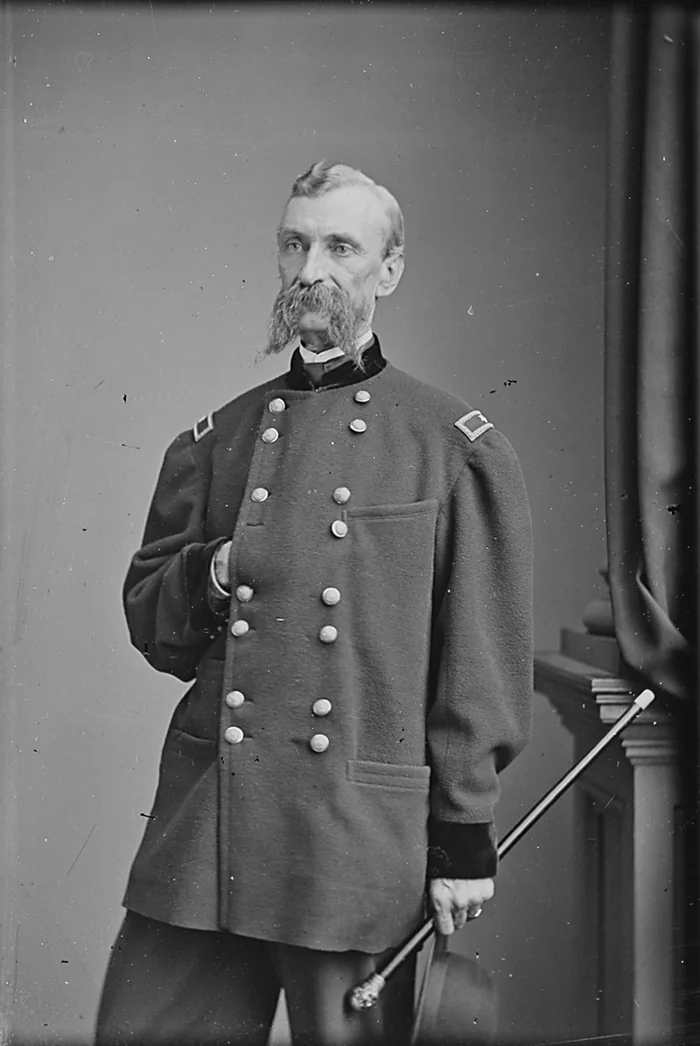
The Battle of Marianna, 1864
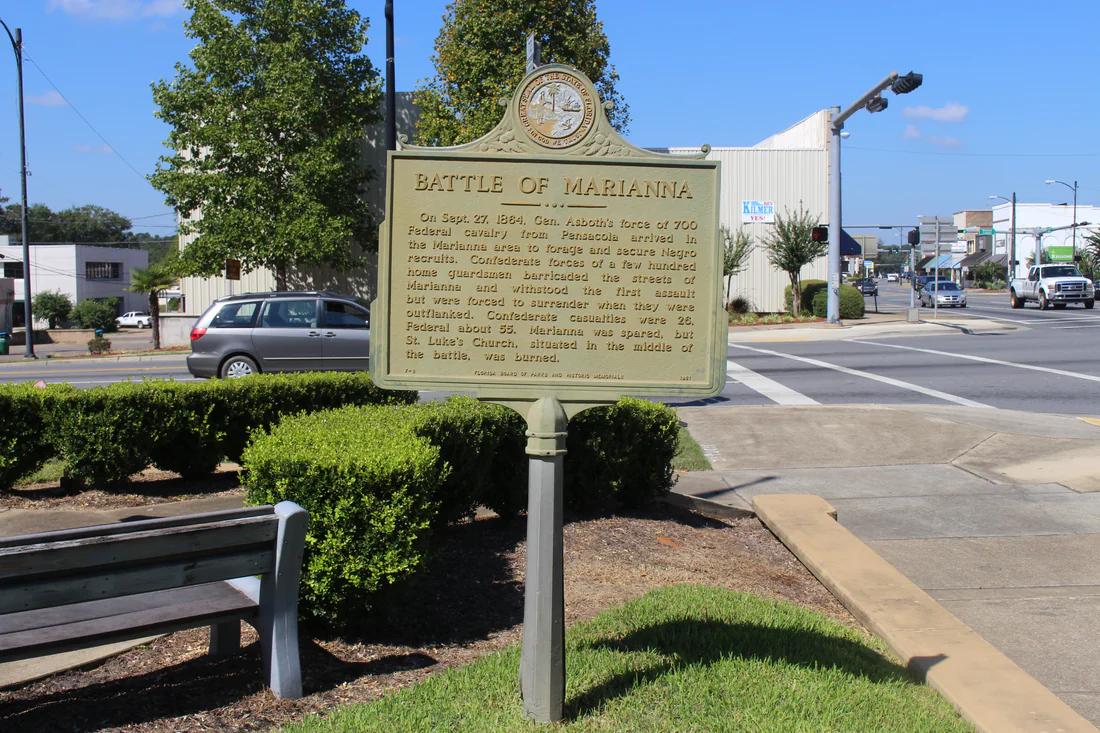
On September 27, 1864, General Asboth's force of 700 Union cavalry from Pensacola reached the Marianna area. They came to gather supplies and to sign up Black recruits. A few hundred Confederate home guardsmen put up barricades in the streets of Marianna and held off the first attack. Confederate casualties numbered 26, and Federal casualties about 55.
The town was spared. St. Luke's Church, which stood in the middle of the fighting, was burned. A Florida Natural Areas Inventory history says no event in the county's past was more tragic or more memorable than the Battle of Marianna. The Florida Department of State notes that only a few Civil War battles were fought in Florida, and this was one of them. John Milton, the governor, took his own life at Sylvania as the war ended.
Sources: Florida Department of State: Florida Historical Marker Details, Battle of Marianna; Florida Natural Areas Inventory, ARROW: History, Jackson County; Florida Department of State: Secretary Byrd Designates Main Street Marianna as Florida Main Street Program of the Month (June 23, 2026); Florida Department of State: Florida Historical Marker Details, Sylvania Plantation
Next: Chapter 6, Freedom, churches and the Jackson County War →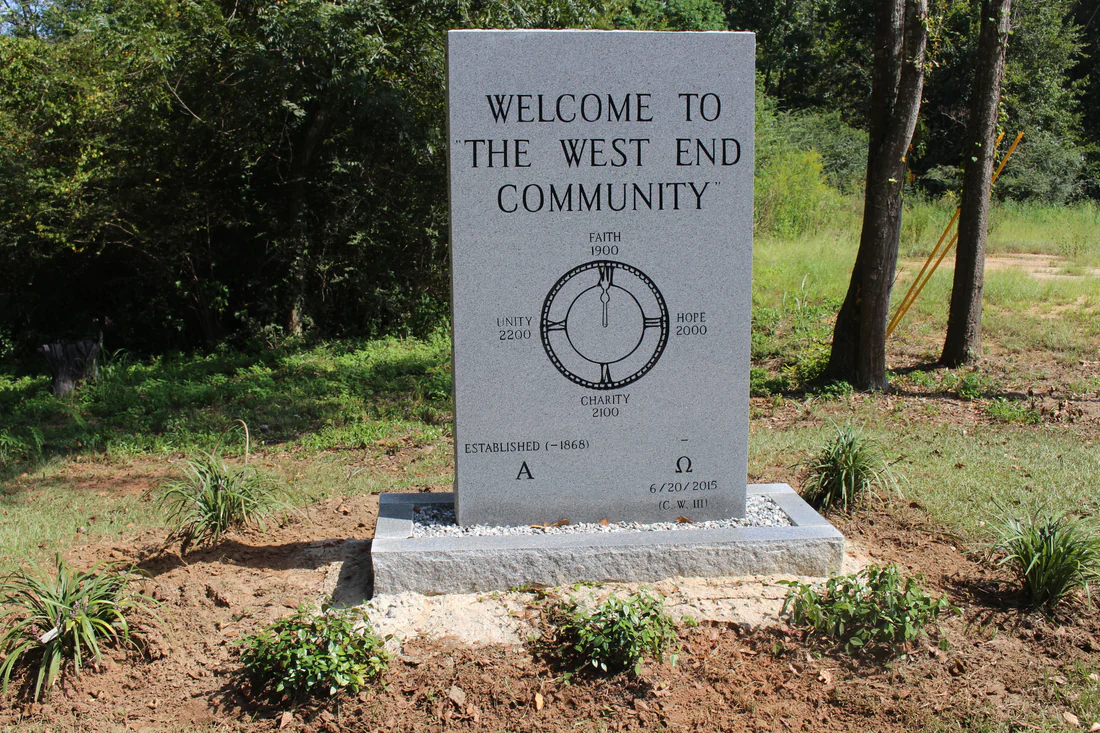
Freedom, churches and the Jackson County War
Saint Luke Baptist Church, an African American congregation, was founded in August 1867 beneath a brush arbor beside the Chipola River. The Rev. Samuel Brown was its leader. Soon after, a member who owned a blacksmith shop let the church use it as its first permanent home. In 1890 the congregation, led by the Rev. William King, chose the church's present site and put up a wooden building.
After 1865, Black communities in the area built their own cemeteries, schools and churches, says the West End marker. Many of their people settled together on 563 acres near downtown Marianna, an area later named West End. Farming and sharecropping were the first main ways to earn a living there.
From 1869 to 1871 the county went through a period of killings known as the Jackson County War. More than 150 men, women and children, both white and Black, died, more than the 1864 battle's casualties, the Florida Natural Areas Inventory says.
Sources: Florida Department of State: Florida Historical Marker Details, Saint Luke Baptist Church; Florida Department of State: Florida Historical Marker Details, The West End Community; Florida Natural Areas Inventory, ARROW: History, Jackson County
Next: Chapter 7, Bridges, railroads and the switch to peanuts →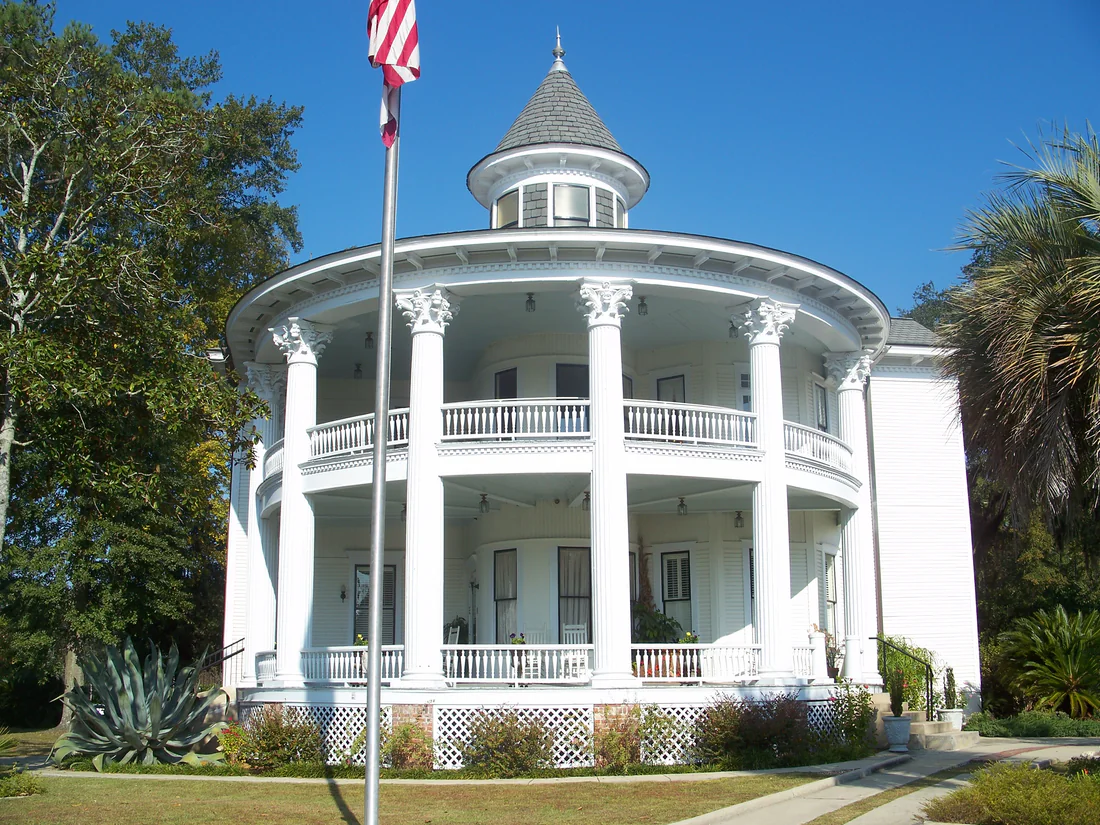
Bridges, railroads and the switch to peanuts
The first Bellamy Bridge dates from 1851, says the Northwest Florida Water Management District. A flood swept it away, and it was built again in 1874. The Pensacola and Atlantic line finished the first railroad in Jackson County in 1882, the Florida Natural Areas Inventory says. The trains turned Marianna into a railroad town, the Florida Department of State says. The railroad also gave rise to Cottondale, Sneads and Grand Ridge.
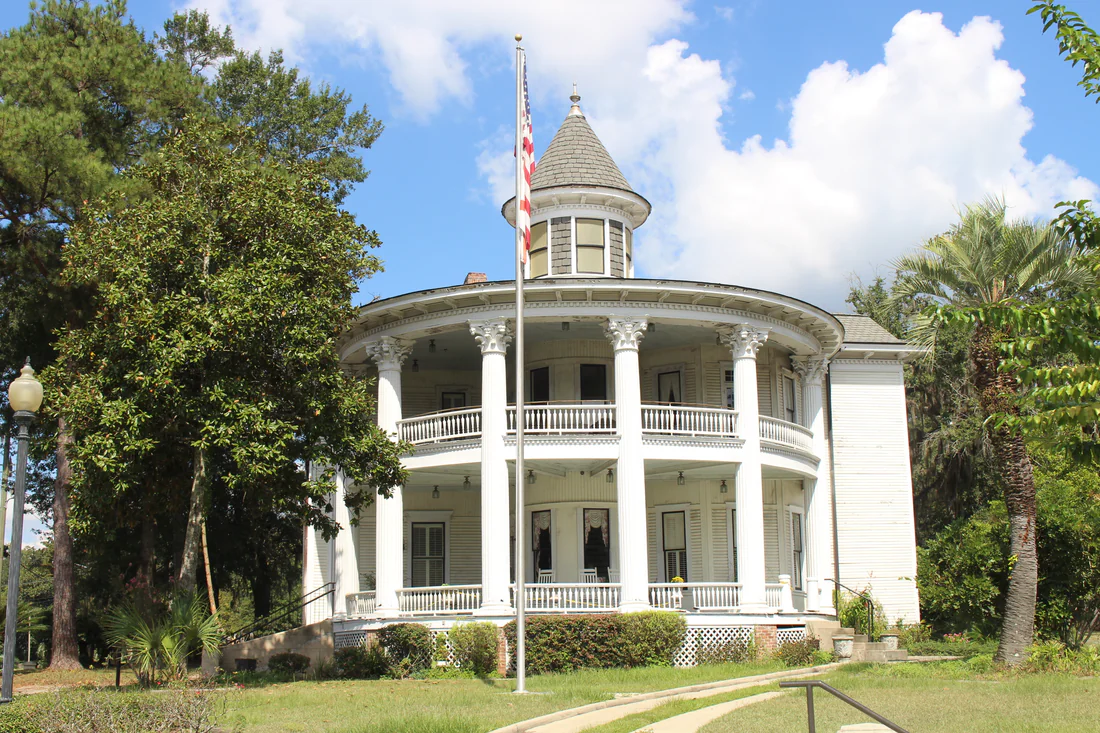
Joseph W. Russ Jr. built his Colonial Revival house in Marianna in 1895, Florida Memory says. The Russ House is now home to the Jackson County Visitor Center. In 1910 the county sold $300,000 in bonds to pay for road work. The money built 800 miles of improved roads made of sand and clay.
Then the boll weevil ruined the cotton crop, which had topped 23,000 bales in 1913. Jackson County farmers turned from cotton to peanuts. The Bellamy Bridge was rebuilt in 1914, and the district says only one steel-framed bridge in Florida is older.
Sources: Northwest Florida Water Management District: Bellamy Bridge; Florida Natural Areas Inventory, ARROW: History, Jackson County; Florida Department of State: Secretary Byrd Designates Main Street Marianna as Florida Main Street Program of the Month (June 23, 2026); Florida Memory: Historic Russ house in Marianna - Marianna, Florida; Jackson County Board of County Commissioners: Tourist Development Council
Next: Chapter 8, New towns, first cars and a Baptist college →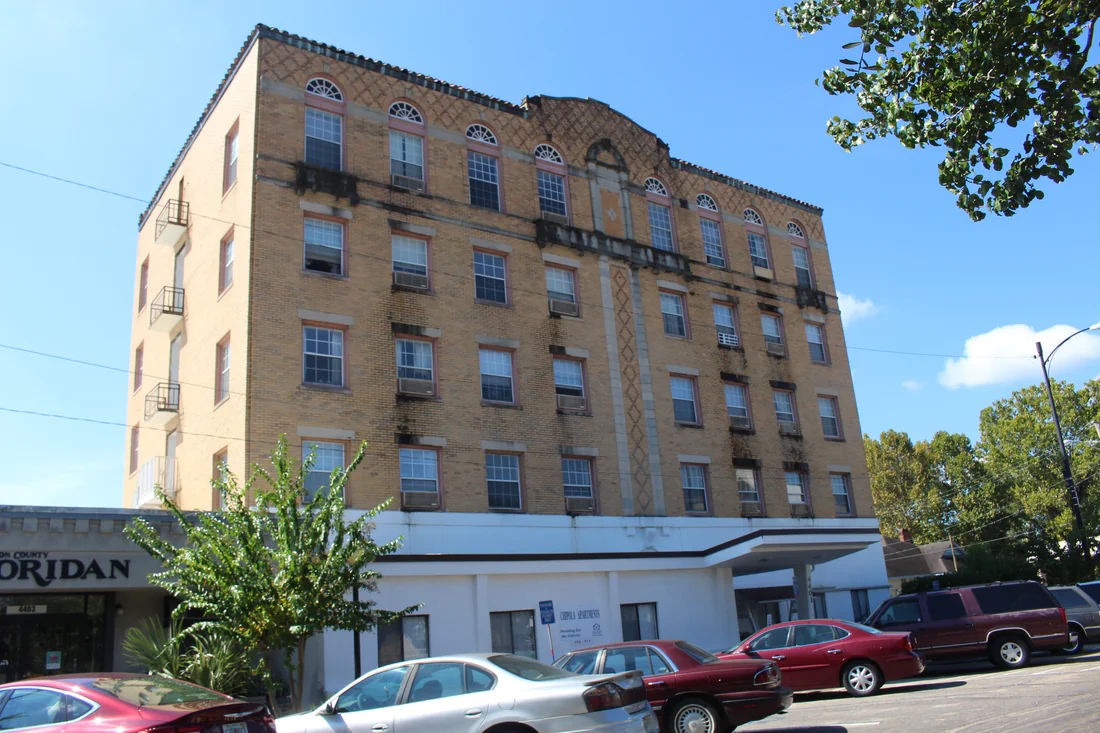
New towns, first cars and a Baptist college
In 1901 the Marianna Telephone Exchange became the county's first public utility, the Florida Natural Areas Inventory history says. The first car in the county belonged to Dr. N.A. Baltzell, and in 1908 J.D. Smith started selling Buicks. Marianna approved street lights in 1920, and they were in place by 1921.
Graceville was incorporated in 1903 and Cottondale in 1905. Graceville took its name from a community made up mostly of people named Grace, who had come from Campbellton. Cottondale sits at a crossing of two railroads and two main highways, about 3 miles southwest of where Webbville stood. Fires in 1932 destroyed much of the business districts in both Cottondale and Graceville.
The Chipola Hotel, five stories tall with 75 rooms, was finished in 1926. J.C. Corcoran, who had married a Greenwood woman in 1908, founded the Jackson County Floridan newspaper in 1927. A Baptist school began in Lakeland in 1943 as Florida Baptist Institute and was renamed Baptist Bible Institute two years later. In 1953 its leaders moved it to Graceville. In 2023 it took the name Baptist University of Florida.
Sources: Florida Natural Areas Inventory, ARROW: History, Jackson County; Baptist University of Florida: 2025-2026 Academic Catalog, History
Next: Chapter 9, Gilmore Academy and the lynching of Claude Neal →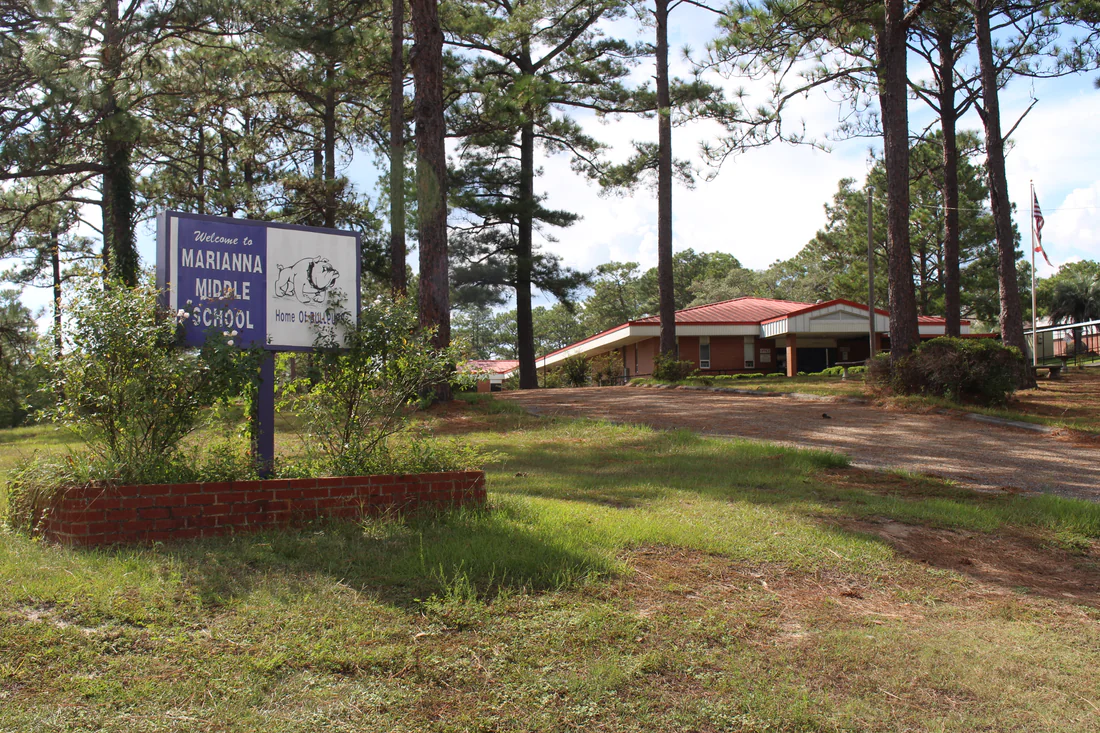
Gilmore Academy and the lynching of Claude Neal
In 1907 trustees of Marianna's African American community bought a three-acre site for a school. Toward the $4,500 they needed to qualify for a Rosenwald Fund grant, they raised $2,500. In 1922 Robert T. Gilmore founded Gilmore Academy, one of the county's first high schools for Black students, a state marker says. After its first class graduated in 1931, the academy took a new name, Jackson County Training School.
Claude Neal, a 23-year-old Black man, was accused of killing Lola Cannidy, the 20-year-old daughter of his employer. Men took him out of the Brewton, Alabama, jail, and on October 26, 1934, he was lynched in the Jackson County woods. His body was hung from a tree on the courthouse square in Marianna. A mob then drove Black residents from their homes and businesses, a U.S. Justice Department review says. The National Guard came after Marianna's mayor asked the governor for help.
A new high school went up on South Street in 1956, and Gilmore Academy closed. The training school became Marianna Middle School in 1970, sixteen years after desegregation.
Sources: Florida Department of State: Florida Historical Marker Details, Gilmore Academy; U.S. Department of Justice, Civil Rights Division: Claude Neal, Notice to Close File (October 1, 2013); WFSU: Revisiting Claude Neal Lynching Brings Opportunity For Racial Healing In Jackson County (August 24, 2020)
Next: Chapter 10, Caverns, power lines, an air field and a dam →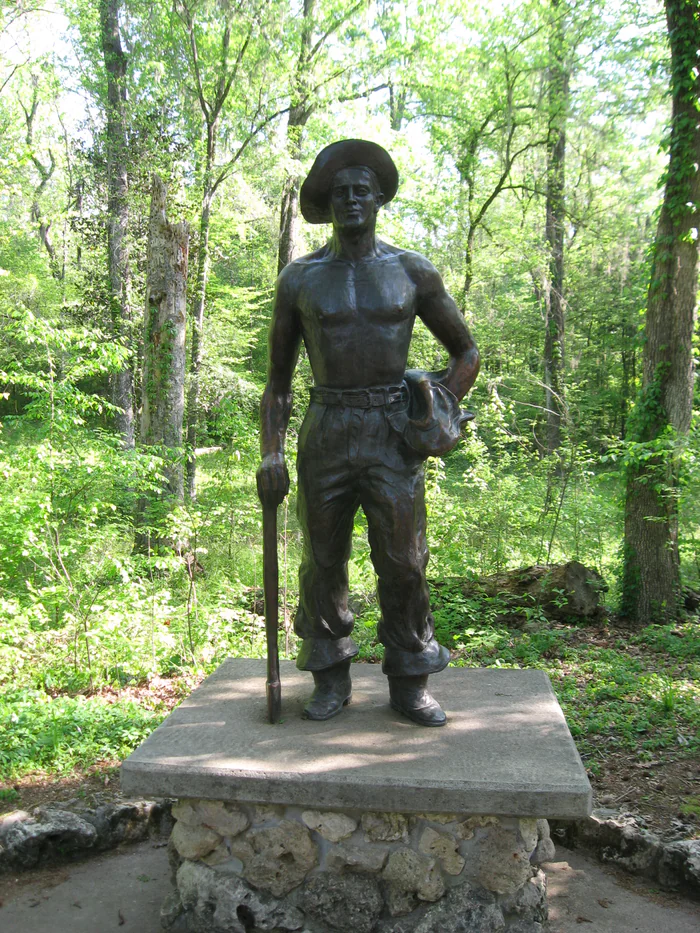
Caverns, power lines, an air field and a dam
Florida Caverns State Park got much of its land on October 11, 1935, Florida State Parks says. Civilian Conservation Corps workers built the tour cave and the park's buildings. They enlarged the passages by hand, so that people on tours could stand upright. The park officially opened in 1942.
On December 10, 1937, more than 700 rural people around Graceville formed the West Florida Electric Cooperative. Electricity reached these rural residents in 1939. The Marianna Army Air Field dates from 1942. In 1943 German prisoners of war were held in a compound built near Cottondale.
Chipola College began in 1947 as Chipola Junior College, with its first campus at the old Marianna Army Air Base. The U.S. Army Corps of Engineers started work on the Jim Woodruff Dam and Lock in 1947. In 1955 the state leased one of the Corps' recreation sites near Sneads, and it became Three Rivers State Park. The dam was completed in 1957, and the lake behind it, Lake Seminole, covers 37,500 acres.
Sources: Florida State Parks: Natural and Cultural History of Florida Caverns; Florida State Parks: Florida Caverns State Park; Florida Department of State: Florida Historical Marker Details, When the Lights Came On; Florida Natural Areas Inventory, ARROW: History, Jackson County; Chipola College: About; Florida State Parks: Three Rivers State Park, History; Florida State Parks: Three Rivers State Park brochure; U.S. Army Corps of Engineers, Corps Lakes Gateway: Lake Seminole (Jim Woodruff Lock and Dam)
Next: Chapter 11, Since 2000: a national title, a heritage trail and a Two Egg marker →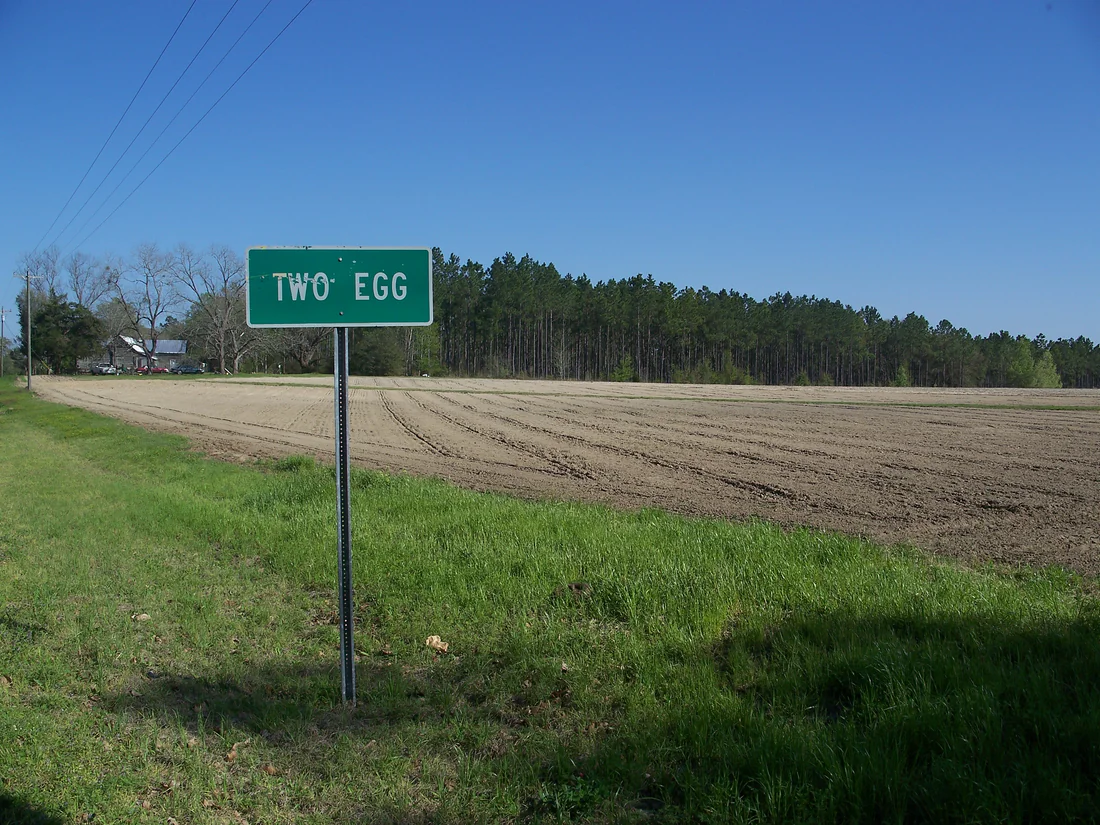
Since 2000: a national title, a heritage trail and a Two Egg marker
On August 18, 2003, the college officially took the name Chipola College, to reflect its new four-year degrees, in nursing, business and education. In August 2012 the Northwest Florida Water Management District agreed with Jackson County to build the Bellamy Bridge Heritage Trail. The half-mile trail leaves from Highway 162, north of Marianna, and leads to the old bridge. In 2015 the Chipola Lady Indians, led by Evelyn Akhator, won the college's first national title in basketball.
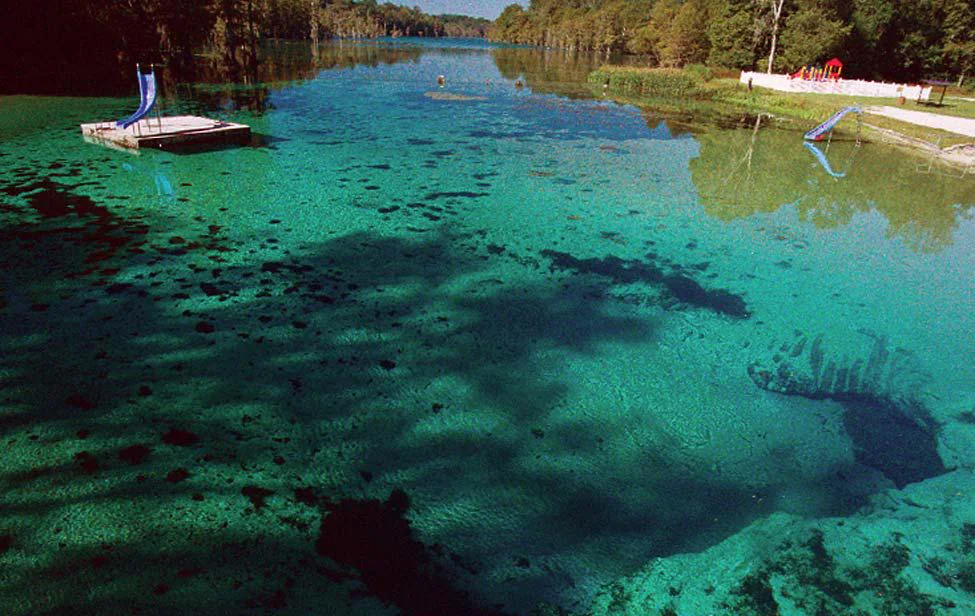
Hurricane Michael brought destruction to Marianna in 2018. Blue Springs Recreation Area opened for the summer in June 2019, a month late, after crews repaired damage from the storm. The spring there feeds Merritt's Mill Pond, a 202-acre reservoir, the county says.
In 2025 a historical marker went up in Two Egg, a few miles to the northeast of Marianna. It says the town was first called Allison and got its new name from bartering at a local store during the Depression. The marker notes that Faye Dunaway, the Academy Award-winning actress, was born on a farm 2.3 miles to the north. It also tells of Elijah Williams, an inventor born into slavery who in 1867 won a patent for a better way of propelling boats. In June 2026 the Florida Department of State named Main Street Marianna its Florida Main Street Program of the Month.
Sources: Chipola College: About; Northwest Florida Water Management District: Bellamy Bridge; Chipola College Athletics: GAMEDAY PREVIEW: Lady Indians begin quest to repeat history (2025); Chipola College Athletics: Chipola Lady Indians Wins National Championship (2015); Florida Department of State: Secretary Lee Designates Main Street Marianna as the Florida Main Street Program of the Month (May 9, 2022); WTXL: Blue Springs Recreational Area reopens in Jackson County (June 20, 2019); Jackson County Board of County Commissioners: Blue Springs Recreation Area; Historical Marker Database: Two Egg, Florida (marker erected 2025); Florida Memory: Which Way to Two Egg? (August 8, 2014); Florida Department of State: Secretary Byrd Designates Main Street Marianna as Florida Main Street Program of the Month (June 23, 2026)
Next: the whole story, in dates →The whole story, in dates
People first live in what is now Jackson County.
The Fort Walton civilization lasts in the region.
The Spanish set up two missions in the future county.
Governor Torres y Ayala camps at a limestone cave and the large spring now called Blue Springs.
Spain hands Florida over to England.
Andrew Jackson's army crosses the Natural Bridge of the Chipola River.
The United States acquires Florida.
Jackson County is created as Florida's third county.
Settlers from North Carolina arrive at Greenwood, then called Panhandle.
Robert Beveridge founds Marianna.
Marianna is incorporated, a state marker says.
John Milton moves to Jackson County.
The courthouse burns, and the early county records are lost.
The first Bellamy Bridge is built.
The Battle of Marianna is fought, and St. Luke's Church is burned.
Saint Luke Baptist Church is founded under a brush arbor.
More than 150 people die in the Jackson County War.
The first railroad in the county is finished.
Joseph W. Russ Jr. builds his house in Marianna.
Graceville is incorporated.
Trustees buy a three-acre site for a school.
The county sells $300,000 in bonds for roads.
The Bellamy Bridge is rebuilt.
Robert T. Gilmore founds Gilmore Academy.
Claude Neal is lynched.
Florida Caverns State Park gets much of its land.
Rural residents form the West Florida Electric Cooperative.
Florida Caverns State Park opens, and the Marianna Army Air Field begins.
Chipola Junior College begins, and work starts on the Jim Woodruff Dam.
The Baptist Bible Institute moves to Graceville.
Three Rivers State Park is created near Sneads.
The training school becomes Marianna Middle School.
The school takes the name Chipola College.
The water management district and the county agree to build the Bellamy Bridge Heritage Trail.
The Chipola Lady Indians win a national basketball title.
Blue Springs Recreation Area reopens after storm repairs.
A historical marker goes up in Two Egg.
Main Street Marianna is named Florida Main Street Program of the Month.
Where you can still see it
 01
 02
Russ House & Visitor Center
Goes with: Bridges, railroads and the switch to peanuts
Open the place page →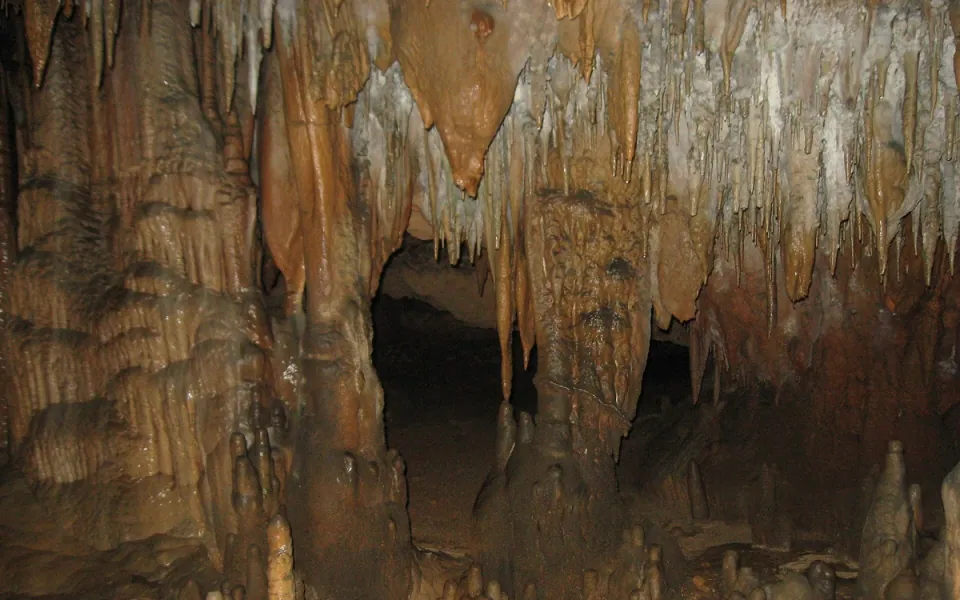 03
Florida Caverns State Park
Goes with: Caverns, power lines, an air field and a dam
Open the place page →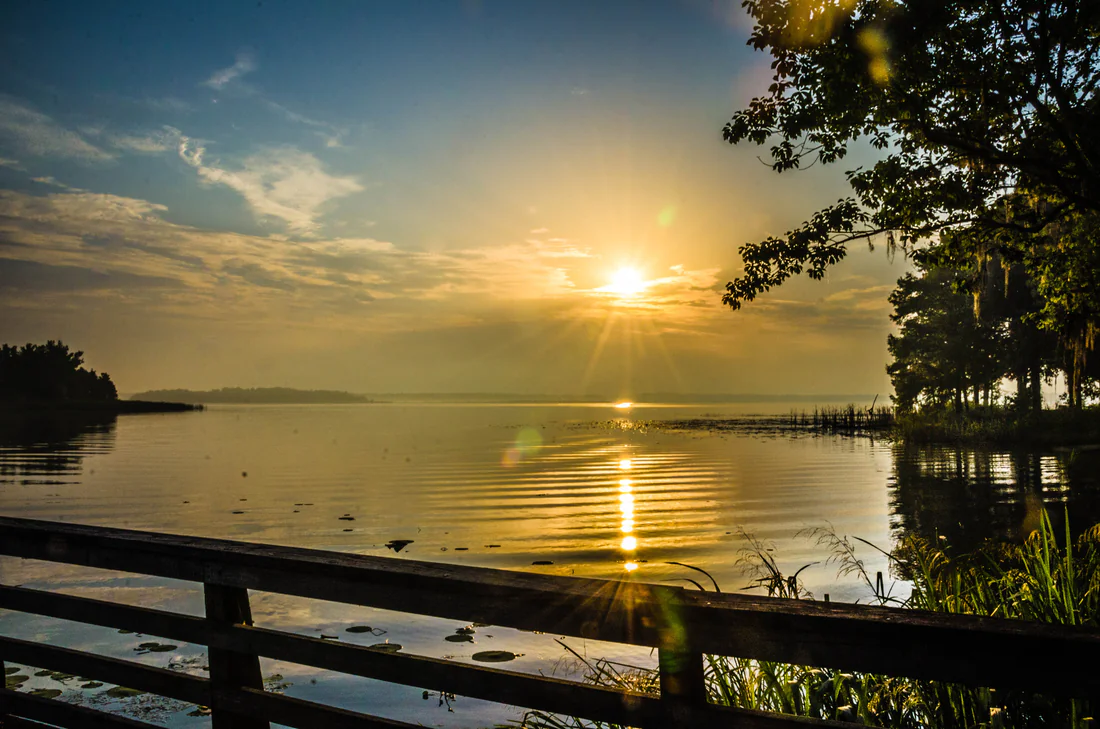 04
 05
Blue Springs Recreation Area
Goes with: Since 2000: a national title, a heritage trail and a Two Egg marker
Open the place page →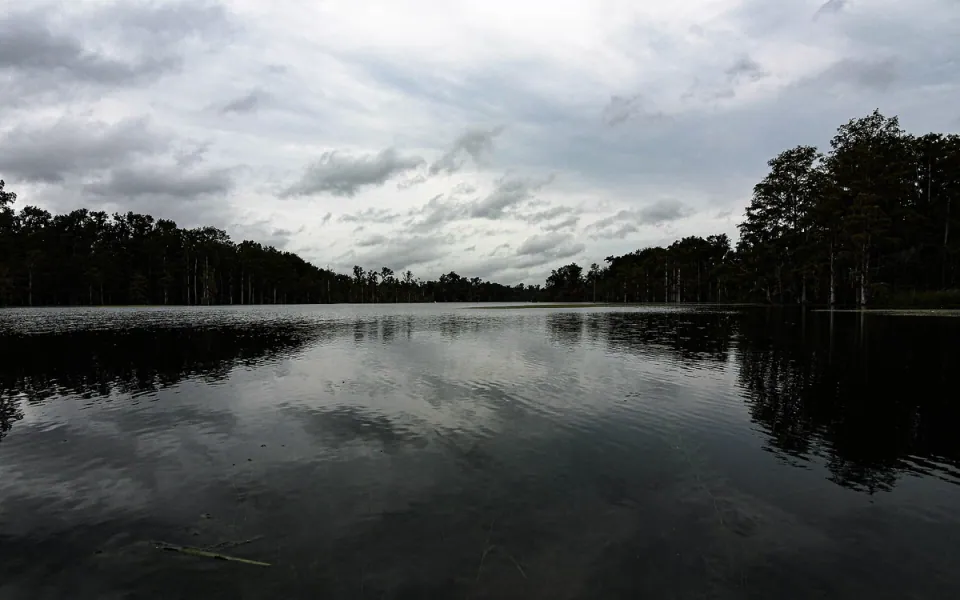 06
Merritt's Mill Pond
Goes with: Since 2000: a national title, a heritage trail and a Two Egg marker
Open the place page →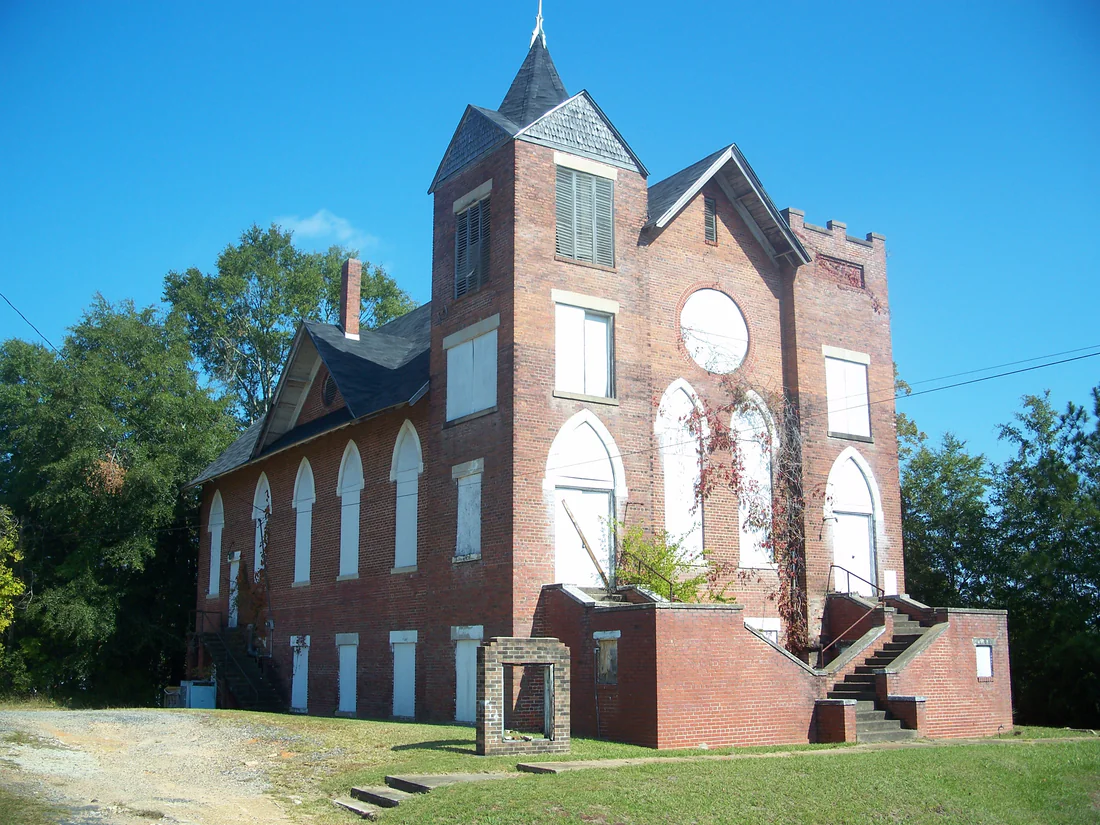 07
Saint Luke Baptist Church
Goes with: Freedom, churches and the Jackson County War
The Saint Luke Baptist Church marker →Questions people ask
When was Jackson County created?
Jackson County was created on August 12, 1822, when the Territorial Legislative Council passed an act dividing West Florida in two.
Chapter 3 →Who was Jackson County named for?
It was named for Andrew Jackson, who had served as governor of East and West Florida and later became the seventh U.S. president.
Chapter 3 →What is the county seat of Jackson County?
Marianna is the county seat, and Robert Beveridge, a Scottish businessman, founded it in 1827.
Chapter 4 →What happened at the Battle of Marianna?
On September 27, 1864, 700 Union cavalry reached the Marianna area, and a few hundred Confederate home guardsmen held off the first attack from barricades in the streets.
Chapter 5 →When did Florida Caverns State Park open?
The park officially opened in 1942, after Civilian Conservation Corps workers built the tour cave and the park's buildings.
Chapter 10 →Where this comes from.
Last updated October 19, 2026.
- Florida Natural Areas Inventory, ARROW: History, Jackson County ↗ Read October 19, 2026
- Florida Memory: History of Jackson County, by Alvirda Johnston (WPA transcript) ↗ Read October 19, 2026
- Florida State Parks: Natural and Cultural History of Florida Caverns ↗ Read October 19, 2026
- Florida State Parks: Florida Caverns State Park ↗ Read October 19, 2026
- Florida Department of State: Florida Historical Marker Details, General Andrew Jackson in Florida - 1818 ↗ Read October 19, 2026
- Florida Department of State: Florida Historical Marker Details, Jackson County ↗ Read October 19, 2026
- University of South Florida, Florida Center for Instructional Technology: FL Maps, Jackson County ↗ Read October 19, 2026
- Jackson County Board of County Commissioners: About ↗ Read October 19, 2026
- Florida Department of State: Secretary Byrd Designates Main Street Marianna as Florida Main Street Program of the Month (June 23, 2026) ↗ Read October 19, 2026
- Florida Department of State: Florida Historical Marker Details, The West End Community ↗ Read October 19, 2026
- Florida Department of State: Florida Historical Marker Details, Sylvania Plantation ↗ Read October 19, 2026
- Florida Department of State: Florida Historical Marker Details, Battle of Marianna ↗ Read October 19, 2026
- Florida Department of State: Florida Historical Marker Details, Saint Luke Baptist Church ↗ Read October 19, 2026
- Northwest Florida Water Management District: Bellamy Bridge ↗ Read October 19, 2026
- Florida Memory: Historic Russ house in Marianna - Marianna, Florida ↗ Read October 19, 2026
- Jackson County Board of County Commissioners: Tourist Development Council ↗ Read October 19, 2026
- Baptist University of Florida: 2025-2026 Academic Catalog, History ↗ Read October 19, 2026
- Florida Department of State: Florida Historical Marker Details, Gilmore Academy ↗ Read October 19, 2026
- U.S. Department of Justice, Civil Rights Division: Claude Neal, Notice to Close File (October 1, 2013) ↗ Read October 19, 2026
- WFSU: Revisiting Claude Neal Lynching Brings Opportunity For Racial Healing In Jackson County (August 24, 2020) ↗ Read October 19, 2026
- Florida Department of State: Florida Historical Marker Details, When the Lights Came On ↗ Read October 19, 2026
- Chipola College: About ↗ Read October 19, 2026
- U.S. Army Corps of Engineers, Corps Lakes Gateway: Lake Seminole (Jim Woodruff Lock and Dam) ↗ Read October 19, 2026
- Florida State Parks: Three Rivers State Park, History ↗ Read October 19, 2026
- Florida State Parks: Three Rivers State Park brochure ↗ Read October 19, 2026
- Chipola College Athletics: Chipola Lady Indians Wins National Championship (2015) ↗ Read October 19, 2026
- Chipola College Athletics: GAMEDAY PREVIEW: Lady Indians begin quest to repeat history (2025) ↗ Read October 19, 2026
- Florida Department of State: Secretary Lee Designates Main Street Marianna as the Florida Main Street Program of the Month (May 9, 2022) ↗ Read October 19, 2026
- WTXL: Blue Springs Recreational Area reopens in Jackson County (June 20, 2019) ↗ Read October 19, 2026
- Jackson County Board of County Commissioners: Blue Springs Recreation Area ↗ Read October 19, 2026
- Historical Marker Database: Two Egg, Florida (marker erected 2025) ↗ Read October 19, 2026
- Florida Memory: Which Way to Two Egg? (August 8, 2014) ↗ Read October 19, 2026