Okeechobee County was formed in 1917 from parts of Palm Beach, Osceola and St. Lucie counties, and its county seat is the city of Okeechobee. It is named for Lake Okeechobee, whose name comes from the Hitchiti words for water and big. Families there have long raised dairy and beef cattle, grown citrus and fished, and the county holds the site of the Battle of Okeechobee, fought on Christmas Day 1837. Its story goes back to the Belle Glade people, who lived around the lake from about 500 BC.
This page tells the story in order, from the Belle Glade people around Lake Okeechobee to a battlefield park, a dark sky park and a festival's return since 2000, then lists places in the county where you can still see it. The sources for each part are named at the end of that part, and all of them are listed at the bottom of the page.
The Belle Glade People Around the Lake
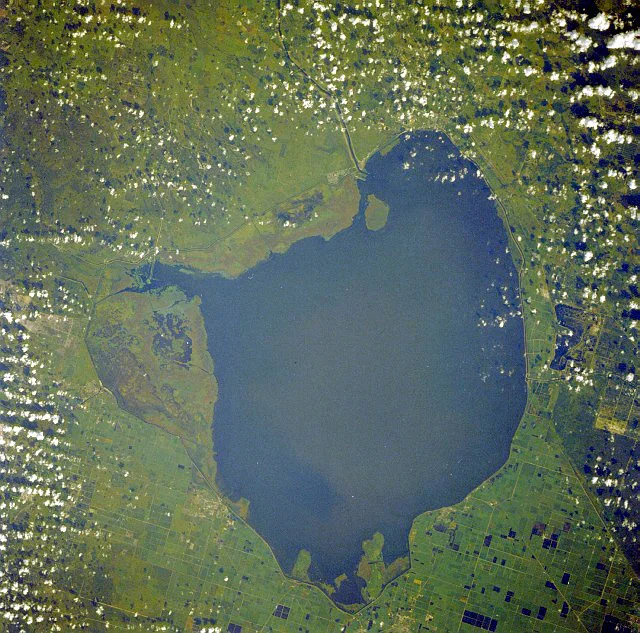
The Belle Glade people, also known as the Mayaimi, made their homes around Lake Okeechobee. Their culture lasted from about 500 BC until AD 1700. A Florida Museum writer says their homeland also took in the valley of the Kissimmee River.
Over nearly 2,000 years, they built many kinds of earthworks, including circular ditches. Their homes stood on tree islands, and they ate turtles and plentiful fish, mostly catfish, gar and bowfin.
Sources: Historical Society of Palm Beach County: Florida's Ancient People; Florida Museum of Natural History, Randell Research Center: The Belle Glade Monumental Landscape (Nathan Lawres, March 1, 2018)
Next: Chapter 2, Spanish Cattle, Seminoles and Crackers →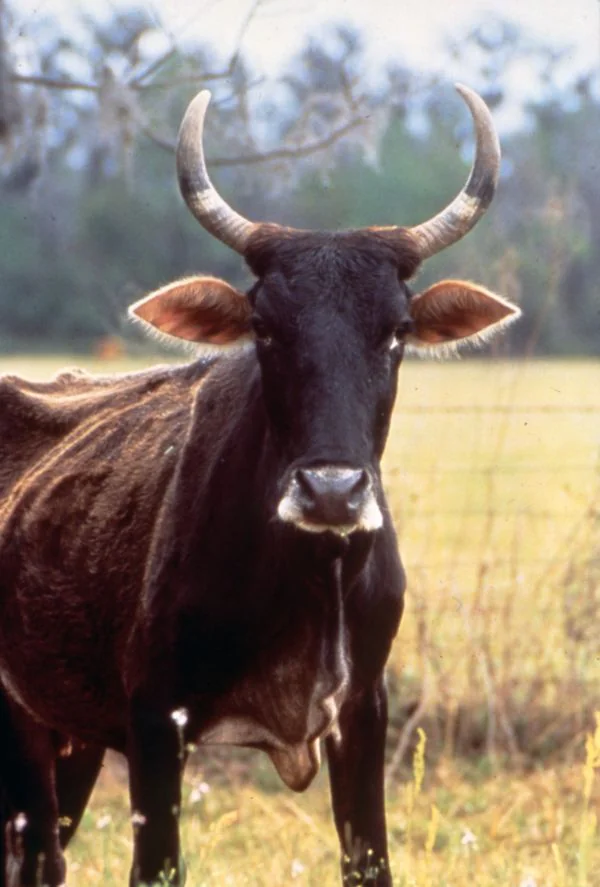
Spanish Cattle, Seminoles and Crackers
Spanish and French explorers began reaching Florida in the sixteenth century and met several native tribes. Juan Ponce de León arrived in 1521 with Andalusian cattle and horses, according to a ranching marker at Cattleman's Square in Okeechobee. The marker says no cattle or horses had come to the land that became the continental United States before them. By the eighteenth century, European diseases, warfare and slavery had destroyed most of Florida's native tribes.
Throughout the 1700s, the people who came to be called the Seminole Tribe did much to build early cattle ranching. Settlers of British descent, called Crackers, came into Florida in the late 1700s and early 1800s. They gathered the wild Spanish cattle into herds of their own. On the Kissimmee River grasslands, pioneers chased free-roaming cattle that came from Spanish explorers' herds. A state marker put up in 1961 says the Seminoles had long used this area, and that almost no white people came until the war of 1835 to 1842.
Sources: Historical Society of Palm Beach County: Florida's Ancient People; Historical Marker Database: Florida Cattle Ranching, 500 Years (Cattleman's Square, Okeechobee); Florida State Parks: History of Kissimmee Prairie; Florida Department of State: Okeechobee County historical marker
Next: Chapter 3, The Battle of Okeechobee, 1837 →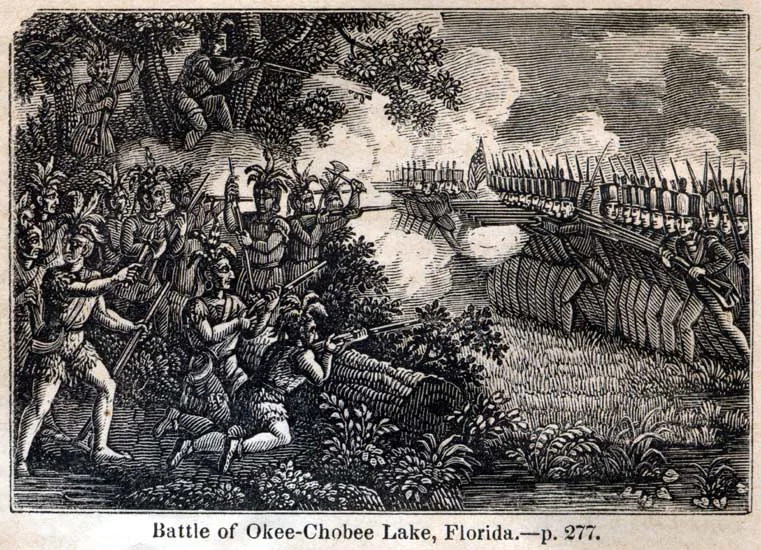
The Battle of Okeechobee, 1837
In 1830, President Andrew Jackson approved the removal of eastern tribes to lands beyond the Mississippi River. The Battle of Okeechobee was fought on December 25, 1837, which was Christmas Day. Seminole and Miccosukee people had their camp by the lake's northeast shore. Col. Zachary Taylor commanded 800 soldiers from three infantry regiments, the 1st, 4th and 6th. The warriors' leaders included Holata Micco, also called Billy Bowlegs, along with Sam Jones, Alligator and Wildcat.
The soldiers had to cross muck so thick that they often sank to their thighs. Taylor then sent the 4th Infantry to attack. The Army lost 28 men killed, and 112 more were wounded. Col. Richard Gentry, who led the Missouri Volunteers, was mortally wounded and died soon after the battle.
Taylor became a national hero and was promoted to general. Voters chose him as president in 1848. Of the original 3,000 Seminoles and Miccosukees, an estimated 300 hid on remote Everglades islands for ten years or more.
Sources: Historical Marker Database: The Battle of Okeechobee (Florida State Parks marker); Florida State Parks: Battle of Okeechobee; Florida State Parks: Okeechobee Battlefield Historic State Park History
Next: Chapter 4, The Raulersons Settle at The Bend →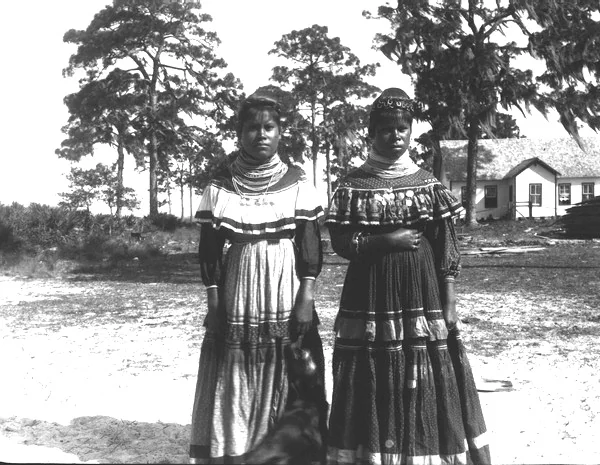
The Raulersons Settle at The Bend
Peter Raulerson was born in Bartow, Florida, on September 1, 1857. In October 1896, he and his wife, Louisiana, moved to a place called The Bend, on Taylor Creek three miles north of the lake. A state marker calls the Raulersons the area's first Euro-American settlers.
The first school at The Bend, a building with a thatched roof, went up around 1897. To fill it, the Raulersons brought five pupils from Platt's Bluff, close by. The teacher, Dr. George M. Hubbard, lived with the Raulersons along with the children. The Raulerson marker gives 1898 as the year Peter started the first school.
The family helped set up the first post office in April 1902, in a community called Tantie. The name honored a local schoolteacher, Tantie Huckabee. Their daughter Martha was the first postmaster. In 1909, Peter's son Lewis built a one-room schoolhouse for $500. St. Lucie County's school board named it School #14.
Sources: Florida Department of State: Peter and Louisiana Raulerson Gravesite historical marker; Florida Department of State: Tantie School House #14 historical marker
Next: Chapter 5, The Railroad Builds a Town, 1911 to 1916 →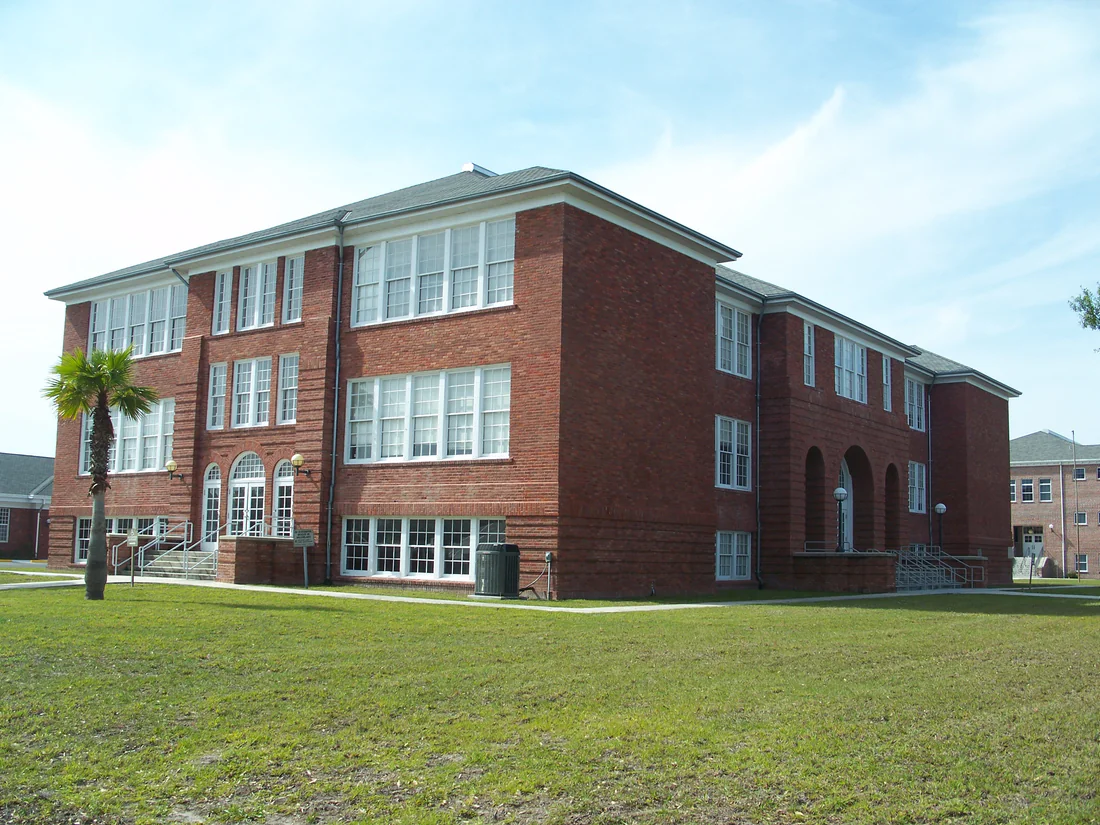
The Railroad Builds a Town, 1911 to 1916
In October 1911, the town took the name Okeechobee. Engineers for the Florida East Coast Railway laid out the new town. They had it planned by the time the tracks reached the area in 1914. The first passenger train came through in January 1915. When the City of Okeechobee was incorporated on June 4, 1915, the governor appointed Peter Raulerson as its first mayor.
Magi Cable, president of the Okeechobee Historical Society, told FOX 13 in 2023 that the town was once sold to newcomers as the coming Chicago of the South. The town grew with the new rail line and a fast-growing fishing industry. Fish houses stood all along Taylor Creek, Cable said.
Reverend William Troutman and seven others founded the First United Methodist Church in May 1915. The church finished its first building in 1916, on land given by Henry Flagler's Okeechobee Company. By the fall of 1915, the school had so many pupils that a tent held the extra students. Work on the Okeechobee Public School began in 1916.
Sources: Florida Department of State: Peter and Louisiana Raulerson Gravesite historical marker; Amtrak Great American Stations: Okeechobee, FL (OKE); FOX 13 Tampa Bay: Okeechobee celebrates and preserves the past in a state that changes every day (Laura Moody, November 7, 2023); Historical Marker Database: First United Methodist Church of Okeechobee, Florida (state marker F-921); Florida Department of State: Tantie School House #14 historical marker
Next: Chapter 6, Okeechobee County Is Created in 1917 →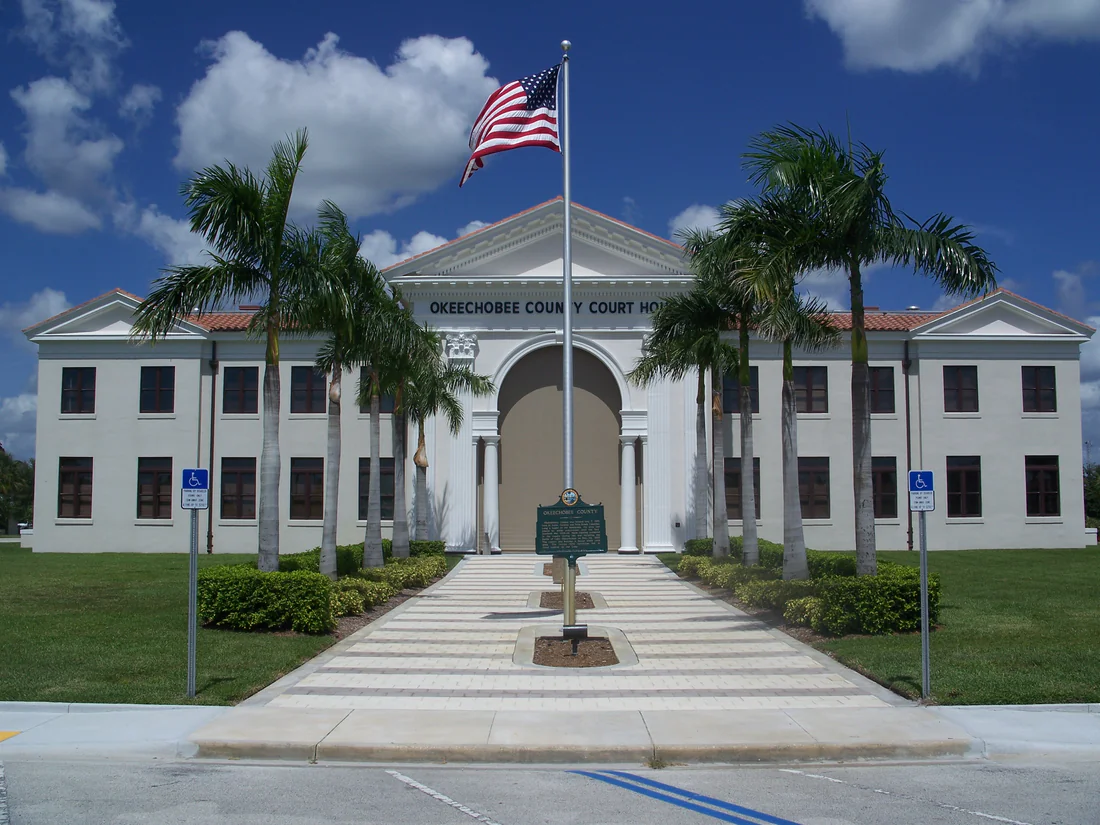
Okeechobee County Is Created in 1917
A state marker put up in 1961 says Okeechobee County was formed on August 7, 1917, from parts of Palm Beach, Osceola and St. Lucie counties. A University of South Florida page gives May 8, 1917, names Osceola and Brevard counties as the parents, and calls it Florida's 54th county. A 1936 state records survey gives August 17, 1917.
The county is named for Lake Okeechobee, whose name comes from the Hitchiti words oka, for water, and chobi, for big. The city of Okeechobee, first called Tantie, is the county seat. The 1936 survey said the county's courthouse went up in 1927.
In 1924, Okeechobee got a station on the Florida, Western and Northern Railroad, which was owned by the Seaboard Air Line Railway. Money raised at a lecture by William Jennings Bryan helped pay for a new brick building for the Methodist church. The brick church was finished free of debt in 1924. By 1936, two main line railroads served the county.
Sources: Florida Department of State: Okeechobee County historical marker; University of South Florida, Florida Center for Instructional Technology: Okeechobee County; Florida Memory: History of Okeechobee County, Florida (Ralph Hammond, Historical Records and State Archives Surveys, December 1936); Florida Public Archaeology Network: Explore Okeechobee County; Amtrak Great American Stations: Okeechobee, FL (OKE); Historical Marker Database: First United Methodist Church of Okeechobee, Florida (state marker F-921)
Next: Chapter 7, The 1928 Hurricane and the Dike →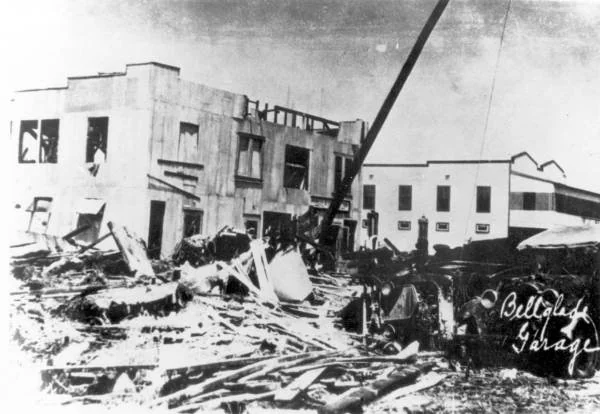
The 1928 Hurricane and the Dike
The Okeechobee Hurricane of 1928 struck land on September 16, 1928, and an estimated 2,500 people in South Florida were killed. From near the Jupiter Lighthouse, the storm moved west over Palm Beach County to the lake. Many people died when the dike on the lake gave way, and most of them were migrant farm workers. A storm surge 15 to 20 feet high flooded the populated land on the lake's southern side.
Several hundred Black victims were laid in a mass grave at the West Palm Beach pauper cemetery. Zora Neale Hurston drew on the disaster in Their Eyes Were Watching God, a novel she published in 1937. In Okeechobee, the storm destroyed the fishing industry, but cattle ranching kept doing well, FOX 13 reported in 2023.
The Herbert Hoover Dike around the lake was first built in the 1930s. Its embankment runs for 143 miles.
Sources: Florida Department of State: Hurricane of 1928 historical marker; FOX 13 Tampa Bay: Okeechobee celebrates and preserves the past in a state that changes every day (Laura Moody, November 7, 2023); WPTV: Herbert Hoover Dike ribbon-cutting ceremony (January 25, 2023)
Next: Chapter 8, Catfish, Cattle and a Bombing Range →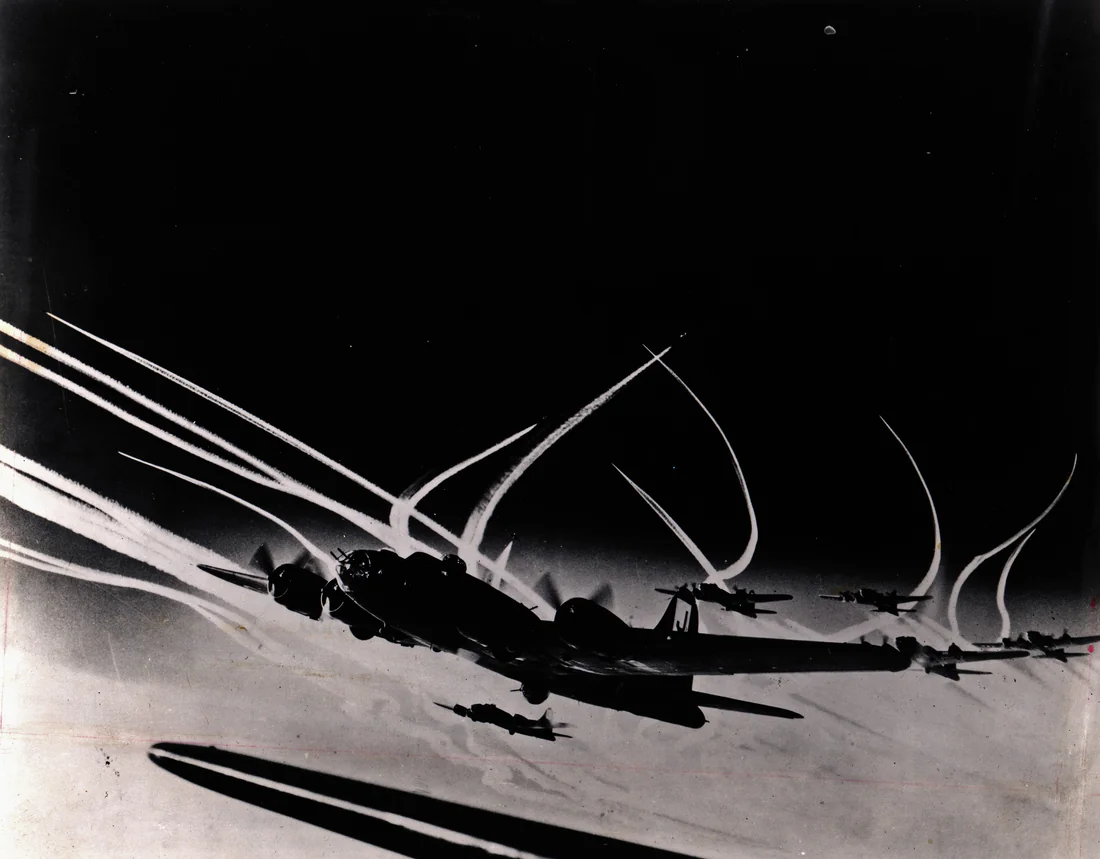
Catfish, Cattle and a Bombing Range
A county history written for a state records survey in December 1936 found two commercial fisheries at Okeechobee. One of them, the survey said, was among the biggest catfish plants in the country and handled close to $1,000,000 in fish each year. Cattle raising was still one of the county's main sources of income. The Okeechobee Livestock Market had been in town since the 1930s, its owner, Todd Clemons, told FOX 13 in 2023.
From the 1930s on, ranchers bred Brahman, Angus and Hereford stock into native cattle, says the ranching marker in Cattleman's Square. Around 1940, the military took over a large part of the Kissimmee Prairie to train B-17 bomber crews for World War II. The training ground was named Avon Park Army Air Field. The Latt Maxcy Corporation bought and fenced its prairie land in the late 1940s. Okeechobee's canneries kept busy through the 1940s, 1950s and 1960s.
Sources: Florida Memory: History of Okeechobee County, Florida (Ralph Hammond, Historical Records and State Archives Surveys, December 1936); FOX 13 Tampa Bay: Okeechobee celebrates and preserves the past in a state that changes every day (Laura Moody, November 7, 2023); Historical Marker Database: Florida Cattle Ranching, 500 Years (Cattleman's Square, Okeechobee); Florida State Parks: History of Kissimmee Prairie; Amtrak Great American Stations: Okeechobee, FL (OKE)
Next: Chapter 9, Flood Control and the Kissimmee River Canal →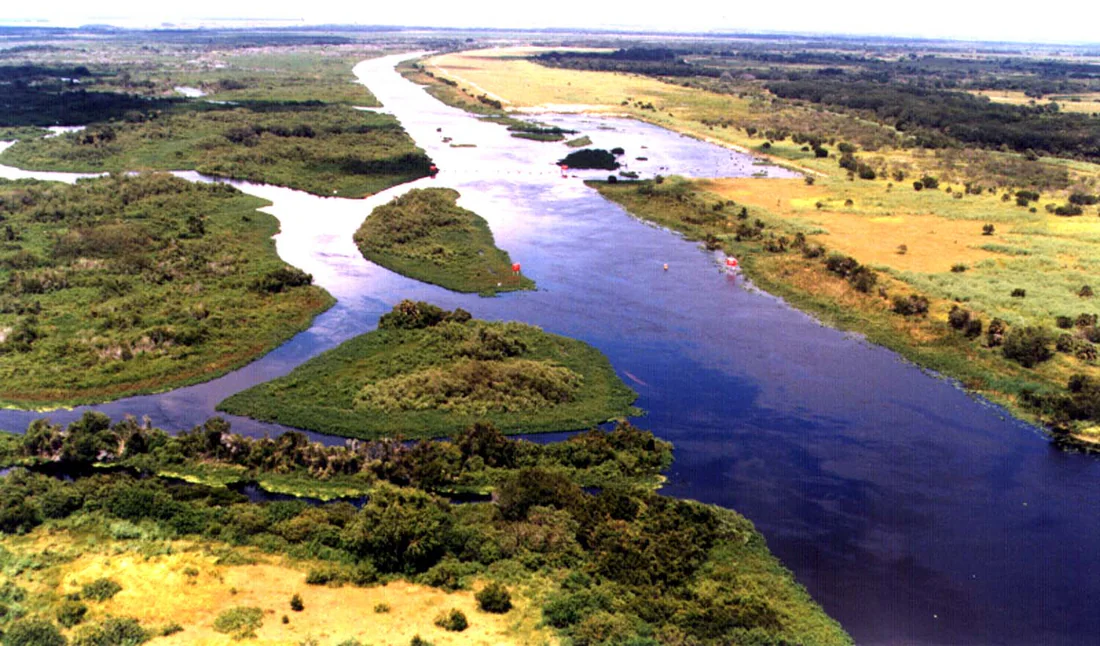
Flood Control and the Kissimmee River Canal
A state marker put up for the county in 1961 says that flood control on the lake came about because of the 1928 hurricane. Flooding that lasted a long time in 1947 led people to demand federal help to reduce flood damage.
The Kissimmee River once curved back and forth over 103 miles of central Florida. In the 1960s, the river was made into a channel. The new canal, called C-38, ran between Lake Kissimmee and Lake Okeechobee.
Sources: Florida Department of State: Okeechobee County historical marker; South Florida Water Management District: Kissimmee River
Next: Chapter 10, Saving a Schoolhouse, a River and a Prairie →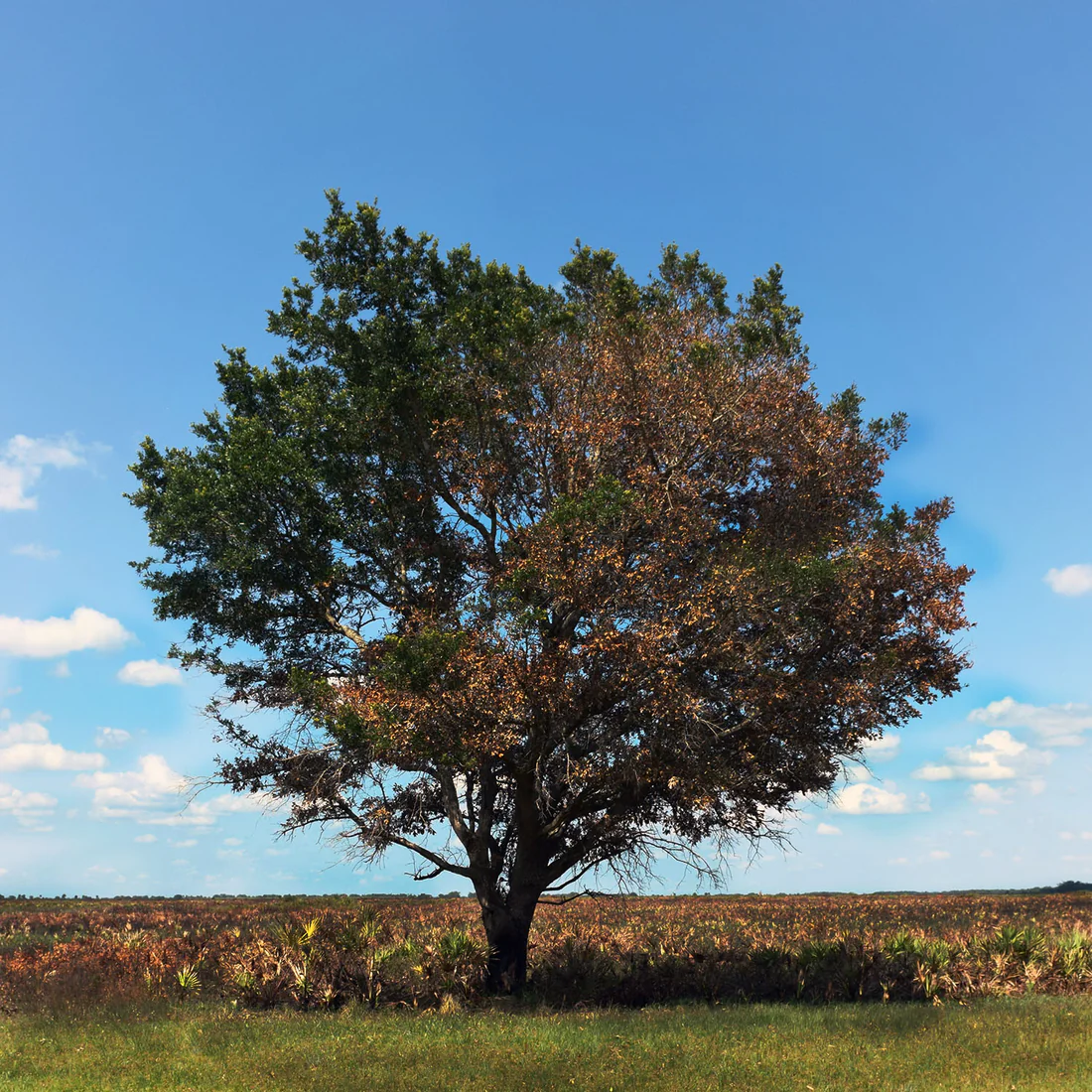
Saving a Schoolhouse, a River and a Prairie
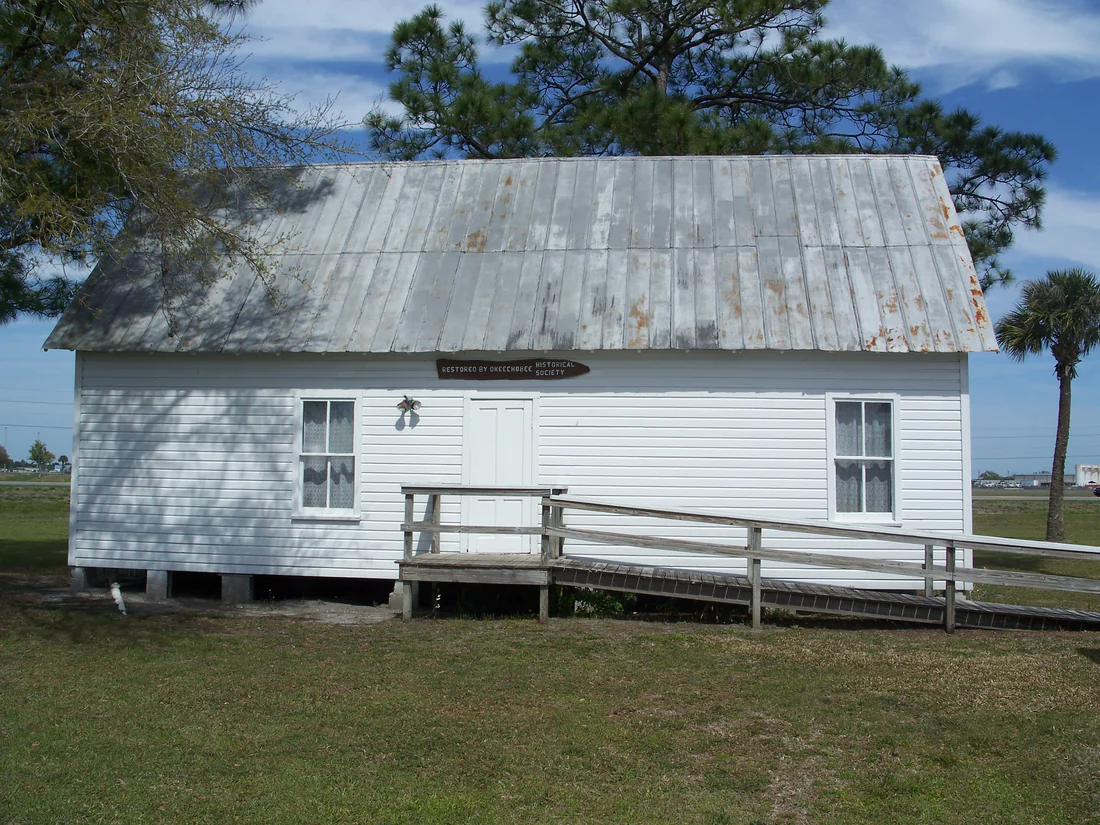
In 1976, the Okeechobee Historical Society bought School #14 and moved it to a new site. The society restored the old schoolhouse as a museum. The Florida Public Archaeology Network lists the Okeechobee Historical Society Museum & Schoolhouse among places to explore in the county.
Congress approved a plan to restore the Kissimmee River in the Water Resources Development Act of 1992. In 1997, the state bought 48,000 acres of the prairie to create Kissimmee Prairie Preserve State Park. The prairie has slowly grown back over several old military targets inside the preserve.
Sources: Florida Department of State: Tantie School House #14 historical marker; Florida Public Archaeology Network: Explore Okeechobee County; South Florida Water Management District: Kissimmee River; Florida State Parks: History of Kissimmee Prairie
Next: Chapter 11, Since 2000: A Battlefield Park, a Dark Sky Park and a Festival →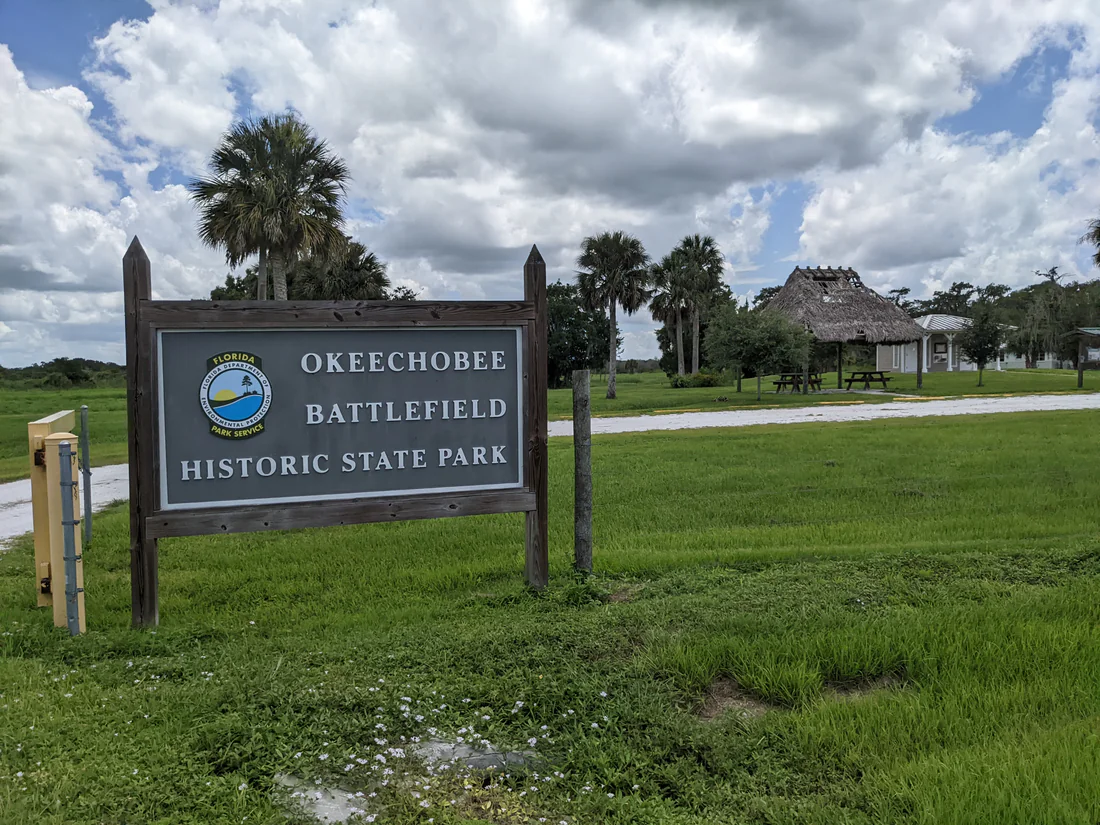
Since 2000: A Battlefield Park, a Dark Sky Park and a Festival
The National Trust for Historic Preservation listed the battle site among America's Most Endangered Historic Places in 2000. The state bought the battlefield on November 30, 2006, with Florida Forever money. A marker put up in 2017 by the Okeechobee Battlefield Friends says Okeechobee Battlefield Historic State Park opened in 2015. Each year, on the final weekend of February, the battle is acted out again at the park.
In 2016, the International Dark Sky Association named Kissimmee Prairie Preserve Florida's first Dark Sky Park, the state park service says. In July 2021, a celebration marked the end of construction on the Kissimmee River Restoration Project. On January 25, 2023, after 18 years of work, the project to repair the dike around the lake was officially completed.
The City of Okeechobee bought the old Okeechobee Primitive Baptist Church in 2022 to preserve it. In December 2022, people in Okeechobee were praising a new bronze sculpture of a cattle drive. The city showed it in Flagler Park as its new community arts project. On Friday, March 20, 2026, the Okeechobee Music & Arts Festival was under way. The four-day festival at Sunshine Grove had come back after a two-year break.
Sources: Florida State Parks: Battle of Okeechobee; Florida State Parks: Okeechobee Battlefield Historic State Park History; Historical Marker Database: The Okeechobee Battlefield Historic State Park (Okeechobee Battlefield Friends marker, 2017); Florida State Parks: Okeechobee Battlefield Manager's Message; Florida State Parks: Dark Sky Designation; South Florida Water Management District: Kissimmee River; WLRN (Associated Press): After 18 years, $1.5B dike repair done at Florida's Lake O (Curt Anderson, January 25, 2023); Historical Marker Database: Okeechobee Primitive Baptist Historical Site; ABC 17 News (WPBF report via CNN Newsource): Bronze cattle drive sculpture in Okeechobee County getting golden reviews (December 16, 2022); WPTV: 'A lot safer': Safety is top priority at Okeechobee Music & Arts Festival (Tyler Hatfield, March 20, 2026)
Next: the whole story, in dates →The whole story, in dates
The Belle Glade people live around Lake Okeechobee.
Juan Ponce de León arrives with Andalusian cattle and horses.
Disease, warfare and slavery have destroyed most of Florida's native tribes.
The people later called the Seminole Tribe help build early cattle ranching.
Cracker settlers come to Florida and gather wild Spanish cattle into herds.
President Andrew Jackson approves removing the eastern tribes west of the Mississippi.
The Battle of Okeechobee is fought near the lake's northeast shore.
Zachary Taylor is elected president.
Peter and Louisiana Raulerson move to The Bend on Taylor Creek.
The first school at The Bend, with a thatched roof, goes up.
The first post office opens in the community called Tantie.
Lewis Raulerson builds the one-room schoolhouse named School #14.
The town takes the name Okeechobee.
Railroad tracks reach the area.
The first passenger train comes through.
The First United Methodist Church is founded.
The City of Okeechobee is incorporated, with Peter Raulerson as first mayor.
Okeechobee County is formed, though sources give different days.
A station is built for the Florida, Western and Northern Railroad.
The county courthouse goes up, according to a 1936 survey.
The Okeechobee Hurricane of 1928 strikes land.
The Herbert Hoover Dike is first built around the lake.
The Okeechobee Livestock Market is in town, its owner says.
A state survey reports a big catfish plant at Okeechobee.
The military takes over prairie land to train B-17 crews.
Long flooding leads people to demand federal flood control.
The Kissimmee River is made into a channel.
The Okeechobee Historical Society moves School #14 and makes it a museum.
Congress approves restoring the Kissimmee River.
The state buys 48,000 acres for Kissimmee Prairie Preserve State Park.
The battle site is listed among America's Most Endangered Historic Places.
The state buys the battlefield.
Okeechobee Battlefield Historic State Park opens.
Kissimmee Prairie Preserve is named Florida's first Dark Sky Park.
A celebration marks the end of construction on the Kissimmee River restoration.
A bronze cattle drive sculpture goes on show in Flagler Park.
The 18-year project to repair the dike is completed.
The Okeechobee Music & Arts Festival returns after a two-year break.
Where you can still see it
 01
 02
Okeechobee Historical Society Museum
Goes with: Saving a Schoolhouse, a River and a Prairie
Open the place page →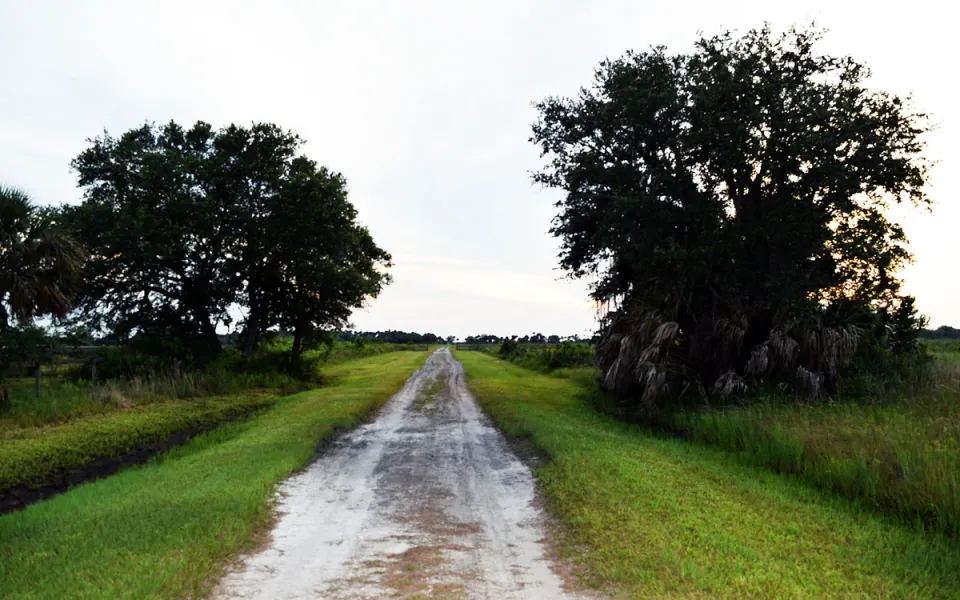 03
Kissimmee Prairie Preserve State Park
Goes with: Saving a Schoolhouse, a River and a Prairie
Open the place page →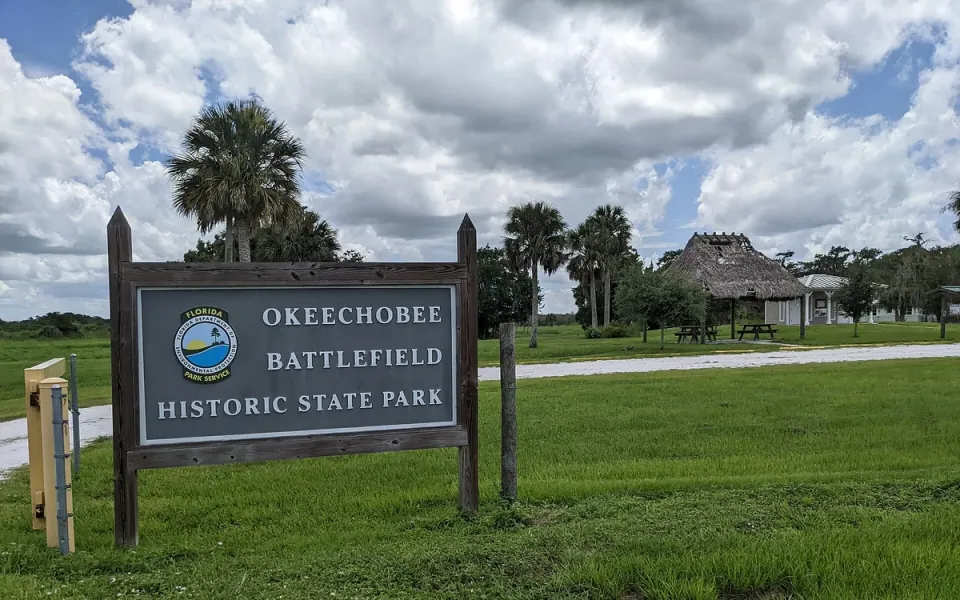 04
Okeechobee Battlefield Historic State Park
Goes with: Since 2000: A Battlefield Park, a Dark Sky Park and a Festival
Open the place page →Questions people ask
When was Okeechobee County created?
A state marker put up in 1961 says Okeechobee County was formed on August 7, 1917, from parts of Palm Beach, Osceola and St. Lucie counties.
Chapter 6 →What is Okeechobee County named for?
The county is named for Lake Okeechobee, whose name comes from the Hitchiti words oka, for water, and chobi, for big.
Chapter 6 →What is the county seat of Okeechobee County?
The city of Okeechobee, first called Tantie, is the county seat.
Chapter 6 →When was the Battle of Okeechobee fought?
The Battle of Okeechobee was fought on December 25, 1837, which was Christmas Day.
Chapter 3 →Who were the first settlers at Okeechobee?
A state marker calls Peter and Louisiana Raulerson, who moved to The Bend on Taylor Creek in October 1896, the area's first Euro-American settlers.
Chapter 4 →Where this comes from.
Last updated October 19, 2026.
- Florida Department of State: Okeechobee County historical marker ↗ Read October 19, 2026
- Florida Department of State: Peter and Louisiana Raulerson Gravesite historical marker ↗ Read October 19, 2026
- Florida Department of State: Tantie School House #14 historical marker ↗ Read October 19, 2026
- Florida Department of State: Hurricane of 1928 historical marker ↗ Read October 19, 2026
- Historical Society of Palm Beach County: Florida's Ancient People ↗ Read October 19, 2026
- Florida Museum of Natural History, Randell Research Center: The Belle Glade Monumental Landscape (Nathan Lawres, March 1, 2018) ↗ Read October 19, 2026
- Historical Marker Database: Florida Cattle Ranching, 500 Years (Cattleman's Square, Okeechobee) ↗ Read October 19, 2026
- Florida State Parks: History of Kissimmee Prairie ↗ Read October 19, 2026
- Historical Marker Database: The Battle of Okeechobee (Florida State Parks marker) ↗ Read October 19, 2026
- Florida State Parks: Battle of Okeechobee ↗ Read October 19, 2026
- Florida State Parks: Okeechobee Battlefield Historic State Park History ↗ Read October 19, 2026
- Amtrak Great American Stations: Okeechobee, FL (OKE) ↗ Read October 19, 2026
- FOX 13 Tampa Bay: Okeechobee celebrates and preserves the past in a state that changes every day (Laura Moody, November 7, 2023) ↗ Read October 19, 2026
- Historical Marker Database: First United Methodist Church of Okeechobee, Florida (state marker F-921) ↗ Read October 19, 2026
- University of South Florida, Florida Center for Instructional Technology: Okeechobee County ↗ Read October 19, 2026
- Florida Public Archaeology Network: Explore Okeechobee County ↗ Read October 19, 2026
- Florida Memory: History of Okeechobee County, Florida (Ralph Hammond, Historical Records and State Archives Surveys, December 1936) ↗ Read October 19, 2026
- WPTV: Herbert Hoover Dike ribbon-cutting ceremony (January 25, 2023) ↗ Read October 19, 2026
- South Florida Water Management District: Kissimmee River ↗ Read October 19, 2026
- Historical Marker Database: The Okeechobee Battlefield Historic State Park (Okeechobee Battlefield Friends marker, 2017) ↗ Read October 19, 2026
- Florida State Parks: Okeechobee Battlefield Manager's Message ↗ Read October 19, 2026
- Florida State Parks: Dark Sky Designation ↗ Read October 19, 2026
- WLRN (Associated Press): After 18 years, $1.5B dike repair done at Florida's Lake O (Curt Anderson, January 25, 2023) ↗ Read October 19, 2026
- Historical Marker Database: Okeechobee Primitive Baptist Historical Site ↗ Read October 19, 2026
- ABC 17 News (WPBF report via CNN Newsource): Bronze cattle drive sculpture in Okeechobee County getting golden reviews (December 16, 2022) ↗ Read October 19, 2026
- WPTV: 'A lot safer': Safety is top priority at Okeechobee Music & Arts Festival (Tyler Hatfield, March 20, 2026) ↗ Read October 19, 2026