DeSoto County was formed from part of Manatee County in 1887 and takes its name from the Spanish explorer Hernando de Soto. Arcadia has been the county seat since 1888. Citrus, cattle and farming have shaped its economy, and since 1929 it has held the Arcadia All-Florida Championship Rodeo, billed as the oldest rodeo found east of the Mississippi River. The state's historical marker names the Caloosa as the area's first people, and historian Canter Brown Jr. says the Peace River has what passes for recorded history going back 5,000 years.
This page tells the story in order, from the first people on the Peace River to a restored museum, Pioneer Day and Arcadia's 2026 Main Street honor, then lists places in the county where you can still see it. The sources for each part are named at the end of that part, and all of them are listed at the bottom of the page.
The First People on the Peace River
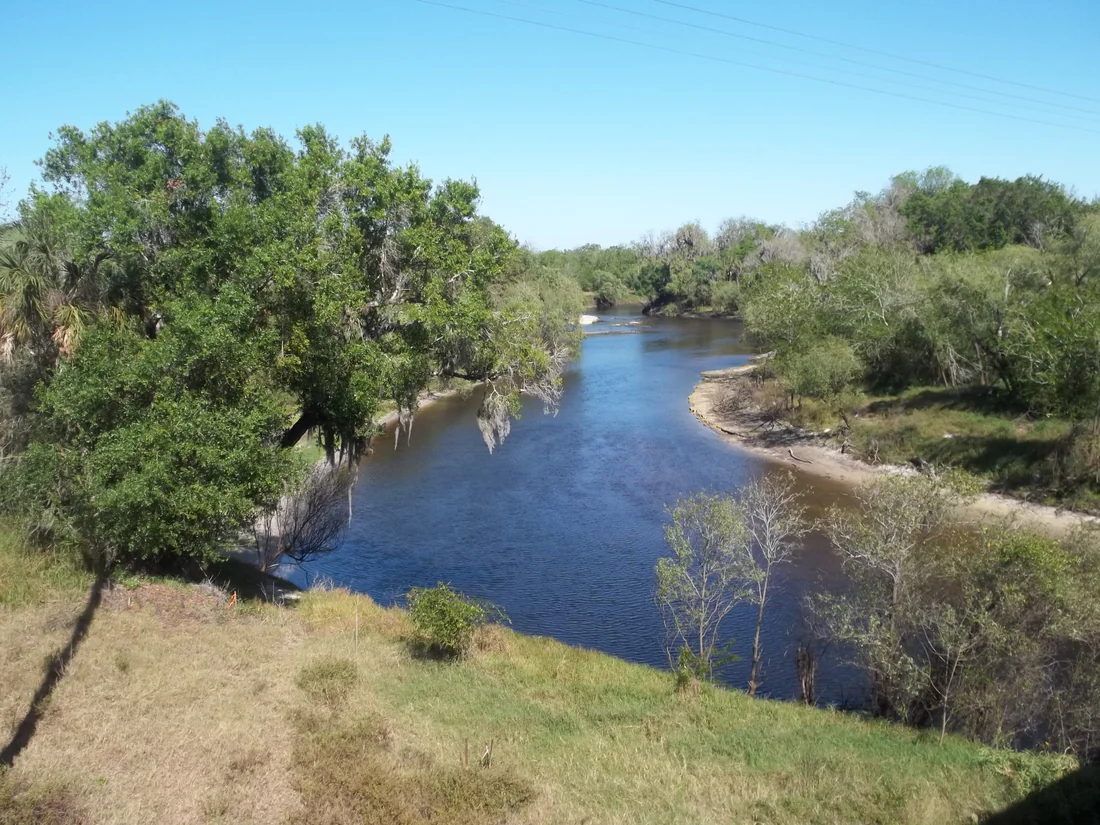
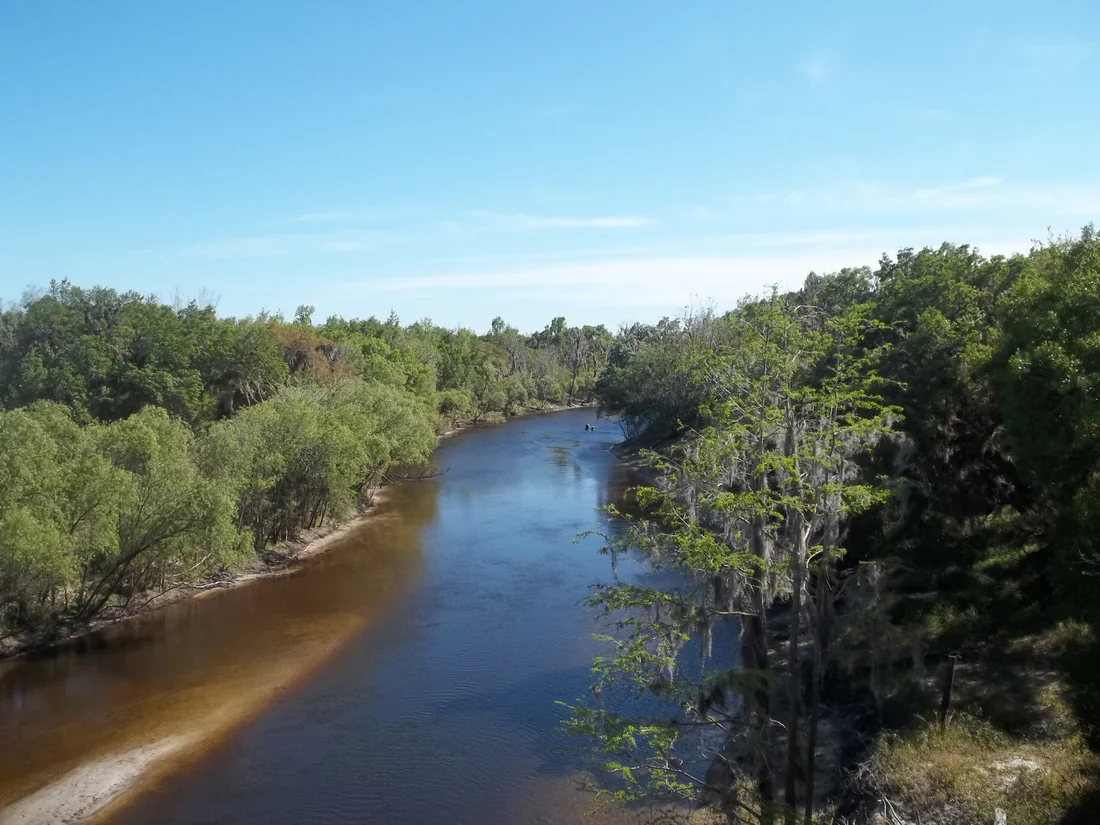
The Peace River runs 106 miles between Polk County's Green Swamp and Charlotte Harbor on the Gulf. The county's state historical marker names the Caloosa Indians as the area's first people. Historian Canter Brown Jr. says the river has what passes for recorded history going back 5,000 years, to about 3000 BC. He says it was a center for mining chert, the stone Florida had in place of flint. As a boy, he says, he could easily find arrowheads on walks along the river.
Spanish explorers of the 1500s first called the river the Rio de la Paz, or River of Peace. Creek people, and later the Seminoles, called it Talak-chopco-hatchee, which means River of Long Peas. Maps drawn in 1856 by a deputy surveyor named Moseley call it Peas Creek. A Works Progress Administration history of the county says the name Peace River came from a treaty with the Seminoles.
Sources: WUSF (republished by WUWF): How Florida's history flows through the Peace River; Florida Department of State: De Soto County historical marker; Florida Memory: Historical Sketch of De Soto County (Works Progress Administration)
Next: Chapter 2, Spanish Explorers and the Seminole Wars →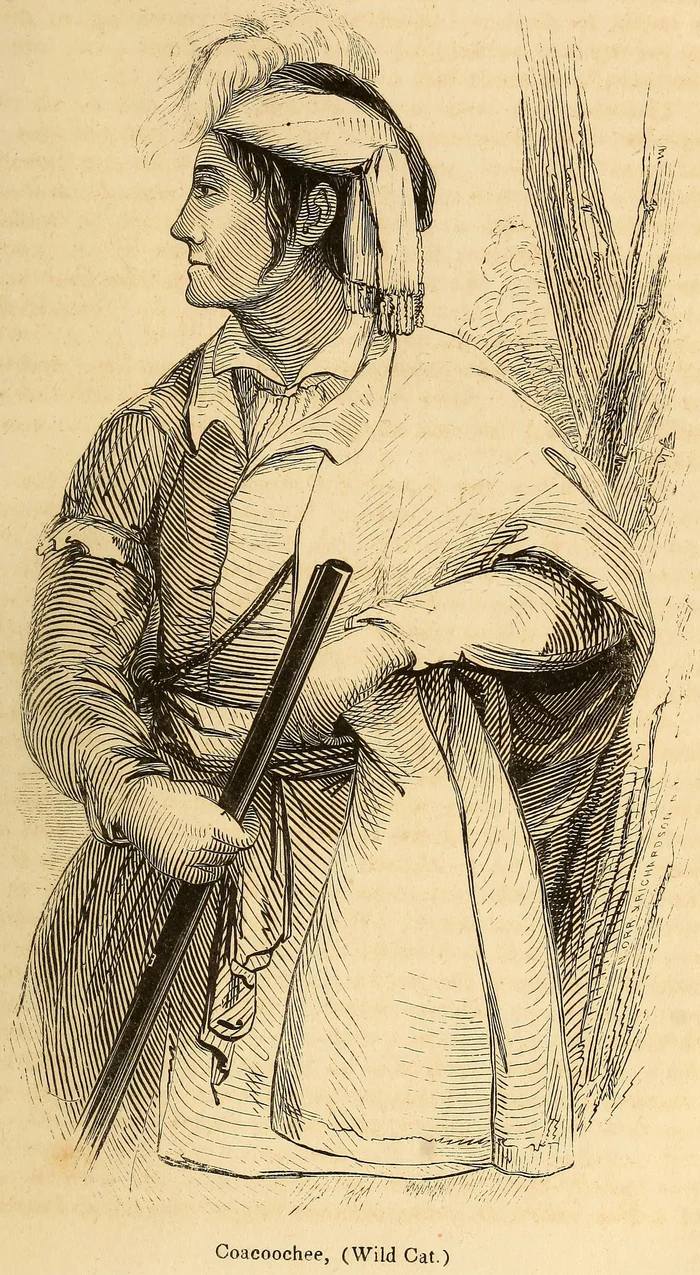
Spanish Explorers and the Seminole Wars
The county is named for Hernando de Soto, who landed on Florida's west coast in May 1539. Historian Canter Brown Jr. says de Soto may have visited a town called Musco in 1539 at what is now Fort Meade. England gave Florida back to Spain under the 1783 Treaty of Paris. In 1821 Florida passed to the United States as a territory.
When white settlers moved into Florida, they demanded that the Seminoles be removed to a reservation in the West. The Seminoles would not cooperate, and the Second Seminole War began in 1835. The county's historical society calls it the longest, bloodiest and costliest of the Indian Wars fought after the Indian Removal Act of 1830.
Camp Ogden seems to have been set up in July 1841 as a forward base for the Big Cypress campaign. It was named for Captain Edmund Ogden, who served in the 8th U.S. Infantry. Before the camp closed that fall, the Indian leader Coacoochee paid it a visit. At the war's end, the Peace River became the northern edge of the land set aside for the Seminoles. The Third Seminole War followed from 1855 to 1858.
Sources: DeSoto County Historical Society: Newsletter, May 2025; Florida Department of State: De Soto County historical marker; WUSF (republished by WUWF): How Florida's history flows through the Peace River; DeSoto County Historical Society: Newsletter, December 2025; DeSoto County Historical Society: DeSoto County History; Florida Department of State: Fort Ogden historical marker
Next: Chapter 3, Civil War Cattle, Pine Level and Fort Ogden →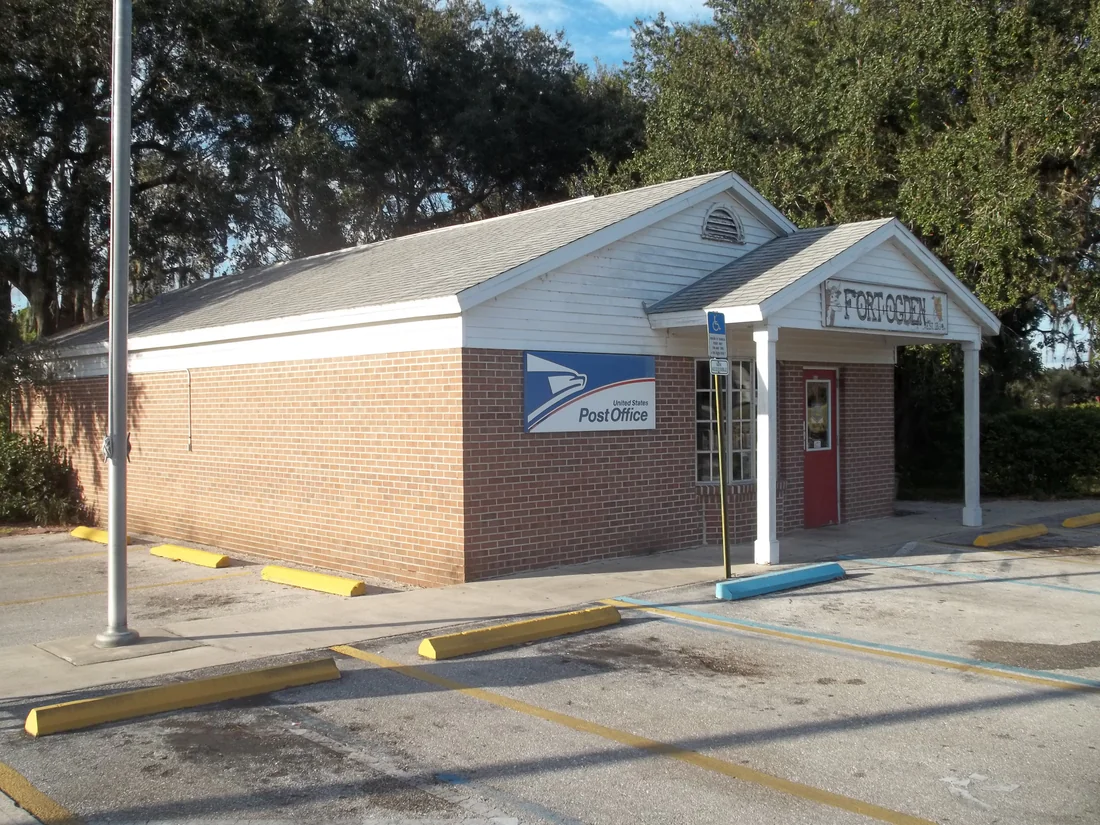
Civil War Cattle, Pine Level and Fort Ogden
Cattle from the Peace River Valley went to the Confederate Army during the Civil War. Many cattle were also herded to Charlotte Harbor and loaded onto ships for Cuba.
Pine Level got its start on April 29, 1866. A courthouse went up there the next year, in 1867. Pine Level became the seat of government for Manatee County.
Fort Ogden grew up in the late 1800s in the citrus and cattle country nearby and was named after the old army camp. Its post office opened in 1876, and the state marker calls it DeSoto County's oldest post office still in continuous service.
Sources: DeSoto County Historical Society: DeSoto County History; Florida Memory: Historical Sketch of De Soto County (Works Progress Administration); Florida Department of State: Fort Ogden historical marker
Next: Chapter 4, From Tater Hill Bluff to Arcadia →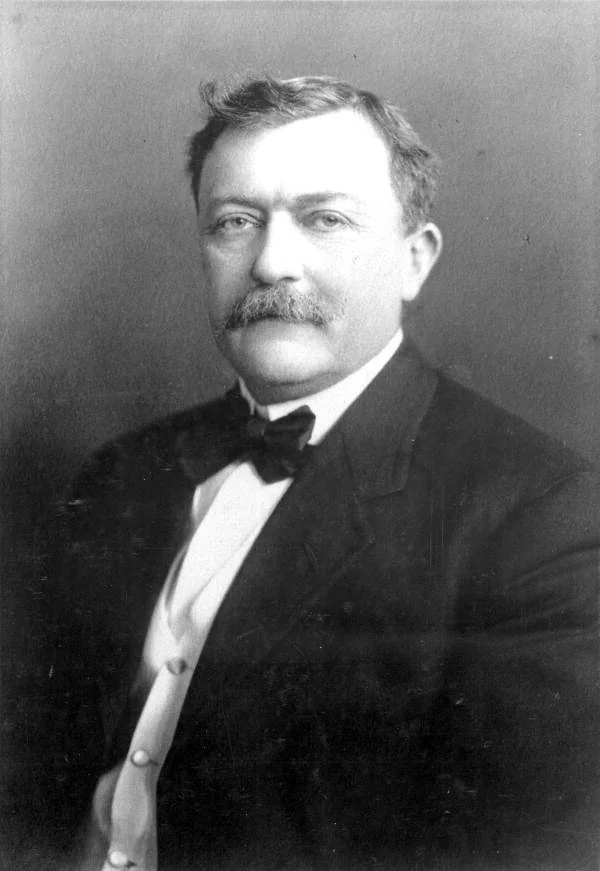
From Tater Hill Bluff to Arcadia
In 1856, Arcadia started as a small settlement on a bluff above the Peace River. The Williams and Waldron families settled on the river's east bank. The spot was called Waldron's Landing, after James Waldron's cabin by the river, and also Raulerson's Landing. Some called it Tater Hill Bluff, since potatoes, or taters, made up most of the crops.
In 1883, Baptist preacher James Madison "Boss" Hendry brought his sawmill to Waldron's Landing. By local legend, Hendry chose the name Arcadia to honor Arcadia Albritton Coker, who had baked him a birthday cake. The Arcadia post office opened on November 19, 1883, with David S. Williams as the first postmaster.
The first Florida Southern Railway train pulled into Arcadia on March 4, 1886. Albert W. Gilchrist, the railway's surveyor, surveyed the town over late June and early July of 1886. Gilchrist later served as Florida's governor from 1909 to 1913. By December 6, 1886, Arcadia had enough people to become a town, and 31 qualified voters attended the meeting held that day.
Sources: DeSoto County Historical Society: DeSoto County History; DeSoto County Historical Society: The Founding of Arcadia, Florida; Florida Department of State: Secretary Byrd Designates Arcadia Main Street as Florida Main Street Program of the Month; South Florida State College Library: Walking Tour of Downtown Arcadia, Florida; DeSoto County Historical Society: Newsletter, December 2025; National Park Service: Arcadia Historic District, National Register of Historic Places nomination form
Next: Chapter 5, A New County in 1887 →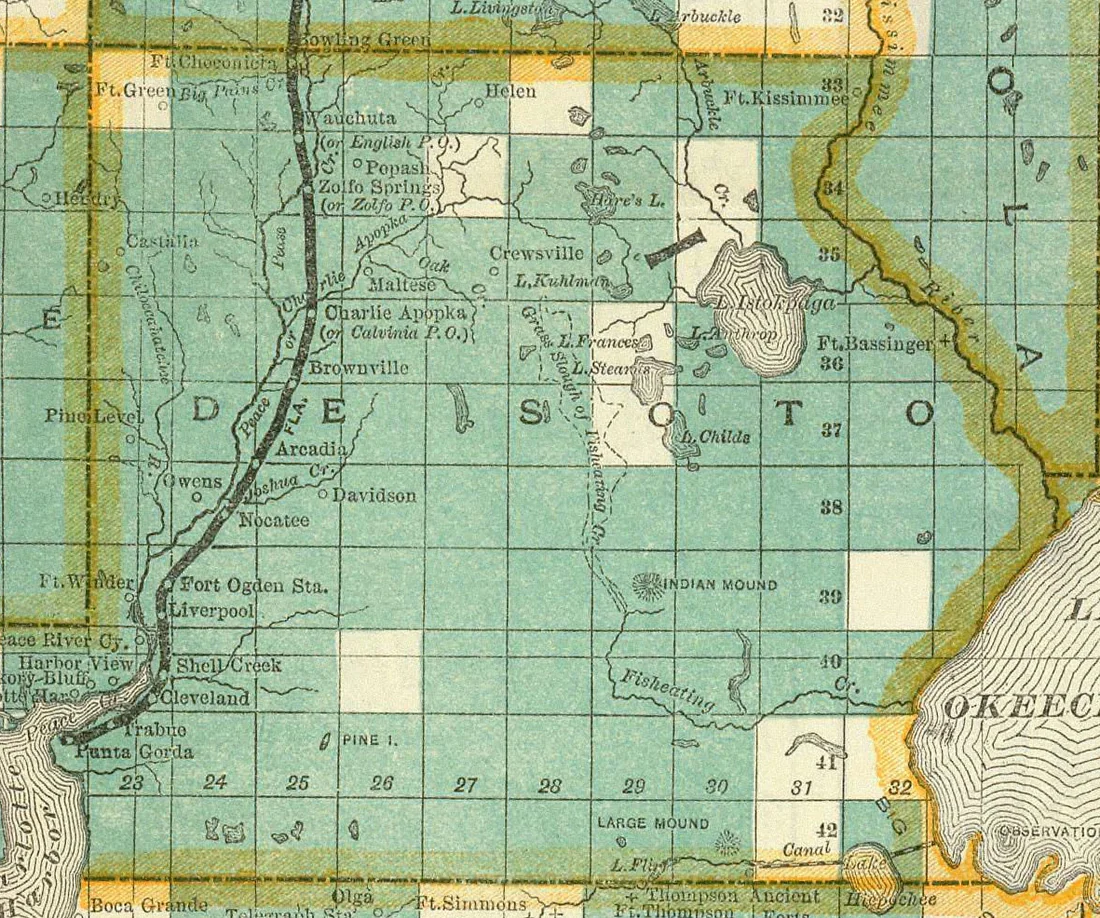
A New County in 1887
On March 15, 1887, a convention at Pine Level voted to split Manatee County in two. Sources disagree on when the split became law. A Works Progress Administration history says the legislature confirmed it in April 1887, a National Register report says the bill passed on May 12, 1887, and the historical society gives May 19, 1887. The new county covered 3,750 square miles, stretching between Charlotte Harbor and Lake Okeechobee. It was named for the Spanish explorer Hernando de Soto, and Senator John W. Whidden, who had served in both the Civil War and the Seminole Indian War, chose the name.
Pine Level was named the first county seat. Arcadia, Brownville, Fort Ogden, Nocatee, Pine Level and Punta Gorda all sought the seat, and Nocatee was the favorite. Yellow fever quarantines put off the voting. It took three votes before Arcadia won on November 6, 1888.
C. C. Pearce made the move to Arcadia by ox cart, after the county commissioners accepted his bid of $22. The commissioners met in Arcadia for the first time on December 10, 1888. Owen H. Dishong was the county's first sheriff, serving from 1887 to 1893 and again from 1897 to 1901.
Sources: Florida Memory: Historical Sketch of De Soto County (Works Progress Administration); National Park Service: Arcadia Historic District, National Register of Historic Places nomination form; DeSoto County Historical Society: Newsletter, May 2025; DeSoto County Historical Society: Newsletter, December 2025; DeSoto County Historical Society: DeSoto County History; Florida Department of State: De Soto County historical marker; Florida Department of State: Owens Community School historical marker
Next: Chapter 6, Phosphate, Lumber and Range Wars →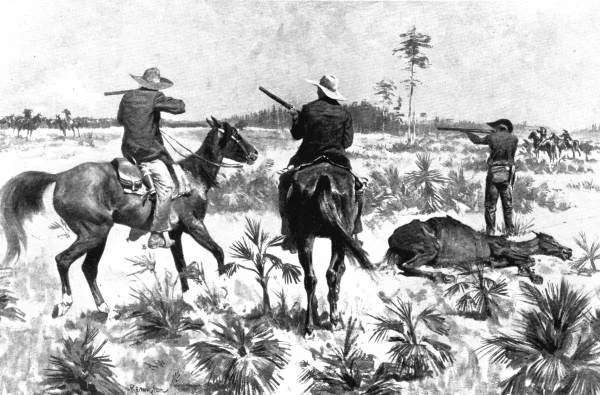
Phosphate, Lumber and Range Wars
In 1881, Captain LeBaron of the Army Corps of Engineers found pebble phosphate while surveying the Peace River. The historical society says his associate T. S. Morehead started the first company to take phosphate out of the river. By 1908 the river mining had stopped, and companies turned to strip-mining phosphate in Polk County. Arcadia became an important place for shipping phosphate onward.
Nocatee began in the 1880s as a lumber town. W. G. Welles started King Lumber and Manufacturing Company there in 1896. The Nocatee Crate Company later became the biggest employer in DeSoto County, the state marker says. Its 4-One crates, made of wire, wood corners and veneer strips, folded flat and cut the cost of shipping fruits and vegetables.
Range wars broke out across DeSoto County from 1890 to 1896. The historical society says Arcadia was once thought of as being as wild as any town in the American West. Frederic Remington came to Arcadia in 1895 and wrote and illustrated an article, "The Cracker Cowboys of Florida," for Harper's Magazine.
Sources: National Park Service: Arcadia Historic District, National Register of Historic Places nomination form; DeSoto County Historical Society: DeSoto County History; Florida Department of State: Secretary Byrd Designates Arcadia Main Street as Florida Main Street Program of the Month; Florida Department of State: Nocatee Historic District and Nocatee Baptist Church historical marker
Next: Chapter 7, The Thanksgiving Fire of 1905 →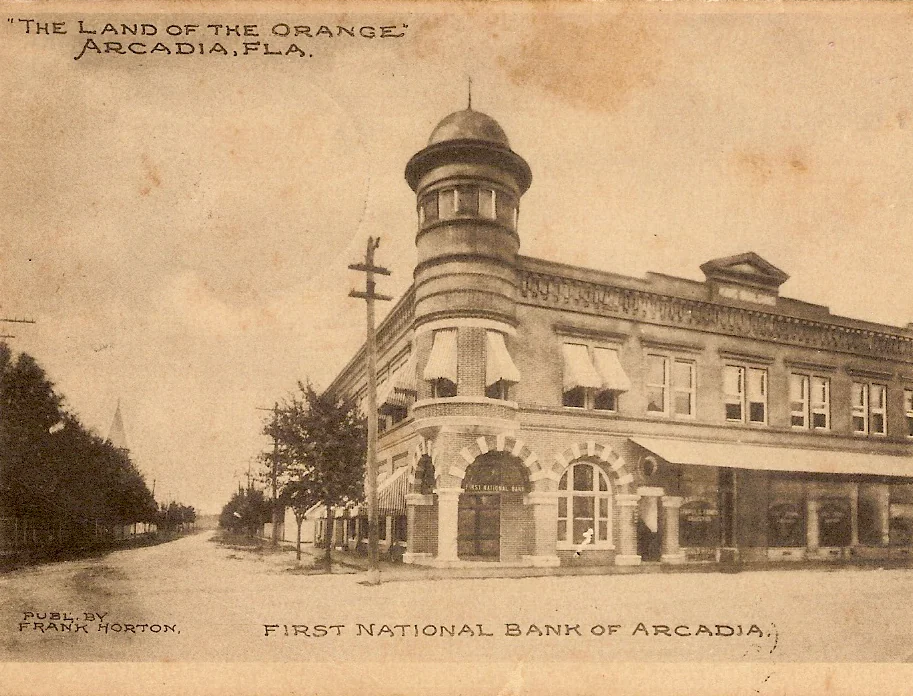
The Thanksgiving Fire of 1905
In 1902 the Florida Baptist State Convention founded the Florida Baptist Orphanage in Arcadia, on 80 acres donated by DeSoto County resident John L. Jones. Its first child, Juanita Martinez, came to live there on February 1, 1904. The home moved to Lakeland in 1948.
On Thanksgiving night, November 30, 1905, fire broke out in downtown Arcadia. Within three hours, 43 wooden buildings were gone, a loss valued at $250,000. Three brick buildings survived, the D. T. Carlton Building, the First National Bank and Seward's General Merchandise Store. Merchants agreed to allow only brick or concrete buildings downtown from then on, and rebuilding began at once.
In 1906, J. J. Heard paid for the building of the Heard Opera House. The cornerstone of a new courthouse was laid on May 17, 1912, and the county accepted the finished building on May 5, 1913. The Owens Community School went up between 1916 and 1918 in Owens, a community that prospered from pebble phosphate mining. The state marker says the wooden schoolhouse is the only one of Owens' original buildings still standing.
Sources: Florida Department of State: Florida Baptist Orphanage historical marker; DeSoto County Historical Society: DeSoto County History; National Park Service: Arcadia Historic District, National Register of Historic Places nomination form; Florida Department of State: Arcadia City Hall historical marker; South Florida State College Library: Walking Tour of Downtown Arcadia, Florida; Florida Memory: Historical Sketch of De Soto County (Works Progress Administration); Florida Department of State: Owens Community School historical marker
Next: Chapter 8, The Aviation City: Carlstrom and Dorr Fields →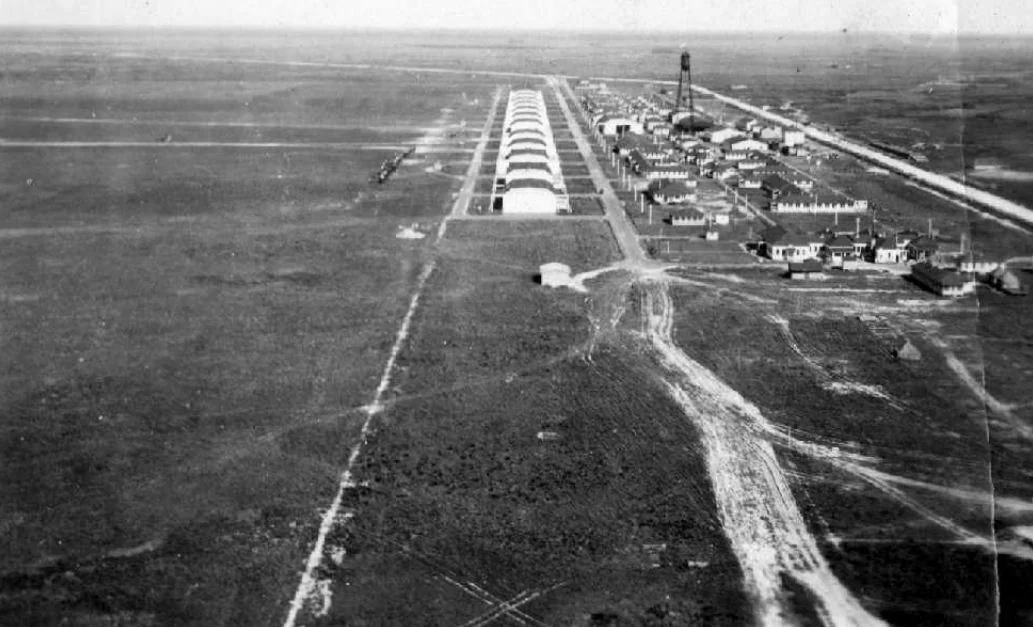
The Aviation City: Carlstrom and Dorr Fields
During World War I, the U.S. Army opened two pilot training camps outside Arcadia, Carlstrom Field and Dorr Field. The state dates both fields to 1917, while a historical society newsletter says they were built in 1918. Each field honored an aviator who had died in 1917. Arcadia promoted itself as the Aviation City, and the two fields were among the main centers for air training in the Southeast, a National Register report says.
Carlstrom Field spread over 700 acres, with 14 hangars and 90 buildings and other structures. World War I ended before any pilots from Carlstrom saw service. In October 1919, Carlstrom Field was the site of a successful test of an unmanned flying torpedo, an early forerunner of the smart bomb. Carlstrom kept training pilots until 1922.
Sources: DeSoto County Historical Society: Newsletter, December 2025; Florida Department of State: Secretary Byrd Designates Arcadia Main Street as Florida Main Street Program of the Month; DeSoto County Historical Society: DeSoto County History; National Park Service: Arcadia Historic District, National Register of Historic Places nomination form; University of Florida George A. Smathers Libraries: Carlstrom Field
Next: Chapter 9, A Smaller County, a Land Boom and the First Rodeo →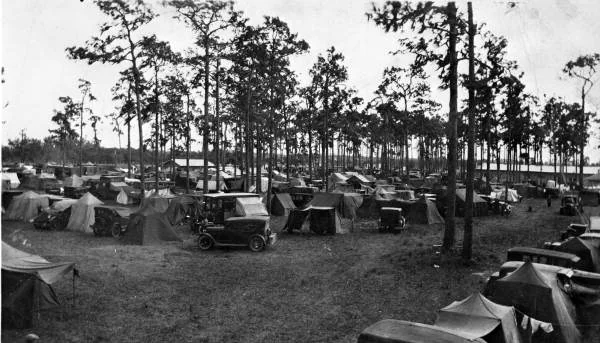
A Smaller County, a Land Boom and the First Rodeo
In April 1921, an act of the legislature split the old DeSoto County into five counties, creating Charlotte, Glades, Hardee and Highlands. The Works Progress Administration history says the split lowered the county's standing in area, population and finances.
Arcadia hosted the conventions of the Tin Can Tourists of the World from 1924 until 1931. The city had bought land, a pineapple patch, from Fred and Ida Gore in 1917 for $3,000. Its new city hall there, in the Mediterranean Revival style, was furnished in June 1926. The huge All-Florida Chautauqua amphitheater, built in 1928, lasted one season, from January to March 1929. A hurricane crossed the Florida peninsula in 1928, and in 1929 the Mediterranean fruit fly badly hurt the state's citrus industry.
The Arcadia All-Florida Championship Rodeo grew out of a July 4th celebration that American Legion K-Post 11 of Arcadia organized in 1929. The post then held the first Arcadia Rodeo on November 11 and 12, 1929. The state says Arcadia was one of the first places in Florida to hold a yearly rodeo. The rodeo goes by the nickname Granddaddy of Em All and is billed as the oldest rodeo found east of the Mississippi River. A state livestock market opened in Arcadia in 1939 and ran until 2005.
Sources: Florida Memory: Historical Sketch of De Soto County (Works Progress Administration); DeSoto County Historical Society: Newsletter, May 2025; DeSoto County Historical Society: DeSoto County History; Florida Department of State: Arcadia City Hall historical marker; National Park Service: Arcadia Historic District, National Register of Historic Places nomination form; DeSoto County Historical Society: The Arcadia Rodeo, A July 4th Tradition; Florida Department of State: Secretary Byrd Designates Arcadia Main Street as Florida Main Street Program of the Month
Next: Chapter 10, A Fight for the Vote, RAF Cadets and a Historic Downtown →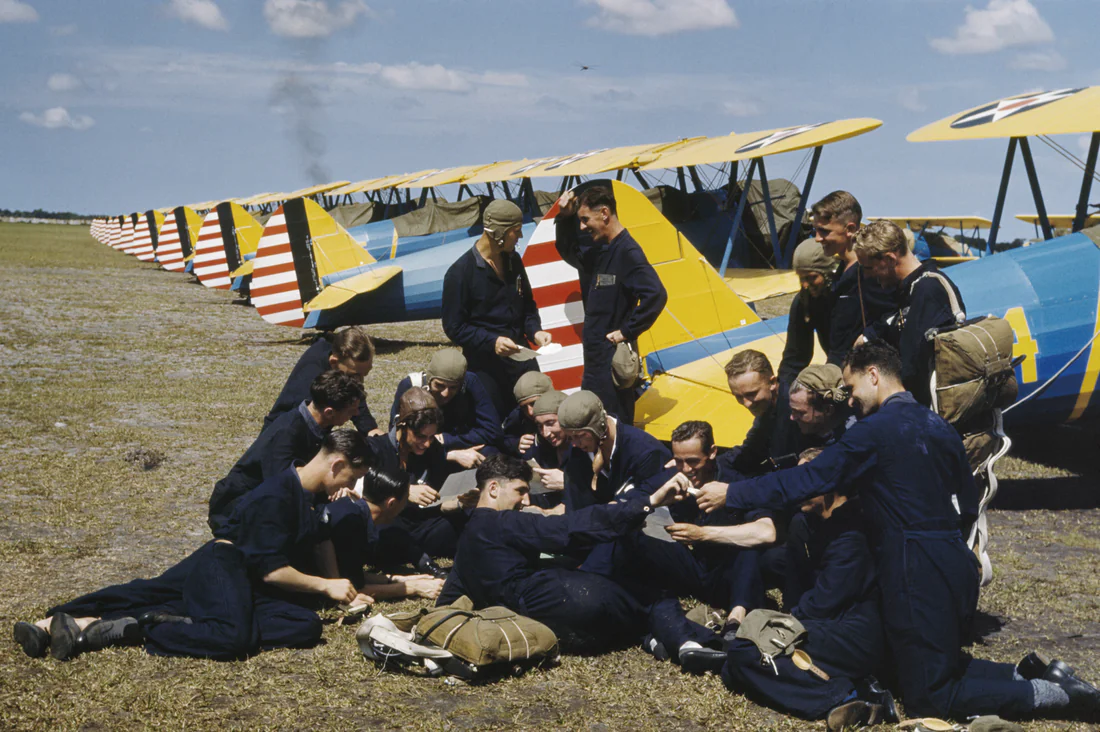
A Fight for the Vote, RAF Cadets and a Historic Downtown
In the 1930s, William Burton came to Arcadia, where he ran a barbershop. He traveled to Tallahassee, organized meetings and talked with officeholders, working to win Black residents the right to vote. He was threatened, but he kept up the fight until Black residents were allowed to vote.
In 1941, the Embry-Riddle Company reopened Carlstrom and Dorr fields as schools for pilots of Britain's Royal Air Force, before the United States entered World War II. On June 8, 1941, the first 99 of what would be 1,800 RAF cadets came to Arcadia by train. Twenty-three of the cadets who died lie in their own plot at Oak Ridge Cemetery in Arcadia. Memorial Day services for the cadets began in 1956. In 1968 the Arcadia Rotary Club put up a British Plot marker.
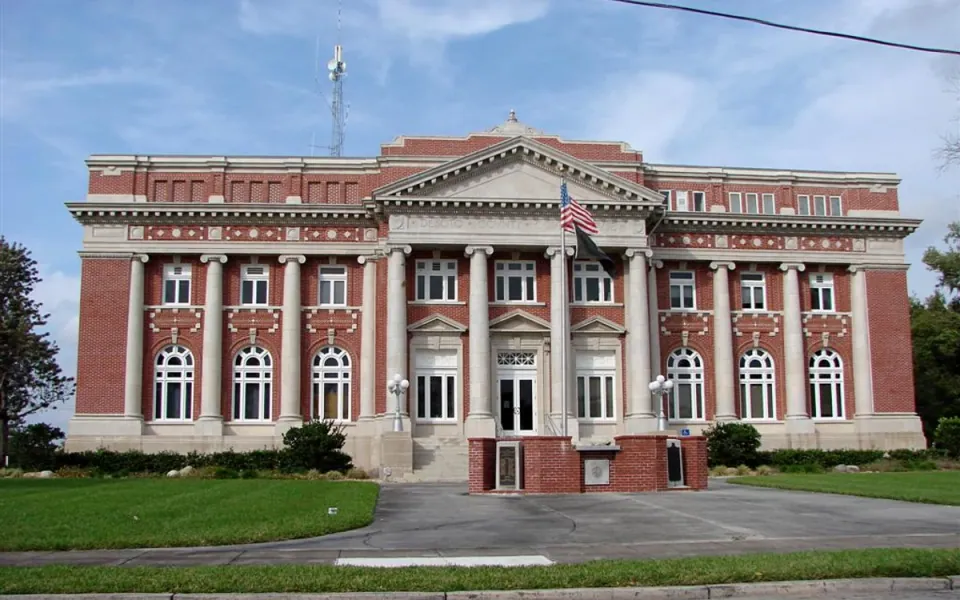
After the war, Carlstrom Field was turned into a state hospital for people with mental illness, G. Pierce Wood Memorial Hospital. In 1984, the Arcadia Historic District, with more than 370 old homes and businesses, was listed on the National Register of Historic Places. The state says Arcadia joined its Florida Main Street program in 1985. The city's centennial also led to the founding of the DeSoto County Historical Society.
Sources: DeSoto County Historical Society: Newsletter, May 2025; Florida Department of State: Secretary Byrd Designates Arcadia Main Street as Florida Main Street Program of the Month; DeSoto County Historical Society: DeSoto County History; WUSF: Memorial Day takes on a British accent in Arcadia; Museum of Florida History: Oak Ridge Cemetery; South Florida State College Library: Walking Tour of Downtown Arcadia, Florida
Next: Chapter 11, Since 1990: A Restored Museum, Pioneer Day and a Main Street Honor →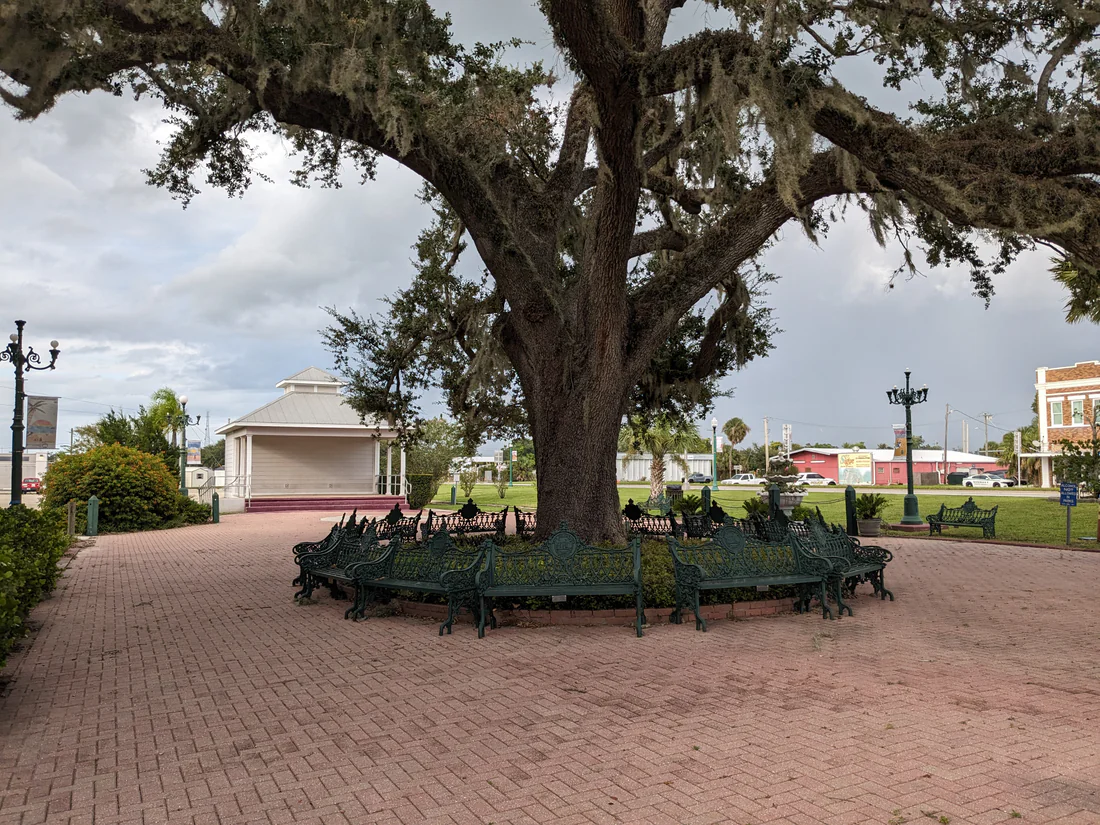
Since 1990: A Restored Museum, Pioneer Day and a Main Street Honor
On April 20, 2001, the DeSoto County Historical Society was given the John Morgan Ingraham House, a late 1800s home that Tom and Marguerite Hankins had bought from Ingraham's heirs. Hurricane Charley hit the county directly in 2004 and wrecked the house. Four restoration grants totaling $158,000 followed between 2007 and 2010.
The first Pioneer Day was held on April 12, 2005, in Tree of Knowledge Park, after Harold McLeod suggested the festival. The historical society says Barack Obama, in 2009, became the first sitting president to come to DeSoto County, and that he came to see the state's largest solar power plant. The July 4th rodeo remained an Arcadia tradition until 2012. A crew replaced the worn siding and trim of the John Morgan Ingraham House Museum and repainted it, and the museum held a grand reopening and ribbon cutting on May 1, 2026. Two days later, Fort Ogden kept up its May Day Picnic, a tradition W. F. Martin and his wife began in 1896.
On June 19, 2026, the society and a group of friends called the Sisterhood held a Juneteenth event at the DeSoto County Library, the third year they had done so. On July 4, 2026, a one-day exhibit in Arcadia told the history of the July 4th rodeo, and about 50 people signed its guest book. Minnie Jean Simpson Jones lent the exhibit a photograph from about 1931 showing Leron Simpson, an African-American cowboy. In August 2026, the state named Arcadia Main Street its Florida Main Street Program of the Month.
Sources: DeSoto County Historical Society: Museum and Research Library; DeSoto County Historical Society: DeSoto County History; DeSoto County Historical Society: Pioneer Day; DeSoto County Historical Society: The Arcadia Rodeo, A July 4th Tradition; DeSoto County Historical Society: Newsletter, May 2026; DeSoto County Historical Society: Newsletter, July 2026; DeSoto County Historical Society: Newsletter, June 2026; Florida Department of State: Secretary Byrd Designates Arcadia Main Street as Florida Main Street Program of the Month
Next: the whole story, in dates →The whole story, in dates
The Peace River's recorded history begins, by one historian's count.
Spanish explorers call the river the Rio de la Paz.
Hernando de Soto lands on Florida's west coast.
England gives Florida back to Spain.
Florida passes to the United States as a territory.
The Second Seminole War begins.
Camp Ogden appears to have been set up.
The Third Seminole War begins.
The Williams and Waldron families settle where Arcadia now stands.
Peace River Valley cattle go to the Confederate Army.
Pine Level gets its start.
The Fort Ogden post office opens.
Pebble phosphate is found in the Peace River.
The Arcadia post office opens.
The first Florida Southern Railway train reaches Arcadia.
Arcadia has enough people to become a town.
A convention at Pine Level votes to split Manatee County.
DeSoto County is formed, on May 12 or May 19 by different sources.
Arcadia wins the county seat on the third vote.
Range wars break out across DeSoto County.
Frederic Remington visits Arcadia.
The Florida Baptist Orphanage is founded.
Fire destroys downtown Arcadia.
The cornerstone of a new courthouse is laid.
Carlstrom Field and Dorr Field are set up, by the state's date.
An unmanned flying torpedo is tested at Carlstrom Field.
The legislature splits DeSoto into five counties.
Arcadia hosts the Tin Can Tourists of the World conventions.
The first Arcadia Rodeo is held.
William Burton comes to Arcadia and runs a barbershop.
The first 99 RAF cadets arrive in Arcadia by train.
Memorial Day services for the RAF cadets begin.
The Arcadia Historic District is listed on the National Register of Historic Places.
The historical society is given the John Morgan Ingraham House.
The first Pioneer Day is held.
Barack Obama becomes the first sitting president to visit DeSoto County.
The Ingraham House Museum holds its grand reopening.
Arcadia Main Street is named Florida Main Street Program of the Month.
Where you can still see it
 01
 02
Arcadia Historic District
Goes with: A Fight for the Vote, RAF Cadets and a Historic Downtown
Open the place page →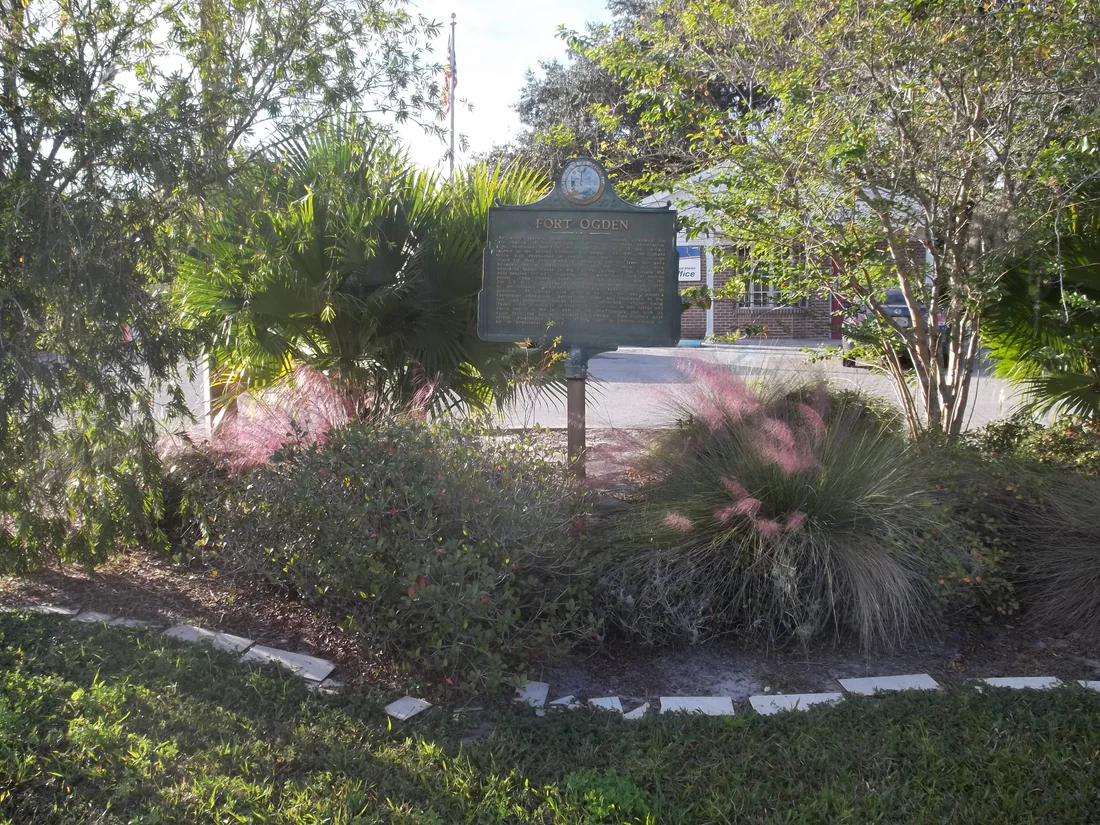 03
Fort Ogden historical marker
Goes with: Civil War Cattle, Pine Level and Fort Ogden
the state historical marker for Fort Ogden →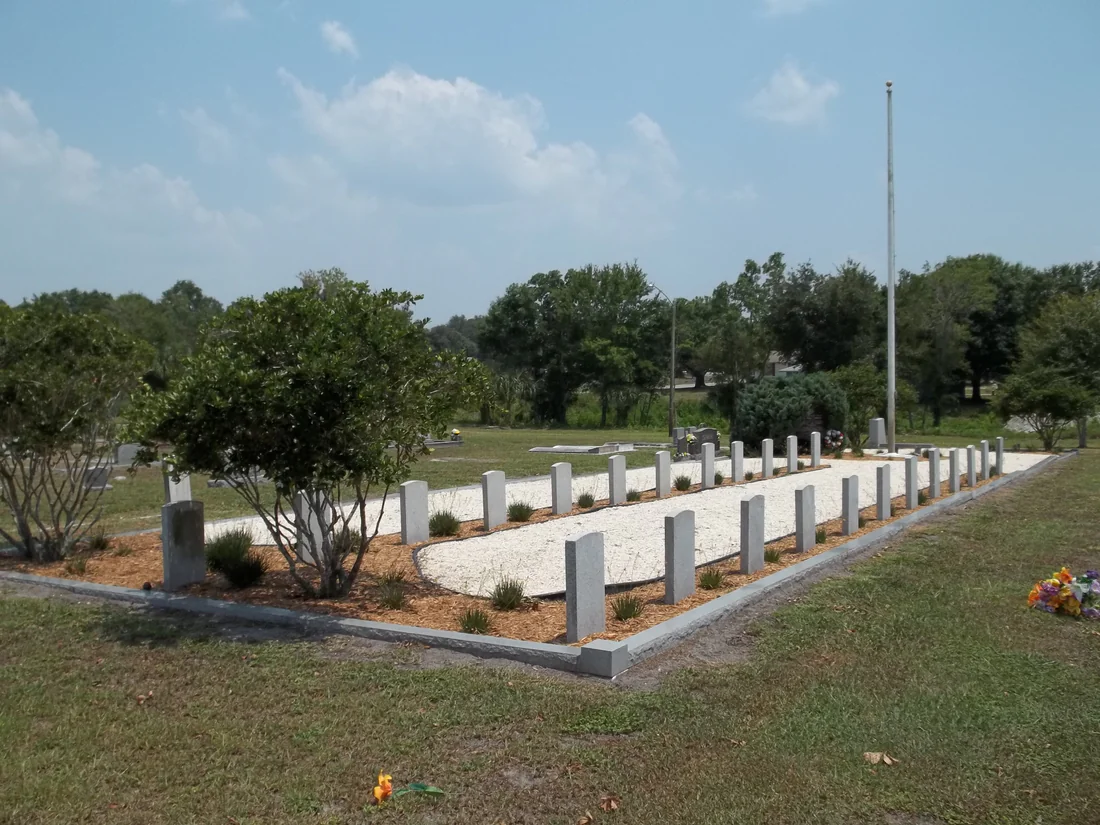 04
Oak Ridge Cemetery British plot
Goes with: A Fight for the Vote, RAF Cadets and a Historic Downtown
the Museum of Florida History page on Oak Ridge Cemetery →Questions people ask
When was DeSoto County created?
DeSoto County was formed from Manatee County in 1887, though sources disagree on the exact date, giving April 1887, May 12, 1887 or May 19, 1887.
Chapter 5 →When did Arcadia become the county seat of DeSoto County?
Arcadia won the county seat on November 6, 1888, after three votes.
Chapter 5 →How did Arcadia get its name?
By local legend, Boss Hendry chose the name Arcadia to honor Arcadia Albritton Coker, who had baked him a birthday cake.
Chapter 4 →When did the Arcadia rodeo begin?
The first Arcadia Rodeo was held on November 11 and 12, 1929, after a July 4th celebration organized that year by American Legion K-Post 11.
Chapter 9 →Where this comes from.
Last updated October 19, 2026.
- WUSF (republished by WUWF): How Florida's history flows through the Peace River ↗ Read October 19, 2026
- Florida Department of State: De Soto County historical marker ↗ Read October 19, 2026
- Florida Memory: Historical Sketch of De Soto County (Works Progress Administration) ↗ Read October 19, 2026
- DeSoto County Historical Society: Newsletter, May 2025 ↗ Read October 19, 2026
- DeSoto County Historical Society: Newsletter, December 2025 ↗ Read October 19, 2026
- DeSoto County Historical Society: DeSoto County History ↗ Read October 19, 2026
- Florida Department of State: Fort Ogden historical marker ↗ Read October 19, 2026
- DeSoto County Historical Society: The Founding of Arcadia, Florida ↗ Read October 19, 2026
- Florida Department of State: Secretary Byrd Designates Arcadia Main Street as Florida Main Street Program of the Month ↗ Read October 19, 2026
- South Florida State College Library: Walking Tour of Downtown Arcadia, Florida ↗ Read October 19, 2026
- National Park Service: Arcadia Historic District, National Register of Historic Places nomination form ↗ Read October 19, 2026
- Florida Department of State: Owens Community School historical marker ↗ Read October 19, 2026
- Florida Department of State: Nocatee Historic District and Nocatee Baptist Church historical marker ↗ Read October 19, 2026
- Florida Department of State: Florida Baptist Orphanage historical marker ↗ Read October 19, 2026
- Florida Department of State: Arcadia City Hall historical marker ↗ Read October 19, 2026
- University of Florida George A. Smathers Libraries: Carlstrom Field ↗ Read October 19, 2026
- DeSoto County Historical Society: The Arcadia Rodeo, A July 4th Tradition ↗ Read October 19, 2026
- WUSF: Memorial Day takes on a British accent in Arcadia ↗ Read October 19, 2026
- Museum of Florida History: Oak Ridge Cemetery ↗ Read October 19, 2026
- DeSoto County Historical Society: Museum and Research Library ↗ Read October 19, 2026
- DeSoto County Historical Society: Pioneer Day ↗ Read October 19, 2026
- DeSoto County Historical Society: Newsletter, May 2026 ↗ Read October 19, 2026
- DeSoto County Historical Society: Newsletter, June 2026 ↗ Read October 19, 2026
- DeSoto County Historical Society: Newsletter, July 2026 ↗ Read October 19, 2026