Levy County was created on March 10, 1845, from part of Alachua County, and it was named for David Levy Yulee, the first United States senator from Florida. The county seat is Bronson. In 1861 the Florida Railroad reached Cedar Key, giving Florida its first railroad across the state. The county's history goes back nearly 14,000 years, to the first people who came to the Fanning Springs area.
This page tells the story in order, from the first people at Fanning Springs and Shell Mound to Cedar Key's clam farms and the 2025 Seafood Festival, then lists places in the county where you can still see it. The sources for each part are named at the end of that part, and all of them are listed at the bottom of the page.
The first people: springs, fish camps and Shell Mound
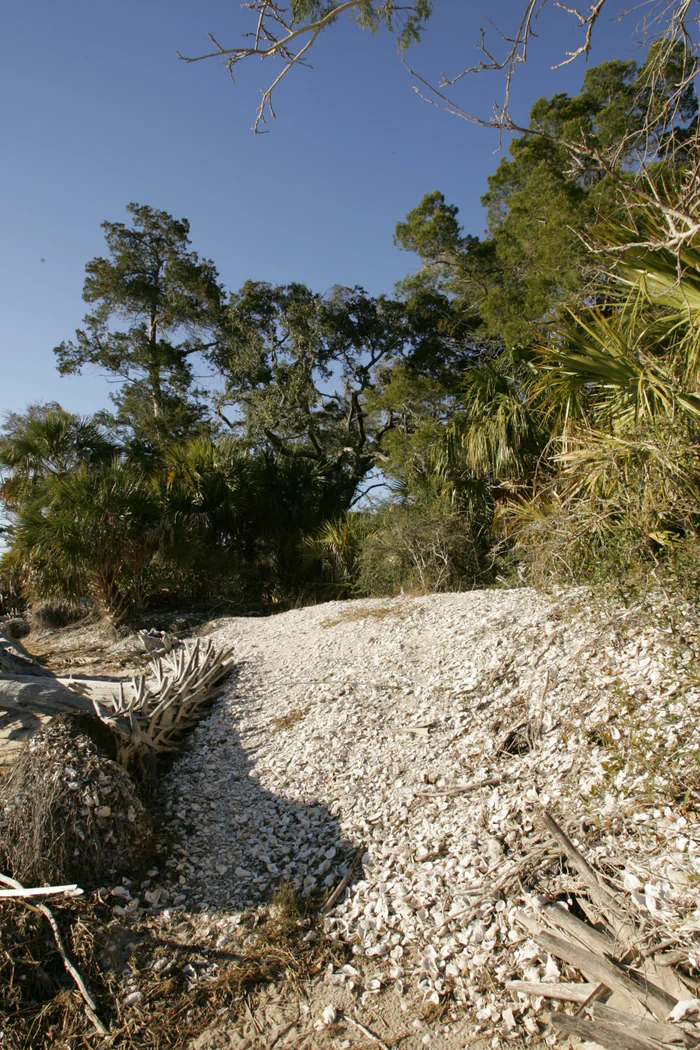
Paleo-Indian people began moving into the Fanning Springs area nearly 14,000 years ago. The sea has risen about 80 meters since then. Artifacts found in and around Manatee Springs indicate that people have lived there for 9,000 years or more. Many thousands of years ago, First Peoples set up fish camps on the 13 islands now in the Cedar Keys National Wildlife Refuge.
Shell Mound stands 12 kilometers north of Cedar Key. Archaic people began it and Woodland people finished it, piling up the shells of the oysters, clams and other shellfish they ate. The roughly circular ridge is about 180 by 170 meters across and stands up to 7 meters high. Before the refuge owned it, the mound was a source of road-building material, but the Shell Mound Archaeological Site is now protected, and only foot traffic is allowed.
University of Florida archaeologists have studied what went on at the site from about 400 to 650 CE. Bones from pits there point to large feasts, likely held around the summer solstice. Most of the food was fish, with turtles, deer and young white ibises too.
Sources: Florida State Parks: Fanning Springs State Park, History; University of Florida, Laboratory of Southeastern Archaeology: Lower Suwannee Archaeological Survey; Florida State Parks: Manatee Springs State Park, History; U.S. Fish and Wildlife Service: Cedar Keys National Wildlife Refuge, About Us; U.S. Fish and Wildlife Service: Shell Mound Archeological Site; University of Florida, Laboratory of Southeastern Archaeology: Shell Mound Summer Solstice Feasts
Next: Chapter 2, Spaniards, William Bartram and the Seminole Wars →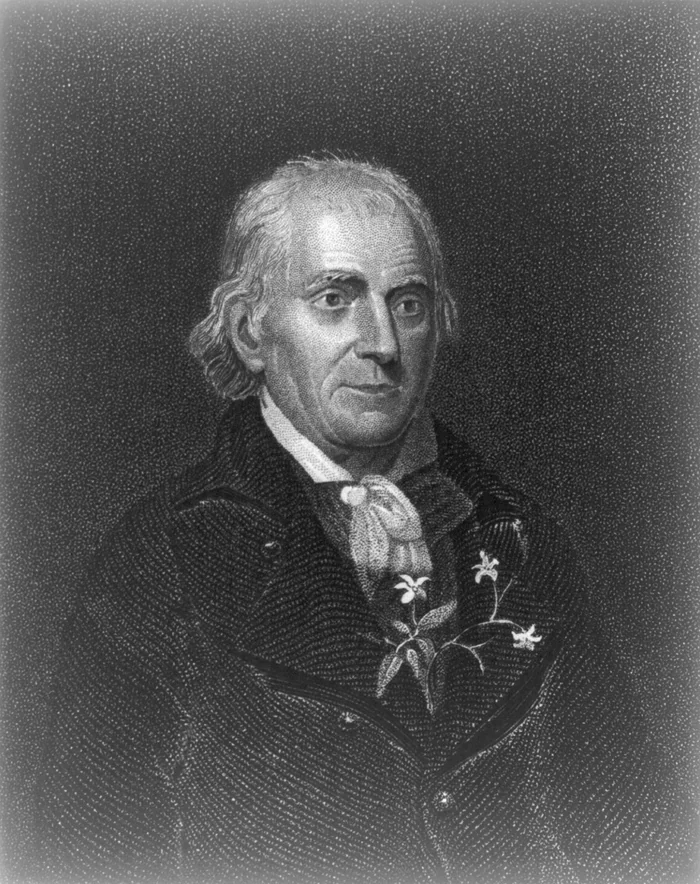
Spaniards, William Bartram and the Seminole Wars
The history of Manatee Springs State Park says the arrival of Spaniards in the 1500s ended a long series of Native cultures there. The naturalist and artist William Bartram came through in 1774 on a journey across the Southeast. His later book gave a full description of Manatee Springs and mentioned that manatees were there.
Fort Fanning was built near Fanning Springs in 1838, in the Second Seminole War. It was named for Colonel Alexander Campbell Wilder Fanning. Nothing of the fort remains, since the warm, damp climate long ago wore it away.
The Army stored supplies on Atsena Otie, which it called Depot Key, from 1839 to 1842. Seahorse Key held Native American captives during the Seminole Wars and was a stop for soldiers passing through. When the wars ended in 1842, Atsena Otie grew for about ten years and got a post office named Cedar Key.
Sources: Florida State Parks: Manatee Springs State Park, History; Florida State Parks: Fanning Springs State Park, History; State Archives of Florida, Florida Memory: Cedar Key Guide (1985 brochure)
Next: Chapter 3, 1845: Levy County and its moving county seat →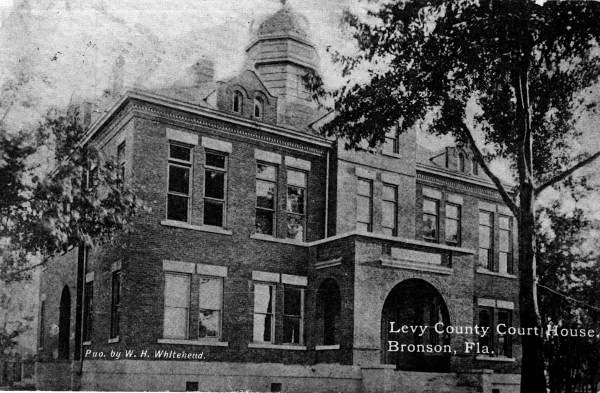
1845: Levy County and its moving county seat
Levy County was created on March 10, 1845, from part of Alachua County. It was named for David Levy Yulee, the first United States senator from Florida.
The first county seat was a place known as Sodom. Circuit court met for the first time in the county on October 11, 1852, at the home of Mary V. Andrews. On April 8, 1854, with the courthouse finished, the county board renamed the seat Mount Pleasant. On January 21, 1856, the board renamed it Levyville.
At a meeting on February 20, 1869, an election was ordered to choose a new county seat, and Bronson won it. Bronson had first been called Chunky Pond, and it was the end of the line for several years while the railroad was under construction. Bronson is still the county seat.
Sources: University of South Florida, Florida Center for Instructional Technology: Levy County maps; State Archives of Florida, Florida Memory: Levy County (typed county history, stamped March 31, 1938)
Next: Chapter 4, A lighthouse, the railroad and the Civil War →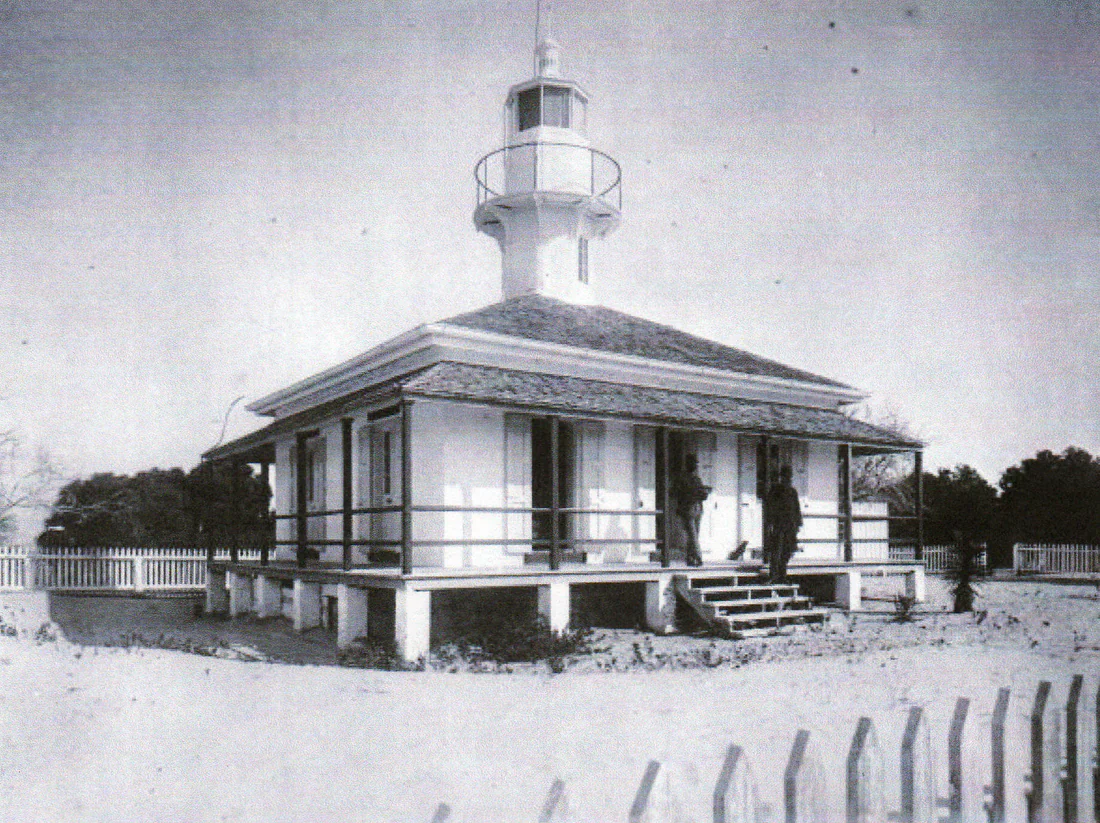
A lighthouse, the railroad and the Civil War
The lighthouse on Seahorse Key first shone on August 1, 1854. Standing 75 feet above sea level, its light could be seen 15 miles away. David L. Yulee headed the Florida Railroad Company, which was formed in 1853. Building began in 1856 at Fernandina on the Atlantic coast, and it went on only now and then. In 1861 the line reached Cedar Key, and Florida had its first railroad across the state.
Today's city of Cedar Key began as the railroad's end point on Way Key. The first train arrived in 1861, shortly before the Civil War broke out. On February 9, 1865, the county courthouse was destroyed. People in the county believed members of the Union army had set it on fire. A diorama at Cedar Key Museum State Park shows a Civil War skirmish at Cedar Key's Station 4.
Sources: State Archives of Florida, Florida Memory: View of the Cedar Keys Lighthouse on Seahorse Key (1959); Florida Department of State, Florida Historical Markers: Atlantic to Gulf Railroad; State Archives of Florida, Florida Memory: Cedar Key Guide (1985 brochure); State Archives of Florida, Florida Memory: Levy County (typed county history, stamped March 31, 1938); Florida State Parks: Cedar Key Museum and Whitman House
Next: Chapter 5, Pencil cedar and John Muir →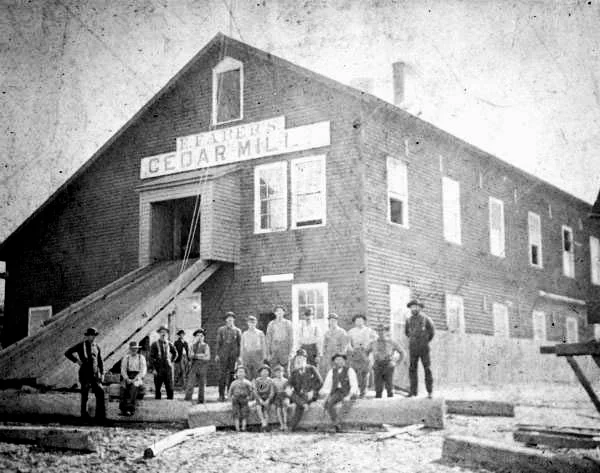
Pencil cedar and John Muir
The redcedar of the Cedar Keys, a kind of juniper, was cut to make pencils. The German businessman J. Eberhard Faber came to New York looking for wood for pencils that would not splinter. In 1858 he built a mill on Atsena Otie to cut cedar into pencil slats. The Eagle Pencil Company followed Faber and in 1876 built its own mill in Cedar Key.
The naturalist John Muir left Indiana on foot for the Gulf and spent several months of 1867 in Florida. He reached Cedar Key in October. While he was getting over malaria in Cedar Key, he first voiced his belief that nature has worth in itself, not only because people can use it. He left in early 1868 and later settled in California, where he helped found the Sierra Club in 1892 and helped create Yosemite National Park. A state marker about his stay stands on the grounds of Cedar Key Museum State Park.
Sources: Florida Department of State, Florida Historical Markers: The Cedar Keys: Pencils, Lumber, Palm Fiber and Brushes; Florida Department of State, Florida Historical Markers: John Muir at Cedar Key; Florida State Parks: Cedar Key Museum State Park, History
Next: Chapter 6, A Bronson doctor, the 1896 hurricane and palm brushes →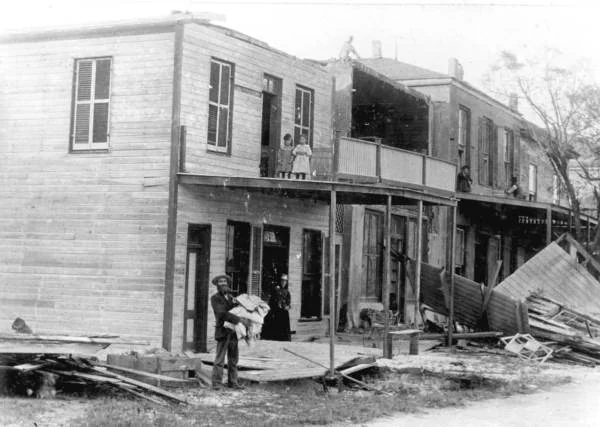
A Bronson doctor, the 1896 hurricane and palm brushes
Dr. James Middleton Jackson and his wife, Mary Glenn Shands, lived in Bronson in a frame house built in the 1880s. He had trained at the Medical College of New Orleans and joined the Confederate Army as a surgeon in 1863. For more than 50 years he was a doctor to Levy County families, and he was a member of both the county commission and the school board.
James M. Jackson Jr., their son, opened a medical practice in Miami in 1896. After the son's death in 1924, Miami gave its city hospital his name, Jackson Memorial Hospital. In 1998 the Jackson house was moved to its present spot, where it serves as Bronson's town hall.
In September 1896 a hurricane destroyed most of the homes in Cedar Key, killed dozens of people and wrecked most of the town's industries. Its official death toll was about 100, and most of the deaths came from the storm surge. The pencil cedar business lasted until the local trees were used up, and the 1896 storm destroyed the slat mills. Letters, maps and recorded memories at the Cedar Key Historical Society Museum tell the story of the storm, which local people call the Cedar Keys Hurricane. From 1910 to 1952 the Standard Manufacturing Company in Cedar Key turned young cabbage palms into brush fiber and Donax whisk brushes.
Sources: Florida Department of State, Florida Historical Markers: Dr. James M. Jackson Home; Main Street Daily News: A look back at the Cedar Keys Hurricane of 1896, July 6, 2021; Florida Department of State, Florida Historical Markers: The Cedar Keys: Pencils, Lumber, Palm Fiber and Brushes
Next: Chapter 7, 1923: Rosewood →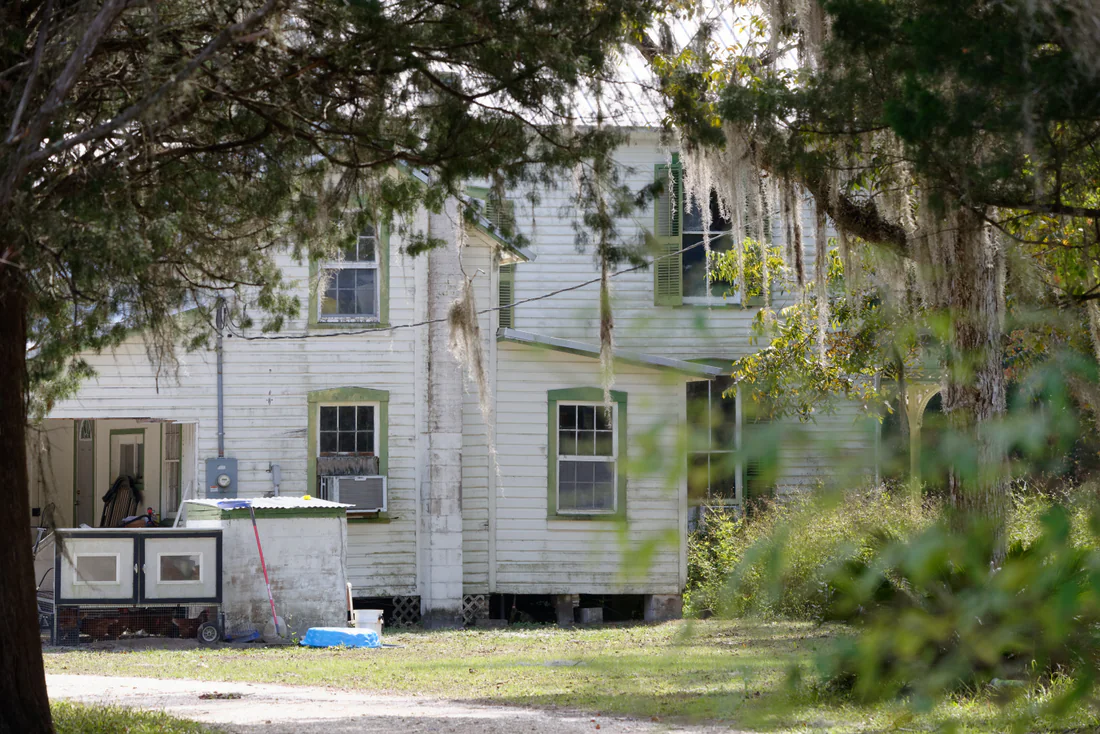
1923: Rosewood
Rosewood was a mostly Black community in Levy County. The violence there began after a white woman from Sumner said a Black man had assaulted her. From January 1 to 7, 1923, whites burned Rosewood and stole livestock and property. Many residents hid in the nearby woods, and John M. Wright, a white store owner, helped shelter some of the people who fled, along with other whites. The state marker says five Black residents were killed, and two people died while attacking a home.
Survivors vowed to keep silent, lived in fear and never went back to claim their property. In 1994 survivors brought a claims bill to the Florida Legislature, and a Special Master ruled that Florida had a moral obligation to pay them. Governor Lawton Chiles signed the $2.1 million bill into law on May 4, 1994. Each of nine survivors was paid $150,000, and the state started a scholarship fund at its universities for Rosewood families and their descendants. WUSF reported that Florida became the first state to pass a kind of reparations for Black victims.
Governor Jeb Bush dedicated a state historical marker at Rosewood in May 2004. In January 2023 descendants of the victims marked the 100th anniversary with a weeklong commemoration.
Sources: Florida Department of State, Florida Historical Markers: Rosewood, Florida; WUSF (Lynn Hatter, WFSU): UF and descendants mark 100th anniversary of the Rosewood massacre, January 4, 2023
Next: Chapter 8, Gulf Hammock, a lumber company town →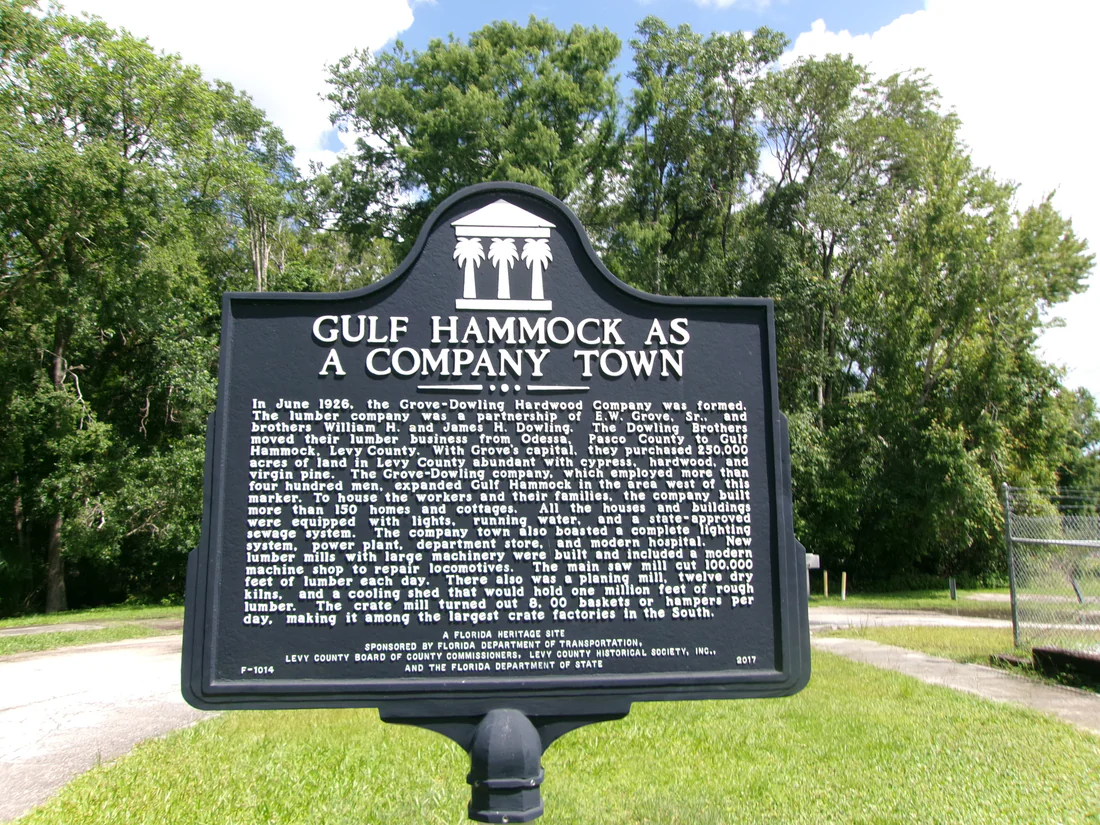
Gulf Hammock, a lumber company town
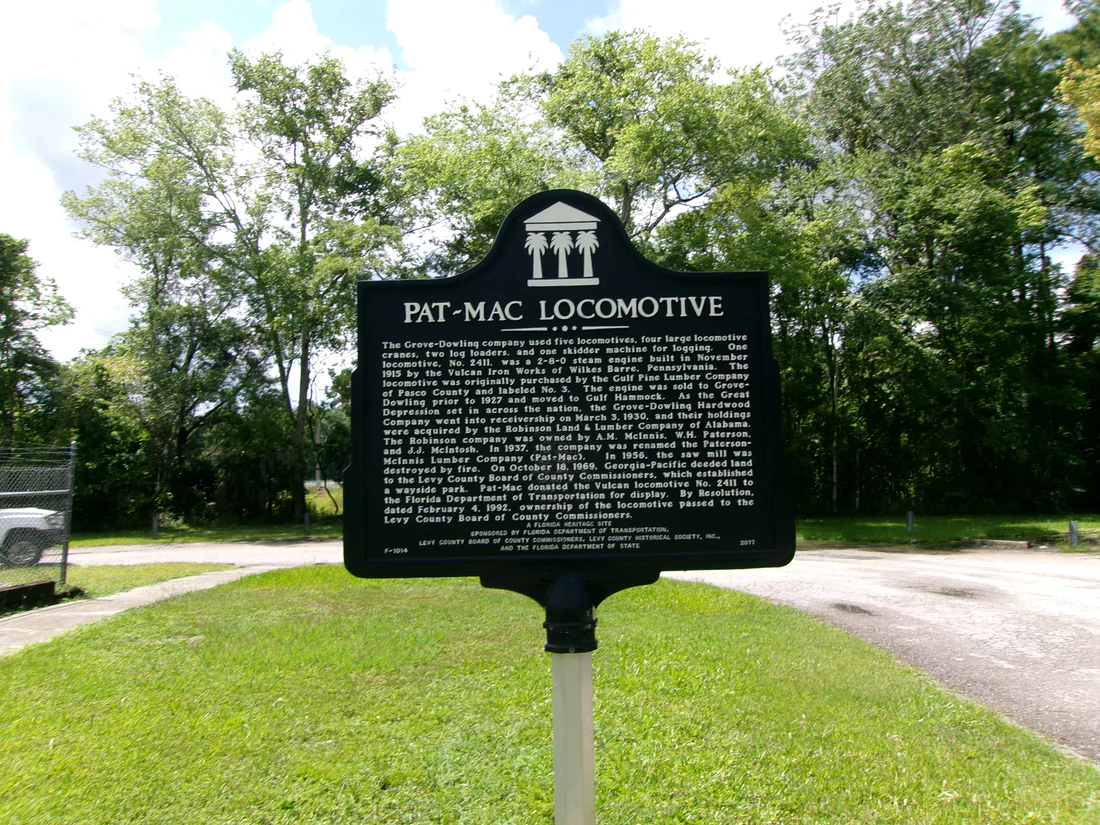
The Grove-Dowling Hardwood Company, founded in June 1926, bought 250,000 acres of Levy County land. It built up Gulf Hammock as a company town, with over 150 houses and cottages, a power plant, a department store and a modern hospital. The company employed more than 400 men, and its main sawmill turned out 100,000 feet of lumber a day.
On March 3, 1930, the company fell into receivership, and its holdings passed to the Robinson Land & Lumber Company of Alabama. In 1937 the company was given a new name, the Paterson-McInnis Lumber Company, or Pat-Mac. A county history typed in 1938 named farming, truck crops and livestock as the main industries of Levy County. It said Williston was a big peanut growing section and that naval stores and lumber were the county's main resources. Fire destroyed the Gulf Hammock sawmill in 1956.
Pat-Mac donated its Vulcan locomotive No. 2411, built in November 1915, to the state transportation department to put on display. On February 4, 1992, the county commission became its owner.
Sources: Florida Department of State, Florida Historical Markers: Pat-Mac Locomotive / Gulf Hammock as a Company Town; State Archives of Florida, Florida Memory: Levy County (typed county history, stamped March 31, 1938)
Next: Chapter 9, 1929: the Cedar Keys become a bird refuge →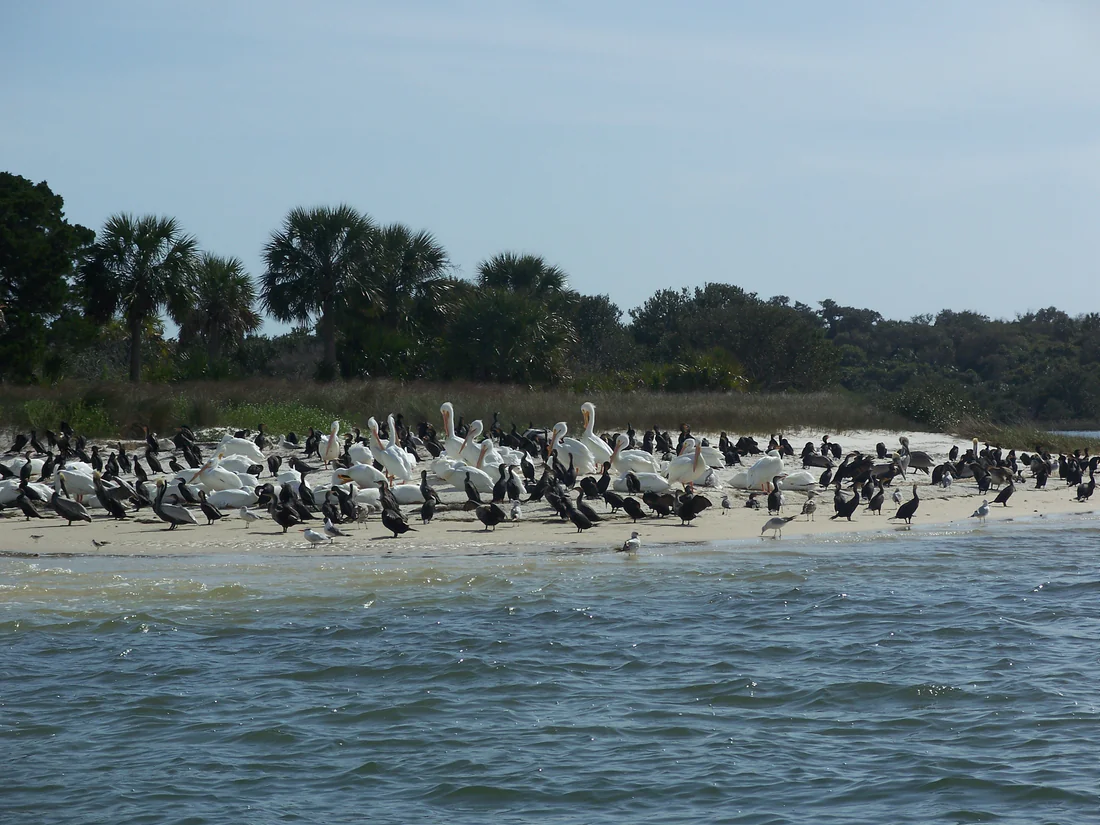
1929: the Cedar Keys become a bird refuge
Once smaller lights were placed on nearby islands, the Seahorse Key lighthouse was no longer needed, and the Coast Guard abandoned it in 1915. Under Executive Order 5158, a presidential order, Cedar Keys National Wildlife Refuge was created on July 16, 1929, to protect a breeding place for birds that nest in colonies. Seahorse Key was added to the refuge on November 6, 1939, by another executive order.
In 1952 the University of Florida made an agreement with the federal Fish and Wildlife Service to keep a marine research laboratory on Seahorse Key. On August 7, 1972, a law passed by Congress made four of the islands, Deadman's, North, Seahorse and Snake keys, national wilderness areas. More islands near the town of Cedar Key were bought for the refuge in the late 1970s and the 1980s.
Sources: State Archives of Florida, Florida Memory: View of the Cedar Keys Lighthouse on Seahorse Key (1959); U.S. Fish and Wildlife Service: Cedar Keys National Wildlife Refuge, About Us
Next: Chapter 10, A shell collector's museum, Elvis and a river refuge →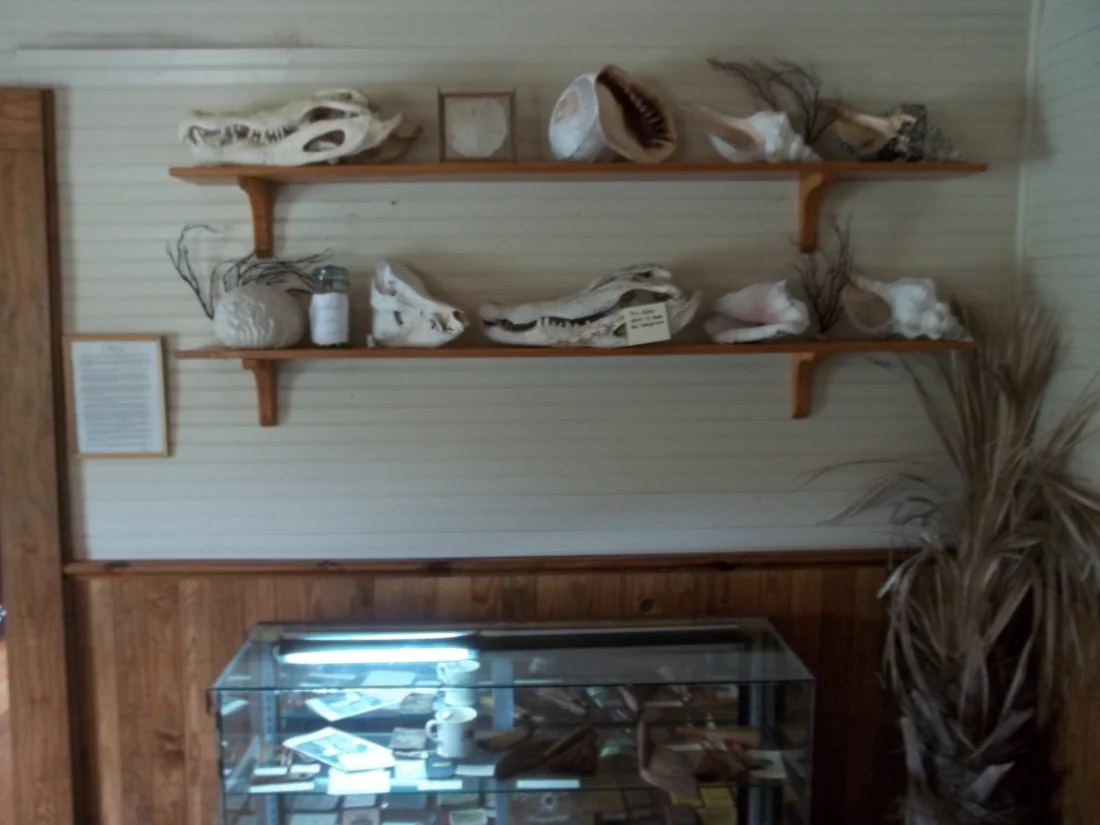
A shell collector's museum, Elvis and a river refuge
St. Clair Whitman came to live in Cedar Key in the late 1800s, when he was a boy. He was involved with both the town's cedar pencil mill and its fiber factory. He collected seashells and Native American artifacts in large numbers and showed them to the public in his front room. National Geographic magazine featured Whitman and his collections in 1955.
When he died in 1959, he gave the collections to the Florida Museum of Natural History at the University of Florida, meaning for them to be shown in a Cedar Key museum. The St. Clair Whitman Museum opened in 1962. Its name later changed to Cedar Key Museum State Park.
In July 1961 Elvis Presley came to Florida to make his ninth movie, Follow That Dream. Much of it was filmed near Inglis and Yankeetown. The road west through those two towns is called Follow That Dream Parkway. Lower Suwannee National Wildlife Refuge was established on April 10, 1979. It was created to protect the clean water of the Suwannee River and its wetlands and estuary.
Sources: Florida State Parks: Cedar Key Museum State Park, History; Ocala Gazette: The summer of Elvis, July 2, 2021; Citrus County Chronicle: Inglis unveils Elvis statue, August 11, 2021; U.S. Fish and Wildlife Service: Lower Suwannee National Wildlife Refuge, About Us; U.S. Fish and Wildlife Service: Lower Suwannee National Wildlife Refuge
Next: Chapter 11, Since 1990: clam farms, island parks and the Seafood Festival's return →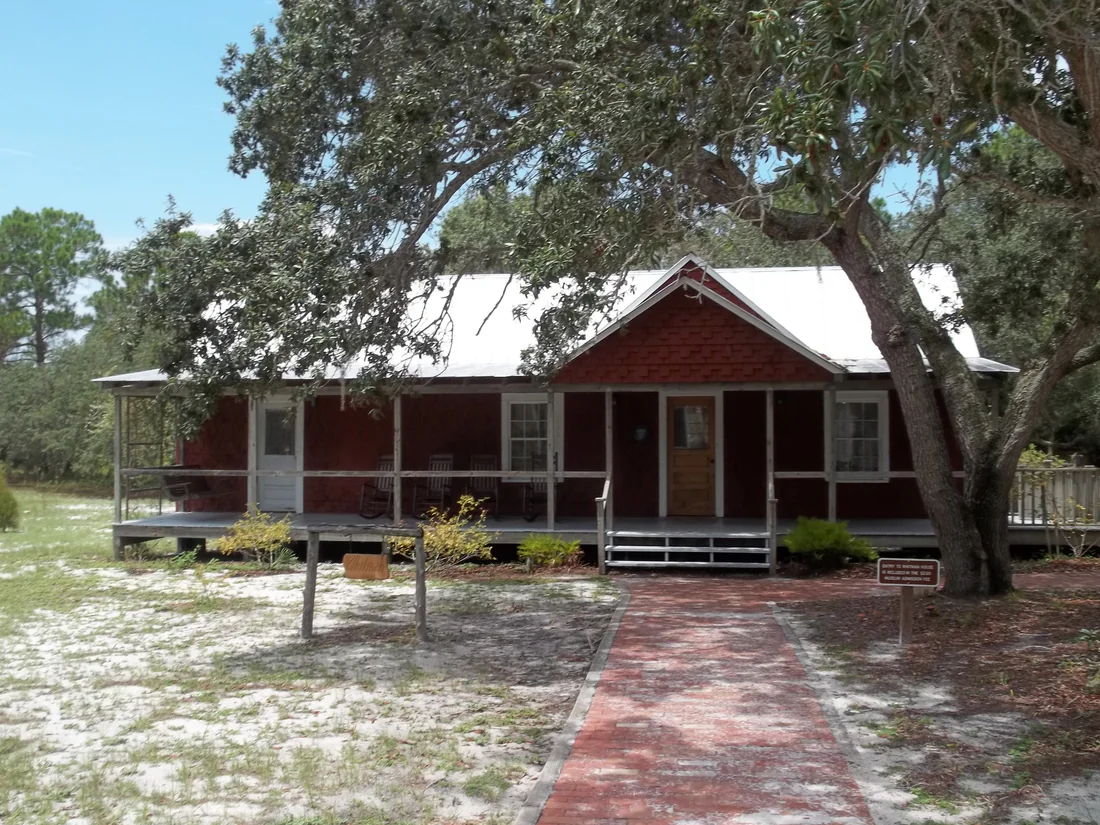
Since 1990: clam farms, island parks and the Seafood Festival's return
In 1990 the U.S. Food and Drug Administration shut the commercial oyster harvest around Cedar Key. In 1994 Florida voters approved a constitutional amendment that banned gill nets. A federal and state retraining program then taught former fishermen to farm clams. Leslie Sturmer was sent to Cedar Key to help retrain the workers and get the young clam farms running.
In 1991 the Whitman family gave his house, Cedar Key's first museum, to the state park. Built in 1880, the house was restored to look as it did in the 1920s. The state bought the land at Fanning Springs in 1993, and the Florida Park Service took over its care in 1997 as Fanning Springs State Park. Atsena Otie Key was bought in 1998 by the Suwannee River Water Management District, which made it part of the Cedar Keys refuge.
In August 2021 the Withlacoochee Gulf Area Chamber unveiled a life-sized statue of Elvis Presley outside its office in Inglis, 60 years after Follow That Dream was filmed in the area. Damage from Hurricane Helene led Cedar Key to skip its seafood festival in 2024. On October 18, 2025, the 54th Cedar Key Seafood Festival opened in the City Park, with paintings, small gifts and seafood for sale. For more than 50 years, the festival has been put on by the Lions Club of Cedar Key.
Sources: University of Florida, Explore: Saving Cedar Key, March 26, 2013; WUSF (Greg Allen, NPR): Forced To Put Its Nets Away, Cedar Key Clams Up, April 22, 2014; Florida State Parks: Cedar Key Museum State Park, History; Florida State Parks: Cedar Key Museum State Park, Manager's Message; Florida State Parks: Fanning Springs State Park, History; U.S. Fish and Wildlife Service: Cedar Keys National Wildlife Refuge, About Us; Citrus County Chronicle: Inglis unveils Elvis statue, August 11, 2021; WCJB: Cedar Key's Seafood Festival returns after one-year hiatus, October 17, 2025; WCJB: Cedar Key Seafood Festival back in full force after hiatus, October 19, 2025
Next: the whole story, in dates →The whole story, in dates
Paleo-Indian people begin moving into the Fanning Springs area.
People gather at Shell Mound, likely for summer solstice feasts.
Spaniards arrive, and the Native cultures around Manatee Springs come to an end.
William Bartram travels through the Manatee Springs area.
Fort Fanning is built near Fanning Springs in the Second Seminole War.
The Army stores supplies on Atsena Otie, its Depot Key.
Levy County is created from part of Alachua County.
Circuit court first meets in the county, at the home of Mary V. Andrews.
The county seat at Sodom is renamed Mount Pleasant.
The Seahorse Key lighthouse first shines.
The county seat is renamed Levyville.
Faber builds a pencil slat mill on Atsena Otie.
The railroad reaches Cedar Key, giving Florida its first railroad across the state.
The county courthouse is destroyed.
John Muir reaches Cedar Key on his walk to the Gulf.
A meeting orders an election for a new county seat, and Bronson wins it.
A hurricane wrecks most of Cedar Key and its slat mills.
The Standard Manufacturing Company makes brush fiber from cabbage palms.
Whites burn the Black community of Rosewood.
The Grove-Dowling Hardwood Company is formed and builds up Gulf Hammock.
Cedar Keys National Wildlife Refuge is created.
The Gulf Hammock lumber company becomes Pat-Mac.
Seahorse Key is added to the refuge.
The University of Florida agrees to keep a marine laboratory on Seahorse Key.
Fire destroys the Gulf Hammock sawmill.
Elvis Presley comes to Florida to film Follow That Dream.
The St. Clair Whitman Museum opens in Cedar Key.
Four refuge islands become national wilderness areas.
Lower Suwannee National Wildlife Refuge is established.
Commercial oyster harvesting around Cedar Key is shut down.
The Whitman family gives his house to the state park.
The state buys the land at Fanning Springs.
Governor Lawton Chiles signs the Rosewood compensation bill.
Atsena Otie Key becomes part of the Cedar Keys refuge.
Governor Jeb Bush dedicates the Rosewood state marker.
A life-sized Elvis statue is unveiled in Inglis.
The 54th Cedar Key Seafood Festival opens after a year off.
Where you can still see it
 01
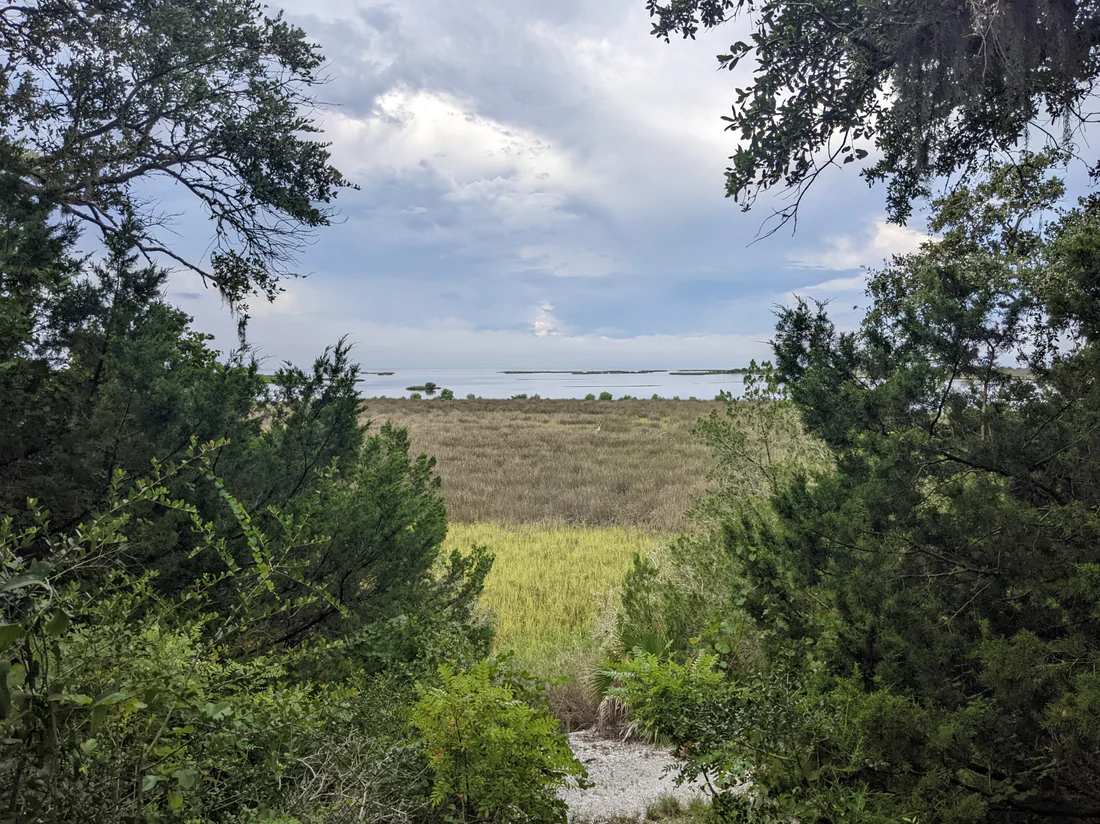
Shell Mound Archaeological Site
Goes with: The first people: springs, fish camps and Shell Mound
Open the place page →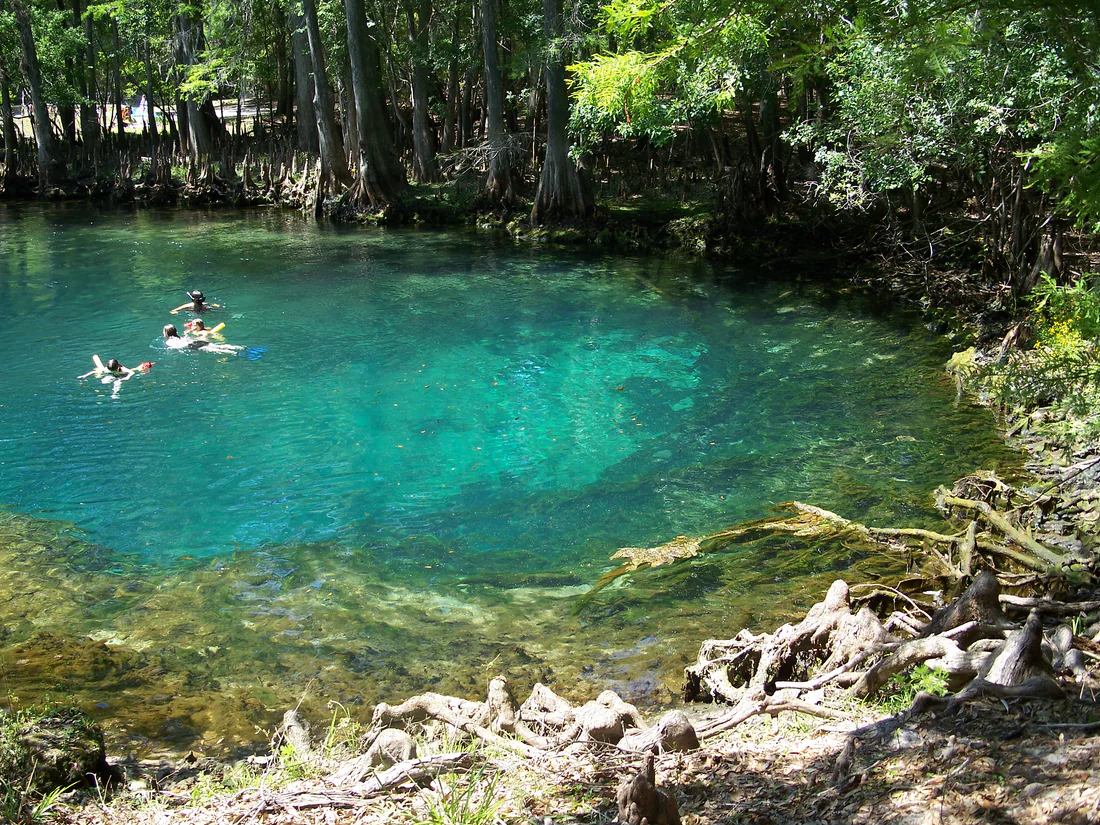 02
Manatee Springs State Park
Goes with: Spaniards, William Bartram and the Seminole Wars
Open the place page →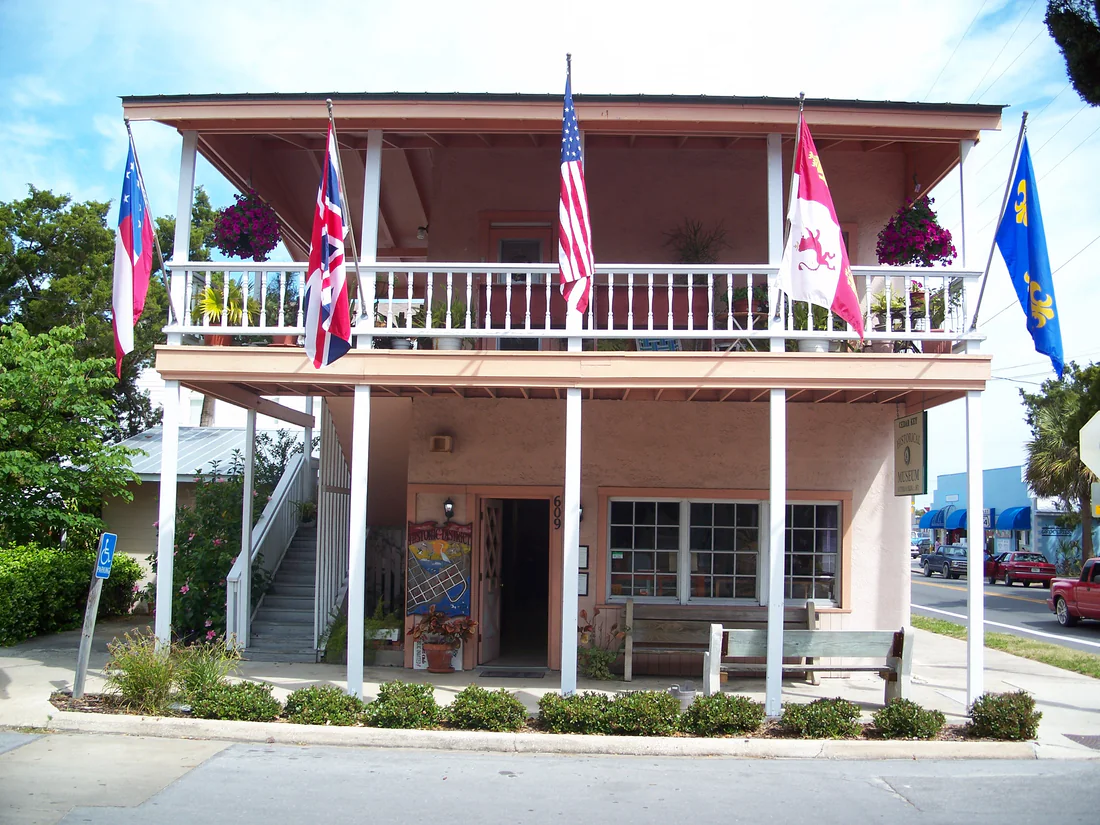 03
Cedar Key Historical Society Museum
Goes with: A Bronson doctor, the 1896 hurricane and palm brushes
Open the place page →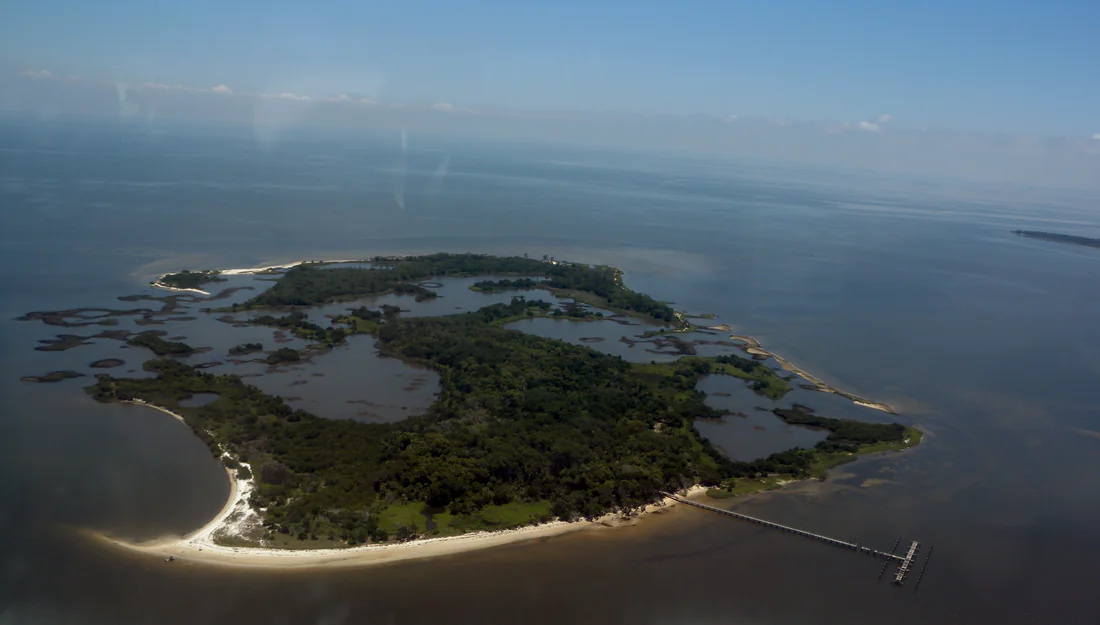 04
Cedar Keys National Wildlife Refuge
Goes with: 1929: the Cedar Keys become a bird refuge
Open the place page →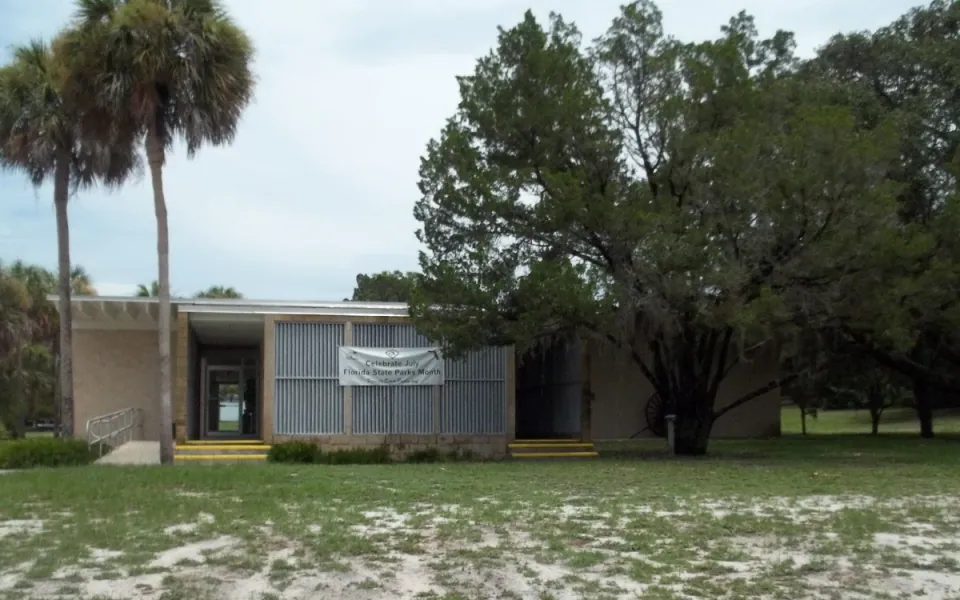 05
Cedar Key Museum State Park
Goes with: A shell collector's museum, Elvis and a river refuge
Open the place page →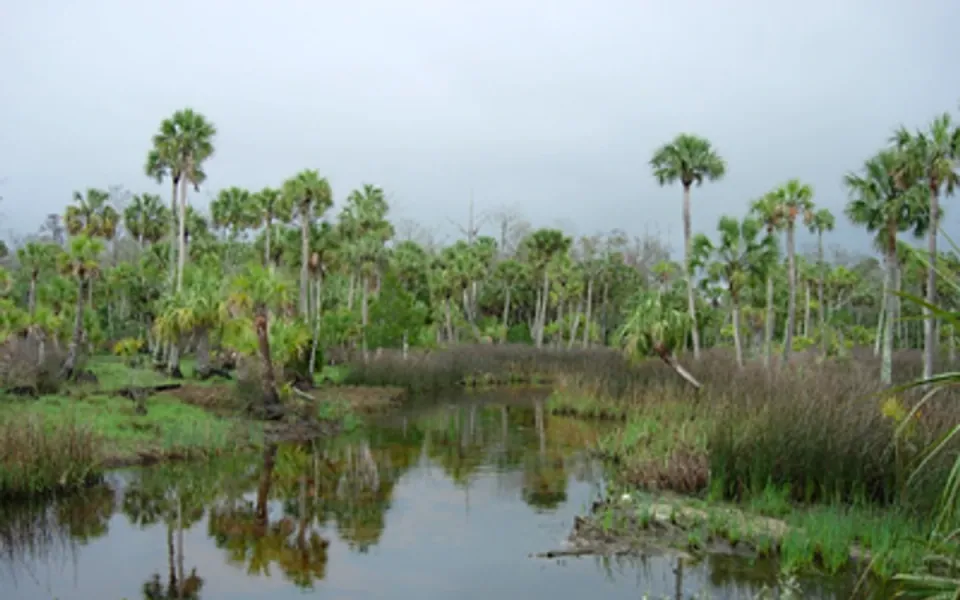 06
Lower Suwannee National Wildlife Refuge
Goes with: A shell collector's museum, Elvis and a river refuge
Open the place page →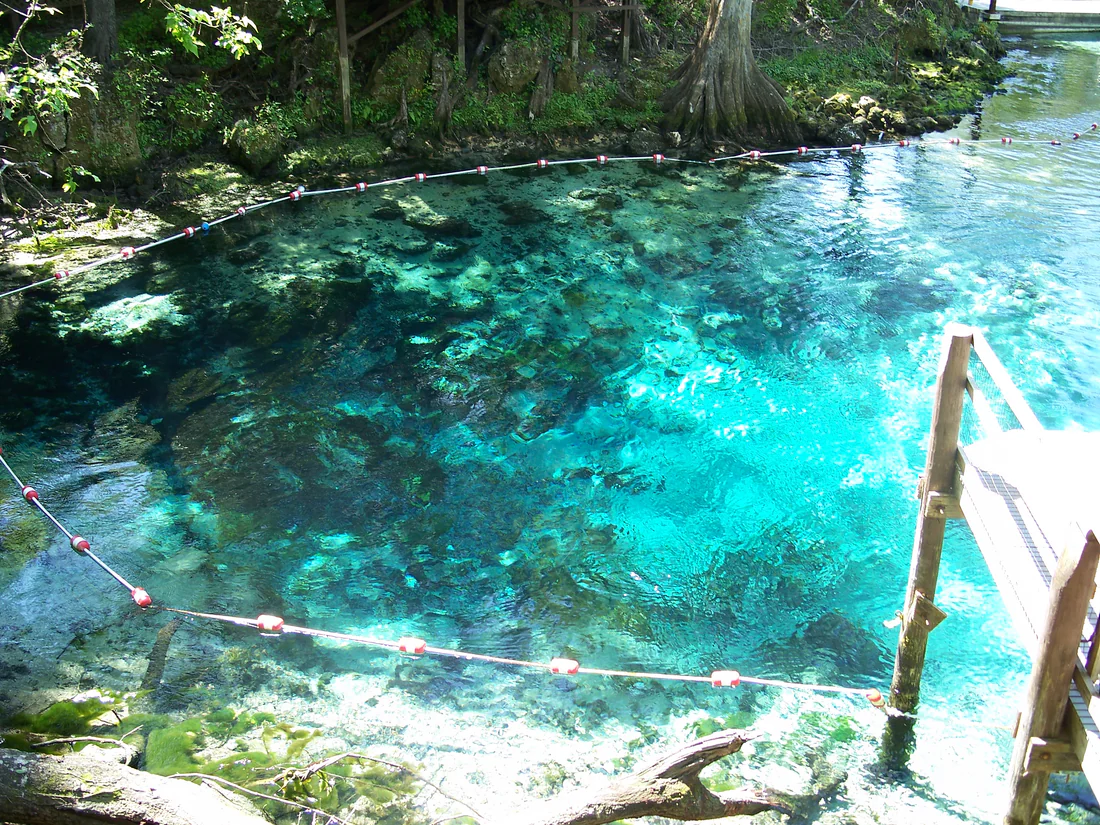 07
Fanning Springs State Park
Goes with: Since 1990: clam farms, island parks and the Seafood Festival's return
Open the place page →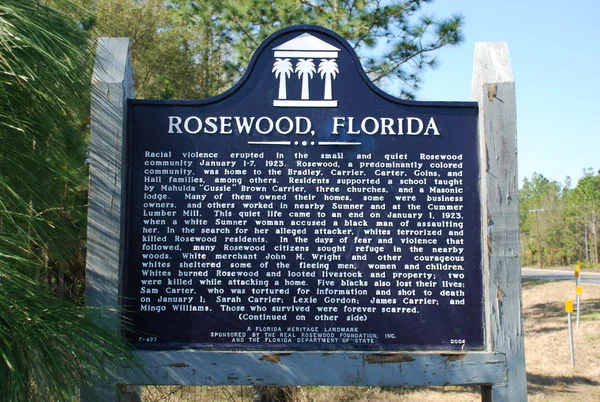 08
 09
Pat-Mac Locomotive and Gulf Hammock historical marker
Goes with: Gulf Hammock, a lumber company town
The Pat-Mac Locomotive and Gulf Hammock state marker →Questions people ask
When was Levy County created?
Levy County was created on March 10, 1845, from part of Alachua County.
Chapter 3 →Who was Levy County named for?
It was named for David Levy Yulee, the first United States senator from Florida.
Chapter 3 →When did the railroad reach Cedar Key?
In 1861 the line reached Cedar Key, and Florida had its first railroad across the state.
Chapter 4 →What happened at Rosewood in 1923?
From January 1 to 7, 1923, whites burned Rosewood and stole livestock and property.
Chapter 7 →Where this comes from.
Last updated October 19, 2026.
- University of South Florida, Florida Center for Instructional Technology: Levy County maps ↗ Read October 19, 2026
- State Archives of Florida, Florida Memory: Levy County (typed county history, stamped March 31, 1938) ↗ Read October 19, 2026
- State Archives of Florida, Florida Memory: Cedar Key Guide (1985 brochure) ↗ Read October 19, 2026
- State Archives of Florida, Florida Memory: View of the Cedar Keys Lighthouse on Seahorse Key (1959) ↗ Read October 19, 2026
- Florida Department of State, Florida Historical Markers: Atlantic to Gulf Railroad ↗ Read October 19, 2026
- Florida Department of State, Florida Historical Markers: John Muir at Cedar Key ↗ Read October 19, 2026
- Florida Department of State, Florida Historical Markers: Rosewood, Florida ↗ Read October 19, 2026
- Florida Department of State, Florida Historical Markers: The Cedar Keys: Pencils, Lumber, Palm Fiber and Brushes ↗ Read October 19, 2026
- Florida Department of State, Florida Historical Markers: Pat-Mac Locomotive / Gulf Hammock as a Company Town ↗ Read October 19, 2026
- Florida Department of State, Florida Historical Markers: Dr. James M. Jackson Home ↗ Read October 19, 2026
- Florida State Parks: Cedar Key Museum State Park, History ↗ Read October 19, 2026
- Florida State Parks: Cedar Key Museum State Park, Manager's Message ↗ Read October 19, 2026
- Florida State Parks: Cedar Key Museum and Whitman House ↗ Read October 19, 2026
- Florida State Parks: Manatee Springs State Park, History ↗ Read October 19, 2026
- Florida State Parks: Fanning Springs State Park, History ↗ Read October 19, 2026
- U.S. Fish and Wildlife Service: Shell Mound Archeological Site ↗ Read October 19, 2026
- University of Florida, Laboratory of Southeastern Archaeology: Lower Suwannee Archaeological Survey ↗ Read October 19, 2026
- University of Florida, Laboratory of Southeastern Archaeology: Shell Mound Summer Solstice Feasts ↗ Read October 19, 2026
- U.S. Fish and Wildlife Service: Lower Suwannee National Wildlife Refuge ↗ Read October 19, 2026
- U.S. Fish and Wildlife Service: Lower Suwannee National Wildlife Refuge, About Us ↗ Read October 19, 2026
- U.S. Fish and Wildlife Service: Cedar Keys National Wildlife Refuge, About Us ↗ Read October 19, 2026
- WUSF (Lynn Hatter, WFSU): UF and descendants mark 100th anniversary of the Rosewood massacre, January 4, 2023 ↗ Read October 19, 2026
- Main Street Daily News: A look back at the Cedar Keys Hurricane of 1896, July 6, 2021 ↗ Read October 19, 2026
- Ocala Gazette: The summer of Elvis, July 2, 2021 ↗ Read October 19, 2026
- Citrus County Chronicle: Inglis unveils Elvis statue, August 11, 2021 ↗ Read October 19, 2026
- University of Florida, Explore: Saving Cedar Key, March 26, 2013 ↗ Read October 19, 2026
- WUSF (Greg Allen, NPR): Forced To Put Its Nets Away, Cedar Key Clams Up, April 22, 2014 ↗ Read October 19, 2026
- WCJB: Cedar Key's Seafood Festival returns after one-year hiatus, October 17, 2025 ↗ Read October 19, 2026
- WCJB: Cedar Key Seafood Festival back in full force after hiatus, October 19, 2025 ↗ Read October 19, 2026