Cedar Key Museum State Park
Saint Clair Whitman spent his life on Cedar Key gathering seashells and native artifacts, and did it well enough that National Geographic took notice of him. The collection he built is the core of this museum.
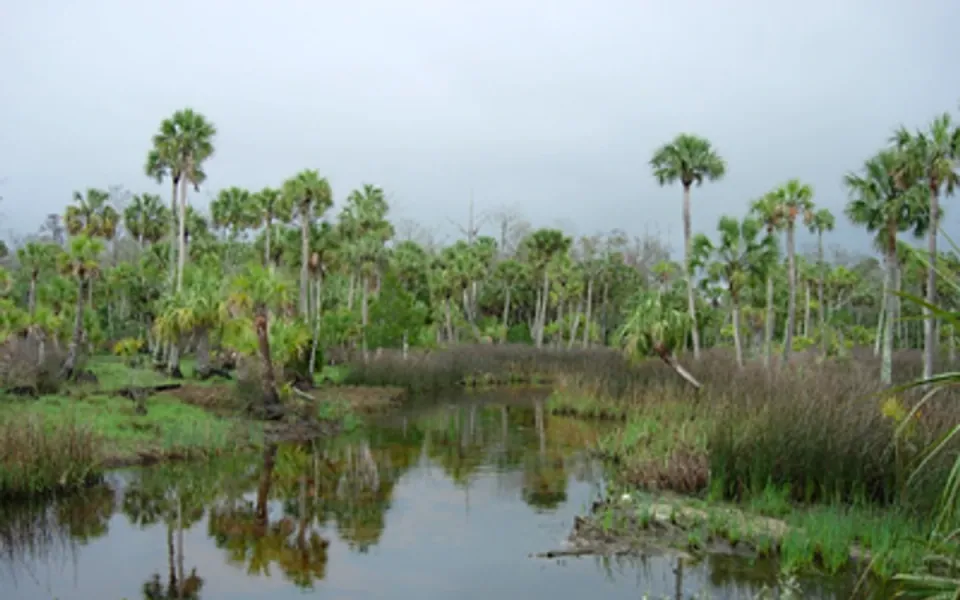
Photograph: Lower Suwannee National Wildlife Refuge.jpg by CatherineMunro at en.wikipedia · Public domain · Restored from the credited Wikimedia Commons file, normalized to the consistent attraction-card frame and converted to WebP by 1stFlorida.com. Portrait originals retain their complete composition over a softly blurred extension of the same photograph.
Levy County attraction
Levy County · Gulf Coast
Fifty-three thousand acres along the last twenty miles of the Suwannee River and the coast it empties into.
Also worth a visit
Saint Clair Whitman spent his life on Cedar Key gathering seashells and native artifacts, and did it well enough that National Geographic took notice of him. The collection he built is the core of this museum.
The roof of a limestone cavern fell in long ago and left an opening at the surface with clear water about a hundred and twenty feet across below it. Light comes down through that opening and that is what people photograph.
William Bartram came here in 1774, saw a dead manatee on the bank, and wrote the place up as Manate Springs; the name stuck. The spring holds at seventy-two degrees and that is why the manatees come, moving up the run from the Suwannee in fall and winter when the river turns cold, with roughly a hundred sightings logged in a year.
Sand pine scrub is one of the older habitats in Florida and one of the scarcest, because it grows on the high dry sand ridges that are also the easiest ground to build on. What survives here supports the Florida scrub-jay, a bird found nowhere else in the world and now confined to fragments of this habitat.
Archaeologists know it as site 8LV42. It became an important gathering place around the year 400 and stayed so through about 650, and it was a civic and ceremonial center rather than simply a trash heap: people lived here and also came here.
This is one of the largest colonial bird nesting grounds in Florida. White ibis, brown pelicans, egrets, herons and cormorants breed on the keys, around twenty thousand birds in an average year now, well down on the historic counts.
Keep comparing