The Florida Legislature created Flagler County in 1917 from parts of Volusia and St. Johns counties. It was named for Henry M. Flagler, Rockefeller's associate at Standard Oil, and Bunnell became its county seat. Among its best-known places are Marineland, which opened in 1938 and has been billed as the first oceanarium in the world, and the coquina sugar mill ruins at Bulow Plantation, which the Seminoles burned in 1836. Its written history goes back to 1565, when Pedro Menendez de Aviles led 150 men across the area, and the county names the Timucua as its early people.
This page tells the story in order, from the Timucua and the Spanish missions to Flagler Beach at 100, then lists places in the county where you can still see it. The sources for each part are named at the end of that part, and all of them are listed at the bottom of the page.
The Timucua and the Spanish missions
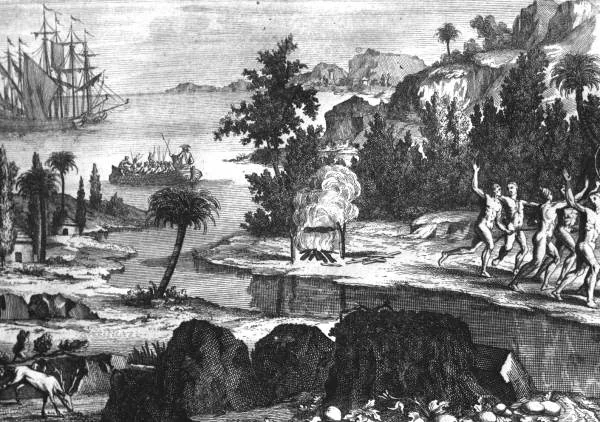
The county names the Timucua as early people of its riverside hammocks. At what is now Washington Oaks, Native Americans found food at the water's edge.
Pedro Menendez de Aviles crossed this area in 1565 with 150 men to attack a French colony that was building a fort at Canaveral, the county history written for the federal Works Progress Administration (WPA) says. Early in the 1600s, Franciscan friars made the first known settlement here, a mission about 26 miles to the south of St. Augustine. The missions here were destroyed by Native people around the middle of the 1700s.
Sources: Flagler County: About Us; Florida State Parks: Washington Oaks Gardens State Park, History; Florida Memory: Historical Sketch of Flagler County (Works Progress Administration, Historical Records Survey, 1938)
Next: Chapter 2, British plantations and Spanish land grants →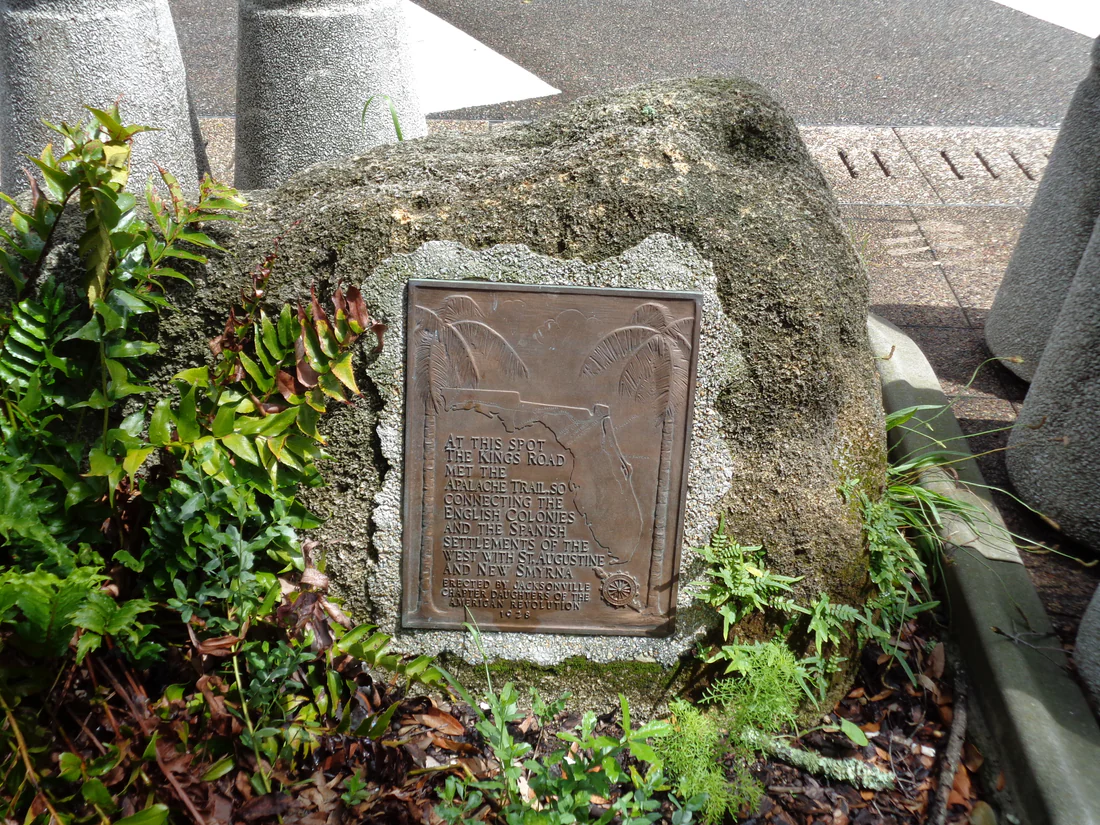
British plantations and Spanish land grants
The King's Road was built around 1766, when James Grant governed British East Florida, the state marker says. It ran from St. Augustine to Cowford, now Jacksonville, and later reached south along the Matanzas River. Between 1771 and 1777, the British laid out several big plantations along the road. Enslaved people built and worked them, growing indigo, cotton and sugar cane.
The road was also a main route for Black families escaping to freedom in the Florida wilds, Bill Ryan writes on the county historical society's website. Hewitt's water-powered sawmill ran in the area from 1770 to 1813, and enslaved people built its dam and mill.
Spain's king offered Francisco Pellicer a 1,100-acre grant in 1791. John Russell, a rich planter from the Bahamas, brought his family and the people he enslaved to St. Augustine in 1812. The WPA history calls him perhaps the earliest permanent settler in what is now Flagler County. He traded his schooner to the governor of East Florida for 4,000 acres, where he grew sugarcane, and later sold the land to Charles W. Bulow. In 1815 Spain granted Bautista Don Juan Ferreira the land that is now Washington Oaks, the state marker says.
Sources: Florida Department of State: Florida Historical Marker Details, King's Road; Flagler County Historical Society: In Florida, the Underground Railroad Ran South, by Bill Ryan; Flagler County Historical Society: Historic Locations in Flagler County; Florida Department of State: Florida Historical Marker Details, Princess Place Estate; Florida Memory: Historical Sketch of Flagler County (Works Progress Administration, Historical Records Survey, 1938); Florida Department of State: Florida Historical Marker Details, Washington Oaks Gardens
Next: Chapter 3, Sugar and cotton plantations, 1816 to 1831 →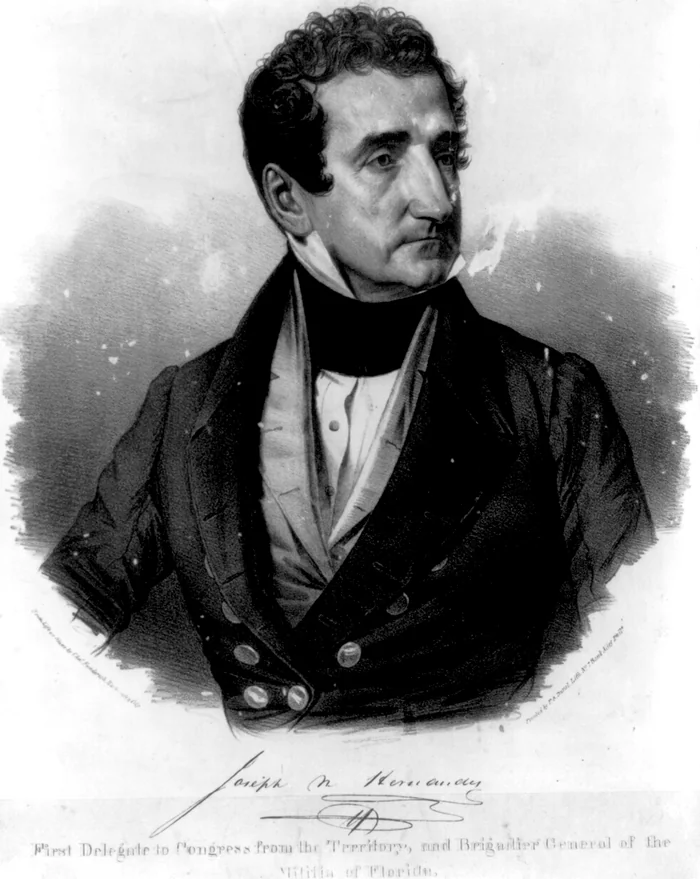
Sugar and cotton plantations, 1816 to 1831
In 1816 Joseph Hernandez received an 800-acre grant from Spain that took in the estuary at today's Hernandez Landing. His St. Joseph's Plantation nearby mainly grew sugarcane, and the marker says it was among three plantations of his that ran on the forced labor of more than 75 enslaved people. From 1816 to 1836 Hernandez also worked Mala Compra Plantation, whose name means "bad bargain" in Spanish. Mala Compra grew long-staple cotton and was the main plantation of Northeast Florida's largest plantation system, the state marker says. Hernandez became a U.S. citizen in 1821, and in 1822 he became Florida's first delegate to Congress and its first Hispanic member, the Hernandez Landing marker says.
Charles Wilhelm Bulow, a rich Charleston merchant, bought 4,675 acres in 1821 beside a tidal creek that now bears his name. Enslaved workers cleared 2,200 acres for him and planted indigo, rice, cotton and sugar cane. Bulow died at 44 soon after, and the plantation went to John Joachim Bulow, his only son, who was raised in Paris. The 1830 census counted 197 men, women and children living in the plantation's 46 cabins for enslaved people. The naturalist John James Audubon arrived at Bulowville on December 25, 1831, and used it as a base for bird trips, writing of hard rowing in salt marshes and of fighting sand flies and mosquitoes.
Sources: Florida Department of State: Florida Historical Marker Details, Hernandez Landing; Florida Department of State: Florida Historical Marker Details, Mala Compra Plantation; Florida State Parks: History of BulowVille; Florida State Parks: Bulow Plantation Ruins Historic State Park
Next: Chapter 4, The Second Seminole War, 1835 to 1836 →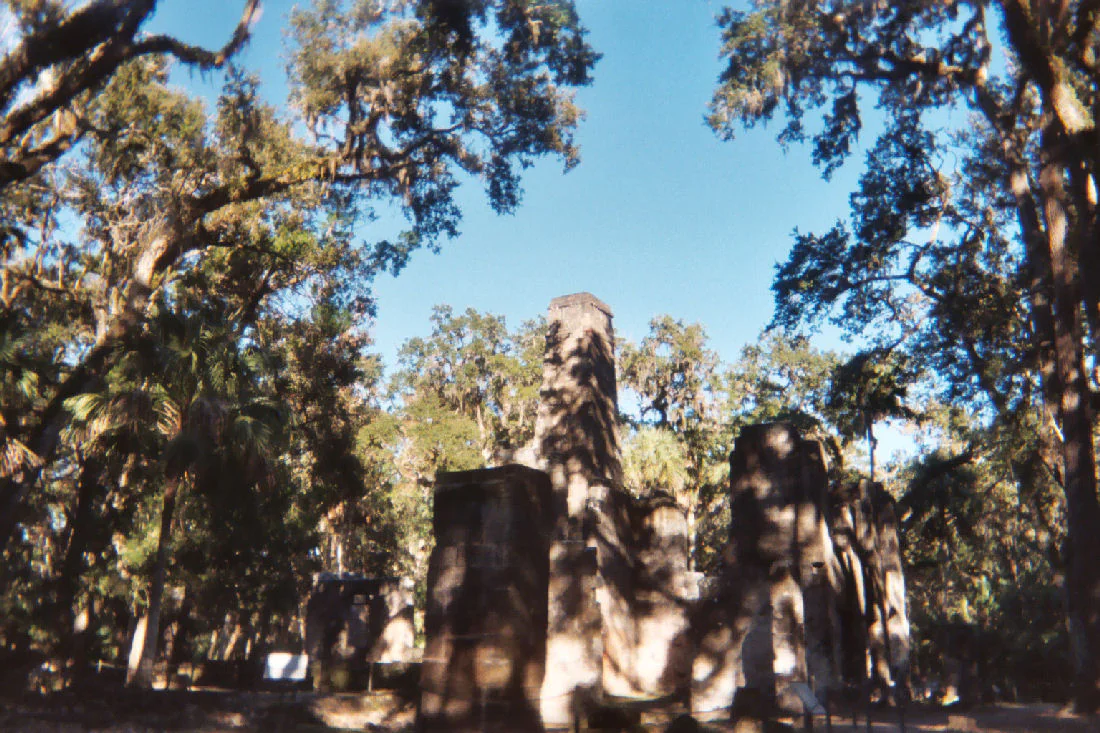
The Second Seminole War, 1835 to 1836
The Second Seminole War began in 1835 and ended the area's early prosperity, the WPA history says. Settlers had built plantations on land the Seminoles believed was theirs, the state park says. Osceola's fighters included Black Seminoles and people escaping slavery, Bill Ryan writes.
When Major Putnam's state militia entered his land, John Bulow fired a four-pounder cannon at them to show he disapproved. The troops took him prisoner, then moved to St. Augustine and let him go. Bulow and other settlers, with the people they enslaved, then left their plantations and followed the troops north. Seminoles set fire to Bulowville and other nearby plantations around January 11, 1836. John Bulow died three months later, at 26, and he was buried in St. Augustine.
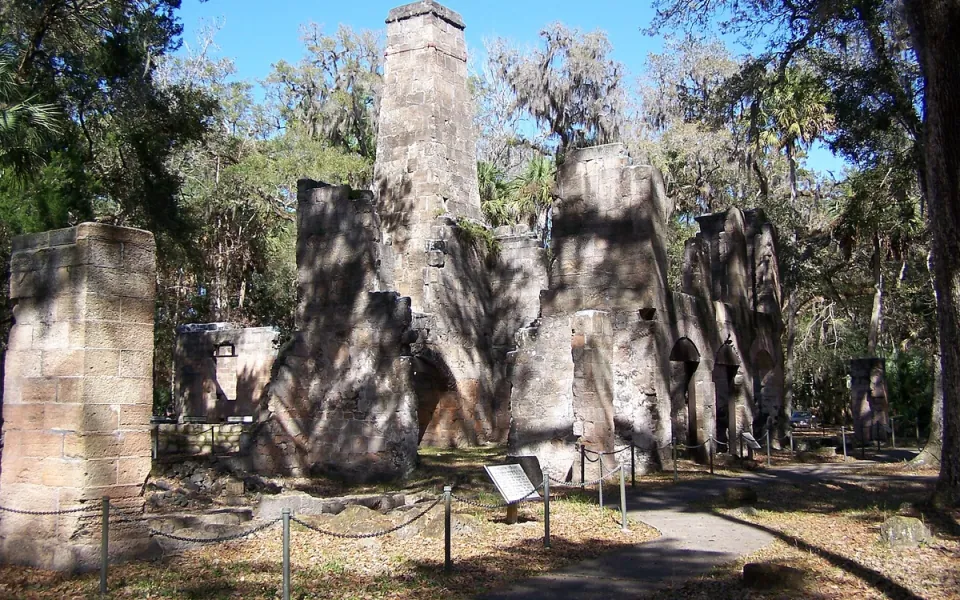
Only the coquina ruins of Bulowville's sugar mill are left, in what is now Bulow Plantation Ruins Historic State Park. Seminoles also burned Mala Compra in 1836, and Hernandez did not revive it after the war. The Fairchild Oak in Bulow Creek State Park, which the park counts among the biggest live oaks in the South, was already standing when the plantation next door was destroyed.
Sources: Florida Memory: Historical Sketch of Flagler County (Works Progress Administration, Historical Records Survey, 1938); Florida State Parks: History of BulowVille; Flagler County Historical Society: In Florida, the Underground Railroad Ran South, by Bill Ryan; Florida State Parks: Bulow Plantation Ruins Historic State Park; Florida Department of State: Florida Historical Marker Details, Mala Compra Plantation; Florida State Parks: Bulow Creek State Park
Next: Chapter 5, A railroad, a House of Refuge and Cherokee Grove →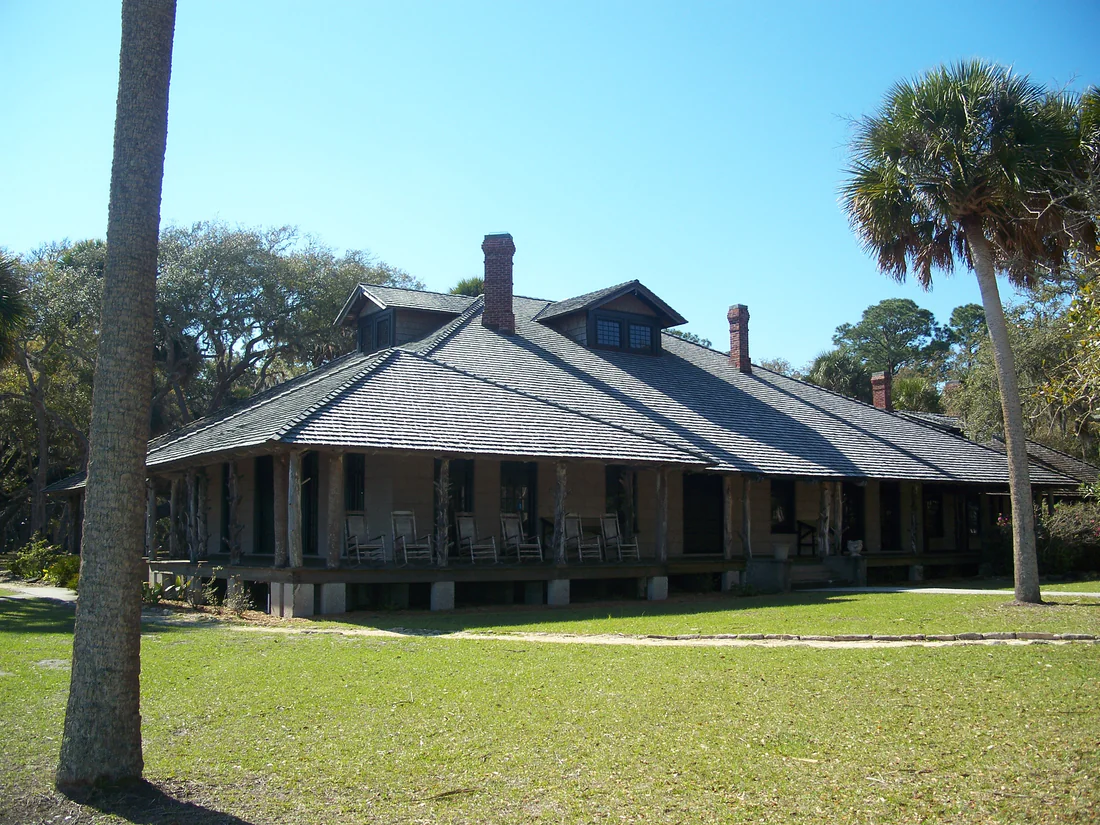
A railroad, a House of Refuge and Cherokee Grove
In 1844 George Washington, a relative of the first president, married Hernandez's daughter Louisa. Hernandez gave them the land that is now Washington Oaks, and they farmed it and planted an orange grove until 1856. After Louisa's death in 1859 George moved away, but he came back in 1886 to spend the rest of his life there.
Utley James White came to St. Augustine from Brockport, New York, in 1872, at age 27. His narrow-gauge St. Johns and Halifax Railroad was 50 miles long by February 1886, with stops at Raulerson (later Espanola), Bunnell Stop and Favoretta. White finished the line to Daytona in December 1886 and sold it to Henry Morrison Flagler about 1890. Also in 1886 the U.S. Life Saving Service set up a House of Refuge at Flagler Beach, one of 10 such houses along Florida's coast.
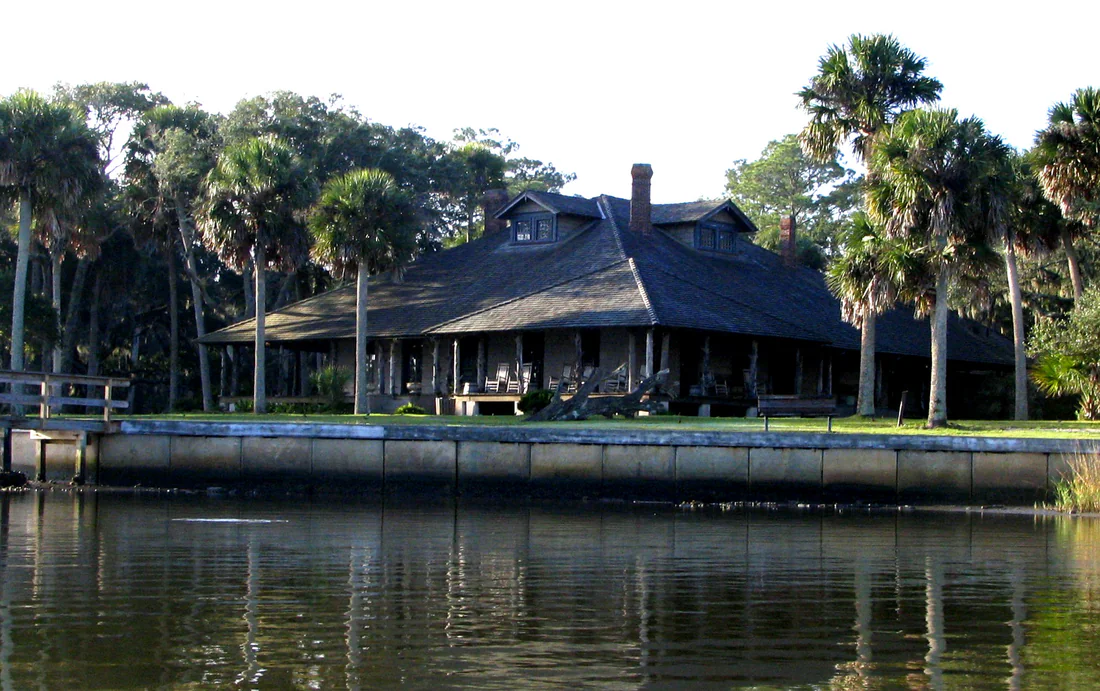
Henry Mason Cutting bought the old Pellicer grant in 1886 and named it Cherokee Grove. The lodge, built in 1887 from local materials such as cedar, palm trunks and pink coquina, was part of a complex with what the state marker calls the first concrete swimming pool built into the ground in Florida. Cutting died in 1892, and his widow, Angela, later married Boris Scherbatoff, an exiled Russian prince. The estate became known as Princess Place, and the county says its lodge, in today's Princess Place Preserve, is Flagler County's oldest intact structure.
Sources: Florida Department of State: Florida Historical Marker Details, Washington Oaks Gardens; Flagler County Historical Society: Railroads; Florida State Parks: History of Gamble Rogers; Florida Department of State: Florida Historical Marker Details, Princess Place Estate; Flagler County: Princess Place Preserve
Next: Chapter 6, Bunnell and Korona →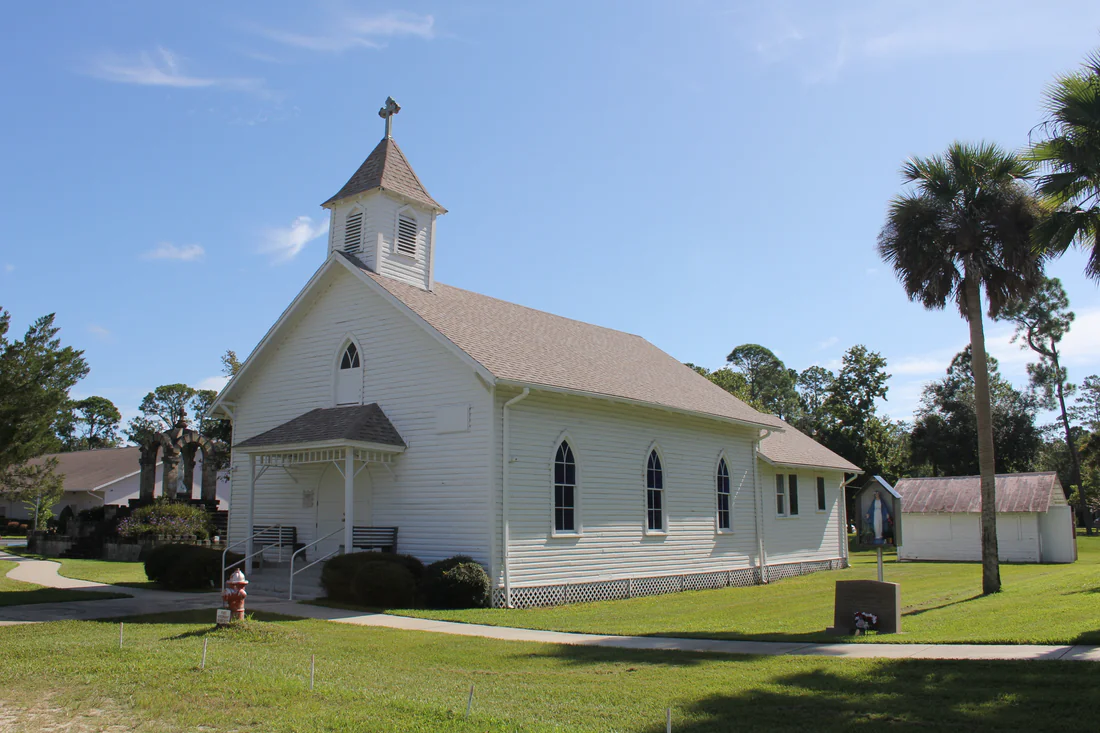
Bunnell and Korona
Bunnell began as a sawmill town in 1881, the WPA history says. The town is named for Alvah Bunnell, an early settler who made shingles, and postal records show he became postmaster in 1892. Major James Frank Lambert and Isaac I. Moody Jr. bought 30,000 acres that had belonged to George W. Deen, a Georgia senator. The Bunnell Development Company, with Moody as president, laid out the town in 1909. The Legislature first incorporated Bunnell Stop on June 2, 1911, but it did not run as a town until 1913, when a special law gave it a charter.
Polish immigrants from Chicago, Detroit and other cities settled Korona, and the first 35 families came early in 1914. Before they left, a committee collected $1,000 for a church in Korona. Potatoes and vegetables helped build the town's economy, and later many families raised poultry.
In 1918 Sam Bortree built the Holden House, a Craftsman bungalow in Bunnell, for his daughter, Ethel, and her husband, Thomas Holden, the town pharmacist. Holden decorated the gables with broken apothecary glass from his pharmacy.
Sources: Florida Memory: Historical Sketch of Flagler County (Works Progress Administration, Historical Records Survey, 1938); Palm Coast Observer: From 1913 to present, a brief history of Bunnell; Palm Coast Observer: Centennial curiosities, a town, a street or park by any other name; Flagler County Historical Society: Pictorial History of Bunnell, by Sisco Deen; Florida Department of State: Florida Historical Marker Details, Holden House; Flagler County Historical Society: Korona, by Sisco Deen
Next: Chapter 7, The Old Brick Road and a new county, 1914 to 1927 →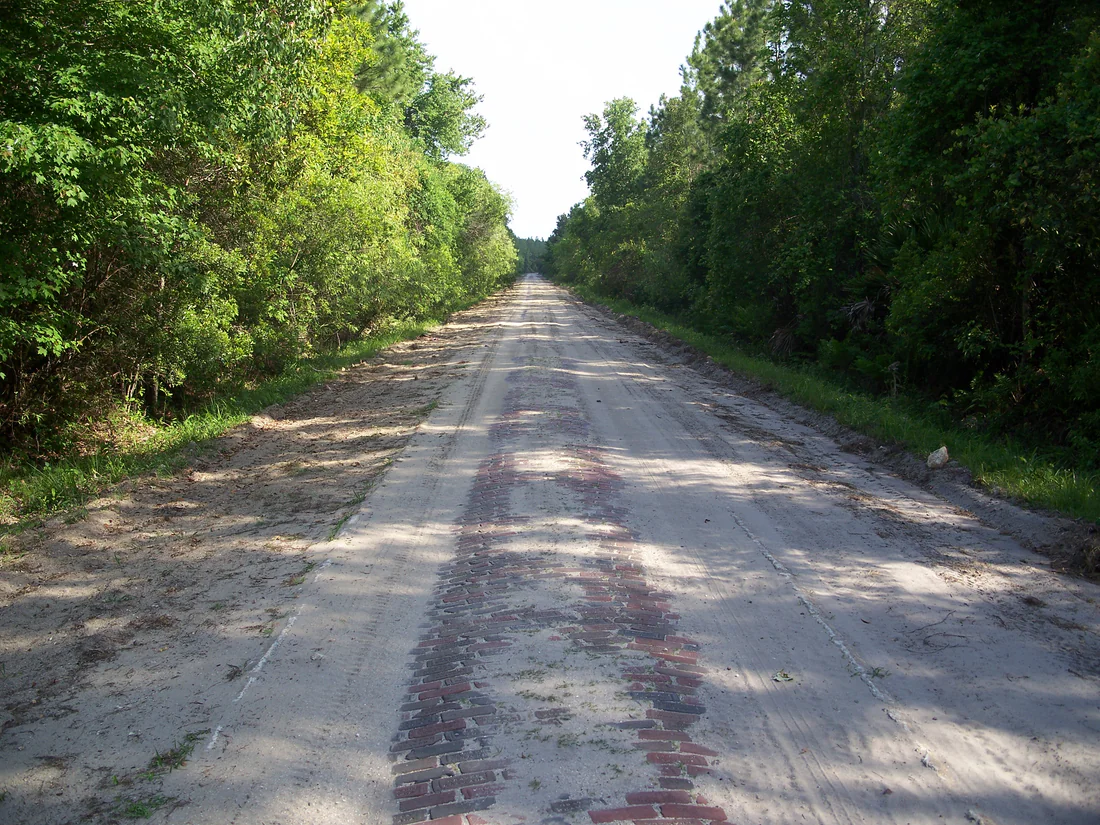
The Old Brick Road and a new county, 1914 to 1927
The Old Brick Road began with a vote on April 1, 1914, when St. Johns County voters approved a $650,000 bond issue. The brick road through Espanola reached Bunnell in 1916 as part of the Dixie Highway, which ran from Sault Ste. Marie, Michigan, to Miami Beach. Most of its red bricks were made in Birmingham, Alabama, by the Graves Brick Company. The bricks are laid nine feet wide, enough at the time for one Model T, the Palm Coast Observer says. The Palm Coast Observer says no rural brick highway in the country is longer.
The Florida Legislature created Flagler County on April 28, 1917, from northern Volusia County and southern St. Johns County, the WPA history says. A 2017 Palm Coast Observer story gives June 11, 1917, as the date the county was formed. The county was named for Henry M. Flagler, Rockefeller's associate at Standard Oil, who arrived in Florida in 1883 and built and ran the Florida East Coast Railroad.
Bunnell became the county seat, and the first county commission meeting was held there in July 1917, on the first Monday of the month. Isaac Moody died in December 1918, when he was the new county's first state representative. The Lambert Building served as the courthouse until the new courthouse was turned over to the county commissioners on April 4, 1927.
Sources: Flagler County Historical Society: Historic Locations in Flagler County; Flagler County Historical Society: Old Brick Road, A Cultural Resource Management Plan for Old Dixie Highway; Flagler County Historical Society: A Drive Down What Remains of the Old Brick Road; National Park Service: National Register of Historic Places Registration Form, Dixie Highway/Hastings, Espanola and Bunnell Road; Palm Coast Observer: Flagler County commission shows support for the preservation of Old Brick Road; Florida Memory: Historical Sketch of Flagler County (Works Progress Administration, Historical Records Survey, 1938); Florida Memory: Historical Sketch of Flagler County, later page (Works Progress Administration, 1938); Palm Coast Observer: Flagler County celebrates centennial with bands, games and historical reenactments; Flagler County Historical Society: Pictorial History of Bunnell, by Sisco Deen; Flagler County Historical Society: A History of the Flagler County Court House, by Mary Ann Clark
Next: Chapter 8, Ocean City becomes Flagler Beach →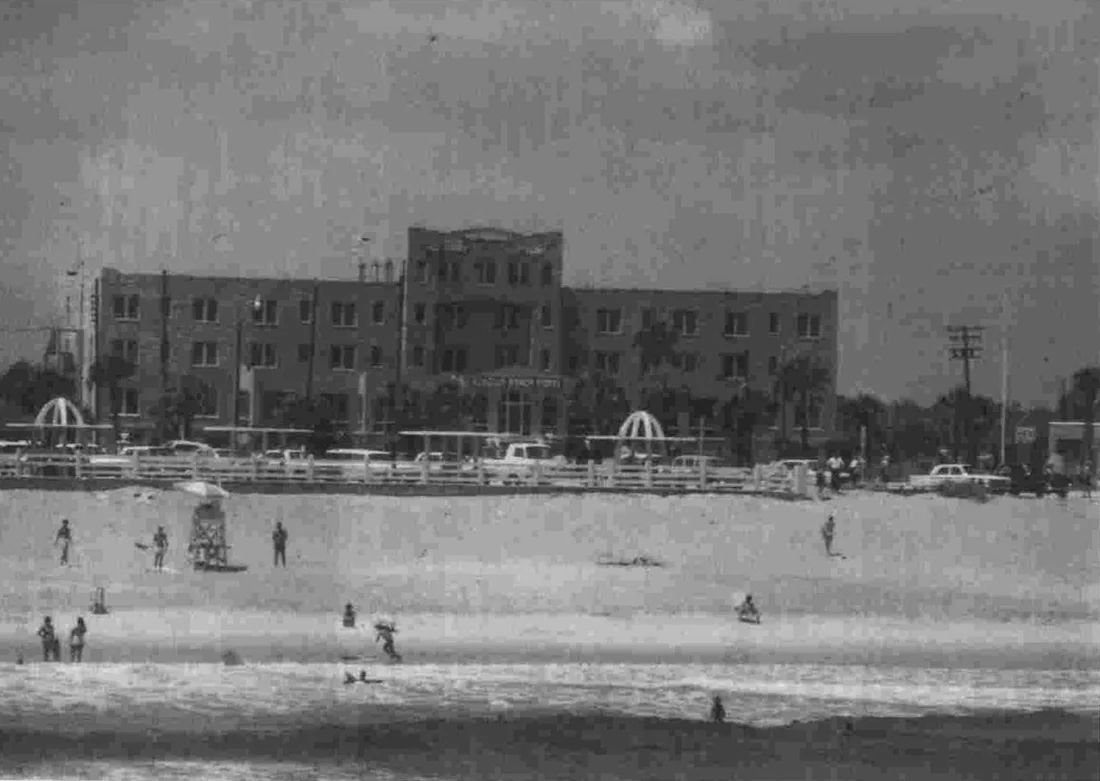
Ocean City becomes Flagler Beach
George Moody began developing Flagler Beach at the age of 34. The first settlement, Ocean City, sat west of the Intracoastal Canal on what is now Moody Boulevard. To reach the beach, Moody built a ferry big enough to carry a car across the canal. The Ocean City post office opened on January 30, 1915, in the Wickline store. In 1916 he put up a recreation hall, the Ocean City Beach Casino.
A swing bridge replaced the ferry in 1920. Flagler Beach was incorporated as a town on April 16, 1925, and it became a city in 1963. The Flagler Beach Hotel, with 30 rooms, opened on July 4, 1925. A hurricane wrecked the town's first pier in the mid-1920s. The Flagler Beach pier, a municipal fishing pier, was built in 1928, a block south of where the first one stood.
Sources: Flagler County Historical Society: Ocean City, Flagler Beach, by Sisco Deen; Flagler County Historical Society: Historic Locations in Flagler County; Palm Coast Observer: Flagler Beach to celebrate 100 years on April 16; Palm Coast Observer: Flagler Beach begins centennial celebration with a block party; City of Flagler Beach: Flagler Beach Celebrates its Centennial
Next: Chapter 9, Washington Oaks, Marineland and World War II →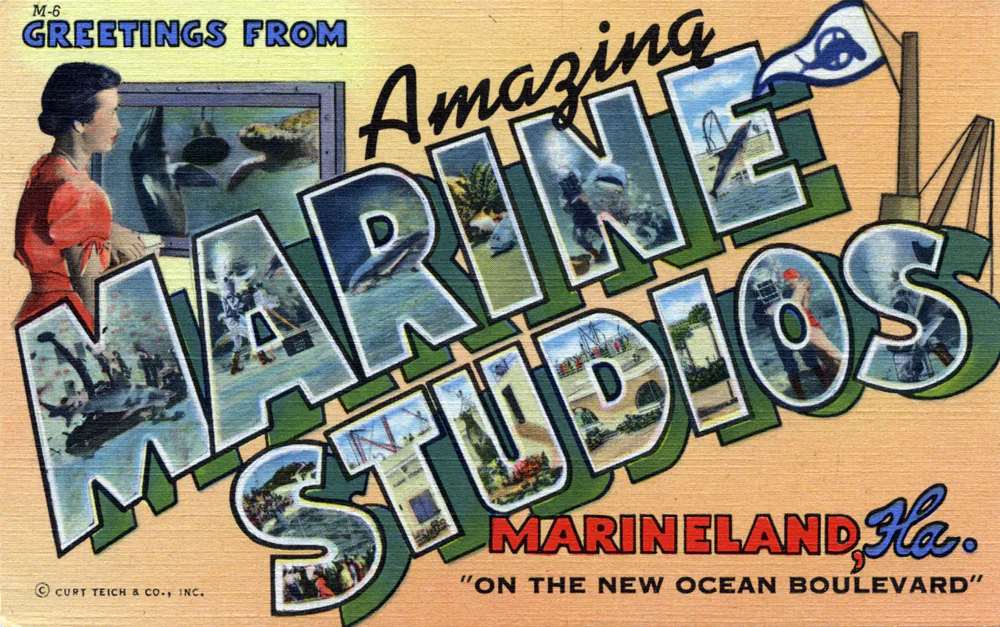
Washington Oaks, Marineland and World War II
The county's Irish potato fields covered 2,175 acres in 1929 and 3,124 acres by 1934, the WPA history says. Federal work programs built Bunnell City Hall, the jail and a boardwalk at Flagler Beach. The Little Red School House, another of these projects, was built in 1938 for Bunnell High School.
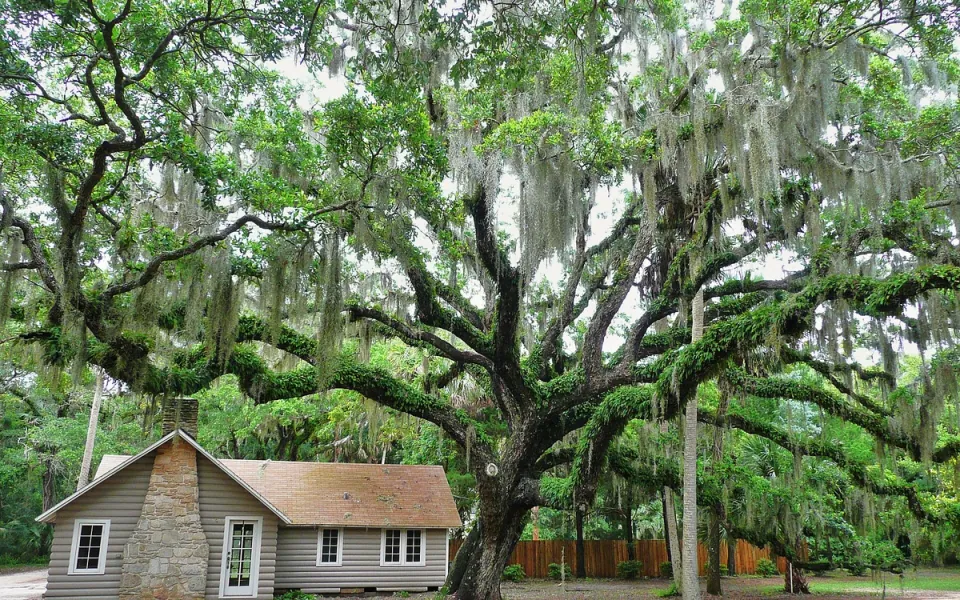
Owen D. Young, who helped found RCA and became chairman of General Electric in 1922, and his wife, Louise, bought the land at what is now Washington Oaks Gardens State Park as a winter retreat, in 1936 by the state marker's date and 1937 by the park's. Louise Young gave the land to Florida in 1964, after her husband died, the marker says. Marineland opened in June 1938 as an underwater motion picture studio, and the word oceanarium was invented to describe it. Count Ilia Tolstoy, a grandson of the novelist Leo Tolstoy, was one of its founders. First Lady Eleanor Roosevelt wrote about it in her newspaper column, "My Day," and Ernest Hemingway was among the writers who came.
In December 1941, when the United States entered World War II, Marineland closed to the public, and the Coast Guard trained combat dogs there. Over 400 people from Flagler County fought in the war, and people at home helped can fruit and vegetables. After about $250,000 in repairs, Marineland was fully open again by May 1946.
Sources: Florida Memory: Historical Sketch of Flagler County (Works Progress Administration, Historical Records Survey, 1938); Palm Coast Observer: From 1913 to present, a brief history of Bunnell; Flagler County Historical Society: Historic Locations in Flagler County; Florida State Parks: Washington Oaks Gardens State Park, History; Florida Department of State: Florida Historical Marker Details, Washington Oaks Gardens; Museum of Florida History: Marineland (World War II historical sites); Flagler County Historical Society: Marineland
Next: Chapter 10, Cement, the start of Palm Coast and school integration →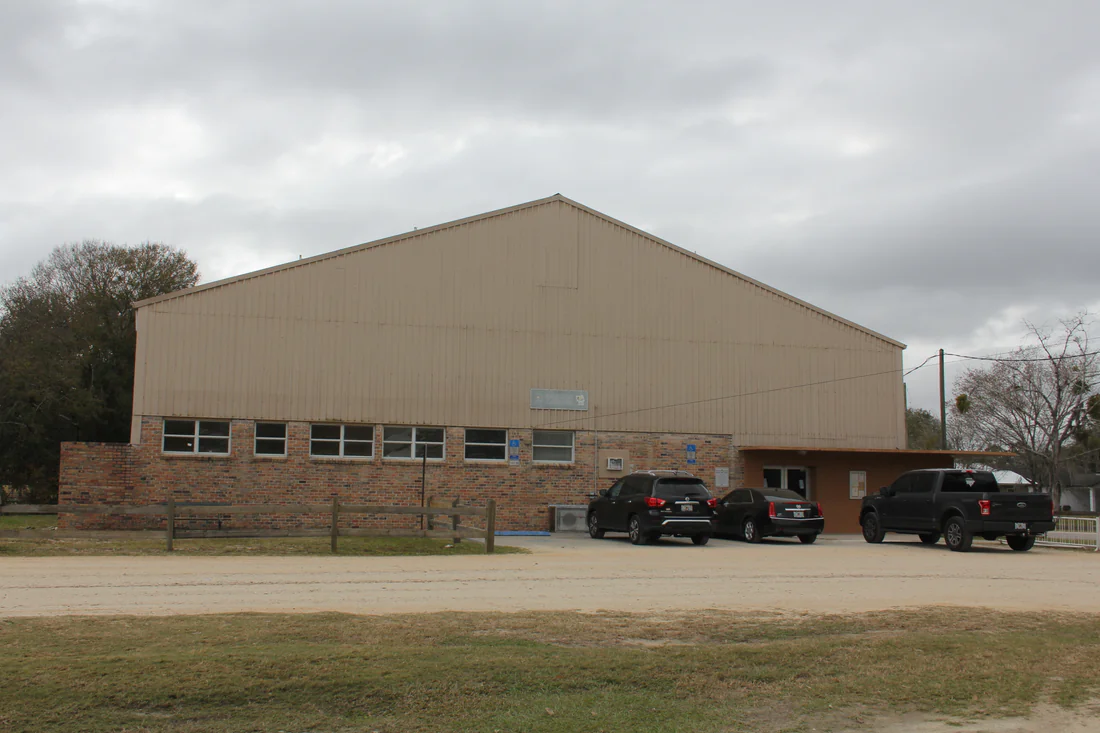
Cement, the start of Palm Coast and school integration
A Lehigh Portland cement plant off Roberts Road peaked at 15 million barrels in 1959, but it closed in 1965 and 175 people lost their jobs. When Interstate 95 came through in the 1960s it went around Bunnell, which made hard times worse. ITT began Palm Coast in 1969 on land bought from Lewis Wadsworth. William Levitt of Levitt & Sons, a company ITT had bought in 1968, drew up the plan. Unlike Levitt's other Florida projects, Palm Coast was planned as a whole community, with 48,000 home sites, a marina, tennis and yacht clubs and a golf course.
Black students went to the George Washington Carver School, one of the county's two schools with every grade from kindergarten to 12th, Barbara Revels writes. Under voluntary integration, Black students could choose to leave Carver for Bunnell High School, the white school. In 1970 a federal court order filed by the U.S. Justice Department required full integration. A 2013 Palm Coast Observer story says Carver closed after that order, but Revels gives 1967 as the year it closed and its high school students moved to Bunnell High.
Bunnell High School burned in 1970, and a new Flagler Palm Coast High School opened in 1973. The School Board later tore down every Carver building except the gym, and when the gym itself was at risk, residents sent the county a petition asking that it stay open.
Sources: Palm Coast Observer: From 1913 to present, a brief history of Bunnell; Florida Department of State: Florida Historical Marker Details, Palm Coast, Florida; Palm Coast Observer: Why the Carver Center matters, by Barbara Revels (May 2, 2017); Palm Coast Observer: A tale of two high schools (February 23, 2013)
Next: Chapter 11, Since 1990: a park for Gamble Rogers, Palm Coast becomes a city and Flagler Beach turns 100 →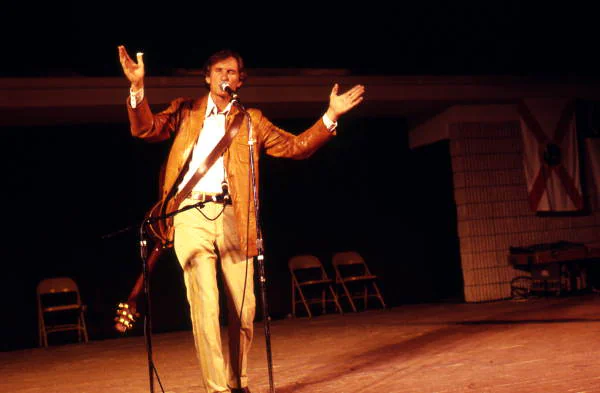
Since 1990: a park for Gamble Rogers, Palm Coast becomes a city and Flagler Beach turns 100
On October 10, 1991, the folk singer Gamble Rogers was camping with his wife at the Flagler Beach State Recreation Area when a young girl came to him because her father was struggling in rough surf. He took an air mattress and headed for the ocean, but the surf overcame him and he drowned. In 1992 the Florida Legislature renamed the park Gamble Rogers Memorial State Recreation Area at Flagler Beach to honor him. Flagler County bought Princess Place as a preserve in 1993.
Palm Coast voters chose to become a city on September 14, 1999, in a vote held late because of Hurricane Floyd, and the city was incorporated on December 31, 1999. In 2005 the Old Brick Road joined the National Register of Historic Places. After several years closed, Marineland opened its doors again on March 4, 2006. Hurricane Ian tore off part of the Flagler Beach pier in September 2022, and the pier was closed.
On April 29, 2017, Flagler County marked its 100th birthday at the Government Services Building, and the County Commission reenacted its first meeting. On October 26, 2024, Palm Coast held its 25th anniversary celebration at Central Park in Town Center, where the City Council unveiled a living time capsule meant to be displayed, not buried. Flagler Beach turned 100 on April 16, 2025, and the city held a birthday and block party with the Flagler Beach Historical Museum. Rotary Club members and others, more than 300 people by the club president's estimate, stood on the sand north of the pier in the shape of a "100."
Sources: Florida State Parks: History of Gamble Rogers; Florida Department of State: Florida Historical Marker Details, Princess Place Estate; Palm Coast Observer: Palm Coast celebrates like it's 1999; Flagler County Historical Society: Historic Locations in Flagler County; Palm Coast Observer: Construction set to begin on new Flagler Beach pier; Palm Coast Observer: Flagler County celebrates centennial with bands, games and historical reenactments; Palm Coast Observer: Flagler Beach begins centennial celebration with a block party
Next: the whole story, in dates →The whole story, in dates
Pedro Menendez de Aviles leads 150 men across the area to attack a French colony.
Franciscan friars found a mission about 26 miles south of St. Augustine.
The British build the King's Road from St. Augustine to Cowford.
Hewitt's water-powered sawmill runs, its dam and mill built by enslaved people.
The British lay out large plantations along the King's Road.
The King of Spain offers Francisco Pellicer a 1,100-acre grant.
John Russell, perhaps the earliest permanent settler, arrives from the Bahamas.
Joseph Hernandez receives a Spanish grant and begins working Mala Compra.
Charles Wilhelm Bulow buys 4,675 acres beside Bulow Creek.
John James Audubon arrives at Bulowville.
The Second Seminole War begins.
Seminoles burn Bulowville and nearby plantations.
George Washington marries Louisa Hernandez and they settle at today's Washington Oaks.
Henry Mason Cutting buys the Pellicer grant and names it Cherokee Grove.
Utley James White's railroad reaches Daytona.
Alvah Bunnell becomes postmaster.
The Bunnell Development Company lays out the town of Bunnell.
Bunnell Stop is first made a town.
The first 35 Polish families arrive in Korona.
St. Johns County voters approve a $650,000 bond issue.
The brick Dixie Highway reaches Bunnell.
The Florida Legislature creates Flagler County, by the WPA history's date.
Sam Bortree builds the Holden House in Bunnell.
Flagler Beach is incorporated as a town.
The new county courthouse is turned over to the commissioners.
The municipal fishing pier at Flagler Beach is built.
Marineland opens as an underwater motion picture studio.
Marineland closes to the public as the United States enters World War II.
Louise Young gives Washington Oaks to the state, by the marker's date.
The Lehigh Portland cement plant closes.
ITT begins Palm Coast.
A federal court order requires full integration of the county's schools.
The Legislature renames the Flagler Beach park for Gamble Rogers.
Palm Coast is incorporated as a city.
Marineland opens again after several years closed.
Flagler County celebrates its centennial.
Palm Coast celebrates its 25th anniversary and unveils a living time capsule.
Flagler Beach turns 100 with a birthday and block party.
Where you can still see it
 01
Bulow Plantation Ruins Historic State Park
Goes with: The Second Seminole War, 1835 to 1836
Open the place page →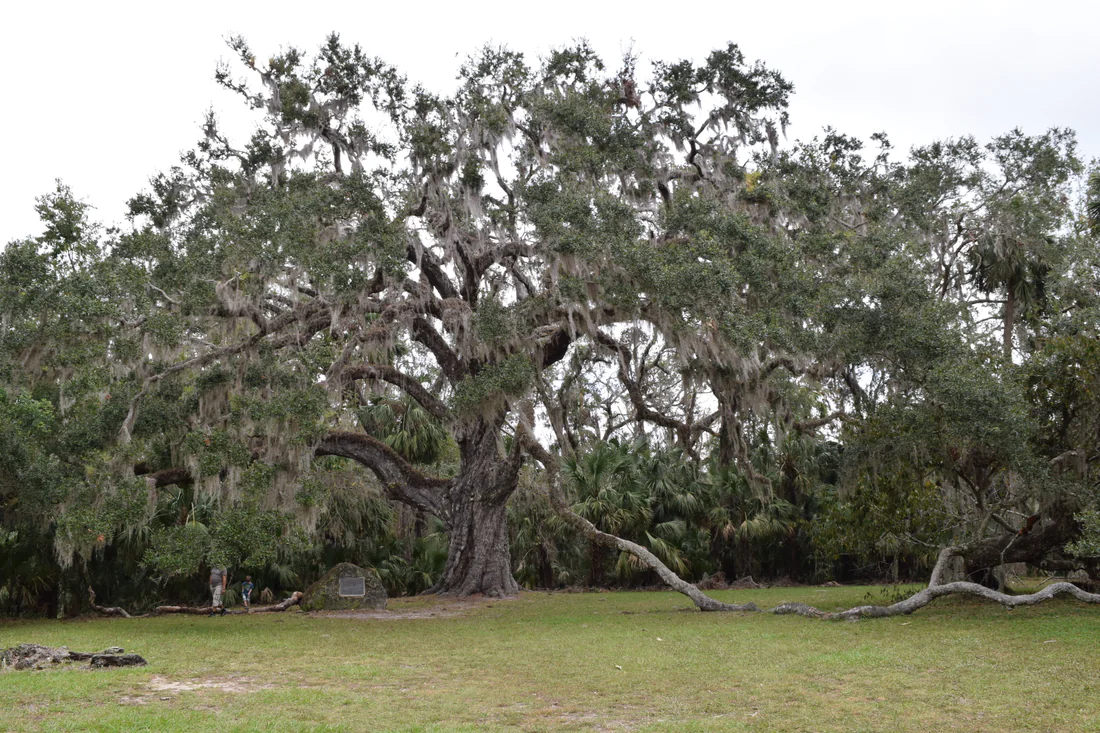 02
 03
Princess Place Preserve
Goes with: A railroad, a House of Refuge and Cherokee Grove
Open the place page →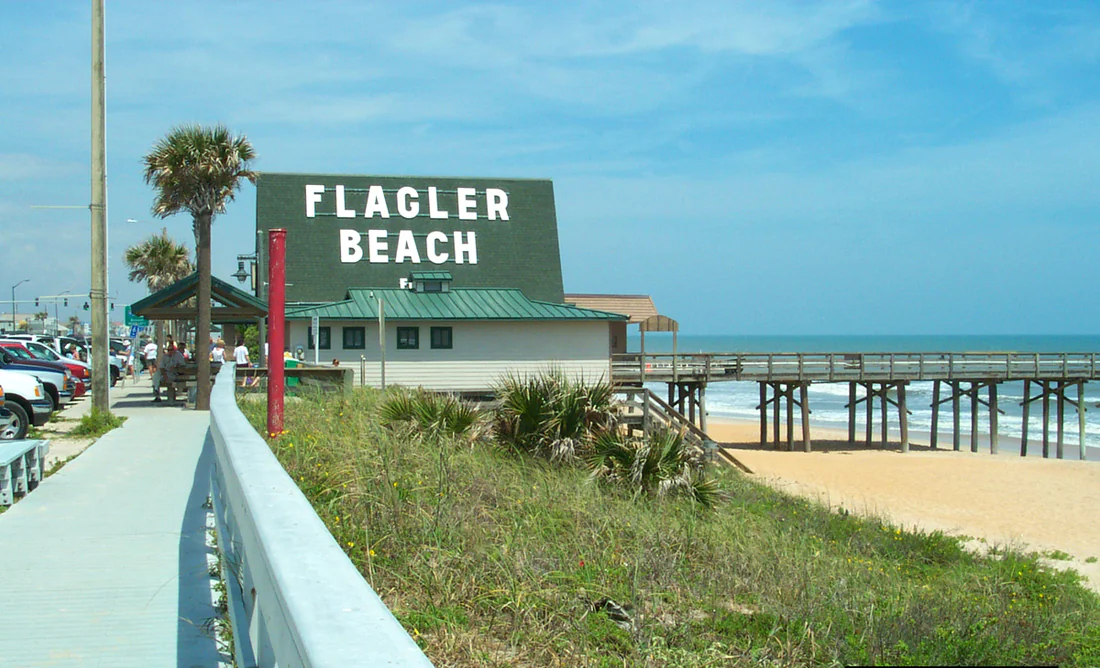 04
 05
Washington Oaks Gardens State Park
Goes with: Washington Oaks, Marineland and World War II
Open the place page →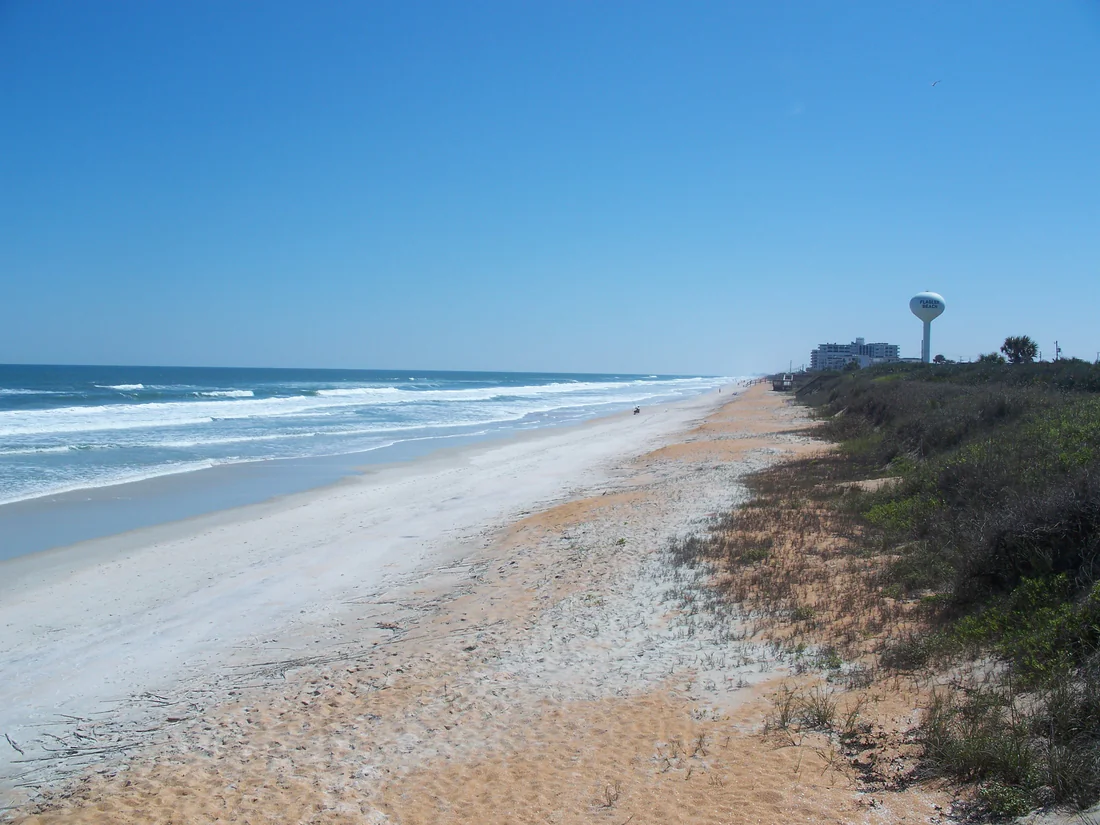 06
Gamble Rogers State Recreation Area
Goes with: Since 1990: a park for Gamble Rogers, Palm Coast becomes a city and Flagler Beach turns 100
Open the place page →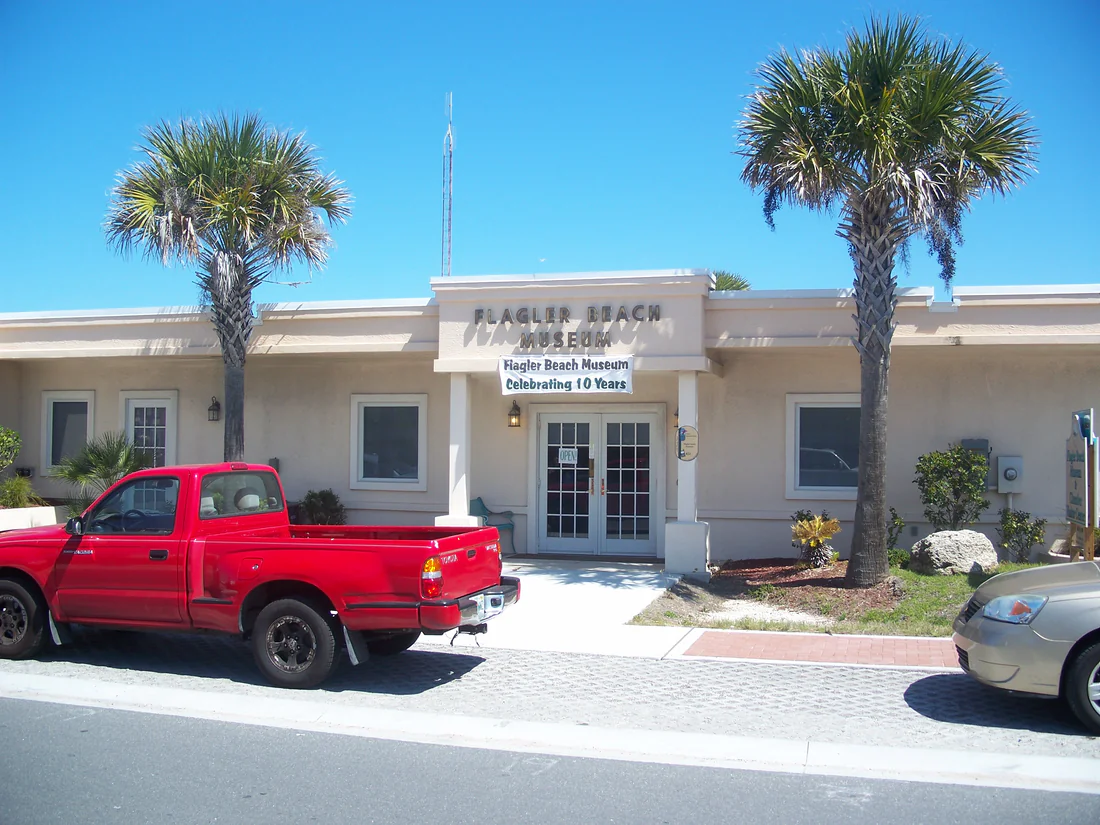 07
Flagler Beach Historical Museum
Goes with: Since 1990: a park for Gamble Rogers, Palm Coast becomes a city and Flagler Beach turns 100
Open the place page →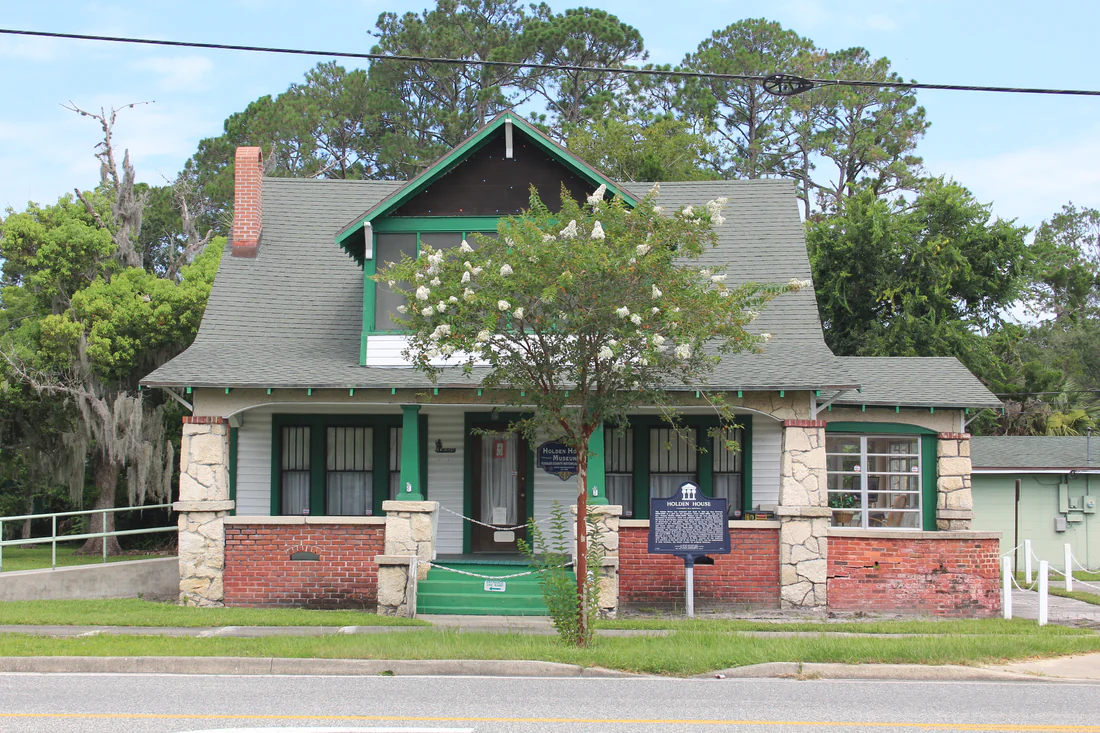 08
Holden House
Goes with: Bunnell and Korona
Holden House, home of the Flagler County Historical Society →Questions people ask
When was Flagler County created?
The Florida Legislature created Flagler County on April 28, 1917, the WPA history says, though a 2017 Palm Coast Observer story gives June 11, 1917.
Chapter 7 →Who was Flagler County named for?
It was named for Henry M. Flagler, Rockefeller's associate at Standard Oil, who built and ran the Florida East Coast Railroad.
Chapter 7 →What is the county seat of Flagler County?
Bunnell became the county seat, and the first county commission meeting was held there in July 1917.
Chapter 7 →When did Marineland open?
Marineland opened in June 1938 as an underwater motion picture studio.
Chapter 9 →When did Palm Coast become a city?
Palm Coast was incorporated as a city on December 31, 1999, after voters chose city status on September 14, 1999.
Chapter 11 →Where this comes from.
Last updated October 18, 2026.
- Flagler County: About Us ↗ Read October 18, 2026
- Flagler County: Princess Place Preserve ↗ Read October 18, 2026
- Florida Memory: Historical Sketch of Flagler County (Works Progress Administration, Historical Records Survey, 1938) ↗ Read October 18, 2026
- Florida Memory: Historical Sketch of Flagler County, later page (Works Progress Administration, 1938) ↗ Read October 18, 2026
- Florida Department of State: Florida Historical Marker Details, King's Road ↗ Read October 18, 2026
- Florida Department of State: Florida Historical Marker Details, Mala Compra Plantation ↗ Read October 18, 2026
- Florida Department of State: Florida Historical Marker Details, Princess Place Estate ↗ Read October 18, 2026
- Florida Department of State: Florida Historical Marker Details, Washington Oaks Gardens ↗ Read October 18, 2026
- Florida Department of State: Florida Historical Marker Details, Palm Coast, Florida ↗ Read October 18, 2026
- Florida Department of State: Florida Historical Marker Details, Hernandez Landing ↗ Read October 18, 2026
- Florida Department of State: Florida Historical Marker Details, Holden House ↗ Read October 18, 2026
- Florida State Parks: History of BulowVille ↗ Read October 18, 2026
- Florida State Parks: Bulow Plantation Ruins Historic State Park ↗ Read October 18, 2026
- Florida State Parks: Bulow Creek State Park ↗ Read October 18, 2026
- Florida State Parks: Washington Oaks Gardens State Park, History ↗ Read October 18, 2026
- Florida State Parks: History of Gamble Rogers ↗ Read October 18, 2026
- Museum of Florida History: Marineland (World War II historical sites) ↗ Read October 18, 2026
- National Park Service: National Register of Historic Places Registration Form, Dixie Highway/Hastings, Espanola and Bunnell Road ↗ Read October 18, 2026
- Flagler County Historical Society: Historic Locations in Flagler County ↗ Read October 18, 2026
- Flagler County Historical Society: In Florida, the Underground Railroad Ran South, by Bill Ryan ↗ Read October 18, 2026
- Flagler County Historical Society: Railroads ↗ Read October 18, 2026
- Flagler County Historical Society: Pictorial History of Bunnell, by Sisco Deen ↗ Read October 18, 2026
- Flagler County Historical Society: Korona, by Sisco Deen ↗ Read October 18, 2026
- Flagler County Historical Society: Old Brick Road, A Cultural Resource Management Plan for Old Dixie Highway ↗ Read October 18, 2026
- Flagler County Historical Society: A Drive Down What Remains of the Old Brick Road ↗ Read October 18, 2026
- Flagler County Historical Society: A History of the Flagler County Court House, by Mary Ann Clark ↗ Read October 18, 2026
- Flagler County Historical Society: Ocean City, Flagler Beach, by Sisco Deen ↗ Read October 18, 2026
- Flagler County Historical Society: Marineland ↗ Read October 18, 2026
- Palm Coast Observer: From 1913 to present, a brief history of Bunnell ↗ Read October 18, 2026
- Palm Coast Observer: Centennial curiosities, a town, a street or park by any other name ↗ Read October 18, 2026
- Palm Coast Observer: A tale of two high schools (February 23, 2013) ↗ Read October 18, 2026
- Palm Coast Observer: Why the Carver Center matters, by Barbara Revels (May 2, 2017) ↗ Read October 18, 2026
- Palm Coast Observer: Flagler County celebrates centennial with bands, games and historical reenactments ↗ Read October 18, 2026
- Palm Coast Observer: Flagler County commission shows support for the preservation of Old Brick Road ↗ Read October 18, 2026
- Palm Coast Observer: Flagler Beach to celebrate 100 years on April 16 ↗ Read October 18, 2026
- Palm Coast Observer: Flagler Beach begins centennial celebration with a block party ↗ Read October 18, 2026
- City of Flagler Beach: Flagler Beach Celebrates its Centennial ↗ Read October 18, 2026
- Palm Coast Observer: Construction set to begin on new Flagler Beach pier ↗ Read October 18, 2026
- Palm Coast Observer: Palm Coast celebrates like it's 1999 ↗ Read October 18, 2026