Deer Lake State Park
A boardwalk three-tenths of a mile long runs from the parking area over the dunes to the beach. It is accessible, railed the whole way, and has two roofed observation decks with benches where people stop and look at the water.
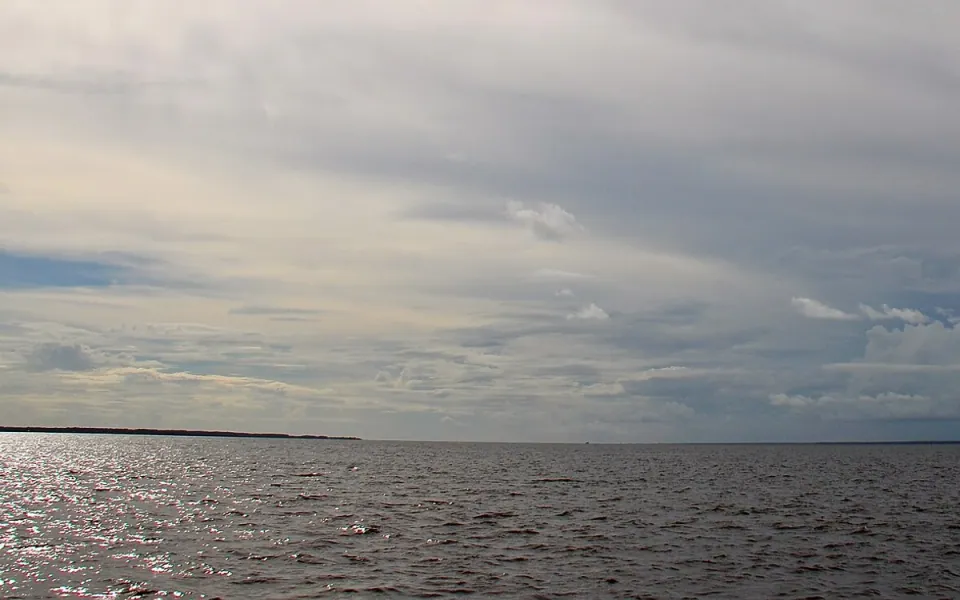
Photograph: Choctawhatchee Bay.JPG by Skye Marthaler · CC BY-SA 4.0 · Restored from the credited Wikimedia Commons file, normalized to the consistent attraction-card frame and converted to WebP by 1stFlorida.com. Portrait originals retain their complete composition over a softly blurred extension of the same photograph.
Walton County attraction
Walton County · Panhandle & Emerald Coast
An estuary twenty-seven miles long and six miles wide, covering 129 square miles across Walton and Okaloosa counties.
Also worth a visit
A boardwalk three-tenths of a mile long runs from the parking area over the dunes to the beach. It is accessible, railed the whole way, and has two roofed observation decks with benches where people stop and look at the water.
It starts at the northern edge of Deer Lake State Park, crosses beneath Scenic Highway 30A, and ends at the Gulf. Public access is at a county easement on Camp Creek Road North. Camp Creek is one of fifteen named coastal dune lakes strung along this stretch of Walton County coast, from Fuller Lake in the west to Lake Powell in the east.
The spring pool is 250 feet across and puts out an estimated 48 million gallons of clear water a day, with peaks recorded at 70 million. Water surfaces through three separate cavities. The deepest of them goes down about 300 feet and ends in an underground chamber whose size nobody has measured.
It measures 1,580 feet at its longest and 1,510 feet at its widest, which is as close to round as a natural lake gets. It is said to be one of only two almost exactly circular spring-fed lakes in the world.
Duany Plater-Zyberk planned it, and the look is different from anything else on this coast: cobblestone streets, deep overhangs, dark wood and stucco, courtyards, and influences drawn from the French Quarter, the Caribbean and old coastal towns further south. About seven hundred people live here.
Every building is white, and that is not a preference but the rule. The design takes from Bermuda and from the Mediterranean, with thick masonry walls, flat roofs, courtyards closed off from the street, and narrow pathways cutting between the buildings.
Keep comparing