Hendry County was formed out of eastern Lee County on May 11, 1923. It was named for Captain Francis Asbury Hendry, a cattle rancher who founded the town of LaBelle, and LaBelle became the county seat. Clewiston, at the south end of Lake Okeechobee, is called America's Sweetest Town, and U.S. Sugar Corporation is based there. The county's history goes back to the Calusa, who lived on the southwest Florida coast from A.D. 800 and used dugout canoes to travel up the Caloosahatchee River.
This page tells the story in order, from the Calusa and the River of the Calusa to the Ah-Tah-Thi-Ki Museum, the Sugar Express and Harlem's new amphitheater, then lists places in the county where you can still see it. The sources for each part are named at the end of that part, and all of them are listed at the bottom of the page.
The Calusa and the River of the Calusa
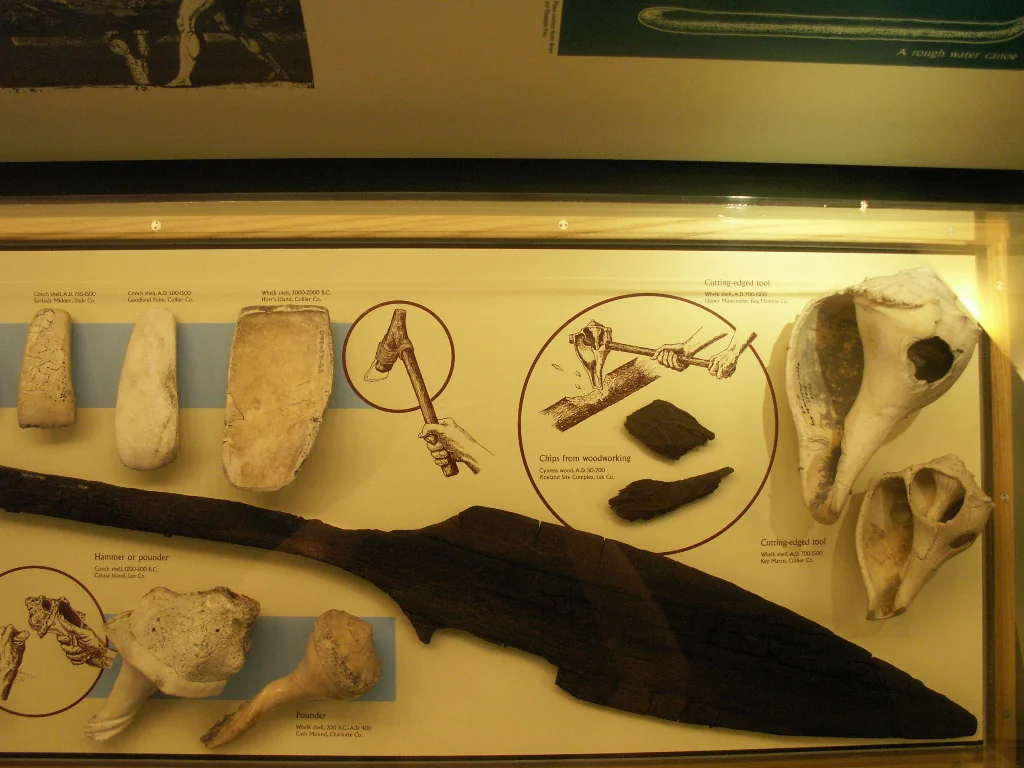
The Calusa were likely among the first people to visit the Hendry County area, including the land that is now Dinner Island Ranch Wildlife Management Area, the state wildlife agency says. Beginning in A.D. 800 and lasting into the 17th century, the Calusa hunted and fished along the southwest Florida coast. They used dugout canoes to travel up the Caloosahatchee River to wetlands farther inland, near the Kissimmee River and Lake Okeechobee.
The name Caloosahatchee means River of the Calusa. The river flows southwest from Lake Okeechobee to the Gulf near present-day Fort Myers. Swamp cabbage, cut from the center of the sabal palm, was an important food for Native Americans such as the Seminole, Fox 4 reports.
Sources: Florida Fish and Wildlife Conservation Commission: Dinner Island - History; Fox 4 News: 'It means a lot': LaBelle celebrates 100 years with the Swamp Cabbage Festival
Next: Chapter 2, 1835 to 1842: Fort Denaud and Fort Thompson →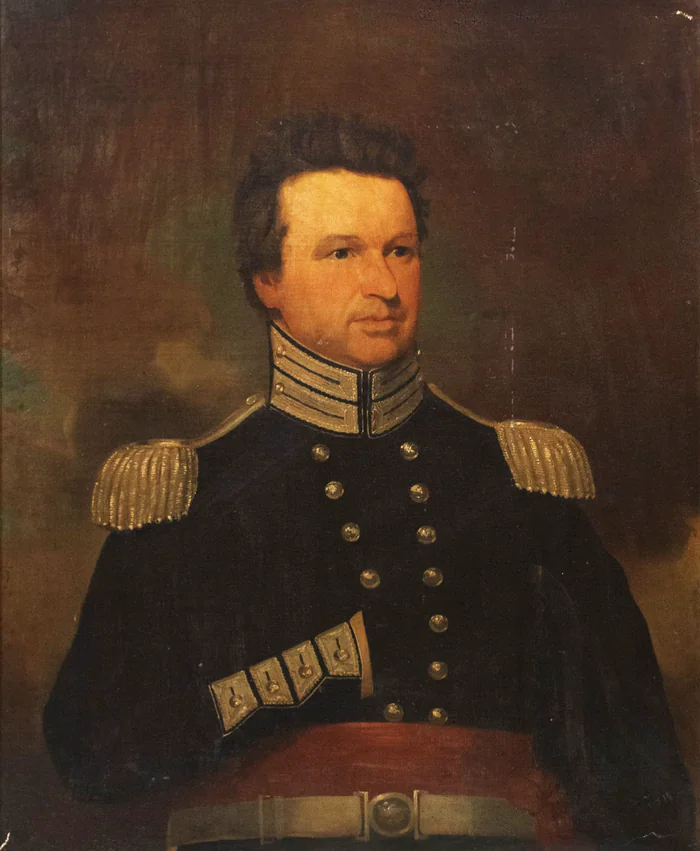
1835 to 1842: Fort Denaud and Fort Thompson
The Second Seminole War broke out in 1835, driven by more and more white settlers in Florida and a federal policy of moving Indian tribes west of the Mississippi, a state marker says. In 1838, Captain B. L. E. Bonneville set up Fort Denaud, one of a chain of posts linking Army operations south of Tampa with the east coast. It was built 27 miles from Fort Myers, on the Caloosahatchee's south bank, on land that belonged to Pierre Danaud, a French trader who dealt with the Indians.
The post was a blockhouse with tents around it. It held supplies for troops near Lake Okeechobee and was used now and then until the war's end in 1842.
Fort Thompson began about 1838 as another military post in the war. It was named for Lieutenant Colonel Alexander Thompson, who was killed in 1837 at the Battle of Okeechobee. A state marker says LaBelle's history begins at the old Fort Thompson site on the Caloosahatchee River. An early county history says the first settlements here were military outposts against the Seminoles.
Sources: Florida Department of State: Historical Marker, Fort Denaud; Florida Department of State: Historical Marker, Fort Thompson; Florida Memory, State Archives of Florida: Hendry County, Historical Sketch
Next: Chapter 3, 1855 to 1858: The Third Seminole War →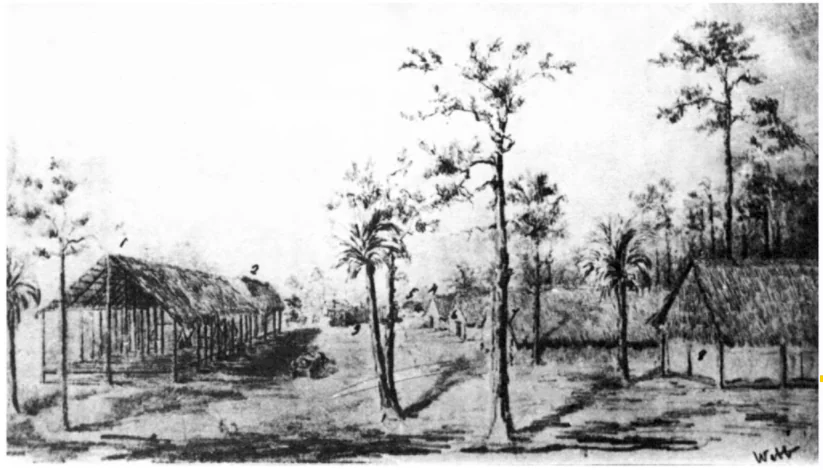
1855 to 1858: The Third Seminole War
Fort Denaud opened again in 1855, soon after the Third Seminole War broke out. New buildings were added, among them company quarters, a hospital, a guardhouse, a sutler's store and stables. A fire swept through the post in June 1856, and a few months later a new site was chosen two miles west, on the north bank of the river. The fort was abandoned in May 1858, and the nearby town of Denaud is named for it.
Explorers on the Ingraham Expedition later crossed the Okaloacoochee Slough on an old government causeway, probably one that the U.S. Army built in 1855. The slough and the forest around it are now protected as Okaloacoochee Slough State Forest. An early county history says the forts were abandoned before scattered settlers began moving into the area in the 1870s.
Sources: Florida Department of State: Historical Marker, Fort Denaud; University of Florida Libraries: Ingraham Expedition, Okaloacoochee Slough; Florida Memory, State Archives of Florida: Hendry County, Historical Sketch
Next: Chapter 4, Cattle, steamboats and Captain Hendry →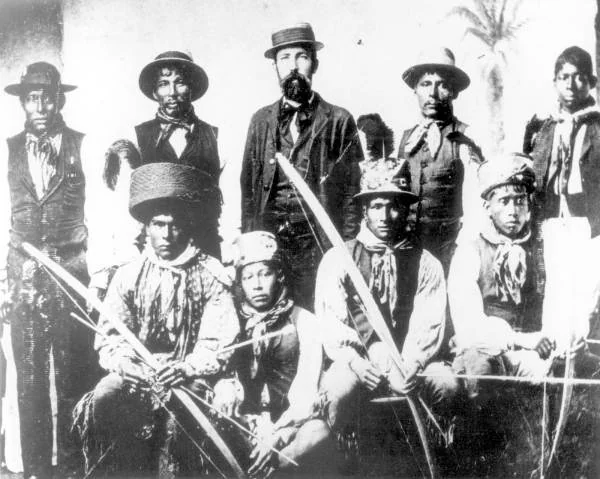
Cattle, steamboats and Captain Hendry
After the soldiers came cattlemen, hunters, trappers and traders, the state wildlife agency says. During the Civil War, Confederates raised cattle for their soldiers on the old Fort Thompson site.
Francis Asbury Hendry was born in Georgia on November 19, 1833. He helped found Fort Myers and became one of Florida's leading cattle ranchers. An early county history says he is believed to have been the first to run cattle on the land south of the Caloosahatchee. In 1879, Hendry, a former Confederate captain, acquired the old fort property, and in 1889 he made it his home. He started a cattle ranch there, and the town of LaBelle grew up along its western edge.
Settlers were few until after 1881, when the Atlantic and Gulf Coast and Okeechobee Land Company took on the job of draining the land, the early county history says. Dredging on the Caloosahatchee began the same year, and a canal joined the river to Lake Okeechobee. In 1885, steamboats carried passengers between Fort Myers and Fort Thompson.
Sources: Florida Fish and Wildlife Conservation Commission: Dinner Island - History; Florida Department of State: Historical Marker, Fort Thompson; University of Florida Libraries: Ingraham Expedition, Francis Asbury Hendry; Florida Memory, State Archives of Florida: Hendry County, Historical Sketch
Next: Chapter 5, LaBelle grows along the river →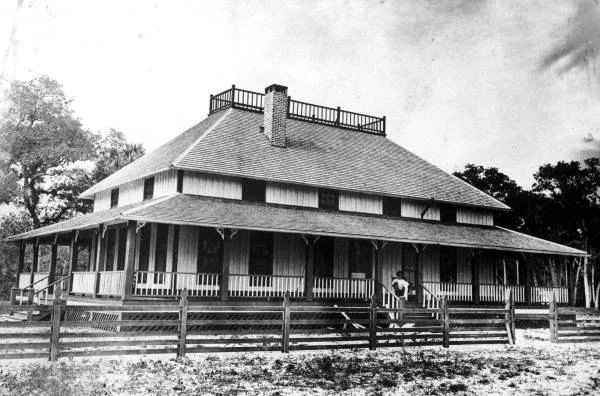
LaBelle grows along the river
By 1889, people were already calling the small new settlement Belle, Belle City or LaBelle, the city says. The name honored Hendry's daughters Laura and Carrie Belle. LaBelle had its first school by 1891, and its first church, a Methodist church, opened the same year. A state marker says Hendry platted a townsite at LaBelle in 1895, but the city's history says he recorded the plat in 1909 at the Lee County Courthouse.
In 1905, Edgar Everett Goodno bought Fort Thompson. He built an electric plant and an ice plant to serve the growing town. Thomas Edison is known to have stayed at the Fort Thompson Hotel on a visit to LaBelle.
In 1911, the Florida Legislature gave LaBelle a town charter, with land in Lee County and in DeSoto County. D. A. Mitchell became its first mayor. In 1924, Henry Ford bought part of Goodno's land. Ford kept the land until 1942 and then sold it to Joseph B. Hendry, one of Captain Hendry's cousins.
Sources: City of LaBelle: The History of LaBelle; Caloosa Belle and Clewiston News (South Central Florida Life): LaBelle; Florida Department of State: Historical Marker, Downtown La Belle Historic District; Florida Department of State: Historical Marker, Fort Thompson
Next: Chapter 6, The 1920s: Clewiston and the sugar mill →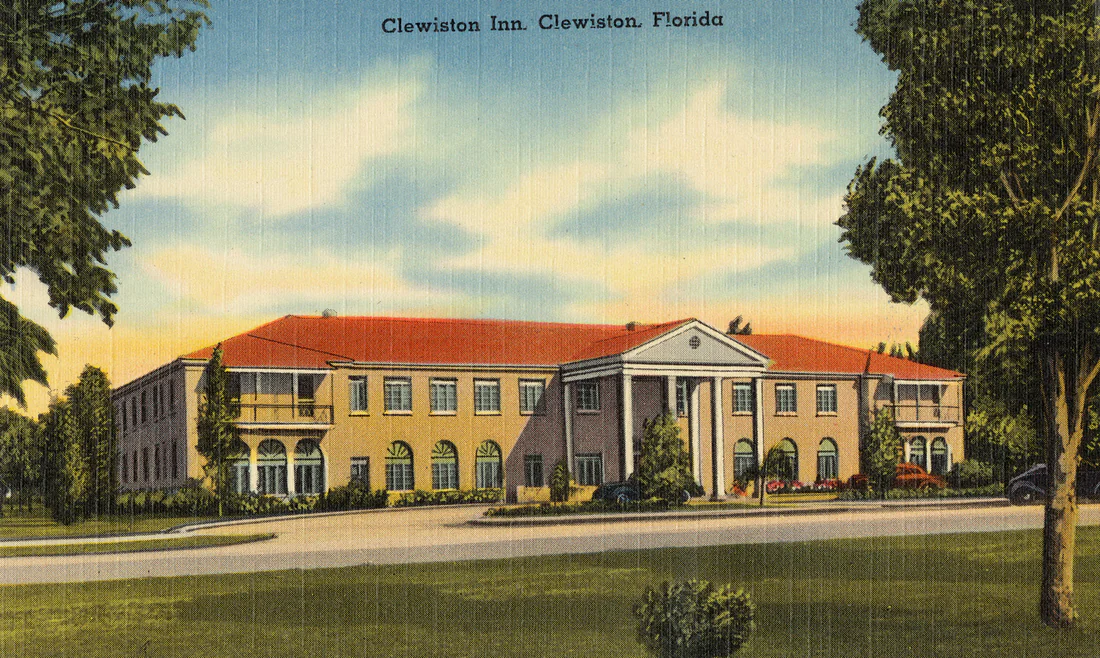
The 1920s: Clewiston and the sugar mill
Clewiston began in 1920, when Alonzo Clewis of Tampa and John O'Brien of Philadelphia bought a large piece of land to start a town. They had a town plan drawn up and built the Moore Haven and Clewiston Railway, linking Clewiston with the Atlantic Coast Line Railroad. Cornell University's library keeps letters from January to June 1925 about a plan for Clewiston among the papers of John Nolen. Clewiston became an incorporated city in 1925.
In the 1920s, Clewiston grew fast, and sugarcane and citrus became major local crops. The Clewiston Inn opened in 1926, WFLX reports. The Clewiston News began publishing in 1928.
Southern Sugar opened the Clewiston Sugar House in 1929. At first it could grind 1,500 tons of sugarcane a day. An early county history reports that the raw sugar plant at Clewiston was said to be the biggest single-unit cane sugar mill in the mainland United States.
Sources: Clewiston News (South Central Florida Life): Clewiston; Cornell University Library, Division of Rare and Manuscript Collections: Clewiston, FL, January - June 1925; Florida Fish and Wildlife Conservation Commission: Dinner Island - History; WFLX: Spirits felt at historic Florida inn; U.S. Sugar: About Us; Florida Memory, State Archives of Florida: Hendry County, Historical Sketch
Next: Chapter 7, 1923: Hendry County is created →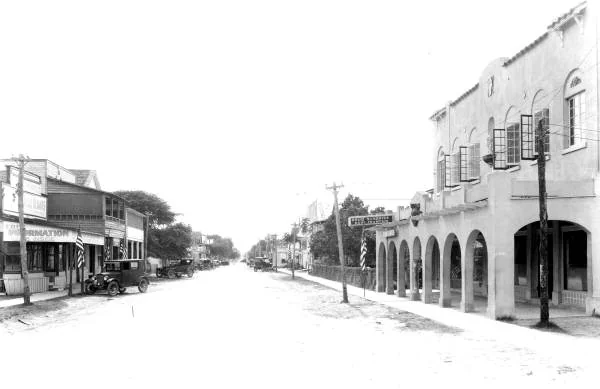
1923: Hendry County is created
On May 11, 1923, the Florida Legislature made eastern Lee County into a new county, Hendry County. The act that created it was Chapter 9360 of the Acts of 1923. It was named for Captain Francis Asbury Hendry, whom the city of LaBelle calls the "Cattle King of South Florida." LaBelle, on the upper Caloosahatchee, became the county seat.
The new board of county commissioners met for the first time on July 10, 1923. Its members were M. E. Forrey, E. E. Goodno, J. J. O'Brien, M. F. Borsclair and J. L. Taylor. In 1925, the legislature chartered LaBelle as a city. The Seaboard Air Line Railroad reached LaBelle in 1927, on tracks it built from Fort Myers.
A fire in 1928 destroyed many of the early downtown buildings. Some survived, among them the Poole Store from 1911 and the First Bank of LaBelle from 1925. The old business district along Bridge Street is now the Downtown LaBelle Historic District, which is listed on the National Register of Historic Places.
Sources: Florida Memory, State Archives of Florida: Hendry County, Historical Sketch; City of LaBelle: The History of LaBelle; Florida Department of State: Historical Marker, Downtown La Belle Historic District
Next: Chapter 8, Harlem and Harlem Academy →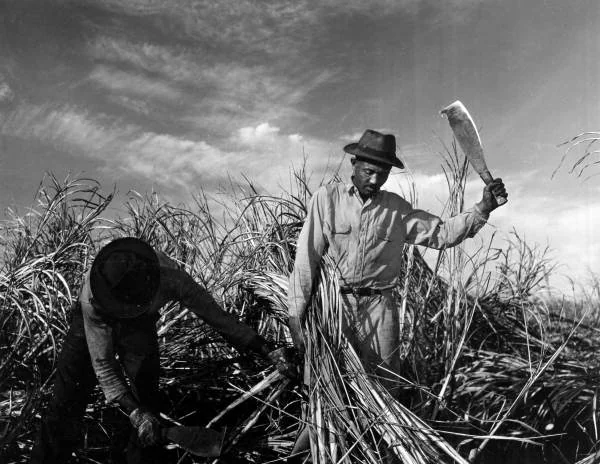
Harlem and Harlem Academy
Harlem began in 1926 as land that the sugar companies set apart outside Clewiston for Black workers in the cane fields, WGCU reports. Many of them had come from the Caribbean. The companies named the place Townsite. In the 1920s, the music of Duke Ellington and other Black artists was reaching Hendry County, and news of the Black cultural renaissance in Manhattan was spreading. So the settlers renamed their town Harlem.
Harlem Academy was a private, all-Black school at a time when the public schools were all-white. On July 17, 1970, the United States filed a case against the Hendry County School District in federal court in the Southern District of Florida. Harlem Academy closed in 1971, when the county's schools were integrated. Later, the former academy was used for kindergarten, special education and school offices. In 1975, the court issued a permanent order against running a dual school system.
Sources: WGCU News: Hendry County moves to help Harlem, a little-known community with lots of history; Civil Rights Litigation Clearinghouse: United States of America v. Hendry County School District
Next: Chapter 9, The 1928 hurricane, U.S. Sugar and the dike →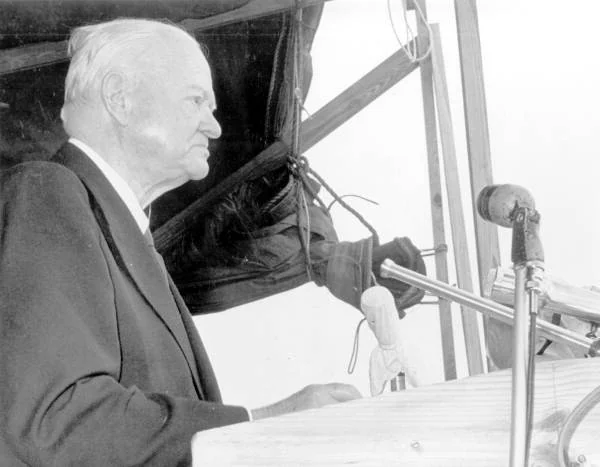
The 1928 hurricane, U.S. Sugar and the dike
Hurricane tides spilled over the first dike around Lake Okeechobee in 1926 and again in 1928 and washed away houses, the Associated Press reported. The 1928 storm, later called the Okeechobee Hurricane, came ashore at about 7 p.m. on September 16. Florida Memory says at least 2,000 people died in the flood, and an AP report estimates at least 2,500 deaths from the 1928 storm. President-elect Herbert Hoover came to see the damage, and once in office he gave the Army Corps of Engineers the job of helping prevent a repeat of the 1928 disaster.
On April 29, 1931, Charles Stewart Mott, known as an automotive pioneer, arranged to buy the land and other assets of the failed Southern Sugar Corporation at Clewiston. Mott became chairman, and the company took the new name United States Sugar Corporation. A 1938 postcard of the Clewiston Inn noted that U.S. Sugar had its headquarters in Clewiston. By 1941, the company was making a profit. In 1985, U.S. Sugar turned its well-known cattle operation into orange groves.
The Corps led the work of building the Herbert Hoover Dike in the 1960s. Hoover himself spoke to the crowd in 1961 when the new lake dike that bears his name was dedicated.
Sources: WLRN Public Media (Associated Press): After 18 years, $1.5B dike repair done at Florida's Lake O; Florida Memory, State Archives of Florida: When the Dam Breaks...; U.S. Sugar: About Us; Florida Memory, State Archives of Florida: Clewiston Inn, Clewiston, Florida. 1938.
Next: Chapter 10, 1941 to 1945: Riddle Field and the British cadets →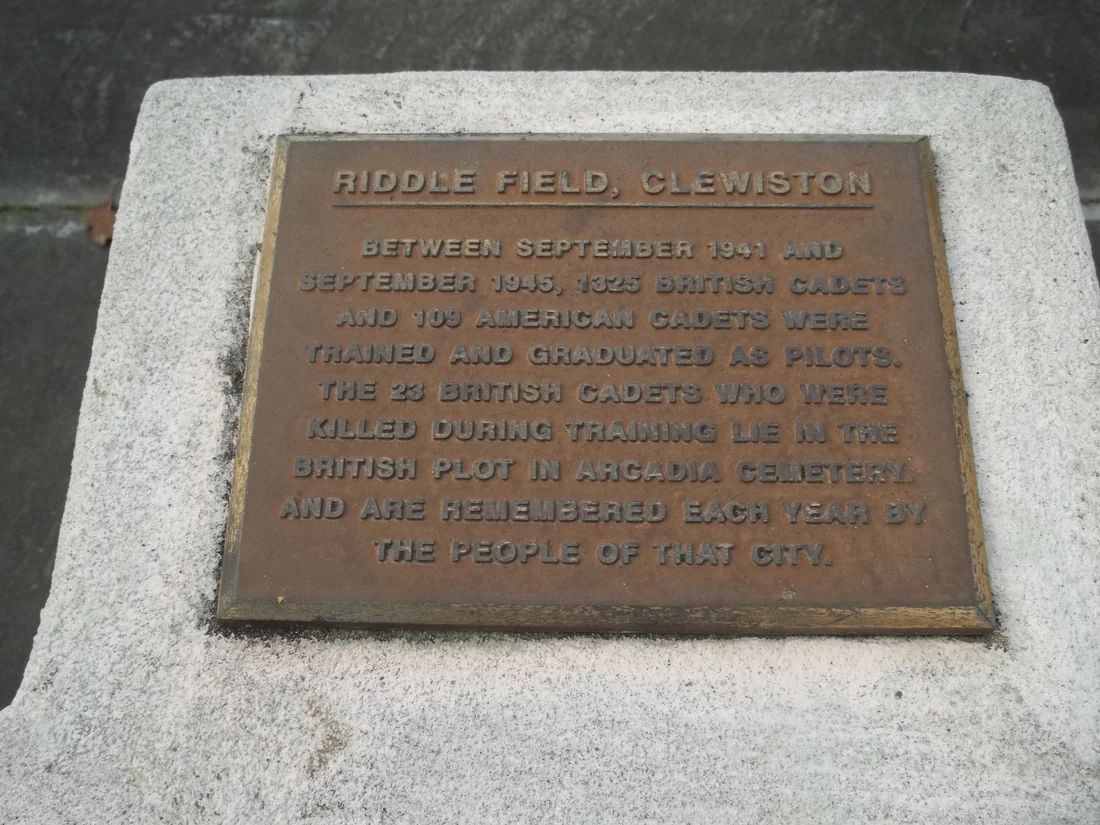
1941 to 1945: Riddle Field and the British cadets
In 1941, a flying school opened at Riddle Field, just west of Clewiston. Known as No. 5 British Flying Training School, it was run by the McCay-Riddle Aeronautical College. Its task was training new pilots for Britain's Royal Air Force.
More than 1,300 British cadets took flying lessons there. They trained in PT-17, BT-13 and AT-6 aircraft. Embry-Riddle Aeronautical University places the school at Riddle Field in Clewiston and at Carlstrom Field in Arcadia from 1941 to 1945. Nothing is left of the wartime airfield, but a memorial to the British cadets and their school stands in Civic Center Park in Clewiston.
Sources: Florida Department of State, Museum of Florida History: Riddle Field; Embry-Riddle Aeronautical University Scholarly Commons: #5BFTS Riddle Field, Clewiston, Florida, 1941-1945
Next: Chapter 11, Since 1990: The Ah-Tah-Thi-Ki Museum, the Sugar Express and Harlem's amphitheater →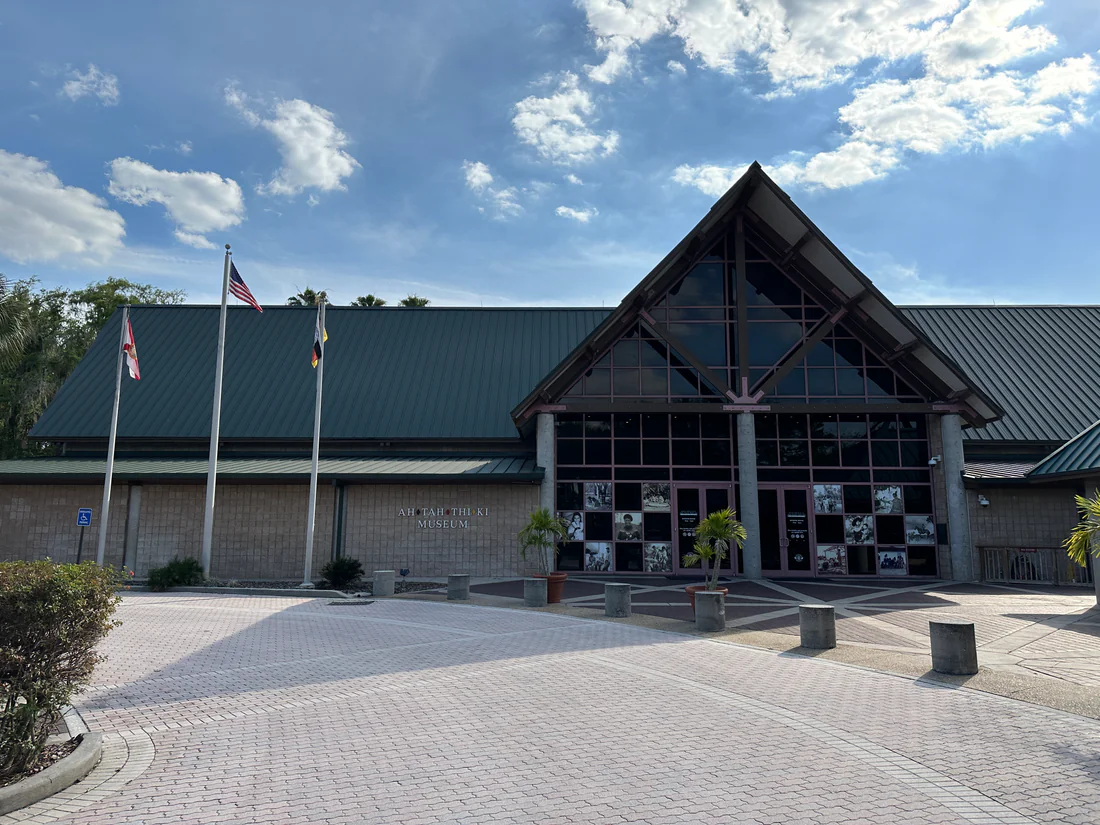
Since 1990: The Ah-Tah-Thi-Ki Museum, the Sugar Express and Harlem's amphitheater
The Seminole Tribe of Florida opened the Ah-Tah-Thi-Ki Museum on the Big Cypress Seminole Indian Reservation on August 21, 1997. The opening marked 40 years since the federal government recognized the tribe. A raised boardwalk more than a mile long runs through the museum's 66-acre cypress dome. In April 2009, the museum earned full accreditation, and WQCS says it was the first museum run by a tribe to earn accreditation from the American Alliance of Museums.
Since 2020, the Sugar Express has carried visitors from around the world, and No. 148, its steam locomotive from the 1920s, once helped harvest sugarcane. At the 2020 Swamp Cabbage Festival, the LaBelle Heritage Museum helped offer boat trips on the Caloosahatchee River aboard the River Queen, the Caloosa Belle reported. LaBelle has held the festival since the 1960s, and it takes place in Barron Park beside the Caloosahatchee River. In January 2023, a $1.5 billion repair of the Herbert Hoover Dike, begun in 2005, was finished with a ribbon cutting on the lakeshore in Clewiston.
By August 2025, Hendry County had won $1.5 million in grant money for restoring some of the old Harlem Academy's buildings. On August 5, 2025, the federal court closed the school case that the United States had filed in 1970. In December 2025, an amphitheater was dedicated in Harlem's Janet B. Taylor Community Tree Park, and it was described as a first for Harlem and for all of Hendry County. Taylor, a former farmworker, was the Clewiston Police Department's first Black woman officer and later served 22 years as a county commissioner.
Sources: WQCS (IRSC Public Media): Ah-Tah-Thi-Ki Museum to Celebrate 25th Anniversary; Ah-Tah-Thi-Ki Seminole Indian Museum: Mission & History; Sugar Express (U.S. Sugar): Lake Placid to Clewiston excursion; The Caloosa Belle (reposted by Calusa Waterkeeper): Time-Traveling River Excursions Featured at Swamp Cabbage Festival; Florida Department of State, Division of Historical Resources: Food Festivals; Caloosa Belle and Clewiston News (South Central Florida Life): LaBelle; WLRN Public Media (Associated Press): After 18 years, $1.5B dike repair done at Florida's Lake O; WGCU News: Hendry County moves to help Harlem, a little-known community with lots of history; Civil Rights Litigation Clearinghouse: United States of America v. Hendry County School District; WGCU News: Harlem residents rich with pride during amphitheater dedication
Next: the whole story, in dates →The whole story, in dates
The Calusa live along the southwest Florida coast and paddle up the Caloosahatchee.
Francis Asbury Hendry is born in Georgia.
The Second Seminole War breaks out.
Lieutenant Colonel Alexander Thompson is killed at the Battle of Okeechobee.
Captain B. L. E. Bonneville sets up Fort Denaud on the Caloosahatchee.
Fort Thompson begins as a military post.
Fort Denaud opens again soon after the Third Seminole War begins.
A fire sweeps through Fort Denaud.
Fort Denaud is abandoned.
Francis Asbury Hendry acquires the old Fort Thompson property.
Dredging begins on the Caloosahatchee, and a land company takes on draining the area.
Steamboats carry passengers between Fort Myers and Fort Thompson.
Hendry makes the old Fort Thompson property his home.
The new settlement is already being called Belle, Belle City or LaBelle.
LaBelle has its first school and its first church.
Edgar Everett Goodno buys Fort Thompson.
The Florida Legislature gives LaBelle a town charter.
Alonzo Clewis and John O'Brien buy land to start Clewiston.
Hendry County is created from eastern Lee County.
The first county commissioners hold their first meeting.
Henry Ford buys part of Goodno's land.
Clewiston becomes an incorporated city.
LaBelle is chartered as a city.
Sugar companies set apart land outside Clewiston for Black cane workers, the start of Harlem.
The Seaboard Air Line Railroad reaches LaBelle.
The Okeechobee Hurricane comes ashore.
Southern Sugar opens the Clewiston Sugar House.
Charles Stewart Mott arranges to buy the assets of Southern Sugar Corporation.
Riddle Field opens just west of Clewiston to train pilots for the Royal Air Force.
Herbert Hoover speaks at the dedication of the lake dike named for him.
The United States files a case against the Hendry County School District.
Harlem Academy closes as the county's schools are integrated.
The Ah-Tah-Thi-Ki Museum opens on the Big Cypress Seminole Indian Reservation.
The Ah-Tah-Thi-Ki Museum earns full accreditation.
The Sugar Express begins welcoming guests.
The $1.5 billion repair of the Herbert Hoover Dike is finished.
The federal court closes the Hendry County school case.
An amphitheater is dedicated in Harlem's Janet B. Taylor Community Tree Park.
Where you can still see it
 01
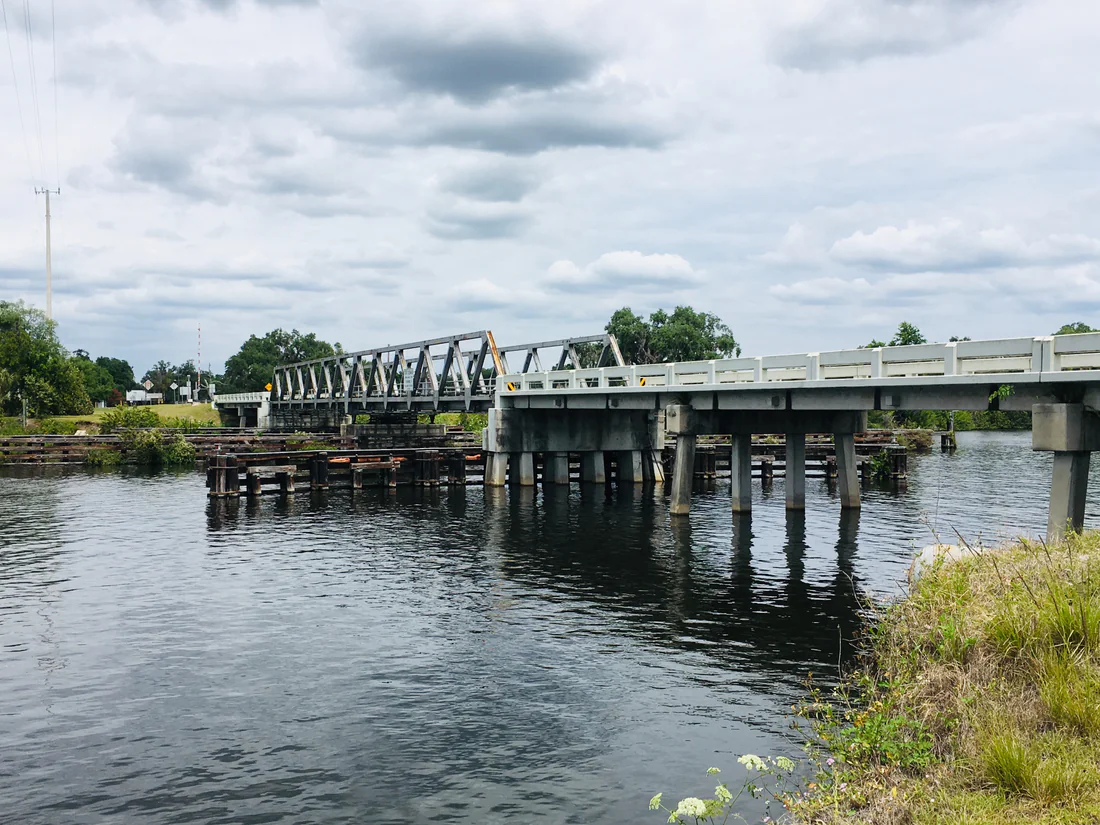
Fort Denaud
Goes with: 1835 to 1842: Fort Denaud and Fort Thompson
The Fort Denaud historical marker →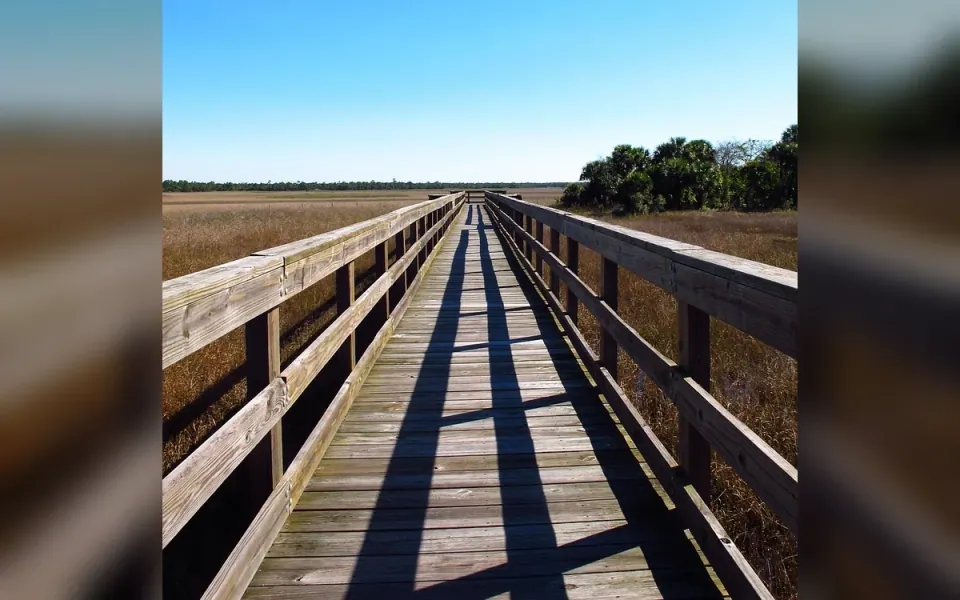 02
Okaloacoochee Slough State Forest
Goes with: 1855 to 1858: The Third Seminole War
Open the place page →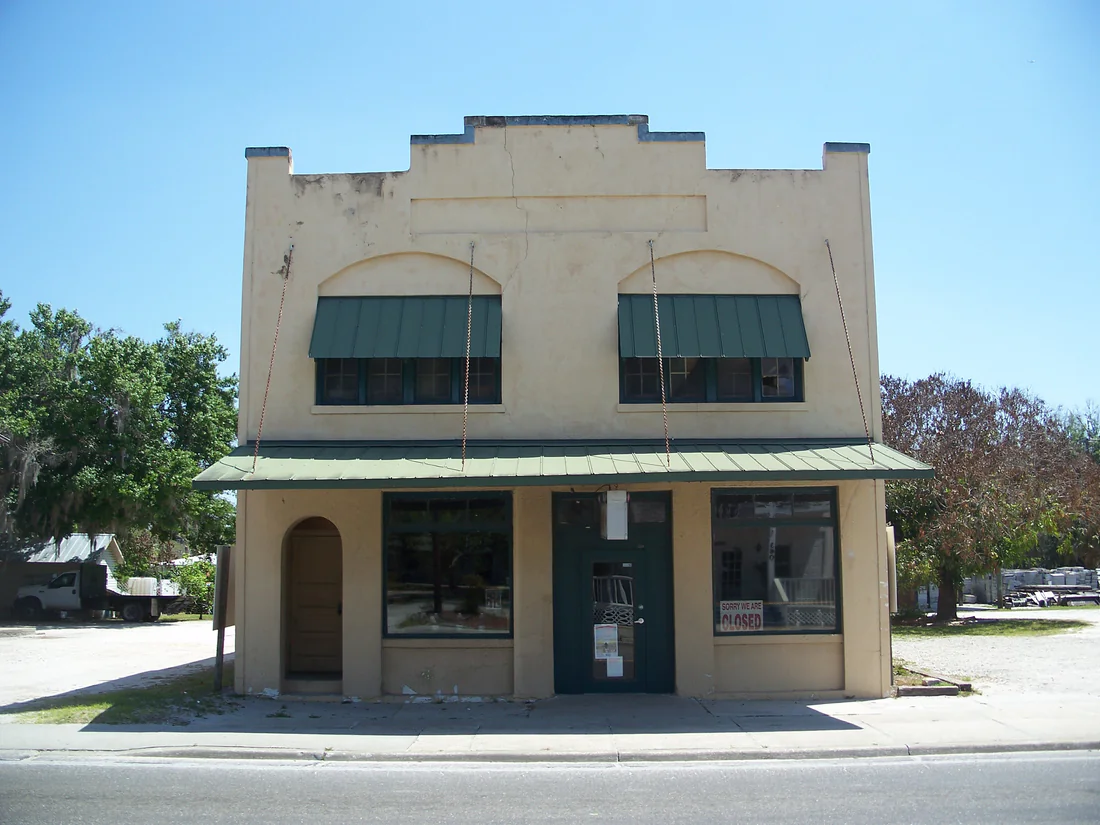 03
Downtown LaBelle Historic District
Goes with: 1923: Hendry County is created
The Downtown La Belle Historic District marker →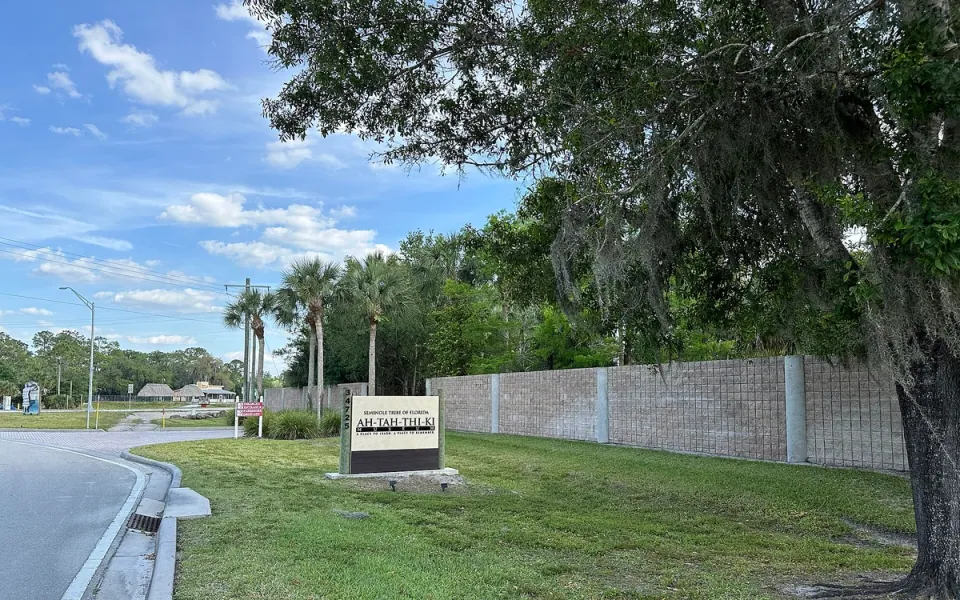 04
Ah-Tah-Thi-Ki Museum
Goes with: Since 1990: The Ah-Tah-Thi-Ki Museum, the Sugar Express and Harlem's amphitheater
Open the place page →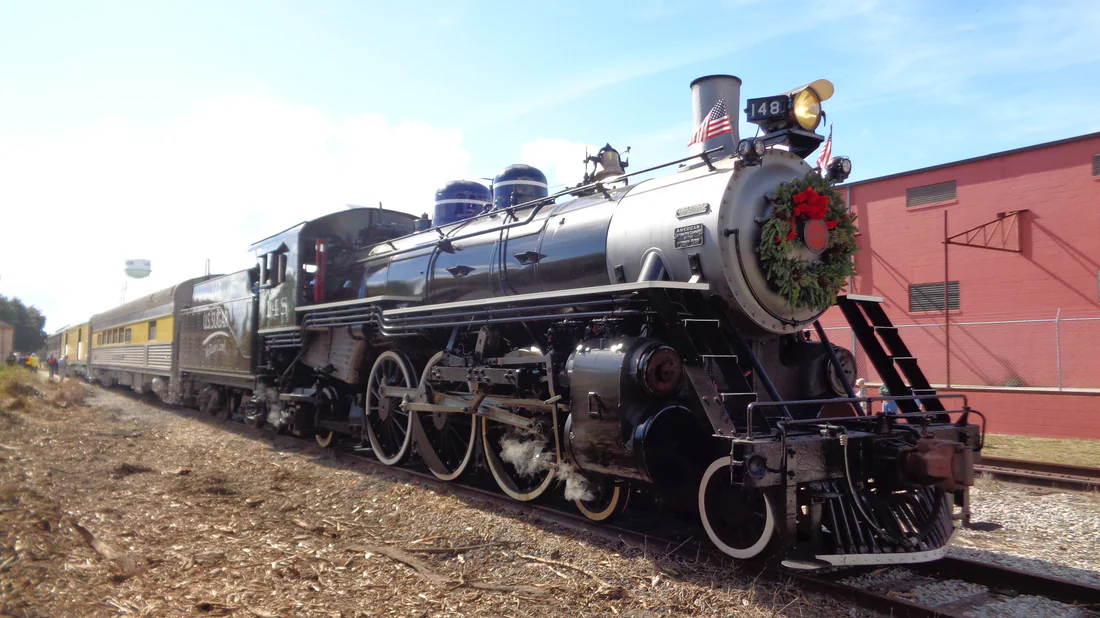 05
Sugar Express
Goes with: Since 1990: The Ah-Tah-Thi-Ki Museum, the Sugar Express and Harlem's amphitheater
Open the place page →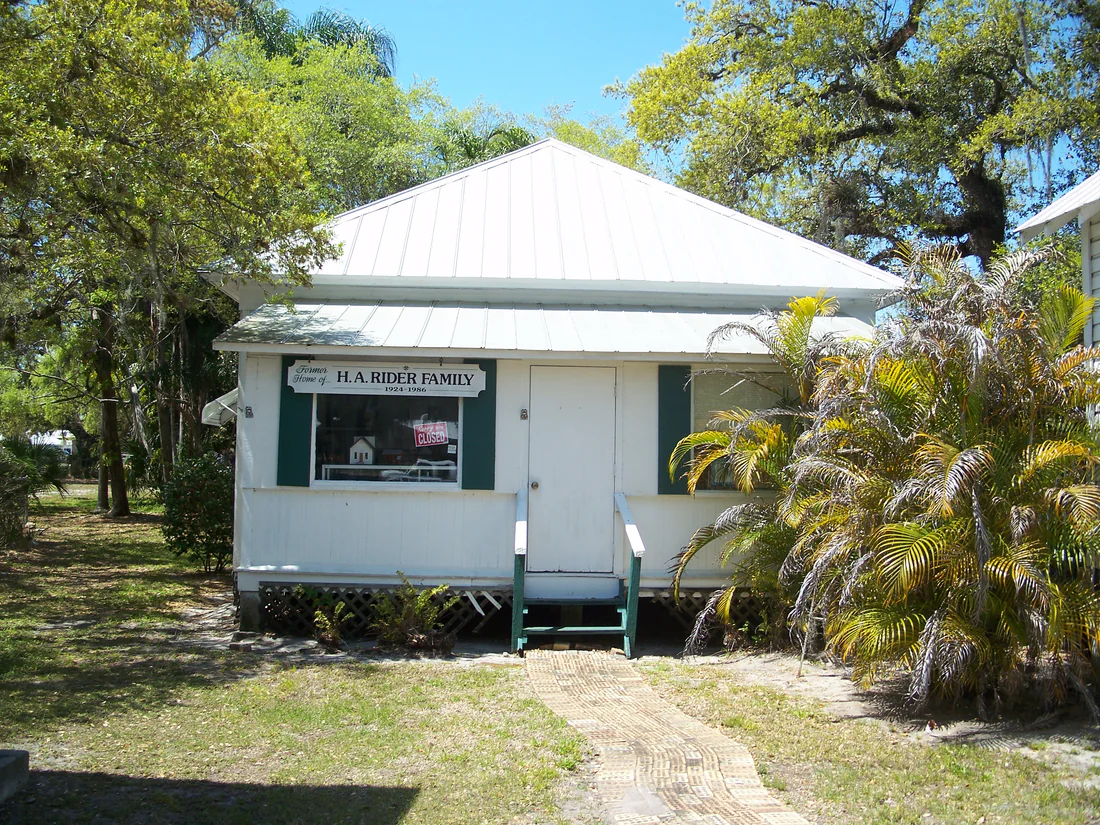 06
LaBelle Heritage Museum
Goes with: Since 1990: The Ah-Tah-Thi-Ki Museum, the Sugar Express and Harlem's amphitheater
Open the place page →Questions people ask
When was Hendry County created?
On May 11, 1923, the Florida Legislature made eastern Lee County into a new county, Hendry County.
Chapter 7 →Who was Hendry County named for?
Hendry County was named for Captain Francis Asbury Hendry, whom the city of LaBelle calls the "Cattle King of South Florida."
Chapter 7 →What is the county seat of Hendry County?
LaBelle, on the upper Caloosahatchee, became the county seat when the county was created in 1923.
Chapter 7 →How did LaBelle get its name?
The name honored Francis Asbury Hendry's daughters Laura and Carrie Belle.
Chapter 5 →What was Riddle Field in Clewiston?
Riddle Field, just west of Clewiston, was the home of No. 5 British Flying Training School, which opened in 1941 to train new pilots for Britain's Royal Air Force.
Chapter 10 →Where this comes from.
Last updated October 19, 2026.
- Florida Fish and Wildlife Conservation Commission: Dinner Island - History ↗ Read October 19, 2026
- Fox 4 News: 'It means a lot': LaBelle celebrates 100 years with the Swamp Cabbage Festival ↗ Read October 19, 2026
- Florida Department of State: Historical Marker, Fort Denaud ↗ Read October 19, 2026
- Florida Department of State: Historical Marker, Fort Thompson ↗ Read October 19, 2026
- Florida Department of State: Historical Marker, Downtown La Belle Historic District ↗ Read October 19, 2026
- Florida Memory, State Archives of Florida: Hendry County, Historical Sketch ↗ Read October 19, 2026
- University of Florida Libraries: Ingraham Expedition, Okaloacoochee Slough ↗ Read October 19, 2026
- University of Florida Libraries: Ingraham Expedition, Francis Asbury Hendry ↗ Read October 19, 2026
- City of LaBelle: The History of LaBelle ↗ Read October 19, 2026
- Caloosa Belle and Clewiston News (South Central Florida Life): LaBelle ↗ Read October 19, 2026
- Clewiston News (South Central Florida Life): Clewiston ↗ Read October 19, 2026
- Cornell University Library, Division of Rare and Manuscript Collections: Clewiston, FL, January - June 1925 ↗ Read October 19, 2026
- WFLX: Spirits felt at historic Florida inn ↗ Read October 19, 2026
- U.S. Sugar: About Us ↗ Read October 19, 2026
- WGCU News: Hendry County moves to help Harlem, a little-known community with lots of history ↗ Read October 19, 2026
- Civil Rights Litigation Clearinghouse: United States of America v. Hendry County School District ↗ Read October 19, 2026
- WLRN Public Media (Associated Press): After 18 years, $1.5B dike repair done at Florida's Lake O ↗ Read October 19, 2026
- Florida Memory, State Archives of Florida: When the Dam Breaks... ↗ Read October 19, 2026
- Florida Memory, State Archives of Florida: Clewiston Inn, Clewiston, Florida. 1938. ↗ Read October 19, 2026
- Florida Department of State, Museum of Florida History: Riddle Field ↗ Read October 19, 2026
- Embry-Riddle Aeronautical University Scholarly Commons: #5BFTS Riddle Field, Clewiston, Florida, 1941-1945 ↗ Read October 19, 2026
- Ah-Tah-Thi-Ki Seminole Indian Museum: Mission & History ↗ Read October 19, 2026
- WQCS (IRSC Public Media): Ah-Tah-Thi-Ki Museum to Celebrate 25th Anniversary ↗ Read October 19, 2026
- Sugar Express (U.S. Sugar): Lake Placid to Clewiston excursion ↗ Read October 19, 2026
- The Caloosa Belle (reposted by Calusa Waterkeeper): Time-Traveling River Excursions Featured at Swamp Cabbage Festival ↗ Read October 19, 2026
- Florida Department of State, Division of Historical Resources: Food Festivals ↗ Read October 19, 2026
- WGCU News: Harlem residents rich with pride during amphitheater dedication ↗ Read October 19, 2026