MUSEUM & CULTURE
It opened in 1977 and its job is the whole of Florida rather than one region, which is why it is the sensible first stop for anyone trying to understand the state before deciding where in it to live. The permanent galleries cover more than fourteen thousand years.
GARDENS & LANDSCAPES
Alfred B. Maclay bought a quail hunting plantation of nineteen hundred and thirty-five acres here in 1923 and called the estate Killearn. He laid out the garden around the house and went on planting it until he died in 1944.
MUSEUM & CULTURE
It is a teaching museum, which shapes what goes on the walls. Exhibitions run to historical and contemporary art both, and a good part of the year is given over to showing the work of the university's own students and faculty, so the building changes completely from one visit to the next.
MUSEUM & CULTURE
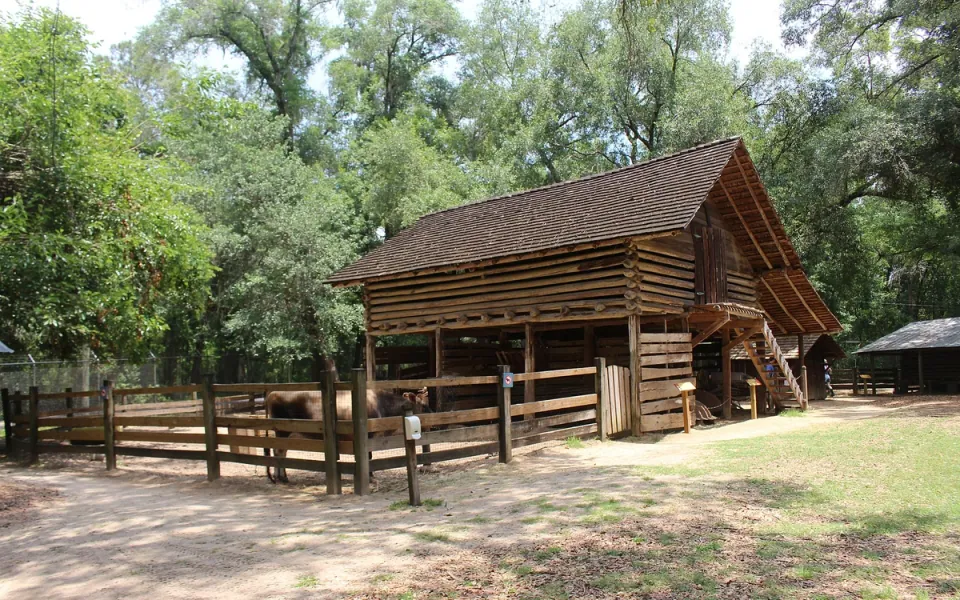
Hardy and Bryan Croom, tobacco planters from North Carolina, bought about twenty-four hundred acres here in 1834 and began a cotton and corn plantation worked by sixty enslaved people they brought with them. Arvah Hopkins, a New York merchant, took it over in 1857, ran it to eight thousand acres and held more than two hundred people in slavery on it.
MUSEUM & CULTURE
DeVoe Moore opened it in May 1996 with fifteen vehicles and moved it into the present building, three times the size of the first one, in 2007. The cars run from a Snell of 1900 to a Camaro of 2010, and they are laid out as objects to look at rather than as a chronological lesson.
MUSEUM & CULTURE
John Gilmore Riley was born into slavery in Leon County in 1857 and had no formal schooling; an aunt taught him. He began teaching in Wakulla County in 1877, worked with the local Board of Public Instruction from the 1880s until 1926, and was principal of Lincoln Academy from 1892 to 1926, the first secondary school in Tallahassee open to Black students.