HISTORY & HERITAGE
Historic Pensacola Village occupies several blocks of downtown and is run by the University of West Florida Historic Trust from 330 South Jefferson Street. Tours start at the Tivoli House, a reconstruction of an 1805 building put back in 1976 from old photographs and what the archaeologists found.
MUSEUM & CULTURE
Pensacola got its first light in 1823, a lightship called the Aurora Borealis, then a 40-foot tower in 1825. Neither worked well: the lightship had to anchor inside the bay because of rough water, and trees blocked the tower's light.
MUSEUM & CULTURE
The building at 407 South Jefferson Street went up in 1906 as Pensacola's first permanent jail. When the city built a new one in 1954 it leased the old jail to the newly formed Pensacola Art Association for a dollar a year, and the association turned the cells into exhibition rooms.
FLORIDA PLACE TO EXPLORE
MESS stands for Math, Engineering, Science and Stuff, and the Pensacola MESS Hall at 418 East Wright Street is built on the idea that people learn this material by doing it rather than reading labels. The place puts out ten to twelve rotating activity kits alongside its regular exhibits, and as the staff put it, at the MESS Hall you are the scientists.
HISTORY & HERITAGE
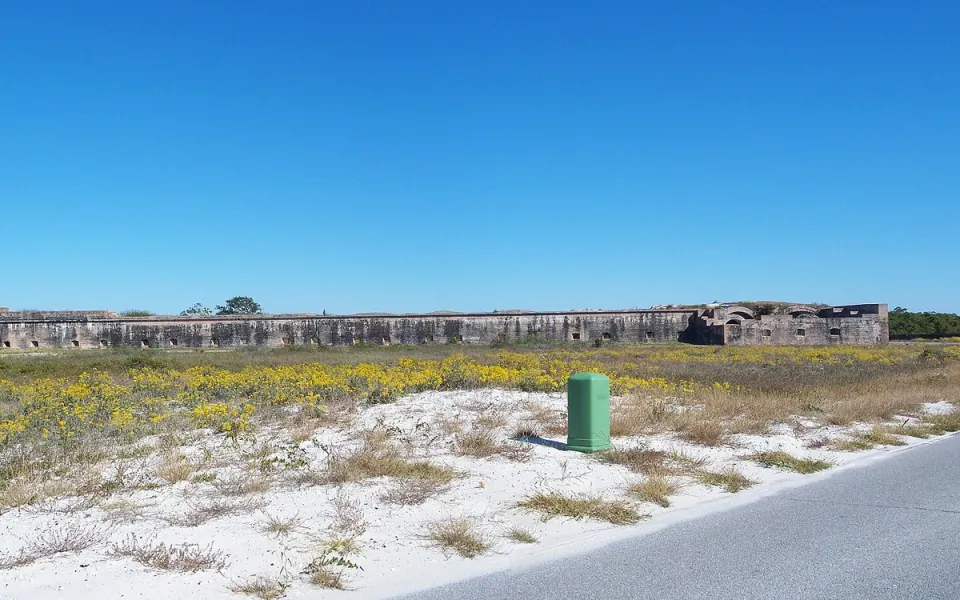
This bluff over Pensacola Bay has carried forts since 1698, when the Spanish built Fort San Carlos de Austria on it. The French destroyed that in 1719. The Spanish came back, put up the Bateria de San Antonio at sea level in 1787 and a wooden fort on the hill between 1787 and 1797.
HISTORY & HERITAGE
Veterans Memorial Park sits on the downtown Pensacola bayfront at 200 South 10th Avenue, next to Admiral Mason Park along Bayfront Parkway. The ground was once a rough waterfront district called Hawkshaw, left over from the lumber years.