 01
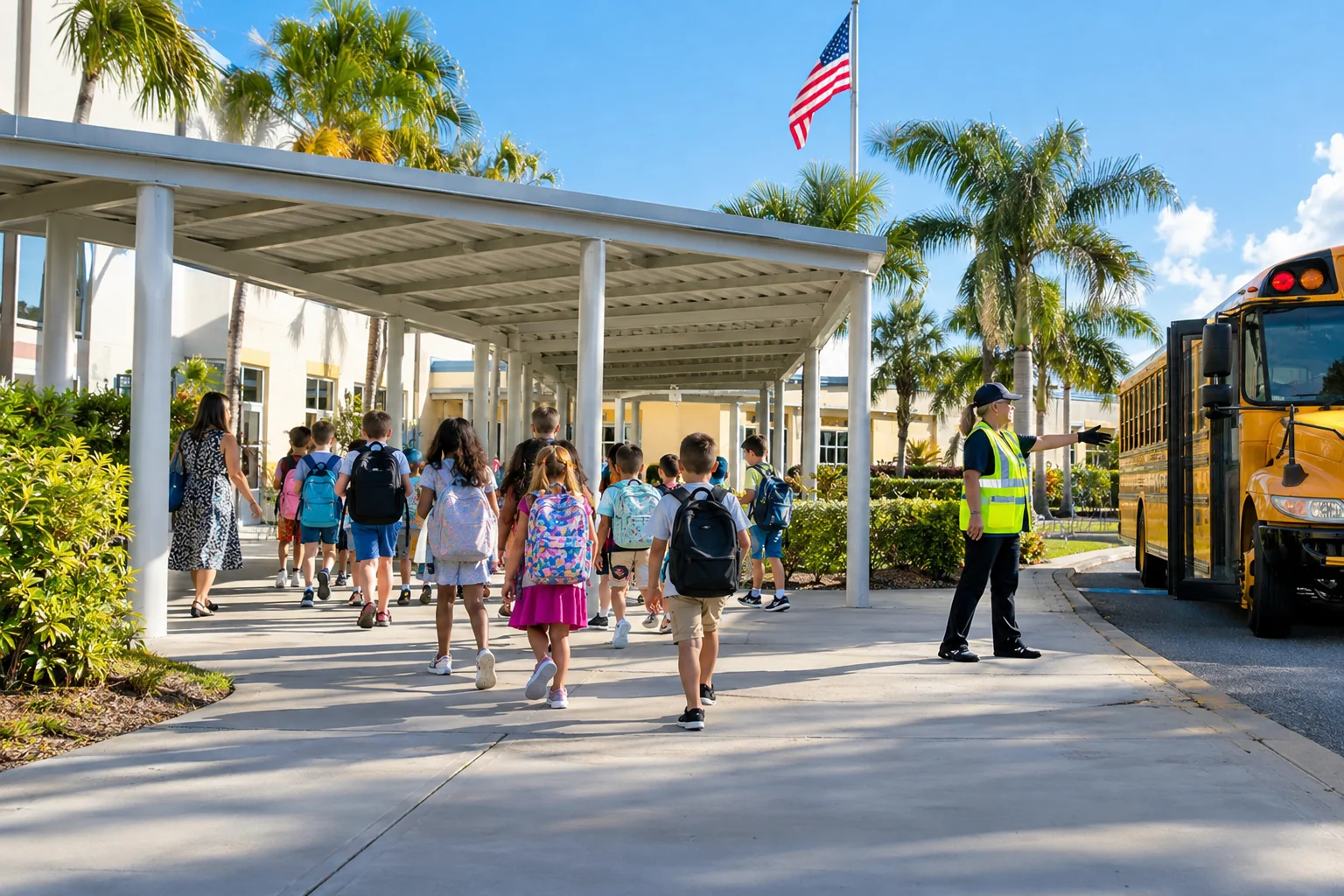
What do I need to enroll my child in school in Florida?
A Florida Certification of Immunization, a school-entry health exam, proof of your child's age, and the proofs of address your school district asks for.
Read the answer →Ask 1stFlorida
Yes, charter schools in Florida are public schools: they charge no tuition and are open to any student who lives in the school district.
A charter school runs under a performance contract, called a charter. It is free from many regulations made for traditional public schools, and it is held accountable for its academic and financial results. Most charters are granted for five years.
Each charter school must be organized as, or run by, a nonprofit organization. Its governing board negotiates a contract with the district school board, which becomes the school's sponsor. Each school must appoint a parent-involvement representative who lives in the district, and its governing board must hold at least two public meetings in the district each school year.
Charter schools may not charge tuition or registration fees. A school may focus on certain age groups or grade levels, or on students at risk of dropping out or failing. It may give enrollment preference to groups such as siblings of current students, children of its board members and employees, and children of active-duty members of the U.S. Armed Forces. The school and the district must work together so that transportation does not keep a student who lives within a reasonable distance from attending.
Charter schools get school grades on the same standards as traditional public schools. The sponsor may close a charter school that misses the student results agreed in its charter, fails to meet standards of fiscal management or breaks the law.
The Florida Department of Education counts more than 739 charter schools in the 2025-2026 school year, and on May 14, 2026, it said more than 400,000 students were enrolled. Its Charter Schools Office, part of the Office of Independent Education and Parental Choice in Tallahassee, answers questions at 850-245-0502, or toll-free at 800-447-1636.
01A Florida Certification of Immunization, a school-entry health exam, proof of your child's age, and the proofs of address your school district asks for.
Read the answer → 02
Start with the school, because in Florida the address decides it. The state grades its public schools and every school district from A to F each year; for 2025-26, 34 of the 67 districts were graded A, 23 B and 10 C, and none D or F. A district graded A still has schools graded lower, so look up the grade of the exact school assigned to the address before you make an offer.
Read the answer →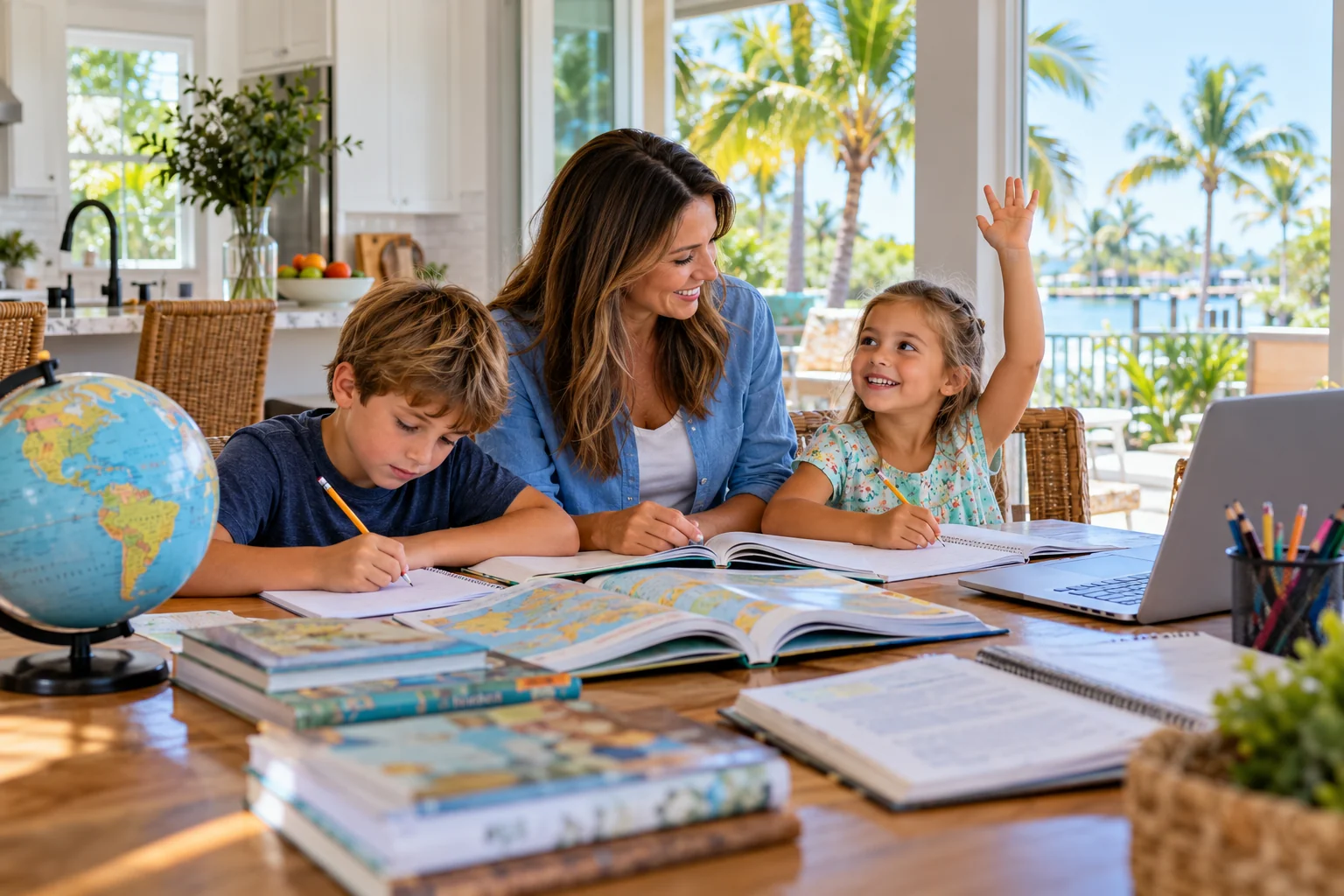 03
Send a written notice to the superintendent of your county's school district within 30 days of starting, signed by the parent, with each child's full legal name, address and birth date; the Department of Education calls it a letter of intent.
Read the answer →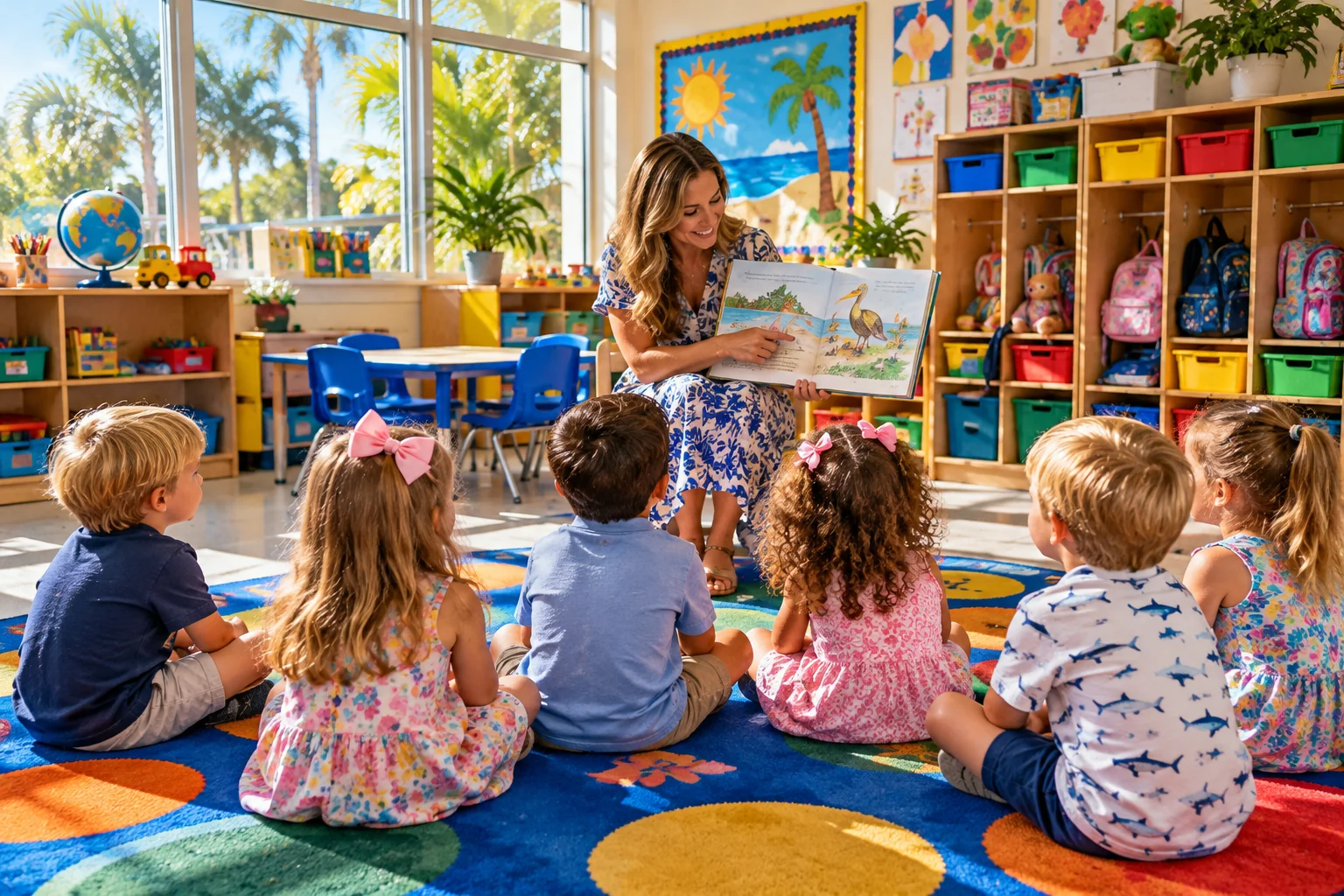 04
Yes. Voluntary Prekindergarten, VPK, is free for every 4-year-old who lives in Florida, whatever the family's income: the child must be 4 on or before September 1 of the school year.
Read the answer →Florida's senior centers are run by nonprofits, cities and counties, and the state Elder Helpline, 1-800-963-5337, can point you to the one near you.
In a Florida golf community with a mandatory homeowners association, state law says you must get a disclosure summary before you sign a contract to buy.
Choose a clinic near your new home, then check the veterinarian's license on MyFloridaLicense.com, where Florida lets anyone look up a license by name.
Have a different question? Ask 1stFlorida →