WATER & COAST
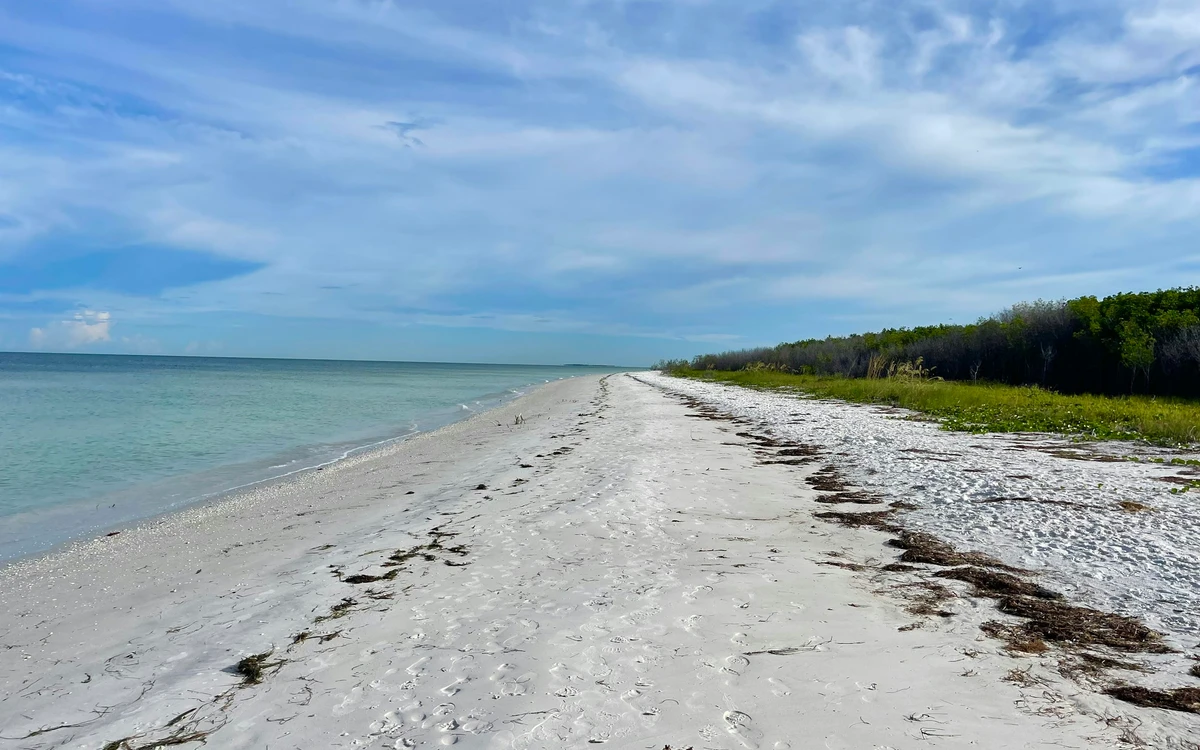
Caladesi and Honeymoon Island were one six-mile barrier island until a hurricane cut Hurricane Pass through it in 1921 and made two. In 1985 Hurricane Elena filled Dunedin Pass at the other end, joining Caladesi to Clearwater Beach, so the island can now be walked to from the south, though there is still no road.
WATER & COAST
St. Petersburg has put piers into Tampa Bay since the 1800s. The Million Dollar Pier opened on November 25, 1926, with 10,000 people on it and a Mediterranean Revival casino at the end. The inverted pyramid that most people remember opened on January 15, 1973, designed by William B. Harvard Sr. at a cost near four million dollars, and came down between 2015 and 2016.
WATER & COAST
The preserve runs along the western shore of Tampa Bay in St. Petersburg and has been managed by Pinellas County since 1993. It went on the National Register of Historic Places on June 13, 1972, and the reason is under the ground rather than on it.
WATER & COAST
Sponging started here in the 1880s with hook boats. In 1905 John Cocoris brought in deep-water diving and recruited spongers from the Dodecanese Islands in Greece, and the town changed completely. Men in canvas suits and brass helmets walked the Gulf floor gathering sponges, and for a period it was Florida's leading export.
WATER & COAST
The beach sits on a barrier island joined to the mainland by the Memorial Causeway, and the sand is the fine white quartz that runs down this coast. It is a built-up beach rather than a wild one, with hotels behind it and Beach Walk running along the front, which suits people who want food, chairs and lifeguards within reach of the water.
WATER & COAST
The city was incorporated in 1957 when Pass-a-Grille, Belle Vista, St. Petersburg Beach and some unincorporated land voted to combine, and the referendum carried by five votes. The name was shortened to St. Pete Beach on March 9, 1994, to stop the confusion with St. Petersburg across the bay.